Youth organizations often provide various activities for young people, but are all these activities charitable? Some activities may directly contribute to education and personal development, while others might simply offer recreational enjoyment. Let’s explore the differences between educational, recreational, and sports activities for youth to understand their purposes better.
Providing job-seeking and interview skills training.
Conducting career-specific or job-related training.
Facilitating on-the-job training or co-op placements.
Additional Considerations: Activities fostering emotional and moral maturity, teamwork, cooperation, good citizenship, and leadership skills are also deemed educational, provided they incorporate structured teaching or learning components.
Social and Recreational Activities:
Definition: Social or recreational activities serve a charitable purpose only when they directly contribute to the well-being or development of young people.
Examples:
Supervised youth dances, movie nights, concerts, and sporting events.
Structured outings to museums, theaters, or zoos.
Guided visits to historical sites with educational components.
Supervised opportunities for learning appropriate social interaction skills.
Critical Factors: The degree of supervision, interaction, and the extent to which the activities align with the charitable purposes of the organization are crucial in determining their benefit.
Sports Activities:
Purpose: While promoting sports alone isn’t recognized as charitable, certain sports activities can benefit youth by fostering self-esteem, preventing addiction, or aiding in addiction recovery.
Criteria for Charitable Sports Activities:
Must be part of a structured program addressing identified youth issues.
It should demonstrate a causal connection between the activity and the charitable benefit.
The selection process should ensure at-risk youth benefit, although participation isn’t limited to them.
Drop-in Centers:
Purpose: Drop-in centers serve various charitable purposes, addressing issues such as violent behavior, drug addiction, or providing a safe space for latch-key children.
Key Elements:
The structured activities should target specific youth issues.
It should have adult supervision to ensure safety and facilitate conflict resolution.
Potential partnerships with social services, schools, and law enforcement agencies.
The question of whether youth activities are charitable depends on their intent, structure, and the extent to which they address identified youth issues. Understanding the distinction between educational, social, recreational, and sports activities helps in evaluating their charitable nature and ensuring that they contribute meaningfully to the well-being and development of young people.
At Northfield & Associates our expert teams guidance on compliance requirements. Our team understands Canadian charity law and can help ensure your organisation follows proper procedures.
At Northfield & Associates, we have a team of professional bookkeepers and accountants to help your organization manage the books so that you can breeze through tax season.
We’re often asked by prospective clients what our Bookkeeping Service covers? People want to know what specific tasks we do, and what their responsibility is. This brief explainer page will answer that question. This is by no means an exhaustive list, but covers the most frequently asked questions.
Getting Started
Review your existing books for needed corrections or back-work
Chart of accounts setup or amendment
Assistance with setting up bank feeds
Limited assistance* with setting up payroll (QBO or Gusto only)
Your books brought current and reconciled if needed
Ongoing Monthly Bookkeeping
After-the-fact transaction recording
Post to general ledger
Post to other ledgers (as needed)
Bank account reconciliation
Monthly financial statements
Other bookkeeping services, as required
Best-practice bookkeeping advice and counsel
Year End
Assistance with 1099-NEC preparation*
Assistance with 1099-MISC preparation*
Year-end financial statements and period-end closing
What We Don’t Do
Pay bills
We do not offer bill-pay services at this time, nor do we manage Accounts Payable (AP) or Accounts Receivable (AR).
Payroll tax responsibility
Our bookkeepers can assist you in setting up your initial payroll service in QBO or Gusto. We are not responsible for entering payroll hours/salary, accruing payroll taxes, nor the transmittal of payroll taxes to the IRS or the state. Your full-service payroll provider (QBO, Gusto, or whatever other service a client uses) will be the responsible party for payroll and payroll tax compliance.
*Payroll deductions and benefits
We provide assistance with setting up a payroll account in either Quickbooks Online or Gusto, including entry of employee data. We do not assist in state registrations, benefits, or advise on deductions. Those service areas are provided directly by either QBO or Gusto.
Preparation of W2s
Similar to the last item, your full-service payroll provider (QBO/Gusto) is responsible for preparation of Form W2 for employees.
Sales tax reporting
For those nonprofits that sell taxable goods and/or services, your bookkeeper will assist in accounting for sales taxes collected and transmitted, but we do not prepare state sales tax reports.
Donation recording
We do not provide individual donation data entry into your neither your donor CRM nor Quickbooks Online, nor do we prepare year-end donor acknowledgements.
Administrative tasks
We cannot provide administrative services unrelated to our bookkeeping function.
Attend board meetings
Due to the constraints of time and distance, we are unable to be present, physically nor virtually, at a meeting of a client’s board of directors.*May incur additional fee per 1099-NEC or 1099-MISC.
Let’s Collaborate & Make a Difference!
Partner with us to amplify your mission. Whether it’s Charity accounting, financial transparency, or strategic growth—we’re here to help you create meaningful impact. Let’s work together to build a better future!
In this evolving economic landscape, collaboration with our firm offers clients a strategic advantage. With Cambodia’s reform-driven investment environment and Canada’s expanding footprint in Southeast Asia, our team of experienced consultants and legal advisors provides tailored guidance to help businesses navigate cross-border opportunities. We focus in developing comprehensive legal strategies, structuring international partnerships, and ensuring compliance in emerging markets.
By leveraging our regional insight and international expertise, you benefit from a trusted partner dedicated to helping you capitalize on growth potential in Cambodia and beyond.
Your Trusted Partner in International Bilateral Relations
At Northfield & Associates are focus in Foreign Direct Investment (FDI), international trade missions, and cross-border legal strategy. Our team of experienced consultants and legal advisors offers tailored guidance and strategic insight to help you navigate the complexities of international partnerships and development opportunities.
Whether you choose to meet in person at one of our offices or connect virtually, we provide flexible and accessible consultation options. During your session, we’ll assess your goals, review key documentation, and guide you through every stage of your FDI or trade mission engagement.
Let us help you take the next step with confidence supported by trusted legal and strategic counsel every step of the way.
Northfield & Associates
Advancing Global Partnerships, Together.
Take the First Step Today
If you believe you may be eligible for legal relief or simply need sound legal advice, we’re here to help. Contact us today to book your consultation. Let us provide the clarity, strategy, and peace of mind you need to move forward.
Disclaimer: The information contained in this article is provided for general information purposes only and does not constitute legal or other professional advice. Readers should seek tailored legal advice in relation to their personal circumstances.
We serve our clients in English, Cambodian, Vietnamese, Mandarin and Cantonese, especially in Asian clients.
If you or anybody that you know, think that you meet the requirements and wish to receive further information.
We can help you start the application process and confirm eligibility requirements to participate.
We Offer Consultations & Meetings by Phone & Virtually. Affordable Fees.
Book a Consultation Today
Contact Northfield & Associates today to schedule a consultation with an experienced Consultant.
Northfield & Associates International Corporation is a global consulting firm serving private enterprises, public institutions, not-for-profit organizations, and institutional capital providers. Operating across Cambodia, Canada, and global markets, the firm supports capital deployment, regulatory navigation, and enterprise decision-making in complex economic and geopolitical environments. Northfield & Associates delivers customized, execution-focused advisory solutions that drive measurable transformation, strengthen competitiveness, and enhance long-term highest value opportunities. The firm incorporates consulting, legal, regulatory, financial, and risk expertise to enable disciplined capital allocation, strong governance, and operational resilience. Northfield & Associates upholds a culture of applied insight and innovation, supporting clients across digital transformation, growth strategy, and organizational capability building. The firm advises individual, leading global corporations, midsize enterprises, government agencies, and mission-driven organizations through long-term partnerships. Enterprise-wide risk management, professional ethics, and fiduciary standards are embedded across all operations. Northfield & Associates’ diverse, globally unified teams are committed to execution certainty and sustainable, risk-adjusted returns aligned with ESG and stakeholder objectives.
Forward-Looking Information
This news release contains forward-looking information. All statements, other than statements of historic fact, that address activities, events or developments that the Company believes, expects or anticipates will or may occur in the future constitute forward-looking information.
This forward-looking information reflects the current expectations or beliefs of the Company based on information currently available to the Company.
Forward-looking information is subject to a number of risks and uncertainties that may cause the actual results of the Company to differ materially from those discussed in the forward-looking information, and even if such actual results are realized or substantially realized, there can be no assurance that they will have the expected consequences to, or effects on the Company. Factors that could cause actual results or events to differ materially from current expectations include, among other things: the failure to finalize negotiations concerning the increase of the Loan or to close such transaction and the failure of the Company to complete the acquisition of the Company Facility; operating performance of facilities; environmental and safety risks; delays in obtaining or failure to obtain necessary permits and approvals from government authorities; unavailability of plant, equipment or labour; inability to retain key management and personnel; changes to regulations or policies affecting the Company’s activities; and the other risks disclosed under the heading “Risk Factors” and elsewhere in the Company’s amended annual information.
Forward-looking information speaks only as of the date on which it is made and, except as may be required by applicable securities laws, the Company disclaims any intent or obligation to update any forward-looking information, whether as a result of new information, future events or results or otherwise. Although the Company believes that the assumptions inherent in the forward-looking information are reasonable, forward-looking information is not a guarantee of future performance and accordingly undue reliance should not be put on such information due to the inherent uncertainty therein.
Questions?
info@northfied.biz
Within Corporate Newsroom
Media Contact:
media@northfied.biz
Press contact
PR consultants press@northfied.biz
NOT LEGAL ADVICE. Information made available on this website in any form is for information purposes only. It is not, and should not be taken as, legal advice. You should not rely on, or take or fail to take any action based upon this information. Never disregard professional legal advice or delay in seeking legal advice because of something you have read on this website. Northfield & Associates professionals will be pleased to discuss resolutions to specific legal concerns you may have.
Starting a foundation in Canada is a clear way to support causes that matter to us. It involves creating a registered charity that can raise funds and make grants or carry out its own charitable work.
The essential steps include incorporating a legal entity, applying for charitable registration with the Canada Revenue Agency (CRA), and setting up proper governance and funding.
Foundations come in two main types: private foundations, usually funded by an individual or family, and public foundations, which rely on donations from the public. Each has different rules about funding sources, governance, and operations, but both offer tax benefits and the ability to issue official donation receipts.
We will guide you through the process, including legal requirements, costs, and timelines. Understanding these details helps us make informed choices and set up a foundation that fits our goals.
Understanding Foundations in Canada
Do you want to start a foundation in Canada? If yes, you have come to the right place! This guide will provide you with the necessary steps to establish a foundation in Canada.
What are Foundations in Canada?
Foundations in Canada are set up either as trusts or corporations with the main goal of donating funds to qualified donees or conducting their own charitable activities.
How are Private Foundations Different from Charities?
Charities receive donations from various sources and actively engage in charitable work, whereas private foundations are typically funded by a single individual or family and may not directly carry out charitable activities (though they would be allowed to carry out charitable activities if provided for in their mandate).
Foundations in Canada play a key role in the charitable sector. They provide funding, support various causes, and follow specific legal and financial rules.
It’s important to understand the types of foundations, how they operate, and what role charities play in this landscape.
Types of Foundations
In Canada, foundations are registered charities that fall into two main categories: private foundations and public foundations. Both can be set up as trusts or corporations, but their funding sources and operations differ.
Private foundations are usually funded by a single donor, family, or corporation. They focus on making grants to other qualified organizations or sometimes run their own charitable activities.
Private foundations face stricter rules, such as annual spending requirements and limits on business activities.
Public foundations raise funds from the public, including individuals, organizations, and corporations. They often support multiple charities by granting a large portion of their income.
Public foundations generally have more donors and operate with greater public accountability.
Public vs. Private Foundations
The main difference between public and private foundations lies in their funding and governance.
Aspect
Private Foundation
Public Foundation
Funding Source
Mainly one individual/family/corp.
Funded by multiple public donors
Control
More controlled by founders
Governed by a board with many unrelated members
Spending Requirements
Must spend 3.5% of assets annually
Same 3.5% spending rule but usually more flexible
Activities
Often focused, fewer programs
Broader range of charitable activities
Tax Regulations
Stricter limits on business and political activities
More operational freedom
Private foundations offer more control to founders but require sufficient initial funding. Public foundations depend on broad community support and follow different governance rules to maintain charitable status.
Role of Charities in the Sector
Charities in Canada include foundations and other groups that perform charitable work. Foundations mainly provide funding to these charities or run their own programs to serve public causes.
Registered charities deliver services, fund research, and support communities. Foundations help channel funds effectively and must register with the Canada Revenue Agency (CRA), which oversees compliance and grants charitable status.
Charitable registration allows foundations to issue donation receipts and receive tax benefits. This encourages philanthropy and makes it easier for individuals and corporations to support causes through foundations.
Steps to Start a Foundation in Canada
1. Seek Professional Guidance: It’s recommended to consult with a charity lawyer or someone with a comprehensive understanding of Canadian charity laws and regulations regarding foundations before beginning the setup process. This will help ensure that you comply with all legal requirements and regulations and avoid any potential legal issues in the future.
2. Understand Legal Obligations: All foundations in Canada must register with the CRA Charities Directorate as charities, which entails specific advantages and responsibilities. Failure to register as a charity subjects the foundation to income tax obligations and restricts its ability to issue tax receipts to donors.
3. Establish the Foundation: Establish the foundation as a legal entity, either as a nonprofit corporation or trust, in accordance with provincial, territorial, or federal legislation.
4. Apply for Charitable Registration: Apply for charitable registration through the Canada Revenue Agency (CRA). The application process involves providing comprehensive documentation and outlining the intended activities of the foundation. The CRA determines the charity’s designation, whether it’s a charitable organization, public foundation, or private foundation, based on factors such as funding sources and operational goals.
Key Legal and Regulatory Requirements
Starting a foundation in Canada means following clear rules set by the government. We need to create solid governing documents, define charitable purposes, and work closely with the Canada Revenue Agency (CRA) to meet all legal standards.
Legal Structure and Governing Documents
Foundations must choose the right legal structure. Most are incorporated as either a charitable organization, public foundation, or private foundation.
Incorporation provides limited liability and formal recognition under Canadian law.
We draft key governing documents, including the letters patent or articles of incorporation. These documents explain the foundation’s mission, rules for operation, and power limits.
They must include legal objects that describe the foundation’s charitable purposes in clear terms.
Our governing documents set out the board’s powers and responsibilities. They ensure compliance with CRA rules and relevant provincial laws.
Independent legal advice helps avoid costly mistakes and ensures all regulatory requirements are met.
Charitable Purposes and Eligibility Criteria
To qualify as a registered charity, a foundation’s purposes must fall within categories approved by the CRA. These include relief of poverty, advancement of education, advancement of religion, and other community benefits.
We need to state our charitable purposes precisely because they define what activities we can legally carry out. The CRA reviews this carefully during registration.
The foundation must operate exclusively for charitable purposes and benefit the public. Foundations that serve private interests or individuals generally won’t qualify.
Meeting these criteria is essential to obtain and maintain charitable registration. This gives tax advantages and allows official fundraising.
Working with the Charities Directorate
The Charities Directorate of the CRA oversees all registered charities, including foundations. We submit a detailed application, providing governing documents, descriptions of activities, and financial plans.
After registration, we file annual returns and financial statements with the Directorate. These reports show compliance with Canadian charity law.
Failure to follow their rules can result in penalties, loss of registration, or other sanctions. The Directorate also provides guidance and tools to help us meet reporting and operational standards.
Staying in regular contact with the Charities Directorate benefits our foundation’s transparency and long-term stability. It helps us maintain public trust and comply with Canada’s charitable regulations.
Understanding Registered Charity Designations
Registered charities in Canada are categorized into three designations:
Charitable Organization:
– Established as a corporation, trust, or under a constitution. – Primarily conducts its own charitable activities and receives funding from various donors. – More than 50% of its directors, trustees, or officials maintain arm’s-length relationships.
Public Foundation:
– Established as a corporation or trust. – Allocates more than 50% of its annual income to other qualified donees, typically other registered charities, while also engaging in charitable activities. – Maintains arm’s-length relationships among the majority of its directors, trustees, or officials.
Private Foundation:
– Established as a corporation or trust. – Conducts its charitable activities or funds other qualified donees, often other registered charities. – Less than 50% of its directors, trustees, or officials have arm’s-length relationships, or a significant portion of its funding comes from a controlling individual or group.
Financial Considerations for Establishing a Foundation
Setting up a foundation in Canada often requires the expertise of financial or legal professionals. Costs may vary, with legal fees ranging from $5000 to $15,000 for comprehensive assistance. We recommend obtaining 3-5 quotes from charity law firms to find the best fit for your legal needs. Additionally, incorporating a Canadian nonprofit without charity status typically incurs legal fees of $2,000 to $3,000.
Tax Implications for Nonprofits in Canada
Nonprofit organizations and registered charities, including foundations, in Canada are generally exempt from paying income tax under Section 149 of the Income Tax Act.
Application and Registration Procedures
Starting a foundation in Canada involves precise steps to become a legal and tax-recognized entity. We need to handle registration with the Canada Revenue Agency (CRA), secure charitable status, and set up a dedicated foundation account to manage finances transparently.
Registering with the CRA
Our first step is to register the foundation with the Canada Revenue Agency (CRA). We submit Form T1789, the Application to Register a Charity Under the Income Tax Act.
The form asks for detailed information about our organization’s structure, including governance and decision-making processes.
We must prepare and include key documents such as the foundation’s governing documents, a description of activities, and financial plans. The CRA uses this information to confirm that our foundation meets the legal requirements.
Completing the application carefully is essential because any missing or incorrect information may delay the process. The CRA reviews applications thoroughly, and it can take several months before we receive approval.
Obtaining Charitable Status
Obtaining charitable status allows us to issue official donation receipts and receive tax benefits. Our application must show that the foundation’s activities serve charitable purposes recognized by Canadian law, such as education, relief of poverty, or advancement of religion.
Once registered, the foundation must meet CRA compliance rules, including filing annual information returns and ensuring funds are used for the stated charitable purposes.
Charitable status also means public accountability. We must keep detailed records, submit reports on activities, and be transparent about our governance and finances.
Foundation Account Set-Up
After registration, we set up a separate bank account dedicated to the foundation. This “foundation account” keeps all donations and expenditures separate from personal or business finances.
Using this account helps us maintain clear financial records for CRA reporting and audit purposes. Many financial institutions offer accounts for non-profits, which can include features like no monthly fees or cheque-writing privileges.
We should also put internal controls in place, like authorizations for expenditures and regular reconciliations. These steps build trust with donors and the CRA, ensuring funds are managed and accounted for properly.
Benefits of Establishing a Foundation
Starting a foundation in Canada offers numerous advantages, such as:
a. Promoting Positive Change: Foundations enable individuals or families to contribute to charitable causes and create a lasting impact. b. Family Involvement: Private foundations often involve multiple family members, promoting a sense of unity and philanthropic values across generations. c. Tax Benefits: Foundations enjoy tax advantages, including donation receipts, charitable tax credits, and exemption from income tax. d. Control and Decision-Making: Foundation founders retain control over ownership and decision-making processes, ensuring alignment with their philanthropic vision.
Fundraising, Management, and Ongoing Compliance
When running a foundation in Canada, we must carefully manage fundraising, investments, and legal requirements. Staying organized helps secure funding, meet government rules, and maintain public trust.
Tax Receipts and Reporting
We can issue official tax receipts to donors once our foundation is registered with the Canada Revenue Agency (CRA) as a charity. These receipts allow donors to claim charitable tax credits on their income taxes.
The CRA requires us to keep accurate records of all donations and issue receipts promptly. We must ensure our receipts meet CRA standards, including the donor’s name, amount donated, and the foundation’s registration number.
Failing to comply with CRA rules on tax receipts can lead to penalties or loss of charitable status. We also report annually to the CRA’s Charities Directorate, showing how donations were used and confirming our ongoing charitable activities.
Investment and Grantmaking Practices
Our foundation must follow strict rules about investing and distributing funds. The CRA requires foundations to spend at least 3.5% of their assets each year on charitable activities or grants to qualified donees.
We should set clear investment policies to balance growth and risk. Investments must align with the foundation’s charitable purposes and not jeopardize its tax-exempt status.
Grantmaking decisions should be transparent and based on objective criteria. We need to document how grants support our charitable goals and ensure recipients are eligible under CRA guidelines.
Proper management prevents conflicts of interest and maintains donor confidence.
Annual Reporting and Transparency
Each year, we file a T3010 Registered Charity Information Return with the CRA. This report provides financial statements, descriptions of our programs, and governance information.
Transparency is critical. Our annual reports must show how funds were raised and spent.
We must disclose executive salaries, conflicts of interest, and fundraising costs.
The CRA monitors these reports to ensure compliance. Incomplete or late submissions risk investigations, penalties, or revocation of charitable status.
Communicating openly with donors and the public strengthens our foundation’s reputation.
Special Considerations in the Canadian Context
When starting a foundation in Canada, there are important cultural and legal factors to keep in mind. Indigenous rights, treaty obligations, and relationships with existing foundations shape how we design and operate our organization.
These factors guide how we support communities and respect nation-to-nation agreements.
Supporting Indigenous Peoples and Treaty Considerations
In Canada, Indigenous peoples have unique legal rights protected by treaties and the Constitution. Our foundation must recognize these rights when engaging in projects that affect Indigenous communities.
This means respecting treaty agreements and ensuring we consult relevant Indigenous groups before starting any work on their lands or involving their people.
Supporting Indigenous peoples can include funding programs for education, health, or cultural preservation that align with their priorities. We should also consider co-developing initiatives with Indigenous partners to reflect their knowledge and perspectives.
This approach honours Indigenous sovereignty and strengthens trust between our foundation and the communities we serve.
Nation-to-Nation Relationships
Canada’s government recognises Indigenous peoples as distinct nations with their own governance systems. Our foundation can benefit by acknowledging these nation-to-nation relationships.
We should work collaboratively with Indigenous governments. This means treating Indigenous leaders as equals in decision-making.
We must design our foundation’s governance and funding policies to reflect this respect. Engaging in early dialogue with Indigenous nations helps us align projects with their goals and values.
Recognizing nation-to-nation relationships reduces misunderstandings and legal issues. This approach ensures our foundation operates fairly and responsibly.
Collaborating with Established Foundations
Partnering with foundations that focus on Indigenous or treaty-related causes is a practical step. Established foundations have expertise, networks, and trust with communities and governments.
We can collaborate through joint funding, shared governance, or by supporting ongoing programs. Working together helps us avoid duplicating efforts and maximise our impact.
We also learn from their experience with legal requirements and cultural sensitivities. This collaboration creates stronger, more sustainable projects for the communities we aim to support.
Conclusion
Establishing a foundation in Canada requires careful consideration, planning, and adherence to legal regulations. Seeking professional guidance, understanding legal obligations, and applying for charitable registration are crucial steps in the process. While there are financial and administrative considerations involved in setting up a foundation, the benefits of creating a lasting impact, promoting philanthropic values, and enjoying tax advantages make it a worthwhile endeavor.
Looking to start a foundation in Canada? The experienced charity lawyers at Northfield & Associates have set up numerous foundations across Canada, for philanthropists in Toronto, Vancouver, Montreal, Ottawa, Calgary, Winnipeg, Mississauga and more. Our team has incorporated and filed Foundation registration applications in as little as 3 days. Our process is streamlined and fast, and we can register your foundation typically in 3-4 months (unless there is a CRA backlog, which happens from time to time) from the time we are engaged.
Schedule your FREE consultation
Frequently Asked Questions
Starting a foundation in Canada involves legal steps, funding requirements, and registration with the Canada Revenue Agency (CRA). You must decide the type of foundation and understand the costs and operations involved.
How do you start a foundation in Canada?
We begin by choosing the foundation type: private or public. Next, we incorporate the foundation as a trust or corporation under federal or provincial law.
Then, we apply for charitable registration with the CRA and set up governance structures. Adequate funding to meet legal requirements is essential.
What is a foundation in Canada?
A foundation is a registered charity created to support charitable causes. It can be public, receiving donations from the public, or private, mainly funded by one individual, family, or corporation.
Foundations make grants or run their own programs to fulfill their mission.
How to set up a charitable foundation in Canada
We must establish a legal entity and draft governing documents. Then, we apply for charitable status with the CRA.
This process includes proving the foundation’s purpose is charitable and meets CRA guidelines. Proper governance and funding plans are critical for approval.
How to register a foundation in Canada
Registration requires submitting an application to the CRA with detailed documentation. We provide information about the foundation’s structure, activities, funding sources, and governance.
The CRA reviews the application to confirm it meets legal and charitable standards.
How much does it cost to start a foundation?
Legal and registration fees typically range from $5,000 to $15,000. This includes incorporation costs, legal advice, and CRA application fees.
Ongoing costs like accounting and administration should also be considered before starting.
How do charitable foundations work?
Foundations collect funds and use those to support charitable activities or grant other registered charities. Private foundations mainly fund others or operate their own programs under strict rules.
Public foundations raise money from many donors and support multiple causes.
What does a foundation do?
A foundation supports charitable causes by making grants, running programs, or both. It helps individuals, families, or communities create lasting social impact.
Foundations may also engage family members or donors in philanthropy and manage donated assets responsibly.
How to create a foundation in Canada?
Start by planning the charitable purpose of your foundation. Next, incorporate the organization.
Apply for registration with the CRA. Make sure you follow federal or provincial laws.
Prepare to meet operational and fundraising requirements. Seek professional advice to help with the process.
Disclaimer: The information contained in this article is provided for general information purposes only and does not constitute legal or other professional advice. Readers should seek tailored legal advice in relation to their personal circumstances.
At Northfield & Associates our expert teams guidance on compliance requirements. Our team understands Canadian law and can help ensure your organization follows proper procedures.
To discuss your specific circumstances and receive expert assistance throughout the reinstatement process with our experienced legal team.
READY FOR BETTER NONPROFIT REPORTING?
At Northfield & Associates, we have a team of professional bookkeepers and accountants to help your organization manage the books so that you can breeze through tax season.
We’re often asked by prospective clients what our Bookkeeping service. People want to know what specific tasks we do, and what their responsibility is. This brief explainer page will answer that question. This is by no means an exhaustive list, but covers the most frequently asked questions.
Getting Started
Review your existing books for needed corrections or back-work
Chart of accounts setup or amendment
Assistance with setting up bank feeds
Limited assistance* with setting up payroll (QBO or Gusto only)
Your books brought current and reconciled if needed
Ongoing Monthly Bookkeeping
After-the-fact transaction recording
Post to general ledger
Post to other ledgers (as needed)
Bank account reconciliation
Monthly financial statements
Other bookkeeping services, as required
Best-practice bookkeeping advice and counsel
Year End
Assistance with 1099-NEC preparation*
Assistance with 1099-MISC preparation*
Year-end financial statements and period-end closing
What We Don’t Do
Pay bills
We do not offer bill-pay services at this time, nor do we manage Accounts Payable (AP) or Accounts Receivable (AR).
Payroll tax responsibility
Our bookkeepers can assist you in setting up your initial payroll service in QBO or Gusto. We are not responsible for entering payroll hours/salary, accruing payroll taxes, nor the transmittal of payroll taxes to the IRS or the state. Your full-service payroll provider (QBO, Gusto, or whatever other service a client uses) will be the responsible party for payroll and payroll tax compliance.
*Payroll deductions and benefits
We provide assistance with setting up a payroll account in either Quickbooks Online or Gusto, including entry of employee data. We do not assist in state registrations, benefits, or advise on deductions. Those service areas are provided directly by either QBO or Gusto.
Preparation of W2s
Similar to the last item, your full-service payroll provider (QBO/Gusto) is responsible for preparation of Form W2 for employees.
Sales tax reporting
For those nonprofits that sell taxable goods and/or services, your bookkeeper will assist in accounting for sales taxes collected and transmitted, but we do not prepare state sales tax reports.
Donation recording
We do not provide individual donation data entry into your neither your donor CRM nor Quickbooks Online, nor do we prepare year-end donor acknowledgements.
Administrative tasks
We cannot provide administrative services unrelated to our bookkeeping function.
Attend board meetings
Due to the constraints of time and distance, we are unable to be present, physically nor virtually, at a meeting of a client’s board of directors.*May incur additional fee per 1099-NEC or 1099-MISC.
Let’s Collaborate & Make a Difference!
Partner with us to amplify your mission. Whether it’s Charity accounting, financial transparency, or strategic growth—we’re here to help you create meaningful impact. Let’s work together to build a better future!
In this evolving economic landscape, collaboration with our firm offers clients a strategic advantage. With Cambodia’s reform-driven investment environment and Canada’s expanding footprint in Southeast Asia, our team of experienced consultants and legal advisors provides tailored guidance to help businesses navigate cross-border opportunities. We focus in developing comprehensive legal strategies, structuring international partnerships, and ensuring compliance in emerging markets.
By leveraging our regional insight and international expertise, you benefit from a trusted partner dedicated to helping you capitalize on growth potential in Cambodia and beyond.
Book a Consultation with Northfield & Associates
Your Trusted Partner in International Bilateral Relations
At Northfield & Associates are focus in Foreign Direct Investment (FDI), international trade missions, and cross-border legal strategy. Our team of experienced consultants and legal advisors offers tailored guidance and strategic insight to help you navigate the complexities of international partnerships and development opportunities.
Whether you choose to meet in person at one of our offices or connect virtually, we provide flexible and accessible consultation options. During your session, we’ll assess your goals, review key documentation, and guide you through every stage of your FDI or trade mission engagement.
Let us help you take the next step with confidence supported by trusted legal and strategic counsel every step of the way.
If you believe you may be eligible for legal relief or simply need sound legal advice, we’re here to help. Contact us today to book your free consultation. Let us provide the clarity, strategy, and peace of mind you need to move forward.
We serve our clients in English, Cambodian, Vietnamese, Mandarin and Cantonese, especially in Asian clients.
If you or anybody that you know, think that you meet the requirements and wish to receive further information.
We can help you start the application process and confirm eligibility requirements to participate.
We Offer Consultations & Meetings by Phone & Virtually. Affordable Fees.
BOOK A CONSULTATION TODAY
Contact Northfield & Associates today to schedule a consultation with an experienced Consultant.
Northfield & Associates is a Canadian consulting firm based in Toronto, Canada. Northfield & Associates specializes in all types of immigration matters, from spousal sponsorships to refugee board appeals. With over eight (8) years of experience and an excellent success rate, Northfield & Associates is recognized as one of Canada’s premier immigration consulting firm.
The purpose of the Free Assessment is to assess whether you are qualified to apply for permanent residence in Canada under the Family Sponsorship, Skilled Worker, or Business Class categories. Please choose which category you would like to be assessed under and complete all fields in the form. We will endeavor to complete your assessment and provide you with a reply within one business day. There is no charge for this service. All information provided will be kept strictly confidential. If our assessment indicates that you are qualified for immigration to Canada, we will contact you to provide further information about our services and fees. Start Your Immigration Application!
Northfield & Associates International Corporation is a global consulting firm serving private enterprises, public institutions, not-for-profit organizations, and institutional capital providers. Operating across Cambodia, Canada, and global markets, the firm supports capital deployment, regulatory navigation, and enterprise decision-making in complex economic and geopolitical environments. Northfield & Associates delivers customized, execution-focused advisory solutions that drive measurable transformation, strengthen competitiveness, and enhance long-term highest value opportunities. The firm incorporates consulting, legal, regulatory, financial, and risk expertise to enable disciplined capital allocation, strong governance, and operational resilience. Northfield & Associates upholds a culture of applied insight and innovation, supporting clients across digital transformation, growth strategy, and organizational capability building. The firm advises individual, leading global corporations, midsize enterprises, government agencies, and mission-driven organizations through long-term partnerships. Enterprise-wide risk management, professional ethics, and fiduciary standards are embedded across all operations. Northfield & Associates’ diverse, globally unified teams are committed to execution certainty and sustainable, risk-adjusted returns aligned with ESG and stakeholder objectives.
NORTHFIELD & ASSOCIATES in Canada
As a global consulting firm, Northfield & Associates helps clients with total transformation, driving complex change, enabling organizations to grow, and driving bottom-line impact.
Learn about our offices in Canada, read our latest thought leadership, and connect with our team.
This news release contains forward-looking information. All statements, other than statements of historic fact, that address activities, events or developments that the Company believes, expects or anticipates will or may occur in the future constitute forward-looking information.
This forward-looking information reflects the current expectations or beliefs of the Company based on information currently available to the Company.
Forward-looking information is subject to a number of risks and uncertainties that may cause the actual results of the Company to differ materially from those discussed in the forward-looking information, and even if such actual results are realized or substantially realized, there can be no assurance that they will have the expected consequences to, or effects on the Company. Factors that could cause actual results or events to differ materially from current expectations include, among other things: the failure to finalize negotiations concerning the increase of the Loan or to close such transaction and the failure of the Company to complete the acquisition of the Company Facility; operating performance of facilities; environmental and safety risks; delays in obtaining or failure to obtain necessary permits and approvals from government authorities; unavailability of plant, equipment or labour; inability to retain key management and personnel; changes to regulations or policies affecting the Company’s activities; and the other risks disclosed under the heading “Risk Factors” and elsewhere in the Company’s amended annual information.
Forward-looking information speaks only as of the date on which it is made and, except as may be required by applicable securities laws, the Company disclaims any intent or obligation to update any forward-looking information, whether as a result of new information, future events or results or otherwise. Although the Company believes that the assumptions inherent in the forward-looking information are reasonable, forward-looking information is not a guarantee of future performance and accordingly undue reliance should not be put on such information due to the inherent uncertainty therein.
Questions?
info@northfied.biz
Within Corporate Newsroom
Media Contact:
media@northfied.biz
Press contact
PR consultants press@northfied.biz
NOT LEGAL ADVICE. Information made available on this website in any form is for information purposes only. It is not, and should not be taken as, legal advice. You should not rely on, or take or fail to take any action based upon this information. Never disregard professional legal advice or delay in seeking legal advice because of something you have read on this website. Northfield & Associates professionals will be pleased to discuss resolutions to specific legal concerns you may have.
What are the steps to take to incorporate a federal nonprofit in Canada?
Creating a Federal Nonprofit can be a great way to establish a legal entity that can offer services and support to the community and provide a platform for fundraising, grant applications, and partnerships with other organizations. However, the incorporation process may be complex, so it is crucial to follow the steps carefully to ensure that all legal requirements are met.
Select and reserve a corporate name. The name must not directly conflict with a registered corporation or trademark.
Draft Forms 4001 – Articles of Incorporation and 4002 – Initial Directors and Head Office
Ensure that the corporate purposes, membership classes, disbursement clause, and additional provisions clauses reflect the organization’s long-term plans and needs. If you intend to apply for charitable status, the Articles must be drafted per the CRA requirements to qualify for charity status.
The Organization’s Directors must sign forms 4001 and 4002
Draft Articles of Not-for-Profit Incorporation must be signed before filing for incorporation.
File the Articles for Incorporation
The fee for NFP incorporation is $200.00.
Congratulations! You are now officially Incorporated.
Expect to receive the Certificate and registered Articles of Incorporation within 24 hours of applying.
Once you’ve received the Certificate and registered Articles of Incorporation, your nonprofit can start offering services to your community and building partnerships with other organizations. With careful planning and attention to legal requirements, your nonprofit can positively impact the world.
Make a difference in the complex process of incorporating a federal nonprofit. Follow these steps to establish a legal entity that can improve lives and communities.
In this evolving economic landscape, collaboration with our firm offers clients a strategic advantage. With Cambodia’s reform-driven investment environment and Canada’s expanding footprint in Southeast Asia, our team of experienced consultants and legal advisors provides tailored guidance to help businesses navigate cross-border opportunities. We focus in developing comprehensive legal strategies, structuring international partnerships, and ensuring compliance in emerging markets.
By leveraging our regional insight and international expertise, you benefit from a trusted partner dedicated to helping you capitalize on growth potential in Cambodia and beyond.
Book a Consultation with Northfield & Associates
Your Trusted Partner in International Bilateral Relations
At Northfield & Associates are focus in Foreign Direct Investment (FDI), international trade missions, and cross-border legal strategy. Our team of experienced consultants and legal advisors offers tailored guidance and strategic insight to help you navigate the complexities of international partnerships and development opportunities.
Whether you choose to meet in person at one of our offices or connect virtually, we provide flexible and accessible consultation options. During your session, we’ll assess your goals, review key documentation, and guide you through every stage of your FDI or trade mission engagement.
Let us help you take the next step with confidence supported by trusted legal and strategic counsel every step of the way.
Take the First Step Today
If you believe you may be eligible for legal relief or simply need sound legal advice, we’re here to help. Contact us today to book your consultation. Let us provide the clarity, strategy, and peace of mind you need to move forward.
We serve our clients in English, Cambodian, Vietnamese, Mandarin and Cantonese, especially in Asian clients.
If you or anybody that you know, think that you meet the requirements and wish to receive further information.
We can help you start the application process and confirm eligibility requirements to participate.
We Offer Consultations & Meetings by Phone & Virtually. Affordable Fees.
Disclaimer:
The information contained in this article is provided for general information purposes only and does not constitute legal or other professional advice. Readers should seek tailored legal advice in relation to their personal circumstances.
Northfield & Associates International Corporation is a global consulting firm serving private enterprises, public institutions, not-for-profit organizations, and institutional capital providers. Operating across Cambodia, Canada, and global markets, the firm supports capital deployment, regulatory navigation, and enterprise decision-making in complex economic and geopolitical environments. Northfield & Associates delivers customized, execution-focused advisory solutions that drive measurable transformation, strengthen competitiveness, and enhance long-term highest value opportunities. The firm incorporates consulting, legal, regulatory, financial, and risk expertise to enable disciplined capital allocation, strong governance, and operational resilience. Northfield & Associates upholds a culture of applied insight and innovation, supporting clients across digital transformation, growth strategy, and organizational capability building. The firm advises individual, leading global corporations, midsize enterprises, government agencies, and mission-driven organizations through long-term partnerships. Enterprise-wide risk management, professional ethics, and fiduciary standards are embedded across all operations. Northfield & Associates’ diverse, globally unified teams are committed to execution certainty and sustainable, risk-adjusted returns aligned with ESG and stakeholder objectives.
Forward-Looking Information
This news release contains forward-looking information. All statements, other than statements of historic fact, that address activities, events or developments that the Company believes, expects or anticipates will or may occur in the future constitute forward-looking information.
This forward-looking information reflects the current expectations or beliefs of the Company based on information currently available to the Company.
Forward-looking information is subject to a number of risks and uncertainties that may cause the actual results of the Company to differ materially from those discussed in the forward-looking information, and even if such actual results are realized or substantially realized, there can be no assurance that they will have the expected consequences to, or effects on the Company. Factors that could cause actual results or events to differ materially from current expectations include, among other things: the failure to finalize negotiations concerning the increase of the Loan or to close such transaction and the failure of the Company to complete the acquisition of the Company Facility; operating performance of facilities; environmental and safety risks; delays in obtaining or failure to obtain necessary permits and approvals from government authorities; unavailability of plant, equipment or labour; inability to retain key management and personnel; changes to regulations or policies affecting the Company’s activities; and the other risks disclosed under the heading “Risk Factors” and elsewhere in the Company’s amended annual information.
Forward-looking information speaks only as of the date on which it is made and, except as may be required by applicable securities laws, the Company disclaims any intent or obligation to update any forward-looking information, whether as a result of new information, future events or results or otherwise. Although the Company believes that the assumptions inherent in the forward-looking information are reasonable, forward-looking information is not a guarantee of future performance and accordingly undue reliance should not be put on such information due to the inherent uncertainty therein.
Questions?
info@northfied.biz
Within Corporate Newsroom
Media Contact:
media@northfied.biz
Press contact
PR consultants press@northfied.biz
NOT LEGAL ADVICE. Information made available on this website in any form is for information purposes only. It is not, and should not be taken as, legal advice. You should not rely on, or take or fail to take any action based upon this information. Never disregard professional legal advice or delay in seeking legal advice because of something you have read on this website. Northfield & Associates professionals will be pleased to discuss resolutions to specific legal concerns you may have.
Social Activities and Charitable Organizations: It’s a Fine Line
If you are considering registering a charity in Canada, you probably have some lofty goals. Charities are, after all, organizations that are established to uplift and empower. They aim to reduce poverty, increase participation in society, and alleviate suffering.
However, if you were thinking that you would simply host endless high brow soirees to fill the coffers of your organization, there may be a bump in the road. That’s because there are some fairly strict guidelines about what kind of social activities charities can host, and how often they can do so.
A Matter of Definitions
While people sometimes mix up charities and non-profits, Canadian law is actually quite clear that while non-profits can be social, sporting or community organizations, charities have to be predominantly engaged in charitable work. This is actually quite narrowly defined in the law.
Which means that if your charity spends too much time hosting social events, even if it’s for fundraising, you could very well cross the line between these two types of organizations.
In fact, if your charity hosts too many of these types of events, it could be seen as the primary purpose of the organization, which may even cause you to lose your registered charity status.
All of this is very bad news for charities, but it can happen surprisingly easily if you’re not very careful.
Clearly for Fund Raising
Another good piece of advice for anyone who either runs or plans to create a charity is to make sure that any social events you do host are very clearly for fund raising purposes.
The authorities recognize that charities need to raise funds to continue their work, and it is accepted that one way to do this is to host various events. So, whether it is a dinner or a fashion show, a party, or a fun run, make sure that there is a clear element of fund-raising built in.
Make sure that there’s an entry fee to community events, or that the tickets for a formal event are sufficient that they will put money into your organizations accounts that can be used for your charitable work.
All About Proportions
In order to keep your charity on the charitable side of the line, it’s recommended that not more than 10% of your time, funds, resources, and property is devoted to social activities.
It’s a good idea to set up formal methods of measuring this too. While most people want to give charities the benefit of the doubt, if you are consistently overstepping this unwritten guideline, you might get yourself into some trouble.
Focus on the Mission
People who start and work for charities should always be driven by their mission. There’s a reason why you created this organization, and there are people out there who need your help.
If you focus most of your efforts on delivering that help and publicizing that message, you should automatically stay on the right side of the social activities line. Everything you do should be built around the idea of giving as much of the money you raise to the organizations and individuals you support.
Consult a Professional
Fund raising for charities is actually quite a complex matter, since there are many restrictions like this. Aside from limits on the proportion of your time you can spend on social activities, even when they support your fundraising efforts, there are other business activity limitations that apply.
Most people who start a charity are driven by the mission and have the very best intentions. But even the best intentions don’t always put you in the best legal position. So, if you are not sure what you can and can’t do in your charity, be it related to social events or something else, it’s best to talk to a professional.
Create clear guidelines to be implemented in your organization about what can and cannot be done based on their advice. Base your fund-raising activities around these guidelines, so you stay on the right side of the law and of the CRA. Make sure that you are not spending too much of the money you do raise hosting events.
Charities are usually experts in their field. But they don’t always know how to maximize their impact on the world. A legal or tax specialist can help to ensure that your big dreams to change the world aren’t detailed by technicalities.
At Northfield & Associates our expert teams guidance on compliance requirements. Our team understands Canadian charity law and can help ensure your organisation follows proper procedures.
In this evolving economic landscape, collaboration with our firm offers clients a strategic advantage. With Cambodia’s reform-driven investment environment and Canada’s expanding footprint in Southeast Asia, our team of experienced consultants and legal advisors provides tailored guidance to help businesses navigate cross-border opportunities. We focus in developing comprehensive legal strategies, structuring international partnerships, and ensuring compliance in emerging markets.
By leveraging our regional insight and international expertise, you benefit from a trusted partner dedicated to helping you capitalize on growth potential in Cambodia and beyond.
Book a Consultation with Northfield & Associates
Your Trusted Partner in International Bilateral Relations
At Northfield & Associates are focus in Foreign Direct Investment (FDI), international trade missions, and cross-border legal strategy. Our team of experienced consultants and legal advisors offers tailored guidance and strategic insight to help you navigate the complexities of international partnerships and development opportunities.
Whether you choose to meet in person at one of our offices or connect virtually, we provide flexible and accessible consultation options. During your session, we’ll assess your goals, review key documentation, and guide you through every stage of your FDI or trade mission engagement.
Let us help you take the next step with confidence supported by trusted legal and strategic counsel every step of the way.
Take the First Step Today
If you believe you may be eligible for legal relief or simply need sound legal advice, we’re here to help. Contact us today to book your consultation. Let us provide the clarity, strategy, and peace of mind you need to move forward.
We serve our clients in English, Cambodian, Vietnamese, Mandarin and Cantonese, especially in Asian clients.
If you or anybody that you know, think that you meet the requirements and wish to receive further information.
We can help you start the application process and confirm eligibility requirements to participate.
We Offer Consultations & Meetings by Phone & Virtually. Affordable Fees.
Disclaimer:
The information contained in this article is provided for general information purposes only and does not constitute legal or other professional advice. Readers should seek tailored legal advice in relation to their personal circumstances.
Northfield & Associates International Corporation is a global consulting firm serving private enterprises, public institutions, not-for-profit organizations, and institutional capital providers. Operating across Cambodia, Canada, and global markets, the firm supports capital deployment, regulatory navigation, and enterprise decision-making in complex economic and geopolitical environments. Northfield & Associates delivers customized, execution-focused advisory solutions that drive measurable transformation, strengthen competitiveness, and enhance long-term highest value opportunities. The firm incorporates consulting, legal, regulatory, financial, and risk expertise to enable disciplined capital allocation, strong governance, and operational resilience. Northfield & Associates upholds a culture of applied insight and innovation, supporting clients across digital transformation, growth strategy, and organizational capability building. The firm advises individual, leading global corporations, midsize enterprises, government agencies, and mission-driven organizations through long-term partnerships. Enterprise-wide risk management, professional ethics, and fiduciary standards are embedded across all operations. Northfield & Associates’ diverse, globally unified teams are committed to execution certainty and sustainable, risk-adjusted returns aligned with ESG and stakeholder objectives.
Forward-Looking Information
This news release contains forward-looking information. All statements, other than statements of historic fact, that address activities, events or developments that the Company believes, expects or anticipates will or may occur in the future constitute forward-looking information.
This forward-looking information reflects the current expectations or beliefs of the Company based on information currently available to the Company.
Forward-looking information is subject to a number of risks and uncertainties that may cause the actual results of the Company to differ materially from those discussed in the forward-looking information, and even if such actual results are realized or substantially realized, there can be no assurance that they will have the expected consequences to, or effects on the Company. Factors that could cause actual results or events to differ materially from current expectations include, among other things: the failure to finalize negotiations concerning the increase of the Loan or to close such transaction and the failure of the Company to complete the acquisition of the Company Facility; operating performance of facilities; environmental and safety risks; delays in obtaining or failure to obtain necessary permits and approvals from government authorities; unavailability of plant, equipment or labour; inability to retain key management and personnel; changes to regulations or policies affecting the Company’s activities; and the other risks disclosed under the heading “Risk Factors” and elsewhere in the Company’s amended annual information.
Forward-looking information speaks only as of the date on which it is made and, except as may be required by applicable securities laws, the Company disclaims any intent or obligation to update any forward-looking information, whether as a result of new information, future events or results or otherwise. Although the Company believes that the assumptions inherent in the forward-looking information are reasonable, forward-looking information is not a guarantee of future performance and accordingly undue reliance should not be put on such information due to the inherent uncertainty therein.
Questions?
info@northfied.biz
Within Corporate Newsroom
Media Contact:
media@northfied.biz
Press contact
PR consultants press@northfied.biz
NOT LEGAL ADVICE. Information made available on this website in any form is for information purposes only. It is not, and should not be taken as, legal advice. You should not rely on, or take or fail to take any action based upon this information. Never disregard professional legal advice or delay in seeking legal advice because of something you have read on this website. Northfield & Associates professionals will be pleased to discuss resolutions to specific legal concerns you may have.
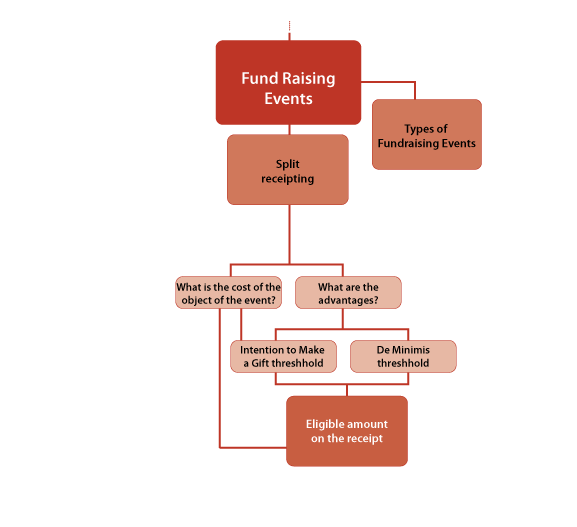
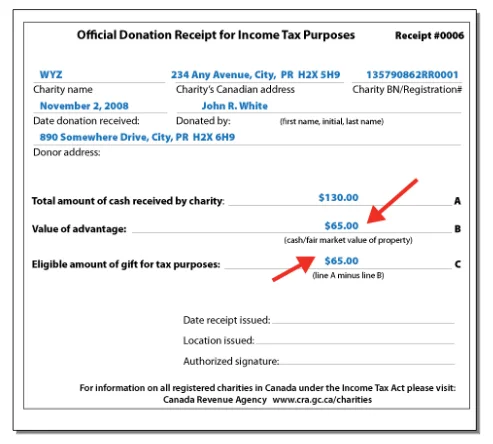
This module provides basic information on advantages. The key areas covered are: What is an advantage? What is split receipting? Advantages and split receipting. How does it work? The importance of Fair Market Value to advantages.
Introduction
This module introduces you to CRA’s Four Part Test.
This is one of two tests that CRA uses to determine if an activity is considered a fundraising or a charitable activity and how the activity‘s expenses have to be reported based on the result of this test.
Note: The other test is the Substantially All Test. Information on the Substantially All Test is available here.
Purpose
The Four Part Test is in the form of four main questions:
Was fundraising the main objective of the activity?
Did the activity include on-going or repeated requests, emotive requests, gift incentives, donor premiums, or other fundraising merchandise?
Was the audience selected based on its ability to give?
Was commission-based remuneration or compensation based on the number or amount of donations?
If you answer “no” to all four questions, a portion of the expenses related to the activity can be reported on the T3010 as charitable, management, or political expenses as applicable and a portion can be reported as fundraising expenses on the T3010.
If you answer “yes” to any one question, all of the activity’s expenses have to be reported as fundraising expenses on the T3010 form.
Example
Charity Z has the mission of helping seniors live a healthy and safe lives. One of its program is the prevention of elder abuse. Charity Z publishes and sends out a 4-page brochure to the general public on:
signs of elder abuse
the public should take action to stop elder abuse
how Charity Z can help
other community resources
The back cover of the brochure describes the programs of Charity Z with a note stating that donations are welcome to support the programs.
The staff and volunteer prepare and mail out this brochure as part of their regular activities. There is no compensation based on the number of donations received.
Explanation: Applying the Four Part Test to the Case of Charity Z
Fundraising is not the main objective of the activity. The purpose of the brochure is to inform the public about elder abuse and to urge them to take action. Less than 25% of the brochure content is about donations.
The brochure does not include on-going, repeated or emotive requests for donations.
The audience was not selected based on its ability to give.
There is no commission-based remuneration or compensation.
A majority of the expenses are to be allocated as charitable expenses with less than 25% as fundraising expenses.
Main Objective
Question 1: Was fundraising the main objective of the activity?
To determine whether the main object of an activity is fundraising, the CRA looks at three things:
the amount of resources devoted to the fundraising component of the activity
the nature of the activity
the content of the activity
Each of these areas is explained more below:
1(a) Amount of Resources
The amount of resources devoted to the fundraising component of the activity.
CRA considers resources to include all of a charity’s financial assets and resources such as staff, volunteers, directors, space, and equipment that the charity can use to further its purposes.
If most of your resources are used for fundraising purposes as reflected in the amount of content and the cost, then the main objective of the activity is fundraising. This is possible even if some resources are used for other objectives.
1(b) Nature of the Activity
These activities by its nature are generally considered as fundraising activities.
Paid advertisement except when the ad is only on the charity’s programs and services.
Infomercial
Telemarketing
Activities with content related to charitable gaming
Activities with content related to products and services being sold as a fundraiser by or on behalf of the charity.
Note: Free Public Service Announcement (PSA) is generally not considered a fundraising activity.
1(c) Content of the Activity
When your activity has both fundraising and charitable components, it may be difficult to separate the two components.
For example, a charity working with autistic children arranges for a television interview to discuss the challenges faced by them and their families. While talking about the issue, the need for funds and how people can donate is discussed. So how can the charitable component be distinguished from the fundraising component?
CRA looks for four features in the content of the activity to determine if it is a fundraising activity or not. In general, if an activity contains one of the features, it is a charitable activity and expenses should be allocated accordingly.
The four features of the contents of an activity that CRA looks for are:
to advance the programs and services of the charity
to raise awareness of an issue
to provide useful information to the public or the stakeholders about the charity’s work or an issue related to that work
to be transparent and accountable for its practices by providing information about its structure, operations, or performance to the public and to its stakeholders.
Each of these features of the contents of an activity is explored in detail below:
Advancing Programs and Services
If the main objective of your activity is:
to provide information to further the objectives of the charity
with
the beneficiaries or potential beneficiaries of the charity as the primary audience
This activity will generally be considered a charitable activity. The expenditures associated with the activity are thus to be reported as charitable expenditures.
Exception: When the programs and services of a charity are profiled as a means to encourage donations, the activity is considered a fundraising activity. The expenses incurred are considered fundraising expenditures.
Example:
A brochure describing the services of a seniors’ centre is distributed to seniors’ households in the area served by the centre.
Costs of the resources for this activity are considered charitable expenses since object of the activity is to further the centre as charitable objectives.
Raising Awareness
Raising awareness among the public or a segment of the public may be considered a charitable activity as long as:
it will fulfill the charity’s objective
OR
the charity has expertise on a matter of public concern
Example:
A charity buys a newspaper advertisement announcing a public forum on Labour Standards and Temporary Foreign Workers. One-quarter of the ad space states that the charity needs funds to conduct research on the issue and that donations are welcome.
The main objective of this activity is to increase public awareness and not to fundraise.
So, 75% of the expenses are charitable expenses 25% of the expenses are fundraising expenses
iii. Providing Useful Information
In this feature, a charity’s activity can be considered charitable if the activity provides useful information to:
prompt an action
OR
to change a behaviour related to its charitable objectives
AND
is directed towards its beneficiaries and/or potential beneficiaries
Providing information on the charity’s programs, services, and operations to the general public is not generally considered under this feature.
Example:
A charity whose object is to prevent prostate cancer may publish information on what prostate cancer is and why regular testing is important.
This activity is considered a charitable and not fundraising activity. Therefore, expenses incurred by this activity are not fundraising expenses.
Being Transparent and Accountable
Your charity may regularly publish reports such as annual reports, financial information, and other reports about its performance. Part of these reports may contain information acknowledging donor support and requesting further support. Because your main objective of these reports is not fundraising but rather part of being transparent and accountable, this activity would not be considered as a fundraising activity.
Exceptions:
Activities for generic branding, that is, for the promotion and marketing of your charity’s name, logo, or past work, are usually considered fundraising activities.
Promotions or branding through cause-related marketing is considered fundraising and any expenses incurred are fundraising expenses.
Question 2: Did the activity include on-going or repeated requests, emotive requests, gift incentives, donor premiums, or other fundraising merchandise?
The following activities are generally considered fundraising:
an activity including repeated or ongoing solicitations
activities that use emotional appeals in the request
telethons are usually considered fundraising as they appeal to emotion
activities that provide incentives, premiums, or merchandise to donors or prospective donors regardless of how the items are treated on the receipts.
Question 3: Target Audience – Was the audience selected based on its ability to give?
The following conditions will make an activity a fundraising activity:
the audience is selected based on its ability to give
the medium chosen for the activity attracts an audience that has the ability to give and not the potential beneficiaries or the audience that would have an interest in the charity’s programming activities
Question 4: Was commission-based remuneration or compensation based on the number or amount of donations?
This part of the test is based on how your charity calculates compensation for people involved in the charity’s activities.
If a person responsible for an activity is paid by commission or other compensation based on the amount or number of donations, the whole activity is considered fundraising.
If compensation is based on the amount of work done and not on the results, and the main objective is not fundraising, then the activity may not be considered wholly fundraising.
Exceptions
CRA recognizes that there are instances where an activity may serve multiple purposes. It may advance a charity’s programs and as a means to raise funds for the charity. So the Guidance lists three exceptions to allocation of fundraising expenditures:
An activity that raises revenues based on the charity’s work with its beneficiaries such as the sale of goods from the operation of a sheltered workshop involving persons with disabilities.
The charity mounts an event featuring its beneficiaries for treatment purposes or to foster their skills or well-being, such as a concert performance by autistic children or an endurance race to build the stamina of cancer survivors;
The charity ties a fundraising event appeal to a political activity allowed under the Income Tax Act such as mounting a public awareness campaign about a policy issue.
Note: Political activity allowed under the Income Tax Act has to be non-partisan and using less than 10% of the charity’s resources.
Summary
The four main questions in the Four Part Test are:
Was fundraising the main objective of the activity?
Did the activity include on-going or repeated requests, emotive requests, gift incentives, donor premiums, or other fundraising merchandise?
Was the audience selected based on its ability to give?
Was commission-based remuneration or compensation based on the number or amount of donations?
More information on the Four Part Test can be found at the CRA website here.
Notice
Information in this module is provided for general educational purposes and not as legal or accounting advice. Consult a lawyer or accountant for professional advice.
Information is accurate as of 2019.
For changes after this date, consult Canada Revenue Agency.
In this evolving economic landscape, collaboration with our firm offers clients a strategic advantage. With Cambodia’s reform-driven investment environment and Canada’s expanding footprint in Southeast Asia, our team of experienced consultants and legal advisors provides tailored guidance to help businesses navigate cross-border opportunities. We focus in developing comprehensive legal strategies, structuring international partnerships, and ensuring compliance in emerging markets.
By leveraging our regional insight and international expertise, you benefit from a trusted partner dedicated to helping you capitalize on growth potential in Cambodia and beyond.
Book a Consultation with Northfield & Associates
Your Trusted Partner in International Bilateral Relations
At Northfield & Associates are focus in Foreign Direct Investment (FDI), international trade missions, and cross-border legal strategy. Our team of experienced consultants and legal advisors offers tailored guidance and strategic insight to help you navigate the complexities of international partnerships and development opportunities.
Whether you choose to meet in person at one of our offices or connect virtually, we provide flexible and accessible consultation options. During your session, we’ll assess your goals, review key documentation, and guide you through every stage of your FDI or trade mission engagement.
Let us help you take the next step with confidence supported by trusted legal and strategic counsel every step of the way.
Take the First Step Today
If you believe you may be eligible for legal relief or simply need sound legal advice, we’re here to help. Contact us today to book your consultation. Let us provide the clarity, strategy, and peace of mind you need to move forward.
We serve our clients in English, Cambodian, Vietnamese, Mandarin and Cantonese, especially in Asian clients.
If you or anybody that you know, think that you meet the requirements and wish to receive further information.
We can help you start the application process and confirm eligibility requirements to participate.
We Offer Consultations & Meetings by Phone & Virtually. Affordable Fees.
Disclaimer:
The information contained in this article is provided for general information purposes only and does not constitute legal or other professional advice. Readers should seek tailored legal advice in relation to their personal circumstances.
Northfield & Associates International Corporation is a global consulting firm serving private enterprises, public institutions, not-for-profit organizations, and institutional capital providers. Operating across Cambodia, Canada, and global markets, the firm supports capital deployment, regulatory navigation, and enterprise decision-making in complex economic and geopolitical environments. Northfield & Associates delivers customized, execution-focused advisory solutions that drive measurable transformation, strengthen competitiveness, and enhance long-term highest value opportunities. The firm incorporates consulting, legal, regulatory, financial, and risk expertise to enable disciplined capital allocation, strong governance, and operational resilience. Northfield & Associates upholds a culture of applied insight and innovation, supporting clients across digital transformation, growth strategy, and organizational capability building. The firm advises individual, leading global corporations, midsize enterprises, government agencies, and mission-driven organizations through long-term partnerships. Enterprise-wide risk management, professional ethics, and fiduciary standards are embedded across all operations. Northfield & Associates’ diverse, globally unified teams are committed to execution certainty and sustainable, risk-adjusted returns aligned with ESG and stakeholder objectives.
Forward-Looking Information
This news release contains forward-looking information. All statements, other than statements of historic fact, that address activities, events or developments that the Company believes, expects or anticipates will or may occur in the future constitute forward-looking information.
This forward-looking information reflects the current expectations or beliefs of the Company based on information currently available to the Company.
Forward-looking information is subject to a number of risks and uncertainties that may cause the actual results of the Company to differ materially from those discussed in the forward-looking information, and even if such actual results are realized or substantially realized, there can be no assurance that they will have the expected consequences to, or effects on the Company. Factors that could cause actual results or events to differ materially from current expectations include, among other things: the failure to finalize negotiations concerning the increase of the Loan or to close such transaction and the failure of the Company to complete the acquisition of the Company Facility; operating performance of facilities; environmental and safety risks; delays in obtaining or failure to obtain necessary permits and approvals from government authorities; unavailability of plant, equipment or labour; inability to retain key management and personnel; changes to regulations or policies affecting the Company’s activities; and the other risks disclosed under the heading “Risk Factors” and elsewhere in the Company’s amended annual information.
Forward-looking information speaks only as of the date on which it is made and, except as may be required by applicable securities laws, the Company disclaims any intent or obligation to update any forward-looking information, whether as a result of new information, future events or results or otherwise. Although the Company believes that the assumptions inherent in the forward-looking information are reasonable, forward-looking information is not a guarantee of future performance and accordingly undue reliance should not be put on such information due to the inherent uncertainty therein.
Questions?
info@northfied.biz
Within Corporate Newsroom
Media Contact:
media@northfied.biz
Press contact
PR consultants press@northfied.biz
NOT LEGAL ADVICE. Information made available on this website in any form is for information purposes only. It is not, and should not be taken as, legal advice. You should not rely on, or take or fail to take any action based upon this information. Never disregard professional legal advice or delay in seeking legal advice because of something you have read on this website. Northfield & Associates professionals will be pleased to discuss resolutions to specific legal concerns you may have.
Must a Canadian Charity Provide Donation Receipts?
Donors expect tax receipts for their charitable contributions, but many wonder whether Canadian charities must provide them by law.
Canadian charities are not legally required to issue donation receipts. However, registered charities that choose to issue receipts must follow strict Canada Revenue Agency rules about format, timing, and eligible donations. Only registered charities can issue official donation receipts that donors can use for tax deductions.
This article explores when charities must issue receipts, what rules they must follow, and how these requirements affect both donors and charitable organizations across Canada.
Are Canadian Charities Obligated to Provide Donation Receipts?
Canadian law does not require charities to issue donation receipts. Understanding the voluntary nature of receipting helps organizations develop appropriate policies.
Legal Requirements for Issuing Receipts
Canadian law does not force charities to issue donation receipts. The Canada Revenue Agency allows registered charities to choose whether they provide receipts to donors. This means charities can accept donations without giving any receipt at all.
However, once a charity decides to issue receipts, it must follow specific CRA guidelines. These rules cover receipt format, required information, and timing of issuance. Charities that issue receipts incorrectly risk losing their registered status.
Only registered charities can issue official donation receipts that qualify for tax deductions. Non-registered organizations, even if they do charitable work, cannot provide tax-deductible receipts to their supporters.
Charity Discretion and Internal Policies
Most charities develop internal policies about when and how they issue receipts. These policies often depend on donation size, donor relationship, and administrative capacity. Small charities might only issue receipts for donations over a certain amount to manage costs.
Charities can set minimum thresholds for receipt issuance. For example, an organization might only provide receipts for donations of $20 or more. This practice helps reduce administrative burden while still serving donors who need tax documentation.
Some charities issue receipts automatically for all donations, while others require donors to specifically request them. Both approaches are legally acceptable as long as the charity communicates its policy clearly to donors.
Transparency with Donors
Clear communication about receipt policies protects both charities and donors. Charities should inform potential donors about their receipt practices before accepting donations. This prevents misunderstandings and ensures donors can make informed giving decisions.
Donors who need tax receipts should ask about a charity’s receipt policy before making their contribution. This is especially important for year-end giving when donors need receipts by December 31st for that tax year.
Charities benefit from having written receipt policies that staff can reference consistently. These policies should address donation minimums, processing timelines, and replacement procedures for lost receipts.
Who Can Issue Official Donation Receipts in Canada?
Only qualified donees recognized by the CRA can issue tax-deductible donation receipts. This status determines which organizations can provide valid receipts to donors.
Registered Charities versus Qualified Donees
Only qualified donees can issue official donation receipts that allow tax deductions in Canada. The Canada Revenue Agency maintains a strict list of organizations that qualify for this status. Most qualified donees are registered charities, but the category includes other specific organization types.
Registered charities form the largest group of qualified donees. These organizations must apply for registration with the CRA and meet ongoing compliance requirements. They receive a unique registration number that must appear on all official receipts.
Other qualified donees include registered Canadian amateur athletic associations, housing corporations, municipalities, universities, and certain government bodies. Each type has specific eligibility criteria and operates under different regulatory frameworks.
Non-profit organizations that are not registered as charities cannot issue tax-deductible receipts. Even if these groups do excellent charitable work, their donors cannot claim tax deductions for contributions without proper qualified donee status.
Registration Number Requirements
Every official donation receipt must display the organization’s CRA registration number. This number proves the organization’s qualified donee status and allows the CRA to verify receipt authenticity during tax filing.
The registration number follows a specific format: a nine-digit number followed by two letters (RR for registered charity). For example, a typical number looks like 123456789RR0001. This number must appear clearly on every receipt.
Donors should always verify registration numbers before claiming tax deductions. The CRA provides an online search tool where anyone can confirm an organization’s registered status and view its registration details.
Organizations that use incorrect or outdated registration numbers on receipts create problems for donors and face potential penalties. Charities must update their receipt templates immediately after any registration changes.
Consequences of Non-Compliance
Charities that issue improper receipts face serious penalties from the CRA. These consequences can include monetary penalties, suspension of receipting privileges, or complete revocation of charitable status.
The CRA conducts regular audits of charitable organizations and their receipting practices. Auditors examine receipt formats, donation records, and compliance with timing requirements. Organizations with poor receipting practices often trigger more frequent audits.
Donors who claim deductions using invalid receipts may face tax reassessments and penalties. The CRA can disallow claimed donations and charge interest on additional taxes owed. This creates problems for donors who trusted the organization’s receipt validity.
Loss of charitable status represents the most severe consequence for non-compliant organizations. Once revoked, organizations cannot issue receipts, may owe taxes on accumulated assets, and face significant barriers to re-registration.
What Constitutes an Official Donation Receipt?
Official receipts must meet specific CRA requirements to be valid for tax purposes. Missing elements can invalidate receipts and prevent donors from claiming tax credits.
Mandatory Information on Receipts
The CRA requires specific information on every official donation receipt. Missing any required element makes the receipt invalid for tax purposes. Charities must include:
Organization’s complete legal name and address
Registration number (format: 123456789RR0001)
Receipt serial number for tracking
Date of donation and receipt issue date
Donor’s complete name and address
Donation amount in Canadian dollars
Description of donated items (for gifts-in-kind)
Statement that the receipt is for income tax purposes
Authorized signature from organization representative
Receipts must clearly state the donation amount. For cash donations, charities list the exact dollar figure. For gifts-in-kind, they must include fair market value determined by qualified appraisal.
The receipt must specify whether the donor received any advantage in return. If the donor got goods or services worth more than minimal value, the receipt must show the eligible donation amount after deducting the advantage value.
Every receipt needs a unique serial number that the charity can track. This number helps the CRA verify receipt authenticity and prevents duplicate claims. Charities design their own numbering systems but must ensure each receipt has a distinct identifier.
Most organizations use sequential numbering systems like 2024-001, 2024-002, etc. Others combine letters and numbers or include location codes. The system doesn’t matter as long as each receipt gets a unique number.
Charities must maintain detailed records linking each serial number to:
Donor information
Donation details
Issue date
Supporting documentation
These records help charities respond to CRA inquiries and replace lost receipts. The CRA requires organizations to keep these records for at least two years after the last tax return filing deadline.
Authorized Signatures and Validity
Official receipts require signatures from authorized organization representatives. The CRA doesn’t specify who can sign, but charities typically authorize board members, senior staff, or designated volunteers.
Organizations should maintain a list of authorized signers and update it regularly. Staff changes, board turnover, and policy updates can affect who has signing authority. Current signers need access to signature specimens for consistency.
Digital signatures are acceptable if they meet security requirements. Electronic receipt systems must prevent unauthorized access and maintain audit trails. Many charities use password-protected systems with user authentication.
Receipts become valid when the charity issues them, not when donors receive them. However, donors need receipts by December 31st to claim deductions for that tax year. This timing requirement affects year-end donation processing and mailing schedules.
Types of Gifts and Issuing Appropriate Receipts
Different donation types require specific receipting approaches. Cash gifts are straightforward, while non-cash donations need valuation. Split receipting applies when donors receive benefits.
Cash Donations and Receipts
Charities issue receipts for exact amounts received through cash, cheque, credit card, or electronic transfer. Processing fees don’t reduce the receipt amount.
Monthly donations can use individual receipts or annual summaries. Failed payments require record adjustments to match actual funds received.
Non-Cash Gifts and Fair Market Value
Non-cash gifts require fair market value determination. The CRA requires professional appraisals for gifts over $1,000.
Valuation rules:
Securities: Closing price on donation date
Real estate: Professional appraisal required
Artwork: Qualified art appraiser assessment
Vehicles: Recognized valuation guides
Receipts must describe gifts specifically, not with generic terms like “household goods.”
Split Receipting and Advantages
Split receipting applies when donors receive benefits. Receipts show eligible donation amounts after deducting advantage values.
Common examples:
Charity auction purchases
Fundraising dinner tickets
Golf tournament fees
Premium gifts
If advantage value exceeds 80% of payment, no receipt can be issued. For payments under $75, advantages under $75 don’t affect receipt amounts.
Charities should communicate advantage calculations before events to prevent donor disappointment.
Eligible and Ineligible Donations for Receipting
Not all payments qualify for donation receipts. Understanding eligibility rules helps charities issue proper receipts and avoid CRA penalties.
Gifts that Qualify for Receipts
True gifts made voluntarily without expectation of benefit qualify for receipts. Donors must transfer property ownership to the charity with no strings attached.
The CRA sets no minimum amount for donation receipts. Charities can choose their own thresholds based on administrative costs.
Common minimum amounts:
$10 for online donations
$20 for mail-in gifts
$25 for event donations
Charities must apply minimums consistently and communicate policies clearly to donors.
Business and Sponsorship Contributions
Business payments often mix charitable donations with sponsorship benefits. Only the charitable portion qualifies for receipts.
Corporate sponsorships typically include:
Logo placement and recognition
Promotional opportunities
Networking access
Marketing materials
Charities must calculate fair market value of benefits provided. The receipt shows payment minus benefit value. Pure donations from businesses without benefits qualify for full receipts.
Implications for Donors and Charities
Donation receipts create obligations and opportunities for both parties. Understanding tax implications and record-keeping requirements ensures compliance.
Tax Credits and Deductibility
Donors receive non-refundable tax credits, not deductions, for charitable donations. Credits reduce taxes owed dollar-for-dollar up to specified limits.
Federal tax credit rates:
15% on first $200 donated annually
29% on amounts over $200
Additional 4% for high-income earners
Provincial credits vary by jurisdiction. Combined federal-provincial credits can exceed 40% in some provinces.
Donors can carry forward unused credits for up to five years if annual limits prevent full use.
Income Tax Purposes and Reporting
Donors claim charitable donations on their tax returns using official receipts. The CRA matches receipt information with charity records during processing.
Annual donation limits:
75% of net income for most donations
100% of net income for certain gifts
No limit for donations to Crown, provinces, or municipalities
Married couples can combine donations on one return to maximize higher credit rates on amounts over $200.
Record Keeping and CRA Audits
Donors must keep original receipts for six years after filing their tax return. Digital copies are acceptable if they meet CRA standards.
The CRA audits both donors and charities. Auditors verify:
Receipt authenticity and format
Donation amounts and dates
Charity registration status
Proper advantage calculations
Charities must maintain donor records for a minimum of two years. Best practice involves keeping records longer to support donor relationships and audit requests.
Poor record keeping can result in denied tax credits for donors and penalties for charities. Electronic systems help maintain organized, accessible records.
Canadian charities are not legally required to issue donation receipts, but those who choose to must follow strict CRA guidelines. Only registered charities can issue official receipts that qualify for tax credits.
Understanding receipt requirements protects both charities and donors from costly mistakes. Proper compliance prevents penalties and maintains charitable status while building stronger donor relationships.
For expert guidance on charitable compliance and donation receipt requirements, connect with experienced charity law professionals.
Common questions about Canadian charity receipts and their requirements. These answers provide quick guidance for donors and charitable organizations.
What is required on a charity receipt in Canada?
Canadian charity receipts must include the organization’s legal name and address, CRA registration number, unique serial number, donation date, donor’s name and address, donation amount, and an authorized signature.
What legally needs to be on a receipt in Canada?
The CRA requires receipts to show the charity’s registration number, serial number, donation amount, donor information, and a statement that the receipt is for income tax purposes. Missing any element makes the receipt invalid.
How to generate a donation receipt?
Create receipts using the charity’s official template with all required information. Assign unique serial numbers, obtain authorized signatures, and maintain detailed records linking each receipt to donor and donation details.
How to acknowledge receipt of donation?
Send thank-you letters separate from official tax receipts. Acknowledgements can be informal but should confirm the donation amount and express gratitude. Tax receipts serve the legal purpose of enabling tax credits.
What should be included in a valid donation receipt for tax purposes?
Valid receipts include charity name, address, registration number, receipt serial number, donation date, donor details, amount, description of gift (if non-cash), advantage calculation (if applicable), and authorized signature.
By what deadline must Canadian charities issue tax receipts for donations?
The CRA requires no specific deadline for issuing receipts. However, donors need receipts by December 31st to claim tax credits for that year. Most charities issue receipts immediately or within 30 days of receiving donations.
In this evolving economic landscape, collaboration with our firm offers clients a strategic advantage. With Cambodia’s reform-driven investment environment and Canada’s expanding footprint in Southeast Asia, our team of experienced consultants and legal advisors provides tailored guidance to help businesses navigate cross-border opportunities. We focus in developing comprehensive legal strategies, structuring international partnerships, and ensuring compliance in emerging markets.
By leveraging our regional insight and international expertise, you benefit from a trusted partner dedicated to helping you capitalize on growth potential in Cambodia and beyond.
Book a Consultation with Northfield & Associates
Your Trusted Partner in International Bilateral Relations
At Northfield & Associates are focus in Foreign Direct Investment (FDI), international trade missions, and cross-border legal strategy. Our team of experienced consultants and legal advisors offers tailored guidance and strategic insight to help you navigate the complexities of international partnerships and development opportunities.
Whether you choose to meet in person at one of our offices or connect virtually, we provide flexible and accessible consultation options. During your session, we’ll assess your goals, review key documentation, and guide you through every stage of your FDI or trade mission engagement.
Let us help you take the next step with confidence supported by trusted legal and strategic counsel every step of the way.
Take the First Step Today
If you believe you may be eligible for legal relief or simply need sound legal advice, we’re here to help. Contact us today to book your consultation. Let us provide the clarity, strategy, and peace of mind you need to move forward.
We serve our clients in English, Cambodian, Vietnamese, Mandarin and Cantonese, especially in Asian clients.
If you or anybody that you know, think that you meet the requirements and wish to receive further information.
We can help you start the application process and confirm eligibility requirements to participate.
We Offer Consultations & Meetings by Phone & Virtually. Affordable Fees.
Disclaimer:
The information contained in this article is provided for general information purposes only and does not constitute legal or other professional advice. Readers should seek tailored legal advice in relation to their personal circumstances.
Northfield & Associates International Corporation is a global consulting firm serving private enterprises, public institutions, not-for-profit organizations, and institutional capital providers. Operating across Cambodia, Canada, and global markets, the firm supports capital deployment, regulatory navigation, and enterprise decision-making in complex economic and geopolitical environments. Northfield & Associates delivers customized, execution-focused advisory solutions that drive measurable transformation, strengthen competitiveness, and enhance long-term highest value opportunities. The firm incorporates consulting, legal, regulatory, financial, and risk expertise to enable disciplined capital allocation, strong governance, and operational resilience. Northfield & Associates upholds a culture of applied insight and innovation, supporting clients across digital transformation, growth strategy, and organizational capability building. The firm advises individual, leading global corporations, midsize enterprises, government agencies, and mission-driven organizations through long-term partnerships. Enterprise-wide risk management, professional ethics, and fiduciary standards are embedded across all operations. Northfield & Associates’ diverse, globally unified teams are committed to execution certainty and sustainable, risk-adjusted returns aligned with ESG and stakeholder objectives.
Forward-Looking Information
This news release contains forward-looking information. All statements, other than statements of historic fact, that address activities, events or developments that the Company believes, expects or anticipates will or may occur in the future constitute forward-looking information.
This forward-looking information reflects the current expectations or beliefs of the Company based on information currently available to the Company.
Forward-looking information is subject to a number of risks and uncertainties that may cause the actual results of the Company to differ materially from those discussed in the forward-looking information, and even if such actual results are realized or substantially realized, there can be no assurance that they will have the expected consequences to, or effects on the Company. Factors that could cause actual results or events to differ materially from current expectations include, among other things: the failure to finalize negotiations concerning the increase of the Loan or to close such transaction and the failure of the Company to complete the acquisition of the Company Facility; operating performance of facilities; environmental and safety risks; delays in obtaining or failure to obtain necessary permits and approvals from government authorities; unavailability of plant, equipment or labour; inability to retain key management and personnel; changes to regulations or policies affecting the Company’s activities; and the other risks disclosed under the heading “Risk Factors” and elsewhere in the Company’s amended annual information.
Forward-looking information speaks only as of the date on which it is made and, except as may be required by applicable securities laws, the Company disclaims any intent or obligation to update any forward-looking information, whether as a result of new information, future events or results or otherwise. Although the Company believes that the assumptions inherent in the forward-looking information are reasonable, forward-looking information is not a guarantee of future performance and accordingly undue reliance should not be put on such information due to the inherent uncertainty therein.
Questions?
info@northfied.biz
Within Corporate Newsroom
Media Contact:
media@northfied.biz
Press contact
PR consultants press@northfied.biz
NOT LEGAL ADVICE. Information made available on this website in any form is for information purposes only. It is not, and should not be taken as, legal advice. You should not rely on, or take or fail to take any action based upon this information. Never disregard professional legal advice or delay in seeking legal advice because of something you have read on this website. Northfield & Associates professionals will be pleased to discuss resolutions to specific legal concerns you may have.
When charities receive donations with specific instructions from donors, they must handle these restricted funds differently from regular donations.
Restricted funds require separate tracking, careful documentation, and precise reporting to ensure every dollar goes exactly where the donor intended. Mismanaging these funds can lead to serious problems, including fines, lawsuits, or loss of charitable status.
This guide walks through the essential steps for handling restricted fund accounting properly. We’ll cover the core principles you need to know, different types of restrictions you might encounter, and practical systems for tracking and reporting on these funds. You’ll also learn about internal controls that protect your organization and ensure compliance with accounting standards.
Core Principles of Restricted Fund Accounting
Restricted fund accounting operates on three key foundations.
First, we must clearly separate funds with and without donor limitations.
Second, we need systematic tracking methods that honor donor wishes.
Third, we must strictly follow how donors intend their gifts to be used.
Definition of Restricted and Unrestricted Funds
Restricted funds are donations that donors have designated for specific purposes.
We cannot use these funds for any other activities without the donor’s permission.
These funds come with clear instructions.
A donor might give money for building repairs, youth programs, or medical equipment.
Unrestricted funds have no donor-imposed limitations.
We can use these donations for any legitimate organizational purpose.
Unrestricted funds help cover general expenses like staff salaries, utilities, rent, office supplies, and emergency needs.
The key difference lies in flexibility.
Restricted funds must follow donor rules exactly, while unrestricted funds let us address our most pressing needs.
Both types are important.
Restricted funds often support specific programs, and unrestricted funds keep our operations running smoothly.
Purpose and Significance of Fund Accounting
Fund accounting helps us track different types of donations separately.
This system ensures we use each gift according to donor wishes.
We must report restricted and unrestricted funds in different categories.
This separation shows donors and regulators how we manage their contributions.
Financial statements require three main sections:
Without donor restrictions (unrestricted funds)
With donor restrictions (temporarily restricted)
With donor restrictions (permanently restricted)
This accounting method builds trust with donors.
They can see exactly how we used their specific gifts.
Fund accounting also protects our organization legally.
Mixing restricted funds with general funds can lead to fines, lawsuits, or loss of charitable status.
The system helps us plan better budgets.
We know which funds are available for general use and which have specific purposes.
Donor Intent and Donor Restrictions
Donor intent represents the specific purpose a donor had in mind when making their gift.
We must understand and document these intentions clearly.
Common types of donor restrictions include:
Time restrictions (use funds within certain dates)
Purpose restrictions (specific programs or projects)
We cannot change donor restrictions without written permission.
If a project costs less than expected, we cannot automatically use leftover funds elsewhere.
Documentation is crucial.
We must keep records of all donor communications and agreements, including emails, letters, and grant agreements.
When restrictions become impossible to follow, we must contact the donor.
Sometimes circumstances change and original plans no longer work.
Clear communication prevents problems.
We should discuss any concerns about restrictions before accepting large gifts.
Types of Restricted Funds in Charities
Charities receive donations with different types of restrictions that affect how and when funds can be used.
These restrictions fall into three main categories based on time limits, permanence, and specific purposes outlined by donors.
Temporarily Restricted Funds
Temporarily restricted funds have donor-imposed limitations that expire over time or when certain conditions are met.
These restrictions typically involve time restrictions or specific project completion requirements.
Common examples include donations for annual programs or multi-year initiatives.
A donor might give $25,000 for youth programs to be spent over three years.
Once we use the funds according to the donor’s wishes, the restrictions are released.
Time restrictions are the most frequent type of temporary restriction.
Donors specify when funds must be used, such as “for the 2026 summer camp program” or “to be spent within five years of receipt.”
We must track these funds carefully in our financial records.
When restrictions are satisfied, we transfer the funds from temporarily restricted to unrestricted net assets on our statement of activities.
Temporary restrictions will eventually be lifted.
This gives us more flexibility in long-term planning once conditions are met.
Permanently Restricted Funds
Permanently restricted funds maintain donor restrictions that never expire.
The principal amount must remain intact forever, though we can often use investment earnings according to donor specifications.
Endowments are the most common type of permanently restricted funds.
Donors create endowments to provide ongoing income for specific purposes while preserving the original gift amount.
For example, a $100,000 endowment for scholarships means we keep the $100,000 invested permanently.
We can use the annual investment earnings to fund scholarships, but the original amount stays untouched.
These funds require special investment management and accounting treatment.
We must maintain detailed records showing the original gift amount and any accumulated earnings or losses.
Legacy gifts often come with permanent restrictions.
Donors want their contributions to support our mission indefinitely, creating lasting impact beyond their lifetime.
Purpose-Restricted Funds
Purpose-restricted funds must be used for specific programs, activities, or expenses as designated by the donor.
These restrictions focus on how funds are spent rather than when they’re spent.
Purpose restrictions can be narrow or broad.
A donor might restrict funds for “veterinary supplies” (narrow) or “animal care programs” (broad).
We must honor the exact wording of the restriction.
Common categories include:
Program-specific donations for particular services
Capital campaigns for buildings or equipment
Operating expenses like rent or utilities
Staff salaries for specific positions
We need separate tracking systems for each purpose-restricted fund.
Our accounting records must clearly show which expenses are charged against which restricted funds.
Some donors combine purpose and time restrictions.
A gift might be restricted for “education programs in 2025 only,” creating both purpose and temporary restrictions we must manage at the same time.
Establishing and Tracking Restricted Income
Proper income identification and tracking systems ensure compliance with donor restrictions while maintaining accurate financial records.
Clear documentation and systematic tracking prevent misuse of restricted funds and support transparent reporting.
Identifying Restricted vs. Unrestricted Donations
We must clearly distinguish between restricted and unrestricted donations at the point of receipt.
Restricted income comes with specific donor-imposed limitations on how we can use the funds.
Unrestricted funds have no donor restrictions.
We can use these donations for any legitimate organizational purpose, including general operating expenses, administrative costs, or program activities.
Common types of restricted donations include:
Program-specific gifts for particular projects
Capital campaign contributions for buildings or equipment
Endowment funds with spending restrictions
Operating expense donations for specific costs like utilities
Time restrictions also matter.
Some donations must be used within specific timeframes, while others may be restricted until certain conditions are met.
We should document the restriction type immediately when receiving each donation.
This prevents confusion later and ensures proper accounting treatment.
Gift Instruments and Documentation
Every restricted donation requires proper documentation to capture donor intent accurately.
Gift instruments serve as legal proof of the donor’s wishes and restriction terms.
Key documentation includes:
Written donor correspondence stating restrictions
Grant agreements outlining fund usage requirements
Pledge cards with specific designation fields
Donation receipts noting any restrictions
We must review all gift documentation carefully before accepting restricted funds.
If restrictions conflict with our mission or capacity, we should discuss modifications with the donor or decline the gift.
Store original documentation in secure files linked to our accounting system.
Digital copies provide backup access while keeping organized records for audits.
Essential information to capture:
Exact restriction language from the donor
Start and end dates for time-restricted funds
Spending requirements or limitations
Reporting obligations to the donor
Clear documentation protects our organization and honors the donor’s wishes.
Implementing a Tracking Process
Our accounting system must separate restricted and unrestricted funds from the moment we receive them.
This requires specific procedures and internal controls.
Set up separate fund codes or accounts for each type of restriction.
Use distinct numbering systems that clearly identify the fund purpose and restriction type.
Tracking requirements include:
Fund Type
Account Setup
Reporting Needs
Unrestricted
General operating accounts
Statement of activities
Temporarily restricted
Separate fund codes
Restriction tracking reports
Permanently restricted
Endowment accounts
Investment performance reports
Record all restricted income in the appropriate fund account immediately upon receipt.
Never deposit restricted funds into general unrestricted accounts, even temporarily.
Monthly reconciliation ensures restricted fund balances match donor restrictions.
Compare actual spending against allowable uses for each restricted fund.
We should generate regular reports showing restricted fund activity.
These reports help management monitor compliance and provide transparency to donors about how we use their gifts.
Train all staff who handle donations on proper restriction identification and recording procedures.
Consistent processes prevent errors that could lead to compliance issues.
Proper accounting for restricted funds requires careful tracking and allocation methods that maintain donor restrictions and ensure accurate financial reporting.
We must record these funds separately from unrestricted donations and allocate expenses according to specific guidelines.
Recording Restricted Funds
We need to set up our accounting system to track restricted funds separately from unrestricted donations.
This starts with creating distinct accounting codes or fund accounts for each type of restriction.
Our chart of accounts should include separate categories for temporarily restricted and permanently restricted net assets.
We record restricted donations in these specific accounts when we receive them.
The balance sheet must show restricted funds as separate line items.
We cannot mix restricted and unrestricted net assets together on our financial statements.
We should establish separate bank accounts for major restricted funds when possible.
This makes tracking easier and reduces the risk of accidentally spending restricted money on the wrong purpose.
Our accounting system needs to track each restriction’s purpose, timeline, and remaining balance.
We must document exactly what each donor specified when they made their gift.
When we spend restricted funds, we move the money from restricted net assets to unrestricted net assets.
This shows that we have met the donor’s requirements.
Expense Allocation and Indirect Costs
We can only charge expenses to restricted funds if they directly relate to the restricted purpose.
Direct costs like program supplies or staff salaries for specific projects are usually acceptable.
Indirect costs require more careful handling.
We can allocate administrative expenses like rent or utilities to restricted funds only if our organization has an approved indirect cost rate.
Many donors limit how much we can spend on overhead costs.
We need to check each restriction to see what percentage can go toward administrative expenses versus program costs.
We should create allocation formulas based on reasonable methods like staff time, square footage, or program budgets.
These formulas must be consistent and well-documented.
Our financial statements must show how we allocated expenses between restricted and unrestricted activities.
This transparency helps donors see how we used their gifts.
Financial Reporting and Compliance
Charities must follow specific reporting standards when handling restricted funds. This helps maintain donor trust and meet legal requirements.
Proper financial statements separate restricted and unrestricted net assets. Regulatory bodies require detailed documentation of how we use these funds.
Reporting in Financial Statements
We must clearly separate restricted and unrestricted funds in our financial statements. The statement of financial position shows net assets with donor restrictions and net assets without donor restrictions as distinct categories.
Our balance sheet displays restricted funds as separate line items. This separation helps readers understand which assets we can use freely and which have limitations.
The statement of activities breaks down revenue and expenses by restriction type. We list temporarily restricted funds that will become available when conditions are met.
Permanently restricted funds appear separately since these restrictions never expire.
Key Financial Statement Elements:
Statement of financial position with separated net assets
Statement of activities showing restricted revenue
Cash flow statements track restricted fund movements
Notes explaining restriction details and purposes
We must document all restriction details in the notes to the financial statements. These notes explain the nature of restrictions and when temporarily restricted funds might become available.
Regulatory Requirements for Charities
Charities face strict rules about restricted fund management from multiple regulatory bodies. We must maintain accurate records that prove we’re using restricted funds according to donor wishes.
Revenue agencies require us to file annual returns that detail our restricted fund activities. These filings must show how we’ve used restricted donations and whether we’ve met all donor conditions.
Provincial charity regulators often have additional reporting requirements. We may need to submit detailed financial reports that break down restricted fund usage by program or purpose.
Annual information returns with restricted fund details
Quarterly reports for large restricted donations
Special reporting for government grants
Documentation of donor communications and agreements
Failure to meet these requirements can result in penalties, loss of charitable status, or legal action. We must keep detailed records of all restricted fund transactions and decisions.
Producing Donor Reports
Donor reports build trust by showing exactly how we’ve used restricted funds. We should create clear, specific reports that demonstrate the impact of restricted donations.
Our donor reports include financial summaries showing how much we’ve spent and what remains. We provide program updates that connect spending to actual outcomes and beneficiaries.
Effective Donor Report Elements:
Financial breakdown of fund usage
Program outcomes and beneficiary stories
Photos or evidence of funded activities
Timeline of fund expenditure and remaining balance
We send reports at agreed intervals, typically quarterly or annually. Some donors require approval before we spend restricted funds, so we include spending plans in our reports.
Large restricted donations often need special reporting arrangements. We work with major donors to create custom reports that meet their specific information needs while protecting beneficiary privacy.
Effective Management and Internal Controls
Strong internal controls and proper management systems help charities track restricted funds accurately. The right technology and clear procedures make compliance easier while reducing the risk of fund misuse.
Best Practices for Managing Restricted Funds
We need to separate restricted funds from unrestricted money right from the start. This means creating different accounts or fund codes in our accounting system for each type of restriction.
Documentation is critical. We should record every detail about donor restrictions when we receive the gift.
This includes the specific purpose, any time limits, and what happens if we can’t use all the money.
Our team needs clear roles for who can approve spending from restricted funds. We recommend having at least two people review each expense before we pay it.
Regular monitoring keeps us on track. We should check our restricted fund balances monthly to make sure we’re not overspending.
This also helps us spot problems early.
We need to train our staff on the rules for restricted funds. Everyone who handles money should understand why we can’t move funds between different restrictions.
Implementing Internal Controls
Strong internal controls start with separating duties. We should have different people who receive donations, record them, and approve spending from restricted accounts.
Our approval process needs multiple levels. Small expenses might need one signature, but larger amounts should require two or more approvals from senior staff or board members.
We need regular reconciliation of our accounts. Someone who doesn’t handle the daily bookkeeping should review our restricted fund records each month.
Written policies protect our organisation. We should document exactly how we handle restricted funds, who can make decisions, and what steps we follow for different situations.
Our board should review restricted fund reports at each meeting. This oversight helps catch mistakes and shows donors we take their restrictions seriously.
Technology Solutions for Charities
Nonprofit accounting software makes managing restricted funds much easier than basic bookkeeping programs. These systems let us tag each donation with its specific restrictions automatically.
Fund accounting features are essential. We need software that can track multiple funds separately while still giving us organisation-wide financial reports.
Cloud-based systems help our team access restricted fund information from anywhere. This is especially helpful when multiple staff members need to check fund balances before making spending decisions.
Integration saves time and reduces errors. Our donation platform should connect directly to our accounting system so restricted gifts get coded properly from the start.
We should look for software that generates compliance reports automatically. This makes it easier to show donors and auditors how we’ve used their restricted gifts properly.
Conclusion
Managing restricted funds requires careful attention to detail and strong systems. When we track these donations properly, we build trust with donors and stay compliant with regulations.
The key steps are simple but important: understand donor rules, track funds separately, and budget carefully. Transparency helps us show donors how their money makes a difference.
Good restricted fund management protects our charity’s reputation and mission. It also helps us use every dollar the way donors intended. Ready to improve your charity’s fund accounting?
Navigating director compensation rules can be complex.
Contact Northfield & Associates for expert guidance on compliance requirements. Our team understands Canadian charity law and can help ensure your organisation follows proper procedures.
Managing restricted funds raises many practical questions about proper accounting methods and compliance requirements. These common concerns focus on recording procedures, classification differences, and financial statement presentation.
What is a restricted account in accounting?
A restricted account holds donations that must be used for specific purposes set by the donor. We cannot use these funds for general operating expenses or other activities.
How do I record restricted funds?
Record restricted funds separately from unrestricted donations in your accounting system. Each restricted gift gets its own tracking code or fund designation, and your income statement must show restricted and unrestricted revenue in different categories.
What is the difference between restricted and unrestricted accounting?
Unrestricted funds have no donor limitations on how you use them. Restricted funds come with specific donor instructions that you must follow exactly. Your financial statements must separate these two types clearly.
Is restricted cash a liability or asset?
Restricted cash is an asset on your balance sheet. You own the money, but must use it according to donor instructions. Show restricted cash separately from unrestricted cash on your financial statements.
How do you show restricted funds on a balance sheet?
List restricted cash as a separate line item under assets. Your net assets section shows funds with donor restrictions separately from unrestricted net assets, as required by accounting standards.
What is an example of a restricted account?
A building fund where donors give money specifically for facility improvements. An endowment fund where you keep the original donation intact and only spend investment earnings. Program-specific donations like “for animal care only” must be tracked separately.
Ready for better nonprofit reporting?
At Northfield & Associates, we have a team of professional bookkeepers and accountants to help your organization manage the books so that you can breeze through tax season.
We’re often asked by prospective clients what our Bookkeeping Service covers? People want to know what specific tasks we do, and what their responsibility is. This brief explainer page will answer that question. This is by no means an exhaustive list, but covers the most frequently asked questions.
Getting Started
Review your existing books for needed corrections or back-work
Chart of accounts setup or amendment
Assistance with setting up bank feeds
Limited assistance* with setting up payroll (QBO or Gusto only)
Your books brought current and reconciled if needed
Ongoing Monthly Bookkeeping
After-the-fact transaction recording
Post to general ledger
Post to other ledgers (as needed)
Bank account reconciliation
Monthly financial statements
Other bookkeeping services, as required
Best-practice bookkeeping advice and counsel
Year End
Assistance with 1099-NEC preparation*
Assistance with 1099-MISC preparation*
Year-end financial statements and period-end closing
What We Don’t Do
Pay bills
We do not offer bill-pay services at this time, nor do we manage Accounts Payable (AP) or Accounts Receivable (AR).
Payroll tax responsibility
Our bookkeepers can assist you in setting up your initial payroll service in QBO or Gusto. We are not responsible for entering payroll hours/salary, accruing payroll taxes, nor the transmittal of payroll taxes to the IRS or the state. Your full-service payroll provider (QBO, Gusto, or whatever other service a client uses) will be the responsible party for payroll and payroll tax compliance.
*Payroll deductions and benefits
We provide assistance with setting up a payroll account in either Quickbooks Online or Gusto, including entry of employee data. We do not assist in state registrations, benefits, or advise on deductions. Those service areas are provided directly by either QBO or Gusto.
Preparation of W2s
Similar to the last item, your full-service payroll provider (QBO/Gusto) is responsible for preparation of Form W2 for employees.
Sales tax reporting
For those nonprofits that sell taxable goods and/or services, your bookkeeper will assist in accounting for sales taxes collected and transmitted, but we do not prepare state sales tax reports.
Donation recording
We do not provide individual donation data entry into your neither your donor CRM nor Quickbooks Online, nor do we prepare year-end donor acknowledgements.
Administrative tasks
We cannot provide administrative services unrelated to our bookkeeping function.
Attend board meetings
Due to the constraints of time and distance, we are unable to be present, physically nor virtually, at a meeting of a client’s board of directors.*May incur additional fee per 1099-NEC or 1099-MISC.
Let’s Collaborate & Make a Difference!
Partner with us to amplify your mission. Whether it’s Charity accounting, financial transparency, or strategic growth—we’re here to help you create meaningful impact. Let’s work together to build a better future!
In this evolving economic landscape, collaboration with our firm offers clients a strategic advantage. With Cambodia’s reform-driven investment environment and Canada’s expanding footprint in Southeast Asia, our team of experienced consultants and legal advisors provides tailored guidance to help businesses navigate cross-border opportunities. We focus in developing comprehensive legal strategies, structuring international partnerships, and ensuring compliance in emerging markets.
By leveraging our regional insight and international expertise, you benefit from a trusted partner dedicated to helping you capitalize on growth potential in Cambodia and beyond.
Your Trusted Partner in International Bilateral Relations
At Northfield & Associates are focus in Foreign Direct Investment (FDI), international trade missions, and cross-border legal strategy. Our team of experienced consultants and legal advisors offers tailored guidance and strategic insight to help you navigate the complexities of international partnerships and development opportunities.
Whether you choose to meet in person at one of our offices or connect virtually, we provide flexible and accessible consultation options. During your session, we’ll assess your goals, review key documentation, and guide you through every stage of your FDI or trade mission engagement.
Let us help you take the next step with confidence supported by trusted legal and strategic counsel every step of the way.
Northfield & Associates
Advancing Global Partnerships, Together.
Take the First Step Today
If you believe you may be eligible for legal relief or simply need sound legal advice, we’re here to help. Contact us today to book your consultation. Let us provide the clarity, strategy, and peace of mind you need to move forward.
Disclaimer: The information contained in this article is provided for general information purposes only and does not constitute legal or other professional advice. Readers should seek tailored legal advice in relation to their personal circumstances.
We serve our clients in English, Cambodian, Vietnamese, Mandarin and Cantonese, especially in Asian clients.
If you or anybody that you know, think that you meet the requirements and wish to receive further information.
We can help you start the application process and confirm eligibility requirements to participate.
We Offer Consultations & Meetings by Phone & Virtually. Affordable Fees.
Book a Consultation Today
Contact Northfield & Associates today to schedule a consultation with an experienced Consultant.
Northfield & Associates International Corporation is a global consulting firm serving private enterprises, public institutions, not-for-profit organizations, and institutional capital providers. Operating across Cambodia, Canada, and global markets, the firm supports capital deployment, regulatory navigation, and enterprise decision-making in complex economic and geopolitical environments. Northfield & Associates delivers customized, execution-focused advisory solutions that drive measurable transformation, strengthen competitiveness, and enhance long-term highest value opportunities. The firm incorporates consulting, legal, regulatory, financial, and risk expertise to enable disciplined capital allocation, strong governance, and operational resilience. Northfield & Associates upholds a culture of applied insight and innovation, supporting clients across digital transformation, growth strategy, and organizational capability building. The firm advises individual, leading global corporations, midsize enterprises, government agencies, and mission-driven organizations through long-term partnerships. Enterprise-wide risk management, professional ethics, and fiduciary standards are embedded across all operations. Northfield & Associates’ diverse, globally unified teams are committed to execution certainty and sustainable, risk-adjusted returns aligned with ESG and stakeholder objectives.
Forward-Looking Information
This news release contains forward-looking information. All statements, other than statements of historic fact, that address activities, events or developments that the Company believes, expects or anticipates will or may occur in the future constitute forward-looking information.
This forward-looking information reflects the current expectations or beliefs of the Company based on information currently available to the Company.
Forward-looking information is subject to a number of risks and uncertainties that may cause the actual results of the Company to differ materially from those discussed in the forward-looking information, and even if such actual results are realized or substantially realized, there can be no assurance that they will have the expected consequences to, or effects on the Company. Factors that could cause actual results or events to differ materially from current expectations include, among other things: the failure to finalize negotiations concerning the increase of the Loan or to close such transaction and the failure of the Company to complete the acquisition of the Company Facility; operating performance of facilities; environmental and safety risks; delays in obtaining or failure to obtain necessary permits and approvals from government authorities; unavailability of plant, equipment or labour; inability to retain key management and personnel; changes to regulations or policies affecting the Company’s activities; and the other risks disclosed under the heading “Risk Factors” and elsewhere in the Company’s amended annual information.
Forward-looking information speaks only as of the date on which it is made and, except as may be required by applicable securities laws, the Company disclaims any intent or obligation to update any forward-looking information, whether as a result of new information, future events or results or otherwise. Although the Company believes that the assumptions inherent in the forward-looking information are reasonable, forward-looking information is not a guarantee of future performance and accordingly undue reliance should not be put on such information due to the inherent uncertainty therein.
Questions?
info@northfied.biz
Within Corporate Newsroom
Media Contact:
media@northfied.biz
Press contact
PR consultants press@northfied.biz
NOT LEGAL ADVICE. Information made available on this website in any form is for information purposes only. It is not, and should not be taken as, legal advice. You should not rely on, or take or fail to take any action based upon this information. Never disregard professional legal advice or delay in seeking legal advice because of something you have read on this website. Northfield & Associates professionals will be pleased to discuss resolutions to specific legal concerns you may have.
Handling Conflicts of Interest on the Board of a Charity
Handling Conflicts of Interest
Are you involved in decision-making or representing a non-profit organization? This could mean holding the position of executive director or being a member of the board, among others. If that’s the case, it’s crucial to manage conflicts of interest effectively and prioritize the use of the non-profit’s resources towards achieving its mission. Upholding the organization’s best interests should always be your primary responsibility when carrying out tasks on behalf of the non-profit.
Effectively manage conflicts of interest
Identifying conflicts of interest can be a nuanced process, and avoidance may not always be possible. Here are the signs to look for and the actions to take if you come across one.
How to recognize conflicts of interest
A conflict of interest arises when an external observer could question whether your decisions on behalf of the non-profit were influenced by interests other than those of the organization. This encompasses situations where your personal interests or those of individuals you have a connection with, such as a spouse, employer, company you own shares in, or another organization you are involved with, could potentially sway your actions.
For instance, let’s consider a scenario where a non-profit’s board needs to purchase insurance for the organization. One of the directors on the board serves as an insurance advisor. If the non-profit chooses to buy insurance through this director, the director will receive a commission, thereby creating a conflict of interest.
While it’s advisable to avoid conflicts of interest, it may not always be feasible. In such cases, you must take the required actions to address the conflict of interest.
Steps directors must take when faced with a conflict of interest
Directors of Canadian non-profit organizations are required to promptly inform their fellow directors about any potential conflicts of interest they may have.
During the first board meeting, directors must disclose any interests they hold in another business or organization that could potentially conflict with the non-profit’s interests. If a new conflict of interest arises subsequently, it must be disclosed at the next board meeting.
If a director intends to enter into an agreement with the non-profit, specific rules must be followed. For instance, if a director wishes to purchase a property that the non-profit is selling, a conflict of interest arises. In such cases, the other directors must evaluate the offer’s alignment with the organization’s interests, and the conflicted director cannot take part in the discussion or vote on the matter.
In exceptional circumstances, conflicted directors may decide their own remuneration, but the amount must be reasonable. The meeting minutes must include information on any conflicts of interest and details of who participated in the decision-making or voting process.
Steps for executive directors to take when confronted with a conflict of interest
Executive directors of Canadian non-profit organizations must adhere to specific regulations when entering into an agreement with their organization. For instance, if an executive director wishes to sell something that the non-profit requires for its operations.
Despite usually being responsible for authorizing such agreements, an executive director with a conflict of interest cannot do so in such a scenario. The board must evaluate whether the offer aligns with the non-profit’s interests and authorize the executive director to enter into an agreement with the organization.
Utilize the resources of the non-profit organization to accomplish its mission
Non-profit organizations possess resources such as funding, property, or information, all of which are owned by the organization. It is necessary to utilize these resources towards fulfilling the non-profit’s mission.
Before utilizing these resources for a different purpose, it is essential to obtain consent from the individual or group to whom you are accountable. In the case of an executive director of a Canadian non-profit organization, the board’s approval is necessary, whereas board members must seek permission from the non-profit’s members.
Authorization is required to undertake activities such as:
Withdrawing funds from the non-profit’s bank accounts or utilizing its credit cards to pay for personal expenses, even if it is temporary.
Utilizing the assets of the non-profit for personal purposes.
Loaning the non-profit’s assets or money to someone or another organization with whom you have a relationship.
Utilizing confidential information about the non-profit or its operations to benefit yourself or any other person or organization.
If the person or people you ask for permission determine that your request is in the non-profit’s best interest, they can approve it. For instance, the non-profit could gain from leasing some of its vacant space to you for a fair rent.
Not following these regulations may lead to possible repercussions
If you fail to adhere to these rules, you could face severe consequences. If you act on behalf of the non-profit in a situation where you have a conflict of interest or misuse its resources without permission, the non-profit may take legal action against you. In such cases, the non-profit may ask the court to nullify your actions and require you to pay for any harm or profit incurred without permission.
In certain circumstances, other individuals may also take legal action against you. If you mishandle a conflict of interest and cause harm to someone, you could be held personally accountable for the damages.
Additionally, misusing a non-profit’s resources may constitute a crime, such as fraud, if you take money from the organization without authorization.
Lastly, the non-profit may remove you from your position as a director or executive director. If you have been found guilty of defrauding an organization or repeatedly violating non-profit laws, a court may even prohibit you from serving on any non-profit board for up to five years.
At Northfield & Associates our expert teams guidance on compliance requirements. Our team understands Canadian charity law and can help ensure your organisation follows proper procedures.
In this evolving economic landscape, collaboration with our firm offers clients a strategic advantage. With Cambodia’s reform-driven investment environment and Canada’s expanding footprint in Southeast Asia, our team of experienced consultants and legal advisors provides tailored guidance to help businesses navigate cross-border opportunities. We focus in developing comprehensive legal strategies, structuring international partnerships, and ensuring compliance in emerging markets.
By leveraging our regional insight and international expertise, you benefit from a trusted partner dedicated to helping you capitalize on growth potential in Cambodia and beyond.
Book a Consultation with Northfield & Associates
Your Trusted Partner in International Bilateral Relations
At Northfield & Associates are focus in Foreign Direct Investment (FDI), international trade missions, and cross-border legal strategy. Our team of experienced consultants and legal advisors offers tailored guidance and strategic insight to help you navigate the complexities of international partnerships and development opportunities.
Whether you choose to meet in person at one of our offices or connect virtually, we provide flexible and accessible consultation options. During your session, we’ll assess your goals, review key documentation, and guide you through every stage of your FDI or trade mission engagement.
Let us help you take the next step with confidence supported by trusted legal and strategic counsel every step of the way.
Take the First Step Today
If you believe you may be eligible for legal relief or simply need sound legal advice, we’re here to help. Contact us today to book your consultation. Let us provide the clarity, strategy, and peace of mind you need to move forward.
We serve our clients in English, Cambodian, Vietnamese, Mandarin and Cantonese, especially in Asian clients.
If you or anybody that you know, think that you meet the requirements and wish to receive further information.
We can help you start the application process and confirm eligibility requirements to participate.
We Offer Consultations & Meetings by Phone & Virtually. Affordable Fees.
Disclaimer:
The information contained in this article is provided for general information purposes only and does not constitute legal or other professional advice. Readers should seek tailored legal advice in relation to their personal circumstances.
Northfield & Associates International Corporation is a global consulting firm serving private enterprises, public institutions, not-for-profit organizations, and institutional capital providers. Operating across Cambodia, Canada, and global markets, the firm supports capital deployment, regulatory navigation, and enterprise decision-making in complex economic and geopolitical environments. Northfield & Associates delivers customized, execution-focused advisory solutions that drive measurable transformation, strengthen competitiveness, and enhance long-term highest value opportunities. The firm incorporates consulting, legal, regulatory, financial, and risk expertise to enable disciplined capital allocation, strong governance, and operational resilience. Northfield & Associates upholds a culture of applied insight and innovation, supporting clients across digital transformation, growth strategy, and organizational capability building. The firm advises individual, leading global corporations, midsize enterprises, government agencies, and mission-driven organizations through long-term partnerships. Enterprise-wide risk management, professional ethics, and fiduciary standards are embedded across all operations. Northfield & Associates’ diverse, globally unified teams are committed to execution certainty and sustainable, risk-adjusted returns aligned with ESG and stakeholder objectives.
Forward-Looking Information
This news release contains forward-looking information. All statements, other than statements of historic fact, that address activities, events or developments that the Company believes, expects or anticipates will or may occur in the future constitute forward-looking information.
This forward-looking information reflects the current expectations or beliefs of the Company based on information currently available to the Company.
Forward-looking information is subject to a number of risks and uncertainties that may cause the actual results of the Company to differ materially from those discussed in the forward-looking information, and even if such actual results are realized or substantially realized, there can be no assurance that they will have the expected consequences to, or effects on the Company. Factors that could cause actual results or events to differ materially from current expectations include, among other things: the failure to finalize negotiations concerning the increase of the Loan or to close such transaction and the failure of the Company to complete the acquisition of the Company Facility; operating performance of facilities; environmental and safety risks; delays in obtaining or failure to obtain necessary permits and approvals from government authorities; unavailability of plant, equipment or labour; inability to retain key management and personnel; changes to regulations or policies affecting the Company’s activities; and the other risks disclosed under the heading “Risk Factors” and elsewhere in the Company’s amended annual information.
Forward-looking information speaks only as of the date on which it is made and, except as may be required by applicable securities laws, the Company disclaims any intent or obligation to update any forward-looking information, whether as a result of new information, future events or results or otherwise. Although the Company believes that the assumptions inherent in the forward-looking information are reasonable, forward-looking information is not a guarantee of future performance and accordingly undue reliance should not be put on such information due to the inherent uncertainty therein.
Questions?
info@northfied.biz
Within Corporate Newsroom
Media Contact:
media@northfied.biz
Press contact
PR consultants press@northfied.biz
NOT LEGAL ADVICE. Information made available on this website in any form is for information purposes only. It is not, and should not be taken as, legal advice. You should not rely on, or take or fail to take any action based upon this information. Never disregard professional legal advice or delay in seeking legal advice because of something you have read on this website. Northfield & Associates professionals will be pleased to discuss resolutions to specific legal concerns you may have.
10 Essential Policies for Canadian Charities & Nonprofits
Operating a charity or nonprofit in Canada means more than just fulfilling a mission; it also involves managing the legal, financial, and ethical responsibilities that come with running an organization. One of the most important ways to ensure smooth operations and compliance with Canadian laws is by implementing clear, comprehensive policies. These policies help establish trust, protect the organization’s assets, and maintain transparency with the public, donors, and employees.
Quick Policy Checklist: Does Your Charity Have These?
Use this checklist to assess your organization’s policy readiness. A well-governed charity should have all of these policies documented and accessible to board members, staff, and volunteers.
Code of Conduct Policy – Ethical standards for everyone in your organization
Conflict of Interest Policy – Disclosure and management of personal interests
Financial Management Policy – Budgeting, expenses, and financial controls
Privacy and Confidentiality Policy – Protection of personal and sensitive data
Human Resources Policies – Fair employment practices and workplace standards
Whistleblower Protection Policy – Safe reporting of misconduct
Anti-Discrimination Policy – Prevention of harassment and discrimination
Risk Management Policy – Identification and mitigation of organizational risks
Volunteer Management Policy – Recruitment, training, and support for volunteers
Fundraising and Donor Stewardship Policy – Ethical fundraising practices
Missing more than 3 policies? Your organization may be at risk for compliance issues or operational challenges. Read on to understand why each policy matters and how to implement them effectively.
Are Policies Important for Charities and Nonprofits?
Policies are essential for any organization, as they establish clear expectations for behavior, processes, and decision-making. For Canadian charities and nonprofits, whether registered in Toronto, Ontario (which has the highest amount of registered charities in the country) or across this great nation, these policies ensure compliance with laws such as the Canada Not-for-Profit Corporations Act (CNCA) and regulations from the Canada Revenue Agency (CRA).
For Ontario-incorporated charities, the Ontario Not-for-Profit Corporations Act (ONCA), which came into effect on October 19, 2021, governs corporate operations and includes specific requirements for conflict of interest policies and audit procedures.
By implementing appropriate policies, organizations can prevent internal issues like misconduct and financial mismanagement while also promoting a culture of transparency and accountability.
Understanding Policies vs. Procedures
Many charities confuse policies with procedures, but understanding the difference is crucial for effective governance.
Policies define the “what” and “why” – they establish rules, principles, and guidelines that govern your organization’s operations. Policies are broad statements that reflect your organization’s values and legal obligations. For example, a conflict of interest policy states that board members must disclose potential conflicts and that decisions must be made in the organization’s best interest.
Procedures define the “how” – they are step-by-step instructions for implementing policies. Procedures are detailed and specific. For example, a conflict of interest procedure would outline exactly how a board member completes a disclosure form, when they must recuse themselves from discussions, and how the board documents the conflict resolution.
Think of it this way: Your financial management policy establishes that expenses over $5,000 require board approval. Your financial management procedure explains the exact steps to submit an expense request, who reviews it, the timeline for approval, and how the decision is recorded.
Most organizations need both policies and procedures, but policies should be established first as they provide the framework for developing effective procedures.
Provincial Considerations for Canadian Charities
While federal law governs all registered Canadian charities through the Income Tax Act and CRA regulations, provincial laws may also affect your organization’s policies, particularly in these areas:
Employment Standards: Each province has its own employment standards legislation that affects HR policies. For example, Ontario’s Employment Standards Act sets minimum requirements for vacation time, termination notice, and workplace rights that must be reflected in your HR policies.
Privacy Laws: While PIPEDA applies federally and in most provinces, British Columbia (PIPA), Alberta (PIPA), and Quebec (Law 25) have their own privacy legislation. Charities operating in these provinces must ensure their privacy policies comply with provincial requirements.
Fundraising Regulations: Charitable fundraising is regulated at the provincial level. Some provinces require registration before conducting fundraising activities or have specific rules about lottery licenses, gaming events, or door-to-door solicitation.
Corporate Governance: If your charity is incorporated provincially (such as under Ontario’s Not-for-Profit Corporations Act, 2010), your governance policies must align with provincial corporate law requirements in addition to federal charity regulations.
Ontario-incorporated charities should note that ONCA contains specific requirements for conflict of interest policies, director duties, and audit procedures that must be reflected in organizational policies.
Public Policy and Advocacy Activities: Understanding your charity’s ability to engage in advocacy is crucial for policy development. As of 2018, the CRA abolished the previous 10% limit on non-partisan political activities. Under current CRA guidance (CG-027), registered charities can now engage in unlimited Public Policy Dialogue and Development Activities (PPDDAs), provided these activities are non-partisan and further a charitable purpose. This means your policies should not restrict advocacy activities based on outdated percentage limits. Instead, governance policies should ensure that any public policy activities remain non-partisan, subordinate to charitable purposes, and properly documented. Organizations involved in advocacy work should develop clear policies outlining how they ensure compliance with these requirements while maximizing their ability to influence public policy in their areas of charitable work.
When developing policies, organizations should consult both federal CRA guidelines and relevant provincial legislation to ensure comprehensive compliance.
10 Policies Every Canadian Charity & Nonprofit Should Have
Every Canadian charity and nonprofit needs clear, effective policies to operate legally and responsibly. Here are 10 essential policies every organisation should have in place.
1. Code of Conduct Policy
A Code of Conduct and Ethics Policy lays out the expectations for how all members of the organization, from board members to volunteers, should behave. It promotes a positive work environment where integrity, respect, and transparency are prioritized.
Why it’s important: This policy helps set the ethical framework for your organization, guiding decisions and actions.
What it includes: Guidelines for ethical behavior, reporting procedures for violations, and how to handle conflicts of interest.
Real-World Example: A youth mentorship charity discovered that one of its volunteer mentors was using their position to promote their private tutoring business to program participants. Because the organization had a clear code of conduct that prohibited using volunteer roles for personal business gain, they were able to address the situation immediately and remove the volunteer while documenting the proper handling of the issue.
2. Conflict of Interest Policy
To maintain trust with stakeholders, including donors and the public, charities and nonprofits need to prevent conflicts of interest that could affect their decision-making. A Conflict of Interest Policy outlines how board members, staff, and volunteers should disclose any personal interests that may interfere with the organization’s objectives.
For Ontario-incorporated charities, ONCA requires directors and officers to disclose conflicts and comply with specific procedural requirements when conflicts arise.
Why it’s important: This ensures that decisions are made in the best interest of the organization, not for personal gain.
What it includes: Clear examples of conflicts of interest, how to disclose conflicts, and steps to resolve potential issues.
3. Financial Management Policy
Charities and nonprofits must maintain financial transparency, especially when managing donations, grants, and other funds. A Financial Management Policy outlines the management of finances, ensuring the responsible use of funds while adhering to legal standards.
Why it’s important: This policy helps ensure proper handling of donations and grants, keeping the organization in good standing with the CRA.
What it includes: Budgeting processes, expense management, approval procedures, and financial reporting requirements.
Real-World Example: A community arts charity implements a financial management policy requiring two signatures on all cheques over $1,000 and board approval for any expenses exceeding $5,000. When their executive director wants to purchase new sound equipment costing $7,500, they must present a proposal to the board showing quotes from three suppliers, demonstrating fair market value, and explaining how the purchase aligns with the charity’s programs. This process prevents impulsive spending and ensures board oversight of significant financial decisions.
4. Privacy and Confidentiality Policy
Handling sensitive information is part of running a charity or nonprofit, from donor details to client data. A Privacy and Confidentiality Policy ensures that personal and sensitive data is collected, stored, and used in compliance with privacy laws likePIPEDA (Personal Information Protection and Electronic Documents Act).
Why it’s important: Protecting the privacy of donors, clients, and employees helps build trust and ensures compliance with Canadian privacy laws.
What it includes: Data collection practices, access controls, and breach protocols.
Real-World Example: A homeless shelter charity collects sensitive personal information from clients, including health conditions, addiction histories, and government identification numbers needed to access social services. Their privacy policy clearly outlines what information is collected, why it’s necessary, how long it’s retained, who can access it, and how it’s secured both physically (locked filing cabinets) and digitally (password-protected databases with limited user access). When a client requests to review their file or asks that certain historical information be removed, the policy provides clear procedures for honoring these requests while maintaining records required for funding compliance.
5. Human Resources Policies
For charities and nonprofits that employ staff, HR policies are crucial for setting expectations and ensuring fair treatment. These policies outline how employees are hired, trained, evaluated, and treated throughout their employment.
Why it’s important: HR policies ensure that all employees are treated fairly and legally in accordance with Canadian employment laws.
What it includes: Hiring practices, anti-discrimination policies, workplace safety measures, and employee conduct expectations.
Real-World Example: An immigrant settlement services charity develops comprehensive HR policies covering recruitment (requiring diverse hiring panels to reduce bias), onboarding (including cultural sensitivity training), performance management (with clear evaluation criteria and regular feedback), and termination procedures (ensuring proper documentation and compliance with employment standards). When they need to terminate an underperforming program coordinator, the HR policy requires documentation of performance issues, a performance improvement plan with specific goals, regular check-ins, and a clear timeline. This protects both the employee’s rights and the organization from potential wrongful dismissal claims.
6. Whistleblower Protection Policy
A Whistleblower Protection Policy allows individuals to report misconduct or unethical behavior without fear of retaliation. For charities and nonprofits, this is vital for maintaining transparency and accountability.
Why it’s important: It protects the individuals who come forward and helps maintain a transparent and ethical environment.
What it includes: How to report issues, assurance of confidentiality, and protection against retaliation.
Real-World Example: A health advocacy charity establishes a whistleblower policy that provides multiple reporting channels: an anonymous tip line, a confidential email address monitored by the board chair, and the option to report directly to an external lawyer. When a staff member discovers that the executive director is submitting inflated expense reports, they can report this anonymously through the tip line. The policy requires the board to investigate all reports within 30 days, prohibits any retaliation against the whistleblower (including subtle actions like workload changes or exclusion from meetings), and outlines the consequences for anyone who retaliates. This encouraged the staff member to report the fraud early, preventing more significant financial losses.
7. Anti-Discrimination Policy
An Anti-Harassment and Discrimination Policy is essential for creating a safe, respectful environment for everyone involved in your charity or nonprofit. This policy outlines acceptable behaviors and the steps for handling complaints of harassment or discrimination.
Why it’s important: It helps prevent and address harassment or discrimination, ensuring a positive and inclusive environment.
What it includes: Definitions of harassment and discrimination, reporting procedures, and disciplinary actions for violations.
Real-World Example: A multicultural community services charity develops a comprehensive anti-discrimination policy that defines discrimination and harassment based on all protected grounds under human rights legislation (race, ethnicity, religion, gender, sexual orientation, age, disability, etc.). When a volunteer complains that another volunteer made repeated comments about their accent and suggested they “learn to speak properly,” the policy provides a clear investigation process. A designated harassment officer (trained in investigations) interviews both parties confidentially, reviews any witnesses or documentation, and determines whether discrimination occurred. The policy outlines progressive discipline, which in this case resulted in mandatory diversity training for the offending volunteer and a written warning. The policy also requires the organization to examine whether systemic issues contributed to the incident and to implement preventive measures.
8. Risk Management Policy
Every organization faces risks, whether financial, operational, or reputational. A Risk Management Policy helps charities and nonprofits identify potential risks and develop strategies to manage them effectively.
Why it’s important: This policy allows the organization to be prepared for unexpected situations, minimizing negative impacts.
What it includes: Risk identification, assessment, and mitigation strategies, along with emergency response plans.
Real-World Example: An outdoor education charity that runs summer camps for children develops a comprehensive risk management policy. They conduct an annual risk assessment identifying potential hazards: severe weather events, medical emergencies, transportation accidents, child safety incidents, financial risks (enrollment shortfalls), and reputational risks (social media crises). For each risk, they document the likelihood and potential impact, then establish mitigation strategies – maintaining insurance coverage, training all staff in first aid, implementing strict child supervision ratios, conducting background checks, diversifying funding sources, and creating a crisis communication protocol. When a severe thunderstorm hits during a camp session, staff follow the emergency weather protocol, ensure all children are accounted for and sheltered safely, notify parents promptly, and document the incident. Because risks were identified and planned for, a potentially dangerous situation was managed effectively.
9. Volunteer Management Policy
Volunteers are often the backbone of charities and nonprofits, and a Volunteer Management Policy helps ensure that volunteers are properly recruited, trained, and managed. This policy also provides clear expectations and roles for volunteers.
Why it’s important: It helps charities effectively manage volunteer resources, ensuring they feel supported and valued.
What it includes: Recruitment procedures, training, safety measures, and how to evaluate volunteer performance.
Real-World Example: A food bank charity develops a comprehensive volunteer management policy. Recruitment includes a simple application process, an interview to assess skills and interests, a criminal background check for volunteers handling cash or working unsupervised, and reference checks for volunteers in leadership positions. New volunteers complete an orientation covering the organization’s mission, confidentiality expectations, safety procedures, and their specific role responsibilities. The policy establishes that volunteers receive the same anti-harassment protections as staff, are covered by the organization’s liability insurance, and can access expense reimbursement for pre-approved costs. Regular volunteer recognition (thank you events, milestone celebrations, volunteer spotlights in newsletters) is built into the policy. When a volunteer’s behavior becomes problematic – repeatedly arriving late or being rude to clients – the policy provides a progressive approach similar to staff management: informal coaching, written expectations, and if necessary, ending the volunteer relationship.
10. Fundraising and Donor Stewardship Policy
This policy outlines how a charity or nonprofit solicits donations and stewards donor relationships. It ensures that fundraising practices are transparent, ethical, and in line with Canadian laws governing charitable fundraising.
Why it’s important: It protects the integrity of fundraising efforts, ensuring donors trust that their contributions are being used as intended.
What it includes: Fundraising guidelines, donor recognition practices, and how to handle restricted funds.
Real-World Example: An animal rescue charity implements a comprehensive fundraising policy. It establishes that all fundraising materials must clearly state the charity’s registration number and accurately describe how funds will be used. When a donor makes a $10,000 contribution specifically for a new veterinary clinic, the policy requires the charity to track this restricted donation separately, use it only for the designated purpose, and provide the donor with updates on the project’s progress. The policy prohibits percentage-based fundraising (where fundraisers keep a percentage of donations raised) and requires written agreements with any professional fundraisers outlining compensation structure and ethical standards. Donor information is kept confidential and never sold or shared. The charity maintains a gift acceptance policy declining donations that don’t align with their mission – when someone offers to donate exotic animals that the charity can’t properly care for, they respectfully decline.
The policy also addresses legacy giving and estate donations, ensuring proper procedures when the charity is named as a beneficiary. In Ontario, where the correct legal term is “estate trustee” rather than “executor” under the Succession Law Reform Act, the policy uses appropriate terminology and outlines how the charity works with estate trustees to receive bequests properly.
Recognition practices are outlined: donations under $500 receive a donation receipt and thank you letter; donations over $500 also receive a personal phone call; major donors are invited to special events.
Common Policy Mistakes to Avoid
Even organizations with policies in place can undermine their effectiveness through these frequent errors:
1. Creating Policies That Aren’t Actually Followed
The most dangerous policy situation is having written policies that exist only to satisfy compliance requirements but aren’t actually implemented. This demonstrates governance failure and creates greater liability than having no policy at all. When problems arise, having an ignored policy proves the board knew about the risk and failed to address it. Ensure policies reflect your organization’s actual practices, not idealized versions of what you wish you did.
2. Failing to Distinguish Between Policies and Procedures
Many organizations create documents that confuse policies with detailed procedures. Policies should be relatively stable governance documents approved by the board that outline principles and parameters. Procedures are operational documents that can be updated by management as processes evolve. When you combine them, you force the board to approve minor procedural changes constantly, or you find that your board-approved policies quickly become outdated because the actual steps have changed.
3. Using Template Policies Without Customization
Downloading a policy template from the internet or copying another charity’s policies might seem efficient, but it creates significant problems. Templates don’t reflect your organization’s size, programs, jurisdiction, or specific risks. A policy designed for a large multi-staff charity won’t work for a small volunteer-run organization. Provincial laws vary, so an Alberta charity can’t simply adopt Ontario-specific policies. Customize every policy to your actual context, and ensure language reflects what your organization actually does.
4. Not Tailoring Policies to Organization Size
Small charities often feel overwhelmed trying to implement policies designed for large organizations, while large charities sometimes rely on informal practices suitable only for small groups. A charity with three staff members doesn’t need the same elaborate HR infrastructure as one with 50 employees, but it still needs basic written policies. Conversely, large organizations can’t rely on informal understanding and personal relationships – they need documented systems.
5. Neglecting Policy Training and Communication
Creating policies and filing them away doesn’t achieve anything. Board members must receive training on governance policies during orientation and annually thereafter. Staff and volunteers need training on policies relevant to their roles. Make policies accessible – keep them on your shared drive, in your volunteer handbook, or on your internal website. When policies are updated, communicate the changes clearly and provide refresher training if needed.
6. Creating Policies But Failing to Enforce Them
Selective enforcement of policies destroys trust and creates liability. If your expense policy requires receipts for all reimbursements but you waive this requirement for the executive director, you’ve created a problematic double standard. If your conflict of interest policy requires annual disclosures but you only ask for them when convenient, the policy becomes meaningless. Enforce policies consistently across all people and situations, or change the policy to reflect what you’ll actually do.
7. Forgetting to Review and Update Policies Regularly
Laws change, organizational contexts evolve, and policies need regular review. A policy created in 2015 before remote work was common won’t address current needs. Review all policies at least annually, and immediately when there are legal changes, regulatory updates, or organizational restructuring. Assign responsibility for policy review to a specific board committee (usually governance committee) with a defined schedule.
Policy Implementation Timeline: A Practical Approach
Implementing all essential policies at once can overwhelm organizations, particularly smaller charities with limited capacity. Here’s a realistic timeline for developing and implementing comprehensive policies:
Phase 1: Foundation Policies (Months 1-2)
Priority policies that protect your organization from immediate risk:
Conflict of Interest Policy – Prevents governance problems and is scrutinized by CRA
Financial Management Policy – Ensures proper handling of charitable funds
Code of Conduct Policy – Establishes ethical framework for operations
These three policies address the most common areas of compliance failure and should be your first priority. Even basic versions of these policies provide more protection than having none. The board should approve these policies before moving to the next phase.
Phase 2: People Management Policies (Months 3-4)
Policies that govern how you work with people:
Human Resources Policies (if you have employees)
Volunteer Management Policy (if you have volunteers)
Anti-Discrimination Policy (essential for all organizations)
Privacy and Confidentiality Policy (required for handling personal information)
These policies protect both your organization and the people involved in it. They address legal requirements under employment law, human rights legislation, and privacy law. Develop these policies after your foundation is established.
Phase 3: Operational Policies (Months 5-6)
Policies that strengthen operations and risk management:
Risk Management Policy – Identifies and mitigates organizational risks
Fundraising and Donor Stewardship Policy – Ensures ethical fundraising practices
These policies move you from basic compliance to operational excellence. While important, they can be implemented after core policies are in place.
Ongoing: Review and Refinement (Every 6-12 months)
Continuous improvement process:
Review each policy annually, even if no changes are needed
Update policies immediately when laws change or organizational context shifts
Collect feedback from staff, volunteers, and board members about policy effectiveness
Document all policy revisions with version dates and track changes
Provide refresher training when policies are updated
Tips for Successful Implementation:
Start with what you can manage: A simple, clear policy that’s actually used is better than a comprehensive policy that sits in a drawer
Get input: Involve people affected by policies in their development – staff input on HR policies, volunteers input on volunteer policies
Assign responsibility: Designate someone (board committee, executive director, governance lead) responsible for driving policy development forward
Use existing resources: Many provincial nonprofit associations, community foundations, and legal clinics offer policy templates specific to Canadian charities
Document board approval: All policies should be formally approved by board resolution, with the date recorded in minutes
Communicate clearly: Once approved, ensure everyone affected knows the policy exists and where to find it
For very small organizations (all-volunteer boards with no staff), consider developing fewer, more comprehensive policies that combine related areas. For example, a single “Governance Policy” might incorporate code of conduct, conflict of interest, and board operations rather than three separate documents.
The Importance of Regular Policy Reviews
While having policies in place is critical, they should also be reviewed and updated regularly. Changes in the law, evolving organizational needs, and feedback from staff or volunteers may require adjustments. A regular review schedule, ideally once a year, ensures that policies stay relevant and effective.
Review Process: Review policies at least annually, and consider conducting additional reviews when there are changes to the law or organizational structure.
Get Expert Advice: Consult legal experts or professionals in nonprofit law to ensure policies are up-to-date and comply with current regulations.
Key Benefits of Having Clear Policies
Implementing and adhering to policies offers several key benefits for Canadian charities and nonprofits, including:
Ensuring Legal Compliance: Policies help ensure that your organization complies with Canadian laws like the CNCA (or ONCA for Ontario-incorporated charities) and CRA guidelines for registered charities.
Enhancing Transparency: Clear policies build trust with donors, volunteers, and the public, demonstrating your commitment to ethical practices.
Protecting Your Organization: Well-crafted policies help protect the organization’s financial and reputational health by identifying potential risks and providing protocols to address them.
Streamlining Operations: Policies make it easier to manage day-to-day operations, improving efficiency and consistency.
Conclusion
For Canadian charities and nonprofits, policies are essential—not just guidelines. They play a crucial role in ensuring legal compliance, protecting the organization, and promoting transparency. By implementing these essential policies, your charity can establish a strong foundation for success, earn public trust, and concentrate on what matters most: making a positive impact in the community.
Need help developing or reviewing your charity’s policies?
Northfield & Associates specializes in helping Canadian charities establish governance frameworks that satisfy CRA requirements. Our experienced charity lawyers can review your existing policies, identify gaps, and create customized solutions for your organization.
to discuss how we can strengthen your governance framework and ensure CRA compliance.
to learn more about our services and access additional resources for Canadian charity leaders.
Frequently Asked Questions
What policies are legally required for Canadian charities?
The CRA doesn’t mandate specific policies but strongly expects conflict of interest policies. Charities must comply with the Income Tax Act and demonstrate proper governance. Provincial laws may require specific policies: employment standards affect HR policies, privacy laws require privacy policies, and provincial corporate laws (like ONCA for Ontario charities) include conflict of interest and audit requirements. Organizations serving vulnerable populations must comply with sector-specific regulations around child protection.
How often should charity policies be reviewed and updated?
Review policies at least annually. Update immediately when laws change, organizational structure shifts, or problems reveal gaps. Many organizations review different policies quarterly to avoid overwhelming board meetings.
What happens if a charity doesn’t have proper policies in place?
Absent policies create serious risks: CRA compliance issues threatening charitable status, increased liability, denied insurance claims, limited funding opportunities, potential board member liability, and reputational damage. The CRA can revoke charitable status for persistent governance failures.
Are nonprofit policies different from charity policies in Canada?
Yes. All registered charities are nonprofits, but not all nonprofits are registered charities.
Non-Profit Organizations (NPOs) under paragraph 149(1)(l) must meet strict annual tests. Unlike charities, NPOs aren’t fully tax-exempt and cannot issue donation receipts. NPO policies must ensure no proprietary interests are available to members.
Registered charities face additional CRA regulations requiring policies for conflict of interest, financial management, and fundraising practices.
What are the CRA’s requirements for charity policies?
The CRA doesn’t mandate specific policies but expects sound governance. During reviews, the CRA examines whether policies ensure charitable use of resources, prevent private benefit, maintain adequate records, and manage conflicts of interest. The CRA wants proof policies are followed through minutes showing disclosures and recusals. Absent governance policies can contribute to charitable status revocation.
Can charities engage in political or advocacy activities?
Yes. Since 2018, the CRA abolished the 10% limit. Under CRA Guidance CG-027, charities can engage in unlimited Public Policy Dialogue and Development Activities (PPDDAs) if they’re non-partisan and further charitable purposes. Policies must ensure activities remain non-partisan and properly documented.
In this evolving economic landscape, collaboration with our firm offers clients a strategic advantage. With Cambodia’s reform-driven investment environment and Canada’s expanding footprint in Southeast Asia, our team of experienced consultants and legal advisors provides tailored guidance to help businesses navigate cross-border opportunities. We focus in developing comprehensive legal strategies, structuring international partnerships, and ensuring compliance in emerging markets.
By leveraging our regional insight and international expertise, you benefit from a trusted partner dedicated to helping you capitalize on growth potential in Cambodia and beyond.
Book a Consultation with Northfield & Associates
Your Trusted Partner in International Bilateral Relations
At Northfield & Associates are focus in Foreign Direct Investment (FDI), international trade missions, and cross-border legal strategy. Our team of experienced consultants and legal advisors offers tailored guidance and strategic insight to help you navigate the complexities of international partnerships and development opportunities.
Whether you choose to meet in person at one of our offices or connect virtually, we provide flexible and accessible consultation options. During your session, we’ll assess your goals, review key documentation, and guide you through every stage of your FDI or trade mission engagement.
Let us help you take the next step with confidence supported by trusted legal and strategic counsel every step of the way.
Take the First Step Today
If you believe you may be eligible for legal relief or simply need sound legal advice, we’re here to help. Contact us today to book your consultation. Let us provide the clarity, strategy, and peace of mind you need to move forward.
We serve our clients in English, Cambodian, Vietnamese, Mandarin and Cantonese, especially in Asian clients.
If you or anybody that you know, think that you meet the requirements and wish to receive further information.
We can help you start the application process and confirm eligibility requirements to participate.
We Offer Consultations & Meetings by Phone & Virtually. Affordable Fees.
Disclaimer:
The information contained in this article is provided for general information purposes only and does not constitute legal or other professional advice. Readers should seek tailored legal advice in relation to their personal circumstances.
Northfield & Associates International Corporation is a global consulting firm serving private enterprises, public institutions, not-for-profit organizations, and institutional capital providers. Operating across Cambodia, Canada, and global markets, the firm supports capital deployment, regulatory navigation, and enterprise decision-making in complex economic and geopolitical environments. Northfield & Associates delivers customized, execution-focused advisory solutions that drive measurable transformation, strengthen competitiveness, and enhance long-term highest value opportunities. The firm incorporates consulting, legal, regulatory, financial, and risk expertise to enable disciplined capital allocation, strong governance, and operational resilience. Northfield & Associates upholds a culture of applied insight and innovation, supporting clients across digital transformation, growth strategy, and organizational capability building. The firm advises individual, leading global corporations, midsize enterprises, government agencies, and mission-driven organizations through long-term partnerships. Enterprise-wide risk management, professional ethics, and fiduciary standards are embedded across all operations. Northfield & Associates’ diverse, globally unified teams are committed to execution certainty and sustainable, risk-adjusted returns aligned with ESG and stakeholder objectives.
Forward-Looking Information
This news release contains forward-looking information. All statements, other than statements of historic fact, that address activities, events or developments that the Company believes, expects or anticipates will or may occur in the future constitute forward-looking information.
This forward-looking information reflects the current expectations or beliefs of the Company based on information currently available to the Company.
Forward-looking information is subject to a number of risks and uncertainties that may cause the actual results of the Company to differ materially from those discussed in the forward-looking information, and even if such actual results are realized or substantially realized, there can be no assurance that they will have the expected consequences to, or effects on the Company. Factors that could cause actual results or events to differ materially from current expectations include, among other things: the failure to finalize negotiations concerning the increase of the Loan or to close such transaction and the failure of the Company to complete the acquisition of the Company Facility; operating performance of facilities; environmental and safety risks; delays in obtaining or failure to obtain necessary permits and approvals from government authorities; unavailability of plant, equipment or labour; inability to retain key management and personnel; changes to regulations or policies affecting the Company’s activities; and the other risks disclosed under the heading “Risk Factors” and elsewhere in the Company’s amended annual information.
Forward-looking information speaks only as of the date on which it is made and, except as may be required by applicable securities laws, the Company disclaims any intent or obligation to update any forward-looking information, whether as a result of new information, future events or results or otherwise. Although the Company believes that the assumptions inherent in the forward-looking information are reasonable, forward-looking information is not a guarantee of future performance and accordingly undue reliance should not be put on such information due to the inherent uncertainty therein.
Questions?
info@northfied.biz
Within Corporate Newsroom
Media Contact:
media@northfied.biz
Press contact
PR consultants press@northfied.biz
NOT LEGAL ADVICE. Information made available on this website in any form is for information purposes only. It is not, and should not be taken as, legal advice. You should not rely on, or take or fail to take any action based upon this information. Never disregard professional legal advice or delay in seeking legal advice because of something you have read on this website. Northfield & Associates professionals will be pleased to discuss resolutions to specific legal concerns you may have.
This module covers basic information on how to issue proper tax donation receipts for a fundraising dinner. The module answers questions such as: Split receipting and fundraising dinners – what is involved? What do we need to know to issue a proper tax receipt for a dinner event? What steps should be taken to determine Fair Market Value (FMV), the Intention to Make a Gift Threshold, and De Minimus? What would a sample receipt look like for a dinner event?
Introduction
This module covers basic information on how to issue proper tax donation receipts for a fundraising dinner.
The module answers questions such as:
Split receipting and fundraising dinners – what is involved?
What do we need to know to issue a proper tax receipt?
What steps should be taken to determine FMV, the Intention to Make a Gift Threshold, and De Minimus?
What would a sample receipt look like?
Receipting and Fundraising Dinners
Generally, fundraising dinners involve food, complimentary prizes and other activities. It is considered a fun way to raise money for charities. The participants pay a price higher than the value of the meal and prizes to have fun and to support the charity. It is a win-win situation.
When planning a fundraising dinner, it is very important to determine in the early stages:
the eligible amount of the official donation receipt for each participant;
and
for the donors of complimentary prizes – the Fair Market Value (FMV) of the prizes (if any) so that they can be issued official donation receipts.
In many cases, fundraising dinners also include auctions. The issue of receipting for auctions is discussed at www.charitycentral.ca/site/?q=node/89
To determine the eligible amount for the receipt, the charity has to apply the rules of split receipting.
See the chart on the following page.
Split Receipting Process Chart
Example
Charity WYZ plans to sell 500 tickets for a fundraising dinner at $130 per ticket. Each ticket comes with a donated book and the dinner. As well, raffle tickets will be sold during the dinner @ $20 each for three prizes with a total value of $2,000.
The fundraising committee wants to know the eligible amount for the official donation receipt, in order to include it in their promotional materials.
The Four Steps
There are four steps in determining the eligible amount for the tax receipt:
Determine the fair market value (FMV) of the book and the dinner.
Book – it can be purchased from bookstores at $20 each, so the FMV is $20
Dinner – a comparable dinner is priced at $45
Determine the Intention to Make a Gift threshold
Will the ticket holder be receiving advantages?
Yes, the dinner and the book.
Does the advantage exceed 80% of the ticket value?
No. 80% of $130 is $104.
To summarize:
FMV of the Dinner = $45
FMV of the Book = $20
Total advantages = $65
$65 is less than $104, so it passes the Intention to Make a Gift
Note: Raffle tickets are sold separately and therefore are not included in the calculation.
Determine if the advantage is De Minimis (minimal)
The object of the event should not be included in determining De Minimis. In this case, the event is a dinner, so the value of the meal ($45) is not included.
Is the advantage (benefit) more than either 10% of the value of the donation (i.e. the ticket), or $75?
Calculation: 10% of $130 is $13, and the advantage of the book is $20
The advantage (the book) exceeds the De Minimis threshold; therefore it should be included in determining the eligible amount on the official donation receipts.
Determine the eligible amount on the official donation receipt.
Calculation:
Value of the ticket
$130
Less the value of the dinner
($ 45)
Less the value of the book
($ 20)
Eligible amount
$ 65
Each participant can be issued an official donation receipt for $65.
Sample Receipt
Notice
Information in this module is provided for general educational purposes and not as legal or accounting advice. Consult a lawyer or accountant for professional advice.
Information is accurate as of January, 2009.
For changes after this date, consult Canada Revenue Agency.
In this evolving economic landscape, collaboration with our firm offers clients a strategic advantage. With Cambodia’s reform-driven investment environment and Canada’s expanding footprint in Southeast Asia, our team of experienced consultants and legal advisors provides tailored guidance to help businesses navigate cross-border opportunities. We focus in developing comprehensive legal strategies, structuring international partnerships, and ensuring compliance in emerging markets.
By leveraging our regional insight and international expertise, you benefit from a trusted partner dedicated to helping you capitalize on growth potential in Cambodia and beyond.
Book a Consultation with Northfield & Associates
Your Trusted Partner in International Bilateral Relations
At Northfield & Associates are focus in Foreign Direct Investment (FDI), international trade missions, and cross-border legal strategy. Our team of experienced consultants and legal advisors offers tailored guidance and strategic insight to help you navigate the complexities of international partnerships and development opportunities.
Whether you choose to meet in person at one of our offices or connect virtually, we provide flexible and accessible consultation options. During your session, we’ll assess your goals, review key documentation, and guide you through every stage of your FDI or trade mission engagement.
Let us help you take the next step with confidence supported by trusted legal and strategic counsel every step of the way.
Take the First Step Today
If you believe you may be eligible for legal relief or simply need sound legal advice, we’re here to help. Contact us today to book your consultation. Let us provide the clarity, strategy, and peace of mind you need to move forward.
We serve our clients in English, Cambodian, Vietnamese, Mandarin and Cantonese, especially in Asian clients.
If you or anybody that you know, think that you meet the requirements and wish to receive further information.
We can help you start the application process and confirm eligibility requirements to participate.
We Offer Consultations & Meetings by Phone & Virtually. Affordable Fees.
Disclaimer:
The information contained in this article is provided for general information purposes only and does not constitute legal or other professional advice. Readers should seek tailored legal advice in relation to their personal circumstances.
Northfield & Associates International Corporation is a global consulting firm serving private enterprises, public institutions, not-for-profit organizations, and institutional capital providers. Operating across Cambodia, Canada, and global markets, the firm supports capital deployment, regulatory navigation, and enterprise decision-making in complex economic and geopolitical environments. Northfield & Associates delivers customized, execution-focused advisory solutions that drive measurable transformation, strengthen competitiveness, and enhance long-term highest value opportunities. The firm incorporates consulting, legal, regulatory, financial, and risk expertise to enable disciplined capital allocation, strong governance, and operational resilience. Northfield & Associates upholds a culture of applied insight and innovation, supporting clients across digital transformation, growth strategy, and organizational capability building. The firm advises individual, leading global corporations, midsize enterprises, government agencies, and mission-driven organizations through long-term partnerships. Enterprise-wide risk management, professional ethics, and fiduciary standards are embedded across all operations. Northfield & Associates’ diverse, globally unified teams are committed to execution certainty and sustainable, risk-adjusted returns aligned with ESG and stakeholder objectives.
Forward-Looking Information
This news release contains forward-looking information. All statements, other than statements of historic fact, that address activities, events or developments that the Company believes, expects or anticipates will or may occur in the future constitute forward-looking information.
This forward-looking information reflects the current expectations or beliefs of the Company based on information currently available to the Company.
Forward-looking information is subject to a number of risks and uncertainties that may cause the actual results of the Company to differ materially from those discussed in the forward-looking information, and even if such actual results are realized or substantially realized, there can be no assurance that they will have the expected consequences to, or effects on the Company. Factors that could cause actual results or events to differ materially from current expectations include, among other things: the failure to finalize negotiations concerning the increase of the Loan or to close such transaction and the failure of the Company to complete the acquisition of the Company Facility; operating performance of facilities; environmental and safety risks; delays in obtaining or failure to obtain necessary permits and approvals from government authorities; unavailability of plant, equipment or labour; inability to retain key management and personnel; changes to regulations or policies affecting the Company’s activities; and the other risks disclosed under the heading “Risk Factors” and elsewhere in the Company’s amended annual information.
Forward-looking information speaks only as of the date on which it is made and, except as may be required by applicable securities laws, the Company disclaims any intent or obligation to update any forward-looking information, whether as a result of new information, future events or results or otherwise. Although the Company believes that the assumptions inherent in the forward-looking information are reasonable, forward-looking information is not a guarantee of future performance and accordingly undue reliance should not be put on such information due to the inherent uncertainty therein.
Questions?
info@northfied.biz
Within Corporate Newsroom
Media Contact:
media@northfied.biz
Press contact
PR consultants press@northfied.biz
NOT LEGAL ADVICE. Information made available on this website in any form is for information purposes only. It is not, and should not be taken as, legal advice. You should not rely on, or take or fail to take any action based upon this information. Never disregard professional legal advice or delay in seeking legal advice because of something you have read on this website. Northfield & Associates professionals will be pleased to discuss resolutions to specific legal concerns you may have.
NorthfieldAssistant
Northfield
Welcome to Our Chat!
Let's get started. Enter your email to begin chatting with us.