
Categories
Business News Financial Institution & Services Legal News Northfield News

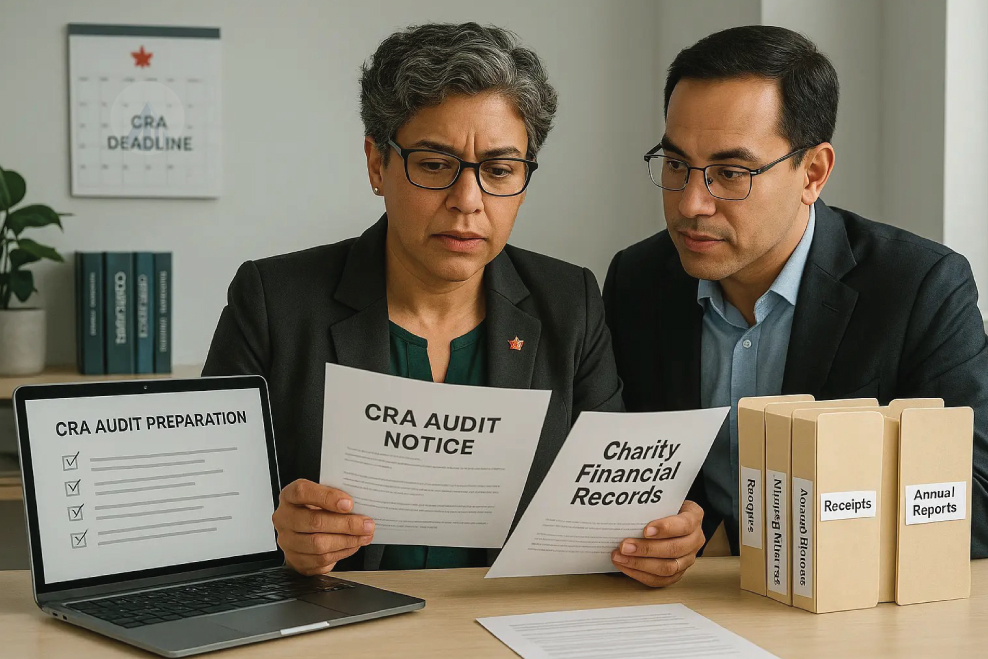
CRA Charity Audit: How to Prepare and Respond Effectively

Getting a letter from the Canada Revenue Agency about a charity audit is like receiving an unexpected visit from your least favorite in-law – your heart drops, your mind races, and you immediately start wondering what you did wrong. But here’s the truth: most CRA charity audits aren’t disasters waiting to happen. They’re routine compliance checks that well-prepared organizations navigate successfully every day.

The problem is that many charities panic when they hear “CRA audit” and make the situation worse through poor preparation or emotional responses. A charity audit doesn’t mean you’re in trouble – it means the CRA wants to verify that you’re operating in compliance with charity law. How you handle the process often determines whether it’s a minor inconvenience or a major crisis.

The key to surviving a CRA charity audit is understanding what the process involves, preparing your documentation properly, and responding professionally to all requests. Most importantly, you need to know when to handle things yourself and when to bring in professional help.

Let’s walk through everything you need to know about CRA charity audits, from the first letter to the final report, so you can approach the process with confidence rather than fear.

Understanding CRA Charity Audit Triggers

CRA charity audits don’t happen randomly. The agency uses specific criteria to identify charities for review, and understanding these triggers helps you see audits in proper context.

Routine Compliance Reviews

Many charity audits are simply routine compliance checks. The CRA selects charities for review based on factors like:

  • Length of time since last review
  • Size and scope of operations
  • Type of charitable activities
  • Geographic diversity of audit program

If your charity is selected for routine review, it doesn’t mean anyone suspects wrongdoing. It means you’re due for a compliance check-up.

Red Flag Activities

Certain activities or circumstances make CRA audits more likely:

  • Significant changes in revenue or activities
  • Political activity that approaches legal limits
  • International operations, especially in high-risk countries
  • Complex business relationships or unusual transactions
  • Complaints from the public or other organizations

T3010 Return Anomalies

The CRA reviews annual T3010 returns for patterns that warrant further investigation:

  • Incomplete or inconsistent information
  • Unusual financial ratios or expense patterns
  • Activities that don’t clearly align with stated purposes
  • Missing required schedules or supporting information

External Referrals

Sometimes audits result from referrals from other government agencies, whistleblower complaints, or media reports about charity activities. While these referrals trigger more focused investigations, they still follow the same basic audit procedures.

Previous Compliance Issues

Charities with previous compliance problems face increased scrutiny. If your organization has had compliance issues in the past, maintaining excellent records and governance becomes even more important.

Understanding why audits happen helps you see them as part of normal charity operations rather than necessarily indicating problems. The CRA conducts thousands of charity audits annually, and most result in minor recommendations rather than serious penalties.

Types of CRA Charity Audits and Reviews

Not all CRA charity audits are the same. Understanding the different types helps you know what to expect and how to prepare.

Desk Audits

Most charity audits are desk audits conducted entirely through correspondence. The CRA reviews your files and requests specific documentation without visiting your premises.

Desk audits typically focus on:

  • Review of annual T3010 returns
  • Verification of specific activities or expenses
  • Confirmation of governance procedures
  • Assessment of particular compliance issues

These audits usually take 3-6 months and involve 2-4 rounds of document requests and questions.

Comprehensive Audits

Comprehensive audits involve detailed review of all aspects of your charity’s operations. These are more thorough than desk audits and may include on-site visits.

Comprehensive audits examine:

  • Complete financial records and internal controls
  • Governance practices and board oversight
  • Program delivery and charitable activities
  • Compliance with all regulatory requirements

These audits can take 6-12 months and require extensive documentation and cooperation.

On-Site Audits

For larger charities or those with complex operations, the CRA may conduct on-site audits at your premises. CRA auditors visit your offices, interview staff and volunteers, and review records in person.

On-site audits allow auditors to:

  • Observe actual operations and activities
  • Interview key personnel directly
  • Review original documents and systems
  • Better understand organizational culture and practices

Focused Reviews

Sometimes the CRA conducts focused reviews targeting specific issues rather than general compliance. These might examine:

  • Political activities and advocacy work
  • International operations and partnerships
  • Fundraising practices and donor relations
  • Specific transactions or business relationships

Pre-Registration Reviews

Organizations applying for charitable status may face enhanced review processes that resemble audits. These aren’t technically audits since you’re not yet a registered charity, but they involve similar documentation requirements and scrutiny.

How to Prepare for a CRA Charity Audit

Preparation is the key to handling charity audits effectively. Well-prepared organizations typically face fewer problems and resolve audits more quickly.

Maintain Audit-Ready Records

The best audit preparation happens long before you receive an audit notice. Maintain organized, complete records that demonstrate compliance:

  • Complete financial records with clear audit trails
  • Board meeting minutes showing proper oversight
  • Documentation of all significant decisions
  • Policies and procedures actually followed in practice
  • Evidence of charitable activities and their impact

Organize Your Documentation

When you receive an audit notice, immediately organize all relevant documentation:

  • Create a comprehensive document index
  • Gather financial statements and supporting records
  • Compile governance documents and meeting minutes
  • Collect evidence of charitable activities and outcomes
  • Prepare summaries of complex transactions or relationships

Assemble Your Response Team

Identify who will handle different aspects of the audit:

  • Primary contact person for CRA communications
  • Financial staff who understand your accounting systems
  • Program staff who can explain charitable activities
  • Board members who can discuss governance decisions
  • Legal counsel for guidance and representation

Review Your Operations

Before responding to the CRA, conduct an internal review of your operations:

  • Identify potential compliance issues or concerns
  • Review recent activities for alignment with charitable purposes
  • Assess governance practices and board oversight
  • Evaluate financial controls and reporting accuracy

Prepare Standard Responses

Develop standard explanations for common audit topics:

  • Description of your charitable activities and impact
  • Explanation of your governance structure and oversight
  • Overview of your financial management and controls
  • Summary of any unusual transactions or relationships

Required Documentation for Charity Audits

CRA charity audits typically require extensive documentation. Being prepared with organized records speeds up the process and demonstrates good governance.

Financial Documentation

Auditors almost always request comprehensive financial information:

  • Audited financial statements for review period
  • General ledger and detailed transaction records
  • Bank statements and reconciliations
  • Investment account statements and activity
  • Documentation for major expenditures or transactions

Governance and Organizational Records

The CRA wants to see evidence of proper governance and oversight:

  • Articles of incorporation and current bylaws
  • Board meeting minutes for the audit period
  • Annual meeting minutes and membership records
  • Conflict of interest policies and declarations
  • Organizational charts and staff responsibilities

Charitable Activities Documentation

You’ll need to demonstrate that your activities further charitable purposes:

  • Program descriptions and activity reports
  • Evidence of services provided and beneficiaries served
  • Documentation of charitable impact and outcomes
  • Marketing materials and public communications
  • Partnership agreements and service contracts

Compliance and Policy Documentation

Auditors review your compliance systems and procedures:

  • Current organizational policies and procedures
  • Staff training records and board orientation materials
  • Internal control procedures and documentation
  • Compliance monitoring and reporting systems
  • Previous audit reports and management responses

Specific Transaction Documentation

For transactions that raise questions, provide detailed documentation:

  • Contracts and agreements for significant expenditures
  • Due diligence records for partnerships or grants
  • Documentation of arm’s length nature of transactions
  • Evidence of competitive procurement processes
  • Approval records for unusual or large transactions

Responding to CRA Audit Questions

How you respond to CRA audit questions significantly affects the audit outcome. Professional, thorough responses demonstrate good governance and help resolve issues quickly.

Read Questions Carefully

CRA audit questions are often specific and technical. Read each question carefully and make sure you understand exactly what information is being requested. If questions are unclear, ask for clarification rather than guessing.

Provide Complete, Accurate Responses

Answer questions completely and honestly. Incomplete answers lead to follow-up questions and extended audit timelines. If you don’t know something, say so rather than speculating.

Organize Your Responses Professionally

Present information in a clear, organized manner:

  • Number your responses to match CRA questions
  • Provide clear headings and document references
  • Include cover letters summarizing key points
  • Attach supporting documentation with clear labels

Meet Deadlines Consistently

The CRA typically gives you 30 days to respond to audit requests. Meeting deadlines demonstrates cooperation and helps maintain audit momentum. If you need extensions, request them in advance with clear justification.

Be Proactive About Clarification

If audit questions reveal misunderstandings about your operations, proactively provide clarifying information. Don’t wait for the CRA to ask follow-up questions – provide context that helps auditors understand your activities properly.

Document All Communications

Keep detailed records of all audit communications:

  • Copies of all CRA correspondence and your responses
  • Notes from phone conversations with auditors
  • Records of document submissions and confirmations
  • Timeline of audit activities and milestones

Common Charity Audit Issues and Solutions

Certain issues come up repeatedly in charity audits. Understanding these common problems helps you address them effectively.

Inadequate Documentation of Charitable Activities

Many charities struggle to demonstrate that their activities actually further charitable purposes. The solution is maintaining detailed records of:

  • Who you serve and how they benefit
  • Specific services provided and their charitable impact
  • Evidence of public benefit rather than private benefit
  • Documentation of how activities align with stated purposes

Governance and Oversight Deficiencies

Weak governance shows up in many audit findings. Strengthen your governance by:

  • Ensuring regular board meetings with proper minutes
  • Implementing and following conflict of interest procedures
  • Demonstrating active board oversight of finances and programs
  • Maintaining current policies and procedures that reflect actual practices

Financial Control and Reporting Issues

Poor financial controls raise red flags in audits. Improve your financial management by:

  • Implementing proper internal controls and segregation of duties
  • Maintaining complete, accurate financial records
  • Ensuring board oversight of financial activities
  • Following your own financial policies consistently

Political Activity Compliance Problems

Political activity violations are serious audit findings. Ensure compliance by:

  • Understanding the limits on charitable political activities
  • Documenting the charitable purpose of any advocacy work
  • Tracking time and resources devoted to political activities
  • Ensuring political activities don’t become your primary focus

International Operations Compliance Issues

Charities working internationally face additional compliance requirements. Address these by:

  • Maintaining proper direction and control over foreign activities
  • Documenting compliance with anti-terrorism financing requirements
  • Keeping detailed records of international partnerships and funding
  • Ensuring foreign activities further charitable purposes in Canada

Working with Legal Counsel During Audits

Knowing when and how to involve legal counsel can make the difference between a successful audit outcome and serious compliance problems.

When to Engage Legal Counsel

Consider involving lawyers when:

  • The audit involves complex legal issues or significant compliance concerns
  • You’re unsure about the scope or implications of audit requests
  • The CRA raises questions about potential violations or penalties
  • You need help interpreting audit communications or requirements
  • The audit could affect your charitable status

Don’t wait until problems develop – early legal guidance often prevents issues from escalating.

How Lawyers Help During Audits

Experienced charity lawyers provide valuable audit support:

  • Review audit communications and help develop response strategies
  • Assist with document preparation and organization
  • Communicate with CRA auditors on your behalf
  • Identify potential compliance issues and recommend solutions
  • Help negotiate audit outcomes and compliance agreements

Coordinating Legal and Operational Responses

When working with legal counsel, maintain clear coordination:

  • Designate single points of contact for CRA communications
  • Ensure lawyers understand your operations and activities
  • Review all responses before submission to ensure accuracy
  • Keep detailed records of legal advice and recommendations

Cost-Effective Legal Support

Many charity law firms offer fixed-fee audit support services. This provides predictable costs while ensuring you have professional guidance throughout the process.

Post-Audit Compliance and Remediation

The audit process doesn’t end when the CRA issues its final report. How you handle post-audit requirements affects your organization’s ongoing compliance and relationship with the CRA.

Understanding Audit Outcomes

CRA charity audits typically result in one of several outcomes:

  • No issues identified: Your charity maintains its status with no required changes
  • Educational letter: Minor issues requiring attention but no formal compliance action
  • Compliance agreement: Formal agreement to address identified deficiencies
  • Penalties or sanctions: Financial penalties or restrictions on activities
  • Revocation proceedings: In serious cases, potential loss of charitable status

Implementing Audit Recommendations

Even when audits don’t result in formal compliance action, implementing recommendations demonstrates good governance:

  • Review all audit findings and recommendations carefully
  • Develop implementation plans for suggested improvements
  • Update policies and procedures to address identified weaknesses
  • Provide board and staff training on compliance requirements

Ongoing Compliance Monitoring

Use audit experiences to improve your ongoing compliance systems:

  • Establish regular internal compliance reviews
  • Update record-keeping practices based on audit requirements
  • Implement monitoring systems to prevent future compliance issues
  • Maintain ongoing relationships with professional advisors

Building Positive CRA Relations

Professional handling of audit processes helps build positive relationships with the CRA:

  • Respond promptly and thoroughly to all audit requests
  • Demonstrate genuine commitment to compliance and improvement
  • Maintain open, honest communication throughout the process
  • Follow through on all commitments and compliance agreements

Facing a CRA charity audit can feel overwhelming, but remember that most audits are routine compliance checks that well-prepared organizations handle successfully. The key is maintaining good records, understanding the process, and getting appropriate professional support when needed.

Whether you’re starting a nonprofit in Ontario or managing an established charity, building audit-ready systems and maintaining strong governance practices protects your organization and supports your charitable mission.

Northfield & Associates provides comprehensive audit support services, helping charities prepare for, respond to, and learn from CRA compliance reviews. Professional guidance during audit processes often makes the difference between minor recommendations and serious compliance problems.

Ready to strengthen your charity’s compliance systems and audit preparedness? Work with experienced professionals who understand both CRA requirements and the practical realities of running successful charitable organizations in Canada.

Ready for better nonprofit reporting?
At Northfield & Associates, we have a team of professional bookkeepers and accountants to help your organization manage the books so that you can breeze through tax season.
GET IN TOUCH

What We Do!

We’re often asked by prospective clients what our Bookkeeping Service covers?  People want to know what specific tasks we do, and what their responsibility is.  This brief explainer page will answer that question.  This is by no means an exhaustive list, but covers the most frequently asked questions.

Getting Started

  • Review your existing books for needed corrections or back-work
  • Chart of accounts setup or amendment
  • Assistance with setting up bank feeds
  • Limited assistance* with setting up payroll (QBO or Gusto only)
  • Your books brought current and reconciled if needed

Ongoing Monthly Bookkeeping

  • After-the-fact transaction recording
  • Post to general ledger
  • Post to other ledgers (as needed)
  • Bank account reconciliation
  • Monthly financial statements
  • Other bookkeeping services, as required
  • Best-practice bookkeeping advice and counsel

Year End

  • Assistance with 1099-NEC preparation*
  • Assistance with 1099-MISC preparation*
  • Year-end financial statements and period-end closing

What We Don’t Do

Pay bills

We do not offer bill-pay services at this time, nor do we manage Accounts Payable (AP) or Accounts Receivable (AR).

Payroll tax responsibility

Our bookkeepers can assist you in setting up your initial payroll service in QBO or Gusto. We are not responsible for entering payroll hours/salary, accruing payroll taxes, nor the transmittal of payroll taxes to the IRS or the state.  Your full-service payroll provider (QBO, Gusto, or whatever other service a client uses) will be the responsible party for payroll and payroll tax compliance.

*Payroll deductions and benefits

We provide assistance with setting up a payroll account in either Quickbooks Online or Gusto, including entry of employee data.  We do not assist in state registrations, benefits, or advise on deductions.  Those service areas are provided directly by either QBO or Gusto.

Preparation of W2s

Similar to the last item, your full-service payroll provider (QBO/Gusto) is responsible for preparation of Form W2 for employees.

Sales tax reporting

For those nonprofits that sell taxable goods and/or services, your bookkeeper will assist in accounting for sales taxes collected and transmitted, but we do not prepare state sales tax reports.

Donation recording

We do not provide individual donation data entry into your neither your donor CRM nor Quickbooks Online, nor do we prepare year-end donor acknowledgements.

Administrative tasks

We cannot provide administrative services unrelated to our bookkeeping function.

Attend board meetings

Due to the constraints of time and distance, we are unable to be present, physically nor virtually, at a meeting of a client’s board of directors.*May incur additional fee per 1099-NEC or 1099-MISC.

Let’s Collaborate & Make a Difference!
Partner with us to amplify your mission. Whether it’s Charity accounting, financial transparency, or strategic growth—we’re here to help you create meaningful impact. Let’s work together to build a better future!
Book a Call

Contact us today to schedule your consultation.

Working with Our Firm

In this evolving economic landscape, collaboration with our firm offers clients a strategic advantage. With Cambodia’s reform-driven investment environment and Canada’s expanding footprint in Southeast Asia, our team of experienced consultants and legal advisors provides tailored guidance to help businesses navigate cross-border opportunities. We focus in developing comprehensive legal strategies, structuring international partnerships, and ensuring compliance in emerging markets.

By leveraging our regional insight and international expertise, you benefit from a trusted partner dedicated to helping you capitalize on growth potential in Cambodia and beyond.

Book a Consultation with Northfield & Associates
Your Trusted Partner in International Bilateral Relations

At Northfield & Associates are focus in Foreign Direct Investment (FDI), international trade missions, and cross-border legal strategy. Our team of experienced consultants and legal advisors offers tailored guidance and strategic insight to help you navigate the complexities of international partnerships and development opportunities.

Whether you choose to meet in person at one of our offices or connect virtually, we provide flexible and accessible consultation options. During your session, we’ll assess your goals, review key documentation, and guide you through every stage of your FDI or trade mission engagement.

Let us help you take the next step with confidence supported by trusted legal and strategic counsel every step of the way.

Northfield & Associates
Advancing Global Partnerships, Together.

Take the First Step Today

If you believe you may be eligible for legal relief or simply need sound legal advice, we’re here to help. Contact us today to book your consultation. Let us provide the clarity, strategy, and peace of mind you need to move forward.

Disclaimer: The information contained in this article is provided for general information purposes only and does not constitute legal or other professional advice. Readers should seek tailored legal advice in relation to their personal circumstances.

We serve our clients in English, Cambodian, Vietnamese, Mandarin and Cantonese, especially in Asian clients.

  • If you or anybody that you know, think that you meet the requirements and wish to receive further information.
  • We can help you start the application process and confirm eligibility requirements to participate.
  • We Offer Consultations & Meetings by Phone & Virtually. Affordable Fees.
Book a Consultation Today
Contact Northfield & Associates today to schedule a consultation with an experienced Consultant.
Book a call with a Consultation
Join the community of Northfield & Associates
Connect with peers and community ambassadors to hear real experiences, tips, and advice about studying abroad.
Explore Northfield & Associates community

About Northfield

Northfield & Associates International Corporation is a global consulting firm serving private enterprises, public institutions, not-for-profit organizations, and institutional capital providers. Operating across Cambodia, Canada, and global markets, the firm supports capital deployment, regulatory navigation, and enterprise decision-making in complex economic and geopolitical environments. Northfield & Associates delivers customized, execution-focused advisory solutions that drive measurable transformation, strengthen competitiveness, and enhance long-term highest value opportunities. The firm incorporates consulting, legal, regulatory, financial, and risk expertise to enable disciplined capital allocation, strong governance, and operational resilience. Northfield & Associates upholds a culture of applied insight and innovation, supporting clients across digital transformation, growth strategy, and organizational capability building. The firm advises individual, leading global corporations, midsize enterprises, government agencies, and mission-driven organizations through long-term partnerships. Enterprise-wide risk management, professional ethics, and fiduciary standards are embedded across all operations. Northfield & Associates’ diverse, globally unified teams are committed to execution certainty and sustainable, risk-adjusted returns aligned with ESG and stakeholder objectives.

Forward-Looking Information

This news release contains forward-looking information. All statements, other than statements of historic fact, that address activities, events or developments that the Company believes, expects or anticipates will or may occur in the future constitute forward-looking information.

This forward-looking information reflects the current expectations or beliefs of the Company based on information currently available to the Company.

Forward-looking information is subject to a number of risks and uncertainties that may cause the actual results of the Company to differ materially from those discussed in the forward-looking information, and even if such actual results are realized or substantially realized, there can be no assurance that they will have the expected consequences to, or effects on the Company. Factors that could cause actual results or events to differ materially from current expectations include, among other things: the failure to finalize negotiations concerning the increase of the Loan or to close such transaction and the failure of the Company to complete the acquisition of the Company Facility; operating performance of facilities; environmental and safety risks; delays in obtaining or failure to obtain necessary permits and approvals from government authorities; unavailability of plant, equipment or labour; inability to retain key management and personnel; changes to regulations or policies affecting the Company’s activities; and the other risks disclosed under the heading “Risk Factors” and elsewhere in the Company’s amended annual information.

Forward-looking information speaks only as of the date on which it is made and, except as may be required by applicable securities laws, the Company disclaims any intent or obligation to update any forward-looking information, whether as a result of new information, future events or results or otherwise. Although the Company believes that the assumptions inherent in the forward-looking information are reasonable, forward-looking information is not a guarantee of future performance and accordingly undue reliance should not be put on such information due to the inherent uncertainty therein.

Questions?

info@northfied.biz

Within Corporate Newsroom  

Media Contact:

media@northfied.biz

Press contact

PR consultants
press@northfied.biz

NOT LEGAL ADVICE. Information made available on this website in any form is for information purposes only. It is not, and should not be taken as, legal advice. You should not rely on, or take or fail to take any action based upon this information. Never disregard professional legal advice or delay in seeking legal advice because of something you have read on this website. Northfield & Associates professionals will be pleased to discuss resolutions to specific legal concerns you may have.

Categories
Business News Financial Institution & Services Legal News Northfield News

Is Your Charity Registration Revoked? Learn how to navigate the re-registration process and meet the necessary requirements.

Is Your Charity Registration Revoked? Learn how to navigate the re-registration process and meet the necessary requirements.

Have you recently faced the revocation of your charitable registration within the last four years? If so, the road to re-registration might seem complex, but understanding the process is crucial for your organization’s future. In this article, we’ll guide you through the steps and requirements for re-registration, helping you navigate the intricacies of the application process.

Re-Registration for Charities Revoked Within Four Years
If your organization has had its charitable registration revoked within the last four years, you have the opportunity to apply for re-registration. However, there are essential points to consider during this process:

Complete Application Review Process:

All applications for re-registration must undergo a comprehensive review process. It’s vital to provide accurate and up-to-date information to facilitate a smooth evaluation.

Limitations on Donation Receipts:

While your application is under review, your organization cannot issue donation receipts. This underscores the importance of a swift and efficient re-registration process.

Submission of Missing Documents:

Prior to re-registration, make certain to submit any outstanding Registered Charity Information Returns (Form T3010) and financial statements for the preceding fiscal periods.

Compliance with Current Requirements:

Organizations must meet current legislative and administrative requirements. Changes in statutes, common law, and administrative policies may necessitate adjustments to your organization’s purposes and activities.

Material Change in Circumstances:

Organizations revoked under the Charities Registration (Security Information) Act may apply for re-registration by demonstrating a material change in circumstances. Otherwise, re-application is possible seven years after a Federal Court judge upholds the registration loss.

Liabilities and Penalties:

  • Organizations are liable for the revocation tax unless re-registered within one year from the notice of intent.
  • Payment of all taxes, penalties, and interest under the Income Tax Act or Excise Tax Act is required before re-registration.
  • A late-filing penalty of $500 is applicable if the charity had its registration revoked due to failure to submit the annual return (Form T3010).

Payment Process:

  • Submit a $500 cheque payable to the Receiver General for Canada with the re-registration application.
  • Online applicants should upload proof of payment, while paper applicants should attach the cheque.

Address for Cheque Submission:

  • Online: Upload proof of payment and send the cheque to Sudbury, ON.
  • Paper: Attach the cheque to the application form and send it to Ottawa, ON.

Record-Keeping:

Maintain copies of all documents submitted to the Canada Revenue Agency for your records.

Navigating the re-registration process for revoked charities demands attention to detail and adherence to specific guidelines. Whether your organization is within the four-year window or facing a longer duration since revocation, understanding the procedures and meeting the requirements is essential for a successful re-registration journey. Remember, compliance and accuracy are key to reinstating your charitable status and continuing your organization’s important work in the community.

If your charity status was revoked due to non-filing its T3010, or for any other reason, the experienced Charity Registration Lawyers.

Contact Northfield & Associates for expert guidance on compliance requirements. Our team understands Canadian charity law and can help ensure your organisation follows proper procedures.

Get professional support today

to discuss your charity’s director benefit questions with our experienced legal team for fast, efficient and affordable charity re-registration.


Contact To Action

Contact us today to schedule your consultation.

Northfield & Associates

Advancing Global Partnerships, Together.

Working with Our Firm

In this evolving economic landscape, collaboration with our firm offers clients a strategic advantage. With Cambodia’s reform-driven investment environment and Canada’s expanding footprint in Southeast Asia, our team of experienced consultants and legal advisors provides tailored guidance to help businesses navigate cross-border opportunities. We focus in developing comprehensive legal strategies, structuring international partnerships, and ensuring compliance in emerging markets.

By leveraging our regional insight and international expertise, you benefit from a trusted partner dedicated to helping you capitalize on growth potential in Cambodia and beyond.

Book a Consultation with Northfield & Associates

Your Trusted Partner in International Bilateral Relations

At Northfield & Associates are focus in Foreign Direct Investment (FDI), international trade missions, and cross-border legal strategy. Our team of experienced consultants and legal advisors offers tailored guidance and strategic insight to help you navigate the complexities of international partnerships and development opportunities.

Whether you choose to meet in person at one of our offices or connect virtually, we provide flexible and accessible consultation options. During your session, we’ll assess your goals, review key documentation, and guide you through every stage of your FDI or trade mission engagement.

Let us help you take the next step with confidence supported by trusted legal and strategic counsel every step of the way.

Take the First Step Today

If you believe you may be eligible for legal relief or simply need sound legal advice, we’re here to help. Contact us today to book your consultation. Let us provide the clarity, strategy, and peace of mind you need to move forward.

We serve our clients in English, Cambodian, Vietnamese, Mandarin and Cantonese, especially in Asian clients.

  • If you or anybody that you know, think that you meet the requirements and wish to receive further information.
  • We can help you start the application process and confirm eligibility requirements to participate.
  • We Offer Consultations & Meetings by Phone & Virtually. Affordable Fees.

Disclaimer:

The information contained in this article is provided for general information purposes only and does not constitute legal or other professional advice. Readers should seek tailored legal advice in relation to their personal circumstances.

Northfield & Associates

Advancing Global Partnerships, Together.

Book a Consultation Today

Contact Northfield & Associates today to schedule a FREE consultation with an experienced Consultant.

Join the community of Northfield & Associates

Connect with peers and community ambassadors to hear real experiences, tips, and advice about studying abroad.


About Northfield

Northfield & Associates International Corporation is a global consulting firm serving private enterprises, public institutions, not-for-profit organizations, and institutional capital providers. Operating across Cambodia, Canada, and global markets, the firm supports capital deployment, regulatory navigation, and enterprise decision-making in complex economic and geopolitical environments. Northfield & Associates delivers customized, execution-focused advisory solutions that drive measurable transformation, strengthen competitiveness, and enhance long-term highest value opportunities. The firm incorporates consulting, legal, regulatory, financial, and risk expertise to enable disciplined capital allocation, strong governance, and operational resilience. Northfield & Associates upholds a culture of applied insight and innovation, supporting clients across digital transformation, growth strategy, and organizational capability building. The firm advises individual, leading global corporations, midsize enterprises, government agencies, and mission-driven organizations through long-term partnerships. Enterprise-wide risk management, professional ethics, and fiduciary standards are embedded across all operations. Northfield & Associates’ diverse, globally unified teams are committed to execution certainty and sustainable, risk-adjusted returns aligned with ESG and stakeholder objectives.

Forward-Looking Information

This news release contains forward-looking information. All statements, other than statements of historic fact, that address activities, events or developments that the Company believes, expects or anticipates will or may occur in the future constitute forward-looking information.

This forward-looking information reflects the current expectations or beliefs of the Company based on information currently available to the Company.

Forward-looking information is subject to a number of risks and uncertainties that may cause the actual results of the Company to differ materially from those discussed in the forward-looking information, and even if such actual results are realized or substantially realized, there can be no assurance that they will have the expected consequences to, or effects on the Company. Factors that could cause actual results or events to differ materially from current expectations include, among other things: the failure to finalize negotiations concerning the increase of the Loan or to close such transaction and the failure of the Company to complete the acquisition of the Company Facility; operating performance of facilities; environmental and safety risks; delays in obtaining or failure to obtain necessary permits and approvals from government authorities; unavailability of plant, equipment or labour; inability to retain key management and personnel; changes to regulations or policies affecting the Company’s activities; and the other risks disclosed under the heading “Risk Factors” and elsewhere in the Company’s amended annual information.

Forward-looking information speaks only as of the date on which it is made and, except as may be required by applicable securities laws, the Company disclaims any intent or obligation to update any forward-looking information, whether as a result of new information, future events or results or otherwise. Although the Company believes that the assumptions inherent in the forward-looking information are reasonable, forward-looking information is not a guarantee of future performance and accordingly undue reliance should not be put on such information due to the inherent uncertainty therein.

Questions?

info@northfied.biz

Within Corporate Newsroom  

Media Contact:

media@northfied.biz

Press contact

PR consultants
press@northfied.biz

NOT LEGAL ADVICE. Information made available on this website in any form is for information purposes only. It is not, and should not be taken as, legal advice. You should not rely on, or take or fail to take any action based upon this information. Never disregard professional legal advice or delay in seeking legal advice because of something you have read on this website. Northfield & Associates professionals will be pleased to discuss resolutions to specific legal concerns you may have.

Categories
Business News Financial Institution & Services Legal News Northfield News

Guidelines for Charitable Receipting for Canadian Charities

Guidelines for Charitable Receipting for Canadian Charities

Canadian registered charities and other qualified donees have the privilege of issuing “official donation receipts,” a crucial aspect of their operations. However, many charities face compliance issues due to a lack of understanding of the receipting requirements, putting both the organizations and their directors at risk. Issuing a tax receipt is a valuable privilege that can be likened to having a money-printing license. Therefore, it is crucial for qualified donees to provide official donation receipts in accordance with the guidelines outlined in the Income Tax Act and Canada Revenue Agency’s directives.

The CRA has found that during its audits of charities, nearly 89% fail to issue receipts correctly. Receipting is likely the principal cause of Canadian registered charities losing their status following an audit. Fortunately, by understanding the proper procedures, several of the most prevalent issues can be quickly resolved with ease. This post aims to dispel common misunderstandings surrounding charitable receipting and offer practical advice to registered charities and qualified donees.

Charitable Organizations Are NOT Required to Provide Tax Receipts

There is a common misconception among charities that they must issue a tax receipt for any proper gift made to the organization. However, this is not accurate. Charities may have their own administrative policies outlining the circumstances under which they issue tax receipts. For instance, some charities may set a minimum donation for tax receipt in Canada, while others may only provide receipts for cash gifts and not gifts in kind. It is crucial for charities to be transparent about their policies with donors to maintain public trust and confidence in the receipting process. In fact, in certain instances, it may be better for charities to decline a donation rather than issue a problematic receipt, as the majority of receipting issues arise from a small fraction of receipts.

Necessary Details Must Be Included on Official Donation Receipts

To issue official donation receipts appropriately, it is necessary to include specific information on them. Failure to include any of this information renders the receipts invalid. This is the most frequently occurring error and also the most straightforward to rectify. Here are the critical details required:

  • Name and address of the charity – The full legal name and mailing address of the registered charity issuing the receipt.
  • Charity’s registration number – The official CRA-issued registration number confirming the organization’s status as a registered charity.
  • Donor’s name and address – The full name and mailing address of the donor.
  • Amount of the donation – The exact amount donated in Canadian dollars.
  • Date of the donation – The date the donation was received by the charity.
  • Unique serial number – A distinctive number assigned to each receipt to track and reference issued receipts.
  • Signature of an authorized representative – The receipt must be signed by an individual with authority within the charity to issue official receipts.
  • A statement confirming the receipt is for an eligible gift – A declaration that the donation is a genuine, voluntary gift with no benefit to the donor.
  • Fair market value of any advantage received – If the donor received any benefit in return for their donation (e.g., event tickets, promotional items), the value of that benefit must be stated, and the eligible donation amount must be reduced accordingly.
  • Description of non-cash gifts (if applicable) – For donations of goods or securities, a description of the donated item and its fair market value must be included.

Failure to include these elements can result in the receipt being deemed invalid by the Canada Revenue Agency (CRA), potentially affecting the donor’s ability to claim a charitable donation tax credit.

What is the Minimum Donation for a Tax Receipt in Canada?

A common question is: What is the minimum donation for a tax receipt in Canada? There is no legally mandated minimum amount required to issue a tax receipt. Charities can set a practical threshold, such as $10 or $20, to reduce administrative costs, but this is a discretionary policy. Charities should be transparent about these thresholds to ensure donors understand when they will receive receipts.

Common Payments That Do Not Qualify as Gifts

Not all donations qualify for a tax receipt. Here are some typical payments that do not meet the criteria for tax-deductible gifts:

  • Standard charges for events or programs
  • Membership costs that deliver tangible benefits to the donor
  • Payments for lottery and raffle tickets
  • Tuition fees, except for specific religious school tuition fees
  • Business sponsorships

Guidelines for Split Receipting

Split receipting applies when a donor receives an advantage in return for their contribution. For example, if a donor pays $200 for a ticket to a gala dinner with a $75 meal, the charity must subtract the $75 (value of the meal) from the donation amount. Only the remaining amount ($125) qualifies for a tax receipt.

Services Received as a Contribution

Charities cannot issue receipts for services. Contributions of time, skills, and effort are considered “services” rather than property. However, if the charity is charged for the services and the individual makes a voluntary contribution for the same amount, a receipt may be issued.

Determining the Identity of the Donor

Accurate identification of the donor is essential to ensure that the receipt is issued to the correct individual or organization. In cases of uncertainty, a declaration from the donor should be requested.

Retention of Receipts

The CRA mandates that charities retain copies of all issued receipts for at least six years. Charities should also store digital receipts in an unalterable format to ensure compliance and assist with future audits.

A Charity Is Prohibited from Acting as a “Conduit”

Charities must not serve as “conduits” for donations directed to non-registered organizations or foreign entities. This practice is prohibited and may lead to the charity’s revocation.

Charitable Donation Tax Credit

Donors who contribute to registered charities can claim a charitable donation tax credit on their income tax return. The first $200 typically qualifies for a 15% federal tax credit, while amounts above $200 may receive a 29% credit. Provincial tax credits can further reduce the donor’s tax liability.

Conclusion

Proper donation receipting is vital for charities to comply with CRA regulations and ensure donors can claim their donation tax credit. Charities should set clear policies, accurately issue receipts, and avoid common mistakes that could jeopardize their charitable status. Understanding the minimum charitable donation for tax receipt in Canada and implementing best practices ensures transparency and trust with donors, fostering the long-term sustainability of charitable organizations.

Have questions about what qualifies for a charitable receipt?

Get started now:

Frequently Asked Questions

Have questions about donation receipts in Canada? Here are answers to common questions about charitable receipting requirements and tax rules for Canadian donors and charities.

What needs to be on a donation receipt in Canada?

A valid Canadian donation receipt must include the charity’s name, registration number, and address. It also needs the donor’s name and address, the date the donation was received, and the donation amount. The receipt must state it’s an official receipt for income tax purposes and include the date it was issued. If the donation is cash, the receipt must say so. For non-cash gifts, the receipt needs to describe the property and state who determined its fair market value. Without these details, the CRA will consider the receipt invalid.

What legally needs to be on a receipt in Canada?

Canadian law requires donation receipts to show specific information to be legally valid. The charity must include its registered name, CRA registration number, and location where the receipt was issued. The receipt needs the donor’s full name and address, the donation date, and the exact amount or value. It must clearly state it’s an official receipt for income tax purposes and show the date of issue. For gifts in kind, the receipt must describe the donated item and explain how its value was determined. Missing any of these required elements makes the receipt invalid.

Are charities required to issue receipts?

No, Canadian charities are not legally required to issue receipts for every donation they receive. Charities can create their own policies about when they issue tax receipts. Some organizations set minimum donation amounts before issuing receipts, while others only provide receipts for cash donations and not for donated items. However, charities must be clear and upfront with donors about their receipting policies. If a charity does issue a receipt, it must follow all CRA requirements to make sure the receipt is valid.

What are the charity tax rules in Canada?

Canadian donors who give to registered charities can claim a charitable donation tax credit on their tax return. The federal government provides a 15% tax credit for the first $200 donated each year. For amounts over $200, donors typically receive a 29% federal tax credit. Provincial tax credits provide additional savings and vary by province. To claim these credits, donors need an official receipt from a registered charity. Not all payments qualify for tax receipts, including membership fees, tuition, raffle tickets, and donations where the donor receives goods or services of equal value.

What is the maximum I can claim for donations without receipts?

In Canada, you cannot claim any charitable donation tax credit without an official receipt from a registered charity. The CRA requires proper documentation for all charitable donation claims on your tax return. There is no maximum or minimum amount you can claim without a receipt because receipts are always required. If you made a donation but didn’t receive a receipt, contact the charity to request one. Charities must keep copies of all receipts for at least six years, so they should be able to provide you with a duplicate if needed.


Contact To Action

Contact us today to schedule your consultation.

Northfield & Associates

Advancing Global Partnerships, Together.

Working with Our Firm

In this evolving economic landscape, collaboration with our firm offers clients a strategic advantage. With Cambodia’s reform-driven investment environment and Canada’s expanding footprint in Southeast Asia, our team of experienced consultants and legal advisors provides tailored guidance to help businesses navigate cross-border opportunities. We focus in developing comprehensive legal strategies, structuring international partnerships, and ensuring compliance in emerging markets.

By leveraging our regional insight and international expertise, you benefit from a trusted partner dedicated to helping you capitalize on growth potential in Cambodia and beyond.

Book a Consultation with Northfield & Associates

Your Trusted Partner in International Bilateral Relations

At Northfield & Associates are focus in Foreign Direct Investment (FDI), international trade missions, and cross-border legal strategy. Our team of experienced consultants and legal advisors offers tailored guidance and strategic insight to help you navigate the complexities of international partnerships and development opportunities.

Whether you choose to meet in person at one of our offices or connect virtually, we provide flexible and accessible consultation options. During your session, we’ll assess your goals, review key documentation, and guide you through every stage of your FDI or trade mission engagement.

Let us help you take the next step with confidence supported by trusted legal and strategic counsel every step of the way.

Take the First Step Today

If you believe you may be eligible for legal relief or simply need sound legal advice, we’re here to help. Contact us today to book your consultation. Let us provide the clarity, strategy, and peace of mind you need to move forward.

We serve our clients in English, Cambodian, Vietnamese, Mandarin and Cantonese, especially in Asian clients.

  • If you or anybody that you know, think that you meet the requirements and wish to receive further information.
  • We can help you start the application process and confirm eligibility requirements to participate.
  • We Offer Consultations & Meetings by Phone & Virtually. Affordable Fees.

Disclaimer:

The information contained in this article is provided for general information purposes only and does not constitute legal or other professional advice. Readers should seek tailored legal advice in relation to their personal circumstances.

Northfield & Associates

Advancing Global Partnerships, Together.

Book a Consultation Today

Contact Northfield & Associates today to schedule a FREE consultation with an experienced Consultant.

Join the community of Northfield & Associates

Connect with peers and community ambassadors to hear real experiences, tips, and advice about studying abroad.


About Northfield

Northfield & Associates International Corporation is a global consulting firm serving private enterprises, public institutions, not-for-profit organizations, and institutional capital providers. Operating across Cambodia, Canada, and global markets, the firm supports capital deployment, regulatory navigation, and enterprise decision-making in complex economic and geopolitical environments. Northfield & Associates delivers customized, execution-focused advisory solutions that drive measurable transformation, strengthen competitiveness, and enhance long-term highest value opportunities. The firm incorporates consulting, legal, regulatory, financial, and risk expertise to enable disciplined capital allocation, strong governance, and operational resilience. Northfield & Associates upholds a culture of applied insight and innovation, supporting clients across digital transformation, growth strategy, and organizational capability building. The firm advises individual, leading global corporations, midsize enterprises, government agencies, and mission-driven organizations through long-term partnerships. Enterprise-wide risk management, professional ethics, and fiduciary standards are embedded across all operations. Northfield & Associates’ diverse, globally unified teams are committed to execution certainty and sustainable, risk-adjusted returns aligned with ESG and stakeholder objectives.

Forward-Looking Information

This news release contains forward-looking information. All statements, other than statements of historic fact, that address activities, events or developments that the Company believes, expects or anticipates will or may occur in the future constitute forward-looking information.

This forward-looking information reflects the current expectations or beliefs of the Company based on information currently available to the Company.

Forward-looking information is subject to a number of risks and uncertainties that may cause the actual results of the Company to differ materially from those discussed in the forward-looking information, and even if such actual results are realized or substantially realized, there can be no assurance that they will have the expected consequences to, or effects on the Company. Factors that could cause actual results or events to differ materially from current expectations include, among other things: the failure to finalize negotiations concerning the increase of the Loan or to close such transaction and the failure of the Company to complete the acquisition of the Company Facility; operating performance of facilities; environmental and safety risks; delays in obtaining or failure to obtain necessary permits and approvals from government authorities; unavailability of plant, equipment or labour; inability to retain key management and personnel; changes to regulations or policies affecting the Company’s activities; and the other risks disclosed under the heading “Risk Factors” and elsewhere in the Company’s amended annual information.

Forward-looking information speaks only as of the date on which it is made and, except as may be required by applicable securities laws, the Company disclaims any intent or obligation to update any forward-looking information, whether as a result of new information, future events or results or otherwise. Although the Company believes that the assumptions inherent in the forward-looking information are reasonable, forward-looking information is not a guarantee of future performance and accordingly undue reliance should not be put on such information due to the inherent uncertainty therein.

Questions?

info@northfied.biz

Within Corporate Newsroom  

Media Contact:

media@northfied.biz

Press contact

PR consultants
press@northfied.biz

NOT LEGAL ADVICE. Information made available on this website in any form is for information purposes only. It is not, and should not be taken as, legal advice. You should not rely on, or take or fail to take any action based upon this information. Never disregard professional legal advice or delay in seeking legal advice because of something you have read on this website. Northfield & Associates professionals will be pleased to discuss resolutions to specific legal concerns you may have.

Categories
Business News Financial Institution & Services Legal News Northfield News

Charitable Receipts: A Guide for Canadian Registered Charities

Charitable Receipts: A Guide for Canadian Registered Charities

Canadian registered charities and qualified donees are granted a remarkable privilege: the ability to issue “official donation receipts.” This powerful tool allows these organizations to acknowledge the generosity of their donors and foster continued support. However, many charities inadvertently stumble when it comes to understanding receipting requirements, leading to compliance issues that can affect both the organization and its directors. In this comprehensive article, we will go through the common misconceptions and provide valuable tips for registered charities and qualified donees navigating donation tax receipt rules in Canada.

1. Understanding the Voluntary Nature of Receipts

One common misconception among charities is the belief that they must issue tax receipts for all donations received. However, this is not mandatory. Charities have the flexibility to set policies regarding when they will issue tax receipts. Some may establish thresholds for issuing receipts, while others might limit receipts to specific types of gifts. Clear communication of these policies is crucial to ensuring the public’s confidence and trust in the receipting process—and in staying compliant with donation tax receipt rules.

2. Spending Flexibility and Receipting

Another misconception is that failing to issue a receipt gives charities unrestricted flexibility in using the donated funds. Regardless of whether a receipt is issued, Canadian registered charities are bound by their objects, legal requirements, common law, and CRA’s guidance when it comes to fund usage. This applies equally across provinces, including donation tax receipt rules in Ontario.

3. The Definition of a ‘Gift’

To qualify for an official donation receipt, a transfer of funds or gifts in kind must meet specific criteria. It must be voluntary, represent a complete transfer of property, and demonstrate donative intent on the part of the donor. If any of these elements are missing, the transfer does not qualify as a ‘gift,’ and no receipt should be issued.

4. Common Payments That Don’t Qualify

Certain payments do not qualify as gifts for receipting purposes. These include basic event or program fees, membership fees with material value, payments for lottery tickets, tuition fees (except for specific religious school tuition fees), and business sponsorships.

5. Mandatory Information on Receipts

Official donation receipts must include specific information. Failure to include this information results in improper receipting. This is a common error but one that is easily rectifiable. Properly issued receipts help ensure your organization complies with donation tax receipt rules Canada requires under the Income Tax Act.‍

6. Understanding Split Receipting Rules

Charities must correctly determine the eligible amount of a gift on the receipt, often referred to as ‘split receipting.’ When donors receive an advantage in return for their gift, the advantage’s value must be deducted from the total gift value. This ensures the eligible gift amount is accurately reflected on the receipt in accordance with donation tax receipt rules.

7. Handling Donations of Services

Donations of time, skills, and effort are considered ‘services’ rather than property, and they do not qualify as ‘gifts’ for receipting purposes.

8. Identifying the Donor

Accurately determining the donor is vital to providing the correct receipt. When in doubt, charities can request a declaration from the donor or corporation to confirm the donor’s identity.

9. Record Keeping

The Canada Revenue Agency (CRA) mandates that charities retain copies of official donation receipts for a minimum of two years from the end of the calendar year in which the donations were made. Most other records must be kept for seven years, and it is advisable to keep donation receipts for longer, given their importance especially when reviewing past compliance with donation tax receipt rules in Ontario or elsewhere in Canada.

10. Avoiding Conduit Situations

Charities must not act as a conduit for funds directed to foreign charities or Canadian non-profits that lack charitable status. This practice can lead to inappropriate situations and revocation of charitable status.

Conclusion

Issuing official donation receipts is a valuable privilege for registered Canadian charities. However, with this privilege comes a responsibility to ensure compliance with the Income Tax Act (Canada) and CRA’s guidance. Addressing common misconceptions and adhering to best practices for receipting is essential. By mastering the art of charitable receipts—and staying informed about the donation tax receipt rules Canada enforces—organizations can build trust, maintain compliance, and secure continued support for their vital missions.

Frequently Asked Questions

Donating to charity comes with tax benefits, but the rules around receipts can be confusing. Here are answers to common questions about how charitable tax receipts work in Canada.

How to issue tax receipts for donations in Canada?

Registered charities must follow CRA rules when issuing tax receipts. The receipt needs to include the charity’s name and registration number, the donor’s name and address, the donation date, and the amount given. For gifts over $20, you must provide a receipt within 30 days if the donor requests one. Cash donations need receipts issued right away. The receipt should also state it’s an official donation receipt for income tax purposes. Make sure all information is accurate because errors can lead to penalties.

Do charities give receipts for donations?

Only registered charities can give official tax receipts. If an organization isn’t registered with the CRA, they can’t issue receipts that donors can use for tax credits. Before you donate, check if the charity has a registration number. You can search for registered charities on the CRA website. Some organizations collect donations on behalf of registered charities and can issue receipts through them. Always ask for a receipt when you donate so you can claim your tax credit.

Do charitable donations to registered charities reduce taxable income in Canada?

Charitable donations don’t reduce your taxable income, but they do give you tax credits that lower the tax you owe. You get a federal tax credit of 15% on the first $200 you donate each year. Any amount over $200 gets a 29% federal credit, or 33% if your income is over $235,675. Your province also gives additional credits. These credits come off your final tax bill, which can mean significant savings. You can claim donations from the current year or any of the past five years.

What is the minimum charitable donation for tax receipt?

There’s no minimum amount required for a charity to issue a tax receipt. Charities can give receipts for donations of any size, even just a few dollars. However, the CRA says charities don’t have to give receipts for gifts under $20 unless the donor asks for one. Many charities set their own minimum amounts for issuing receipts automatically, often around $10 or $20, to reduce paperwork. If you donate less than their minimum, you can still request a receipt and they must provide one.

What is the maximum amount you can claim for donations without receipts?

You can’t claim any charitable donations without proper receipts from registered charities. The CRA requires official donation receipts for all charitable tax credits. There’s no exception that lets you claim donations without documentation. You need receipts that meet CRA requirements, including the charity’s registration number and all required information. Keep your receipts for at least six years in case the CRA asks to see them. If you lose a receipt, contact the charity and ask for a duplicate before filing your taxes.

Disclaimer: The information contained in this article is provided for general information purposes only and does not constitute legal or other professional advice. Readers should seek tailored legal advice in relation to their personal circumstances.

At Northfield & Associates our expert teams guidance on compliance requirements. Our team understands Canadian law and can help ensure your organization follows proper procedures.

Get professional support today

To discuss your specific circumstances and receive expert assistance throughout the reinstatement process with our experienced legal team.


Contact To Action

Contact us today to schedule your consultation.

Northfield & Associates

Advancing Global Partnerships, Together.

Working with Our Firm

In this evolving economic landscape, collaboration with our firm offers clients a strategic advantage. With Cambodia’s reform-driven investment environment and Canada’s expanding footprint in Southeast Asia, our team of experienced consultants and legal advisors provides tailored guidance to help businesses navigate cross-border opportunities. We focus in developing comprehensive legal strategies, structuring international partnerships, and ensuring compliance in emerging markets.

By leveraging our regional insight and international expertise, you benefit from a trusted partner dedicated to helping you capitalize on growth potential in Cambodia and beyond.

Book a Consultation with Northfield & Associates

Your Trusted Partner in International Bilateral Relations

At Northfield & Associates are focus in Foreign Direct Investment (FDI), international trade missions, and cross-border legal strategy. Our team of experienced consultants and legal advisors offers tailored guidance and strategic insight to help you navigate the complexities of international partnerships and development opportunities.

Whether you choose to meet in person at one of our offices or connect virtually, we provide flexible and accessible consultation options. During your session, we’ll assess your goals, review key documentation, and guide you through every stage of your FDI or trade mission engagement.

Let us help you take the next step with confidence supported by trusted legal and strategic counsel every step of the way.

Take the First Step Today

If you believe you may be eligible for legal relief or simply need sound legal advice, we’re here to help. Contact us today to book your consultation. Let us provide the clarity, strategy, and peace of mind you need to move forward.

We serve our clients in English, Cambodian, Vietnamese, Mandarin and Cantonese, especially in Asian clients.

  • If you or anybody that you know, think that you meet the requirements and wish to receive further information.
  • We can help you start the application process and confirm eligibility requirements to participate.
  • We Offer Consultations & Meetings by Phone & Virtually. Affordable Fees.

Disclaimer:

The information contained in this article is provided for general information purposes only and does not constitute legal or other professional advice. Readers should seek tailored legal advice in relation to their personal circumstances.

Northfield & Associates

Advancing Global Partnerships, Together.

Book a Consultation Today

Contact Northfield & Associates today to schedule a FREE consultation with an experienced Consultant.

Join the community of Northfield & Associates

Connect with peers and community ambassadors to hear real experiences, tips, and advice about studying abroad.


About Northfield

Northfield & Associates International Corporation is a global consulting firm serving private enterprises, public institutions, not-for-profit organizations, and institutional capital providers. Operating across Cambodia, Canada, and global markets, the firm supports capital deployment, regulatory navigation, and enterprise decision-making in complex economic and geopolitical environments. Northfield & Associates delivers customized, execution-focused advisory solutions that drive measurable transformation, strengthen competitiveness, and enhance long-term highest value opportunities. The firm incorporates consulting, legal, regulatory, financial, and risk expertise to enable disciplined capital allocation, strong governance, and operational resilience. Northfield & Associates upholds a culture of applied insight and innovation, supporting clients across digital transformation, growth strategy, and organizational capability building. The firm advises individual, leading global corporations, midsize enterprises, government agencies, and mission-driven organizations through long-term partnerships. Enterprise-wide risk management, professional ethics, and fiduciary standards are embedded across all operations. Northfield & Associates’ diverse, globally unified teams are committed to execution certainty and sustainable, risk-adjusted returns aligned with ESG and stakeholder objectives.

Forward-Looking Information

This news release contains forward-looking information. All statements, other than statements of historic fact, that address activities, events or developments that the Company believes, expects or anticipates will or may occur in the future constitute forward-looking information.

This forward-looking information reflects the current expectations or beliefs of the Company based on information currently available to the Company.

Forward-looking information is subject to a number of risks and uncertainties that may cause the actual results of the Company to differ materially from those discussed in the forward-looking information, and even if such actual results are realized or substantially realized, there can be no assurance that they will have the expected consequences to, or effects on the Company. Factors that could cause actual results or events to differ materially from current expectations include, among other things: the failure to finalize negotiations concerning the increase of the Loan or to close such transaction and the failure of the Company to complete the acquisition of the Company Facility; operating performance of facilities; environmental and safety risks; delays in obtaining or failure to obtain necessary permits and approvals from government authorities; unavailability of plant, equipment or labour; inability to retain key management and personnel; changes to regulations or policies affecting the Company’s activities; and the other risks disclosed under the heading “Risk Factors” and elsewhere in the Company’s amended annual information.

Forward-looking information speaks only as of the date on which it is made and, except as may be required by applicable securities laws, the Company disclaims any intent or obligation to update any forward-looking information, whether as a result of new information, future events or results or otherwise. Although the Company believes that the assumptions inherent in the forward-looking information are reasonable, forward-looking information is not a guarantee of future performance and accordingly undue reliance should not be put on such information due to the inherent uncertainty therein.

Questions?

info@northfied.biz

Within Corporate Newsroom  

Media Contact:

media@northfied.biz

Press contact

PR consultants
press@northfied.biz

NOT LEGAL ADVICE. Information made available on this website in any form is for information purposes only. It is not, and should not be taken as, legal advice. You should not rely on, or take or fail to take any action based upon this information. Never disregard professional legal advice or delay in seeking legal advice because of something you have read on this website. Northfield & Associates professionals will be pleased to discuss resolutions to specific legal concerns you may have.

Categories
Business News Financial Institution & Services Legal News Northfield News

What Is a Charitable Organization in Canada?

What Is a Charitable Organization in Canada?

Canada has a well-defined framework for charities, offering tax benefits and legal recognition to organizations that serve the public good. But what exactly qualifies as a charitable organization in Canada? If you’re considering starting a charity or supporting one, it’s important to understand how Canadian law defines, regulates, and supports charitable organizations.

This guide will explain what a charitable organization is, the legal requirements for registration, and the benefits and responsibilities that come with charitable status.

Definition of a Charitable Organization in Canada

In Canada, a charitable organization is a type of registered charity recognized by the Canada Revenue Agency (CRA). To qualify, an organization must operate exclusively for charitable purposes and provide a public benefit.

According to the Income Tax Act, a charity must fall under one or more of the following categories:

  1. Relief of Poverty – Organizations that provide basic needs like food, shelter, and clothing to those in financial need (e.g., food banks, homeless shelters).
  2. Advancement of Education – Schools, scholarships, literacy programs, and other organizations that provide educational resources to the public.
  3. Advancement of Religion – Religious institutions and programs that promote spiritual teachings and community engagement.
  4. Other Purposes Beneficial to the Community – This includes arts organizations, environmental conservation groups, animal rescue nonprofits, healthcare research foundations, and more.

To be recognized as a registered charity, an organization must apply to the CRA and comply with strict regulations.

Types of Charities in Canada

The CRA recognizes three main types of charities:

1. Charitable Organizations

  • The most common type of charity.
  • Conducts charitable activities directly (e.g., running a food bank, offering free educational programs).
  • Must use most of its resources for charitable activities rather than funding other organizations.

2. Public Foundations

  • Primarily funds other charities instead of running programs.
  • Usually provides grants to charitable organizations.
  • Must receive most of its funding from multiple sources (not a single donor or entity).

3. Private Foundations

  • Typically funded by a single individual, family, or corporation.
  • Can conduct its own charitable programs or provide grants to other charities.
  • Subject to stricter rules to prevent private benefits.

Each type of charity has different requirements, but all must be registered with the CRA to receive tax benefits.

How to Register as a Charity in Canada

To become a registered charity, an organization must apply to the CRA and demonstrate that it meets the legal requirements. Here’s how:

Step 1: Incorporate Your Organization

  • Most charities incorporate federally or provincially as not-for-profit corporations before applying for charitable status.
  • Federal incorporation is done through Corporations Canada, while provincial incorporation varies by province.

Step 2: Define Charitable Purposes and Activities

  • The organization must have a clear mission statement outlining its charitable purpose.
  • Activities must align with the CRA’s definition of charity (e.g., providing education, poverty relief).

Step 3: Apply for Registration with the CRA

  • Submit Form (Application to Register a Charity under the Income Tax Act).
  • Include detailed information on governance, activities, and financial management.

Step 4: Wait for the CRA Review

  • The CRA will assess whether the organization meets the legal definition of a charity.
  • Approval can take several months, depending on the complexity of the application.

Benefits of Being a Registered Charity

Once registered, charities receive several key benefits:

  • Tax-Exempt Status – Charities do not pay income tax on their revenue.
  • Ability to Issue Tax Receipts – Donations to registered charities are tax-deductible, making fundraising easier.
  • Access to Grants and Funding – Many government and private grants are only available to registered charities.
  • Increased Credibility – Donors and the public are more likely to trust a CRA-registered charity.

However, charities must comply with strict reporting and operational requirements to maintain their status.

Legal Responsibilities of a Charity

To keep its registered status, a charity must follow CRA rules, including:

  • Using Funds for Charitable Purposes – At least 3.5% of assets must be spent on charitable activities annually (if assets exceed $100,000).
  • Filing an Annual T3010 Report – Charities must submit a Registered Charity Information Return each year.
  • Maintaining Proper Financial Records – Detailed accounting of revenue, expenses, and fundraising activities is required.
  • Following Fundraising and Governance Rules – The CRA prohibits excessive fundraising costs and personal benefits to board members.

Failure to follow these rules can lead to revocation of charitable status.

Key Differences Between Charities and Nonprofits

Many people confuse charities and nonprofits, but they are not the same.

Key Differences Between Charities and Nonprofits

Feature CharityNonprofit Organization
Can issue tax receipts?YesNo
Tax-exempt status?YesYes (but with restrictions)
PurposeCharitable activities benefiting the publicSocial, recreational, or professional activities
Strict CRA oversight Less regulatory oversight

Not all nonprofits qualify as charities, but all charities are considered nonprofits.

Conclusion

charitable organization in Canada is a registered charity that operates for the benefit of the public in areas such as poverty relief, education, religion, and community welfare. To gain tax-exempt status and the ability to issue tax receipts, an organization must apply for registration with the CRA and comply with legal requirements.

For those looking to start a charity, understanding the rules and responsibilities is crucial to maintaining compliance and maximizing impact. If you need assistance with registering a charity in Canada, consult a charity lawyer or an expert to ensure a smooth application process.

Would you like guidance on registering your charity?

Contact us today! 

Schedule your FREE consultation

Frequently Asked Questions

We often receive questions about charitable organizations in Canada. Here, we’ve answered the most common ones to help you understand how they work and how they’re different from other nonprofits.

What is the difference between a nonprofit and a charity in Canada?

A nonprofit exists to serve a purpose other than making a profit, such as sports, arts, or community services. A charity is a type of nonprofit that has been registered with the Canada Revenue Agency (CRA) and can issue tax receipts for donations.

What are the three types of charities in Canada?

In Canada, the CRA recognizes three categories of registered charities: charitable organizations, public foundations, and private foundations. Each type has different rules about funding, governance, and activities.

What is meant by charitable organization?

A charitable organization is a registered charity whose main purpose is to carry out its own charitable activities, such as running programs or delivering services that benefit the public.

How to tell if a charity is legit in Canada?

You can search the CRA’s online list of registered charities. This database shows the charity’s registration status, activities, and financial information, so you can confirm it’s legitimate.

What is considered a registered charity in Canada?

A registered charity is a nonprofit approved by the CRA to operate for charitable purposes. It must meet specific legal requirements, follow compliance rules, and can issue official tax receipts for eligible donations.

Disclaimer: The information contained in this article is provided for general information purposes only and does not constitute legal or other professional advice. Readers should seek tailored legal advice in relation to their personal circumstances.

At Northfield & Associates our expert teams guidance on compliance requirements. Our team understands Canadian law and can help ensure your organization follows proper procedures.

Get professional support today

Email info@northfield.biz

Phone (416) 317-6806

Visit us https://www.northfield.biz/

 Appointment Schedule your free consultation 

To discuss your specific circumstances and receive expert assistance throughout the reinstatement process with our experienced legal team.

READY FOR BETTER NONPROFIT REPORTING?
At Northfield & Associates, we have a team of professional bookkeepers and accountants to help your organization manage the books so that you can breeze through tax season.
GET IN TOUCH

What We Do!

We’re often asked by prospective clients what our Bookkeeping service. People want to know what specific tasks we do, and what their responsibility is. This brief explainer page will answer that question. This is by no means an exhaustive list, but covers the most frequently asked questions.

Getting Started

  • Review your existing books for needed corrections or back-work
  • Chart of accounts setup or amendment
  • Assistance with setting up bank feeds
  • Limited assistance* with setting up payroll (QBO or Gusto only)
  • Your books brought current and reconciled if needed

Ongoing Monthly Bookkeeping

  • After-the-fact transaction recording
  • Post to general ledger
  • Post to other ledgers (as needed)
  • Bank account reconciliation
  • Monthly financial statements
  • Other bookkeeping services, as required
  • Best-practice bookkeeping advice and counsel

Year End

  • Assistance with 1099-NEC preparation*
  • Assistance with 1099-MISC preparation*
  • Year-end financial statements and period-end closing

What We Don’t Do

Pay bills

We do not offer bill-pay services at this time, nor do we manage Accounts Payable (AP) or Accounts Receivable (AR).

Payroll tax responsibility

Our bookkeepers can assist you in setting up your initial payroll service in QBO or Gusto. We are not responsible for entering payroll hours/salary, accruing payroll taxes, nor the transmittal of payroll taxes to the IRS or the state.  Your full-service payroll provider (QBO, Gusto, or whatever other service a client uses) will be the responsible party for payroll and payroll tax compliance.

*Payroll deductions and benefits

We provide assistance with setting up a payroll account in either Quickbooks Online or Gusto, including entry of employee data.  We do not assist in state registrations, benefits, or advise on deductions.  Those service areas are provided directly by either QBO or Gusto.

Preparation of W2s

Similar to the last item, your full-service payroll provider (QBO/Gusto) is responsible for preparation of Form W2 for employees.

Sales tax reporting

For those nonprofits that sell taxable goods and/or services, your bookkeeper will assist in accounting for sales taxes collected and transmitted, but we do not prepare state sales tax reports.

Donation recording

We do not provide individual donation data entry into your neither your donor CRM nor Quickbooks Online, nor do we prepare year-end donor acknowledgements.

Administrative tasks

We cannot provide administrative services unrelated to our bookkeeping function.

Attend board meetings

Due to the constraints of time and distance, we are unable to be present, physically nor virtually, at a meeting of a client’s board of directors.*May incur additional fee per 1099-NEC or 1099-MISC.

Let’s Collaborate & Make a Difference!
Partner with us to amplify your mission. Whether it’s Charity accounting, financial transparency, or strategic growth—we’re here to help you create meaningful impact. Let’s work together to build a better future!
Book a Call

Contact us today to schedule your free consultation.

Working with Our Firm

In this evolving economic landscape, collaboration with our firm offers clients a strategic advantage. With Cambodia’s reform-driven investment environment and Canada’s expanding footprint in Southeast Asia, our team of experienced consultants and legal advisors provides tailored guidance to help businesses navigate cross-border opportunities. We focus in developing comprehensive legal strategies, structuring international partnerships, and ensuring compliance in emerging markets.

By leveraging our regional insight and international expertise, you benefit from a trusted partner dedicated to helping you capitalize on growth potential in Cambodia and beyond.

Book a Consultation with Northfield & Associates
Your Trusted Partner in International Bilateral Relations

At Northfield & Associates are focus in Foreign Direct Investment (FDI), international trade missions, and cross-border legal strategy. Our team of experienced consultants and legal advisors offers tailored guidance and strategic insight to help you navigate the complexities of international partnerships and development opportunities.

Whether you choose to meet in person at one of our offices or connect virtually, we provide flexible and accessible consultation options. During your session, we’ll assess your goals, review key documentation, and guide you through every stage of your FDI or trade mission engagement.

Let us help you take the next step with confidence supported by trusted legal and strategic counsel every step of the way.

Contact us today to schedule your free consultation.

Northfield & Associates
Advancing Global Partnerships, Together.

Take the First Step Today

If you believe you may be eligible for legal relief or simply need sound legal advice, we’re here to help. Contact us today to book your free consultation. Let us provide the clarity, strategy, and peace of mind you need to move forward.

We serve our clients in English, Cambodian, Vietnamese, Mandarin and Cantonese, especially in Asian clients.

  • If you or anybody that you know, think that you meet the requirements and wish to receive further information.
  • We can help you start the application process and confirm eligibility requirements to participate.
  • We Offer Consultations & Meetings by Phone & Virtually. Affordable Fees.
BOOK A CONSULTATION TODAY
Contact Northfield & Associates today to schedule a consultation with an experienced Consultant.
BOOK A CALL WITH A CONSULTATION
JOIN THE COMMUNITY OF NORTHFIELD & ASSOCIATES
Connect with peers and community ambassadors to hear real experiences, tips, and advice about studying abroad.
EXPLORE NORTHFIELD & ASSOCIATES COMMUNITY
CANADA IMMIGRATION CONSULTANTS
Northfield & Associates is a Canadian consulting firm based in Toronto, Canada. Northfield & Associates specializes in all types of immigration matters, from spousal sponsorships to refugee board appeals. With over eight (8) years of experience and an excellent success rate, Northfield & Associates is recognized as one of Canada’s premier immigration consulting firm.
HOW CAN WE HELP?
FREE IMMIGRATION ASSESSMENT
The purpose of the Free Assessment is to assess whether you are qualified to apply for permanent residence in Canada under the Family Sponsorship, Skilled Worker, or Business Class categories. Please choose which category you would like to be assessed under and complete all fields in the form. We will endeavor to complete your assessment and provide you with a reply within one business day. There is no charge for this service. All information provided will be kept strictly confidential. If our assessment indicates that you are qualified for immigration to Canada, we will contact you to provide further information about our services and fees. Start Your Immigration Application!
FREE ASSESSMENT FORM

How can we assist you today?

Unlocking the Potential of Those Who Advance the World

Learn more about our core areas of expertise

About Northfield

Northfield & Associates International Corporation is a global consulting firm serving private enterprises, public institutions, not-for-profit organizations, and institutional capital providers. Operating across Cambodia, Canada, and global markets, the firm supports capital deployment, regulatory navigation, and enterprise decision-making in complex economic and geopolitical environments. Northfield & Associates delivers customized, execution-focused advisory solutions that drive measurable transformation, strengthen competitiveness, and enhance long-term highest value opportunities. The firm incorporates consulting, legal, regulatory, financial, and risk expertise to enable disciplined capital allocation, strong governance, and operational resilience. Northfield & Associates upholds a culture of applied insight and innovation, supporting clients across digital transformation, growth strategy, and organizational capability building. The firm advises individual, leading global corporations, midsize enterprises, government agencies, and mission-driven organizations through long-term partnerships. Enterprise-wide risk management, professional ethics, and fiduciary standards are embedded across all operations. Northfield & Associates’ diverse, globally unified teams are committed to execution certainty and sustainable, risk-adjusted returns aligned with ESG and stakeholder objectives.

NORTHFIELD & ASSOCIATES in Canada

As a global consulting firm, Northfield & Associates helps clients with total transformation, driving complex change, enabling organizations to grow, and driving bottom-line impact.

 Learn about our offices in Canada, read our latest thought leadership, and connect with our team.

Learn More

Forward-Looking Information

This news release contains forward-looking information. All statements, other than statements of historic fact, that address activities, events or developments that the Company believes, expects or anticipates will or may occur in the future constitute forward-looking information.

This forward-looking information reflects the current expectations or beliefs of the Company based on information currently available to the Company.

Forward-looking information is subject to a number of risks and uncertainties that may cause the actual results of the Company to differ materially from those discussed in the forward-looking information, and even if such actual results are realized or substantially realized, there can be no assurance that they will have the expected consequences to, or effects on the Company. Factors that could cause actual results or events to differ materially from current expectations include, among other things: the failure to finalize negotiations concerning the increase of the Loan or to close such transaction and the failure of the Company to complete the acquisition of the Company Facility; operating performance of facilities; environmental and safety risks; delays in obtaining or failure to obtain necessary permits and approvals from government authorities; unavailability of plant, equipment or labour; inability to retain key management and personnel; changes to regulations or policies affecting the Company’s activities; and the other risks disclosed under the heading “Risk Factors” and elsewhere in the Company’s amended annual information.

Forward-looking information speaks only as of the date on which it is made and, except as may be required by applicable securities laws, the Company disclaims any intent or obligation to update any forward-looking information, whether as a result of new information, future events or results or otherwise. Although the Company believes that the assumptions inherent in the forward-looking information are reasonable, forward-looking information is not a guarantee of future performance and accordingly undue reliance should not be put on such information due to the inherent uncertainty therein.

Questions?

info@northfied.biz

Within Corporate Newsroom  

Media Contact:

media@northfied.biz

Press contact

PR Secretary
press@northfied.biz

NOT LEGAL ADVICE. Information made available on this website in any form is for information purposes only. It is not, and should not be taken as, legal advice. You should not rely on, or take or fail to take any action based upon this information. Never disregard professional legal advice or delay in seeking legal advice because of something you have read on this website. Northfield & Associates professionals will be pleased to discuss resolutions to specific legal concerns you may have.

Categories
Business News Financial Institution & Services Legal News Northfield News

How Can Canadian Charities Issue Official Donation Receipts?

How Can Canadian Charities Issue Official Donation Receipts?

When a charity in Canada receives a donation, it can issue an official donation receipt that allows donors to claim tax benefits. However, issuing these receipts comes with strict rules set by the Canada Revenue Agency (CRA). Failure to comply can lead to penalties or even loss of charitable status. This guide explains how Canadian charities can properly issue official donation receipts to ensure compliance with CRA regulations.

‍What Is an Official Donation Receipt?

An official donation receipt is a document issued by a registered charity to confirm a donation. Donors can use this receipt to claim a tax credit when filing their income tax returns. Only charities registered with the CRA can issue these receipts—nonprofits that are not registered charities do not have this privilege.

How Can Canadian Charities Issue Official Donation Receipts?

When a charity in Canada receives a donation, it can issue an official donation receipt that allows donors to claim tax benefits. However, issuing these receipts comes with strict rules set by the Canada Revenue Agency (CRA). Failure to comply can lead to penalties or even loss of charitable status. This guide explains how Canadian charities can properly issue official donation receipts to ensure compliance with CRA regulations.

‍Who Can Issue Official Donation Receipts?

Only organizations that have been granted registered charity status by the CRA can issue official donation receipts. Other nonprofit organizations, even if they operate for a good cause, are not eligible to provide these receipts. To confirm whether an organization is a registered charity, you can check the CRA’s list of registered charities.

What Donations Qualify for Official Donation Receipts?

Not all donations are eligible for a tax receipt. The CRA defines a qualifying donation as a voluntary transfer of property made without expectation of anything in return. Here are some key points:

  • Eligible Donations: Cash, publicly traded securities, real estate, and other physical property.
  • Ineligible Donations: Services, gift certificates from the issuer, and loans.
  • Partial Contributions: If a donor receives something in return (e.g., event tickets), only the portion exceeding the fair market value of the benefit can be receipted.‍

What Information Must Be on an Official Donation Receipt?

A proper donation receipt must contain specific information to be valid. Here is what the CRA requires:

‍‍Mandatory Information for Cash Donations

  • Name and address of the charity as registered with the CRA
  • Charity’s registration number
  • Unique serial number for tracking
  • Date the donation was received
  • Date the receipt was issued (if different from the donation date)
  • Full name and address of the donor
  • Total amount of the donation
  • Signature of an authorized representative of the charity
  • Statement: “Official receipt for income tax purposes”
  • Website address of the CRA (canada.ca/charities-giving)

‍Mandatory Information for Non-Cash Donations

‍How to Determine Fair Market Value (FMV)

If a donor contributes a non-cash gift, the charity must determine its fair market value. The FMV is the price the item would sell for in an open market between a willing buyer and a willing seller. If the value exceeds $1,000, an independent appraiser should assess the item.

‍When Should Charities Issue Donation Receipts?

Charities should issue donation receipts promptly, either at the time of the donation or by February 28 of the following year. This ensures donors can use them when filing their tax returns.

The issued receipts can be made periodically or in a cumulative receipt for the year for cash donations. For non-cash donations, a separate receipt must be issued when the non-cash donations are made on different dates, as the fair market value of an item is for a particular date.

How Should Charities Store Donation Receipts?

‍Charities must keep copies of all receipts issued for at least six years in case the CRA requests them for audit purposes. They should also maintain a donation log to track each receipt issued.

Common Mistakes to Avoid

Many charities unknowingly make errors when issuing donation receipts. Some common mistakes include:

  • Issuing receipts for ineligible donations, such as services or volunteer time.
  • Failing to include the required information making the receipt invalid.
  • Overstating the donation amount, which can trigger CRA audits.
  • Not keeping proper records, leading to compliance issues.

What Happens If a Charity Doesn’t Follow CRA Rules?‍

If a charity fails to comply with CRA donation receipt rules, it may face penalties, including:

  • Fines of 5% to 125% of the amount on the incorrect receipts
  • Suspension of the charity’s ability to issue receipts
  • Revocation of registered charity status, meaning loss of tax-exempt privileges

ITA Requirements for Official Donation Receipts

In regards to the contents of the official donation receipt itself, the CRA outlines guidelines as to what should be included on the receipt which will be outlined below. There are different requirements for official donation receipts for cash gifts and non-cash gifts.

A proper donation receipt must contain specific information to be valid. Here is what the CRA requires:

Mandatory Information for Cash Donations

Official Donation Receipts Cash gifts must include the following:

  • A statement that it is an official receipt for income tax purposes
  • The name and address of the charity as on file with the Canada Revenue Agency (CRA)
  • A unique serial number
  • The registration number issued by the CRA
  • The location where the receipt was issued (city, town, municipality)
  • The date or year the gift was received
  • The date the receipt was issued
  • The full name, including middle initial, and address of the donor
  • The amount of the gift
  • The amount and description of any advantage received by the donor
  • The eligible amount of the gift
  • The signature of an individual authorized by the charity to acknowledge gifts
  • The name and website address of the CRA

Mandatory Information for Non-Cash Donations

Official Donation Receipts Non-cash gifts must include the following:

  • The date the gift was received (if not already included)
  • A brief description of the gift received by the charity
  • The name and address of the appraiser (if the gift was appraised)

Important Update: These mandatory elements may change over the next few months if the proposal by the Federal Government in their 2024 Budget is passed. In that case, the place of issuance of the receipt, the name and address of the appraiser and the middle initial of the donor will then not be required.

Looking to understand whether Canadian charities can issue donation receipts for service gifts?

Explore our full guide on official donation receipts for service gifts.

Conclusion

Issuing official donation receipts is a privilege that comes with strict CRA requirements. Canadian charities must ensure they follow the correct procedures, issue receipts only for eligible donations, and include all required details. Keeping accurate records is crucial to maintaining compliance and avoiding penalties. By following these guidelines, charities can support their donors while protecting their charitable status.

Need Expert Guidance on Donation Receipts?

Navigating charity law and donation receipt requirements can be complex. If you have questions about your organization’s receipting practices or need assistance ensuring CRA compliance, Northfield & Associates is here to help.

Our experienced charity law team can review your current receipting procedures, help you establish compliant policies, and provide ongoing support to protect your charitable status. 

Get started now:

to discuss your specific circumstances and receive expert assistance throughout the reinstatement process with our experienced legal team.

Frequently Asked Questions

Common questions about official donation receipts in Canada, with practical answers for charities and donors.

Who can issue donation receipts in Canada?

Only qualified donees registered with the CRA can issue official donation receipts. This includes registered charities, registered journalism organizations, and registered Canadian municipal or public bodies. Regular nonprofits that aren’t registered charities cannot issue tax receipts.

How to generate a donation receipt?

Use the CRA’s sample receipt templates and include all mandatory information: charity name and registration details, donor information, gift amounts, and authorized signature. For non-cash gifts, add gift descriptions and appraiser details if the item was professionally valued.

How do charitable donations work in Canada?

When you donate to a registered charity, you receive an official receipt that allows you to claim a charitable donation tax credit on your tax return. This credit reduces your taxes owed and can be carried forward for up to five years if not fully used.

How to write a receipt in Canada?

Follow CRA requirements by including “Official receipt for income tax purposes,” your charity’s registered name and address, registration number, unique serial number, donation details, and authorized signature. Use the CRA’s official sample templates to ensure compliance.

What legally needs to be on a receipt in Canada?

Cash donations require 13 mandatory elements including charity details, registration number, donor’s full name and address, gift amount, any advantages received, eligible amount, and CRA website. Non-cash gifts need additional description and appraiser information if applicable.


Contact To Action

Contact us today to schedule your consultation.

Northfield & Associates

Advancing Global Partnerships, Together.

Working with Our Firm

In this evolving economic landscape, collaboration with our firm offers clients a strategic advantage. With Cambodia’s reform-driven investment environment and Canada’s expanding footprint in Southeast Asia, our team of experienced consultants and legal advisors provides tailored guidance to help businesses navigate cross-border opportunities. We focus in developing comprehensive legal strategies, structuring international partnerships, and ensuring compliance in emerging markets.

By leveraging our regional insight and international expertise, you benefit from a trusted partner dedicated to helping you capitalize on growth potential in Cambodia and beyond.

Book a Consultation with Northfield & Associates

Your Trusted Partner in International Bilateral Relations

At Northfield & Associates are focus in Foreign Direct Investment (FDI), international trade missions, and cross-border legal strategy. Our team of experienced consultants and legal advisors offers tailored guidance and strategic insight to help you navigate the complexities of international partnerships and development opportunities.

Whether you choose to meet in person at one of our offices or connect virtually, we provide flexible and accessible consultation options. During your session, we’ll assess your goals, review key documentation, and guide you through every stage of your FDI or trade mission engagement.

Let us help you take the next step with confidence supported by trusted legal and strategic counsel every step of the way.

Take the First Step Today

If you believe you may be eligible for legal relief or simply need sound legal advice, we’re here to help. Contact us today to book your consultation. Let us provide the clarity, strategy, and peace of mind you need to move forward.

We serve our clients in English, Cambodian, Vietnamese, Mandarin and Cantonese, especially in Asian clients.

  • If you or anybody that you know, think that you meet the requirements and wish to receive further information.
  • We can help you start the application process and confirm eligibility requirements to participate.
  • We Offer Consultations & Meetings by Phone & Virtually. Affordable Fees.

Disclaimer:

The information contained in this article is provided for general information purposes only and does not constitute legal or other professional advice. Readers should seek tailored legal advice in relation to their personal circumstances.

Northfield & Associates

Advancing Global Partnerships, Together.

Book a Consultation Today

Contact Northfield & Associates today to schedule a FREE consultation with an experienced Consultant.

Join the community of Northfield & Associates

Connect with peers and community ambassadors to hear real experiences, tips, and advice about studying abroad.


About Northfield

Northfield & Associates International Corporation is a global consulting firm serving private enterprises, public institutions, not-for-profit organizations, and institutional capital providers. Operating across Cambodia, Canada, and global markets, the firm supports capital deployment, regulatory navigation, and enterprise decision-making in complex economic and geopolitical environments. Northfield & Associates delivers customized, execution-focused advisory solutions that drive measurable transformation, strengthen competitiveness, and enhance long-term highest value opportunities. The firm incorporates consulting, legal, regulatory, financial, and risk expertise to enable disciplined capital allocation, strong governance, and operational resilience. Northfield & Associates upholds a culture of applied insight and innovation, supporting clients across digital transformation, growth strategy, and organizational capability building. The firm advises individual, leading global corporations, midsize enterprises, government agencies, and mission-driven organizations through long-term partnerships. Enterprise-wide risk management, professional ethics, and fiduciary standards are embedded across all operations. Northfield & Associates’ diverse, globally unified teams are committed to execution certainty and sustainable, risk-adjusted returns aligned with ESG and stakeholder objectives.

Forward-Looking Information

This news release contains forward-looking information. All statements, other than statements of historic fact, that address activities, events or developments that the Company believes, expects or anticipates will or may occur in the future constitute forward-looking information.

This forward-looking information reflects the current expectations or beliefs of the Company based on information currently available to the Company.

Forward-looking information is subject to a number of risks and uncertainties that may cause the actual results of the Company to differ materially from those discussed in the forward-looking information, and even if such actual results are realized or substantially realized, there can be no assurance that they will have the expected consequences to, or effects on the Company. Factors that could cause actual results or events to differ materially from current expectations include, among other things: the failure to finalize negotiations concerning the increase of the Loan or to close such transaction and the failure of the Company to complete the acquisition of the Company Facility; operating performance of facilities; environmental and safety risks; delays in obtaining or failure to obtain necessary permits and approvals from government authorities; unavailability of plant, equipment or labour; inability to retain key management and personnel; changes to regulations or policies affecting the Company’s activities; and the other risks disclosed under the heading “Risk Factors” and elsewhere in the Company’s amended annual information.

Forward-looking information speaks only as of the date on which it is made and, except as may be required by applicable securities laws, the Company disclaims any intent or obligation to update any forward-looking information, whether as a result of new information, future events or results or otherwise. Although the Company believes that the assumptions inherent in the forward-looking information are reasonable, forward-looking information is not a guarantee of future performance and accordingly undue reliance should not be put on such information due to the inherent uncertainty therein.

Questions?

info@northfied.biz

Within Corporate Newsroom  

Media Contact:

media@northfied.biz

Press contact

PR consultants
press@northfied.biz

NOT LEGAL ADVICE. Information made available on this website in any form is for information purposes only. It is not, and should not be taken as, legal advice. You should not rely on, or take or fail to take any action based upon this information. Never disregard professional legal advice or delay in seeking legal advice because of something you have read on this website. Northfield & Associates professionals will be pleased to discuss resolutions to specific legal concerns you may have.

Categories
Business News Financial Institution & Services Legal News Northfield News

What Are Articles of Incorporation and Why Do They Matter in Canada?

What Are Articles of Incorporation and Why Do They Matter in Canada?

Incorporating a business or charity in Canada requires several key steps, one of the most critical being the filing of Articles of Incorporation. These documents provide the legal foundation for the organization, outlining its structure, purpose, and governance. Whether you’re setting up a business or a charity, understanding the importance of Articles of Incorporation is crucial. So, what exactly are they, and why do they matter?

What Are Articles of Incorporation?

Articles of Incorporation are legal documents filed with the appropriate government authority when you want to form a Nonprofit corporation. In Canada, the process differs slightly depending on whether you incorporate federally or provincially. Federally, you would submit the articles to Corporations Canada, whereas, for provincial incorporation, the relevant provincial or territorial registry is used (e.g., British Columbia’s Corporate Registry).

These articles act as the “constitution” of the corporation, setting out key information about the organization’s purpose, structure, and legal status. They help define the scope and authority of your corporation and ensure that it operates within legal guidelines.

What Information Do Articles of Incorporation Include?

Articles of Incorporation must include specific details about your corporation. Though the exact requirements can vary slightly between federal and provincial incorporations, the general content includes:

  1. Corporate Name: This is the official legal name under which the corporation will operate. Ensure that the name is unique and complies with naming rules set by the province or federal government.
  2. Corporate Purpose: This outlines the general purpose of the corporation. For example, a charity may state that its purpose is to provide educational resources, while a business might describe its intention to sell goods or services.
  3. Share Structure: If the corporation will have shareholders, the articles will need to specify the types of shares available, the number of shares the corporation is authorized to issue, and any special rights or restrictions tied to those shares.
  4. Directors and Officers: Articles of Incorporation generally include details on the number of directors the corporation will have, as well as the initial directors who will manage the corporation.
  5. Registered Office: The articles should specify the physical location of the corporation’s registered office. This is the address where official correspondence will be sent.
  6. Incorporator’s Information: The person or people responsible for filing the Articles of Incorporation must include their names and signatures.

The Importance of Articles of Incorporation in Canada

Legal Recognition and Protection: Once you file the Articles of Incorporation, your business or charity becomes a separate legal entity. This separation protects the owners from personal liability for the corporation’s debts and obligations.

Corporate Structure: The Articles of Incorporation provide the blueprint for how the corporation will be run, from who can own shares to who makes decisions. They provide clarity for investors, board members, and other stakeholders.

Fundraising and Donations: For charities, having proper Articles of Incorporation is often a prerequisite for applying for tax-exempt status with the Canada Revenue Agency (CRA). Without it, a charity may be unable to issue donation receipts, making fundraising more challenging.

Governance and Compliance: By establishing clear guidelines for governance, the Articles of Incorporation help ensure that a corporation operates in compliance with relevant laws. For charities, this can be particularly important, as failing to comply with these rules can result in the revocation of charitable status.

Federal vs. Provincial Incorporation in Canada

In Canada, businesses and charities can choose to incorporate either federally or provincially. Each option has its own advantages and requirements:

  • Federal Incorporation: Incorporating federally allows your corporation to operate under the same name across all provinces and territories in Canada. This option is ideal for companies or charities that plan to operate in multiple jurisdictions. Federal corporations are governed by the Canada Business Corporations Act (CBCA) or the Canada Not-for-profit Corporations Act (CNCA).
  • Provincial Incorporation: If you choose to incorporate provincially, your corporation can only operate within that specific province. Each province has its own legislation for corporations, such as British Columbia’s Business Corporations Act (BCBCA) or Ontario Not-for-Profit Corporations Act (ONCA).


It’s important to note that federal incorporation often involves slightly more administrative work since the corporation must comply with both federal and provincial laws. However, it offers greater flexibility when operating across Canada.

How to File Articles of Incorporation in Canada

Filing the Articles of Incorporation involves submitting the required forms and documents to the relevant government authority. Here’s a general outline of the steps:

  1. Choose Your Corporate Name: Before filing, you must ensure that your chosen corporate name is available and complies with the applicable naming guidelines. You can conduct a NUANS (Newly Upgraded Automated Name Search) report to check name availability at the federal level or use the provincial search systems in British Columbia, Ontario, or other regions.
  2. Prepare the Articles: Draft the Articles of Incorporation, including all necessary information such as the corporate name, share structure, and purpose. Templates are often available from government websites to guide you.
  3. File with the Government: Submit the completed Articles of Incorporation to the appropriate registry. For federal incorporation, this would be through Corporations Canada, while for provincial incorporation, it would be the relevant provincial body.
  4. Pay the Fees: Incorporation fees vary depending on whether you are filing federally or provincially. For example, federal incorporation costs about $200, while provincial fees can vary depending on the province.
  5. Receive Your Certificate of Incorporation: Once approved, you will receive a Certificate of Incorporation confirming that your business or charity is officially recognized as a legal entity.

Why Should You Incorporate?

Incorporation offers several benefits that make it a popular choice for both businesses and charities in Canada:

  1. Limited Liability: Incorporation protects the personal assets of the owners from the corporation’s liabilities.
  2. Credibility: Incorporating can enhance the credibility of your business or charity, making it more attractive to investors and donors.
  3. Tax Benefits: Corporations, especially registered charities, may be eligible for various tax benefits, including reduced income tax rates and the ability to issue donation receipts.
  4. Perpetual Existence: Unlike a sole proprietorship or partnership, a corporation has a perpetual existence, meaning it continues to exist even if the original owners or directors leave.

Articles of Incorporation are the cornerstone of forming a business or charity in Canada. They provide the legal framework for your organization and help establish its legitimacy and governance. Whether you choose to incorporate federally or provincially, it’s essential to understand the requirements and processes involved. Incorporating offers many benefits, from limited liability to tax advantages, making it a crucial step for anyone looking to establish a lasting and legally sound organization in Canada.

Frequently Asked Questions

Starting a business in Canada means dealing with paperwork. We know you have questions about articles of incorporation. Here are the answers to help you understand this important legal document and get your business started on the right track.

What Is the Purpose of the Articles of Incorporation?

We use articles of incorporation to create a legal corporation in Canada. This document officially brings your business to life in the eyes of the law. It gives your company the right to operate, own property, and enter contracts. Without articles of incorporation, your business cannot exist as a corporation.

The articles also protect your personal assets. When we incorporate, we create a separate legal entity. This means the corporation’s debts and problems stay with the business, not with you personally.

How Do You Write Articles of Incorporation?

We start by gathering key information about our business:

  • Company name
  • Business address
  • Number and type of shares
  • Names of directors
  • Business purpose

Next, we fill out the required forms. In Canada, we use different forms depending on our province. Most provinces have online systems that make this process easier.

We must include specific details like:

  • How many people can serve as directors
  • What powers the corporation has
  • Any limits on business activities

Many business owners hire lawyers or use incorporation services to help with this step. The paperwork must be perfect to avoid delays.

Can One Person Submit Articles of Incorporation?

Yes, one person can submit articles of incorporation in Canada. We call this a single-shareholder corporation. You can be the only director, officer, and shareholder of your company.

However, we need to meet certain requirements:

  • You must be at least 18 years old
  • You need to be a Canadian resident
  • Some provinces require at least 25% of directors to be Canadian residents

One-person corporations work well for freelancers, consultants, and small business owners who want liability protection.

How to Find Articles of Incorporation in Canada?

We can search for articles of incorporation through government databases. Each province has its own system:

Federal corporations: Search through Corporations Canada online databaseProvincial corporations: Check your province’s business registry

Most searches require:

  • Company name or registration number
  • Province of incorporation
  • Small search fee

We can also request copies directly from the government office that handles corporate records in your province.

How to Get a Certificate of Incorporation in Canada?

We receive a certificate of incorporation after our articles get approved. Here’s how the process works:

  1. Submit articles of incorporation with all required documents
  2. Pay filing fees (usually $200-$500 depending on province)
  3. Wait for processing (typically 1-5 business days)
  4. Receive certificate by mail or email

The certificate proves our corporation exists legally. We need this document to:

  • Open business bank accounts
  • Apply for business licenses
  • File tax returns
  • Sign contracts as a corporation

Keep multiple copies of this certificate. We’ll need it throughout our business operations.

What Is the Certificate Number on Articles of Incorporation in Canada?

The certificate number is our corporation’s unique identification number. Every corporation in Canada gets one when we incorporate. This number appears on our certificate of incorporation.

We use this number for:

  • Government filings and reports
  • Tax documents
  • Banking applications
  • Business license applications

The number format depends on where we incorporate:

  • Federal corporations: Start with numbers like 123456789
  • Provincial corporations: Each province has its own format

Write down this number and keep it safe. We’ll need it for many business activities throughout our company’s life.

Why Do Articles of Incorporation Matter?

Articles of incorporation create the foundation of our business. They establish our corporation as a separate legal entity with its own rights and responsibilities. Without them, we cannot:

  • Protect our personal assets from business debts
  • Issue shares to investors
  • Take advantage of corporate tax benefits
  • Build business credit separate from personal credit

These documents also provide credibility with customers, suppliers, and lenders. They show we run a legitimate, properly structured business.


Contact To Action

Contact us today to schedule your consultation.

Northfield & Associates

Advancing Global Partnerships, Together.

Working with Our Firm

In this evolving economic landscape, collaboration with our firm offers clients a strategic advantage. With Cambodia’s reform-driven investment environment and Canada’s expanding footprint in Southeast Asia, our team of experienced consultants and legal advisors provides tailored guidance to help businesses navigate cross-border opportunities. We focus in developing comprehensive legal strategies, structuring international partnerships, and ensuring compliance in emerging markets.

By leveraging our regional insight and international expertise, you benefit from a trusted partner dedicated to helping you capitalize on growth potential in Cambodia and beyond.

Book a Consultation with Northfield & Associates

Your Trusted Partner in International Bilateral Relations

At Northfield & Associates are focus in Foreign Direct Investment (FDI), international trade missions, and cross-border legal strategy. Our team of experienced consultants and legal advisors offers tailored guidance and strategic insight to help you navigate the complexities of international partnerships and development opportunities.

Whether you choose to meet in person at one of our offices or connect virtually, we provide flexible and accessible consultation options. During your session, we’ll assess your goals, review key documentation, and guide you through every stage of your FDI or trade mission engagement.

Let us help you take the next step with confidence supported by trusted legal and strategic counsel every step of the way.

Take the First Step Today

If you believe you may be eligible for legal relief or simply need sound legal advice, we’re here to help. Contact us today to book your consultation. Let us provide the clarity, strategy, and peace of mind you need to move forward.

We serve our clients in English, Cambodian, Vietnamese, Mandarin and Cantonese, especially in Asian clients.

  • If you or anybody that you know, think that you meet the requirements and wish to receive further information.
  • We can help you start the application process and confirm eligibility requirements to participate.
  • We Offer Consultations & Meetings by Phone & Virtually. Affordable Fees.

Disclaimer:

The information contained in this article is provided for general information purposes only and does not constitute legal or other professional advice. Readers should seek tailored legal advice in relation to their personal circumstances.

Northfield & Associates

Advancing Global Partnerships, Together.

Book a Consultation Today

Contact Northfield & Associates today to schedule a FREE consultation with an experienced Consultant.

Join the community of Northfield & Associates

Connect with peers and community ambassadors to hear real experiences, tips, and advice about studying abroad.


About Northfield

Northfield & Associates International Corporation is a global consulting firm serving private enterprises, public institutions, not-for-profit organizations, and institutional capital providers. Operating across Cambodia, Canada, and global markets, the firm supports capital deployment, regulatory navigation, and enterprise decision-making in complex economic and geopolitical environments. Northfield & Associates delivers customized, execution-focused advisory solutions that drive measurable transformation, strengthen competitiveness, and enhance long-term highest value opportunities. The firm incorporates consulting, legal, regulatory, financial, and risk expertise to enable disciplined capital allocation, strong governance, and operational resilience. Northfield & Associates upholds a culture of applied insight and innovation, supporting clients across digital transformation, growth strategy, and organizational capability building. The firm advises individual, leading global corporations, midsize enterprises, government agencies, and mission-driven organizations through long-term partnerships. Enterprise-wide risk management, professional ethics, and fiduciary standards are embedded across all operations. Northfield & Associates’ diverse, globally unified teams are committed to execution certainty and sustainable, risk-adjusted returns aligned with ESG and stakeholder objectives.

Forward-Looking Information

This news release contains forward-looking information. All statements, other than statements of historic fact, that address activities, events or developments that the Company believes, expects or anticipates will or may occur in the future constitute forward-looking information.

This forward-looking information reflects the current expectations or beliefs of the Company based on information currently available to the Company.

Forward-looking information is subject to a number of risks and uncertainties that may cause the actual results of the Company to differ materially from those discussed in the forward-looking information, and even if such actual results are realized or substantially realized, there can be no assurance that they will have the expected consequences to, or effects on the Company. Factors that could cause actual results or events to differ materially from current expectations include, among other things: the failure to finalize negotiations concerning the increase of the Loan or to close such transaction and the failure of the Company to complete the acquisition of the Company Facility; operating performance of facilities; environmental and safety risks; delays in obtaining or failure to obtain necessary permits and approvals from government authorities; unavailability of plant, equipment or labour; inability to retain key management and personnel; changes to regulations or policies affecting the Company’s activities; and the other risks disclosed under the heading “Risk Factors” and elsewhere in the Company’s amended annual information.

Forward-looking information speaks only as of the date on which it is made and, except as may be required by applicable securities laws, the Company disclaims any intent or obligation to update any forward-looking information, whether as a result of new information, future events or results or otherwise. Although the Company believes that the assumptions inherent in the forward-looking information are reasonable, forward-looking information is not a guarantee of future performance and accordingly undue reliance should not be put on such information due to the inherent uncertainty therein.

Questions?

info@northfied.biz

Within Corporate Newsroom  

Media Contact:

media@northfied.biz

Press contact

PR consultants
press@northfied.biz

NOT LEGAL ADVICE. Information made available on this website in any form is for information purposes only. It is not, and should not be taken as, legal advice. You should not rely on, or take or fail to take any action based upon this information. Never disregard professional legal advice or delay in seeking legal advice because of something you have read on this website. Northfield & Associates professionals will be pleased to discuss resolutions to specific legal concerns you may have.

Categories
Business News Financial Institution & Services Legal News Northfield News

What is Charity Sponsorship?

What is Charity Sponsorship?

When a business donates towards the expenses of a charity’s event or activity, and in exchange, the charity publicizes or endorses the business’s brand, merchandise, or offerings, this is known as sponsorship.‍

Can a registered charity recognize a business for its contribution and provide an official donation receipt to the same business?

Provided that a business is acknowledged similarly to all other donors without any preferential handling, and the acknowledgement is negligible, a registered charitable organization can provide the business with a receipt totalling the entire amount of the contribution.

However, if a business obtains superior acknowledgement for its contribution or anything above minor recognition (such as signs or marketing of products), that would be counted as a form of sponsorship. As providing sponsorship confers an advantage, the fair market value is usually subtracted from the contribution total for the purpose of providing receipts. Ascertaining the exact value of the sponsorship can prove challenging, and this may prevent the charity from being able to furnish an official donation receipt to the sponsoring business. In these situations, the business can state the contribution as an advertising expenditure.

Aspects to take into account in sponsorship scenarios

When evaluating sponsorship situations, it’s crucial to consider each one on its merit and consider a range of factors. Some of the key considerations include:

• The source of the donation: Is the contribution from an individual or a business? Typically, individuals are not expected to benefit from name recognition financially. If any benefits do exist, they’re usually of little value. However, there may be exceptions where using the donor’s name could be advantageous for a business, particularly if the donor is closely associated with it.

• The purpose of the donation: Is the primary objective of the donation to gain recognition?

• Agreeing: Whether there is any written or unwritten agreement that indicates the donor expects to receive a benefit in return for their donation.

• The form of recognition: How is the donor being acknowledged, such as through newsletters, plaques, or cards? Is the acknowledgement intended only for participants of the charitable organization or is it accessible to the public?

• Determination of worth: Whether the value of the recognition, such as promotion, advertising, or sponsorship, can be accurately calculated.

Other considerations to be aware of

As per the split-receipting regulations, it is necessary to compute the value of all benefits to issue a receipt for the eligible amount of a gift.

If the value of these benefits cannot be assessed, the charity may not be able to provide a receipt to the donor. Furthermore, if these benefits’ value surpasses 80% of the gift’s value, the Canada Revenue Agency may doubt the donor’s actual intention to make a gift, and the charity may not be authorized to issue a receipt.

Examples

Example 1

Maggie’s Bakery provides a corporate donation to the food bank (a registered charitable organization) to assist with their operations. The food bank lists all donors in their monthly newsletter, including Maggie’s Bakery in the list of supporters. The bakery will not receive any other benefits from the food bank. 

Q. Is the food bank allowed to provide an official contribution receipt to Maggie’s Bakery for its contribution? 

A. Yes. Maggie’s bakery is being acknowledged in the same way as all the other contributors. As the bakery is not receiving any benefits other than being listed in the newsletter like other donors, the food bank can issue an official donation receipt to Maggie’s Bakery for its contribution.

Example 2

Linda’s Eatery donates $3,000 to a local charity’s fundraising gala in exchange for having its logo prominently displayed on all event signage and advertisements. 

Q. Is the charity allowed to provide an official contribution receipt to Linda’s Eatery for their contribution?

A. Probably not. The eatery is receiving marketing benefits as a result of its donation, and the charity needs to be able to compute the cost of these benefits to provide a receipt. In situations where the cost of the benefits cannot be ascertained, it becomes impossible to determine the eligible amount of the gift. Consequently, the bakery may opt to declare the donation as an advertising cost.

Example 3

Oliver Brown is an employee at a local hardware store. When he hears about XYZ charity’s fundraising event, he agrees to donate $200 to sponsor a food booth. There will be a sign at the booth that reads “Thank you Oliver Brown for sponsoring this food booth.”

Q. Is XYZ charity authorized to provide Oliver Brown with an official donation receipt for his contribution of $200?

A. Yes. Although Oliver will receive some social recognition for his gift, he will receive no material advantage and his employer will not receive any promotional or advertising benefits. Therefore, XYZ charity is able to provide Oliver with an official donation receipt for his contribution.

Example 4

Joe Lee is a popular local musician who regularly performs at various venues around town. Joe donates $500 to support the operations of XYZ charity, and in recognition of his gift, the charity will feature Joe’s name and photo prominently on its website and social media channels for the next month.

Q. Can XYZ charity provide Joe Lee with an official donation receipt for his $500 contribution?

A. Probably not. Joe Lee’s name and image are closely associated with his music career, which stands to benefit from the publicity generated by the charity’s recognition. To issue a receipt, the charity needs to accurately compute the promotional benefit’s value. However, if the value is indeterminate, the charity cannot establish the eligible amount of the gift.

Conclusion

Charity sponsorship occurs when a business supports a charity’s event or activity and, in return, receives public recognition or promotion from the charity. The distinction between a simple donation and a sponsorship depends on the level of acknowledgement or marketing benefit the business receives. Understanding these differences is essential to ensure proper receipting and compliance with CRA guidelines.

When a business receives only minimal recognition, such as a name listed among donors, a charity can usually issue an official donation receipt. However, if the business gains substantial promotional value, like prominent logo placement or public endorsements, the contribution is treated as sponsorship. In these cases, determining the value of the benefit is crucial, and often the business will claim the amount as an advertising expense instead.

If you’re unsure how sponsorship rules apply to your organisation or donors, Northfield & Associates is here to help.

Schedule your FREE consultation

Frequently Asked Questions

What is a sponsorship for a charity?

A sponsorship for a charity is when a business or individual provides financial support or goods and services to a charity’s event, program, or activity in exchange for some form of public recognition, promotion, or marketing benefit.

What are the 4 types of sponsorships?

The four main types of sponsorships are:

  1. Financial sponsorship – providing direct funding,
  2. In-kind sponsorship – donating products or services,
  3. Media sponsorship – offering advertising or media coverage,
  4. Promotional sponsorship – helping to promote the charity’s cause or event through various channels.

How to get sponsorship for charity?

To get sponsorship, a charity should identify businesses or individuals with shared interests, prepare a clear sponsorship proposal outlining benefits, and build relationships through networking and personalised outreach. Recognising sponsors’ contributions publicly can also help attract support.

What is the difference between a sponsor and a charity?

A sponsor is typically a business or person who provides resources or funding in exchange for recognition or marketing benefits. A charity is the nonprofit organisation that receives these resources to support its programs and mission.

Does charity mean giving money?

Charity often involves giving money, but it can also mean donating goods, providing services, or volunteering time to help others or support a cause.

Does sponsorship mean money?

Sponsorship can involve money, but it may also include donating goods, services, or promotional support. The key feature is that sponsors usually receive public acknowledgement or marketing benefits in return.

What is the difference between sponsorship and donation?

Sponsorship is a business transaction where you pay for marketing benefits like logo placement, naming rights, or promotional opportunities. Donation is a charitable gift with no expectation of business benefit in return.

Is a sponsorship tax deductible?

Generally no. Sponsorships are typically considered business expenses (marketing/advertising costs) rather than charitable deductions, unless no benefits are received in return.

Can sponsorship be a tax write off?

Yes, but as a business expense, not a charitable deduction. You can deduct sponsorship costs as ordinary business expenses for marketing and promotion.

Is a sponsorship a donation?

No. A sponsorship involves receiving benefits (advertising, recognition, etc.) in exchange for payment. A donation is a gift with no expected return benefits.

Disclaimer: The information contained in this article is provided for general information purposes only and does not constitute legal or other professional advice. Readers should seek tailored legal advice in relation to their personal circumstances.

At Northfield & Associates our expert teams guidance on compliance requirements. Our team understands Canadian law and can help ensure your organization follows proper procedures.

Get professional support today

Email info@northfield.biz

Phone (416) 317-6806

Visit us https://www.northfield.biz/

 Appointment Schedule your free consultation 

To discuss your specific circumstances and receive expert assistance throughout the reinstatement process with our experienced legal team.

READY FOR BETTER NONPROFIT REPORTING?
At Northfield & Associates, we have a team of professional bookkeepers and accountants to help your organization manage the books so that you can breeze through tax season.
GET IN TOUCH

What We Do!

We’re often asked by prospective clients what our Bookkeeping service. People want to know what specific tasks we do, and what their responsibility is. This brief explainer page will answer that question. This is by no means an exhaustive list, but covers the most frequently asked questions.

Getting Started

  • Review your existing books for needed corrections or back-work
  • Chart of accounts setup or amendment
  • Assistance with setting up bank feeds
  • Limited assistance* with setting up payroll (QBO or Gusto only)
  • Your books brought current and reconciled if needed

Ongoing Monthly Bookkeeping

  • After-the-fact transaction recording
  • Post to general ledger
  • Post to other ledgers (as needed)
  • Bank account reconciliation
  • Monthly financial statements
  • Other bookkeeping services, as required
  • Best-practice bookkeeping advice and counsel

Year End

  • Assistance with 1099-NEC preparation*
  • Assistance with 1099-MISC preparation*
  • Year-end financial statements and period-end closing

What We Don’t Do

Pay bills

We do not offer bill-pay services at this time, nor do we manage Accounts Payable (AP) or Accounts Receivable (AR).

Payroll tax responsibility

Our bookkeepers can assist you in setting up your initial payroll service in QBO or Gusto. We are not responsible for entering payroll hours/salary, accruing payroll taxes, nor the transmittal of payroll taxes to the IRS or the state.  Your full-service payroll provider (QBO, Gusto, or whatever other service a client uses) will be the responsible party for payroll and payroll tax compliance.

*Payroll deductions and benefits

We provide assistance with setting up a payroll account in either Quickbooks Online or Gusto, including entry of employee data.  We do not assist in state registrations, benefits, or advise on deductions.  Those service areas are provided directly by either QBO or Gusto.

Preparation of W2s

Similar to the last item, your full-service payroll provider (QBO/Gusto) is responsible for preparation of Form W2 for employees.

Sales tax reporting

For those nonprofits that sell taxable goods and/or services, your bookkeeper will assist in accounting for sales taxes collected and transmitted, but we do not prepare state sales tax reports.

Donation recording

We do not provide individual donation data entry into your neither your donor CRM nor Quickbooks Online, nor do we prepare year-end donor acknowledgements.

Administrative tasks

We cannot provide administrative services unrelated to our bookkeeping function.

Attend board meetings

Due to the constraints of time and distance, we are unable to be present, physically nor virtually, at a meeting of a client’s board of directors.*May incur additional fee per 1099-NEC or 1099-MISC.

Let’s Collaborate & Make a Difference!
Partner with us to amplify your mission. Whether it’s Charity accounting, financial transparency, or strategic growth—we’re here to help you create meaningful impact. Let’s work together to build a better future!
Book a Call

Contact us today to schedule your free consultation.

Working with Our Firm

In this evolving economic landscape, collaboration with our firm offers clients a strategic advantage. With Cambodia’s reform-driven investment environment and Canada’s expanding footprint in Southeast Asia, our team of experienced consultants and legal advisors provides tailored guidance to help businesses navigate cross-border opportunities. We focus in developing comprehensive legal strategies, structuring international partnerships, and ensuring compliance in emerging markets.

By leveraging our regional insight and international expertise, you benefit from a trusted partner dedicated to helping you capitalize on growth potential in Cambodia and beyond.

Book a Consultation with Northfield & Associates
Your Trusted Partner in International Bilateral Relations

At Northfield & Associates are focus in Foreign Direct Investment (FDI), international trade missions, and cross-border legal strategy. Our team of experienced consultants and legal advisors offers tailored guidance and strategic insight to help you navigate the complexities of international partnerships and development opportunities.

Whether you choose to meet in person at one of our offices or connect virtually, we provide flexible and accessible consultation options. During your session, we’ll assess your goals, review key documentation, and guide you through every stage of your FDI or trade mission engagement.

Let us help you take the next step with confidence supported by trusted legal and strategic counsel every step of the way.

Contact us today to schedule your free consultation.

Northfield & Associates
Advancing Global Partnerships, Together.

Take the First Step Today

If you believe you may be eligible for legal relief or simply need sound legal advice, we’re here to help. Contact us today to book your free consultation. Let us provide the clarity, strategy, and peace of mind you need to move forward.

We serve our clients in English, Cambodian, Vietnamese, Mandarin and Cantonese, especially in Asian clients.

  • If you or anybody that you know, think that you meet the requirements and wish to receive further information.
  • We can help you start the application process and confirm eligibility requirements to participate.
  • We Offer Consultations & Meetings by Phone & Virtually. Affordable Fees.
BOOK A CONSULTATION TODAY
Contact Northfield & Associates today to schedule a consultation with an experienced Consultant.
BOOK A CALL WITH A CONSULTATION
JOIN THE COMMUNITY OF NORTHFIELD & ASSOCIATES
Connect with peers and community ambassadors to hear real experiences, tips, and advice about studying abroad.
EXPLORE NORTHFIELD & ASSOCIATES COMMUNITY
CANADA IMMIGRATION CONSULTANTS
Northfield & Associates is a Canadian consulting firm based in Toronto, Canada. Northfield & Associates specializes in all types of immigration matters, from spousal sponsorships to refugee board appeals. With over eight (8) years of experience and an excellent success rate, Northfield & Associates is recognized as one of Canada’s premier immigration consulting firm.
HOW CAN WE HELP?
FREE IMMIGRATION ASSESSMENT
The purpose of the Free Assessment is to assess whether you are qualified to apply for permanent residence in Canada under the Family Sponsorship, Skilled Worker, or Business Class categories. Please choose which category you would like to be assessed under and complete all fields in the form. We will endeavor to complete your assessment and provide you with a reply within one business day. There is no charge for this service. All information provided will be kept strictly confidential. If our assessment indicates that you are qualified for immigration to Canada, we will contact you to provide further information about our services and fees. Start Your Immigration Application!
FREE ASSESSMENT FORM

How can we assist you today?

Unlocking the Potential of Those Who Advance the World

Learn more about our core areas of expertise

About Northfield

Northfield & Associates International Corporation is a global consulting firm serving private enterprises, public institutions, not-for-profit organizations, and institutional capital providers. Operating across Cambodia, Canada, and global markets, the firm supports capital deployment, regulatory navigation, and enterprise decision-making in complex economic and geopolitical environments. Northfield & Associates delivers customized, execution-focused advisory solutions that drive measurable transformation, strengthen competitiveness, and enhance long-term highest value opportunities. The firm incorporates consulting, legal, regulatory, financial, and risk expertise to enable disciplined capital allocation, strong governance, and operational resilience. Northfield & Associates upholds a culture of applied insight and innovation, supporting clients across digital transformation, growth strategy, and organizational capability building. The firm advises individual, leading global corporations, midsize enterprises, government agencies, and mission-driven organizations through long-term partnerships. Enterprise-wide risk management, professional ethics, and fiduciary standards are embedded across all operations. Northfield & Associates’ diverse, globally unified teams are committed to execution certainty and sustainable, risk-adjusted returns aligned with ESG and stakeholder objectives.

NORTHFIELD & ASSOCIATES in Canada

As a global consulting firm, Northfield & Associates helps clients with total transformation, driving complex change, enabling organizations to grow, and driving bottom-line impact.

 Learn about our offices in Canada, read our latest thought leadership, and connect with our team.

Learn More

Forward-Looking Information

This news release contains forward-looking information. All statements, other than statements of historic fact, that address activities, events or developments that the Company believes, expects or anticipates will or may occur in the future constitute forward-looking information.

This forward-looking information reflects the current expectations or beliefs of the Company based on information currently available to the Company.

Forward-looking information is subject to a number of risks and uncertainties that may cause the actual results of the Company to differ materially from those discussed in the forward-looking information, and even if such actual results are realized or substantially realized, there can be no assurance that they will have the expected consequences to, or effects on the Company. Factors that could cause actual results or events to differ materially from current expectations include, among other things: the failure to finalize negotiations concerning the increase of the Loan or to close such transaction and the failure of the Company to complete the acquisition of the Company Facility; operating performance of facilities; environmental and safety risks; delays in obtaining or failure to obtain necessary permits and approvals from government authorities; unavailability of plant, equipment or labour; inability to retain key management and personnel; changes to regulations or policies affecting the Company’s activities; and the other risks disclosed under the heading “Risk Factors” and elsewhere in the Company’s amended annual information.

Forward-looking information speaks only as of the date on which it is made and, except as may be required by applicable securities laws, the Company disclaims any intent or obligation to update any forward-looking information, whether as a result of new information, future events or results or otherwise. Although the Company believes that the assumptions inherent in the forward-looking information are reasonable, forward-looking information is not a guarantee of future performance and accordingly undue reliance should not be put on such information due to the inherent uncertainty therein.

Questions?

info@northfied.biz

Within Corporate Newsroom  

Media Contact:

media@northfied.biz

Press contact

PR consultants
press@northfied.biz

NOT LEGAL ADVICE. Information made available on this website in any form is for information purposes only. It is not, and should not be taken as, legal advice. You should not rely on, or take or fail to take any action based upon this information. Never disregard professional legal advice or delay in seeking legal advice because of something you have read on this website. Northfield & Associates professionals will be pleased to discuss resolutions to specific legal concerns you may have.

Categories
Business News Financial Institution & Services Legal News Northfield News

Can a Canadian Charity Work with Third-Party Fundraisers?

Can a Canadian Charity Work with Third-Party Fundraisers?

Fundraising is the lifeblood of many charities in Canada, helping them fund programs and make a real difference in their communities. But let’s face it—running successful fundraising campaigns takes a lot of time, effort, and sometimes expertise that smaller charities may not have. This is where third-party fundraisers can step in and lend a hand.

If your charity is considering working with a third-party fundraiser, it’s essential to know how to make the most of the partnership while staying on the right side of Canadian law. Here’s what you need to know.

What Are Third-Party Fundraisers?

A third-party fundraiser is someone whether an individual, business, or organization who raises money on behalf of a charity. Instead of the charity doing all the work, the third-party organizes events, campaigns, or donation drives to help generate funds.

For example:

  • A local company might donate a portion of its sales to your cause.
  • A professional event planner might host a gala to benefit your charity.

This kind of partnership can be a game-changer for many charities, but it’s important to set things up correctly to ensure it benefits everyone involved.

Why Work with Third-Party Fundraisers?

Here are some of the big advantages of working with third-party fundraisers:

1. They Help You Reach More People

Third parties often have their own networks, customers, or audiences that your charity might not otherwise reach.

2. They Bring Expertise

Experienced fundraisers know how to plan and execute successful campaigns, taking a lot of pressure off your team.

3. They Save You Time

Outsourcing fundraising means your charity can focus on what you do best helping your community.

4. They Can Be Cost-Effective

Instead of hiring extra staff, you can work with third parties who already have the skills and tools needed to raise funds.

What Rules Do Canadian Charities Need to Follow?

While third-party fundraising can be a huge help, charities need to follow some important rules to stay compliant with the Canada Revenue Agency (CRA).

1. Stay in Control

Your charity is legally responsible for everything done in its name even by a third-party fundraiser. You need to stay in charge by:

  • Having a written agreement outlining what the fundraiser can and can’t do.
  • Make sure their activities align with your charity’s mission.
  • Regularly reviewing what they’re doing to ensure it’s appropriate.

2. Be Honest with Donors

Donors need to know exactly where their money is going. This means being upfront about:

  • The charity’s involvement in the fundraiser.
  • Any fees or percentages are taken out for costs.

3. Report It Properly

All money raised through third-party fundraisers is still considered part of your charity’s revenue. You’ll need to:

4. Avoid Problematic Practices

The CRA doesn’t allow practices like:

  • Misleading donors about how their money will be used.
  • Giving the third party an unreasonably large cut of the funds raised.
  • Using aggressive or coercive tactics to get donations.

The Importance of a Written Agreement

To protect your charity and ensure everything runs smoothly, you need a written agreement with the third-party fundraiser. Here’s what it should include:

1. Who Does What?

Clearly outline the responsibilities of both the charity and the fundraiser.

2. How Will Funds Be Handled?

Be specific about how the money raised will be collected, tracked, and handed over.

3. What’s the Fee or Payment?

Detail how the fundraiser will be compensated, whether it’s a percentage of funds raised or a flat fee.

4. Who Owns Donor Lists?

Make it clear that donor information collected during the campaign belongs to your charity.

5. How Will You Keep in Touch?

Set up regular check-ins or progress reports to make sure everything stays on track.

Real-Life Examples

Here are a couple of ways charities can work with third-party fundraisers:

Example 1: A Local Business Partnership

A health charity partners with a local fitness studio, which donates $5 for every membership sold during a month-long campaign. The charity provides materials about their work, and the studio promotes the cause to its clients.

Example 2: A Professional Event Planner

An animal welfare charity works with an event planner to host a charity dinner. The planner handles the logistics, while the charity shares its mission during the event and collects donations.

Tips for a Successful Partnership

Here’s how to make third-party fundraising work for your charity:

  • Pick the Right Partner: Choose fundraisers who share your values and understand your mission.
  • Be Transparent: Make sure donors know exactly where their money is going.
  • Keep Records: Document everything, from agreements to expenses, so you can report accurately to the CRA.
  • Communicate Regularly: Check in with the fundraiser to make sure the campaign stays aligned with your goals.

Third-party fundraisers can be a fantastic way for Canadian charities to boost their fundraising efforts, but they come with responsibilities. By following CRA guidelines, being transparent with donors, and keeping control over fundraising activities, you can build a successful partnership that helps your charity thrive.

If you’re thinking about working with a third-party fundraiser, take the time to set up a solid agreement and ensure you’re clear on your responsibilities. With the right approach, these partnerships can help you make an even greater impact on your community.

Looking to understand CRA rules on fundraising?

Read our guide on Can Canadian Charities Raise Funds Through a Third Party?

Disclaimer: The information contained in this article is provided for general information purposes only and does not constitute legal or other professional advice. Readers should seek tailored legal advice in relation to their personal circumstances.

At Northfield & Associates our expert teams guidance on compliance requirements. Our team understands Canadian law and can help ensure your organization follows proper procedures.

Get professional support today

Email info@northfield.biz

Phone (416) 317-6806

Visit us https://www.northfield.biz/

 Appointment Schedule your free consultation 

To discuss your specific circumstances and receive expert assistance throughout the reinstatement process with our experienced legal team.

READY FOR BETTER NONPROFIT REPORTING?
At Northfield & Associates, we have a team of professional bookkeepers and accountants to help your organization manage the books so that you can breeze through tax season.
GET IN TOUCH

What We Do!

We’re often asked by prospective clients what our Bookkeeping service. People want to know what specific tasks we do, and what their responsibility is. This brief explainer page will answer that question. This is by no means an exhaustive list, but covers the most frequently asked questions.

Getting Started

  • Review your existing books for needed corrections or back-work
  • Chart of accounts setup or amendment
  • Assistance with setting up bank feeds
  • Limited assistance* with setting up payroll (QBO or Gusto only)
  • Your books brought current and reconciled if needed

Ongoing Monthly Bookkeeping

  • After-the-fact transaction recording
  • Post to general ledger
  • Post to other ledgers (as needed)
  • Bank account reconciliation
  • Monthly financial statements
  • Other bookkeeping services, as required
  • Best-practice bookkeeping advice and counsel

Year End

  • Assistance with 1099-NEC preparation*
  • Assistance with 1099-MISC preparation*
  • Year-end financial statements and period-end closing

What We Don’t Do

Pay bills

We do not offer bill-pay services at this time, nor do we manage Accounts Payable (AP) or Accounts Receivable (AR).

Payroll tax responsibility

Our bookkeepers can assist you in setting up your initial payroll service in QBO or Gusto. We are not responsible for entering payroll hours/salary, accruing payroll taxes, nor the transmittal of payroll taxes to the IRS or the state.  Your full-service payroll provider (QBO, Gusto, or whatever other service a client uses) will be the responsible party for payroll and payroll tax compliance.

*Payroll deductions and benefits

We provide assistance with setting up a payroll account in either Quickbooks Online or Gusto, including entry of employee data.  We do not assist in state registrations, benefits, or advise on deductions.  Those service areas are provided directly by either QBO or Gusto.

Preparation of W2s

Similar to the last item, your full-service payroll provider (QBO/Gusto) is responsible for preparation of Form W2 for employees.

Sales tax reporting

For those nonprofits that sell taxable goods and/or services, your bookkeeper will assist in accounting for sales taxes collected and transmitted, but we do not prepare state sales tax reports.

Donation recording

We do not provide individual donation data entry into your neither your donor CRM nor Quickbooks Online, nor do we prepare year-end donor acknowledgements.

Administrative tasks

We cannot provide administrative services unrelated to our bookkeeping function.

Attend board meetings

Due to the constraints of time and distance, we are unable to be present, physically nor virtually, at a meeting of a client’s board of directors.*May incur additional fee per 1099-NEC or 1099-MISC.

Let’s Collaborate & Make a Difference!
Partner with us to amplify your mission. Whether it’s Charity accounting, financial transparency, or strategic growth—we’re here to help you create meaningful impact. Let’s work together to build a better future!
Book a Call

Contact us today to schedule your free consultation.

Working with Our Firm

In this evolving economic landscape, collaboration with our firm offers clients a strategic advantage. With Cambodia’s reform-driven investment environment and Canada’s expanding footprint in Southeast Asia, our team of experienced consultants and legal advisors provides tailored guidance to help businesses navigate cross-border opportunities. We focus in developing comprehensive legal strategies, structuring international partnerships, and ensuring compliance in emerging markets.

By leveraging our regional insight and international expertise, you benefit from a trusted partner dedicated to helping you capitalize on growth potential in Cambodia and beyond.

Book a Consultation with Northfield & Associates
Your Trusted Partner in International Bilateral Relations

At Northfield & Associates are focus in Foreign Direct Investment (FDI), international trade missions, and cross-border legal strategy. Our team of experienced consultants and legal advisors offers tailored guidance and strategic insight to help you navigate the complexities of international partnerships and development opportunities.

Whether you choose to meet in person at one of our offices or connect virtually, we provide flexible and accessible consultation options. During your session, we’ll assess your goals, review key documentation, and guide you through every stage of your FDI or trade mission engagement.

Let us help you take the next step with confidence supported by trusted legal and strategic counsel every step of the way.

Contact us today to schedule your free consultation.

Northfield & Associates
Advancing Global Partnerships, Together.

Take the First Step Today

If you believe you may be eligible for legal relief or simply need sound legal advice, we’re here to help. Contact us today to book your free consultation. Let us provide the clarity, strategy, and peace of mind you need to move forward.

We serve our clients in English, Cambodian, Vietnamese, Mandarin and Cantonese, especially in Asian clients.

  • If you or anybody that you know, think that you meet the requirements and wish to receive further information.
  • We can help you start the application process and confirm eligibility requirements to participate.
  • We Offer Consultations & Meetings by Phone & Virtually. Affordable Fees.
BOOK A CONSULTATION TODAY
Contact Northfield & Associates today to schedule a consultation with an experienced Consultant.
BOOK A CALL WITH A CONSULTATION
JOIN THE COMMUNITY OF NORTHFIELD & ASSOCIATES
Connect with peers and community ambassadors to hear real experiences, tips, and advice about studying abroad.
EXPLORE NORTHFIELD & ASSOCIATES COMMUNITY
CANADA IMMIGRATION CONSULTANTS
Northfield & Associates is a Canadian consulting firm based in Toronto, Canada. Northfield & Associates specializes in all types of immigration matters, from spousal sponsorships to refugee board appeals. With over eight (8) years of experience and an excellent success rate, Northfield & Associates is recognized as one of Canada’s premier immigration consulting firm.
HOW CAN WE HELP?
FREE IMMIGRATION ASSESSMENT
The purpose of the Free Assessment is to assess whether you are qualified to apply for permanent residence in Canada under the Family Sponsorship, Skilled Worker, or Business Class categories. Please choose which category you would like to be assessed under and complete all fields in the form. We will endeavor to complete your assessment and provide you with a reply within one business day. There is no charge for this service. All information provided will be kept strictly confidential. If our assessment indicates that you are qualified for immigration to Canada, we will contact you to provide further information about our services and fees. Start Your Immigration Application!
FREE ASSESSMENT FORM

How can we assist you today?

Unlocking the Potential of Those Who Advance the World

Learn more about our core areas of expertise

About Northfield

Northfield & Associates International Corporation is a global consulting firm serving private enterprises, public institutions, not-for-profit organizations, and institutional capital providers. Operating across Cambodia, Canada, and global markets, the firm supports capital deployment, regulatory navigation, and enterprise decision-making in complex economic and geopolitical environments. Northfield & Associates delivers customized, execution-focused advisory solutions that drive measurable transformation, strengthen competitiveness, and enhance long-term highest value opportunities. The firm incorporates consulting, legal, regulatory, financial, and risk expertise to enable disciplined capital allocation, strong governance, and operational resilience. Northfield & Associates upholds a culture of applied insight and innovation, supporting clients across digital transformation, growth strategy, and organizational capability building. The firm advises individual, leading global corporations, midsize enterprises, government agencies, and mission-driven organizations through long-term partnerships. Enterprise-wide risk management, professional ethics, and fiduciary standards are embedded across all operations. Northfield & Associates’ diverse, globally unified teams are committed to execution certainty and sustainable, risk-adjusted returns aligned with ESG and stakeholder objectives.

NORTHFIELD & ASSOCIATES in Canada

As a global consulting firm, Northfield & Associates helps clients with total transformation, driving complex change, enabling organizations to grow, and driving bottom-line impact.

 Learn about our offices in Canada, read our latest thought leadership, and connect with our team.

Learn More

Forward-Looking Information

This news release contains forward-looking information. All statements, other than statements of historic fact, that address activities, events or developments that the Company believes, expects or anticipates will or may occur in the future constitute forward-looking information.

This forward-looking information reflects the current expectations or beliefs of the Company based on information currently available to the Company.

Forward-looking information is subject to a number of risks and uncertainties that may cause the actual results of the Company to differ materially from those discussed in the forward-looking information, and even if such actual results are realized or substantially realized, there can be no assurance that they will have the expected consequences to, or effects on the Company. Factors that could cause actual results or events to differ materially from current expectations include, among other things: the failure to finalize negotiations concerning the increase of the Loan or to close such transaction and the failure of the Company to complete the acquisition of the Company Facility; operating performance of facilities; environmental and safety risks; delays in obtaining or failure to obtain necessary permits and approvals from government authorities; unavailability of plant, equipment or labour; inability to retain key management and personnel; changes to regulations or policies affecting the Company’s activities; and the other risks disclosed under the heading “Risk Factors” and elsewhere in the Company’s amended annual information.

Forward-looking information speaks only as of the date on which it is made and, except as may be required by applicable securities laws, the Company disclaims any intent or obligation to update any forward-looking information, whether as a result of new information, future events or results or otherwise. Although the Company believes that the assumptions inherent in the forward-looking information are reasonable, forward-looking information is not a guarantee of future performance and accordingly undue reliance should not be put on such information due to the inherent uncertainty therein.

Questions?

info@northfied.biz

Within Corporate Newsroom  

Media Contact:

media@northfied.biz

Press contact

PR Secretary
press@northfied.biz

NOT LEGAL ADVICE. Information made available on this website in any form is for information purposes only. It is not, and should not be taken as, legal advice. You should not rely on, or take or fail to take any action based upon this information. Never disregard professional legal advice or delay in seeking legal advice because of something you have read on this website. Northfield & Associates professionals will be pleased to discuss resolutions to specific legal concerns you may have.

Categories
Business News Financial Institution & Services Legal News Northfield News

How Does the Income Tax Act Affect Indian Bands in Canada?

How Does the Income Tax Act Affect Indian Bands in Canada?

The Income Tax Act in Canada has specific provisions that exempt Indian Bands, which perform governmental functions, from paying taxes. This has been a complex issue for many years, as it was not always clear what activities qualified Indian Bands for this exemption. The Canada Revenue Agency (CRA) has frequently addressed this matter through ruling request letters.

A Recent Clarification by the CRA

The CRA issued a letter that provided much-needed clarity on this issue. Here’s a detailed look at what the letter says and its implications:

Background of the Tax Exemption

The Income Tax Act was amended in 1948 to include a tax exemption for municipalities and other public bodies that perform governmental functions. Although the Act does not define “a municipal or public body performing a function of government,” it implies entities that are similar to municipalities and govern specific areas.

The federal government creates Indian Bands through the Indian Act. These Bands can levy property taxes and create by-laws that affect their members. Therefore, Indian Bands function as local governments, similar to municipalities. Their reserve lands, monies, resources, and governance structures are managed according to the Indian Act. When a Band council makes a by-law, it must be approved by the Minister of Indigenous and Northern Affairs Canada.

The CRA’s Policy

In 2014, the CRA’s Rulings Directorate started a pilot project called Public Body Rulings to determine if Indian Bands qualify as public bodies performing a function of government. Based on their findings, the CRA now considers all Indian Bands created under the Indian Act to meet the criteria for tax exemption under paragraph 149(1)(c) of the Income Tax Act.

Implications for Indian Bands

This ruling has significant implications beyond just tax exemption. A municipality can be a “qualified donee” if it is registered by the Minister. Similarly, a municipal or public body performing a function of government can become a qualified donee if it applies for registration and is approved.

For Indian Bands, this ruling removes a major obstacle to achieving tax-exempt status and qualifying as a donee. This means they can now receive donations and issue official receipts for tax purposes, which is highly beneficial for their financial and operational stability.

The CRA’s recent clarification ensures that Indian Bands in Canada are recognized as public bodies performing governmental functions, qualifying them for tax exemption. This recognition not only alleviates tax burdens but also allows Indian Bands to become qualified donees, enhancing their ability to receive donations and support their communities. This development is a significant and positive step for Indian Bands across Canada.

The Charity Lawyers at Northfield & Associates have over a decade experience assisting indigenous and aboriginal charities across Ontario, British Columbia, Alberta and Manitoba. If you are looking to register a charity which specifically supports indigenous communities.

Disclaimer: The information contained in this article is provided for general information purposes only and does not constitute legal or other professional advice. Readers should seek tailored legal advice in relation to their personal circumstances.

At Northfield & Associates our expert teams guidance on compliance requirements. Our team understands Canadian law and can help ensure your organization follows proper procedures.

Get professional support today

Email info@northfield.biz

Phone (416) 317-6806

Visit us https://www.northfield.biz/

 Appointment Schedule your free consultation 

To discuss your specific circumstances and receive expert assistance throughout the reinstatement process with our experienced legal team.

READY FOR BETTER NONPROFIT REPORTING?
At Northfield & Associates, we have a team of professional bookkeepers and accountants to help your organization manage the books so that you can breeze through tax season.
GET IN TOUCH

What We Do!

We’re often asked by prospective clients what our Bookkeeping service. People want to know what specific tasks we do, and what their responsibility is. This brief explainer page will answer that question. This is by no means an exhaustive list, but covers the most frequently asked questions.

Getting Started

  • Review your existing books for needed corrections or back-work
  • Chart of accounts setup or amendment
  • Assistance with setting up bank feeds
  • Limited assistance* with setting up payroll (QBO or Gusto only)
  • Your books brought current and reconciled if needed

Ongoing Monthly Bookkeeping

  • After-the-fact transaction recording
  • Post to general ledger
  • Post to other ledgers (as needed)
  • Bank account reconciliation
  • Monthly financial statements
  • Other bookkeeping services, as required
  • Best-practice bookkeeping advice and counsel

Year End

  • Assistance with 1099-NEC preparation*
  • Assistance with 1099-MISC preparation*
  • Year-end financial statements and period-end closing

What We Don’t Do

Pay bills

We do not offer bill-pay services at this time, nor do we manage Accounts Payable (AP) or Accounts Receivable (AR).

Payroll tax responsibility

Our bookkeepers can assist you in setting up your initial payroll service in QBO or Gusto. We are not responsible for entering payroll hours/salary, accruing payroll taxes, nor the transmittal of payroll taxes to the IRS or the state.  Your full-service payroll provider (QBO, Gusto, or whatever other service a client uses) will be the responsible party for payroll and payroll tax compliance.

*Payroll deductions and benefits

We provide assistance with setting up a payroll account in either Quickbooks Online or Gusto, including entry of employee data.  We do not assist in state registrations, benefits, or advise on deductions.  Those service areas are provided directly by either QBO or Gusto.

Preparation of W2s

Similar to the last item, your full-service payroll provider (QBO/Gusto) is responsible for preparation of Form W2 for employees.

Sales tax reporting

For those nonprofits that sell taxable goods and/or services, your bookkeeper will assist in accounting for sales taxes collected and transmitted, but we do not prepare state sales tax reports.

Donation recording

We do not provide individual donation data entry into your neither your donor CRM nor Quickbooks Online, nor do we prepare year-end donor acknowledgements.

Administrative tasks

We cannot provide administrative services unrelated to our bookkeeping function.

Attend board meetings

Due to the constraints of time and distance, we are unable to be present, physically nor virtually, at a meeting of a client’s board of directors.*May incur additional fee per 1099-NEC or 1099-MISC.

Lets Collaborate & Make a Difference!
Partner with us to amplify your mission. Whether it’s Charity accounting, financial transparency, or strategic growth—we’re here to help you create meaningful impact. Let’s work together to build a better future!
Book a Call

Contact us today to schedule your free consultation.

Working with Our Firm

In this evolving economic landscape, collaboration with our firm offers clients a strategic advantage. With Cambodia’s reform-driven investment environment and Canada’s expanding footprint in Southeast Asia, our team of experienced consultants and legal advisors provides tailored guidance to help businesses navigate cross-border opportunities. We focus in developing comprehensive legal strategies, structuring international partnerships, and ensuring compliance in emerging markets.

By leveraging our regional insight and international expertise, you benefit from a trusted partner dedicated to helping you capitalize on growth potential in Cambodia and beyond.

Book a Consultation with Northfield & Associates
Your Trusted Partner in International Bilateral Relations

At Northfield & Associates are focus in Foreign Direct Investment (FDI), international trade missions, and cross-border legal strategy. Our team of experienced consultants and legal advisors offers tailored guidance and strategic insight to help you navigate the complexities of international partnerships and development opportunities.

Whether you choose to meet in person at one of our offices or connect virtually, we provide flexible and accessible consultation options. During your session, we’ll assess your goals, review key documentation, and guide you through every stage of your FDI or trade mission engagement.

Let us help you take the next step with confidence supported by trusted legal and strategic counsel every step of the way.

Contact us today to schedule your free consultation.

Northfield & Associates
Advancing Global Partnerships, Together.

Take the First Step Today

If you believe you may be eligible for legal relief or simply need sound legal advice, we’re here to help. Contact us today to book your free consultation. Let us provide the clarity, strategy, and peace of mind you need to move forward.

We serve our clients in English, Cambodian, Vietnamese, Mandarin and Cantonese, especially in Asian clients.

  • If you or anybody that you know, think that you meet the requirements and wish to receive further information.
  • We can help you start the application process and confirm eligibility requirements to participate.
  • We Offer Consultations & Meetings by Phone & Virtually. Affordable Fees.
BOOK A CONSULTATION TODAY
Contact Northfield & Associates today to schedule a consultation with an experienced Consultant.
BOOK A CALL WITH A CONSULTATION
JOIN THE COMMUNITY OF NORTHFIELD & ASSOCIATES
Connect with peers and community ambassadors to hear real experiences, tips, and advice about studying abroad.
EXPLORE NORTHFIELD & ASSOCIATES COMMUNITY
CANADA IMMIGRATION CONSULTANTS
Northfield & Associates is a Canadian consulting firm based in Toronto, Canada. Northfield & Associates specializes in all types of immigration matters, from spousal sponsorships to refugee board appeals. With over eight (8) years of experience and an excellent success rate, Northfield & Associates is recognized as one of Canada’s premier immigration consulting firm.
HOW CAN WE HELP?
FREE IMMIGRATION ASSESSMENT
The purpose of the Free Assessment is to assess whether you are qualified to apply for permanent residence in Canada under the Family Sponsorship, Skilled Worker, or Business Class categories. Please choose which category you would like to be assessed under and complete all fields in the form. We will endeavor to complete your assessment and provide you with a reply within one business day. There is no charge for this service. All information provided will be kept strictly confidential. If our assessment indicates that you are qualified for immigration to Canada, we will contact you to provide further information about our services and fees. Start Your Immigration Application!
FREE ASSESSMENT FORM

How can we assist you today?

Unlocking the Potential of Those Who Advance the World

Learn more about our core areas of expertise

About Northfield

Northfield & Associates International Corporation is a global consulting firm serving private enterprises, public institutions, not-for-profit organizations, and institutional capital providers. Operating across Cambodia, Canada, and global markets, the firm supports capital deployment, regulatory navigation, and enterprise decision-making in complex economic and geopolitical environments. Northfield & Associates delivers customized, execution-focused advisory solutions that drive measurable transformation, strengthen competitiveness, and enhance long-term highest value opportunities. The firm incorporates consulting, legal, regulatory, financial, and risk expertise to enable disciplined capital allocation, strong governance, and operational resilience. Northfield & Associates upholds a culture of applied insight and innovation, supporting clients across digital transformation, growth strategy, and organizational capability building. The firm advises individual, leading global corporations, midsize enterprises, government agencies, and mission-driven organizations through long-term partnerships. Enterprise-wide risk management, professional ethics, and fiduciary standards are embedded across all operations. Northfield & Associates’ diverse, globally unified teams are committed to execution certainty and sustainable, risk-adjusted returns aligned with ESG and stakeholder objectives.

NORTHFIELD & ASSOCIATES in Canada

As a global consulting firm, Northfield & Associates helps clients with total transformation, driving complex change, enabling organizations to grow, and driving bottom-line impact.

 Learn about our offices in Canada, read our latest thought leadership, and connect with our team.

Learn More

Forward-Looking Information

This news release contains forward-looking information. All statements, other than statements of historic fact, that address activities, events or developments that the Company believes, expects or anticipates will or may occur in the future constitute forward-looking information.

This forward-looking information reflects the current expectations or beliefs of the Company based on information currently available to the Company.

Forward-looking information is subject to a number of risks and uncertainties that may cause the actual results of the Company to differ materially from those discussed in the forward-looking information, and even if such actual results are realized or substantially realized, there can be no assurance that they will have the expected consequences to, or effects on the Company. Factors that could cause actual results or events to differ materially from current expectations include, among other things: the failure to finalize negotiations concerning the increase of the Loan or to close such transaction and the failure of the Company to complete the acquisition of the Company Facility; operating performance of facilities; environmental and safety risks; delays in obtaining or failure to obtain necessary permits and approvals from government authorities; unavailability of plant, equipment or labour; inability to retain key management and personnel; changes to regulations or policies affecting the Company’s activities; and the other risks disclosed under the heading “Risk Factors” and elsewhere in the Company’s amended annual information.

Forward-looking information speaks only as of the date on which it is made and, except as may be required by applicable securities laws, the Company disclaims any intent or obligation to update any forward-looking information, whether as a result of new information, future events or results or otherwise. Although the Company believes that the assumptions inherent in the forward-looking information are reasonable, forward-looking information is not a guarantee of future performance and accordingly undue reliance should not be put on such information due to the inherent uncertainty therein.

Questions?

info@northfied.biz

Within Corporate Newsroom  

Media Contact:

media@northfied.biz

Press contact

PR consultants
press@northfied.biz

NOT LEGAL ADVICE. Information made available on this website in any form is for information purposes only. It is not, and should not be taken as, legal advice. You should not rely on, or take or fail to take any action based upon this information. Never disregard professional legal advice or delay in seeking legal advice because of something you have read on this website. Northfield & Associates professionals will be pleased to discuss resolutions to specific legal concerns you may have.

Hey there! Ask me anything!