If you’re part of a religious organization in Canada or simply interested in how these organizations operate, you might wonder: how does the Canada Revenue Agency (CRA) decide if a religious group can be considered a charity? This question touches on important aspects of common law and the specific requirements of the Income Tax Act. Let’s break down the key points to understand this process better.
The Role of Common Law and the CRA In Canada, common law plays a significant role in determining what counts as a charitable purpose. One of these purposes is advancing religion. However, it’s important to know that the CRA doesn’t judge the value or worth of different belief systems. Instead, it assesses if an organization meets the legal requirements to be registered as a charity.
Historical Context and Diversity Most of the common law concerning religion was developed in predominantly Christian countries. As a result, the language used in these legal decisions might not fully reflect Canada’s diverse religious landscape today. Despite this, the principles from these cases apply to all religious organizations aiming to achieve charitable status.
Defining Religion According to Charity Law For an organization to be eligible for charitable status on the basis of advancing religion, it must prove that its belief system qualifies as a religion under charity law. Here are the three essential elements required:
Belief in a Supreme Being: The organization must have a doctrine that includes belief in a God or Supreme Being.
Worship or Reverence: There must be a doctrine that requires adherents to worship or revere this Supreme Being.
Comprehensive System of Faith and Worship: The belief system must include a detailed and comprehensive set of faith practices and worship methods.
Advancing Religion: What Does It Mean? Once a belief system is established as a religion, the CRA evaluates whether the organization is advancing this religion according to charity law. To advance religion means to manifest, promote, sustain, or increase belief in the religion. This is assessed by looking at the organization’s purposes and activities.
Purposes That Advance Religion A purpose that advances religion must clearly state:
a. The specific religion being promoted.
b. The methods used to advance the religion.
c. Who will benefit from these religious activities.
For detailed guidance on how to draft these purposes, the CRA provides a document called Guidance CG-019.
Activities That Advance Religion Not every activity done in the name of religion qualifies as advancing religion in a charitable sense. Activities that do meet this requirement must:
1. Be clearly and materially connected to the religion’s teachings, doctrines, or observances.
2. Aim to manifest, promote, sustain, or increase belief in the religion among adherents or the general public.
Activities That Serve Multiple Charitable Purposes Sometimes, religious activities can also further other charitable purposes like relieving poverty, advancing education, or benefiting the community. For these activities to count as advancing religion, they must:
Directly Further Another Charitable Purpose: The activity should meet all criteria for directly furthering a different type of charitable purpose.
Connect to Religious Teachings: There must be a clear and material link to the religion’s teachings, doctrine, or observances.
Public Perception: The public should be able to recognize the activity as linked to the religion being advanced.
Understanding how the CRA evaluates religious organizations for charitable status involves knowing the intersection of common law and the Income Tax Act. By ensuring that an organization’s belief system, purposes, and activities meet specific legal criteria, religious groups can achieve recognition as charities. This process ensures that charitable status is granted fairly and reflects the diversity of religious practices in Canada. Whether you’re part of a religious organization or simply curious about the law, these guidelines provide a clear framework for understanding what it means to advance religion in a charitable context.
At Northfield & Associates our expert teams guidance on compliance requirements. Our team understands Canadian charity law and can help ensure your organisation follows proper procedures.
In this evolving economic landscape, collaboration with our firm offers clients a strategic advantage. With Cambodia’s reform-driven investment environment and Canada’s expanding footprint in Southeast Asia, our team of experienced consultants and legal advisors provides tailored guidance to help businesses navigate cross-border opportunities. We focus in developing comprehensive legal strategies, structuring international partnerships, and ensuring compliance in emerging markets.
By leveraging our regional insight and international expertise, you benefit from a trusted partner dedicated to helping you capitalize on growth potential in Cambodia and beyond.
Book a Consultation with Northfield & Associates
Your Trusted Partner in International Bilateral Relations
At Northfield & Associates are focus in Foreign Direct Investment (FDI), international trade missions, and cross-border legal strategy. Our team of experienced consultants and legal advisors offers tailored guidance and strategic insight to help you navigate the complexities of international partnerships and development opportunities.
Whether you choose to meet in person at one of our offices or connect virtually, we provide flexible and accessible consultation options. During your session, we’ll assess your goals, review key documentation, and guide you through every stage of your FDI or trade mission engagement.
Let us help you take the next step with confidence supported by trusted legal and strategic counsel every step of the way.
Take the First Step Today
If you believe you may be eligible for legal relief or simply need sound legal advice, we’re here to help. Contact us today to book your consultation. Let us provide the clarity, strategy, and peace of mind you need to move forward.
We serve our clients in English, Cambodian, Vietnamese, Mandarin and Cantonese, especially in Asian clients.
If you or anybody that you know, think that you meet the requirements and wish to receive further information.
We can help you start the application process and confirm eligibility requirements to participate.
We Offer Consultations & Meetings by Phone & Virtually. Affordable Fees.
Disclaimer:
The information contained in this article is provided for general information purposes only and does not constitute legal or other professional advice. Readers should seek tailored legal advice in relation to their personal circumstances.
Northfield & Associates International Corporation is a global consulting firm serving private enterprises, public institutions, not-for-profit organizations, and institutional capital providers. Operating across Cambodia, Canada, and global markets, the firm supports capital deployment, regulatory navigation, and enterprise decision-making in complex economic and geopolitical environments. Northfield & Associates delivers customized, execution-focused advisory solutions that drive measurable transformation, strengthen competitiveness, and enhance long-term highest value opportunities. The firm incorporates consulting, legal, regulatory, financial, and risk expertise to enable disciplined capital allocation, strong governance, and operational resilience. Northfield & Associates upholds a culture of applied insight and innovation, supporting clients across digital transformation, growth strategy, and organizational capability building. The firm advises individual, leading global corporations, midsize enterprises, government agencies, and mission-driven organizations through long-term partnerships. Enterprise-wide risk management, professional ethics, and fiduciary standards are embedded across all operations. Northfield & Associates’ diverse, globally unified teams are committed to execution certainty and sustainable, risk-adjusted returns aligned with ESG and stakeholder objectives.
Forward-Looking Information
This news release contains forward-looking information. All statements, other than statements of historic fact, that address activities, events or developments that the Company believes, expects or anticipates will or may occur in the future constitute forward-looking information.
This forward-looking information reflects the current expectations or beliefs of the Company based on information currently available to the Company.
Forward-looking information is subject to a number of risks and uncertainties that may cause the actual results of the Company to differ materially from those discussed in the forward-looking information, and even if such actual results are realized or substantially realized, there can be no assurance that they will have the expected consequences to, or effects on the Company. Factors that could cause actual results or events to differ materially from current expectations include, among other things: the failure to finalize negotiations concerning the increase of the Loan or to close such transaction and the failure of the Company to complete the acquisition of the Company Facility; operating performance of facilities; environmental and safety risks; delays in obtaining or failure to obtain necessary permits and approvals from government authorities; unavailability of plant, equipment or labour; inability to retain key management and personnel; changes to regulations or policies affecting the Company’s activities; and the other risks disclosed under the heading “Risk Factors” and elsewhere in the Company’s amended annual information.
Forward-looking information speaks only as of the date on which it is made and, except as may be required by applicable securities laws, the Company disclaims any intent or obligation to update any forward-looking information, whether as a result of new information, future events or results or otherwise. Although the Company believes that the assumptions inherent in the forward-looking information are reasonable, forward-looking information is not a guarantee of future performance and accordingly undue reliance should not be put on such information due to the inherent uncertainty therein.
Questions?
info@northfied.biz
Within Corporate Newsroom
Media Contact:
media@northfied.biz
Press contact
PR consultants press@northfied.biz
NOT LEGAL ADVICE. Information made available on this website in any form is for information purposes only. It is not, and should not be taken as, legal advice. You should not rely on, or take or fail to take any action based upon this information. Never disregard professional legal advice or delay in seeking legal advice because of something you have read on this website. Northfield & Associates professionals will be pleased to discuss resolutions to specific legal concerns you may have.
CRA’s Guidance on Grants to Non-Qualified Donees Explained
In a significant move impacting the Canadian charitable sector, amendments to the Income Tax Act (ITA) in June 2022 introduced alternative options for registered charities to engage with non-qualified charities and organizations abroad. The new “qualifying disbursement” rules allow charities to make certain disbursements to non-qualified donees, and the Income Tax Regulations now mandate additional reporting obligations for disbursements exceeding CA$5,000 in a taxation year.
One of the key developments following these amendments is the release of the Canada Revenue Agency’s (CRA) Draft Guidance on registered charities making grants to non-qualified donees (Guidance CG-032) on November 30, 2022. While the Draft Guidance is still in its draft form, several key takeaways and insights can be drawn.
Key Takeaways:
Opportunity Amidst Caution: Despite the Draft Guidance being in a draft form, charities can now make qualifying disbursements. However, caution is advised until the finalized guidance is released, expected in late summer or early fall 2023 at the earliest.
Reporting Updates: The T3010 and T4033 are undergoing updates and are expected to be available shortly.
Understanding the Landscape: The Old Regime vs. The New Regime
The Old Regime: Before the amendments, charities had limited options, primarily focusing on their own activities or making gifts to qualified donees. Providing resources to non-qualified donees required strict adherence to CRA’s “direction and control” requirements.
The New Regime: The amendments introduced two routes for registered Canadian charities: continuing “own activities” or making a qualified disbursement. The latter allows disbursements to both qualified donees and grantee organizations (non-qualified donees) under specific conditions.
Draft CRA Guidance: Accountability and Risk Assessment
The Draft Guidance delineates accountability standards for eligible disbursements, underscoring the significance of showcasing that the recipient organization allocates the disbursement solely to charitable activities aligned with the charity’s declared mission.
Risk assessment is a crucial aspect, and charities are advised to evaluate the level of risk associated with each grant, with the guidance providing tools for accountability and risk mitigation.
Schedule for Publication of Conclusive CRA Guidance
The Draft Guidance underwent a public comment period until January 31, 2023, with the anticipated release of the finalized version later this year. The entire projected timeframe for the CRA to formulate guidance spans from 10 to 20 months since the enactment of the new legislation.
Moving Forward: Recommended Next Steps
While the Draft Guidance signals positive steps toward flexibility for registered charities, it’s crucial to remember that it is still in draft form. Charities interested in leveraging the new rules should proceed with caution until the CRA addresses public comments and provides further clarity on compliant granting to non-qualified donees.
At Northfield & Associates our expert teams guidance on compliance requirements. Our team understands Canadian charity law and can help ensure your organisation follows proper procedures.
In this evolving economic landscape, collaboration with our firm offers clients a strategic advantage. With Cambodia’s reform-driven investment environment and Canada’s expanding footprint in Southeast Asia, our team of experienced consultants and legal advisors provides tailored guidance to help businesses navigate cross-border opportunities. We focus in developing comprehensive legal strategies, structuring international partnerships, and ensuring compliance in emerging markets.
By leveraging our regional insight and international expertise, you benefit from a trusted partner dedicated to helping you capitalize on growth potential in Cambodia and beyond.
Book a Consultation with Northfield & Associates
Your Trusted Partner in International Bilateral Relations
At Northfield & Associates are focus in Foreign Direct Investment (FDI), international trade missions, and cross-border legal strategy. Our team of experienced consultants and legal advisors offers tailored guidance and strategic insight to help you navigate the complexities of international partnerships and development opportunities.
Whether you choose to meet in person at one of our offices or connect virtually, we provide flexible and accessible consultation options. During your session, we’ll assess your goals, review key documentation, and guide you through every stage of your FDI or trade mission engagement.
Let us help you take the next step with confidence supported by trusted legal and strategic counsel every step of the way.
Take the First Step Today
If you believe you may be eligible for legal relief or simply need sound legal advice, we’re here to help. Contact us today to book your consultation. Let us provide the clarity, strategy, and peace of mind you need to move forward.
We serve our clients in English, Cambodian, Vietnamese, Mandarin and Cantonese, especially in Asian clients.
If you or anybody that you know, think that you meet the requirements and wish to receive further information.
We can help you start the application process and confirm eligibility requirements to participate.
We Offer Consultations & Meetings by Phone & Virtually. Affordable Fees.
Disclaimer:
The information contained in this article is provided for general information purposes only and does not constitute legal or other professional advice. Readers should seek tailored legal advice in relation to their personal circumstances.
Northfield & Associates International Corporation is a global consulting firm serving private enterprises, public institutions, not-for-profit organizations, and institutional capital providers. Operating across Cambodia, Canada, and global markets, the firm supports capital deployment, regulatory navigation, and enterprise decision-making in complex economic and geopolitical environments. Northfield & Associates delivers customized, execution-focused advisory solutions that drive measurable transformation, strengthen competitiveness, and enhance long-term highest value opportunities. The firm incorporates consulting, legal, regulatory, financial, and risk expertise to enable disciplined capital allocation, strong governance, and operational resilience. Northfield & Associates upholds a culture of applied insight and innovation, supporting clients across digital transformation, growth strategy, and organizational capability building. The firm advises individual, leading global corporations, midsize enterprises, government agencies, and mission-driven organizations through long-term partnerships. Enterprise-wide risk management, professional ethics, and fiduciary standards are embedded across all operations. Northfield & Associates’ diverse, globally unified teams are committed to execution certainty and sustainable, risk-adjusted returns aligned with ESG and stakeholder objectives.
Forward-Looking Information
This news release contains forward-looking information. All statements, other than statements of historic fact, that address activities, events or developments that the Company believes, expects or anticipates will or may occur in the future constitute forward-looking information.
This forward-looking information reflects the current expectations or beliefs of the Company based on information currently available to the Company.
Forward-looking information is subject to a number of risks and uncertainties that may cause the actual results of the Company to differ materially from those discussed in the forward-looking information, and even if such actual results are realized or substantially realized, there can be no assurance that they will have the expected consequences to, or effects on the Company. Factors that could cause actual results or events to differ materially from current expectations include, among other things: the failure to finalize negotiations concerning the increase of the Loan or to close such transaction and the failure of the Company to complete the acquisition of the Company Facility; operating performance of facilities; environmental and safety risks; delays in obtaining or failure to obtain necessary permits and approvals from government authorities; unavailability of plant, equipment or labour; inability to retain key management and personnel; changes to regulations or policies affecting the Company’s activities; and the other risks disclosed under the heading “Risk Factors” and elsewhere in the Company’s amended annual information.
Forward-looking information speaks only as of the date on which it is made and, except as may be required by applicable securities laws, the Company disclaims any intent or obligation to update any forward-looking information, whether as a result of new information, future events or results or otherwise. Although the Company believes that the assumptions inherent in the forward-looking information are reasonable, forward-looking information is not a guarantee of future performance and accordingly undue reliance should not be put on such information due to the inherent uncertainty therein.
Questions?
info@northfied.biz
Within Corporate Newsroom
Media Contact:
media@northfied.biz
Press contact
PR consultants press@northfied.biz
NOT LEGAL ADVICE. Information made available on this website in any form is for information purposes only. It is not, and should not be taken as, legal advice. You should not rely on, or take or fail to take any action based upon this information. Never disregard professional legal advice or delay in seeking legal advice because of something you have read on this website. Northfield & Associates professionals will be pleased to discuss resolutions to specific legal concerns you may have.
Charity Registration Timeline: What to Expect at Each Stage
“How long will it take to get our charity registered?” This is often the first question I hear from clients embarking on the registration process. While I wish I could give a simple answer, the reality is that charity registration in Canada involves multiple stages, each with its own timeline and variables.
Having guided hundreds of organizations through this process, I’ve developed a realistic understanding of how the registration timeline unfolds. In this comprehensive guide, I’ll walk you through each stage of the charity registration process, helping you understand typical timelines, potential delays, and strategies for efficient progress. With proper planning and realistic expectations, you can navigate this journey successfully.
Overview of the Canadian Charity Registration Process
Before breaking down the individual stages, let’s look at the complete process from start to finish.
End-to-end Process Map
The charity registration journey typically follows this path:
Pre-application planning: Research, purpose development, and initial planning
Incorporation: Establishing the legal entity (if not already incorporated)
Application preparation: Completing Form T2050 and assembling supporting documents
CRA submission: Filing the application package with the Charities Directorate
Initial review: CRA’s first assessment of the application
Information exchange: Responding to CRA questions and providing additional materials
Post-approval setup: Implementing systems to operate as a registered charity
This sequential process builds toward successful registration, though some stages may overlap or cycle back if issues arise.
Key Milestones and Decision Points
Critical milestones in the registration journey include:
Incorporation completion: Receiving your certificate of incorporation
Application submission: Filing your completed T2050 package
CRA acknowledgment: Receiving confirmation your application is being processed
Information request: Receiving questions from the CRA examiner
Determination letter: Final decision notification from the CRA
Registration number issuance: Receiving your charitable registration number
First donation receipts: Beginning your charitable receipting program
First T3010 filing: Submitting your first annual information return
Each milestone marks progress toward your goal of operating as a registered charity.
Typical Timeline Ranges
While individual experiences vary, these timeframes are typical:
Total process: 8-18 months from initial planning to registration
Pre-application planning: 1-2 months
Incorporation: 2-4 weeks
Application preparation: 2-4 weeks
CRA initial review: 2-3 months
Information exchange: 1-3 months (if required)
Final determination: 1 month after completing information exchange
Post-approval setup: 1 month
Simple applications with clearly charitable purposes may move faster, while complex applications can take longer, particularly if multiple rounds of questions arise.
Factors Affecting Processing Time
Several factors influence how quickly your application progresses:
Application completeness: Thorough, well-organized applications typically process faster
Purpose clarity: Clear charitable purposes aligned with recognized categories face fewer questions
Activity complexity: Novel or complex activities require more thorough review
International activities: Operations outside Canada typically trigger additional scrutiny
CRA backlog: Processing times fluctuate with the CRA’s current workload
Response times: How quickly you respond to CRA questions affects overall timeline
Professional assistance: Expert guidance often streamlines the process
Previous attempts: Prior unsuccessful applications may receive heightened scrutiny
Understanding these factors helps set realistic expectations and identify areas where you can positively influence the timeline.
Current CRA Processing Standards
The CRA’s current service standards:
Initial acknowledgment: Within 2-4 weeks of receiving application
Simple applications: 3-6 months from submission to decision
Standard applications: 6-12 months from submission to decision
Complex applications: 12-18+ months from submission to decision
Response to inquiries: Generally within 30 days
These standards fluctuate based on the CRA’s workload and resources, but provide a general framework for expectations. For information on CRA oversight, see our article on CRA compliance requirements.
Pre-Application Stage (1-2 Months)
The pre-application stage lays the foundation for successful registration.
Research and Planning
Effective preliminary research includes:
Charity sector analysis: Understanding similar organizations in your field
Legal framework research: Familiarizing yourself with charitable purposes and activities
Governance model exploration: Evaluating different board structures and bylaws
CRA guidance review: Reading relevant CRA policies and guidance
Strategic planning: Aligning charitable goals with recognized charitable purposes
Resource assessment: Evaluating financial and human resources needed
Timeline development: Creating a realistic project plan for registration
This research typically takes 2-4 weeks but pays dividends throughout the process.
Purpose Statement Development
Crafting effective charitable purposes involves:
Category selection: Identifying which recognized charitable categories align with your mission
Precision drafting: Creating clear, specific purpose statements
Legal review: Ensuring purposes meet established legal requirements
Scope definition: Clarifying geographic and beneficiary boundaries
Activity alignment: Ensuring purposes connect clearly to planned activities
Comparison research: Examining purposes of similar registered charities
Iteration: Refining language for clarity and compliance
Allow 1-2 weeks for this critical task, as your purpose statements form the foundation of your application.
Activity Planning
Detailed activity planning includes:
Program development: Outlining specific programs and services
Beneficiary identification: Clearly defining who will benefit from activities
Resource allocation: Determining how time and money will be spent
Implementation timelines: Creating realistic schedules for program launch
Outcome metrics: Defining how success will be measured
Risk assessment: Identifying potential challenges and mitigation strategies
Compliance review: Ensuring activities align with charitable purposes
This planning typically takes 2-3 weeks but creates clarity that speeds the later application process.
Governance Structure Development
Establishing appropriate governance includes:
Board composition planning: Identifying director qualifications and recruitment strategy
Bylaw development: Creating governance rules appropriate for a charity
Cost-benefit analysis: Evaluating when professional help provides best value
Professional consultations throughout the pre-application phase typically total 3-6 hours spread across several weeks.
Incorporation Phase for Canadian Charities (2-4 Weeks)
Establishing the legal entity is a critical step in the registration process.
Federal vs. Provincial Considerations
Incorporation jurisdiction selection involves:
Operational scope assessment: Determining geographical reach of planned activities
Name protection needs: Evaluating importance of nationwide name protection
Governance preference: Comparing governance frameworks across jurisdictions
Cost comparison: Evaluating filing fees and ongoing compliance costs
Timeline needs: Comparing processing times across jurisdictions
Regulatory framework: Considering which legislative framework best fits your organization
Future flexibility: Assessing potential for changing operational scope
This decision typically takes 1-2 weeks of research and consideration. For detailed comparison of incorporation options, see our guide to federal vs. provincial incorporation.
Documentation Preparation
Preparing incorporation documents includes:
Articles of Incorporation/Letters Patent: Primary incorporation document
Bylaws: Internal governance rules
Initial director information: Details of founding board members
Registered office address: Official location for corporate records
Corporate name search: NUANS or provincial name search
Address these requirements promptly to establish good compliance practices from the start. For ongoing compliance guidance, see our CRA compliance FAQ.
Post-Registration Setup (1 Month)
After receiving approval, several systems must be established.
Charitable Receipting Systems
Setting up proper receipting includes:
Receipt template design: Creating compliant official donation receipt format
Donation processing systems: Setting up mechanisms for receiving donations
Credit card processing: Establishing merchant services if needed
Financial control implementation: Creating appropriate separation of duties
Banking arrangements should be updated within 2-3 weeks of registration.
Record-keeping Implementation
Establishing proper records includes:
Document retention policy: Creating guidelines for record preservation
Financial record systems: Implementing appropriate accounting processes
Donation tracking: Systems to document all contributions
Program activity documentation: Processes to record charitable activities
Meeting records: Procedures for maintaining corporate minutes
Digital and physical storage: Appropriate secure storage systems
Accessibility planning: Ensuring records can be retrieved when needed
Backup systems: Creating redundancy for critical records
Basic record-keeping systems should be operational within 2-3 weeks of registration.
Policy Development
Essential policies include:
Financial management policy: Guidelines for financial decisions and controls
Conflict of interest policy: Procedures for managing potential conflicts
Gift acceptance policy: Parameters for what gifts will be accepted
Investment policy: Guidelines for managing charitable assets
Volunteer management policy: Framework for volunteer engagement
Privacy policy: Procedures for handling personal information
Disbursement policy: Guidelines for charitable expenditures
Risk management policy: Approaches to managing organizational risk
Develop core policies within the first month, with additional policies to follow.
Board and Staff Training
Essential training topics include:
Director responsibilities: Legal duties and compliance obligations
CRA requirements: Overview of ongoing regulatory expectations
Receipting rules: Specific training on donation receipt requirements
T3010 filing: Information about annual reporting obligations
Financial oversight: Training on financial monitoring responsibilities
Risk management: Education about potential compliance pitfalls
Resource allocation: Guidelines for charitable resource use
Public benefit focus: Maintaining focus on charitable purposes
Initial training should occur within the first month, with ongoing education to follow.
Handling Charity Registration Delays
Sometimes the registration process takes longer than expected.
Identifying Delay Causes
Common delay factors include:
Application incompleteness: Missing information or documents
Purpose clarity issues: Vague or problematic purpose statements
Activity concerns: Activities not clearly furthering charitable purposes
Public benefit questions: Insufficient demonstration of public benefit
Private benefit flags: Potential undue benefits to individuals
CRA backlog: High volume of applications under review
Complex structures: Unusual or complicated organizational arrangements
International activities: Operations outside Canada requiring additional review
Response delays: Slow responses to CRA information requests
Identifying specific causes helps develop appropriate response strategies.
Appropriate Follow-up Techniques
Effective status inquiries include:
Timing appropriateness: Waiting reasonable periods before following up
Contact channel selection: Using appropriate communication methods
File number reference: Always including your application identifier
Tone management: Maintaining professional, courteous approach
Specific questions: Asking clear questions about status
Documentation: Recording all communications and responses
Realistic expectations: Understanding normal processing times
Escalation progression: Starting with basic inquiries before escalating
Balance persistence with patience and professionalism.
Escalation Options
If significant delays occur:
Supervisor inquiry: Requesting to speak with the examiner’s team leader
Formal complaint: Using CRA’s service complaint process if appropriate
Taxpayer Ombudsman: Contacting the Office of the Taxpayer Ombudsman
Director General inquiry: Writing to the Director General of the Charities Directorate
Problem Resolution Program: Accessing CRA’s internal resolution process
Written status request: Sending formal written inquiry about application status
Professional advocate engagement: Having legal counsel communicate on your behalf
Documentation of delays: Maintaining records of all communications and timeframes
Use escalation judiciously and progressively after reasonable waiting periods.
MP Assistance Possibilities
Parliamentary assistance options:
Constituency office inquiry: Requesting MP’s office to inquire about status
Ministerial inquiry: MP inquiry to Minister of National Revenue
Status verification: MP office can confirm application is in process
Process explanation: MP can help clarify procedures
Timing information: MP may obtain processing timeframe estimates
Documentation support: Providing MP with timeline and communication history
Reasonable expectations: Understanding limitations of MP intervention
Professional courtesy: Maintaining respectful approach in all communications
MP assistance can be helpful but has limitations in affecting substantive review.
Legal Intervention Considerations
Legal options for significant delays:
Legal opinion letters: Formal legal position on application merits
Mandamus application: Legal proceeding to compel decision (rare)
Judicial review: Court review of unreasonable delay (very rare)
Legal advocacy letters: Lawyer communication with Charities Directorate
Cost-benefit analysis: Evaluating whether legal intervention is worthwhile
Timing considerations: Understanding when legal options become viable
Success probability: Assessing likelihood of successful intervention
Relationship impact: Considering effect on long-term CRA relationship
Legal interventions are rarely necessary but may be appropriate in extreme cases.
Special Case Timelines for Charity Registration
Certain types of organizations face unique timeline considerations.
International Activities Impact
Organizations with international programs should expect:
Extended review periods: Typically 12-18+ months for approval
Multiple information requests: Detailed questions about international operations
Agency agreement scrutiny: Close examination of international partnerships
Direction and control focus: Emphasis on Canadian organization’s control
Documentation demands: Extensive requirements for international activities
Risk assessment: Thorough review of international risk factors
Country-specific questions: Varying scrutiny based on operational locations
Resource allocation examination: Close review of international spending
International activities consistently extend the registration timeline and require specialized planning.
Religious Organization Considerations
Faith-based organizations often experience:
Advancement of religion analysis: Assessment of whether activities advance religion
Public benefit scrutiny: Questions about benefit beyond adherents
Doctrine examination: Questions about religious teachings and practices
Governance structure review: Analysis of faith-based governance models
Private benefit concerns: Questions about benefits to religious leaders
Specialized examiner assignment: Review by examiners familiar with religious charities
Denominational comparison: Assessment against similar registered organizations
Historical precedent consideration: Evaluation based on established principles
Religious organizations typically face 8-14 month registration timelines.
Educational Institution Process
Educational organizations typically experience:
Advancement of education analysis: Assessment against educational criteria
Public benefit examination: Questions about accessibility and benefit
Curriculum review: Evaluation of educational content
Accreditation questions: Inquiries about educational standards
Student selection process: Review of how beneficiaries are chosen
Faculty qualification assessment: Questions about teacher qualifications
Facility evaluation: Inquiries about educational facilities
Tuition structure analysis: Review of fee structures and accessibility
Educational charities typically face 6-12 month registration timelines.
Healthcare Organization Specifics
Health-focused organizations often encounter:
Public benefit assessment: Questions about who receives services
Qualification verification: Inquiries about practitioner credentials
Treatment validation: Questions about evidence for therapeutic approaches
Accessibility review: Assessment of how beneficiaries access services
Specialized examiner assignment: Review by health charity specialists
Fee structure analysis: Examination of service costs to recipients
Overlap with public healthcare: Questions about relationship to public system
Facility standards: Inquiries about service delivery locations
Healthcare charities typically face 8-14 month registration timelines.
Foundation Registration Nuances
Foundations experience unique considerations:
Funding source scrutiny: Close examination of initial and ongoing funding
Disbursement planning: Review of grant-making plans
Arm’s length assessment: Analysis of board composition and relationships
Investment approach: Questions about fund management
Due diligence procedures: Inquiry into qualified donee assessment process
Private/public determination: Classification based on structure and funding
Donor direction examination: Questions about donor involvement in decisions
Specialized review team: Processing by foundation specialists
Private foundations typically face shorter timelines (3-4 months) than operating charities, while public foundations often fall within standard timeframes. For more details on foundations, see our article on charity vs. nonprofit status.
Accelerating Your Charity Registration in Canada
While much of the timeline is beyond your control, certain strategies can help.
Professional Assistance Benefits
Expert guidance provides:
Application quality improvement: Professional preparation meeting CRA expectations
Common error avoidance: Prevention of typical application mistakes
Thorough pre-submission review typically takes 1-2 weeks but prevents months of potential delays.
Complete Application Strategies
Develop a comprehensive application by:
Detailed activity descriptions: Providing thorough program explanations
Purpose-activity connection: Clearly linking activities to charitable purposes
Proactive question addressing: Anticipating and answering likely CRA questions
Comprehensive documentation: Including all relevant supporting materials
Organizational readiness evidence: Demonstrating capacity to operate
Complete Application Strategies (continued)
Develop a comprehensive application by:
Beneficiary clarification: Clearly defining who will benefit from your work
Public benefit demonstration: Showing how your work benefits the broader community
Private benefit mitigation: Explaining safeguards against improper private benefit
Financial sustainability evidence: Demonstrating viable funding model
Governance strength: Showing appropriate board composition and policies
Complete, proactive applications typically reduce total processing time by 2-4 months.
Follow-up Best Practices
Maintain appropriate communication through:
Status inquiries: Polite checks after reasonable waiting periods (typically 90 days)
Response timeliness: Prompt, thorough replies to CRA questions
Document tracking: Using delivery confirmation for all submissions
Contact consistency: Maintaining a single point of contact with CRA
Call documentation: Recording details of all phone conversations
Availability assurance: Ensuring your contact person is readily available
Professional tone: Maintaining courteous, cooperative communication
Patience with persistence: Balancing respect for process with appropriate follow-up
Effective follow-up and communication can prevent unnecessary delays of 1-3 months.
Alternative Approaches While Waiting
While awaiting registration, consider:
Fiscal sponsorship: Operating under another charity’s umbrella
Non-charitable programs: Conducting activities not requiring charitable status
Infrastructure development: Building organizational systems and policies
Network development: Building partnerships and community connections
Volunteer engagement: Developing volunteer base and programs
Board development: Strengthening governance knowledge and practices
Fundraising preparation: Developing donation systems and relationships
Program planning: Refining program models and implementation plans
These approaches allow meaningful progress while navigating the registration process.
Ready to navigate the charity registration process efficiently?
Work with Northfield & Associates for expert guidance through each stage, from initial planning to post-registration compliance, minimizing delays and maximizing your chances of successful registration.
Conclusion
The charity registration process in Canada involves multiple stages, each with its own timeline and variables. While the total process typically takes 8-18 months, understanding what to expect at each stage helps you plan effectively and minimize unnecessary delays.
By approaching each phase with thorough preparation, prompt responses to CRA inquiries, and appropriate follow-up, you can navigate the registration journey successfully. Remember that the investment of time and effort in proper registration establishes a strong foundation for your charitable work for years to come.
Whether you’re just beginning to explore charitable registration or are already in the midst of the process, maintaining realistic expectations and implementing the strategies outlined in this guide will help you achieve your goal of becoming a registered Canadian charity.
At Northfield & Associates our expert teams guidance on compliance requirements. Our team understands Canadian charity law and can help ensure your organisation follows proper procedures.
In this evolving economic landscape, collaboration with our firm offers clients a strategic advantage. With Cambodia’s reform-driven investment environment and Canada’s expanding footprint in Southeast Asia, our team of experienced consultants and legal advisors provides tailored guidance to help businesses navigate cross-border opportunities. We focus in developing comprehensive legal strategies, structuring international partnerships, and ensuring compliance in emerging markets.
By leveraging our regional insight and international expertise, you benefit from a trusted partner dedicated to helping you capitalize on growth potential in Cambodia and beyond.
Book a Consultation with Northfield & Associates
Your Trusted Partner in International Bilateral Relations
At Northfield & Associates are focus in Foreign Direct Investment (FDI), international trade missions, and cross-border legal strategy. Our team of experienced consultants and legal advisors offers tailored guidance and strategic insight to help you navigate the complexities of international partnerships and development opportunities.
Whether you choose to meet in person at one of our offices or connect virtually, we provide flexible and accessible consultation options. During your session, we’ll assess your goals, review key documentation, and guide you through every stage of your FDI or trade mission engagement.
Let us help you take the next step with confidence supported by trusted legal and strategic counsel every step of the way.
Take the First Step Today
If you believe you may be eligible for legal relief or simply need sound legal advice, we’re here to help. Contact us today to book your consultation. Let us provide the clarity, strategy, and peace of mind you need to move forward.
We serve our clients in English, Cambodian, Vietnamese, Mandarin and Cantonese, especially in Asian clients.
If you or anybody that you know, think that you meet the requirements and wish to receive further information.
We can help you start the application process and confirm eligibility requirements to participate.
We Offer Consultations & Meetings by Phone & Virtually. Affordable Fees.
Disclaimer:
The information contained in this article is provided for general information purposes only and does not constitute legal or other professional advice. Readers should seek tailored legal advice in relation to their personal circumstances.
Northfield & Associates International Corporation is a global consulting firm serving private enterprises, public institutions, not-for-profit organizations, and institutional capital providers. Operating across Cambodia, Canada, and global markets, the firm supports capital deployment, regulatory navigation, and enterprise decision-making in complex economic and geopolitical environments. Northfield & Associates delivers customized, execution-focused advisory solutions that drive measurable transformation, strengthen competitiveness, and enhance long-term highest value opportunities. The firm incorporates consulting, legal, regulatory, financial, and risk expertise to enable disciplined capital allocation, strong governance, and operational resilience. Northfield & Associates upholds a culture of applied insight and innovation, supporting clients across digital transformation, growth strategy, and organizational capability building. The firm advises individual, leading global corporations, midsize enterprises, government agencies, and mission-driven organizations through long-term partnerships. Enterprise-wide risk management, professional ethics, and fiduciary standards are embedded across all operations. Northfield & Associates’ diverse, globally unified teams are committed to execution certainty and sustainable, risk-adjusted returns aligned with ESG and stakeholder objectives.
Forward-Looking Information
This news release contains forward-looking information. All statements, other than statements of historic fact, that address activities, events or developments that the Company believes, expects or anticipates will or may occur in the future constitute forward-looking information.
This forward-looking information reflects the current expectations or beliefs of the Company based on information currently available to the Company.
Forward-looking information is subject to a number of risks and uncertainties that may cause the actual results of the Company to differ materially from those discussed in the forward-looking information, and even if such actual results are realized or substantially realized, there can be no assurance that they will have the expected consequences to, or effects on the Company. Factors that could cause actual results or events to differ materially from current expectations include, among other things: the failure to finalize negotiations concerning the increase of the Loan or to close such transaction and the failure of the Company to complete the acquisition of the Company Facility; operating performance of facilities; environmental and safety risks; delays in obtaining or failure to obtain necessary permits and approvals from government authorities; unavailability of plant, equipment or labour; inability to retain key management and personnel; changes to regulations or policies affecting the Company’s activities; and the other risks disclosed under the heading “Risk Factors” and elsewhere in the Company’s amended annual information.
Forward-looking information speaks only as of the date on which it is made and, except as may be required by applicable securities laws, the Company disclaims any intent or obligation to update any forward-looking information, whether as a result of new information, future events or results or otherwise. Although the Company believes that the assumptions inherent in the forward-looking information are reasonable, forward-looking information is not a guarantee of future performance and accordingly undue reliance should not be put on such information due to the inherent uncertainty therein.
Questions?
info@northfied.biz
Within Corporate Newsroom
Media Contact:
media@northfied.biz
Press contact
PR consultants press@northfied.biz
NOT LEGAL ADVICE. Information made available on this website in any form is for information purposes only. It is not, and should not be taken as, legal advice. You should not rely on, or take or fail to take any action based upon this information. Never disregard professional legal advice or delay in seeking legal advice because of something you have read on this website. Northfield & Associates professionals will be pleased to discuss resolutions to specific legal concerns you may have.
What are the steps to take to incorporate a federal nonprofit in Canada?
Creating a Federal Nonprofit can be a great way to establish a legal entity that can offer services and support to the community and provide a platform for fundraising, grant applications, and partnerships with other organizations. However, the incorporation process may be complex, so it is crucial to follow the steps carefully to ensure that all legal requirements are met.
Select and reserve a corporate name. The name must not directly conflict with a registered corporation or trademark.
Draft Forms 4001 – Articles of Incorporation and 4002 – Initial Directors and Head Office
Ensure that the corporate purposes, membership classes, disbursement clause, and additional provisions clauses reflect the organization’s long-term plans and needs. If you intend to apply for charitable status, the Articles must be drafted per the CRA requirements to qualify for charity status.
The Organization’s Directors must sign forms 4001 and 4002
Draft Articles of Not-for-Profit Incorporation must be signed before filing for incorporation.
File the Articles for Incorporation
The fee for NFP incorporation is $200.00.
Congratulations! You are now officially Incorporated.
Expect to receive the Certificate and registered Articles of Incorporation within 24 hours of applying.
Once you’ve received the Certificate and registered Articles of Incorporation, your nonprofit can start offering services to your community and building partnerships with other organizations. With careful planning and attention to legal requirements, your nonprofit can positively impact the world.
Make a difference in the complex process of incorporating a federal nonprofit. Follow these steps to establish a legal entity that can improve lives and communities.
In this evolving economic landscape, collaboration with our firm offers clients a strategic advantage. With Cambodia’s reform-driven investment environment and Canada’s expanding footprint in Southeast Asia, our team of experienced consultants and legal advisors provides tailored guidance to help businesses navigate cross-border opportunities. We focus in developing comprehensive legal strategies, structuring international partnerships, and ensuring compliance in emerging markets.
By leveraging our regional insight and international expertise, you benefit from a trusted partner dedicated to helping you capitalize on growth potential in Cambodia and beyond.
Book a Consultation with Northfield & Associates
Your Trusted Partner in International Bilateral Relations
At Northfield & Associates are focus in Foreign Direct Investment (FDI), international trade missions, and cross-border legal strategy. Our team of experienced consultants and legal advisors offers tailored guidance and strategic insight to help you navigate the complexities of international partnerships and development opportunities.
Whether you choose to meet in person at one of our offices or connect virtually, we provide flexible and accessible consultation options. During your session, we’ll assess your goals, review key documentation, and guide you through every stage of your FDI or trade mission engagement.
Let us help you take the next step with confidence supported by trusted legal and strategic counsel every step of the way.
Take the First Step Today
If you believe you may be eligible for legal relief or simply need sound legal advice, we’re here to help. Contact us today to book your consultation. Let us provide the clarity, strategy, and peace of mind you need to move forward.
We serve our clients in English, Cambodian, Vietnamese, Mandarin and Cantonese, especially in Asian clients.
If you or anybody that you know, think that you meet the requirements and wish to receive further information.
We can help you start the application process and confirm eligibility requirements to participate.
We Offer Consultations & Meetings by Phone & Virtually. Affordable Fees.
Disclaimer:
The information contained in this article is provided for general information purposes only and does not constitute legal or other professional advice. Readers should seek tailored legal advice in relation to their personal circumstances.
Northfield & Associates International Corporation is a global consulting firm serving private enterprises, public institutions, not-for-profit organizations, and institutional capital providers. Operating across Cambodia, Canada, and global markets, the firm supports capital deployment, regulatory navigation, and enterprise decision-making in complex economic and geopolitical environments. Northfield & Associates delivers customized, execution-focused advisory solutions that drive measurable transformation, strengthen competitiveness, and enhance long-term highest value opportunities. The firm incorporates consulting, legal, regulatory, financial, and risk expertise to enable disciplined capital allocation, strong governance, and operational resilience. Northfield & Associates upholds a culture of applied insight and innovation, supporting clients across digital transformation, growth strategy, and organizational capability building. The firm advises individual, leading global corporations, midsize enterprises, government agencies, and mission-driven organizations through long-term partnerships. Enterprise-wide risk management, professional ethics, and fiduciary standards are embedded across all operations. Northfield & Associates’ diverse, globally unified teams are committed to execution certainty and sustainable, risk-adjusted returns aligned with ESG and stakeholder objectives.
Forward-Looking Information
This news release contains forward-looking information. All statements, other than statements of historic fact, that address activities, events or developments that the Company believes, expects or anticipates will or may occur in the future constitute forward-looking information.
This forward-looking information reflects the current expectations or beliefs of the Company based on information currently available to the Company.
Forward-looking information is subject to a number of risks and uncertainties that may cause the actual results of the Company to differ materially from those discussed in the forward-looking information, and even if such actual results are realized or substantially realized, there can be no assurance that they will have the expected consequences to, or effects on the Company. Factors that could cause actual results or events to differ materially from current expectations include, among other things: the failure to finalize negotiations concerning the increase of the Loan or to close such transaction and the failure of the Company to complete the acquisition of the Company Facility; operating performance of facilities; environmental and safety risks; delays in obtaining or failure to obtain necessary permits and approvals from government authorities; unavailability of plant, equipment or labour; inability to retain key management and personnel; changes to regulations or policies affecting the Company’s activities; and the other risks disclosed under the heading “Risk Factors” and elsewhere in the Company’s amended annual information.
Forward-looking information speaks only as of the date on which it is made and, except as may be required by applicable securities laws, the Company disclaims any intent or obligation to update any forward-looking information, whether as a result of new information, future events or results or otherwise. Although the Company believes that the assumptions inherent in the forward-looking information are reasonable, forward-looking information is not a guarantee of future performance and accordingly undue reliance should not be put on such information due to the inherent uncertainty therein.
Questions?
info@northfied.biz
Within Corporate Newsroom
Media Contact:
media@northfied.biz
Press contact
PR consultants press@northfied.biz
NOT LEGAL ADVICE. Information made available on this website in any form is for information purposes only. It is not, and should not be taken as, legal advice. You should not rely on, or take or fail to take any action based upon this information. Never disregard professional legal advice or delay in seeking legal advice because of something you have read on this website. Northfield & Associates professionals will be pleased to discuss resolutions to specific legal concerns you may have.
Social Activities and Charitable Organizations: It’s a Fine Line
If you are considering registering a charity in Canada, you probably have some lofty goals. Charities are, after all, organizations that are established to uplift and empower. They aim to reduce poverty, increase participation in society, and alleviate suffering.
However, if you were thinking that you would simply host endless high brow soirees to fill the coffers of your organization, there may be a bump in the road. That’s because there are some fairly strict guidelines about what kind of social activities charities can host, and how often they can do so.
A Matter of Definitions
While people sometimes mix up charities and non-profits, Canadian law is actually quite clear that while non-profits can be social, sporting or community organizations, charities have to be predominantly engaged in charitable work. This is actually quite narrowly defined in the law.
Which means that if your charity spends too much time hosting social events, even if it’s for fundraising, you could very well cross the line between these two types of organizations.
In fact, if your charity hosts too many of these types of events, it could be seen as the primary purpose of the organization, which may even cause you to lose your registered charity status.
All of this is very bad news for charities, but it can happen surprisingly easily if you’re not very careful.
Clearly for Fund Raising
Another good piece of advice for anyone who either runs or plans to create a charity is to make sure that any social events you do host are very clearly for fund raising purposes.
The authorities recognize that charities need to raise funds to continue their work, and it is accepted that one way to do this is to host various events. So, whether it is a dinner or a fashion show, a party, or a fun run, make sure that there is a clear element of fund-raising built in.
Make sure that there’s an entry fee to community events, or that the tickets for a formal event are sufficient that they will put money into your organizations accounts that can be used for your charitable work.
All About Proportions
In order to keep your charity on the charitable side of the line, it’s recommended that not more than 10% of your time, funds, resources, and property is devoted to social activities.
It’s a good idea to set up formal methods of measuring this too. While most people want to give charities the benefit of the doubt, if you are consistently overstepping this unwritten guideline, you might get yourself into some trouble.
Focus on the Mission
People who start and work for charities should always be driven by their mission. There’s a reason why you created this organization, and there are people out there who need your help.
If you focus most of your efforts on delivering that help and publicizing that message, you should automatically stay on the right side of the social activities line. Everything you do should be built around the idea of giving as much of the money you raise to the organizations and individuals you support.
Consult a Professional
Fund raising for charities is actually quite a complex matter, since there are many restrictions like this. Aside from limits on the proportion of your time you can spend on social activities, even when they support your fundraising efforts, there are other business activity limitations that apply.
Most people who start a charity are driven by the mission and have the very best intentions. But even the best intentions don’t always put you in the best legal position. So, if you are not sure what you can and can’t do in your charity, be it related to social events or something else, it’s best to talk to a professional.
Create clear guidelines to be implemented in your organization about what can and cannot be done based on their advice. Base your fund-raising activities around these guidelines, so you stay on the right side of the law and of the CRA. Make sure that you are not spending too much of the money you do raise hosting events.
Charities are usually experts in their field. But they don’t always know how to maximize their impact on the world. A legal or tax specialist can help to ensure that your big dreams to change the world aren’t detailed by technicalities.
At Northfield & Associates our expert teams guidance on compliance requirements. Our team understands Canadian charity law and can help ensure your organisation follows proper procedures.
In this evolving economic landscape, collaboration with our firm offers clients a strategic advantage. With Cambodia’s reform-driven investment environment and Canada’s expanding footprint in Southeast Asia, our team of experienced consultants and legal advisors provides tailored guidance to help businesses navigate cross-border opportunities. We focus in developing comprehensive legal strategies, structuring international partnerships, and ensuring compliance in emerging markets.
By leveraging our regional insight and international expertise, you benefit from a trusted partner dedicated to helping you capitalize on growth potential in Cambodia and beyond.
Book a Consultation with Northfield & Associates
Your Trusted Partner in International Bilateral Relations
At Northfield & Associates are focus in Foreign Direct Investment (FDI), international trade missions, and cross-border legal strategy. Our team of experienced consultants and legal advisors offers tailored guidance and strategic insight to help you navigate the complexities of international partnerships and development opportunities.
Whether you choose to meet in person at one of our offices or connect virtually, we provide flexible and accessible consultation options. During your session, we’ll assess your goals, review key documentation, and guide you through every stage of your FDI or trade mission engagement.
Let us help you take the next step with confidence supported by trusted legal and strategic counsel every step of the way.
Take the First Step Today
If you believe you may be eligible for legal relief or simply need sound legal advice, we’re here to help. Contact us today to book your consultation. Let us provide the clarity, strategy, and peace of mind you need to move forward.
We serve our clients in English, Cambodian, Vietnamese, Mandarin and Cantonese, especially in Asian clients.
If you or anybody that you know, think that you meet the requirements and wish to receive further information.
We can help you start the application process and confirm eligibility requirements to participate.
We Offer Consultations & Meetings by Phone & Virtually. Affordable Fees.
Disclaimer:
The information contained in this article is provided for general information purposes only and does not constitute legal or other professional advice. Readers should seek tailored legal advice in relation to their personal circumstances.
Northfield & Associates International Corporation is a global consulting firm serving private enterprises, public institutions, not-for-profit organizations, and institutional capital providers. Operating across Cambodia, Canada, and global markets, the firm supports capital deployment, regulatory navigation, and enterprise decision-making in complex economic and geopolitical environments. Northfield & Associates delivers customized, execution-focused advisory solutions that drive measurable transformation, strengthen competitiveness, and enhance long-term highest value opportunities. The firm incorporates consulting, legal, regulatory, financial, and risk expertise to enable disciplined capital allocation, strong governance, and operational resilience. Northfield & Associates upholds a culture of applied insight and innovation, supporting clients across digital transformation, growth strategy, and organizational capability building. The firm advises individual, leading global corporations, midsize enterprises, government agencies, and mission-driven organizations through long-term partnerships. Enterprise-wide risk management, professional ethics, and fiduciary standards are embedded across all operations. Northfield & Associates’ diverse, globally unified teams are committed to execution certainty and sustainable, risk-adjusted returns aligned with ESG and stakeholder objectives.
Forward-Looking Information
This news release contains forward-looking information. All statements, other than statements of historic fact, that address activities, events or developments that the Company believes, expects or anticipates will or may occur in the future constitute forward-looking information.
This forward-looking information reflects the current expectations or beliefs of the Company based on information currently available to the Company.
Forward-looking information is subject to a number of risks and uncertainties that may cause the actual results of the Company to differ materially from those discussed in the forward-looking information, and even if such actual results are realized or substantially realized, there can be no assurance that they will have the expected consequences to, or effects on the Company. Factors that could cause actual results or events to differ materially from current expectations include, among other things: the failure to finalize negotiations concerning the increase of the Loan or to close such transaction and the failure of the Company to complete the acquisition of the Company Facility; operating performance of facilities; environmental and safety risks; delays in obtaining or failure to obtain necessary permits and approvals from government authorities; unavailability of plant, equipment or labour; inability to retain key management and personnel; changes to regulations or policies affecting the Company’s activities; and the other risks disclosed under the heading “Risk Factors” and elsewhere in the Company’s amended annual information.
Forward-looking information speaks only as of the date on which it is made and, except as may be required by applicable securities laws, the Company disclaims any intent or obligation to update any forward-looking information, whether as a result of new information, future events or results or otherwise. Although the Company believes that the assumptions inherent in the forward-looking information are reasonable, forward-looking information is not a guarantee of future performance and accordingly undue reliance should not be put on such information due to the inherent uncertainty therein.
Questions?
info@northfied.biz
Within Corporate Newsroom
Media Contact:
media@northfied.biz
Press contact
PR consultants press@northfied.biz
NOT LEGAL ADVICE. Information made available on this website in any form is for information purposes only. It is not, and should not be taken as, legal advice. You should not rely on, or take or fail to take any action based upon this information. Never disregard professional legal advice or delay in seeking legal advice because of something you have read on this website. Northfield & Associates professionals will be pleased to discuss resolutions to specific legal concerns you may have.
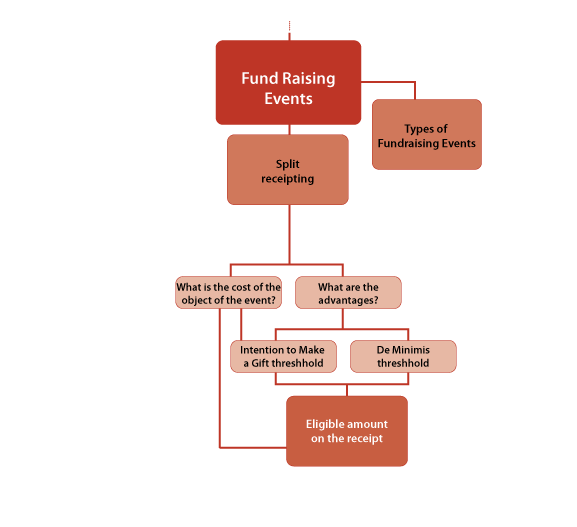
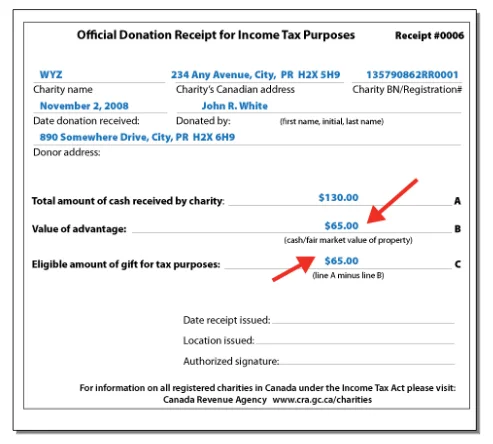
This module provides basic information on advantages. The key areas covered are: What is an advantage? What is split receipting? Advantages and split receipting. How does it work? The importance of Fair Market Value to advantages.
Introduction
This module introduces you to CRA’s Four Part Test.
This is one of two tests that CRA uses to determine if an activity is considered a fundraising or a charitable activity and how the activity‘s expenses have to be reported based on the result of this test.
Note: The other test is the Substantially All Test. Information on the Substantially All Test is available here.
Purpose
The Four Part Test is in the form of four main questions:
Was fundraising the main objective of the activity?
Did the activity include on-going or repeated requests, emotive requests, gift incentives, donor premiums, or other fundraising merchandise?
Was the audience selected based on its ability to give?
Was commission-based remuneration or compensation based on the number or amount of donations?
If you answer “no” to all four questions, a portion of the expenses related to the activity can be reported on the T3010 as charitable, management, or political expenses as applicable and a portion can be reported as fundraising expenses on the T3010.
If you answer “yes” to any one question, all of the activity’s expenses have to be reported as fundraising expenses on the T3010 form.
Example
Charity Z has the mission of helping seniors live a healthy and safe lives. One of its program is the prevention of elder abuse. Charity Z publishes and sends out a 4-page brochure to the general public on:
signs of elder abuse
the public should take action to stop elder abuse
how Charity Z can help
other community resources
The back cover of the brochure describes the programs of Charity Z with a note stating that donations are welcome to support the programs.
The staff and volunteer prepare and mail out this brochure as part of their regular activities. There is no compensation based on the number of donations received.
Explanation: Applying the Four Part Test to the Case of Charity Z
Fundraising is not the main objective of the activity. The purpose of the brochure is to inform the public about elder abuse and to urge them to take action. Less than 25% of the brochure content is about donations.
The brochure does not include on-going, repeated or emotive requests for donations.
The audience was not selected based on its ability to give.
There is no commission-based remuneration or compensation.
A majority of the expenses are to be allocated as charitable expenses with less than 25% as fundraising expenses.
Main Objective
Question 1: Was fundraising the main objective of the activity?
To determine whether the main object of an activity is fundraising, the CRA looks at three things:
the amount of resources devoted to the fundraising component of the activity
the nature of the activity
the content of the activity
Each of these areas is explained more below:
1(a) Amount of Resources
The amount of resources devoted to the fundraising component of the activity.
CRA considers resources to include all of a charity’s financial assets and resources such as staff, volunteers, directors, space, and equipment that the charity can use to further its purposes.
If most of your resources are used for fundraising purposes as reflected in the amount of content and the cost, then the main objective of the activity is fundraising. This is possible even if some resources are used for other objectives.
1(b) Nature of the Activity
These activities by its nature are generally considered as fundraising activities.
Paid advertisement except when the ad is only on the charity’s programs and services.
Infomercial
Telemarketing
Activities with content related to charitable gaming
Activities with content related to products and services being sold as a fundraiser by or on behalf of the charity.
Note: Free Public Service Announcement (PSA) is generally not considered a fundraising activity.
1(c) Content of the Activity
When your activity has both fundraising and charitable components, it may be difficult to separate the two components.
For example, a charity working with autistic children arranges for a television interview to discuss the challenges faced by them and their families. While talking about the issue, the need for funds and how people can donate is discussed. So how can the charitable component be distinguished from the fundraising component?
CRA looks for four features in the content of the activity to determine if it is a fundraising activity or not. In general, if an activity contains one of the features, it is a charitable activity and expenses should be allocated accordingly.
The four features of the contents of an activity that CRA looks for are:
to advance the programs and services of the charity
to raise awareness of an issue
to provide useful information to the public or the stakeholders about the charity’s work or an issue related to that work
to be transparent and accountable for its practices by providing information about its structure, operations, or performance to the public and to its stakeholders.
Each of these features of the contents of an activity is explored in detail below:
Advancing Programs and Services
If the main objective of your activity is:
to provide information to further the objectives of the charity
with
the beneficiaries or potential beneficiaries of the charity as the primary audience
This activity will generally be considered a charitable activity. The expenditures associated with the activity are thus to be reported as charitable expenditures.
Exception: When the programs and services of a charity are profiled as a means to encourage donations, the activity is considered a fundraising activity. The expenses incurred are considered fundraising expenditures.
Example:
A brochure describing the services of a seniors’ centre is distributed to seniors’ households in the area served by the centre.
Costs of the resources for this activity are considered charitable expenses since object of the activity is to further the centre as charitable objectives.
Raising Awareness
Raising awareness among the public or a segment of the public may be considered a charitable activity as long as:
it will fulfill the charity’s objective
OR
the charity has expertise on a matter of public concern
Example:
A charity buys a newspaper advertisement announcing a public forum on Labour Standards and Temporary Foreign Workers. One-quarter of the ad space states that the charity needs funds to conduct research on the issue and that donations are welcome.
The main objective of this activity is to increase public awareness and not to fundraise.
So, 75% of the expenses are charitable expenses 25% of the expenses are fundraising expenses
iii. Providing Useful Information
In this feature, a charity’s activity can be considered charitable if the activity provides useful information to:
prompt an action
OR
to change a behaviour related to its charitable objectives
AND
is directed towards its beneficiaries and/or potential beneficiaries
Providing information on the charity’s programs, services, and operations to the general public is not generally considered under this feature.
Example:
A charity whose object is to prevent prostate cancer may publish information on what prostate cancer is and why regular testing is important.
This activity is considered a charitable and not fundraising activity. Therefore, expenses incurred by this activity are not fundraising expenses.
Being Transparent and Accountable
Your charity may regularly publish reports such as annual reports, financial information, and other reports about its performance. Part of these reports may contain information acknowledging donor support and requesting further support. Because your main objective of these reports is not fundraising but rather part of being transparent and accountable, this activity would not be considered as a fundraising activity.
Exceptions:
Activities for generic branding, that is, for the promotion and marketing of your charity’s name, logo, or past work, are usually considered fundraising activities.
Promotions or branding through cause-related marketing is considered fundraising and any expenses incurred are fundraising expenses.
Question 2: Did the activity include on-going or repeated requests, emotive requests, gift incentives, donor premiums, or other fundraising merchandise?
The following activities are generally considered fundraising:
an activity including repeated or ongoing solicitations
activities that use emotional appeals in the request
telethons are usually considered fundraising as they appeal to emotion
activities that provide incentives, premiums, or merchandise to donors or prospective donors regardless of how the items are treated on the receipts.
Question 3: Target Audience – Was the audience selected based on its ability to give?
The following conditions will make an activity a fundraising activity:
the audience is selected based on its ability to give
the medium chosen for the activity attracts an audience that has the ability to give and not the potential beneficiaries or the audience that would have an interest in the charity’s programming activities
Question 4: Was commission-based remuneration or compensation based on the number or amount of donations?
This part of the test is based on how your charity calculates compensation for people involved in the charity’s activities.
If a person responsible for an activity is paid by commission or other compensation based on the amount or number of donations, the whole activity is considered fundraising.
If compensation is based on the amount of work done and not on the results, and the main objective is not fundraising, then the activity may not be considered wholly fundraising.
Exceptions
CRA recognizes that there are instances where an activity may serve multiple purposes. It may advance a charity’s programs and as a means to raise funds for the charity. So the Guidance lists three exceptions to allocation of fundraising expenditures:
An activity that raises revenues based on the charity’s work with its beneficiaries such as the sale of goods from the operation of a sheltered workshop involving persons with disabilities.
The charity mounts an event featuring its beneficiaries for treatment purposes or to foster their skills or well-being, such as a concert performance by autistic children or an endurance race to build the stamina of cancer survivors;
The charity ties a fundraising event appeal to a political activity allowed under the Income Tax Act such as mounting a public awareness campaign about a policy issue.
Note: Political activity allowed under the Income Tax Act has to be non-partisan and using less than 10% of the charity’s resources.
Summary
The four main questions in the Four Part Test are:
Was fundraising the main objective of the activity?
Did the activity include on-going or repeated requests, emotive requests, gift incentives, donor premiums, or other fundraising merchandise?
Was the audience selected based on its ability to give?
Was commission-based remuneration or compensation based on the number or amount of donations?
More information on the Four Part Test can be found at the CRA website here.
Notice
Information in this module is provided for general educational purposes and not as legal or accounting advice. Consult a lawyer or accountant for professional advice.
Information is accurate as of 2019.
For changes after this date, consult Canada Revenue Agency.
In this evolving economic landscape, collaboration with our firm offers clients a strategic advantage. With Cambodia’s reform-driven investment environment and Canada’s expanding footprint in Southeast Asia, our team of experienced consultants and legal advisors provides tailored guidance to help businesses navigate cross-border opportunities. We focus in developing comprehensive legal strategies, structuring international partnerships, and ensuring compliance in emerging markets.
By leveraging our regional insight and international expertise, you benefit from a trusted partner dedicated to helping you capitalize on growth potential in Cambodia and beyond.
Book a Consultation with Northfield & Associates
Your Trusted Partner in International Bilateral Relations
At Northfield & Associates are focus in Foreign Direct Investment (FDI), international trade missions, and cross-border legal strategy. Our team of experienced consultants and legal advisors offers tailored guidance and strategic insight to help you navigate the complexities of international partnerships and development opportunities.
Whether you choose to meet in person at one of our offices or connect virtually, we provide flexible and accessible consultation options. During your session, we’ll assess your goals, review key documentation, and guide you through every stage of your FDI or trade mission engagement.
Let us help you take the next step with confidence supported by trusted legal and strategic counsel every step of the way.
Take the First Step Today
If you believe you may be eligible for legal relief or simply need sound legal advice, we’re here to help. Contact us today to book your consultation. Let us provide the clarity, strategy, and peace of mind you need to move forward.
We serve our clients in English, Cambodian, Vietnamese, Mandarin and Cantonese, especially in Asian clients.
If you or anybody that you know, think that you meet the requirements and wish to receive further information.
We can help you start the application process and confirm eligibility requirements to participate.
We Offer Consultations & Meetings by Phone & Virtually. Affordable Fees.
Disclaimer:
The information contained in this article is provided for general information purposes only and does not constitute legal or other professional advice. Readers should seek tailored legal advice in relation to their personal circumstances.
Northfield & Associates International Corporation is a global consulting firm serving private enterprises, public institutions, not-for-profit organizations, and institutional capital providers. Operating across Cambodia, Canada, and global markets, the firm supports capital deployment, regulatory navigation, and enterprise decision-making in complex economic and geopolitical environments. Northfield & Associates delivers customized, execution-focused advisory solutions that drive measurable transformation, strengthen competitiveness, and enhance long-term highest value opportunities. The firm incorporates consulting, legal, regulatory, financial, and risk expertise to enable disciplined capital allocation, strong governance, and operational resilience. Northfield & Associates upholds a culture of applied insight and innovation, supporting clients across digital transformation, growth strategy, and organizational capability building. The firm advises individual, leading global corporations, midsize enterprises, government agencies, and mission-driven organizations through long-term partnerships. Enterprise-wide risk management, professional ethics, and fiduciary standards are embedded across all operations. Northfield & Associates’ diverse, globally unified teams are committed to execution certainty and sustainable, risk-adjusted returns aligned with ESG and stakeholder objectives.
Forward-Looking Information
This news release contains forward-looking information. All statements, other than statements of historic fact, that address activities, events or developments that the Company believes, expects or anticipates will or may occur in the future constitute forward-looking information.
This forward-looking information reflects the current expectations or beliefs of the Company based on information currently available to the Company.
Forward-looking information is subject to a number of risks and uncertainties that may cause the actual results of the Company to differ materially from those discussed in the forward-looking information, and even if such actual results are realized or substantially realized, there can be no assurance that they will have the expected consequences to, or effects on the Company. Factors that could cause actual results or events to differ materially from current expectations include, among other things: the failure to finalize negotiations concerning the increase of the Loan or to close such transaction and the failure of the Company to complete the acquisition of the Company Facility; operating performance of facilities; environmental and safety risks; delays in obtaining or failure to obtain necessary permits and approvals from government authorities; unavailability of plant, equipment or labour; inability to retain key management and personnel; changes to regulations or policies affecting the Company’s activities; and the other risks disclosed under the heading “Risk Factors” and elsewhere in the Company’s amended annual information.
Forward-looking information speaks only as of the date on which it is made and, except as may be required by applicable securities laws, the Company disclaims any intent or obligation to update any forward-looking information, whether as a result of new information, future events or results or otherwise. Although the Company believes that the assumptions inherent in the forward-looking information are reasonable, forward-looking information is not a guarantee of future performance and accordingly undue reliance should not be put on such information due to the inherent uncertainty therein.
Questions?
info@northfied.biz
Within Corporate Newsroom
Media Contact:
media@northfied.biz
Press contact
PR consultants press@northfied.biz
NOT LEGAL ADVICE. Information made available on this website in any form is for information purposes only. It is not, and should not be taken as, legal advice. You should not rely on, or take or fail to take any action based upon this information. Never disregard professional legal advice or delay in seeking legal advice because of something you have read on this website. Northfield & Associates professionals will be pleased to discuss resolutions to specific legal concerns you may have.
Handling Conflicts of Interest on the Board of a Charity
Handling Conflicts of Interest
Are you involved in decision-making or representing a non-profit organization? This could mean holding the position of executive director or being a member of the board, among others. If that’s the case, it’s crucial to manage conflicts of interest effectively and prioritize the use of the non-profit’s resources towards achieving its mission. Upholding the organization’s best interests should always be your primary responsibility when carrying out tasks on behalf of the non-profit.
Effectively manage conflicts of interest
Identifying conflicts of interest can be a nuanced process, and avoidance may not always be possible. Here are the signs to look for and the actions to take if you come across one.
How to recognize conflicts of interest
A conflict of interest arises when an external observer could question whether your decisions on behalf of the non-profit were influenced by interests other than those of the organization. This encompasses situations where your personal interests or those of individuals you have a connection with, such as a spouse, employer, company you own shares in, or another organization you are involved with, could potentially sway your actions.
For instance, let’s consider a scenario where a non-profit’s board needs to purchase insurance for the organization. One of the directors on the board serves as an insurance advisor. If the non-profit chooses to buy insurance through this director, the director will receive a commission, thereby creating a conflict of interest.
While it’s advisable to avoid conflicts of interest, it may not always be feasible. In such cases, you must take the required actions to address the conflict of interest.
Steps directors must take when faced with a conflict of interest
Directors of Canadian non-profit organizations are required to promptly inform their fellow directors about any potential conflicts of interest they may have.
During the first board meeting, directors must disclose any interests they hold in another business or organization that could potentially conflict with the non-profit’s interests. If a new conflict of interest arises subsequently, it must be disclosed at the next board meeting.
If a director intends to enter into an agreement with the non-profit, specific rules must be followed. For instance, if a director wishes to purchase a property that the non-profit is selling, a conflict of interest arises. In such cases, the other directors must evaluate the offer’s alignment with the organization’s interests, and the conflicted director cannot take part in the discussion or vote on the matter.
In exceptional circumstances, conflicted directors may decide their own remuneration, but the amount must be reasonable. The meeting minutes must include information on any conflicts of interest and details of who participated in the decision-making or voting process.
Steps for executive directors to take when confronted with a conflict of interest
Executive directors of Canadian non-profit organizations must adhere to specific regulations when entering into an agreement with their organization. For instance, if an executive director wishes to sell something that the non-profit requires for its operations.
Despite usually being responsible for authorizing such agreements, an executive director with a conflict of interest cannot do so in such a scenario. The board must evaluate whether the offer aligns with the non-profit’s interests and authorize the executive director to enter into an agreement with the organization.
Utilize the resources of the non-profit organization to accomplish its mission
Non-profit organizations possess resources such as funding, property, or information, all of which are owned by the organization. It is necessary to utilize these resources towards fulfilling the non-profit’s mission.
Before utilizing these resources for a different purpose, it is essential to obtain consent from the individual or group to whom you are accountable. In the case of an executive director of a Canadian non-profit organization, the board’s approval is necessary, whereas board members must seek permission from the non-profit’s members.
Authorization is required to undertake activities such as:
Withdrawing funds from the non-profit’s bank accounts or utilizing its credit cards to pay for personal expenses, even if it is temporary.
Utilizing the assets of the non-profit for personal purposes.
Loaning the non-profit’s assets or money to someone or another organization with whom you have a relationship.
Utilizing confidential information about the non-profit or its operations to benefit yourself or any other person or organization.
If the person or people you ask for permission determine that your request is in the non-profit’s best interest, they can approve it. For instance, the non-profit could gain from leasing some of its vacant space to you for a fair rent.
Not following these regulations may lead to possible repercussions
If you fail to adhere to these rules, you could face severe consequences. If you act on behalf of the non-profit in a situation where you have a conflict of interest or misuse its resources without permission, the non-profit may take legal action against you. In such cases, the non-profit may ask the court to nullify your actions and require you to pay for any harm or profit incurred without permission.
In certain circumstances, other individuals may also take legal action against you. If you mishandle a conflict of interest and cause harm to someone, you could be held personally accountable for the damages.
Additionally, misusing a non-profit’s resources may constitute a crime, such as fraud, if you take money from the organization without authorization.
Lastly, the non-profit may remove you from your position as a director or executive director. If you have been found guilty of defrauding an organization or repeatedly violating non-profit laws, a court may even prohibit you from serving on any non-profit board for up to five years.
At Northfield & Associates our expert teams guidance on compliance requirements. Our team understands Canadian charity law and can help ensure your organisation follows proper procedures.
In this evolving economic landscape, collaboration with our firm offers clients a strategic advantage. With Cambodia’s reform-driven investment environment and Canada’s expanding footprint in Southeast Asia, our team of experienced consultants and legal advisors provides tailored guidance to help businesses navigate cross-border opportunities. We focus in developing comprehensive legal strategies, structuring international partnerships, and ensuring compliance in emerging markets.
By leveraging our regional insight and international expertise, you benefit from a trusted partner dedicated to helping you capitalize on growth potential in Cambodia and beyond.
Book a Consultation with Northfield & Associates
Your Trusted Partner in International Bilateral Relations
At Northfield & Associates are focus in Foreign Direct Investment (FDI), international trade missions, and cross-border legal strategy. Our team of experienced consultants and legal advisors offers tailored guidance and strategic insight to help you navigate the complexities of international partnerships and development opportunities.
Whether you choose to meet in person at one of our offices or connect virtually, we provide flexible and accessible consultation options. During your session, we’ll assess your goals, review key documentation, and guide you through every stage of your FDI or trade mission engagement.
Let us help you take the next step with confidence supported by trusted legal and strategic counsel every step of the way.
Take the First Step Today
If you believe you may be eligible for legal relief or simply need sound legal advice, we’re here to help. Contact us today to book your consultation. Let us provide the clarity, strategy, and peace of mind you need to move forward.
We serve our clients in English, Cambodian, Vietnamese, Mandarin and Cantonese, especially in Asian clients.
If you or anybody that you know, think that you meet the requirements and wish to receive further information.
We can help you start the application process and confirm eligibility requirements to participate.
We Offer Consultations & Meetings by Phone & Virtually. Affordable Fees.
Disclaimer:
The information contained in this article is provided for general information purposes only and does not constitute legal or other professional advice. Readers should seek tailored legal advice in relation to their personal circumstances.
Northfield & Associates International Corporation is a global consulting firm serving private enterprises, public institutions, not-for-profit organizations, and institutional capital providers. Operating across Cambodia, Canada, and global markets, the firm supports capital deployment, regulatory navigation, and enterprise decision-making in complex economic and geopolitical environments. Northfield & Associates delivers customized, execution-focused advisory solutions that drive measurable transformation, strengthen competitiveness, and enhance long-term highest value opportunities. The firm incorporates consulting, legal, regulatory, financial, and risk expertise to enable disciplined capital allocation, strong governance, and operational resilience. Northfield & Associates upholds a culture of applied insight and innovation, supporting clients across digital transformation, growth strategy, and organizational capability building. The firm advises individual, leading global corporations, midsize enterprises, government agencies, and mission-driven organizations through long-term partnerships. Enterprise-wide risk management, professional ethics, and fiduciary standards are embedded across all operations. Northfield & Associates’ diverse, globally unified teams are committed to execution certainty and sustainable, risk-adjusted returns aligned with ESG and stakeholder objectives.
Forward-Looking Information
This news release contains forward-looking information. All statements, other than statements of historic fact, that address activities, events or developments that the Company believes, expects or anticipates will or may occur in the future constitute forward-looking information.
This forward-looking information reflects the current expectations or beliefs of the Company based on information currently available to the Company.
Forward-looking information is subject to a number of risks and uncertainties that may cause the actual results of the Company to differ materially from those discussed in the forward-looking information, and even if such actual results are realized or substantially realized, there can be no assurance that they will have the expected consequences to, or effects on the Company. Factors that could cause actual results or events to differ materially from current expectations include, among other things: the failure to finalize negotiations concerning the increase of the Loan or to close such transaction and the failure of the Company to complete the acquisition of the Company Facility; operating performance of facilities; environmental and safety risks; delays in obtaining or failure to obtain necessary permits and approvals from government authorities; unavailability of plant, equipment or labour; inability to retain key management and personnel; changes to regulations or policies affecting the Company’s activities; and the other risks disclosed under the heading “Risk Factors” and elsewhere in the Company’s amended annual information.
Forward-looking information speaks only as of the date on which it is made and, except as may be required by applicable securities laws, the Company disclaims any intent or obligation to update any forward-looking information, whether as a result of new information, future events or results or otherwise. Although the Company believes that the assumptions inherent in the forward-looking information are reasonable, forward-looking information is not a guarantee of future performance and accordingly undue reliance should not be put on such information due to the inherent uncertainty therein.
Questions?
info@northfied.biz
Within Corporate Newsroom
Media Contact:
media@northfied.biz
Press contact
PR consultants press@northfied.biz
NOT LEGAL ADVICE. Information made available on this website in any form is for information purposes only. It is not, and should not be taken as, legal advice. You should not rely on, or take or fail to take any action based upon this information. Never disregard professional legal advice or delay in seeking legal advice because of something you have read on this website. Northfield & Associates professionals will be pleased to discuss resolutions to specific legal concerns you may have.
10 Essential Policies for Canadian Charities & Nonprofits
Operating a charity or nonprofit in Canada means more than just fulfilling a mission; it also involves managing the legal, financial, and ethical responsibilities that come with running an organization. One of the most important ways to ensure smooth operations and compliance with Canadian laws is by implementing clear, comprehensive policies. These policies help establish trust, protect the organization’s assets, and maintain transparency with the public, donors, and employees.
Quick Policy Checklist: Does Your Charity Have These?
Use this checklist to assess your organization’s policy readiness. A well-governed charity should have all of these policies documented and accessible to board members, staff, and volunteers.
Code of Conduct Policy – Ethical standards for everyone in your organization
Conflict of Interest Policy – Disclosure and management of personal interests
Financial Management Policy – Budgeting, expenses, and financial controls
Privacy and Confidentiality Policy – Protection of personal and sensitive data
Human Resources Policies – Fair employment practices and workplace standards
Whistleblower Protection Policy – Safe reporting of misconduct
Anti-Discrimination Policy – Prevention of harassment and discrimination
Risk Management Policy – Identification and mitigation of organizational risks
Volunteer Management Policy – Recruitment, training, and support for volunteers
Fundraising and Donor Stewardship Policy – Ethical fundraising practices
Missing more than 3 policies? Your organization may be at risk for compliance issues or operational challenges. Read on to understand why each policy matters and how to implement them effectively.
Are Policies Important for Charities and Nonprofits?
Policies are essential for any organization, as they establish clear expectations for behavior, processes, and decision-making. For Canadian charities and nonprofits, whether registered in Toronto, Ontario (which has the highest amount of registered charities in the country) or across this great nation, these policies ensure compliance with laws such as the Canada Not-for-Profit Corporations Act (CNCA) and regulations from the Canada Revenue Agency (CRA).
For Ontario-incorporated charities, the Ontario Not-for-Profit Corporations Act (ONCA), which came into effect on October 19, 2021, governs corporate operations and includes specific requirements for conflict of interest policies and audit procedures.
By implementing appropriate policies, organizations can prevent internal issues like misconduct and financial mismanagement while also promoting a culture of transparency and accountability.
Understanding Policies vs. Procedures
Many charities confuse policies with procedures, but understanding the difference is crucial for effective governance.
Policies define the “what” and “why” – they establish rules, principles, and guidelines that govern your organization’s operations. Policies are broad statements that reflect your organization’s values and legal obligations. For example, a conflict of interest policy states that board members must disclose potential conflicts and that decisions must be made in the organization’s best interest.
Procedures define the “how” – they are step-by-step instructions for implementing policies. Procedures are detailed and specific. For example, a conflict of interest procedure would outline exactly how a board member completes a disclosure form, when they must recuse themselves from discussions, and how the board documents the conflict resolution.
Think of it this way: Your financial management policy establishes that expenses over $5,000 require board approval. Your financial management procedure explains the exact steps to submit an expense request, who reviews it, the timeline for approval, and how the decision is recorded.
Most organizations need both policies and procedures, but policies should be established first as they provide the framework for developing effective procedures.
Provincial Considerations for Canadian Charities
While federal law governs all registered Canadian charities through the Income Tax Act and CRA regulations, provincial laws may also affect your organization’s policies, particularly in these areas:
Employment Standards: Each province has its own employment standards legislation that affects HR policies. For example, Ontario’s Employment Standards Act sets minimum requirements for vacation time, termination notice, and workplace rights that must be reflected in your HR policies.
Privacy Laws: While PIPEDA applies federally and in most provinces, British Columbia (PIPA), Alberta (PIPA), and Quebec (Law 25) have their own privacy legislation. Charities operating in these provinces must ensure their privacy policies comply with provincial requirements.
Fundraising Regulations: Charitable fundraising is regulated at the provincial level. Some provinces require registration before conducting fundraising activities or have specific rules about lottery licenses, gaming events, or door-to-door solicitation.
Corporate Governance: If your charity is incorporated provincially (such as under Ontario’s Not-for-Profit Corporations Act, 2010), your governance policies must align with provincial corporate law requirements in addition to federal charity regulations.
Ontario-incorporated charities should note that ONCA contains specific requirements for conflict of interest policies, director duties, and audit procedures that must be reflected in organizational policies.
Public Policy and Advocacy Activities: Understanding your charity’s ability to engage in advocacy is crucial for policy development. As of 2018, the CRA abolished the previous 10% limit on non-partisan political activities. Under current CRA guidance (CG-027), registered charities can now engage in unlimited Public Policy Dialogue and Development Activities (PPDDAs), provided these activities are non-partisan and further a charitable purpose. This means your policies should not restrict advocacy activities based on outdated percentage limits. Instead, governance policies should ensure that any public policy activities remain non-partisan, subordinate to charitable purposes, and properly documented. Organizations involved in advocacy work should develop clear policies outlining how they ensure compliance with these requirements while maximizing their ability to influence public policy in their areas of charitable work.
When developing policies, organizations should consult both federal CRA guidelines and relevant provincial legislation to ensure comprehensive compliance.
10 Policies Every Canadian Charity & Nonprofit Should Have
Every Canadian charity and nonprofit needs clear, effective policies to operate legally and responsibly. Here are 10 essential policies every organisation should have in place.
1. Code of Conduct Policy
A Code of Conduct and Ethics Policy lays out the expectations for how all members of the organization, from board members to volunteers, should behave. It promotes a positive work environment where integrity, respect, and transparency are prioritized.
Why it’s important: This policy helps set the ethical framework for your organization, guiding decisions and actions.
What it includes: Guidelines for ethical behavior, reporting procedures for violations, and how to handle conflicts of interest.
Real-World Example: A youth mentorship charity discovered that one of its volunteer mentors was using their position to promote their private tutoring business to program participants. Because the organization had a clear code of conduct that prohibited using volunteer roles for personal business gain, they were able to address the situation immediately and remove the volunteer while documenting the proper handling of the issue.
2. Conflict of Interest Policy
To maintain trust with stakeholders, including donors and the public, charities and nonprofits need to prevent conflicts of interest that could affect their decision-making. A Conflict of Interest Policy outlines how board members, staff, and volunteers should disclose any personal interests that may interfere with the organization’s objectives.
For Ontario-incorporated charities, ONCA requires directors and officers to disclose conflicts and comply with specific procedural requirements when conflicts arise.
Why it’s important: This ensures that decisions are made in the best interest of the organization, not for personal gain.
What it includes: Clear examples of conflicts of interest, how to disclose conflicts, and steps to resolve potential issues.
3. Financial Management Policy
Charities and nonprofits must maintain financial transparency, especially when managing donations, grants, and other funds. A Financial Management Policy outlines the management of finances, ensuring the responsible use of funds while adhering to legal standards.
Why it’s important: This policy helps ensure proper handling of donations and grants, keeping the organization in good standing with the CRA.
What it includes: Budgeting processes, expense management, approval procedures, and financial reporting requirements.
Real-World Example: A community arts charity implements a financial management policy requiring two signatures on all cheques over $1,000 and board approval for any expenses exceeding $5,000. When their executive director wants to purchase new sound equipment costing $7,500, they must present a proposal to the board showing quotes from three suppliers, demonstrating fair market value, and explaining how the purchase aligns with the charity’s programs. This process prevents impulsive spending and ensures board oversight of significant financial decisions.
4. Privacy and Confidentiality Policy
Handling sensitive information is part of running a charity or nonprofit, from donor details to client data. A Privacy and Confidentiality Policy ensures that personal and sensitive data is collected, stored, and used in compliance with privacy laws likePIPEDA (Personal Information Protection and Electronic Documents Act).
Why it’s important: Protecting the privacy of donors, clients, and employees helps build trust and ensures compliance with Canadian privacy laws.
What it includes: Data collection practices, access controls, and breach protocols.
Real-World Example: A homeless shelter charity collects sensitive personal information from clients, including health conditions, addiction histories, and government identification numbers needed to access social services. Their privacy policy clearly outlines what information is collected, why it’s necessary, how long it’s retained, who can access it, and how it’s secured both physically (locked filing cabinets) and digitally (password-protected databases with limited user access). When a client requests to review their file or asks that certain historical information be removed, the policy provides clear procedures for honoring these requests while maintaining records required for funding compliance.
5. Human Resources Policies
For charities and nonprofits that employ staff, HR policies are crucial for setting expectations and ensuring fair treatment. These policies outline how employees are hired, trained, evaluated, and treated throughout their employment.
Why it’s important: HR policies ensure that all employees are treated fairly and legally in accordance with Canadian employment laws.
What it includes: Hiring practices, anti-discrimination policies, workplace safety measures, and employee conduct expectations.
Real-World Example: An immigrant settlement services charity develops comprehensive HR policies covering recruitment (requiring diverse hiring panels to reduce bias), onboarding (including cultural sensitivity training), performance management (with clear evaluation criteria and regular feedback), and termination procedures (ensuring proper documentation and compliance with employment standards). When they need to terminate an underperforming program coordinator, the HR policy requires documentation of performance issues, a performance improvement plan with specific goals, regular check-ins, and a clear timeline. This protects both the employee’s rights and the organization from potential wrongful dismissal claims.
6. Whistleblower Protection Policy
A Whistleblower Protection Policy allows individuals to report misconduct or unethical behavior without fear of retaliation. For charities and nonprofits, this is vital for maintaining transparency and accountability.
Why it’s important: It protects the individuals who come forward and helps maintain a transparent and ethical environment.
What it includes: How to report issues, assurance of confidentiality, and protection against retaliation.
Real-World Example: A health advocacy charity establishes a whistleblower policy that provides multiple reporting channels: an anonymous tip line, a confidential email address monitored by the board chair, and the option to report directly to an external lawyer. When a staff member discovers that the executive director is submitting inflated expense reports, they can report this anonymously through the tip line. The policy requires the board to investigate all reports within 30 days, prohibits any retaliation against the whistleblower (including subtle actions like workload changes or exclusion from meetings), and outlines the consequences for anyone who retaliates. This encouraged the staff member to report the fraud early, preventing more significant financial losses.
7. Anti-Discrimination Policy
An Anti-Harassment and Discrimination Policy is essential for creating a safe, respectful environment for everyone involved in your charity or nonprofit. This policy outlines acceptable behaviors and the steps for handling complaints of harassment or discrimination.
Why it’s important: It helps prevent and address harassment or discrimination, ensuring a positive and inclusive environment.
What it includes: Definitions of harassment and discrimination, reporting procedures, and disciplinary actions for violations.
Real-World Example: A multicultural community services charity develops a comprehensive anti-discrimination policy that defines discrimination and harassment based on all protected grounds under human rights legislation (race, ethnicity, religion, gender, sexual orientation, age, disability, etc.). When a volunteer complains that another volunteer made repeated comments about their accent and suggested they “learn to speak properly,” the policy provides a clear investigation process. A designated harassment officer (trained in investigations) interviews both parties confidentially, reviews any witnesses or documentation, and determines whether discrimination occurred. The policy outlines progressive discipline, which in this case resulted in mandatory diversity training for the offending volunteer and a written warning. The policy also requires the organization to examine whether systemic issues contributed to the incident and to implement preventive measures.
8. Risk Management Policy
Every organization faces risks, whether financial, operational, or reputational. A Risk Management Policy helps charities and nonprofits identify potential risks and develop strategies to manage them effectively.
Why it’s important: This policy allows the organization to be prepared for unexpected situations, minimizing negative impacts.
What it includes: Risk identification, assessment, and mitigation strategies, along with emergency response plans.
Real-World Example: An outdoor education charity that runs summer camps for children develops a comprehensive risk management policy. They conduct an annual risk assessment identifying potential hazards: severe weather events, medical emergencies, transportation accidents, child safety incidents, financial risks (enrollment shortfalls), and reputational risks (social media crises). For each risk, they document the likelihood and potential impact, then establish mitigation strategies – maintaining insurance coverage, training all staff in first aid, implementing strict child supervision ratios, conducting background checks, diversifying funding sources, and creating a crisis communication protocol. When a severe thunderstorm hits during a camp session, staff follow the emergency weather protocol, ensure all children are accounted for and sheltered safely, notify parents promptly, and document the incident. Because risks were identified and planned for, a potentially dangerous situation was managed effectively.
9. Volunteer Management Policy
Volunteers are often the backbone of charities and nonprofits, and a Volunteer Management Policy helps ensure that volunteers are properly recruited, trained, and managed. This policy also provides clear expectations and roles for volunteers.
Why it’s important: It helps charities effectively manage volunteer resources, ensuring they feel supported and valued.
What it includes: Recruitment procedures, training, safety measures, and how to evaluate volunteer performance.
Real-World Example: A food bank charity develops a comprehensive volunteer management policy. Recruitment includes a simple application process, an interview to assess skills and interests, a criminal background check for volunteers handling cash or working unsupervised, and reference checks for volunteers in leadership positions. New volunteers complete an orientation covering the organization’s mission, confidentiality expectations, safety procedures, and their specific role responsibilities. The policy establishes that volunteers receive the same anti-harassment protections as staff, are covered by the organization’s liability insurance, and can access expense reimbursement for pre-approved costs. Regular volunteer recognition (thank you events, milestone celebrations, volunteer spotlights in newsletters) is built into the policy. When a volunteer’s behavior becomes problematic – repeatedly arriving late or being rude to clients – the policy provides a progressive approach similar to staff management: informal coaching, written expectations, and if necessary, ending the volunteer relationship.
10. Fundraising and Donor Stewardship Policy
This policy outlines how a charity or nonprofit solicits donations and stewards donor relationships. It ensures that fundraising practices are transparent, ethical, and in line with Canadian laws governing charitable fundraising.
Why it’s important: It protects the integrity of fundraising efforts, ensuring donors trust that their contributions are being used as intended.
What it includes: Fundraising guidelines, donor recognition practices, and how to handle restricted funds.
Real-World Example: An animal rescue charity implements a comprehensive fundraising policy. It establishes that all fundraising materials must clearly state the charity’s registration number and accurately describe how funds will be used. When a donor makes a $10,000 contribution specifically for a new veterinary clinic, the policy requires the charity to track this restricted donation separately, use it only for the designated purpose, and provide the donor with updates on the project’s progress. The policy prohibits percentage-based fundraising (where fundraisers keep a percentage of donations raised) and requires written agreements with any professional fundraisers outlining compensation structure and ethical standards. Donor information is kept confidential and never sold or shared. The charity maintains a gift acceptance policy declining donations that don’t align with their mission – when someone offers to donate exotic animals that the charity can’t properly care for, they respectfully decline.
The policy also addresses legacy giving and estate donations, ensuring proper procedures when the charity is named as a beneficiary. In Ontario, where the correct legal term is “estate trustee” rather than “executor” under the Succession Law Reform Act, the policy uses appropriate terminology and outlines how the charity works with estate trustees to receive bequests properly.
Recognition practices are outlined: donations under $500 receive a donation receipt and thank you letter; donations over $500 also receive a personal phone call; major donors are invited to special events.
Common Policy Mistakes to Avoid
Even organizations with policies in place can undermine their effectiveness through these frequent errors:
1. Creating Policies That Aren’t Actually Followed
The most dangerous policy situation is having written policies that exist only to satisfy compliance requirements but aren’t actually implemented. This demonstrates governance failure and creates greater liability than having no policy at all. When problems arise, having an ignored policy proves the board knew about the risk and failed to address it. Ensure policies reflect your organization’s actual practices, not idealized versions of what you wish you did.
2. Failing to Distinguish Between Policies and Procedures
Many organizations create documents that confuse policies with detailed procedures. Policies should be relatively stable governance documents approved by the board that outline principles and parameters. Procedures are operational documents that can be updated by management as processes evolve. When you combine them, you force the board to approve minor procedural changes constantly, or you find that your board-approved policies quickly become outdated because the actual steps have changed.
3. Using Template Policies Without Customization
Downloading a policy template from the internet or copying another charity’s policies might seem efficient, but it creates significant problems. Templates don’t reflect your organization’s size, programs, jurisdiction, or specific risks. A policy designed for a large multi-staff charity won’t work for a small volunteer-run organization. Provincial laws vary, so an Alberta charity can’t simply adopt Ontario-specific policies. Customize every policy to your actual context, and ensure language reflects what your organization actually does.
4. Not Tailoring Policies to Organization Size
Small charities often feel overwhelmed trying to implement policies designed for large organizations, while large charities sometimes rely on informal practices suitable only for small groups. A charity with three staff members doesn’t need the same elaborate HR infrastructure as one with 50 employees, but it still needs basic written policies. Conversely, large organizations can’t rely on informal understanding and personal relationships – they need documented systems.
5. Neglecting Policy Training and Communication
Creating policies and filing them away doesn’t achieve anything. Board members must receive training on governance policies during orientation and annually thereafter. Staff and volunteers need training on policies relevant to their roles. Make policies accessible – keep them on your shared drive, in your volunteer handbook, or on your internal website. When policies are updated, communicate the changes clearly and provide refresher training if needed.
6. Creating Policies But Failing to Enforce Them
Selective enforcement of policies destroys trust and creates liability. If your expense policy requires receipts for all reimbursements but you waive this requirement for the executive director, you’ve created a problematic double standard. If your conflict of interest policy requires annual disclosures but you only ask for them when convenient, the policy becomes meaningless. Enforce policies consistently across all people and situations, or change the policy to reflect what you’ll actually do.
7. Forgetting to Review and Update Policies Regularly
Laws change, organizational contexts evolve, and policies need regular review. A policy created in 2015 before remote work was common won’t address current needs. Review all policies at least annually, and immediately when there are legal changes, regulatory updates, or organizational restructuring. Assign responsibility for policy review to a specific board committee (usually governance committee) with a defined schedule.
Policy Implementation Timeline: A Practical Approach
Implementing all essential policies at once can overwhelm organizations, particularly smaller charities with limited capacity. Here’s a realistic timeline for developing and implementing comprehensive policies:
Phase 1: Foundation Policies (Months 1-2)
Priority policies that protect your organization from immediate risk:
Conflict of Interest Policy – Prevents governance problems and is scrutinized by CRA
Financial Management Policy – Ensures proper handling of charitable funds
Code of Conduct Policy – Establishes ethical framework for operations
These three policies address the most common areas of compliance failure and should be your first priority. Even basic versions of these policies provide more protection than having none. The board should approve these policies before moving to the next phase.
Phase 2: People Management Policies (Months 3-4)
Policies that govern how you work with people:
Human Resources Policies (if you have employees)
Volunteer Management Policy (if you have volunteers)
Anti-Discrimination Policy (essential for all organizations)
Privacy and Confidentiality Policy (required for handling personal information)
These policies protect both your organization and the people involved in it. They address legal requirements under employment law, human rights legislation, and privacy law. Develop these policies after your foundation is established.
Phase 3: Operational Policies (Months 5-6)
Policies that strengthen operations and risk management:
Risk Management Policy – Identifies and mitigates organizational risks
Fundraising and Donor Stewardship Policy – Ensures ethical fundraising practices
These policies move you from basic compliance to operational excellence. While important, they can be implemented after core policies are in place.
Ongoing: Review and Refinement (Every 6-12 months)
Continuous improvement process:
Review each policy annually, even if no changes are needed
Update policies immediately when laws change or organizational context shifts
Collect feedback from staff, volunteers, and board members about policy effectiveness
Document all policy revisions with version dates and track changes
Provide refresher training when policies are updated
Tips for Successful Implementation:
Start with what you can manage: A simple, clear policy that’s actually used is better than a comprehensive policy that sits in a drawer
Get input: Involve people affected by policies in their development – staff input on HR policies, volunteers input on volunteer policies
Assign responsibility: Designate someone (board committee, executive director, governance lead) responsible for driving policy development forward
Use existing resources: Many provincial nonprofit associations, community foundations, and legal clinics offer policy templates specific to Canadian charities
Document board approval: All policies should be formally approved by board resolution, with the date recorded in minutes
Communicate clearly: Once approved, ensure everyone affected knows the policy exists and where to find it
For very small organizations (all-volunteer boards with no staff), consider developing fewer, more comprehensive policies that combine related areas. For example, a single “Governance Policy” might incorporate code of conduct, conflict of interest, and board operations rather than three separate documents.
The Importance of Regular Policy Reviews
While having policies in place is critical, they should also be reviewed and updated regularly. Changes in the law, evolving organizational needs, and feedback from staff or volunteers may require adjustments. A regular review schedule, ideally once a year, ensures that policies stay relevant and effective.
Review Process: Review policies at least annually, and consider conducting additional reviews when there are changes to the law or organizational structure.
Get Expert Advice: Consult legal experts or professionals in nonprofit law to ensure policies are up-to-date and comply with current regulations.
Key Benefits of Having Clear Policies
Implementing and adhering to policies offers several key benefits for Canadian charities and nonprofits, including:
Ensuring Legal Compliance: Policies help ensure that your organization complies with Canadian laws like the CNCA (or ONCA for Ontario-incorporated charities) and CRA guidelines for registered charities.
Enhancing Transparency: Clear policies build trust with donors, volunteers, and the public, demonstrating your commitment to ethical practices.
Protecting Your Organization: Well-crafted policies help protect the organization’s financial and reputational health by identifying potential risks and providing protocols to address them.
Streamlining Operations: Policies make it easier to manage day-to-day operations, improving efficiency and consistency.
Conclusion
For Canadian charities and nonprofits, policies are essential—not just guidelines. They play a crucial role in ensuring legal compliance, protecting the organization, and promoting transparency. By implementing these essential policies, your charity can establish a strong foundation for success, earn public trust, and concentrate on what matters most: making a positive impact in the community.
Need help developing or reviewing your charity’s policies?
Northfield & Associates specializes in helping Canadian charities establish governance frameworks that satisfy CRA requirements. Our experienced charity lawyers can review your existing policies, identify gaps, and create customized solutions for your organization.
to discuss how we can strengthen your governance framework and ensure CRA compliance.
to learn more about our services and access additional resources for Canadian charity leaders.
Frequently Asked Questions
What policies are legally required for Canadian charities?
The CRA doesn’t mandate specific policies but strongly expects conflict of interest policies. Charities must comply with the Income Tax Act and demonstrate proper governance. Provincial laws may require specific policies: employment standards affect HR policies, privacy laws require privacy policies, and provincial corporate laws (like ONCA for Ontario charities) include conflict of interest and audit requirements. Organizations serving vulnerable populations must comply with sector-specific regulations around child protection.
How often should charity policies be reviewed and updated?
Review policies at least annually. Update immediately when laws change, organizational structure shifts, or problems reveal gaps. Many organizations review different policies quarterly to avoid overwhelming board meetings.
What happens if a charity doesn’t have proper policies in place?
Absent policies create serious risks: CRA compliance issues threatening charitable status, increased liability, denied insurance claims, limited funding opportunities, potential board member liability, and reputational damage. The CRA can revoke charitable status for persistent governance failures.
Are nonprofit policies different from charity policies in Canada?
Yes. All registered charities are nonprofits, but not all nonprofits are registered charities.
Non-Profit Organizations (NPOs) under paragraph 149(1)(l) must meet strict annual tests. Unlike charities, NPOs aren’t fully tax-exempt and cannot issue donation receipts. NPO policies must ensure no proprietary interests are available to members.
Registered charities face additional CRA regulations requiring policies for conflict of interest, financial management, and fundraising practices.
What are the CRA’s requirements for charity policies?
The CRA doesn’t mandate specific policies but expects sound governance. During reviews, the CRA examines whether policies ensure charitable use of resources, prevent private benefit, maintain adequate records, and manage conflicts of interest. The CRA wants proof policies are followed through minutes showing disclosures and recusals. Absent governance policies can contribute to charitable status revocation.
Can charities engage in political or advocacy activities?
Yes. Since 2018, the CRA abolished the 10% limit. Under CRA Guidance CG-027, charities can engage in unlimited Public Policy Dialogue and Development Activities (PPDDAs) if they’re non-partisan and further charitable purposes. Policies must ensure activities remain non-partisan and properly documented.
In this evolving economic landscape, collaboration with our firm offers clients a strategic advantage. With Cambodia’s reform-driven investment environment and Canada’s expanding footprint in Southeast Asia, our team of experienced consultants and legal advisors provides tailored guidance to help businesses navigate cross-border opportunities. We focus in developing comprehensive legal strategies, structuring international partnerships, and ensuring compliance in emerging markets.
By leveraging our regional insight and international expertise, you benefit from a trusted partner dedicated to helping you capitalize on growth potential in Cambodia and beyond.
Book a Consultation with Northfield & Associates
Your Trusted Partner in International Bilateral Relations
At Northfield & Associates are focus in Foreign Direct Investment (FDI), international trade missions, and cross-border legal strategy. Our team of experienced consultants and legal advisors offers tailored guidance and strategic insight to help you navigate the complexities of international partnerships and development opportunities.
Whether you choose to meet in person at one of our offices or connect virtually, we provide flexible and accessible consultation options. During your session, we’ll assess your goals, review key documentation, and guide you through every stage of your FDI or trade mission engagement.
Let us help you take the next step with confidence supported by trusted legal and strategic counsel every step of the way.
Take the First Step Today
If you believe you may be eligible for legal relief or simply need sound legal advice, we’re here to help. Contact us today to book your consultation. Let us provide the clarity, strategy, and peace of mind you need to move forward.
We serve our clients in English, Cambodian, Vietnamese, Mandarin and Cantonese, especially in Asian clients.
If you or anybody that you know, think that you meet the requirements and wish to receive further information.
We can help you start the application process and confirm eligibility requirements to participate.
We Offer Consultations & Meetings by Phone & Virtually. Affordable Fees.
Disclaimer:
The information contained in this article is provided for general information purposes only and does not constitute legal or other professional advice. Readers should seek tailored legal advice in relation to their personal circumstances.
Northfield & Associates International Corporation is a global consulting firm serving private enterprises, public institutions, not-for-profit organizations, and institutional capital providers. Operating across Cambodia, Canada, and global markets, the firm supports capital deployment, regulatory navigation, and enterprise decision-making in complex economic and geopolitical environments. Northfield & Associates delivers customized, execution-focused advisory solutions that drive measurable transformation, strengthen competitiveness, and enhance long-term highest value opportunities. The firm incorporates consulting, legal, regulatory, financial, and risk expertise to enable disciplined capital allocation, strong governance, and operational resilience. Northfield & Associates upholds a culture of applied insight and innovation, supporting clients across digital transformation, growth strategy, and organizational capability building. The firm advises individual, leading global corporations, midsize enterprises, government agencies, and mission-driven organizations through long-term partnerships. Enterprise-wide risk management, professional ethics, and fiduciary standards are embedded across all operations. Northfield & Associates’ diverse, globally unified teams are committed to execution certainty and sustainable, risk-adjusted returns aligned with ESG and stakeholder objectives.
Forward-Looking Information
This news release contains forward-looking information. All statements, other than statements of historic fact, that address activities, events or developments that the Company believes, expects or anticipates will or may occur in the future constitute forward-looking information.
This forward-looking information reflects the current expectations or beliefs of the Company based on information currently available to the Company.
Forward-looking information is subject to a number of risks and uncertainties that may cause the actual results of the Company to differ materially from those discussed in the forward-looking information, and even if such actual results are realized or substantially realized, there can be no assurance that they will have the expected consequences to, or effects on the Company. Factors that could cause actual results or events to differ materially from current expectations include, among other things: the failure to finalize negotiations concerning the increase of the Loan or to close such transaction and the failure of the Company to complete the acquisition of the Company Facility; operating performance of facilities; environmental and safety risks; delays in obtaining or failure to obtain necessary permits and approvals from government authorities; unavailability of plant, equipment or labour; inability to retain key management and personnel; changes to regulations or policies affecting the Company’s activities; and the other risks disclosed under the heading “Risk Factors” and elsewhere in the Company’s amended annual information.
Forward-looking information speaks only as of the date on which it is made and, except as may be required by applicable securities laws, the Company disclaims any intent or obligation to update any forward-looking information, whether as a result of new information, future events or results or otherwise. Although the Company believes that the assumptions inherent in the forward-looking information are reasonable, forward-looking information is not a guarantee of future performance and accordingly undue reliance should not be put on such information due to the inherent uncertainty therein.
Questions?
info@northfied.biz
Within Corporate Newsroom
Media Contact:
media@northfied.biz
Press contact
PR consultants press@northfied.biz
NOT LEGAL ADVICE. Information made available on this website in any form is for information purposes only. It is not, and should not be taken as, legal advice. You should not rely on, or take or fail to take any action based upon this information. Never disregard professional legal advice or delay in seeking legal advice because of something you have read on this website. Northfield & Associates professionals will be pleased to discuss resolutions to specific legal concerns you may have.
This module covers basic information on how to issue proper tax donation receipts for a fundraising dinner. The module answers questions such as: Split receipting and fundraising dinners – what is involved? What do we need to know to issue a proper tax receipt for a dinner event? What steps should be taken to determine Fair Market Value (FMV), the Intention to Make a Gift Threshold, and De Minimus? What would a sample receipt look like for a dinner event?
Introduction
This module covers basic information on how to issue proper tax donation receipts for a fundraising dinner.
The module answers questions such as:
Split receipting and fundraising dinners – what is involved?
What do we need to know to issue a proper tax receipt?
What steps should be taken to determine FMV, the Intention to Make a Gift Threshold, and De Minimus?
What would a sample receipt look like?
Receipting and Fundraising Dinners
Generally, fundraising dinners involve food, complimentary prizes and other activities. It is considered a fun way to raise money for charities. The participants pay a price higher than the value of the meal and prizes to have fun and to support the charity. It is a win-win situation.
When planning a fundraising dinner, it is very important to determine in the early stages:
the eligible amount of the official donation receipt for each participant;
and
for the donors of complimentary prizes – the Fair Market Value (FMV) of the prizes (if any) so that they can be issued official donation receipts.
In many cases, fundraising dinners also include auctions. The issue of receipting for auctions is discussed at www.charitycentral.ca/site/?q=node/89
To determine the eligible amount for the receipt, the charity has to apply the rules of split receipting.
See the chart on the following page.
Split Receipting Process Chart
Example
Charity WYZ plans to sell 500 tickets for a fundraising dinner at $130 per ticket. Each ticket comes with a donated book and the dinner. As well, raffle tickets will be sold during the dinner @ $20 each for three prizes with a total value of $2,000.
The fundraising committee wants to know the eligible amount for the official donation receipt, in order to include it in their promotional materials.
The Four Steps
There are four steps in determining the eligible amount for the tax receipt:
Determine the fair market value (FMV) of the book and the dinner.
Book – it can be purchased from bookstores at $20 each, so the FMV is $20
Dinner – a comparable dinner is priced at $45
Determine the Intention to Make a Gift threshold
Will the ticket holder be receiving advantages?
Yes, the dinner and the book.
Does the advantage exceed 80% of the ticket value?
No. 80% of $130 is $104.
To summarize:
FMV of the Dinner = $45
FMV of the Book = $20
Total advantages = $65
$65 is less than $104, so it passes the Intention to Make a Gift
Note: Raffle tickets are sold separately and therefore are not included in the calculation.
Determine if the advantage is De Minimis (minimal)
The object of the event should not be included in determining De Minimis. In this case, the event is a dinner, so the value of the meal ($45) is not included.
Is the advantage (benefit) more than either 10% of the value of the donation (i.e. the ticket), or $75?
Calculation: 10% of $130 is $13, and the advantage of the book is $20
The advantage (the book) exceeds the De Minimis threshold; therefore it should be included in determining the eligible amount on the official donation receipts.
Determine the eligible amount on the official donation receipt.
Calculation:
Value of the ticket
$130
Less the value of the dinner
($ 45)
Less the value of the book
($ 20)
Eligible amount
$ 65
Each participant can be issued an official donation receipt for $65.
Sample Receipt
Notice
Information in this module is provided for general educational purposes and not as legal or accounting advice. Consult a lawyer or accountant for professional advice.
Information is accurate as of January, 2009.
For changes after this date, consult Canada Revenue Agency.
In this evolving economic landscape, collaboration with our firm offers clients a strategic advantage. With Cambodia’s reform-driven investment environment and Canada’s expanding footprint in Southeast Asia, our team of experienced consultants and legal advisors provides tailored guidance to help businesses navigate cross-border opportunities. We focus in developing comprehensive legal strategies, structuring international partnerships, and ensuring compliance in emerging markets.
By leveraging our regional insight and international expertise, you benefit from a trusted partner dedicated to helping you capitalize on growth potential in Cambodia and beyond.
Book a Consultation with Northfield & Associates
Your Trusted Partner in International Bilateral Relations
At Northfield & Associates are focus in Foreign Direct Investment (FDI), international trade missions, and cross-border legal strategy. Our team of experienced consultants and legal advisors offers tailored guidance and strategic insight to help you navigate the complexities of international partnerships and development opportunities.
Whether you choose to meet in person at one of our offices or connect virtually, we provide flexible and accessible consultation options. During your session, we’ll assess your goals, review key documentation, and guide you through every stage of your FDI or trade mission engagement.
Let us help you take the next step with confidence supported by trusted legal and strategic counsel every step of the way.
Take the First Step Today
If you believe you may be eligible for legal relief or simply need sound legal advice, we’re here to help. Contact us today to book your consultation. Let us provide the clarity, strategy, and peace of mind you need to move forward.
We serve our clients in English, Cambodian, Vietnamese, Mandarin and Cantonese, especially in Asian clients.
If you or anybody that you know, think that you meet the requirements and wish to receive further information.
We can help you start the application process and confirm eligibility requirements to participate.
We Offer Consultations & Meetings by Phone & Virtually. Affordable Fees.
Disclaimer:
The information contained in this article is provided for general information purposes only and does not constitute legal or other professional advice. Readers should seek tailored legal advice in relation to their personal circumstances.
Northfield & Associates International Corporation is a global consulting firm serving private enterprises, public institutions, not-for-profit organizations, and institutional capital providers. Operating across Cambodia, Canada, and global markets, the firm supports capital deployment, regulatory navigation, and enterprise decision-making in complex economic and geopolitical environments. Northfield & Associates delivers customized, execution-focused advisory solutions that drive measurable transformation, strengthen competitiveness, and enhance long-term highest value opportunities. The firm incorporates consulting, legal, regulatory, financial, and risk expertise to enable disciplined capital allocation, strong governance, and operational resilience. Northfield & Associates upholds a culture of applied insight and innovation, supporting clients across digital transformation, growth strategy, and organizational capability building. The firm advises individual, leading global corporations, midsize enterprises, government agencies, and mission-driven organizations through long-term partnerships. Enterprise-wide risk management, professional ethics, and fiduciary standards are embedded across all operations. Northfield & Associates’ diverse, globally unified teams are committed to execution certainty and sustainable, risk-adjusted returns aligned with ESG and stakeholder objectives.
Forward-Looking Information
This news release contains forward-looking information. All statements, other than statements of historic fact, that address activities, events or developments that the Company believes, expects or anticipates will or may occur in the future constitute forward-looking information.
This forward-looking information reflects the current expectations or beliefs of the Company based on information currently available to the Company.
Forward-looking information is subject to a number of risks and uncertainties that may cause the actual results of the Company to differ materially from those discussed in the forward-looking information, and even if such actual results are realized or substantially realized, there can be no assurance that they will have the expected consequences to, or effects on the Company. Factors that could cause actual results or events to differ materially from current expectations include, among other things: the failure to finalize negotiations concerning the increase of the Loan or to close such transaction and the failure of the Company to complete the acquisition of the Company Facility; operating performance of facilities; environmental and safety risks; delays in obtaining or failure to obtain necessary permits and approvals from government authorities; unavailability of plant, equipment or labour; inability to retain key management and personnel; changes to regulations or policies affecting the Company’s activities; and the other risks disclosed under the heading “Risk Factors” and elsewhere in the Company’s amended annual information.
Forward-looking information speaks only as of the date on which it is made and, except as may be required by applicable securities laws, the Company disclaims any intent or obligation to update any forward-looking information, whether as a result of new information, future events or results or otherwise. Although the Company believes that the assumptions inherent in the forward-looking information are reasonable, forward-looking information is not a guarantee of future performance and accordingly undue reliance should not be put on such information due to the inherent uncertainty therein.
Questions?
info@northfied.biz
Within Corporate Newsroom
Media Contact:
media@northfied.biz
Press contact
PR consultants press@northfied.biz
NOT LEGAL ADVICE. Information made available on this website in any form is for information purposes only. It is not, and should not be taken as, legal advice. You should not rely on, or take or fail to take any action based upon this information. Never disregard professional legal advice or delay in seeking legal advice because of something you have read on this website. Northfield & Associates professionals will be pleased to discuss resolutions to specific legal concerns you may have.
This module looks at the basic rule of De Minimis. The module answers the questions: What is De Minimis? What are the rules? Can you give me an example of applying the De Minimis rule? Are there exceptions to the De Minimis rule? What are the exceptions?
Introduction
This module looks at the basic rule of De Minimis.
What is De Minimis?
What are the rules?
Can you give me an example of applying the De Minimis rule?
Are there exceptions to the De Minimis rule?
What are the exceptions?
De Minimis Threshold
The De Minimis rule allows a donor to receive an official donation receipt for the full amount of their donation, when the advantage is too minimal to affect the value of the gift.
The rule states that if the total advantage does not exceed $75 or 10 per cent of the amount of the gift (whichever is less), the advantage is not included in the calculation of the eligible amount on the receipt.
Note: In the case of fundraising events, the object of the event is not included in determining the De Minimis.
Example
A museum gives small tokens of appreciation to acknowledge donations of certain amounts:
For a $150 donation, donors receive a calendar worth $14
For a $200 donation, donors receive a tote bag worth $25
For a $1,000 donation, donors receive a pen worth $100
Can the museum issue donation receipts for these gifts?
The $14 calendar is worth less than the lesser of $75 or $15 (10% of the $150 donation). The advantage is too small (de minimis).
An official receipt can be issued for $150
The $25 tote bag is worth more than the lesser of $75 or $20 (10% of the $200 donation) and must be considered an advantage.
An official receipt can be issued for $175.
The $100 pen is worth more than the lesser of $75 or $100 (10% of the $1,000 donation) and must be considered an advantage.
An official receipt can be issued for $900.
Exception to De Minimis
The De Minimis rule does not apply to cash or near cash equivalents such as redeemable gift certificates, coupons, or vouchers.
This means that any advantages are to be included in the total amount of the advantages, and deducted from the value of the gift, to determine the eligible amount of the tax receipt.
Notice
Information in this module is provided for general educational purposes and not as legal or accounting advice. Consult a lawyer or accountant for professional advice.
Information is accurate as of 2019.
For changes after this date, consult Canada Revenue Agency.
In this evolving economic landscape, collaboration with our firm offers clients a strategic advantage. With Cambodia’s reform-driven investment environment and Canada’s expanding footprint in Southeast Asia, our team of experienced consultants and legal advisors provides tailored guidance to help businesses navigate cross-border opportunities. We focus in developing comprehensive legal strategies, structuring international partnerships, and ensuring compliance in emerging markets.
By leveraging our regional insight and international expertise, you benefit from a trusted partner dedicated to helping you capitalize on growth potential in Cambodia and beyond.
Book a Consultation with Northfield & Associates
Your Trusted Partner in International Bilateral Relations
At Northfield & Associates are focus in Foreign Direct Investment (FDI), international trade missions, and cross-border legal strategy. Our team of experienced consultants and legal advisors offers tailored guidance and strategic insight to help you navigate the complexities of international partnerships and development opportunities.
Whether you choose to meet in person at one of our offices or connect virtually, we provide flexible and accessible consultation options. During your session, we’ll assess your goals, review key documentation, and guide you through every stage of your FDI or trade mission engagement.
Let us help you take the next step with confidence supported by trusted legal and strategic counsel every step of the way.
Take the First Step Today
If you believe you may be eligible for legal relief or simply need sound legal advice, we’re here to help. Contact us today to book your consultation. Let us provide the clarity, strategy, and peace of mind you need to move forward.
We serve our clients in English, Cambodian, Vietnamese, Mandarin and Cantonese, especially in Asian clients.
If you or anybody that you know, think that you meet the requirements and wish to receive further information.
We can help you start the application process and confirm eligibility requirements to participate.
We Offer Consultations & Meetings by Phone & Virtually. Affordable Fees.
Disclaimer:
The information contained in this article is provided for general information purposes only and does not constitute legal or other professional advice. Readers should seek tailored legal advice in relation to their personal circumstances.
Northfield & Associates International Corporation is a global consulting firm serving private enterprises, public institutions, not-for-profit organizations, and institutional capital providers. Operating across Cambodia, Canada, and global markets, the firm supports capital deployment, regulatory navigation, and enterprise decision-making in complex economic and geopolitical environments. Northfield & Associates delivers customized, execution-focused advisory solutions that drive measurable transformation, strengthen competitiveness, and enhance long-term highest value opportunities. The firm incorporates consulting, legal, regulatory, financial, and risk expertise to enable disciplined capital allocation, strong governance, and operational resilience. Northfield & Associates upholds a culture of applied insight and innovation, supporting clients across digital transformation, growth strategy, and organizational capability building. The firm advises individual, leading global corporations, midsize enterprises, government agencies, and mission-driven organizations through long-term partnerships. Enterprise-wide risk management, professional ethics, and fiduciary standards are embedded across all operations. Northfield & Associates’ diverse, globally unified teams are committed to execution certainty and sustainable, risk-adjusted returns aligned with ESG and stakeholder objectives.
Forward-Looking Information
This news release contains forward-looking information. All statements, other than statements of historic fact, that address activities, events or developments that the Company believes, expects or anticipates will or may occur in the future constitute forward-looking information.
This forward-looking information reflects the current expectations or beliefs of the Company based on information currently available to the Company.
Forward-looking information is subject to a number of risks and uncertainties that may cause the actual results of the Company to differ materially from those discussed in the forward-looking information, and even if such actual results are realized or substantially realized, there can be no assurance that they will have the expected consequences to, or effects on the Company. Factors that could cause actual results or events to differ materially from current expectations include, among other things: the failure to finalize negotiations concerning the increase of the Loan or to close such transaction and the failure of the Company to complete the acquisition of the Company Facility; operating performance of facilities; environmental and safety risks; delays in obtaining or failure to obtain necessary permits and approvals from government authorities; unavailability of plant, equipment or labour; inability to retain key management and personnel; changes to regulations or policies affecting the Company’s activities; and the other risks disclosed under the heading “Risk Factors” and elsewhere in the Company’s amended annual information.
Forward-looking information speaks only as of the date on which it is made and, except as may be required by applicable securities laws, the Company disclaims any intent or obligation to update any forward-looking information, whether as a result of new information, future events or results or otherwise. Although the Company believes that the assumptions inherent in the forward-looking information are reasonable, forward-looking information is not a guarantee of future performance and accordingly undue reliance should not be put on such information due to the inherent uncertainty therein.
Questions?
info@northfied.biz
Within Corporate Newsroom
Media Contact:
media@northfied.biz
Press contact
PR consultants press@northfied.biz
NOT LEGAL ADVICE. Information made available on this website in any form is for information purposes only. It is not, and should not be taken as, legal advice. You should not rely on, or take or fail to take any action based upon this information. Never disregard professional legal advice or delay in seeking legal advice because of something you have read on this website. Northfield & Associates professionals will be pleased to discuss resolutions to specific legal concerns you may have.
NorthfieldAssistant
Northfield
Welcome to Our Chat!
Let's get started. Enter your email to begin chatting with us.