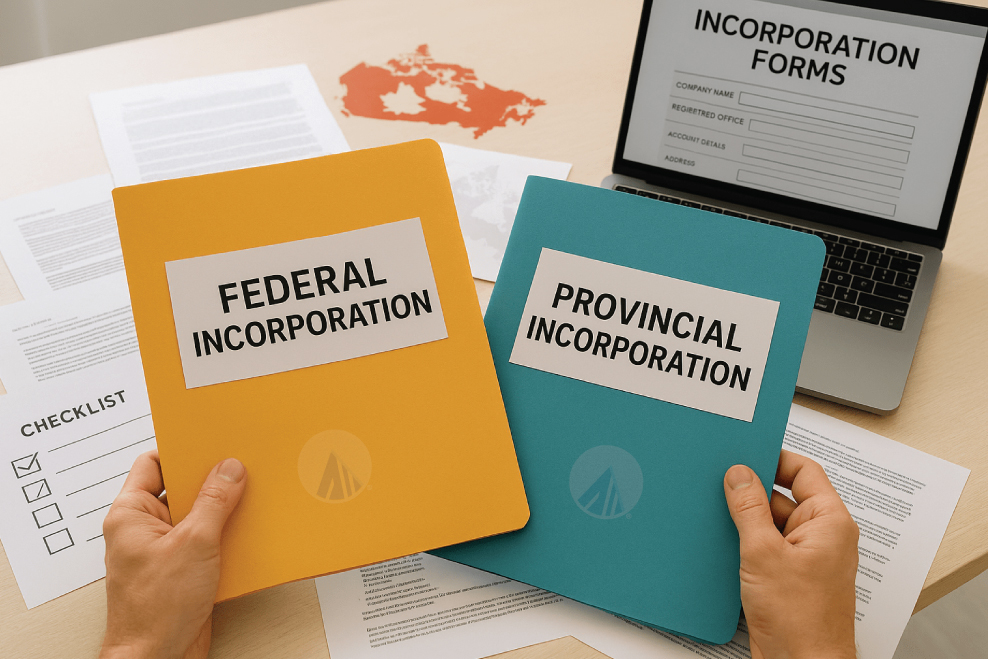
CNCA vs. ONCA: What’s the Difference and How Does It Affect Charities and Not-for-Profits?
Are you involved in a charity or not-for-profit organization in Canada or Ontario? If so, you’ve likely come across two important laws: the Canada Not-for-profit Corporations Act (CNCA) and the Ontario Not-for-Profit Corporations Act, 2010 (ONCA). Understanding how these laws differ — and who they apply to — is essential for ensuring your organization stays compliant.
What Is CNCA?
TheCanada Not-for-profit Corporations Act (CNCA) is federal legislation that governs not-for-profit corporations that choose to incorporate federally rather than provincially. It provides rules around incorporation, governance, financial reporting, and dissolution of federally incorporated nonprofits.
The CNCA is administered by Corporations Canada, which also issues the Certificate of Incorporation under the CNCA for newly formed federal not-for-profit organizations.
What Is ONCA in Ontario?
TheOntario Not-for-Profit Corporations Act, 2010 (ONCA) is Ontario’s legislation for not-for-profits incorporated in the province. It replaced the old Ontario Corporations Act and aligns much of Ontario’s rules with the federal CNCA, though key differences remain.
ONCA applies only to Ontario-incorporated not-for-profit corporations, while CNCA applies to those incorporated federally. If your organization was incorporated under Ontario law, you must transition to ONCA rules to remain compliant.
What’s the Difference Between CNCA and ONCA?
While both CNCA and ONCA aim to create transparency and good governance for not-for-profits, there are several key differences:
1. Incorporation Requirements
ONCA requires your registered office to be in Ontario.
CNCA allows any Canadian province or territory to be your registered office, as stated in your articles.
ONCA categorizes NFPs into public benefit corporations (PBCs) and non-PBCs, affecting rules around governance and financial reporting.
3. Board Composition
Both acts set minimum numbers for directors, but ONCA requires specific rules for PBCs to ensure diverse, qualified leadership.
4. Ex-Officio Directors
ONCA allows ex-officio directors (board members who serve by virtue of holding another office).
CNCA does not allow ex-officio directors — all must be elected.
5. Voting Rights for Non-Voting Members
CNCA gives non-voting members the right to vote on fundamental matters.
ONCA does not extend voting rights to non-voting members unless specified.
6. Audit Exemptions
Both acts provide audit exemption thresholds based on revenue and type of organization, but they differ slightly in terms of limits and required approvals.
7. Dissolution Rules
The CNCA and ONCA have different rules on how assets are distributed when a charity or nonprofit dissolves. Ensuring proper compliance is critical for protecting your organization’s legacy.
Who Does the Canada Not-for-Profit Corporations Act Apply To?
The CNCA applies to federally incorporated not-for-profit organizations in Canada. This includes:
National organizations that operate across multiple provinces
Charities that wish to be federally incorporated
Organizations that receive funding from federal sources or operate internationally
If your corporation was federally incorporated before the CNCA came into force in 2011, you likely had to transition to the CNCA framework.
Who Issues a CNCA Certificate?
Corporations Canada, part of Innovation, Science and Economic Development Canada, is the federal body that administers the CNCA. They issue:
Certificates of Incorporation
Certificates of Amendment
Certificates of Dissolution
You can learn more about this process on the Corporations Canada website or consult acharity lawyer to guide you through incorporation.
Final Thoughts
Understanding the difference between CNCA and ONCA is crucial for staying compliant, especially if you’re involved in setting up or managing a not-for-profit or charity in Ontario or across Canada.
Still unsure which legislation applies to your organization? The legal team at Northfield & Associates specializes in federal and provincial incorporation, governance, and ONCA compliance.
Need help registering or transitioning your Ontario charity or nonprofit?
Get quick answers to common questions about charities and not-for-profit organizations in Canada.
What is the difference between a charity and not-for-profit?
A charity is a specific type of not-for-profit organization that must focus on charitable purposes like relieving poverty, advancing education, or benefiting the community. Charities can issue tax receipts for donations and must register with the Canada Revenue Agency. Not-for-profits include a broader range of organizations like sports clubs, social groups, and industry associations that don’t qualify as charities and can’t issue donation receipts.
What is the difference between a non-profit and a not-for-profit organization?
In Canada, “non-profit” and “not-for-profit” mean the same thing. Both terms describe organizations that don’t exist to make money for owners or shareholders. Any money they earn goes back into running programs and services rather than being paid out as profits. The terms can be used interchangeably.
How to tell if a charity is not-for-profit?
All registered charities in Canada are not-for-profit organizations by law. You can verify if an organization is a registered charity by searching the Canada Revenue Agency’s online charity database. Look for their registration number, which often appears on their website or donation receipts. Registered charities must follow strict rules about how they use their funds and can’t distribute profits to members.
What is the main difference between non-profit and for-profit organizations is how they handle?
The main difference is how they handle money. For-profit organizations aim to make money for their owners and shareholders. Non-profit organizations use any money they earn to support their mission and programs. Non-profits don’t have owners who take home profits, and any surplus funds must stay within the organization to further its purpose.
What is the difference between a non-profit organization and a non-profit company?
A non-profit organization is the general term for any group that operates without making profits for owners. A non-profit company is a specific legal structure that’s incorporated under provincial or federal law. Incorporated non-profits have more formal legal protections and must follow corporate rules like holding annual meetings and keeping records. Some non-profits operate as unincorporated associations instead, which have simpler structures but less legal protection.
In this evolving economic landscape, collaboration with our firm offers clients a strategic advantage. With Cambodia’s reform-driven investment environment and Canada’s expanding footprint in Southeast Asia, our team of experienced consultants and legal advisors provides tailored guidance to help businesses navigate cross-border opportunities. We focus in developing comprehensive legal strategies, structuring international partnerships, and ensuring compliance in emerging markets.
By leveraging our regional insight and international expertise, you benefit from a trusted partner dedicated to helping you capitalize on growth potential in Cambodia and beyond.
Book a Consultation with Northfield & Associates
Your Trusted Partner in International Bilateral Relations
At Northfield & Associates are focus in Foreign Direct Investment (FDI), international trade missions, and cross-border legal strategy. Our team of experienced consultants and legal advisors offers tailored guidance and strategic insight to help you navigate the complexities of international partnerships and development opportunities.
Whether you choose to meet in person at one of our offices or connect virtually, we provide flexible and accessible consultation options. During your session, we’ll assess your goals, review key documentation, and guide you through every stage of your FDI or trade mission engagement.
Let us help you take the next step with confidence supported by trusted legal and strategic counsel every step of the way.
Take the First Step Today
If you believe you may be eligible for legal relief or simply need sound legal advice, we’re here to help. Contact us today to book your consultation. Let us provide the clarity, strategy, and peace of mind you need to move forward.
We serve our clients in English, Cambodian, Vietnamese, Mandarin and Cantonese, especially in Asian clients.
If you or anybody that you know, think that you meet the requirements and wish to receive further information.
We can help you start the application process and confirm eligibility requirements to participate.
We Offer Consultations & Meetings by Phone & Virtually. Affordable Fees.
Disclaimer:
The information contained in this article is provided for general information purposes only and does not constitute legal or other professional advice. Readers should seek tailored legal advice in relation to their personal circumstances.
Northfield & Associates International Corporation is a global consulting firm serving private enterprises, public institutions, not-for-profit organizations, and institutional capital providers. Operating across Cambodia, Canada, and global markets, the firm supports capital deployment, regulatory navigation, and enterprise decision-making in complex economic and geopolitical environments. Northfield & Associates delivers customized, execution-focused advisory solutions that drive measurable transformation, strengthen competitiveness, and enhance long-term highest value opportunities. The firm incorporates consulting, legal, regulatory, financial, and risk expertise to enable disciplined capital allocation, strong governance, and operational resilience. Northfield & Associates upholds a culture of applied insight and innovation, supporting clients across digital transformation, growth strategy, and organizational capability building. The firm advises individual, leading global corporations, midsize enterprises, government agencies, and mission-driven organizations through long-term partnerships. Enterprise-wide risk management, professional ethics, and fiduciary standards are embedded across all operations. Northfield & Associates’ diverse, globally unified teams are committed to execution certainty and sustainable, risk-adjusted returns aligned with ESG and stakeholder objectives.
Forward-Looking Information
This news release contains forward-looking information. All statements, other than statements of historic fact, that address activities, events or developments that the Company believes, expects or anticipates will or may occur in the future constitute forward-looking information.
This forward-looking information reflects the current expectations or beliefs of the Company based on information currently available to the Company.
Forward-looking information is subject to a number of risks and uncertainties that may cause the actual results of the Company to differ materially from those discussed in the forward-looking information, and even if such actual results are realized or substantially realized, there can be no assurance that they will have the expected consequences to, or effects on the Company. Factors that could cause actual results or events to differ materially from current expectations include, among other things: the failure to finalize negotiations concerning the increase of the Loan or to close such transaction and the failure of the Company to complete the acquisition of the Company Facility; operating performance of facilities; environmental and safety risks; delays in obtaining or failure to obtain necessary permits and approvals from government authorities; unavailability of plant, equipment or labour; inability to retain key management and personnel; changes to regulations or policies affecting the Company’s activities; and the other risks disclosed under the heading “Risk Factors” and elsewhere in the Company’s amended annual information.
Forward-looking information speaks only as of the date on which it is made and, except as may be required by applicable securities laws, the Company disclaims any intent or obligation to update any forward-looking information, whether as a result of new information, future events or results or otherwise. Although the Company believes that the assumptions inherent in the forward-looking information are reasonable, forward-looking information is not a guarantee of future performance and accordingly undue reliance should not be put on such information due to the inherent uncertainty therein.
Questions?
info@northfied.biz
Within Corporate Newsroom
Media Contact:
media@northfied.biz
Press contact
PR consultants press@northfied.biz
NOT LEGAL ADVICE. Information made available on this website in any form is for information purposes only. It is not, and should not be taken as, legal advice. You should not rely on, or take or fail to take any action based upon this information. Never disregard professional legal advice or delay in seeking legal advice because of something you have read on this website. Northfield & Associates professionals will be pleased to discuss resolutions to specific legal concerns you may have.
An Annual General Meeting (AGM) is a crucial event for any charity or nonprofit organization in Canada. This meeting provides a platform for transparency, accountability, and the overall functioning of the organization. If your organization is registered as a charity or nonprofit, understanding the purpose and requirements of an AGM is essential to staying compliant with Canadian laws and regulations. In this article, we will break down everything you need to know about AGMs, from their legal requirements to how they benefit your organization.
What is an Annual General Meeting (AGM)?
An Annual General Meeting (AGM) is a formal meeting where the members of a nonprofit or charity gather to discuss the organization’s performance over the past year and its future direction. AGMs allow members to:
Review and approve financial statements
Elect or re-elect board members
Approve major decisions and budgets for the upcoming year
Discuss key developments, issues, or plans
For charities and nonprofits, this meeting is not just a good practice; it’s a requirement under Canadian law. The Canada Not-for-profit Corporations Act (CNCA) and various provincial regulations, including Ontario’s Ontario Not-for-Profit Corporations Act (ONCA), mandate AGMs for registered organizations.
Why Are AGMs Important for Canadian Charities and Nonprofits?
AGMs are vital for several reasons:
Transparency and Accountability Charities and nonprofits handle public funds, donations, and grants, so it’s important for these organizations to be transparent about how they use these resources. During the AGM, organizations present their financial statements, including income and expenditures, allowing members to understand how funds are being utilized.
Legal Requirement Under the Canada Not-for-profit Corporations Act (CNCA), every charity or nonprofit in Canada must hold an AGM every year. You must schedule this meeting within 15 months of your previous AGM. If you miss this deadline, your organization may be in violation of the law.
Engagement with Members AGMs offer an opportunity for members to engage with the board of directors and senior leadership. It allows them to ask questions, voice concerns, and participate in key decisions, fostering a sense of involvement and community within the organization.
Leadership Elections The AGM is the place where board members are elected or re-elected. This is crucial for ensuring your charity or nonprofit has competent and engaged leadership. Elections also help maintain diversity and inclusion in leadership roles.
What Are the Legal Requirements for an AGM?
As a Canadian charity or nonprofit, you need to follow specific legal guidelines when holding an AGM. These requirements may vary slightly depending on whether your organization is federally or provincially incorporated, but there are key things to know:
Timing of the AGM The CNCA mandates that an AGM be held at least once a year. You must schedule this meeting within 15 months of your previous AGM. If you miss this deadline, your organization may be in violation of the law.
Notice of the AGM A formal notice of the AGM must be sent to all members at least 21 days before the meeting. The notice should include the date, time, location, and agenda items that will be discussed, including financial statements and elections. The CNCA allows electronic notices, but you must ensure that all members have access to the meeting details.
Agenda The agenda for the AGM typically includes:
Presentation of the financial statements
Election or re-election of board members
Appointment of auditors, if applicable
Discussion of the organization’s activities over the past year
Any other business (AOB) or issues raised by members
Quorum In order to conduct official business at the AGM, a quorum (the minimum number of members present) is required. The quorum is usually outlined in the organization’s bylaws. Without a quorum, decisions made during the meeting would not be valid.
If your charity or nonprofit fails to hold an AGM, it can have serious consequences:
Legal Penalties: Your organization could face penalties or even risk losing its charity status.
Loss of Transparency: Without an AGM, members and stakeholders have no formal way to review the charity’s finances, leadership, or overall progress.
Loss of Trust: Not holding an AGM may signal to your members, donors, and the public that the organization is not transparent or accountable, potentially undermining trust.
How to Prepare for Your AGM
Here are the steps to prepare for a successful AGM:
Review Your Bylaws Your organization’s bylaws will outline the rules for your AGM, including the number of directors required, the process for elections, and the quorum required. Familiarizing yourself with these rules is key.
Prepare Financial Statements Ensure that your charity’s financial statements are ready for review. This includes the balance sheet, income statement, and any notes to the financial statements. It’s common to have a professional auditor review your financials if your charity is large enough to require auditing.
Notify Members Send out notices of the AGM at least 21 days in advance, as required by law. Include the agenda and any materials that will be discussed, like financial reports or proposed changes to the bylaws.
Plan for Elections If board members are up for re-election, make sure nominations are collected well before the meeting. Voting can be done by members present, or in some cases, via proxy if allowed by the bylaws.
Prepare for Questions Be ready to answer questions about your charity’s finances, activities, and plans for the future. The AGM is a time for transparency, so ensure your board and leadership team are prepared to discuss any concerns.
Conclusion
The Annual General Meeting is a vital tool for Canadian charities and nonprofits to ensure they are operating legally and ethically. Holding an AGM is not only a legal requirement but also an opportunity to engage with your members, foster transparency, and make key decisions about the future of your organization. By following the guidelines outlined in this blog, you can ensure that your AGM runs smoothly and effectively, setting the stage for another year of success.
By holding an effective AGM, your charity or nonprofit will build trust with its members, remain compliant with Canadian laws, and continue making a positive impact on your community.
At Northfield & Associates our expert teams guidance on compliance requirements. Our team understands Canadian charity law and can help ensure your organisation follows proper procedures.
If you run or volunteer with a charity or nonprofit in Canada, you might have questions about annual general meetings. These meetings are an important part of running your organization legally and keeping your members informed. Here are answers to common questions about AGMs.
What is the purpose of an annual general meeting (AGM)?
An annual general meeting is a formal gathering where members of a nonprofit or charity come together once a year to review what the organization has accomplished. During this meeting, members look at financial reports, vote on important decisions, and discuss plans for the future.
What is the purpose of an AGM for a charity?
For charities in Canada, the AGM allows the charity to show members and donors how donation money is being spent. Members can review financial statements and elect board members who will lead the organization. Canadian law requires charities to hold an AGM every year to stay in good standing and maintain their charitable status.
Why is an AGM important?
AGMs create transparency and accountability when charities handle public donations and grants. It is also a legal requirement under the Canada Not-for-profit Corporations Act. Organizations must hold an AGM within 15 months of their last meeting. Missing this requirement can lead to penalties or even loss of charity status.
What is the main objective of the meeting?
The main objective of an AGM is to keep members informed and involved in how the charity operates. The board presents the organization’s financial health, activities, and future plans. Members get to ask questions, raise concerns, and vote on major decisions.
What are the four reasons for meetings?
AGMs provide transparency by presenting financial statements. They fulfill legal requirements set by Canadian law. They engage members by giving them a voice in important decisions. They also handle leadership elections to ensure the charity has qualified board members.
What is the basic AGM agenda?
A typical AGM agenda includes a presentation of financial statements from the past year. It covers the election or re-election of board members. The meeting includes a review of activities and accomplishments. There is also time for members to bring up other business or questions. All members must receive notice of the agenda at least 21 days before the meeting.
Ready for better nonprofit reporting?
At Northfield & Associates, we have a team of professional bookkeepers and accountants to help your organization manage the books so that you can breeze through tax season.
We’re often asked by prospective clients what our Bookkeeping Service covers? People want to know what specific tasks we do, and what their responsibility is. This brief explainer page will answer that question. This is by no means an exhaustive list, but covers the most frequently asked questions.
Getting Started
Review your existing books for needed corrections or back-work
Chart of accounts setup or amendment
Assistance with setting up bank feeds
Limited assistance* with setting up payroll (QBO or Gusto only)
Your books brought current and reconciled if needed
Ongoing Monthly Bookkeeping
After-the-fact transaction recording
Post to general ledger
Post to other ledgers (as needed)
Bank account reconciliation
Monthly financial statements
Other bookkeeping services, as required
Best-practice bookkeeping advice and counsel
Year End
Assistance with 1099-NEC preparation*
Assistance with 1099-MISC preparation*
Year-end financial statements and period-end closing
What We Don’t Do
Pay bills
We do not offer bill-pay services at this time, nor do we manage Accounts Payable (AP) or Accounts Receivable (AR).
Payroll tax responsibility
Our bookkeepers can assist you in setting up your initial payroll service in QBO or Gusto. We are not responsible for entering payroll hours/salary, accruing payroll taxes, nor the transmittal of payroll taxes to the IRS or the state. Your full-service payroll provider (QBO, Gusto, or whatever other service a client uses) will be the responsible party for payroll and payroll tax compliance.
*Payroll deductions and benefits
We provide assistance with setting up a payroll account in either Quickbooks Online or Gusto, including entry of employee data. We do not assist in state registrations, benefits, or advise on deductions. Those service areas are provided directly by either QBO or Gusto.
Preparation of W2s
Similar to the last item, your full-service payroll provider (QBO/Gusto) is responsible for preparation of Form W2 for employees.
Sales tax reporting
For those nonprofits that sell taxable goods and/or services, your bookkeeper will assist in accounting for sales taxes collected and transmitted, but we do not prepare state sales tax reports.
Donation recording
We do not provide individual donation data entry into your neither your donor CRM nor Quickbooks Online, nor do we prepare year-end donor acknowledgements.
Administrative tasks
We cannot provide administrative services unrelated to our bookkeeping function.
Attend board meetings
Due to the constraints of time and distance, we are unable to be present, physically nor virtually, at a meeting of a client’s board of directors.*May incur additional fee per 1099-NEC or 1099-MISC.
Let’s Collaborate & Make a Difference!
Partner with us to amplify your mission. Whether it’s Charity accounting, financial transparency, or strategic growth—we’re here to help you create meaningful impact. Let’s work together to build a better future!
In this evolving economic landscape, collaboration with our firm offers clients a strategic advantage. With Cambodia’s reform-driven investment environment and Canada’s expanding footprint in Southeast Asia, our team of experienced consultants and legal advisors provides tailored guidance to help businesses navigate cross-border opportunities. We focus in developing comprehensive legal strategies, structuring international partnerships, and ensuring compliance in emerging markets.
By leveraging our regional insight and international expertise, you benefit from a trusted partner dedicated to helping you capitalize on growth potential in Cambodia and beyond.
Your Trusted Partner in International Bilateral Relations
At Northfield & Associates are focus in Foreign Direct Investment (FDI), international trade missions, and cross-border legal strategy. Our team of experienced consultants and legal advisors offers tailored guidance and strategic insight to help you navigate the complexities of international partnerships and development opportunities.
Whether you choose to meet in person at one of our offices or connect virtually, we provide flexible and accessible consultation options. During your session, we’ll assess your goals, review key documentation, and guide you through every stage of your FDI or trade mission engagement.
Let us help you take the next step with confidence supported by trusted legal and strategic counsel every step of the way.
Northfield & Associates
Advancing Global Partnerships, Together.
Take the First Step Today
If you believe you may be eligible for legal relief or simply need sound legal advice, we’re here to help. Contact us today to book your consultation. Let us provide the clarity, strategy, and peace of mind you need to move forward.
Disclaimer: The information contained in this article is provided for general information purposes only and does not constitute legal or other professional advice. Readers should seek tailored legal advice in relation to their personal circumstances.
We serve our clients in English, Cambodian, Vietnamese, Mandarin and Cantonese, especially in Asian clients.
If you or anybody that you know, think that you meet the requirements and wish to receive further information.
We can help you start the application process and confirm eligibility requirements to participate.
We Offer Consultations & Meetings by Phone & Virtually. Affordable Fees.
Book a Consultation Today
Contact Northfield & Associates today to schedule a consultation with an experienced Consultant.
Northfield & Associates International Corporation is a global consulting firm serving private enterprises, public institutions, not-for-profit organizations, and institutional capital providers. Operating across Cambodia, Canada, and global markets, the firm supports capital deployment, regulatory navigation, and enterprise decision-making in complex economic and geopolitical environments. Northfield & Associates delivers customized, execution-focused advisory solutions that drive measurable transformation, strengthen competitiveness, and enhance long-term highest value opportunities. The firm incorporates consulting, legal, regulatory, financial, and risk expertise to enable disciplined capital allocation, strong governance, and operational resilience. Northfield & Associates upholds a culture of applied insight and innovation, supporting clients across digital transformation, growth strategy, and organizational capability building. The firm advises individual, leading global corporations, midsize enterprises, government agencies, and mission-driven organizations through long-term partnerships. Enterprise-wide risk management, professional ethics, and fiduciary standards are embedded across all operations. Northfield & Associates’ diverse, globally unified teams are committed to execution certainty and sustainable, risk-adjusted returns aligned with ESG and stakeholder objectives.
Forward-Looking Information
This news release contains forward-looking information. All statements, other than statements of historic fact, that address activities, events or developments that the Company believes, expects or anticipates will or may occur in the future constitute forward-looking information.
This forward-looking information reflects the current expectations or beliefs of the Company based on information currently available to the Company.
Forward-looking information is subject to a number of risks and uncertainties that may cause the actual results of the Company to differ materially from those discussed in the forward-looking information, and even if such actual results are realized or substantially realized, there can be no assurance that they will have the expected consequences to, or effects on the Company. Factors that could cause actual results or events to differ materially from current expectations include, among other things: the failure to finalize negotiations concerning the increase of the Loan or to close such transaction and the failure of the Company to complete the acquisition of the Company Facility; operating performance of facilities; environmental and safety risks; delays in obtaining or failure to obtain necessary permits and approvals from government authorities; unavailability of plant, equipment or labour; inability to retain key management and personnel; changes to regulations or policies affecting the Company’s activities; and the other risks disclosed under the heading “Risk Factors” and elsewhere in the Company’s amended annual information.
Forward-looking information speaks only as of the date on which it is made and, except as may be required by applicable securities laws, the Company disclaims any intent or obligation to update any forward-looking information, whether as a result of new information, future events or results or otherwise. Although the Company believes that the assumptions inherent in the forward-looking information are reasonable, forward-looking information is not a guarantee of future performance and accordingly undue reliance should not be put on such information due to the inherent uncertainty therein.
Questions?
info@northfied.biz
Within Corporate Newsroom
Media Contact:
media@northfied.biz
Press contact
PR consultants press@northfied.biz
NOT LEGAL ADVICE. Information made available on this website in any form is for information purposes only. It is not, and should not be taken as, legal advice. You should not rely on, or take or fail to take any action based upon this information. Never disregard professional legal advice or delay in seeking legal advice because of something you have read on this website. Northfield & Associates professionals will be pleased to discuss resolutions to specific legal concerns you may have.
Federal vs. Provincial Incorporation for Canadian Nonprofits: Pros and Cons
One of the first and most important decisions when establishing a nonprofit in Canada is whether to incorporate federally or provincially. This choice affects everything from your organization’s name protection to operational flexibility and ongoing compliance requirements.
I’ve guided hundreds of organizations through this decision process, and I can tell you that there’s no one-size-fits-all answer. Your optimal incorporation jurisdiction depends on your specific goals, operational scope, and administrative capacity. In this comprehensive guide, I’ll walk you through the key considerations to help you make the best choice for your nonprofit’s future.
Understanding Nonprofit Incorporation Options in Canada
Before diving into specific jurisdictions, let’s establish a foundation for understanding nonprofit incorporation in Canada.
The Legal Framework for Nonprofits
In Canada, nonprofits can incorporate under either federal legislation or provincial/territorial statutes:
Federal incorporation is governed by the Canada Not-for-profit Corporations Act (CNCA), administered by Corporations Canada
Provincial incorporation is governed by each province’s own legislation:
Ontario: Not-for-Profit Corporations Act (ONCA)
British Columbia: Societies Act
Alberta: Societies Act
Quebec: Companies Act (Part III) and Civil Code
Other provinces have their own respective acts
Unlike the United States, Canadian nonprofits don’t automatically receive tax-exempt status through incorporation. Incorporation and charitable registration are separate processes, with the latter handled by the Canada Revenue Agency (CRA).
Different Incorporation Statutes
Each incorporation statute has its own unique features:
CNCA (Federal): Modern legislation implemented in 2014, with clear member rights, governance flexibility, and nationwide application
ONCA (Ontario): Modernized legislation from 2021, replacing the outdated Corporations Act, with enhanced member rights and governance provisions
BC Societies Act: Progressive legislation from 2016 with online filing system and flexible governance options
Alberta Societies Act: Traditional framework recently modernized with amendments
Quebec Companies Act: Part III governs nonprofits, with additional provisions in the Civil Code
These legal frameworks establish the governance requirements, member rights, and operational parameters for organizations incorporated under them.
Key Considerations in Choosing Jurisdiction
When evaluating incorporation options, consider:
Geographic scope: Where will you primarily operate?
Name protection: How important is nationwide name protection?
Governance preferences: Which governance model best fits your organization?
Administrative capacity: What level of ongoing compliance can you manage?
Future plans: Might you expand to other provinces later?
Corporate structure: Do you need specialized provisions for your governance model?
Costs: What are the relative costs of incorporation and maintenance?
Speed: How quickly do you need to incorporate?
These factors will help determine which jurisdiction best meets your organization’s needs.
If you’re deciding between incorporating federally or provincially, pros and cons of federal vs. provincial incorporation offers a clear, side-by-side comparison to help inform your choice. This short video is a helpful resource for nonprofit leaders evaluating their next steps.
Overview of the Decision Process
A typical decision process includes:
Assessment: Evaluate your organization’s goals, operations, and capacity
Research: Investigate requirements of relevant jurisdictions
Comparison: Weigh pros and cons of each option for your specific situation
Consultation: Seek professional advice if needed
Decision: Select the most appropriate jurisdiction
Implementation: Prepare and file required documentation
Compliance planning: Establish systems to meet ongoing requirements
This methodical approach helps ensure you select the jurisdiction that best supports your nonprofit’s mission and operations.
Federal Incorporation Under the CNCA for Nonprofits
Federal incorporation offers several distinct advantages but comes with its own requirements.
Process and Requirements
The federal incorporation process includes:
Name search and reservation: Conduct a NUANS name search to ensure availability
Articles of Incorporation preparation: Complete Form 4001 (Articles of Incorporation)
Initial registered office and directors: Complete Form 4002
Bylaw creation: Develop bylaws compliant with CNCA requirements
Filing: Submit all documents to Corporations Canada
Post-incorporation organization: Hold initial meetings, establish record-keeping systems
Federal incorporation requires:
Minimum of three directors (at least two not officers)
Registered office address in Canada
Corporate name in English, French, or both
Clearly defined membership structure
Purposes that comply with CNCA requirements
These requirements create a standardized framework for federally incorporated nonprofits.
Name Protection Advantages
Federal incorporation provides significant name protection:
Nationwide protection: Your corporate name is protected across all provinces and territories
Exclusive rights: No other federal corporation can use a name that’s confusingly similar
Stronger foundation: If expanding to multiple provinces, federal name protection simplifies operations
Brand consistency: Maintain the same name throughout Canada
Searchable database: Publicly accessible federal corporate registry
This nationwide protection is particularly valuable for organizations operating or planning to operate in multiple provinces.
Nationwide Operational Considerations
Federal corporations can operate nationwide but must still:
Register as an extra-provincial corporation in provinces where they have a physical presence
Comply with provincial regulations governing their activities
Maintain a registered office in Canada
Follow provincial fundraising, employment, and privacy laws
Meet provincial business name registration requirements where applicable
Obtain appropriate provincial licenses and permits
Federal incorporation allows nationwide operation but doesn’t exempt you from provincial compliance requirements.
Costs and Timeline
Federal incorporation involves these costs and timeframes:
Filing fee: $200 (online) or $250 (paper)
NUANS name search: $20-$100
Professional assistance (if used): $500-$2,000
Extra-provincial registration: Varies by province ($30-$450)
Timeline: 1-5 business days for online filing; 10-15 business days for paper filing
Annual filing fee: $20 (online) or $40 (paper)
While initial costs may be higher than some provincial options, federal incorporation often proves cost-effective for organizations operating in multiple provinces.
Ongoing Compliance Obligations
Federally incorporated nonprofits must:
File annual corporate returns with Corporations Canada
Update director and address information as changes occur
Maintain copies of bylaws, financial statements, and corporate records
Hold annual member meetings
Maintain proper books and records
Comply with CNCA governance requirements
These compliance obligations are generally straightforward but must be consistently maintained to remain in good standing.
Ontario Incorporation Under ONCA for Nonprofits
Ontario’s Not-for-Profit Corporations Act (ONCA) offers a modern framework for provincially incorporated organizations.
Application Process
The Ontario incorporation process involves:
Name search: Ontario NUANS name search or use of numbered company
Articles of Incorporation preparation: Complete required forms through the Ontario Business Registry
Initial director and officer information: Provide details for all initial directors
Filing: Submit documents electronically through the Ontario Business Registry
Organization: Hold initial meetings and establish governance systems
The electronic filing system has streamlined what was previously a paper-heavy process. For detailed information about ONCA compliance, see our step-by-step guide to ONCA compliance.
Structural Requirements
ONCA requires:
Minimum of three directors
At least one incorporator
Ontario address for registered office
Clear identification of membership classes and voting rights
Purposes that comply with ONCA requirements
Appropriate corporate name
Default provisions for specific governance matters if not addressed in bylaws
These requirements create a foundation for good governance while offering flexibility for organizational structure.
Cost Considerations
Ontario incorporation costs include:
Filing fee: $155 standard service; $255 for expedited service
Name search: $30-$60
Professional assistance (if used): $500-$1,500
Annual return: No fee, but must file annual information return
Timeline: 3-5 business days for standard service; 1-2 business days for expedited
Ontario incorporation is typically less expensive than federal incorporation, particularly if you plan to operate exclusively within the province.
Ongoing Reporting Obligations
ONCA corporations must:
File annual returns through the Ontario Business Registry
Update director and officer information as changes occur
Maintain corporate records at the registered office
Hold annual member meetings
Prepare financial statements according to prescribed standards
Maintain proper books and records
Comply with ONCA governance requirements
While similar to federal compliance obligations, reporting is done through Ontario’s systems rather than Corporations Canada.
Recent Legislative Changes
ONCA finally came into force on October 19, 2021, after years of delays, bringing significant changes:
Modern member rights and remedies
Enhanced governance provisions
Clearer rules for director and officer duties
Public Benefit Corporation designation for charities and publicly funded nonprofits
Electronic meeting provisions
Clear rules for financial review requirements
Transition period for existing corporations until October 19, 2024
These changes have modernized Ontario’s nonprofit sector and aligned it more closely with federal standards.
British Columbia Society Incorporation Under the BC Societies Act
British Columbia offers a progressive framework for nonprofits through its Societies Act.
BC Societies Act Overview
The BC Societies Act:
Implemented in 2016, replacing the previous Society Act
Provides modern governance provisions
Offers an online filing system
Distinguishes between member-funded and community-focused societies
Balances flexibility with accountability
Includes specific provisions for charities and publicly funded organizations
Allows electronic meetings and voting
Permits society bylaws to override certain default provisions
This modern legislation is designed to be accessible to small volunteer-run organizations while providing appropriate oversight.
Application Process
The BC incorporation process includes:
Name approval: Submit name approval request to BC Registry Services
Constitution and bylaws preparation: Create governing documents
Incorporation application: Complete online through BC Registry Services
Submission: File documents electronically with filing fee
Confirmation: Receive Certificate of Incorporation
Organization: Hold initial meetings and establish systems
BC’s online filing system has significantly streamlined the incorporation process.
Unique Features of BC Societies
The BC Societies Act includes several distinctive features:
Member-funded societies: Special designation for societies funded primarily by members for member benefit
Bylaw flexibility: Organizations can choose between the model bylaws or create customized bylaws
Senior manager concept: Recognizes key staff with management authority
Court access: Enhanced remedy provisions for members
Disclosure requirements: Different levels based on public funding
Electronic filing: Comprehensive online system
Conversion provisions: Ability to convert between BC and federal incorporation
These unique features offer flexibility while maintaining appropriate accountability.
Regulatory Requirements
BC societies must:
File annual reports with BC Registry Services
Maintain a registered office in British Columbia
Keep society records at the registered office or another designated location
Hold annual general meetings
Prepare financial statements
Maintain membership lists
Keep proper books and records
Comply with specific requirements if designated as a charitably-focused society
These requirements ensure transparency and good governance.
Recent Legislative Updates
Recent changes to the BC Societies Act include:
Amendments to simplify operations for smaller societies
Enhanced provisions for electronic meetings and voting
Clarification of director qualifications and responsibilities
Streamlined reporting for smaller organizations
Improved processes for extraprovincial societies
Technical amendments to address practical issues identified since implementation
These updates reflect BC’s commitment to maintaining modern, responsive nonprofit legislation.
Alberta Nonprofit Incorporation
Alberta’s Societies Act provides a straightforward framework for provincial nonprofits.
Societies Act Provisions
Alberta’s Societies Act:
Provides basic incorporation for nonprofits within the province
Requires a minimum of five persons to incorporate
Focuses on member-governed organizations
Includes specific provisions for charitable societies
Offers relatively simple ongoing compliance
Provides a standardized framework for governance
Balances simplicity with appropriate oversight
Has been periodically updated but retains traditional structure
While less modern than some jurisdictions, Alberta’s framework remains functional and accessible.
Application Requirements
Incorporating in Alberta requires:
Name search: Corporate Registry name search
Application: Complete Form REG3088 (Application)
Bylaws: Develop bylaws that comply with Societies Act requirements
Objects: Define the organization’s purposes
Filing: Submit documentation to Alberta Corporate Registry
Organization: Hold initial meetings and establish systems
The paper-based process is relatively straightforward but less digitized than some provinces.
Governance Structure
Alberta societies must have:
Minimum of five incorporators
At least three directors
Clearly defined membership structure
Purposes (objects) consistent with Societies Act
Bylaws covering required governance matters
Annual general meetings
Registered office in Alberta
This structure emphasizes member governance and collective decision-making.
Reporting Obligations
Alberta societies must:
File annual returns within one month after the anniversary of incorporation
Update director and officer information as changes occur
Maintain society records
Hold annual general meetings
Keep minutes of all meetings
Maintain membership lists
Prepare financial statements
These straightforward compliance requirements are manageable for most volunteer-led organizations.
Extra-provincial registration: Additional costs when operating outside incorporating province
Consider both initial and ongoing costs when making your decision.
Cross-provincial Operations
Organizations operating in multiple provinces face different challenges:
Federal: Simplifies multi-provincial operations with nationwide name protection
Provincial: Requires extra-provincial registration in each additional province
Extra-provincial requirements: Vary by province in complexity and cost
Registered agent requirements: Some provinces require a local representative
Reporting duplication: Potential for multiple filing requirements
Compliance complexity: Increases with each additional registration
For organizations planning multi-provincial operations, federal incorporation often reduces administrative complexity. For more information on charity registration in Canada, see our complete guide to Canadian charity registration.
Special Considerations for Charities’ Articles of Incorporation
Organizations seeking charitable status face additional incorporation considerations.
CRA Requirements for Incorporation
The CRA has specific expectations for charities’ incorporating documents:
Exclusively charitable purposes within recognized categories
Clear charitable benefit to the public
Limitations on non-charitable activities
Specific dissolution provisions for remaining assets
Restrictions on director remuneration
Non-profit clause explicitly prohibiting profit distribution
Appropriate governance provisions
Clear statement of activities
While the CRA doesn’t officially prescribe incorporation jurisdiction, certain provisions must appear in your governing documents regardless of where you incorporate. For details on the types of charitable organizations, see our article on private vs. public foundations in Canada.
Charitable Purpose Provisions
Charitable purposes in articles of incorporation must:
Fall within recognized charitable categories (relief of poverty, advancement of education, advancement of religion, other purposes beneficial to the community)
Be stated precisely and clearly
Be exclusively charitable
Define scope and beneficiaries
Avoid vague or broad language
Exclude non-charitable elements
Be achievable and practical
Be supported by planned activities
Well-crafted charitable purposes are essential for CRA approval.
Dissolution Clauses
Charitable organizations require specific dissolution provisions:
Assets must be transferred to “qualified donees” (usually other registered charities) upon dissolution
No distribution to members
Clear process for determining recipient organizations
Compliance with both corporate law and CRA requirements
Specific wording varies by jurisdiction
May require CRA pre-approval for named recipients
Should address both voluntary and involuntary dissolution
These provisions ensure charitable assets remain in the charitable sector.
Board Structure Requirements
CRA expectations for charity governance include:
Arm’s length board majority (particularly for foundations)
Clear conflict of interest provisions
Reasonable size for effective governance
Appropriate officer positions
Prohibition on director remuneration (or strict limitations)
Clear delineation of duties and authorities
Provisions for board member removal
Appropriate meeting requirements
While specific requirements vary by charity type, all must demonstrate good governance.
Extra-provincial Registration
Charities operating in multiple provinces should consider:
Extra-provincial registration requirements in each province of operation
Provincial fundraising registration requirements
Business name registration where required
Provincial tax exemption applications where needed
Local permit and license requirements
Provincial employment and workplace regulations
Privacy law compliance across jurisdictions
Multi-province operations increase complexity regardless of incorporation jurisdiction. For ongoing compliance information, refer to our CRA compliance FAQ.
Extra-Provincial Registration Requirements for Nonprofits
Organizations operating beyond their incorporating jurisdiction face additional registration requirements.
When Registration is Required
Extra-provincial registration is typically required when:
Maintaining a physical address in a province
Having employees in a province
Conducting ongoing programs or activities in a province
Soliciting donations or fundraising in a province
Holding regular meetings in a province
Having significant property in a province
Meeting other province-specific thresholds for “carrying on activities”
Mere occasional contact with a province generally doesn’t trigger registration requirements.
Process for Registration
The extra-provincial registration process typically involves:
Name search in the province (to ensure availability)
Application forms specific to that province
Appointment of a registered agent or attorney for service (in some provinces)
Submission of corporate documents from the home jurisdiction
Payment of required fees
Annual maintenance filings as required
The process varies significantly in complexity and cost across provinces.
Ongoing Compliance
Extra-provincial registrants must:
File annual returns or reports in each province of registration
Maintain a registered agent where required
Update information when changes occur
Comply with provincial regulations governing their activities
Maintain proper records of provincial compliance
Potentially prepare multiple filings with similar information
Track various deadlines across jurisdictions
This creates additional administrative burden, particularly for organizations registered in multiple provinces.
Cost Considerations
Extra-provincial registration costs include:
Initial registration fees: $30-$450 depending on province
Annual filing fees: $0-$200 depending on province
Registered agent fees (if using a service provider): $100-$300 annually
Legal assistance (if used): $500-$1,500 per province
Internal administrative costs for compliance management
Potential penalties for non-compliance
These costs should be factored into the incorporation decision, particularly for organizations planning multi-provincial operations.
Managing Multiple Registrations
Organizations can manage multi-jurisdictional compliance by:
Creating a compliance calendar with all deadlines
Assigning clear responsibility for filings
Using standardized information where possible
Considering professional assistance for complex situations
Implementing reminder systems for deadlines
Maintaining central document repository
Tracking requirement changes across jurisdictions
Budgeting for ongoing compliance costs
Effective systems prevent missed deadlines and compliance gaps in complex multi-provincial operations.
Making the Right Choice for Your Nonprofit Organization
The optimal incorporation jurisdiction depends on your specific circumstances.
Assessment Framework
Evaluate potential jurisdictions using these criteria:
Geographic scope: Where will you operate initially and in the future?
Name protection needs: How important is nationwide name protection?
Administrative capacity: What level of ongoing compliance can you manage?
Budget constraints: How significant are cost differences for your organization?
Governance preferences: Which jurisdiction’s requirements best match your vision?
Timeline: How quickly do you need to incorporate?
Future plans: How might your needs evolve over time?
Charitable intent: Will you seek charitable registration?
Systematically assessing these factors leads to an informed decision.
Decision-making Checklist
Consider these specific questions:
Will you operate in multiple provinces? (Favors federal)
Is nationwide name protection important? (Favors federal)
Will you operate primarily in one province? (May favor provincial)
Are you seeking the simplest ongoing compliance? (Varies)
Is incorporation cost a primary concern? (May favor provincial)
Do you need specialized governance provisions? (Varies by jurisdiction)
Are you planning to apply for charitable status? (Either works, with appropriate provisions)
How important is modern legislation? (CNCA, ONCA, BC generally most modern)
Work through these questions systematically to identify your optimal jurisdiction.
Common Scenarios and Recommended Approaches
Typical scenarios often lead to specific recommendations:
National organization: Federal incorporation typically best
Local community group: Provincial incorporation in your home province usually sufficient
Organization operating in Ontario only: ONCA incorporation generally appropriate
Small volunteer-run group: Simplest provincial option often works well
Organization needing maximum governance flexibility: BC or federal often preferred
Organization with limited administrative capacity: Simplest provincial option usually best
Organization planning growth across provinces: Federal incorporation simplifies expansion
Consider which scenario most closely matches your situation.
Professional Guidance Recommendations
Consider professional assistance when:
Incorporating with the intention to seek charitable status
Creating complex governance structures
Operating across multiple provinces
Uncertain which jurisdiction best meets your needs
Requiring specialized provisions in governing documents
Converting from one jurisdiction to another
Amalgamating organizations from different jurisdictions
Creating affiliate or subsidiary relationships
Professional advice is particularly valuable for complicated situations or when charitable status is planned. For information about compliance with Ontario’s nonprofit legislation, see our guide to ONCA compliance.
Ready to incorporate your nonprofit organization?
Work with Northfield & Associates for expert guidance on selecting the optimal jurisdiction and creating governing documents that support your organization’s mission and operational needs.
In this evolving economic landscape, collaboration with our firm offers clients a strategic advantage. With Cambodia’s reform-driven investment environment and Canada’s expanding footprint in Southeast Asia, our team of experienced consultants and legal advisors provides tailored guidance to help businesses navigate cross-border opportunities. We focus in developing comprehensive legal strategies, structuring international partnerships, and ensuring compliance in emerging markets.
By leveraging our regional insight and international expertise, you benefit from a trusted partner dedicated to helping you capitalize on growth potential in Cambodia and beyond.
Book a Consultation with Northfield & Associates
Your Trusted Partner in International Bilateral Relations
At Northfield & Associates are focus in Foreign Direct Investment (FDI), international trade missions, and cross-border legal strategy. Our team of experienced consultants and legal advisors offers tailored guidance and strategic insight to help you navigate the complexities of international partnerships and development opportunities.
Whether you choose to meet in person at one of our offices or connect virtually, we provide flexible and accessible consultation options. During your session, we’ll assess your goals, review key documentation, and guide you through every stage of your FDI or trade mission engagement.
Let us help you take the next step with confidence supported by trusted legal and strategic counsel every step of the way.
Take the First Step Today
If you believe you may be eligible for legal relief or simply need sound legal advice, we’re here to help. Contact us today to book your consultation. Let us provide the clarity, strategy, and peace of mind you need to move forward.
We serve our clients in English, Cambodian, Vietnamese, Mandarin and Cantonese, especially in Asian clients.
If you or anybody that you know, think that you meet the requirements and wish to receive further information.
We can help you start the application process and confirm eligibility requirements to participate.
We Offer Consultations & Meetings by Phone & Virtually. Affordable Fees.
Disclaimer:
The information contained in this article is provided for general information purposes only and does not constitute legal or other professional advice. Readers should seek tailored legal advice in relation to their personal circumstances.
Northfield & Associates International Corporation is a global consulting firm serving private enterprises, public institutions, not-for-profit organizations, and institutional capital providers. Operating across Cambodia, Canada, and global markets, the firm supports capital deployment, regulatory navigation, and enterprise decision-making in complex economic and geopolitical environments. Northfield & Associates delivers customized, execution-focused advisory solutions that drive measurable transformation, strengthen competitiveness, and enhance long-term highest value opportunities. The firm incorporates consulting, legal, regulatory, financial, and risk expertise to enable disciplined capital allocation, strong governance, and operational resilience. Northfield & Associates upholds a culture of applied insight and innovation, supporting clients across digital transformation, growth strategy, and organizational capability building. The firm advises individual, leading global corporations, midsize enterprises, government agencies, and mission-driven organizations through long-term partnerships. Enterprise-wide risk management, professional ethics, and fiduciary standards are embedded across all operations. Northfield & Associates’ diverse, globally unified teams are committed to execution certainty and sustainable, risk-adjusted returns aligned with ESG and stakeholder objectives.
Forward-Looking Information
This news release contains forward-looking information. All statements, other than statements of historic fact, that address activities, events or developments that the Company believes, expects or anticipates will or may occur in the future constitute forward-looking information.
This forward-looking information reflects the current expectations or beliefs of the Company based on information currently available to the Company.
Forward-looking information is subject to a number of risks and uncertainties that may cause the actual results of the Company to differ materially from those discussed in the forward-looking information, and even if such actual results are realized or substantially realized, there can be no assurance that they will have the expected consequences to, or effects on the Company. Factors that could cause actual results or events to differ materially from current expectations include, among other things: the failure to finalize negotiations concerning the increase of the Loan or to close such transaction and the failure of the Company to complete the acquisition of the Company Facility; operating performance of facilities; environmental and safety risks; delays in obtaining or failure to obtain necessary permits and approvals from government authorities; unavailability of plant, equipment or labour; inability to retain key management and personnel; changes to regulations or policies affecting the Company’s activities; and the other risks disclosed under the heading “Risk Factors” and elsewhere in the Company’s amended annual information.
Forward-looking information speaks only as of the date on which it is made and, except as may be required by applicable securities laws, the Company disclaims any intent or obligation to update any forward-looking information, whether as a result of new information, future events or results or otherwise. Although the Company believes that the assumptions inherent in the forward-looking information are reasonable, forward-looking information is not a guarantee of future performance and accordingly undue reliance should not be put on such information due to the inherent uncertainty therein.
Questions?
info@northfied.biz
Within Corporate Newsroom
Media Contact:
media@northfied.biz
Press contact
PR consultants press@northfied.biz
NOT LEGAL ADVICE. Information made available on this website in any form is for information purposes only. It is not, and should not be taken as, legal advice. You should not rely on, or take or fail to take any action based upon this information. Never disregard professional legal advice or delay in seeking legal advice because of something you have read on this website. Northfield & Associates professionals will be pleased to discuss resolutions to specific legal concerns you may have.
What Is the Ontario Business Registry for Nonprofits?
The Ontario Business Registry serves as a crucial platform for businesses and organizations, aiding in various tasks such as registering a new business, registering a nonprofit, filing annual returns, and updating corporate information. While it primarily caters to Ontario, its impact resonates with businesses across Canada, especially those operating in Ontario or looking to expand into the province.
What is the Ontario Business Registry?
The Ontario Business Registry, launched in October 2021, is an online system that replaces older, manual methods of registering and managing businesses. It simplifies processes that previously required paper forms and in-person submissions, allowing businesses to manage their information online.
Key features of the Ontario Business Registry include:
Business Registration: New businesses, charities, and not-for-profits can register directly online.
Information Updates: Businesses can easily update details such as addresses, directors, or other essential corporate information.
Annual Return Filings: Filing annual returns, which is a requirement for businesses, is now easier through the registry.
Dissolution of Businesses: When a business is closing down, it can be dissolved through the system to meet legal obligations.
Why Should Canadian Businesses Pay Attention to the Ontario Business Registry?
While this registry is specific to Ontario, businesses from across Canada need to understand how it works, especially if they operate or intend to operate in Ontario. Some reasons why the registry is important include:
Compliance with Ontario Laws Businesses operating in Ontario must comply with provincial regulations. The Ontario Business Registry provides the tools necessary to meet these legal requirements. Even if a business is based elsewhere in Canada, it must adhere to Ontario’s laws if it has operations there.
Improved Administrative Efficiency Before the registry was introduced, many business filings had to be completed using a slow, manual process. Now, tasks like registering a business, updating information, or filing annual returns can all be done online, saving businesses valuable time.
Broad Range of Services The registry offers more than just business registration. It also provides services like amending corporate information, reviving dissolved businesses, and allowing charities to manage their compliance needs.
Transparency The registry offers public access to basic business information, helping to ensure transparency and trust. Stakeholders, including customers and investors, can easily verify business details, which contributes to a fairer and more competitive business environment across Canada.
How Can Businesses Use the Ontario Business Registry?
Using the Ontario Business Registry is a straightforward process, making business management easier for organizations of all sizes. Here’s how businesses can navigate the system:
Create an Account Businesses must first create an account through the Ontario government’s official website. You will need basic information, including your business number and any necessary documentation, to set up the account.
Register a New Business or Nonprofit New businesses and Ontario Not-for-Profits can be registered online. After selecting the relevant option, you’ll be asked to provide key information such as your business name, type (e.g., corporation or charity), and contact details.
Update Corporate Information For already registered businesses, the registry allows you to make updates, such as changes in business addresses, directors, or other essential information.
File Annual Returns Ontario businesses must file annual returns to remain compliant. The registry provides easy-to-use forms, and you will receive reminders for timely submissions, reducing the chances of missing deadlines.
Dissolve a Business or Nonprofit If a business closes, it must be formally dissolved through the Ontario Business Registry. This step ensures that the business is no longer responsible for ongoing filing requirements.
Who Can Benefit from the Ontario Business Registry?
New Businesses: Entrepreneurs can quickly register their new ventures online without going through lengthy manual processes.
Existing Businesses: The platform allows for quick updates and helps businesses stay on top of regulatory obligations.
Charities and Not-for-Profits: These organizations can use the registry to manage their legal compliance and maintain their status.
Businesses Expanding into Ontario: Companies from other provinces or countries looking to operate in Ontario can register and manage their Ontario-specific compliance obligations.
What Lies Ahead for the Ontario Business Registry?
The Ontario Business Registry is expected to continue evolving, potentially offering even more services in the future. As digital platforms grow in importance, we may see the registry integrate with other provincial systems, making it easier for businesses operating across multiple provinces to manage their compliance with a unified approach.
The Ontario Business Registry is a valuable tool that simplifies the way businesses handle their legal obligations in Ontario. Whether you’re starting a new business, filing annual returns, or updating your corporate information, the registry streamlines these processes, helping businesses operate more efficiently. For companies across Canada, especially those expanding into Ontario, understanding how to navigate the registry is crucial for staying compliant.
Get Expert Help with the Ontario Business Registry
Need help with the Ontario Business Registry or nonprofit compliance? Contact Northfield & Associates today. Our team makes charity and nonprofit law easy to understand.
Call us for guidance on registering your organization, filing returns, or updating corporate information.
The Ontario Business Registry simplifies nonprofit management, but you don’t have to navigate it alone. Having the right legal support helps your organization stay compliant and avoid costly mistakes. Our experienced lawyers understand the unique challenges Ontario nonprofits face.
Schedule a FREE consultation with our team. Let us handle the legal details so you can focus on making a bigger impact in your community.
Frequently Asked Questions
Here are answers to common questions about nonprofit registration and the Ontario Business Registry. These will help you understand the basics of starting and managing a nonprofit organization in Ontario.
Who regulates non-profit organizations in Ontario?
Non-profit organizations in Ontario are regulated by different government bodies depending on their structure. The Ontario government oversees corporations through the Ministry of Public and Business Service Delivery. If your nonprofit is a registered charity, the Canada Revenue Agency (CRA) also regulates it at the federal level. Both levels work together to ensure nonprofits follow the law and maintain their legal status.
How to register a non-profit business in Ontario?
You can register a nonprofit in Ontario through the Ontario Business Registry online. First, create an account on the Ontario government website. Then, choose the option to register a new not-for-profit corporation. You’ll need to provide your organization’s name, purpose, contact details, and information about your directors. Once you submit your application and pay the fee, your nonprofit will be officially registered.
What are the different types of business registration in Ontario?
Ontario offers several types of business registration. You can register as a sole proprietorship, partnership, or corporation. For nonprofits, you can register as a not-for-profit corporation or a charitable organization. Each type has different legal requirements and tax implications. The Ontario Business Registry handles most of these registrations online, making the process simple and fast.
What is OBR in Ontario?
OBR stands for Ontario Business Registry. It’s an online platform launched in 2021 that lets businesses and nonprofits register, update information, and file annual returns. The system replaced old paper-based methods and makes it easier to manage your organization’s legal requirements. You can access the OBR through the Ontario government’s official website to handle most business and nonprofit tasks.
Who needs to register a business in Ontario?
Anyone operating a business or nonprofit organization in Ontario needs to register. This includes sole proprietors, partnerships, corporations, and not-for-profit organizations. If you’re doing business under a name other than your personal name, you must register it. Charities and nonprofits also need to register to gain legal status and meet their compliance obligations in the province.
In this evolving economic landscape, collaboration with our firm offers clients a strategic advantage. With Cambodia’s reform-driven investment environment and Canada’s expanding footprint in Southeast Asia, our team of experienced consultants and legal advisors provides tailored guidance to help businesses navigate cross-border opportunities. We focus in developing comprehensive legal strategies, structuring international partnerships, and ensuring compliance in emerging markets.
By leveraging our regional insight and international expertise, you benefit from a trusted partner dedicated to helping you capitalize on growth potential in Cambodia and beyond.
Book a Consultation with Northfield & Associates
Your Trusted Partner in International Bilateral Relations
At Northfield & Associates are focus in Foreign Direct Investment (FDI), international trade missions, and cross-border legal strategy. Our team of experienced consultants and legal advisors offers tailored guidance and strategic insight to help you navigate the complexities of international partnerships and development opportunities.
Whether you choose to meet in person at one of our offices or connect virtually, we provide flexible and accessible consultation options. During your session, we’ll assess your goals, review key documentation, and guide you through every stage of your FDI or trade mission engagement.
Let us help you take the next step with confidence supported by trusted legal and strategic counsel every step of the way.
Take the First Step Today
If you believe you may be eligible for legal relief or simply need sound legal advice, we’re here to help. Contact us today to book your consultation. Let us provide the clarity, strategy, and peace of mind you need to move forward.
We serve our clients in English, Cambodian, Vietnamese, Mandarin and Cantonese, especially in Asian clients.
If you or anybody that you know, think that you meet the requirements and wish to receive further information.
We can help you start the application process and confirm eligibility requirements to participate.
We Offer Consultations & Meetings by Phone & Virtually. Affordable Fees.
Disclaimer:
The information contained in this article is provided for general information purposes only and does not constitute legal or other professional advice. Readers should seek tailored legal advice in relation to their personal circumstances.
Northfield & Associates International Corporation is a global consulting firm serving private enterprises, public institutions, not-for-profit organizations, and institutional capital providers. Operating across Cambodia, Canada, and global markets, the firm supports capital deployment, regulatory navigation, and enterprise decision-making in complex economic and geopolitical environments. Northfield & Associates delivers customized, execution-focused advisory solutions that drive measurable transformation, strengthen competitiveness, and enhance long-term highest value opportunities. The firm incorporates consulting, legal, regulatory, financial, and risk expertise to enable disciplined capital allocation, strong governance, and operational resilience. Northfield & Associates upholds a culture of applied insight and innovation, supporting clients across digital transformation, growth strategy, and organizational capability building. The firm advises individual, leading global corporations, midsize enterprises, government agencies, and mission-driven organizations through long-term partnerships. Enterprise-wide risk management, professional ethics, and fiduciary standards are embedded across all operations. Northfield & Associates’ diverse, globally unified teams are committed to execution certainty and sustainable, risk-adjusted returns aligned with ESG and stakeholder objectives.
Forward-Looking Information
This news release contains forward-looking information. All statements, other than statements of historic fact, that address activities, events or developments that the Company believes, expects or anticipates will or may occur in the future constitute forward-looking information.
This forward-looking information reflects the current expectations or beliefs of the Company based on information currently available to the Company.
Forward-looking information is subject to a number of risks and uncertainties that may cause the actual results of the Company to differ materially from those discussed in the forward-looking information, and even if such actual results are realized or substantially realized, there can be no assurance that they will have the expected consequences to, or effects on the Company. Factors that could cause actual results or events to differ materially from current expectations include, among other things: the failure to finalize negotiations concerning the increase of the Loan or to close such transaction and the failure of the Company to complete the acquisition of the Company Facility; operating performance of facilities; environmental and safety risks; delays in obtaining or failure to obtain necessary permits and approvals from government authorities; unavailability of plant, equipment or labour; inability to retain key management and personnel; changes to regulations or policies affecting the Company’s activities; and the other risks disclosed under the heading “Risk Factors” and elsewhere in the Company’s amended annual information.
Forward-looking information speaks only as of the date on which it is made and, except as may be required by applicable securities laws, the Company disclaims any intent or obligation to update any forward-looking information, whether as a result of new information, future events or results or otherwise. Although the Company believes that the assumptions inherent in the forward-looking information are reasonable, forward-looking information is not a guarantee of future performance and accordingly undue reliance should not be put on such information due to the inherent uncertainty therein.
Questions?
info@northfied.biz
Within Corporate Newsroom
Media Contact:
media@northfied.biz
Press contact
PR consultants press@northfied.biz
NOT LEGAL ADVICE. Information made available on this website in any form is for information purposes only. It is not, and should not be taken as, legal advice. You should not rely on, or take or fail to take any action based upon this information. Never disregard professional legal advice or delay in seeking legal advice because of something you have read on this website. Northfield & Associates professionals will be pleased to discuss resolutions to specific legal concerns you may have.
What is the Process for Extra-Provincial Registration for Canadian Charities and Nonprofits?
If you’re part of a Canadian charity or nonprofit considering extending your operations to a new province or territory, you’ll need to navigate the process of extra-provincial registration. This ensures your organization is legally recognized and allowed to operate in areas beyond your original incorporation location. Here’s a detailed guide to understanding and executing this process. Understanding Extra-Provincial Registration
Extra-provincial registration allows a charity or nonprofit to legally operate in provinces or territories outside its original incorporation jurisdiction. This is essential for expanding your services and reaching more communities.
Requirements Exploration: Start by looking into the specific requirements for registering in the new province or territory. Rules can vary per province or territory.
Legal and Tax Considerations: Understand the legal and tax implications of operating in a new location. This will help in planning your operations and ensuring compliance.
Feasibility Study: Assess whether expanding into the new province is practical and beneficial for your organization.
2. Preparing Documentation
Collect Necessary Papers: Gather all required documents. These typically include the Application for Extra-Provincial Registration, corporate documents, and any necessary certificates or licenses.
Check for Accuracy: Ensure all documents are correctly filled out and complete to avoid delays in the registration process.
3. Application Submission
File the Application: Submit your completed application and supporting documents to the appropriate regulatory authority in the new jurisdiction.
Fee Payment: Be ready to pay any filing fees. These can differ depending on the province or territory.
4. Ongoing Compliance
Maintain Legal Compliance: After registration approval, ensure ongoing compliance with the legal and regulatory requirements of both the original and new jurisdictions.
Regular Reporting and Renewals: File annual reports, renew registrations, and fulfill any other local obligations to stay compliant.
Advantages of Extra-Provincial Registration
Broader Opportunities
Access to New Markets: Registering in additional jurisdictions opens up new markets and communities that can benefit from your services.
Growth and Impact: Expanding your operations can help your organization grow and increase its impact.
Legal Safeguards
Operate Within the Law: Ensures your organization is legally compliant in each jurisdiction.
Local Legal Recourse: Provides access to local courts for enforcing rights and resolving disputes.
Boosted Credibility
Demonstrated Commitment: Registration in multiple jurisdictions shows your commitment to complying with local laws, enhancing your organization’s credibility.
Reassurance for Stakeholders: This can reassure clients, partners, and investors of your legitimacy and reliability.
Enhanced Flexibility
Adapt to Local Needs: Allows you to adapt your operations to meet the specific needs and demands of different regions.
Tailored Approaches: Enables you to tailor products, services, and strategies to suit local preferences and conditions.
For Canadian charities and nonprofits aiming to extend their reach across provinces and territories, extra-provincial registration is a crucial step. This process ensures legal compliance, opens up new opportunities, provides legal protection, and boosts your organization’s credibility and flexibility.
The registration process can be overwhelming and involves various legal and compliance requirements. Seeking professional legal assistance can help you navigate this process effectively. By doing so, your charity or nonprofit can expand its impact and serve more communities across Canada.
In this evolving economic landscape, collaboration with our firm offers clients a strategic advantage. With Cambodia’s reform-driven investment environment and Canada’s expanding footprint in Southeast Asia, our team of experienced consultants and legal advisors provides tailored guidance to help businesses navigate cross-border opportunities. We focus in developing comprehensive legal strategies, structuring international partnerships, and ensuring compliance in emerging markets.
By leveraging our regional insight and international expertise, you benefit from a trusted partner dedicated to helping you capitalize on growth potential in Cambodia and beyond.
Book a Consultation with Northfield & Associates
Your Trusted Partner in International Bilateral Relations
At Northfield & Associates are focus in Foreign Direct Investment (FDI), international trade missions, and cross-border legal strategy. Our team of experienced consultants and legal advisors offers tailored guidance and strategic insight to help you navigate the complexities of international partnerships and development opportunities.
Whether you choose to meet in person at one of our offices or connect virtually, we provide flexible and accessible consultation options. During your session, we’ll assess your goals, review key documentation, and guide you through every stage of your FDI or trade mission engagement.
Let us help you take the next step with confidence supported by trusted legal and strategic counsel every step of the way.
Take the First Step Today
If you believe you may be eligible for legal relief or simply need sound legal advice, we’re here to help. Contact us today to book your consultation. Let us provide the clarity, strategy, and peace of mind you need to move forward.
We serve our clients in English, Cambodian, Vietnamese, Mandarin and Cantonese, especially in Asian clients.
If you or anybody that you know, think that you meet the requirements and wish to receive further information.
We can help you start the application process and confirm eligibility requirements to participate.
We Offer Consultations & Meetings by Phone & Virtually. Affordable Fees.
Disclaimer:
The information contained in this article is provided for general information purposes only and does not constitute legal or other professional advice. Readers should seek tailored legal advice in relation to their personal circumstances.
Northfield & Associates International Corporation is a global consulting firm serving private enterprises, public institutions, not-for-profit organizations, and institutional capital providers. Operating across Cambodia, Canada, and global markets, the firm supports capital deployment, regulatory navigation, and enterprise decision-making in complex economic and geopolitical environments. Northfield & Associates delivers customized, execution-focused advisory solutions that drive measurable transformation, strengthen competitiveness, and enhance long-term highest value opportunities. The firm incorporates consulting, legal, regulatory, financial, and risk expertise to enable disciplined capital allocation, strong governance, and operational resilience. Northfield & Associates upholds a culture of applied insight and innovation, supporting clients across digital transformation, growth strategy, and organizational capability building. The firm advises individual, leading global corporations, midsize enterprises, government agencies, and mission-driven organizations through long-term partnerships. Enterprise-wide risk management, professional ethics, and fiduciary standards are embedded across all operations. Northfield & Associates’ diverse, globally unified teams are committed to execution certainty and sustainable, risk-adjusted returns aligned with ESG and stakeholder objectives.
Forward-Looking Information
This news release contains forward-looking information. All statements, other than statements of historic fact, that address activities, events or developments that the Company believes, expects or anticipates will or may occur in the future constitute forward-looking information.
This forward-looking information reflects the current expectations or beliefs of the Company based on information currently available to the Company.
Forward-looking information is subject to a number of risks and uncertainties that may cause the actual results of the Company to differ materially from those discussed in the forward-looking information, and even if such actual results are realized or substantially realized, there can be no assurance that they will have the expected consequences to, or effects on the Company. Factors that could cause actual results or events to differ materially from current expectations include, among other things: the failure to finalize negotiations concerning the increase of the Loan or to close such transaction and the failure of the Company to complete the acquisition of the Company Facility; operating performance of facilities; environmental and safety risks; delays in obtaining or failure to obtain necessary permits and approvals from government authorities; unavailability of plant, equipment or labour; inability to retain key management and personnel; changes to regulations or policies affecting the Company’s activities; and the other risks disclosed under the heading “Risk Factors” and elsewhere in the Company’s amended annual information.
Forward-looking information speaks only as of the date on which it is made and, except as may be required by applicable securities laws, the Company disclaims any intent or obligation to update any forward-looking information, whether as a result of new information, future events or results or otherwise. Although the Company believes that the assumptions inherent in the forward-looking information are reasonable, forward-looking information is not a guarantee of future performance and accordingly undue reliance should not be put on such information due to the inherent uncertainty therein.
Questions?
info@northfied.biz
Within Corporate Newsroom
Media Contact:
media@northfied.biz
Press contact
PR consultants press@northfied.biz
NOT LEGAL ADVICE. Information made available on this website in any form is for information purposes only. It is not, and should not be taken as, legal advice. You should not rely on, or take or fail to take any action based upon this information. Never disregard professional legal advice or delay in seeking legal advice because of something you have read on this website. Northfield & Associates professionals will be pleased to discuss resolutions to specific legal concerns you may have.
What Are the Requirements for Registering a Not-for-Profit Business Name in Canada?
In Canada, when starting a not-for-profit organization, one of the critical steps is registering the organization’s name. This process ensures that the name is both unique and legally compliant. Whether you’re operating at the federal or provincial level, business name registration can be complex, and it’s crucial to understand the rules and guidelines to avoid delays or legal issues. This article will cover everything you need to know about registering a not-for-profit name in Canada.
Why Is Business Name Registration Important for Not-for-Profits?
Registering your not-for-profit’s name is essential for several reasons:
Legal Protection: Registration helps protect your organization from potential name conflicts. By securing a unique name, other businesses or organizations cannot use the same name, reducing confusion.
Brand Identity: Your organization’s name is part of its brand. A clear, registered name ensures that the public can easily recognize and trust your organization.
Compliance with Regulations: Both federal and provincial governments require not-for-profits to register their names as part of the incorporation process.
Key Considerations in Choosing a Name
Before registering your not-for-profit’s name, there are a few things to consider:
Uniqueness: The name must be distinctive and not identical to any other registered business in your jurisdiction. This includes variations that sound the same but are spelled differently.
Legal Restrictions: Your chosen name must comply with federal and provincial regulations. Some words, such as “bank,” “trust,” or “insurance,” may require additional approval.
No Misleading Terms: The name should not be misleading or suggest an affiliation with government bodies unless authorized.
Bilingual Requirements: In some provinces, especially in bilingual regions like Quebec, you may need to ensure the name works in both English and French.
The Process of Registering a Not-for-Profit Name in Canada
The steps to register a not-for-profit business name differ slightly depending on whether you’re registering federally or provincially. Below are the general processes for both:
Federal Registration
If you plan to operate your not-for-profit across Canada, federal registration is recommended. Here’s how to register your name federally:
Search the NUANS Database: Before registering, conduct a search on the NUANS (Newly Upgraded Automated Name Search) database. This ensures your proposed name is unique.
Apply for Name Approval: After confirming the name’s availability, submit a name approval request to Corporations Canada.
Filing for Incorporation: Once the name is approved, file your incorporation documents, including your name, bylaws, and board of directors’ information.
Final Registration: Once all documents are approved, Corporations Canada will issue a certificate of incorporation, officially registering your not-for-profit.
Provincial Registration
If your not-for-profit operates only within one province, you’ll need to register your name provincially. Here’s the general process:
Business Name Search: Each province has its database for business name searches. Check this to ensure your name isn’t already in use.
Filing Incorporation Documents: Similar to federal incorporation, you must submit documents outlining your organization’s structure, including its name, purpose, and governance.
After successfully registering your not-for-profit’s name, there are a few additional steps to take:
Register for Taxes: Depending on the nature of your organization, you may need to register for a Business Number (BN) and file for tax exemptions.
Trademark Protection: While registering a business name protects it from being used by others in your jurisdiction, it may be worth trademarking your name to offer broader protection across Canada.
Maintain Compliance: Not-for-profits are required to file annual returns and ensure that their records are up-to-date. Any changes to the organization’s name, directors, or structure must be reported.
Real-Life Example of Name Registration
Let’s consider a real-life scenario to illustrate the process. Imagine a group of volunteers forming a not-for-profit organization called “Hopeful Hearts Ontario,” which will offer mental health services to teenagers in Ontario.
Step 1: They conduct a name search through Ontario’s business registry to ensure “Hopeful Hearts Ontario” is available.
Step 2: The group submits an application for name approval, which is granted after confirming that there are no conflicts.
Step 3: After receiving approval, the volunteers complete and submit the necessary incorporation documents.
Step 4: Once the documents are processed, “Hopeful Hearts Ontario” receives a certificate of incorporation, and the group can officially operate under that name.
Common Mistakes to Avoid During Registration
While registering a not-for-profit name might seem straightforward, several common mistakes can cause issues:
Skipping the Name Search: Failing to search for existing names can result in delays if your chosen name has already been taken.
Not Considering Trademarks: Registering a business name doesn’t automatically grant trademark rights. If you want exclusive rights across the country, consider trademarking your name.
Ignoring Provincial Rules: Each province has unique regulations regarding not-for-profit names. Ensure you comply with both federal and provincial rules, especially if you’re operating locally.
Registering a not-for-profit’s business name in Canada is an essential step in setting up a legal, recognizable organization. Whether operating provincially or federally, ensure you follow the appropriate steps for name searches, approvals, and incorporation. By doing so, you’ll protect your organization’s identity and avoid legal issues in the future.
Understanding Not-for-Profit Business Names in Canada
Not-for-profit organizations operate as separate legal entities under the Canada Not-for-profit Corporations Act. Their naming requirements differ from regular businesses and registered charities.
These organizations serve purposes beyond making a profit and have distinct legal status and operational rules.
Key Characteristics of Not-for-Profits
Not-for-profit corporations are independent legal entities, separate from their members and directors. They operate under the Canada Not-for-profit Corporations Actat the federal level.
They cannot distribute profits to members or directors. Any surplus funds must stay within the organization to support its purposes.
Not-for-profits can engage in activities such as:
Community services
Arts and culture promotion
Educational programs
Sports and recreation
Professional associations
Legal structure requires a board of directors and formal governance processes. We must maintain proper records and file annual returns with the federal government.
Naming requirements often include terms like “Association,” “Centre,” “Foundation,” “Institute,” or “Society” for numbered names.
Differences Between Not-for-Profits and Charities
Not all not-for-profits qualify as registered charities under Canadian tax law. Charitable status requires approval from the Canada Revenue Agency and limits activities to charitable purposes only.
Registered charities can issue tax receipts for donations, while not-for-profits without charitable status cannot.
Purpose restrictions differ. Charities must focus on specific purposes such as relief of poverty or advancement of education.
Not-for-profits have broader flexibility and can engage in advocacy, political activities, and member services that charities cannot.
Tax treatment also varies. Charities receive automatic tax exemptions, while not-for-profits may pay taxes on some income.
Common Types of Not-for-Profit Organizations
Professional associations represent trades or professions, such as medical associations and legal societies.
Community service organizations address local needs through food banks, housing services, and social programs.
Sports and recreation clubs organize athletic and recreational activities, promoting healthy lifestyles and community engagement.
Educational institutions include private schools, training centres, and research organizations outside the public system.
Religious organizations serve spiritual communities and may operate as not-for-profits for governance purposes.
Steps to Register a Not-for-Profit Business Name
The registration process has three main steps: searching for name availability, requesting approval, and preparing the necessary documents. Each step needs careful attention to ensure your organization meets legal requirements.
Conducting a Name Search
Start by checking if your chosen name is available and unique. This prevents conflicts with existing organizations and saves time.
For federal registration, use the NUANS database to search all registered business names in Canada. Make sure your name doesn’t match or closely resemble any existing corporations.
For provincial registration, search the province’s business registry. Each province, like Ontario or British Columbia, has its own database.
Key search criteria include:
Exact name matches
Similar sounding names
Names with different spellings but the same pronunciation
Names in both official languages where required
Prepare backup names in case your first choice is unavailable. This speeds up the process.
Submitting a Name Approval Request
After confirming your name is available, submit a formal approval request to the relevant authority. Federal corporations apply through Corporations Canada, while provincial ones use their provincial registry.
The application includes your proposed name and a brief description of your organization’s purpose. Pay the required fee, which varies by jurisdiction.
Processing times differ. Federal requests often take 2-4 weeks, while provincial applications may be faster or slower.
You will receive either approval or rejection. If rejected, you can appeal or choose a different name.
Document Preparation and Filing
After name approval, prepare your articles of incorporation and supporting documents. These articles establish your corporation and include your approved name, purpose, and structure.
You must designate a registered office address in Canada. This address serves as your official mailing address for legal documents and government correspondence.
Required documents typically include:
Articles of incorporation
Initial directors list
Registered office address
Organizational bylaws
File these documents with the incorporating authority and pay the filing fee. Federal incorporation goes through Corporations Canada, while provincial incorporation uses the provincial registry.
Once approved, you receive a certificate of incorporation. You can then hold your organizational meeting to elect officers and adopt bylaws.
Key Legislation and Regulatory Bodies
Three main laws and government bodies control not-for-profit name registration in Canada. The Canada Not-for-profit Corporations Act sets the basic rules, and the Income Tax Act affects tax status and naming requirements.
This Act sets the rules for creating and running federal not-for-profit corporations. It covers how you must choose and register your organization’s name.
Key naming requirements under the Act include:
Names must be unique and not conflict with existing corporations
Names cannot mislead people about what the organization does
Names cannot suggest government connections without approval
Certain restricted words like “bank” or “insurance” need special permission
The Act requires you to search the NUANS database before applying for name approval. This database shows all registered business names in Canada.
You must also follow specific naming formats. Federal not-for-profit names often end with words like “Corporation,” “Corp.,” “Incorporated,” or “Inc.”
Income Tax Act Implications
The Income Tax Act affects your naming choices if you want charitable status. This law sets rules for organizations that want to be registered charities.
Charitable organizations must have names that clearly show their charitable purpose. Names cannot mislead people about the organization’s activities or goals.
The Act requires charitable names to:
Reflect the organization’s actual charitable work
Avoid commercial-sounding terms that suggest profit-making
Not imply government endorsement without authorization
If you plan to register as a charity, consider these naming rules early. Changing a registered name later costs money and takes time.
The Canada Revenue Agency reviews charitable applications under this Act. They can reject applications if names don’t meet their standards.
Role of Corporations Canada
Corporations Canada is the federal government office that handles not-for-profit incorporation. Submit all federal name registration applications through this office.
This office reviews proposed names and approves or rejects them. They check names against their database and federal naming rules.
Corporations Canada’s main duties include:
Processing name approval requests
Maintaining the corporate registry database
Issuing certificates of incorporation
Handling annual filing requirements
The office provides online tools for name searches and applications. Most name approvals take several business days to process.
You can appeal Corporations Canada’s decisions if they reject your proposed name. The office also handles name changes for existing corporations.
Tax Registration and Charitable Status
Not-for-profit organizations must register with the Canada Revenue Agency to operate legally. Organizations that want to issue tax receipts for donations need charitable registration and must meet ongoing requirements.
Requirement for Tax Registration with CRA
All not-for-profit organizations must register with the Canada Revenue Agency for tax purposes.
This registration is separate from charitable status and applies to all organizations, regardless of their charitable goals.
We need to complete basic tax registration even if our organization doesn’t plan to seek charitable status.
The CRA requires this registration to track organizational activities and ensure compliance with tax laws.
Key registration requirements include:
Legal incorporation documents
Organizational governing documents
Description of planned activities
Financial information and projected budgets
The registration process usually takes several weeks.
We must provide accurate information about our organization’s structure, leadership, and intended operations.
Organizations that do not register properly may face penalties or legal issues.
The CRA uses this information to determine our tax obligations and eligibility for various programs.
Obtaining Charitable Registration
Charitable registration allows organizations to issue official donation receipts and receive certain tax benefits.
This process is more complex than basic tax registration and requires meeting strict requirements.
We must show that our organization meets specific criteria under the Income Tax Act.
Our purposes must be exclusively charitable and fit into one of four categories: relief of poverty, advancement of education, advancement of religion, or other purposes beneficial to the community.
Main requirements for charitable registration:
All purposes must be charitable at law
Activities must further charitable purposes
Organization must provide public benefit
Proper governance structure must exist
Compliance with anti-terrorism legislation
The application process now uses an online form through the My Business Account portal.
We need to submit detailed information about our activities, beneficiaries, and organizational structure.
Required documentation includes:
Governing documents (articles and bylaws)
Detailed activity descriptions
Financial projections
Board member information
The CRA review process can take 6-12 months or longer for complex applications.
Issuance of Official Donation Receipts
Only registered charities can issue official donation receipts that donors can use for tax deductions.
This privilege comes with strict rules and responsibilities that we must follow carefully.
We must issue receipts that meet specific CRA requirements.
Receipts must include our registration number, donor details, and donation amount.
Mandatory receipt information:
Charity’s registered name and address
Charity registration number
Receipt serial number
Date of donation and receipt issuance
Donor’s name and address
Donation amount
We can only issue receipts for eligible donations.
Payments for goods or services, membership fees, or other non-gift transactions generally do not qualify for receipts.
The CRA regularly audits donation receipt practices.
Organizations that do not follow proper procedures may lose their charitable status or face penalties.
We must keep detailed records of all donations and receipts issued.
These records must be available for CRA review and maintained for specific time periods as required by law.
Accessing Funding and Financial Assistance
Not-for-profit organizations in Canada can access various government grants and financial assistance programs after completing business name registration.
We need to understand the eligibility requirements and application processes to secure funding for our newly registered organizations.
Eligibility for Government Grants
Government grants are available to registered not-for-profit organizations that meet specific criteria.
We must show that our organization serves a public purpose and operates for charitable, educational, or community benefit.
Federal eligibility requirements typically include:
Valid incorporation under federal or provincial legislation
Charitable registration status (for certain programs)
Clear mission statement aligned with government priorities
Financial accountability measures in place
Provincial programs often have additional requirements.
We need to show our organization addresses community needs in areas like health, education, social services, or environmental protection.
Many grants require us to have operated for a minimum period.
Some programs accept new organizations, while others require at least one year of operational history.
Applying for Government Funding
The application process varies by funding program and government level.
We should start by researching available opportunities through official government websites and funding databases.
Key application components include:
Detailed project proposals
Organization financial statements
Board member information
Community impact assessments
Budget breakdowns and timelines
Federal applications often go through Corporations Canada or specific department portals.
Provincial applications use dedicated funding platforms like Transfer Payment Ontario.
We must submit applications before posted deadlines.
Review periods can take several months, so we should plan accordingly.
Supporting documents must be current and properly formatted.
Incomplete applications are usually rejected without review.
Financial Assistance for Newly Registered Not-for-Profits
New organizations have access to startup funding and capacity-building programs designed for emerging not-for-profits.
These programs help newly registered organizations establish operations.
Common assistance types include:
Startup grants for operational costs
Capacity-building funding for staff training
Equipment and technology grants
Professional development support
We can access loans and credit facilities designed for not-for-profit organizations.
These often have better terms than commercial lending options.
Many provinces offer mentorship programs paired with financial assistance.
These help us develop governance structures and financial management systems.
Community foundations and United Way chapters also provide funding for new organizations.
We should explore both government and private funding sources to maximize our opportunities.
Conclusion
Registering a not-for-profit business name in Canada requires careful planning and attention to detail.
The process involves conducting thorough name searches, ensuring compliance with federal and provincial regulations, and completing the right incorporation documents.
Each step is important for protecting your organization’s identity and legal standing.
From choosing a unique name to filing the necessary paperwork, following the correct procedures helps avoid delays and legal issues.
Ready to register your not-for-profit organization?
Contact Northfield & Associates for expert guidance through the registration process.
Our experienced team can help ensure your organization meets all legal requirements and gets started on the right path.
Registration costs vary by province and level of incorporation.
Processing times depend on whether you file federally or provincially, with most applications taking several weeks.
How much does it cost to register a nonprofit organization in Canada?
Federal incorporation costs $200 online or $250 on paper. Provincial fees vary: Ontario charges $155 online, BC charges $100 online. Additional costs include name searches ($20-$30) and optional legal help ($500-$2,000).
How long does it take to register a non-profit in Canada?
Federal incorporation takes 10-15 business days, while provincial times vary. Ontario takes 15-20 days, BC takes 5-10 days for online submissions. Name approval adds 3-5 days.
What qualifies as a non-profit in Canada?
Organizations must operate exclusively for non-profit purposes with no personal benefit to members. They must serve public benefit while being allowed to employ staff and generate revenue supporting their mission.
What is a dba business name?
DBA means “doing business as” – a trade name different from your legal corporate name. In Canada, these business names are used for marketing while maintaining one legal identity.
How do you copyright a business name in Canada?
Business names cannot be copyrighted. Use trademark registration instead, which costs $330 per category, takes 12-18 months, and provides broader protection.
What are the four categories of Canadian nonprofits?
The four categories are charitable organizations (can issue tax receipts), public foundations (multiple funding sources), private foundations (family/corporate funded with stricter rules), and other nonprofits (clubs and associations that are tax-exempt).
In this evolving economic landscape, collaboration with our firm offers clients a strategic advantage. With Cambodia’s reform-driven investment environment and Canada’s expanding footprint in Southeast Asia, our team of experienced consultants and legal advisors provides tailored guidance to help businesses navigate cross-border opportunities. We focus in developing comprehensive legal strategies, structuring international partnerships, and ensuring compliance in emerging markets.
By leveraging our regional insight and international expertise, you benefit from a trusted partner dedicated to helping you capitalize on growth potential in Cambodia and beyond.
Book a Consultation with Northfield & Associates
Your Trusted Partner in International Bilateral Relations
At Northfield & Associates are focus in Foreign Direct Investment (FDI), international trade missions, and cross-border legal strategy. Our team of experienced consultants and legal advisors offers tailored guidance and strategic insight to help you navigate the complexities of international partnerships and development opportunities.
Whether you choose to meet in person at one of our offices or connect virtually, we provide flexible and accessible consultation options. During your session, we’ll assess your goals, review key documentation, and guide you through every stage of your FDI or trade mission engagement.
Let us help you take the next step with confidence supported by trusted legal and strategic counsel every step of the way.
Take the First Step Today
If you believe you may be eligible for legal relief or simply need sound legal advice, we’re here to help. Contact us today to book your consultation. Let us provide the clarity, strategy, and peace of mind you need to move forward.
We serve our clients in English, Cambodian, Vietnamese, Mandarin and Cantonese, especially in Asian clients.
If you or anybody that you know, think that you meet the requirements and wish to receive further information.
We can help you start the application process and confirm eligibility requirements to participate.
We Offer Consultations & Meetings by Phone & Virtually. Affordable Fees.
Disclaimer:
The information contained in this article is provided for general information purposes only and does not constitute legal or other professional advice. Readers should seek tailored legal advice in relation to their personal circumstances.
Northfield & Associates International Corporation is a global consulting firm serving private enterprises, public institutions, not-for-profit organizations, and institutional capital providers. Operating across Cambodia, Canada, and global markets, the firm supports capital deployment, regulatory navigation, and enterprise decision-making in complex economic and geopolitical environments. Northfield & Associates delivers customized, execution-focused advisory solutions that drive measurable transformation, strengthen competitiveness, and enhance long-term highest value opportunities. The firm incorporates consulting, legal, regulatory, financial, and risk expertise to enable disciplined capital allocation, strong governance, and operational resilience. Northfield & Associates upholds a culture of applied insight and innovation, supporting clients across digital transformation, growth strategy, and organizational capability building. The firm advises individual, leading global corporations, midsize enterprises, government agencies, and mission-driven organizations through long-term partnerships. Enterprise-wide risk management, professional ethics, and fiduciary standards are embedded across all operations. Northfield & Associates’ diverse, globally unified teams are committed to execution certainty and sustainable, risk-adjusted returns aligned with ESG and stakeholder objectives.
Forward-Looking Information
This news release contains forward-looking information. All statements, other than statements of historic fact, that address activities, events or developments that the Company believes, expects or anticipates will or may occur in the future constitute forward-looking information.
This forward-looking information reflects the current expectations or beliefs of the Company based on information currently available to the Company.
Forward-looking information is subject to a number of risks and uncertainties that may cause the actual results of the Company to differ materially from those discussed in the forward-looking information, and even if such actual results are realized or substantially realized, there can be no assurance that they will have the expected consequences to, or effects on the Company. Factors that could cause actual results or events to differ materially from current expectations include, among other things: the failure to finalize negotiations concerning the increase of the Loan or to close such transaction and the failure of the Company to complete the acquisition of the Company Facility; operating performance of facilities; environmental and safety risks; delays in obtaining or failure to obtain necessary permits and approvals from government authorities; unavailability of plant, equipment or labour; inability to retain key management and personnel; changes to regulations or policies affecting the Company’s activities; and the other risks disclosed under the heading “Risk Factors” and elsewhere in the Company’s amended annual information.
Forward-looking information speaks only as of the date on which it is made and, except as may be required by applicable securities laws, the Company disclaims any intent or obligation to update any forward-looking information, whether as a result of new information, future events or results or otherwise. Although the Company believes that the assumptions inherent in the forward-looking information are reasonable, forward-looking information is not a guarantee of future performance and accordingly undue reliance should not be put on such information due to the inherent uncertainty therein.
Questions?
info@northfied.biz
Within Corporate Newsroom
Media Contact:
media@northfied.biz
Press contact
PR consultants press@northfied.biz
NOT LEGAL ADVICE. Information made available on this website in any form is for information purposes only. It is not, and should not be taken as, legal advice. You should not rely on, or take or fail to take any action based upon this information. Never disregard professional legal advice or delay in seeking legal advice because of something you have read on this website. Northfield & Associates professionals will be pleased to discuss resolutions to specific legal concerns you may have.
A statement of cash flows is a required financial document that shows how much cash moved in and out of a Canadian business during a specific time period. This financial statement breaks down cash movements into three main categories: operating activities, investing activities, and financing activities.
It gives business owners, investors, and lenders a clear picture of how well a company manages its cash.
Many business owners focus on profit and loss statements but miss the bigger picture. A company can show profit on paper while still running out of cash to pay bills.
The cash flow statement fills this gap by showing actual cash movements rather than just earnings.
We’ll walk you through everything you need to know about cash flow statements in Canada. You’ll learn how to read these statements and understand the different methods for preparing them.
You’ll also discover how they fit into the Canadian business landscape. This knowledge will help you make better financial decisions and understand your company’s true financial health.
Defining the Statement of Cash Flows in Canada
The statement of cash flows is a mandatory financial statement that tracks all cash movements in Canadian businesses over a specific period. Canadian companies must follow strict regulatory standards set by the Accounting Standards Board.
This statement provides crucial information that differs significantly from traditional income statements.
Purpose and Importance
The statement of cash flows is a critical tool for assessing a company’s financial health and liquidity position. We use this statement to track cash inflows and outflows across operating, investing, and financing activities.
Investors rely on cash flow statements to evaluate whether a company generates sufficient cash from its core operations. This information helps them make informed investment decisions based on actual cash performance.
The statement helps us assess short-term liquidity and long-term solvency risks. Companies that consistently generate positive operating cash flows demonstrate stronger financial stability.
Financial reporting standards require this statement because it provides unique insights into cash management. We can identify potential cash shortages before they become critical problems.
Cash Flow Statement Versus Income Statement
The cash flow statement and income statement measure different aspects of business performance. Income statements record revenues and expenses when they occur, regardless of when cash actually changes hands.
Cash flow statements only record actual cash transactions. A company might show strong profits on its income statement while experiencing cash flow problems.
Revenue recognition creates the main difference between these statements. We might record a sale on the income statement when we ship goods, but the cash flow statement only reflects the transaction when we receive payment.
Non-cash expenses like depreciation appear on income statements but not on cash flow statements. This difference helps investors understand the quality of reported earnings.
Key Regulatory Requirements
The Accounting Standards Board (AcSB) governs cash flow statement preparation in Canada. All Canadian companies must prepare these statements as part of their mandatory financial statements.
Companies can choose between direct and indirect methods for presenting operating cash flows. The indirect method adjusts net income for non-cash items, while the direct method lists actual cash receipts and payments.
Consistency requirements mean companies must use the same presentation format from period to period. Any changes in classification must be clearly disclosed to maintain comparability.
Material items that could influence analysis must be separately reported. We aggregate smaller, immaterial transactions to avoid cluttering the statement with unnecessary detail.
Core Components of a Cash Flow Statement
A cash flow statement breaks down all cash movements into three main categories that track where money comes from and where it goes. Each section captures different types of business activities that affect cash balances during a specific time period.
Operating Activities
Operating activities show cash flows from our day-to-day business operations. This section reveals how much cash we generate from selling products or services and how much we spend on regular business expenses.
We start with net income from the income statement. Then we adjust for non-cash items like depreciation and amortization that appear on the income statement but don’t involve actual cash movements.
Key adjustments include:
Adding back depreciation expense
Adjusting for gains or losses on asset sales
Changes in working capital accounts
Working capital changes show how cash moves through current assets and liabilities. When accounts receivable increases, it means we collected less cash from customers.
When accounts payable increases, we kept more cash by paying suppliers later.
Common working capital items:
Accounts receivable changes
Inventory changes
Accounts payable changes
Prepaid expenses changes
This section tells us if our core business operations generate positive cash flow. Strong operating cash flow usually indicates a healthy business model.
Investing Activities
Investing activities track cash flows from buying and selling long-term assets. This section shows how much cash we spend on growth and how much we receive from selling assets.
Cash outflows typically include:
Purchasing property, plant, and equipment
Buying long-term investments
Acquiring other businesses
Cash inflows typically include:
Selling equipment or buildings
Selling long-term investments
Cash receipts from asset disposals
We only record the actual cash amounts paid or received. If we finance an asset purchase, only the cash portion appears here.
The financed amount shows up in financing activities. This section helps investors understand our investment strategy and capital allocation decisions.
Financing Activities
Financing activities show cash flows between our company and its owners or creditors. This section tracks how we raise money and return money to stakeholders.
Cash inflows include:
Borrowing money through loans or bonds
Issuing new shares to investors
Receiving cash from debt or equity financing
Cash outflows include:
Repaying loans and bonds
Paying dividends to shareholders
Buying back our own shares
Making principal payments on debt
We separate interest payments from principal payments. Interest usually appears in operating activities, while principal repayments show up here.
This section reveals our financing strategy and how we balance debt and equity funding. It also shows our dividend policy and commitment to returning cash to shareholders.
Detailed Breakdown and Best Practices
The Statement of Cash Flows outlines how cash is generated and used within a charity over a specific period. Unlike the income statement, which focuses on revenues and expenses, the cash flow statement highlights actual cash movements. It is divided into three main sections:
Operating Activities: This section details cash flows from the charity’s primary revenue-generating activities. It includes cash received from donations, grants, program fees, and money paid for operational expenses like salaries and utilities.
Investing Activities: This section shows cash transactions in acquiring and disposing of long-term assets like property, equipment, and investments. It helps stakeholders see how the charity allocates resources to foster future growth.
Financing Activities: This portion covers cash flows related to borrowing and repaying loans or receiving contributions from members and donors. It reveals how the charity finances its operations and capital projects.
The Statement of Cash Flows is more than just a document; it acts as a cornerstone of financial management for charities. It details how the charity generates and uses cash over a specific period, offering a clear view of its economic health and prospects.
This statement fulfills several essential purposes for charities.
Cash Management: This section offers a clear overview of cash inflows and outflows, allowing charities to manage their liquidity effectively. This capability is essential for fulfilling obligations, particularly during periods of variable donations.
Financial Analysis: Board members, donors, and regulators use this statement to evaluate the charity’s financial health. Positive cash flow demonstrates effective financial management, whereas negative cash flow may indicate potential problems.
Budgeting and Planning: Analyzing cash flows allows charities to make informed decisions regarding future budgets and financial strategies, ensuring effective allocation of resources.
Best Practices for Preparing the Statement of Cash Flows
To create an accurate and informative Statement of Cash Flows, charities should follow these best practices:
Use the Indirect Method: Most charities report cash flows from operating activities using the indirect method, beginning with net income and adjusting for changes in working capital accounts.
Regular Updates: Regularly updating cash flow statements enhances accuracy and offers real-time insights into the charity’s financial health.
Seek Professional Assistance: Collaborating with accountants specializing in charity financial reporting helps ensure adherence to Canadian accounting standards and best practices.
For charities in Canada, the Statement of Cash Flows is more than just a financial report; it is a vital tool for transparency, management, and strategic planning.
By understanding and effectively utilizing this statement, charities can take control of their financial health and make confident, informed decisions to serve their communities better.
Presentation Methods: Direct and Indirect
Canadian companies can prepare the operating activities section of their cash flow statements using either the direct method or the indirect method. The direct method shows actual cash receipts and payments, while the indirect method starts with net income and makes adjustments to arrive at operating cash flows.
Direct Method Overview
The direct method lists the major categories of cash receipts and cash payments from operating activities. We see exactly how much cash came in from customers and how much went out to suppliers and employees.
Key components of the direct method include:
Cash received from customers
Cash paid to suppliers
Cash paid to employees
Cash paid for operating expenses
Cash paid for interest and taxes
This approach provides clear visibility into actual cash transactions. Users can easily understand where cash came from and where it went during the period.
The direct method requires more detailed record-keeping. Companies must track specific cash flows rather than working from existing financial statements.
This makes preparation more time-consuming and costly compared to other methods.
Indirect Method Overview
The indirect method starts with net income and adjusts for non-cash items to calculate operating cash flows. We begin with profit from the income statement and modify it to show actual cash generated.
Common adjustments include:
Adding back depreciation and amortization
Adjusting for changes in accounts receivable
Adjusting for changes in inventory
Adjusting for changes in accounts payable
Changes in working capital accounts are crucial to this method. When accounts receivable increases, we subtract from net income because we collected less cash than we recorded in sales.
Most Canadian companies use the indirect method. It’s easier to prepare because the information comes directly from the income statement and balance sheet.
The method also shows how net income relates to actual cash generation.
Key Differences and Practical Use
Aspect
Direct Method
Indirect Method
Starting point
Cash transactions
Net income
Detail level
High transparency
Reconciliation focus
Preparation ease
More complex
Easier to prepare
Usage in Canada
Less common
Most common
Both methods produce the same final operating cash flow amount. The difference lies in how we present the information to users.
The indirect method dominates Canadian practice because it’s simpler to prepare. Companies already have the necessary data from their income statements and balance sheets.
The direct method offers better transparency but requires additional systems to track cash flows. Some analysts prefer it because they can see specific cash collection and payment patterns.
How to Prepare a Statement of Cash Flows
Creating a cash flow statement requires gathering financial documents and following a systematic approach. We can use either the direct or indirect method to categorise cash flows into operating, investing, and financing activities.
Step-by-Step Preparation
Step 1: Gather Required Documents
We need three key financial statements: the current year’s balance sheet, the previous year’s balance sheet, and the current year’s income statement.
These documents provide all the information necessary to track cash movements.
Step 2: Choose Our Method
We can prepare cash flow statements using two methods:
Direct method: Lists actual cash receipts and payments
Indirect method: Starts with net income and adjusts for non-cash items
Most Canadian companies use the indirect method because it’s easier to prepare.
Step 3: Calculate Cash Flow from Operations
For the indirect method, we start with net income from our income statement. We then add back non-cash expenses like depreciation and amortization.
We adjust for changes in working capital accounts:
Accounts receivable increases reduce cash flow
Inventory increases reduce cash flow
Accounts payable increases improve cash flow
Step 4: Determine Investing Activities
We record cash flows from buying or selling long-term assets. This includes purchasing equipment, selling investments, or acquiring other businesses.
Step 5: Calculate Financing Activities
We include cash flows from debt, equity, and dividend transactions. Examples are issuing shares, repaying loans, or paying dividends to shareholders.
Example of Preparation in Practice
Let’s look at how ABC Manufacturing Ltd. prepared its cash flow statement for 2025.
Operating Activities: Net income was $50,000. We added $15,000 in depreciation expense because it’s a non-cash charge.
Working capital changes affected our cash flow from operations:
Accounts receivable increased by $8,000 (reduces cash)
Inventory decreased by $5,000 (increases cash)
Accounts payable increased by $3,000 (increases cash)
Our cash flow from operations totaled $65,000 after these adjustments.
Investing and Financing Activities: ABC bought new machinery for $25,000. The company received $40,000 from a bank loan and paid $10,000 in dividends.
This led to positive cash flow of $70,000 for the year. Management uses this information to guide future investments and financing decisions.
Reading and Analysing Cash Flow Statements
Reading cash flow statements means looking at three key areas. We check overall financial stability, whether cash movements are positive or negative, and what trends appear over time.
These areas help us see a company’s real financial position. Net income alone does not show the full picture.
Assessing Financial Health
We assess financial health by looking at how well a company generates cash from its main operations. Operating cash flow shows if the business can fund itself without outside help.
A healthy company usually has positive operating cash flow that is higher than net income. This means the business collects cash from customers faster than it spends money.
We also check the cash-to-debt ratio. Companies with strong cash flow can pay down debt and invest in growth.
Weak operating cash flow can signal collection problems or declining sales. Free cash flow is important for long-term health. We calculate it by subtracting capital expenditures from operating cash flow.
Positive free cash flow means the company can maintain equipment and still have money left over. Companies with steady positive operating cash flow are usually in better shape than those that rely on financing.
Identifying Positive and Negative Cash Flow
We spot positive cash flow when money comes into the business. Operating activities show positive flow from customer payments and negative flow from paying suppliers and employees.
Positive cash flow from operations is vital. It shows the core business makes money. Negative operating cash flow is a warning sign if it lasts too long.
Investing activities often show negative cash flow when companies buy equipment or expand. This usually means the business is growing.
Financing activities depend on company needs. Borrowing or issuing shares creates positive flow, while paying dividends or repaying loans creates negative flow.
We pay most attention to operating cash flow patterns. Companies can handle short-term negative investing or financing flows, but negative operating flows threaten business survival.
Cash Flow Patterns and Trends
We compare cash flows over several periods to spot patterns. Seasonal businesses show regular ups and downs. Growth companies often reinvest heavily.
Strong patterns include:
Increasing operating cash flow over time
Consistent positive flows from core operations
Strategic investing in growth opportunities
Warning patterns include:
Declining operating cash flow despite growing net income
Heavy reliance on financing activities for basic operations
Sudden changes in cash flow without clear business reasons
Healthy companies show operating cash flow that matches net income trends. Multi-year trends give more insight than just one period.
We look for companies that consistently generate more cash than reported earnings. This shows conservative accounting and strong cash management.
Cash Flow Statement in Canadian Business Context
Cash flow statements have different uses for investors and managers in Canadian businesses. These statements shape business decisions and connect closely with working capital and inventory management.
Role for Investors and Management
For investors, cash flow statements show a company’s true financial health. We see if a business generates real cash or relies too much on outside financing.
Investors use operating cash flow to check if a company can keep paying dividends. They also look at investing activities to see how much goes into future growth.
Management teams use cash flow data to plan both daily operations and long-term strategies. We track seasonal patterns to predict possible cash shortages.
Managers watch operating cash flow trends to spot issues early. If cash flow drops while profits remain steady, this may signal problems with earnings quality.
The financing section helps management decide when to borrow or pay down debt. It also guides decisions about issuing or buying back shares.
Impact on Business Decision-Making
Cash flow statements guide big business choices in Canadian companies. We use this data to time large purchases and plan expansion.
Capital investment decisions depend on cash flow projections. Companies put off buying equipment if cash flow weakens and speed up investments when cash improves.
Hiring and staffing choices depend on cash flow patterns. Businesses freeze hiring when cash is tight and add staff when cash flow is strong.
Supplier payment strategies change with cash flow timing. Companies may ask for longer payment terms during tight periods and take early payment discounts when cash flow is strong.
Product development funding needs steady positive cash flow. New projects get delayed or cancelled if cash flow weakens.
Connection with Working Capital and Inventory
Working capital changes show up in the operating section of cash flow statements. Inventory increases reduce operating cash flow because money is tied up in unsold goods.
When inventory drops, cash flow improves. Businesses often lower inventory during slow times to boost cash.
Accounts receivable changes also impact operating cash flow. Higher receivables mean more money owed by customers, reducing available cash. Faster collection improves cash flow quickly.
Accounts payable movements work in the opposite way. Extending payment periods with suppliers temporarily boosts operating cash flow.
Canadian businesses watch these working capital elements closely. Seasonal companies like retailers see big swings in inventory and cash flow throughout the year.
Effective inventory management is key for steady cash flow. We balance having enough stock with avoiding excess inventory that drains cash.
Conclusion
The statement of cash flows gives you important insights into your business’s financial health and cash management. It shows exactly where your money comes from and where it goes each reporting period.
Understanding cash flow patterns helps you make better business decisions. This statement shows your company’s ability to generate cash, pay debts, and fund growth. It also helps investors and lenders judge your financial stability.
We suggest working with experienced accounting professionals to prepare accurate cash flow statements. Our team at charityaccountingfirm.ca helps Canadian businesses create clear, compliant financial statements that meet all requirements.
Frequently Asked Questions
Many people have questions about cash flow statements and how they work in Canada. The statement of cash flows follows Canadian accounting standards and is one of the four main financial documents companies must prepare.
What is the statement of cash flows in Canada?
The statement of cash flows is one of the core financial statements that Canadian companies prepare. It shows how much cash comes in and goes out during a specific time period.
This statement breaks down cash movements into three areas: operating activities, investing activities, and financing activities.
The Accounting Standards Board (AcSB) sets the rules for how Canadian companies prepare this statement. Companies follow these standards to keep cash flow statements accurate and consistent.
What is the statement of cash flows for Canadian GAAP?
Under Canadian Generally Accepted Accounting Principles (GAAP), companies choose between two methods to prepare cash flow statements: the direct method and the indirect method.
The indirect method is more common in Canada. It starts with net income and adjusts for non-cash items to show cash flow from operations.
The direct method shows actual cash receipts and payments, such as cash paid to suppliers and cash received from customers.
Both methods use the same basic structure with three sections. Companies also follow key principles like consistency, transparency, and materiality.
What are financial statements called in Canada?
In Canada, we use the same names for financial statements as most other countries. The four main financial statements are the income statement, balance sheet, statement of cash flows, and statement of changes in equity.
Some companies may use slightly different names. For example, the income statement might be called the statement of profit and loss.
The statement of cash flows is always called by this name in Canada. Formal reports do not use “cash flow statement” as the title.
Where can I find financial statements of a company in Canada?
Public companies in Canada file their financial statements with securities regulators. We can find these on the System for Electronic Data Analysis and Retrieval (SEDAR+).
Most companies also post financial statements on their websites, usually in the investor relations section.
Private companies do not have to make their financial statements public. They may share them with lenders, investors, or other stakeholders if needed.
What are the 4 types of financial statements?
The four main financial statements Canadian companies prepare are the income statement, balance sheet, statement of cash flows, and statement of changes in equity.
The income statement shows revenues and expenses over a period. The balance sheet shows assets, liabilities, and equity at a specific date.
The statement of cash flows tracks cash movements during a period. The statement of changes in equity shows how ownership equity changed over time.
All four statements together give a complete picture of a company’s financial health. Each one provides important information for decision making.
What are the three sections in the cash flow statement?
The statement of cash flows has three main sections. These sections categorise different types of cash activities.
They help users see where cash comes from and how businesses use it.
Operating activities include cash from daily business operations. This covers cash from sales, payments to suppliers, and employee wages.
Investing activities show cash used for long-term investments. This includes buying or selling equipment, buildings, and other assets.
Financing activities cover cash from borrowing and equity transactions. Examples are loan proceeds, loan repayments, dividend payments, and share purchases.
Navigating director compensation rules can be complex.
At Northfield & Associates our expert teams guidance on compliance requirements. Our team understands Canadian charity law and can help ensure your organisation follows proper procedures.
At Northfield & Associates, we have a team of professional bookkeepers and accountants to help your organization manage the books so that you can breeze through tax season.
We’re often asked by prospective clients what our Bookkeeping Service covers? People want to know what specific tasks we do, and what their responsibility is. This brief explainer page will answer that question. This is by no means an exhaustive list, but covers the most frequently asked questions.
Getting Started
Review your existing books for needed corrections or back-work
Chart of accounts setup or amendment
Assistance with setting up bank feeds
Limited assistance* with setting up payroll (QBO or Gusto only)
Your books brought current and reconciled if needed
Ongoing Monthly Bookkeeping
After-the-fact transaction recording
Post to general ledger
Post to other ledgers (as needed)
Bank account reconciliation
Monthly financial statements
Other bookkeeping services, as required
Best-practice bookkeeping advice and counsel
Year End
Assistance with 1099-NEC preparation*
Assistance with 1099-MISC preparation*
Year-end financial statements and period-end closing
What We Don’t Do
Pay bills
We do not offer bill-pay services at this time, nor do we manage Accounts Payable (AP) or Accounts Receivable (AR).
Payroll tax responsibility
Our bookkeepers can assist you in setting up your initial payroll service in QBO or Gusto. We are not responsible for entering payroll hours/salary, accruing payroll taxes, nor the transmittal of payroll taxes to the IRS or the state. Your full-service payroll provider (QBO, Gusto, or whatever other service a client uses) will be the responsible party for payroll and payroll tax compliance.
*Payroll deductions and benefits
We provide assistance with setting up a payroll account in either Quickbooks Online or Gusto, including entry of employee data. We do not assist in state registrations, benefits, or advise on deductions. Those service areas are provided directly by either QBO or Gusto.
Preparation of W2s
Similar to the last item, your full-service payroll provider (QBO/Gusto) is responsible for preparation of Form W2 for employees.
Sales tax reporting
For those nonprofits that sell taxable goods and/or services, your bookkeeper will assist in accounting for sales taxes collected and transmitted, but we do not prepare state sales tax reports.
Donation recording
We do not provide individual donation data entry into your neither your donor CRM nor Quickbooks Online, nor do we prepare year-end donor acknowledgements.
Administrative tasks
We cannot provide administrative services unrelated to our bookkeeping function.
Attend board meetings
Due to the constraints of time and distance, we are unable to be present, physically nor virtually, at a meeting of a client’s board of directors.*May incur additional fee per 1099-NEC or 1099-MISC.
Let’s Collaborate & Make a Difference!
Partner with us to amplify your mission. Whether it’s Charity accounting, financial transparency, or strategic growth—we’re here to help you create meaningful impact. Let’s work together to build a better future!
In this evolving economic landscape, collaboration with our firm offers clients a strategic advantage. With Cambodia’s reform-driven investment environment and Canada’s expanding footprint in Southeast Asia, our team of experienced consultants and legal advisors provides tailored guidance to help businesses navigate cross-border opportunities. We focus in developing comprehensive legal strategies, structuring international partnerships, and ensuring compliance in emerging markets.
By leveraging our regional insight and international expertise, you benefit from a trusted partner dedicated to helping you capitalize on growth potential in Cambodia and beyond.
Your Trusted Partner in International Bilateral Relations
At Northfield & Associates are focus in Foreign Direct Investment (FDI), international trade missions, and cross-border legal strategy. Our team of experienced consultants and legal advisors offers tailored guidance and strategic insight to help you navigate the complexities of international partnerships and development opportunities.
Whether you choose to meet in person at one of our offices or connect virtually, we provide flexible and accessible consultation options. During your session, we’ll assess your goals, review key documentation, and guide you through every stage of your FDI or trade mission engagement.
Let us help you take the next step with confidence supported by trusted legal and strategic counsel every step of the way.
Northfield & Associates
Advancing Global Partnerships, Together.
Take the First Step Today
If you believe you may be eligible for legal relief or simply need sound legal advice, we’re here to help. Contact us today to book your consultation. Let us provide the clarity, strategy, and peace of mind you need to move forward.
Disclaimer: The information contained in this article is provided for general information purposes only and does not constitute legal or other professional advice. Readers should seek tailored legal advice in relation to their personal circumstances.
We serve our clients in English, Cambodian, Vietnamese, Mandarin and Cantonese, especially in Asian clients.
If you or anybody that you know, think that you meet the requirements and wish to receive further information.
We can help you start the application process and confirm eligibility requirements to participate.
We Offer Consultations & Meetings by Phone & Virtually. Affordable Fees.
Book a Consultation Today
Contact Northfield & Associates today to schedule a consultation with an experienced Consultant.
Northfield & Associates International Corporation is a global consulting firm serving private enterprises, public institutions, not-for-profit organizations, and institutional capital providers. Operating across Cambodia, Canada, and global markets, the firm supports capital deployment, regulatory navigation, and enterprise decision-making in complex economic and geopolitical environments. Northfield & Associates delivers customized, execution-focused advisory solutions that drive measurable transformation, strengthen competitiveness, and enhance long-term highest value opportunities. The firm incorporates consulting, legal, regulatory, financial, and risk expertise to enable disciplined capital allocation, strong governance, and operational resilience. Northfield & Associates upholds a culture of applied insight and innovation, supporting clients across digital transformation, growth strategy, and organizational capability building. The firm advises individual, leading global corporations, midsize enterprises, government agencies, and mission-driven organizations through long-term partnerships. Enterprise-wide risk management, professional ethics, and fiduciary standards are embedded across all operations. Northfield & Associates’ diverse, globally unified teams are committed to execution certainty and sustainable, risk-adjusted returns aligned with ESG and stakeholder objectives.
Forward-Looking Information
This news release contains forward-looking information. All statements, other than statements of historic fact, that address activities, events or developments that the Company believes, expects or anticipates will or may occur in the future constitute forward-looking information.
This forward-looking information reflects the current expectations or beliefs of the Company based on information currently available to the Company.
Forward-looking information is subject to a number of risks and uncertainties that may cause the actual results of the Company to differ materially from those discussed in the forward-looking information, and even if such actual results are realized or substantially realized, there can be no assurance that they will have the expected consequences to, or effects on the Company. Factors that could cause actual results or events to differ materially from current expectations include, among other things: the failure to finalize negotiations concerning the increase of the Loan or to close such transaction and the failure of the Company to complete the acquisition of the Company Facility; operating performance of facilities; environmental and safety risks; delays in obtaining or failure to obtain necessary permits and approvals from government authorities; unavailability of plant, equipment or labour; inability to retain key management and personnel; changes to regulations or policies affecting the Company’s activities; and the other risks disclosed under the heading “Risk Factors” and elsewhere in the Company’s amended annual information.
Forward-looking information speaks only as of the date on which it is made and, except as may be required by applicable securities laws, the Company disclaims any intent or obligation to update any forward-looking information, whether as a result of new information, future events or results or otherwise. Although the Company believes that the assumptions inherent in the forward-looking information are reasonable, forward-looking information is not a guarantee of future performance and accordingly undue reliance should not be put on such information due to the inherent uncertainty therein.
Questions?
info@northfied.biz
Within Corporate Newsroom
Media Contact:
media@northfied.biz
Press contact
PR consultants press@northfied.biz
NOT LEGAL ADVICE. Information made available on this website in any form is for information purposes only. It is not, and should not be taken as, legal advice. You should not rely on, or take or fail to take any action based upon this information. Never disregard professional legal advice or delay in seeking legal advice because of something you have read on this website. Northfield & Associates professionals will be pleased to discuss resolutions to specific legal concerns you may have.
If you have received a removal order and wish to return to Canada, the Authorization to Return to Canada (ARC) may be your ticket back. The type of ARC application you need depends on the type of removal order you have received. It’s important to note that the ARC application is typically submitted along with the main application unless you are from a visa-exempt country.
Departure Order:
If you have received a departure order and have left Canada within 30 days, you may not require an ARC and can return through any port of entry. However, if you have not verified your departure, your removal order may be converted into a Deportation Order, which will require you to apply for an ARC to return to Canada.
Deportation Order:
If you have received a deportation order and wish to return to Canada before your deportation order expires, you will need to apply for an ARC. It’s important to note that a deportation order is different from a removal order, as it is issued when you do not leave Canada within 30 days of your issued departure order. If you were issued a deportation order due to criminal convictions, you may also need to apply for criminal rehabilitation before applying for ARC. You may require a Temporary Resident Permit (TRP) in addition to ARC, and an interview may also be required.
Exclusion Order:
If you were issued an exclusion order and left Canada within 12 months since it was issued, and have a certificate of departure, you may not need an ARC. However, if you wish to return before 12 months have passed, you will need to apply for an ARC.
Applying for an ARC requires filling out an application and providing relevant information, including the reasons for the removal order, the length of time of the order issued, reasons for wishing to enter Canada, a declaration of better behaviour in the future, and evidence of your current situation.
If you are unsure about your admissibility to Canada due to past convictions or other reasons, Northfield & Associates can provide an assessment of your situation and suggest the best options based on your circumstances, and you need help. Book a consultation with Northfield & Associates to help explore available options and navigate this process together, book a consultation with Northfield & Associates to help explore available options and navigate this process together.
In this evolving economic landscape, collaboration with our firm offers clients a strategic advantage. With Cambodia’s reform-driven investment environment and Canada’s expanding footprint in Southeast Asia, our team of experienced consultants and legal advisors provides tailored guidance to help businesses navigate cross-border opportunities. We specialize in developing comprehensive legal strategies, structuring international partnerships, and ensuring compliance in emerging markets.
By leveraging our regional insight and international expertise, you benefit from a trusted partner dedicated to helping you capitalize on growth potential in Cambodia and beyond.
Your Trusted Partner in International Bilateral Relations
At Northfield & Associates, we specialize in Foreign Direct Investment (FDI), international trade missions, and cross-border legal strategy. Our team of experienced consultants and legal advisors offers tailored guidance and strategic insight to help you navigate the complexities of international partnerships and development opportunities.
Whether you choose to meet in person at one of our offices or connect virtually, we provide flexible and accessible consultation options. During your session, we’ll assess your goals, review key documentation, and guide you through every stage of your FDI or trade mission engagement.
Let us help you take the next step with confidence supported by trusted legal and strategic counsel every step of the way.
Northfield & Associates
Advancing Global Partnerships, Together.
Take the First Step Today
If you believe you may be eligible for legal relief or simply need sound legal advice, we’re here to help. Contact us today to book your consultation. Let us provide the clarity, strategy, and peace of mind you need to move forward.
Disclaimer: The information contained in this article is provided for general information purposes only and does not constitute legal or other professional advice. Readers should seek tailored legal advice in relation to their personal circumstances.
We serve our clients in English, Cambodian, Vietnamese, Mandarin and Cantonese, especially in Asian clients.
If you or anybody that you know, think that you meet the requirements and wish to receive further information.
We can help you start the application process and confirm eligibility requirements to participate.
We Offer Consultations & Meetings by Phone & Virtually. Affordable Fees.
Book a Consultation Today
Contact Northfield & Associates today to schedule a consultation with an experienced Consultant.
Northfield & Associates International Corporation is a global strategic advisory and consulting firm partnering with private equity, sovereign, and institutional investors to deploy capital, manage regulatory, supporting senior leadership, boards, and capital providers across Cambodia, Canada, and international markets operating in complex regulatory, economic, and geopolitical environments, and drive enterprise value creation across complex global markets.
We advise boards, executives, entrepreneurs, and public-sector decision-makers on business strategy, institutional transformation, and high-stakes market challenges requiring disciplined judgment, capital efficiency, and execution certainty. Our work is concentrated across priority global sectors, including agribusiness, aviation and automotive, energy and natural resources, financial services, healthcare, infrastructure, real estate, immigration, education, and information technology.
Our platform integrates sector-specific intelligence with multidisciplinary advisory capabilities. Clients benefit from coordinated access to consulting, legal and regulatory counsel, financial management, risk assessment, real estate advisory, immigration, education, and technology expertise. This integrated model supports informed capital allocation, regulatory-compliant investment structuring, and execution-ready strategies designed to optimise returns, preserve downside protection, and enhance risk-adjusted performance.
Northfield combines consulting rigor with legal and regulatory judgment to support capital markets-aligned decision-making in complex, regulated, and rapidly evolving environments. We partner with private enterprises, institutional investors, family offices, and public-sector entities to structure, deploy, and manage capital effectively; strengthen governance; mitigate regulatory and geopolitical risk; and drive sustainable enterprise value creation.
Our engagements span strategy formulation, operational optimisation, organisational design, and change execution. We deliver measurable outcomes that improve financial performance, support disciplined growth, enhance valuation, and generate durable returns on investment for investors, shareholders, and institutional stakeholders. We operate with independence, precision, and accountability, aligned with long-term value creation and fiduciary standards.
Forward-Looking Information
This news release contains forward-looking information. All statements, other than statements of historic fact, that address activities, events or developments that the Company believes, expects or anticipates will or may occur in the future constitute forward-looking information.
This forward-looking information reflects the current expectations or beliefs of the Company based on information currently available to the Company.
Forward-looking information is subject to a number of risks and uncertainties that may cause the actual results of the Company to differ materially from those discussed in the forward-looking information, and even if such actual results are realized or substantially realized, there can be no assurance that they will have the expected consequences to, or effects on the Company. Factors that could cause actual results or events to differ materially from current expectations include, among other things: the failure to finalize negotiations concerning the increase of the Loan or to close such transaction and the failure of the Company to complete the acquisition of the Company Facility; operating performance of facilities; environmental and safety risks; delays in obtaining or failure to obtain necessary permits and approvals from government authorities; unavailability of plant, equipment or labour; inability to retain key management and personnel; changes to regulations or policies affecting the Company’s activities; and the other risks disclosed under the heading “Risk Factors” and elsewhere in the Company’s amended annual information.
Forward-looking information speaks only as of the date on which it is made and, except as may be required by applicable securities laws, the Company disclaims any intent or obligation to update any forward-looking information, whether as a result of new information, future events or results or otherwise. Although the Company believes that the assumptions inherent in the forward-looking information are reasonable, forward-looking information is not a guarantee of future performance and accordingly undue reliance should not be put on such information due to the inherent uncertainty therein.
Questions?
info@northfied.biz
Within Corporate Newsroom
Media Contact:
media@northfied.biz
Press contact
PR consultants press@northfied.biz
NOT LEGAL ADVICE. Information made available on this website in any form is for information purposes only. It is not, and should not be taken as, legal advice. You should not rely on, or take or fail to take any action based upon this information. Never disregard professional legal advice or delay in seeking legal advice because of something you have read on this website. Northfield & Associates professionals will be pleased to discuss resolutions to specific legal concerns you may have.
Why Do Charities and Nonprofits in Canada Need Extra-Provincial Registration?
In today’s interconnected world, charities and nonprofits often aim to extend their reach across multiple provinces and territories to better serve their causes and communities. But what happens when a nonprofit organization wants to operate in a province or territory where it wasn’t originally established? This is where extra-provincial registration comes into play. In this article, we will explore what extra-provincial registration is, why it is essential for charities and nonprofits, and what steps these organizations need to take to comply with these regulations.
What is Extra-Provincial Registration?
Extra-provincial registration, sometimes referred to as foreign qualification, is a process that allows a charity or nonprofit incorporated in one province or territory to legally conduct activities in another. This registration is necessary for the organization to meet legal requirements and operate within the laws of the new jurisdiction.
Why is Extra-Provincial Registration Important?
There are several key reasons why extra-provincial registration is necessary for charities and nonprofits:
Following the Law: Each province or territory has its own set of rules governing nonprofit activities. Extra-provincial registration ensures that a charity or nonprofit adheres to the specific regulations of the region where it plans to operate.
Protecting Legal Rights: Registering in the new jurisdiction helps an organization safeguard its legal rights and take advantage of the legal protections and benefits available there. It allows the organization to carry out its mission, enter contracts, and protect its interests.
Ensuring Transparency and Accountability: Extra-provincial registration makes information about the organization’s activities in the new jurisdiction accessible to regulatory authorities and the public, promoting transparency and accountability.
Legal Implications and Compliance
Undergoing extra-provincial registration brings several legal obligations that charities and nonprofits must fulfill. Here are the main aspects:
Document Filing: Organizations need to submit specific documents, such as an Application for Extra-Provincial Registration, to the relevant regulatory authority in the new jurisdiction.
Registered Office and Agent: Charities and nonprofits may be required to have a registered office address and appoint a registered agent in the new jurisdiction. This agent acts as a point of contact for legal documents.
Annual Reports and Filings: Organizations often need to file annual reports, updating the regulatory authority about their activities, financial status, and corporate structure in the new jurisdiction.
Tax and Regulatory Obligations: Charities and nonprofits must comply with tax laws, licensing requirements, and other regulations in both their original location and the new province or territory.
Registering a Federal Charity or Nonprofit in a Province or Territory
If a charity or nonprofit is federally incorporated in Canada, it must register in each province or territory where it will conduct activities. The registration requirements vary by province and territory, but generally, conducting business includes:
Having an address, a post office box, or a phone number in the province or territory.
Offering services or products in the province or territory.
Extra-provincial registration is a vital process for charities and nonprofits that wish to expand their operations into new regions. It ensures that organizations comply with local laws, protect their legal rights, and maintain transparency and accountability. While the process can be complex, understanding the requirements and taking the necessary steps can help ensure a smooth and successful expansion into new areas. Expanding your charitable or nonprofit organization into new territories offers many opportunities to better serve your cause, but it is crucial to comply with all legal requirements to operate successfully and legally.
Why Charities and Nonprofits Require Extra-Provincial Registration
To operate legally beyond their home province, charities and nonprofits must register in new jurisdictions and protect their rights there. This allows them to serve communities across Canada while staying compliant and secure.
Legal Compliance Obligations
When we expand into another province or territory, we must follow that region’s rules for charities and nonprofits. Extra-provincial registration helps us meet these legal obligations.
Each province has its own laws about fundraising, governance, and reporting. Filing an Application for Extra-Provincial Registration with the local authority is a key step.
We may also need to appoint a registered agent and maintain a registered office address in the new province. Ongoing duties include submitting annual reports and staying updated on tax and licensing rules.
Without this registration, we risk penalties or being barred from operating legally in that province or territory.
Expanding Operations Across Canada
Extra-provincial registration lets us work beyond our original province and reach more people. By registering, we can offer services, run fundraising campaigns, and form contracts in new jurisdictions.
Even having a phone number or office in another province might require registration. Registration creates a clear legal presence and helps local authorities recognize and support our operations.
This helps us respond better to community needs across provincial borders.
Protecting Legal Rights in Other Jurisdictions
Registering extra-provincially protects our legal rights outside our home province. It lets us enforce contracts, own property, and defend ourselves in court if needed.
A registered agent acts as a local contact for receiving important legal documents. This setup helps us handle legal issues quickly and avoid complications from operating without formal recognition.
Maintaining compliance and a legal presence in every province strengthens our position. It safeguards our reputation and assets as we expand.
Key Legal Requirements for Extra-Provincial Registration
To operate legally in a new province or territory, we must follow specific steps. This includes submitting paperwork, setting up a local office address, and appointing someone to handle legal communications.
Filing Applications and Required Documents
We start by filing an Application for Extra-Provincial Registration with the authority in the new jurisdiction. This application shows our intent to carry on activities there.
We must provide documents such as proof of incorporation, a copy of our bylaws, and a statement of directors and officers. Each province sets its own requirements, so we must check carefully before submitting.
Fees apply and vary by province. Filing these documents properly ensures the new jurisdiction recognizes us and permits us to operate.
Maintaining a Registered Office
We must have a registered office in the new province or territory. This office acts as our official address for legal correspondence and notices.
The address must be a physical location, not just a post office box, and must be accessible during business hours. Maintaining a registered office provides an official contact point and ensures government bodies and the public can reach us.
Failing to keep this office can lead to penalties or loss of registration.
Appointing an Agent for Service
We must appoint an agent for service in the new jurisdiction. This agent handles all legal documents for us.
The agent needs a physical address in the province or territory and must be available during business hours. The agent acts as our local representative for legal matters.
Choosing a reliable agent ensures we do not miss important deadlines or notices. Staying compliant with provincial laws depends on this role.
Types of Charities and Nonprofits Impacted
Not all charities and nonprofits face the same rules when expanding into other provinces or territories. The need for extra-provincial registration depends on where the organization is incorporated and plans to operate.
Provincially Incorporated Charities
Charities and nonprofits incorporated at the provincial level must register extra-provincially to operate outside their home province. This includes offering services, having an office, or holding events in another province or territory.
Each province has its own requirements for extra-provincial registration. Usually, the organization must apply to the provincial corporate registry, provide documents like certified letters patent, and appoint a registered agent in the new jurisdiction.
This allows the charity to carry out contracts, fundraise legally, and protect its interests. Failing to register can result in fines or the inability to enforce contracts in the new province.
Provincially incorporated charities must track where they work and register as needed.
Federally Incorporated Charities
Charities that are federally incorporated in Canada must register separately in every province or territory where they plan to operate. Federal incorporation allows operation across the country, but provincial registration is still required for local legal recognition.
Extra-provincial registration for federally incorporated charities involves submitting an application and designating a local registered office and agent. Requirements vary across provinces but focus on ensuring the charity follows local rules and tax standards.
This process helps federally incorporated charities stay transparent and accountable in each region. It also grants access to local legal protections and funding opportunities.
Cross-Border and International Considerations
Some charities and nonprofits operate across provincial, national, or international borders. Organizations active in multiple Canadian provinces need extra-provincial registration in each jurisdiction they enter.
Charities involved with the United States or other countries must comply with foreign laws, tax rules, and registration requirements. This often means working with legal experts to navigate different systems.
Cross-border activities may affect fundraising, tax-exempt status, and the ability to hold assets. Careful planning and registration in each jurisdiction help avoid penalties and protect the organization’s mission.
Understanding the Extra-Provincial Registration Process
To operate legally in another province or territory, we must follow rules that vary across jurisdictions. This includes learning local requirements, submitting forms, and keeping up with ongoing obligations.
Researching Jurisdictional Requirements
We first need to understand the legal rules in the province or territory where we want to work. Each place has different laws about registering charities and nonprofits.
We must check if we need to register a business name, pay extra fees, or provide special documents. Some provinces require a registered office or a local agent to handle legal notices.
We should also verify tax registration or fundraising rules that might apply. Doing thorough research helps us avoid mistakes and delays.
Preparing and Submitting Applications
Once we know the rules, we gather all required documents for the application. This often includes our governing documents, proof of good standing from our home province, and a completed application form.
Depending on the province, we may submit these materials online or by mail. Some jurisdictions require business name registration if we operate under a different name.
We must provide accurate information and meet any deadlines to ensure our application is accepted.
Maintaining Ongoing Compliance
After registering, we must keep meeting all ongoing legal duties in that jurisdiction. This usually means filing annual reports or updates on our activities, finances, and corporate structure.
We also need to keep a registered office or agent available for receiving official documents. Any changes to our organisation, like a new address or board members, must be reported promptly.
Failing to stay compliant can lead to penalties or losing our registration rights in that province or territory.
Benefits and Risks of Extra-Provincial Registration
Extra-provincial registration lets us operate legally outside our original province. It opens doors to new communities while keeping us accountable to local laws.
This process involves legal duties and risks if we do not follow the rules carefully.
Accessing New Communities and Stakeholders
Registering extra-provincially allows us to provide services in provinces where we were not initially incorporated. We can reach more people and organizations that support our cause.
It helps build trust with local stakeholders by showing we follow their specific rules. Having a registered office or agent in the new province makes us more visible and accountable.
This registration makes it easier to form partnerships, apply for local grants, and host events. By expanding our presence, we can increase donations and volunteers from new areas.
Legal and Tax Implications
Extra-provincial registration requires us to comply with laws in each province or territory where we operate. This means filing annual reports and maintaining a registered office or agent.
We must also follow each region’s tax rules, including possible new tax filings. Not meeting these requirements could affect our legal status and ability to fundraise.
Understanding different provincial regulations helps us avoid penalties or legal challenges. Proper registration gives us protections for contracts and legal actions within those regions.
Legal compliance keeps our operations smooth and ensures transparency with regulatory authorities and the public.
Risks of Non-Compliance
Failing to register where required may lead to fines or legal actions against us. Operating without extra-provincial registration can limit our ability to enforce contracts or defend our rights locally.
Non-compliance can also hurt our reputation with donors and partners. We may lose tax-exempt status for activities in that province, reducing funding opportunities.
We risk having to stop operations in unregistered provinces, wasting resources and time. Understanding each province’s rules helps us avoid these problems.
Staying up-to-date with registration renewals and filings protects us from these risks and keeps our organisation in good legal standing.
Conclusion
We know that extra-provincial registration can be complex for charities and nonprofits. Following local laws protects your organization’s legal rights and keeps your operations transparent in every province or territory where you work.
This process helps your organization continue its work smoothly across Canada.
If your organization plans to expand beyond your home province, getting expert legal advice is a smart move.
We offer guidance tailored to your needs. Our team helps you meet all registration requirements efficiently.
Let us help you expand your impact with confidence and compliance.
Frequently Asked Questions
We often receive questions about extra-provincial registration for charities and nonprofits. Common topics include what it means, reasons for registering, risks of not registering, differences between provinces, and support options for costs.
What is extra-provincial registration in Canada?
Extra-provincial registration lets a charity or nonprofit incorporated in one province or territory legally operate in another. It ensures the organization follows local laws when it works outside its home jurisdiction.
What is the purpose of extra-provincial registration for charities and nonprofits?
The main purpose is to comply with each jurisdiction’s specific rules. This registration protects the charity’s legal rights and allows it to enter contracts, hold property, and fundraise in the new province.
It also promotes transparency and accountability.
Are there any penalties for failing to register a charity extra-provincially?
Yes. Operating in a province without registration can lead to penalties, including fines and loss of legal protections.
It may also affect the charity’s ability to enforce contracts or defend itself in legal matters in that province.
How does the extra-provincial registration process differ from province to province?
Registration requirements and procedures vary by province. Some provinces require a registered agent and a physical address.
The time, fees, and paperwork can also differ depending on where you register.
Can a charity operate across Canadian provinces without extra-provincial registration?
In some provinces, a charity may carry out limited activities without registering, but this is rare. Most charities need to register extra-provincially to operate legally and access full rights under local laws.
Grants to help cover the costs of extra-provincial registration for Canadian Charities?
Few grants exist specifically for extra-provincial registration fees. Some funding programs and foundations may support operational expansions or legal costs, which can include registration fees.
Research and apply for relevant funding opportunities to increase your chances of receiving support.
In this evolving economic landscape, collaboration with our firm offers clients a strategic advantage. With Cambodia’s reform-driven investment environment and Canada’s expanding footprint in Southeast Asia, our team of experienced consultants and legal advisors provides tailored guidance to help businesses navigate cross-border opportunities. We focus in developing comprehensive legal strategies, structuring international partnerships, and ensuring compliance in emerging markets.
By leveraging our regional insight and international expertise, you benefit from a trusted partner dedicated to helping you capitalize on growth potential in Cambodia and beyond.
Book a Consultation with Northfield & Associates
Your Trusted Partner in International Bilateral Relations
At Northfield & Associates are focus in Foreign Direct Investment (FDI), international trade missions, and cross-border legal strategy. Our team of experienced consultants and legal advisors offers tailored guidance and strategic insight to help you navigate the complexities of international partnerships and development opportunities.
Whether you choose to meet in person at one of our offices or connect virtually, we provide flexible and accessible consultation options. During your session, we’ll assess your goals, review key documentation, and guide you through every stage of your FDI or trade mission engagement.
Let us help you take the next step with confidence supported by trusted legal and strategic counsel every step of the way.
Take the First Step Today
If you believe you may be eligible for legal relief or simply need sound legal advice, we’re here to help. Contact us today to book your consultation. Let us provide the clarity, strategy, and peace of mind you need to move forward.
We serve our clients in English, Cambodian, Vietnamese, Mandarin and Cantonese, especially in Asian clients.
If you or anybody that you know, think that you meet the requirements and wish to receive further information.
We can help you start the application process and confirm eligibility requirements to participate.
We Offer Consultations & Meetings by Phone & Virtually. Affordable Fees.
Disclaimer:
The information contained in this article is provided for general information purposes only and does not constitute legal or other professional advice. Readers should seek tailored legal advice in relation to their personal circumstances.
Northfield & Associates International Corporation is a global consulting firm serving private enterprises, public institutions, not-for-profit organizations, and institutional capital providers. Operating across Cambodia, Canada, and global markets, the firm supports capital deployment, regulatory navigation, and enterprise decision-making in complex economic and geopolitical environments. Northfield & Associates delivers customized, execution-focused advisory solutions that drive measurable transformation, strengthen competitiveness, and enhance long-term highest value opportunities. The firm incorporates consulting, legal, regulatory, financial, and risk expertise to enable disciplined capital allocation, strong governance, and operational resilience. Northfield & Associates upholds a culture of applied insight and innovation, supporting clients across digital transformation, growth strategy, and organizational capability building. The firm advises individual, leading global corporations, midsize enterprises, government agencies, and mission-driven organizations through long-term partnerships. Enterprise-wide risk management, professional ethics, and fiduciary standards are embedded across all operations. Northfield & Associates’ diverse, globally unified teams are committed to execution certainty and sustainable, risk-adjusted returns aligned with ESG and stakeholder objectives.
Forward-Looking Information
This news release contains forward-looking information. All statements, other than statements of historic fact, that address activities, events or developments that the Company believes, expects or anticipates will or may occur in the future constitute forward-looking information.
This forward-looking information reflects the current expectations or beliefs of the Company based on information currently available to the Company.
Forward-looking information is subject to a number of risks and uncertainties that may cause the actual results of the Company to differ materially from those discussed in the forward-looking information, and even if such actual results are realized or substantially realized, there can be no assurance that they will have the expected consequences to, or effects on the Company. Factors that could cause actual results or events to differ materially from current expectations include, among other things: the failure to finalize negotiations concerning the increase of the Loan or to close such transaction and the failure of the Company to complete the acquisition of the Company Facility; operating performance of facilities; environmental and safety risks; delays in obtaining or failure to obtain necessary permits and approvals from government authorities; unavailability of plant, equipment or labour; inability to retain key management and personnel; changes to regulations or policies affecting the Company’s activities; and the other risks disclosed under the heading “Risk Factors” and elsewhere in the Company’s amended annual information.
Forward-looking information speaks only as of the date on which it is made and, except as may be required by applicable securities laws, the Company disclaims any intent or obligation to update any forward-looking information, whether as a result of new information, future events or results or otherwise. Although the Company believes that the assumptions inherent in the forward-looking information are reasonable, forward-looking information is not a guarantee of future performance and accordingly undue reliance should not be put on such information due to the inherent uncertainty therein.
Questions?
info@northfied.biz
Within Corporate Newsroom
Media Contact:
media@northfied.biz
Press contact
PR consultants press@northfied.biz
NOT LEGAL ADVICE. Information made available on this website in any form is for information purposes only. It is not, and should not be taken as, legal advice. You should not rely on, or take or fail to take any action based upon this information. Never disregard professional legal advice or delay in seeking legal advice because of something you have read on this website. Northfield & Associates professionals will be pleased to discuss resolutions to specific legal concerns you may have.
How do audits differ from review engagements under ONCA?
During the annual meeting, members must assign an auditor or an individual to conduct a review engagement. The latter is less extensive and more affordable than an audit. However, certain corporations are exempt from this obligation based on specific criteria. Refer to sections 68 and 76 of ONCA for more information.
Audits are a comprehensive analysis of financial statements and related operations conducted by a qualified individual authorized under the Public Accounting Act of 2004. The primary goal of audits is to instill confidence in external parties such as investors and creditors. To conduct an audit, several requirements must be met, including obtaining reasonable assurance, maintaining independence, assessing control risks, executing various procedures, expressing opinions, and obtaining a management representation letter. For more information, refer to section 69 of ONCA.
On the other hand, reviews offer a more limited level of assurance, ensuring that financial statements comply with applicable accounting standards. They aim to provide a basic level of confidence regarding the accuracy of financial statements. To perform a review, one must obtain limited assurance, maintain independence, execute fewer procedures than audits, provide a conclusion, and secure a management representation letter.
The individual tasked with conducting either an audit or a review engagement must generate a financial report for the corporation. Subsequently, the directors are required to present this report to the members during each annual meeting. For more information, refer to sections 78 and 84 of ONCA.
From a cost perspective, reviews are generally more economical than audits.
Feel free to seek expert guidance if you need help navigating the complex world of ONCA financial reviews and audits. Seek personalized advice tailored to your organization’s needs. Consult with our Charity lawyers today to take the proactive step towards seamless financial governance.
In this evolving economic landscape, collaboration with our firm offers clients a strategic advantage. With Cambodia’s reform-driven investment environment and Canada’s expanding footprint in Southeast Asia, our team of experienced consultants and legal advisors provides tailored guidance to help businesses navigate cross-border opportunities. We focus in developing comprehensive legal strategies, structuring international partnerships, and ensuring compliance in emerging markets.
By leveraging our regional insight and international expertise, you benefit from a trusted partner dedicated to helping you capitalize on growth potential in Cambodia and beyond.
Book a Consultation with Northfield & Associates
Your Trusted Partner in International Bilateral Relations
At Northfield & Associates are focus in Foreign Direct Investment (FDI), international trade missions, and cross-border legal strategy. Our team of experienced consultants and legal advisors offers tailored guidance and strategic insight to help you navigate the complexities of international partnerships and development opportunities.
Whether you choose to meet in person at one of our offices or connect virtually, we provide flexible and accessible consultation options. During your session, we’ll assess your goals, review key documentation, and guide you through every stage of your FDI or trade mission engagement.
Let us help you take the next step with confidence supported by trusted legal and strategic counsel every step of the way.
Take the First Step Today
If you believe you may be eligible for legal relief or simply need sound legal advice, we’re here to help. Contact us today to book your consultation. Let us provide the clarity, strategy, and peace of mind you need to move forward.
We serve our clients in English, Cambodian, Vietnamese, Mandarin and Cantonese, especially in Asian clients.
If you or anybody that you know, think that you meet the requirements and wish to receive further information.
We can help you start the application process and confirm eligibility requirements to participate.
We Offer Consultations & Meetings by Phone & Virtually. Affordable Fees.
Disclaimer:
The information contained in this article is provided for general information purposes only and does not constitute legal or other professional advice. Readers should seek tailored legal advice in relation to their personal circumstances.
Northfield & Associates International Corporation is a global consulting firm serving private enterprises, public institutions, not-for-profit organizations, and institutional capital providers. Operating across Cambodia, Canada, and global markets, the firm supports capital deployment, regulatory navigation, and enterprise decision-making in complex economic and geopolitical environments. Northfield & Associates delivers customized, execution-focused advisory solutions that drive measurable transformation, strengthen competitiveness, and enhance long-term highest value opportunities. The firm incorporates consulting, legal, regulatory, financial, and risk expertise to enable disciplined capital allocation, strong governance, and operational resilience. Northfield & Associates upholds a culture of applied insight and innovation, supporting clients across digital transformation, growth strategy, and organizational capability building. The firm advises individual, leading global corporations, midsize enterprises, government agencies, and mission-driven organizations through long-term partnerships. Enterprise-wide risk management, professional ethics, and fiduciary standards are embedded across all operations. Northfield & Associates’ diverse, globally unified teams are committed to execution certainty and sustainable, risk-adjusted returns aligned with ESG and stakeholder objectives.
Forward-Looking Information
This news release contains forward-looking information. All statements, other than statements of historic fact, that address activities, events or developments that the Company believes, expects or anticipates will or may occur in the future constitute forward-looking information.
This forward-looking information reflects the current expectations or beliefs of the Company based on information currently available to the Company.
Forward-looking information is subject to a number of risks and uncertainties that may cause the actual results of the Company to differ materially from those discussed in the forward-looking information, and even if such actual results are realized or substantially realized, there can be no assurance that they will have the expected consequences to, or effects on the Company. Factors that could cause actual results or events to differ materially from current expectations include, among other things: the failure to finalize negotiations concerning the increase of the Loan or to close such transaction and the failure of the Company to complete the acquisition of the Company Facility; operating performance of facilities; environmental and safety risks; delays in obtaining or failure to obtain necessary permits and approvals from government authorities; unavailability of plant, equipment or labour; inability to retain key management and personnel; changes to regulations or policies affecting the Company’s activities; and the other risks disclosed under the heading “Risk Factors” and elsewhere in the Company’s amended annual information.
Forward-looking information speaks only as of the date on which it is made and, except as may be required by applicable securities laws, the Company disclaims any intent or obligation to update any forward-looking information, whether as a result of new information, future events or results or otherwise. Although the Company believes that the assumptions inherent in the forward-looking information are reasonable, forward-looking information is not a guarantee of future performance and accordingly undue reliance should not be put on such information due to the inherent uncertainty therein.
Questions?
info@northfied.biz
Within Corporate Newsroom
Media Contact:
media@northfied.biz
Press contact
PR consultants press@northfied.biz
NOT LEGAL ADVICE. Information made available on this website in any form is for information purposes only. It is not, and should not be taken as, legal advice. You should not rely on, or take or fail to take any action based upon this information. Never disregard professional legal advice or delay in seeking legal advice because of something you have read on this website. Northfield & Associates professionals will be pleased to discuss resolutions to specific legal concerns you may have.
NorthfieldAssistant
Northfield
Welcome to Our Chat!
Let's get started. Enter your email to begin chatting with us.