
Categories
Northfield News

16 Accounting Software for Nonprofits & Charities in Canada

Nonprofit organizations in Canada face unique financial challenges. They require specialized accounting solutions to meet their needs.

Unlike regular businesses, charities and nonprofits must track donations and manage restricted funds. They also need to meet strict reporting requirements set by the Canada Revenue Agency.

Standard accounting software often lacks features for fund accounting and compliance tracking. Specialized options are necessary for these organizations.

Choosing the right accounting software can help your nonprofit manage finances more effectively while staying compliant with Canadian regulations.

The software options range from free basic tools to comprehensive platforms designed for charities. Each solution offers features for donation tracking, grant management, and financial reporting.

These tools can streamline your organization’s operations and improve efficiency.

1) Sage Accounting for Nonprofits

Sage offers accounting solutions designed for Canadian nonprofits and charities. Their software streamlines financial workflows and saves time for mission-focused work.

Sage Intacct is their cloud-based financial management solution. It’s built specifically for nonprofit organizations with unique accounting needs.

The software includes automated fund accounting features. This allows you to track revenue, grants, and donations separately for compliance.

You get real-time visibility into your program outcomes and financial position. The cloud-based system provides secure access from anywhere.

Sage Intacct handles advanced financial management tasks. You can manage revenue recognition and maintain detailed financial records in one platform.

The software integrates with donor management systems to align fundraising and finance efforts. This connection creates smoother workflows between departments.

Canadian nonprofits benefit from Sage’s experience as a global leader in accounting software. The platform meets specific compliance and reporting requirements for nonprofits.

2) QuickBooks Online for Charities

QuickBooks Online offers features designed for Canadian nonprofits and charities. You can track donations, manage grants, and handle fund accounting in one place.

The software helps you stay compliant with CRA requirements. You can generate reports needed for tax filings and charity returns.

QuickBooks Online lets you set up different funds for your organization. This makes it easy to track restricted and unrestricted donations.

You can customize the chart of accounts to match nonprofit accounting standards. The system supports revenue categories specific to charities.

Donation tracking is simple with built-in donor management tools. You can record gifts, track pledge payments, and generate donor receipts automatically.

The cloud-based platform means you can access your books from anywhere. Multiple team members can work in the system at the same time.

QuickBooks Online integrates with many fundraising and donor management systems. This saves time by avoiding double data entry.

The software offers real-time financial reporting. You can see your organization’s financial health and make informed decisions quickly.

Training resources are available specifically for Canadian charities using QuickBooks Online.

3) Xero Nonprofit Edition

Xero offers cloud-based accounting software for Canadian nonprofits and charities. You can access your accounts and reports from anywhere.

The platform helps you track donations and manage cash flow. You can monitor your financial health while staying compliant with local regulations.

Xero’s budgeting features let you compare your actual spending against your planned budget. You can run accounting reports to support decision-making.

The software streamlines administrative tasks so you spend less time on paperwork. This gives you more hours to focus on your mission.

You can customize charts of accounts to match your nonprofit’s needs. The platform integrates with various apps to enhance donation management.

Xero works well for nonprofits of all sizes across Canada. It includes features like invoicing, expense tracking, and project management tools.

The system promotes financial transparency. You can easily generate reports that show how you’re using donor funds and resources.

4) Instabooks Free Nonprofit Software

Instabooks Canada offers free accounting software for small businesses and nonprofit organizations. The platform provides basic accounting tools without monthly fees.

You can track expenses and manage funds through their streamlined interface. The software includes invoice creation, expense tracking, and bank reconciliation features.

The platform offers templates for professional invoices. You also get access to a tax calculator for Canadian tax requirements.

Instabooks saves organizations time with automated bookkeeping features. Their software can reduce manual bookkeeping work significantly.

The system works well for smaller nonprofits needing basic accounting functions. You can manage donations, track spending, and organize financial records in one place.

Since it’s free, Instabooks provides good value for charities with tight budgets. The software includes Canadian-specific features like tax calculations and compliance tools.

The interface is simple to use, making it suitable for nonprofit staff without accounting experience. You can access your financial data online from any device.

5) FreshBooks for Nonprofits

FreshBooks offers accounting features for nonprofits in Canada. You can track donations and manage your organization’s finances through their platform.

The software lets you create invoices for fundraising events or services. You can also track expenses and categorize them by program or administrative costs.

FreshBooks provides reporting tools to help you monitor your nonprofit’s financial health. You can generate reports for donors or board members.

The platform includes time tracking features. This helps if your nonprofit bills for services or tracks volunteer hours.

You can connect your bank accounts to import transactions automatically. This saves time on manual data entry and reduces errors.

FreshBooks offers customer support through phone, email, and chat. They provide resources to help you learn the software quickly.

The pricing starts with a basic plan for smaller nonprofits. Larger organizations can choose plans with more features and user access.

FreshBooks works on computers, tablets, and phones. You can access your nonprofit’s financial information from anywhere with internet access.

6) Wave Accounting

Wave Accounting offers free cloud-based software for small businesses and nonprofits. You can manage your organization’s finances without paying monthly fees for basic features.

The platform provides essential accounting tools like income and expense tracking. You can create professional invoices and manage your cash flow.

Wave includes features helpful for nonprofits. You can track donations and generate financial reports that meet nonprofit requirements.

The software connects to your Canadian bank accounts for automatic transaction importing. This saves time on data entry and reduces manual errors.

You can invite multiple team members to access your Wave account. This helps with collaboration between staff and board members.

Wave offers basic reporting features that work well for smaller nonprofits. You can create profit and loss statements and balance sheets for your board meetings.

The free version covers most essential accounting needs. You’ll need to pay for additional services like payment processing or advanced features.

Wave works best for smaller Canadian nonprofits with straightforward accounting needs. Organizations needing complex fund accounting may need more specialized software.

7) Zoho Books for Charities

Zoho Books offers accounting software built for nonprofit organizations across Canada. The platform simplifies financial management for charities and NGOs of all sizes.

You can track donations, manage expenses, and handle invoicing through one system. The software works well for small nonprofits needing basic accounting features.

Zoho Books includes expense tracking and project management tools. These features help you monitor how funds are used for different programs.

The cloud-based system lets you access your financial data from anywhere. You can work on your books whether you’re in the office or at home.

The software was originally designed for small businesses but adapts well to nonprofit needs. You get core accounting functions without extra complexity.

Zoho Books offers cost-effective pricing for organizations with tight budgets. This makes it a good choice for charities just starting out.

The user-friendly interface means you don’t need extensive accounting knowledge to get started. Your team can learn the system quickly and focus more on your mission.

8) Kashoo Simple Accounting

Kashoo is a simple accounting software platform for small organizations. It focuses on providing basic financial tools for users without accounting backgrounds.

You can use Kashoo to send invoices or file tax returns. The software offers simple tools for beginners and traditional accounting features for advanced users.

The platform includes a customizable chart of accounts. This helps you organize your financial records to suit your nonprofit’s needs.

Kashoo aims to make financial management less complex. The software is user-friendly for organizations just starting with accounting software.

You get access to basic invoicing features. The system also supports tax preparation functions many small nonprofits require.

The software offers different tool levels based on your needs. You can start with simple features and move to advanced options as your nonprofit grows.

9) Aplos Nonprofit Accounting

Aplos is cloud-based accounting software built for nonprofits and churches. The platform combines fund accounting, donor management, and online giving tools.

You can track restricted and unrestricted funds with fund accounting features. This helps you maintain compliance with nonprofit accounting standards.

The software connects to your bank accounts for automatic reconciliation. You get automated transaction matching and categorization to save time.

Aplos includes donor management tools within the accounting platform. You can track donor relationships, process online donations, and create donor reports.

The system generates financial reports designed for nonprofits. You can create fund statements, budget reports, and donor-ready summaries.

Small to mid-sized nonprofits and churches benefit most from Aplos. The software focuses on ease of use while providing specialized nonprofit features.

You can try Aplos with a free trial to test its features. The platform offers training resources to help you learn fund accounting principles.

Canadian nonprofits can use Aplos to manage finances and maintain proper fund tracking for grants and donations.

10) Blackbaud Financial Edge NXT

Blackbaud Financial Edge NXT is cloud-based fund accounting software for nonprofits and government organizations. The platform combines years of development experience with modern technology.

You get comprehensive fund accounting features that handle donor restrictions and sub-fund management. The software provides detailed reporting and program-based budgeting tools.

The platform offers real-time dashboards and customizable reporting options. You can track budgets and manage transactions through an intuitive interface.

Financial Edge NXT integrates with Blackbaud Raiser’s Edge NXT fundraising software. Together, these tools create a complete planning solution for nonprofits.

The software helps you maintain compliance with nonprofit accounting standards and regulations. Built-in controls support transparency and ethical accounting practices.

You can automate simple accounting tasks while accessing powerful reporting tools. The platform streamlines your daily accounting processes and ensures accuracy.

Financial Edge NXT is designed to meet complex accounting requirements. The system supports the unique needs of Canadian nonprofits and charities.

11) Abila MIP Fund Accounting

Abila MIP Fund Accounting is built for nonprofits and government agencies. The software handles unique financial needs that basic programs cannot manage.

You get technology designed for nonprofit financial complexities. The system manages fund accounting, grants, donations, and compliance reporting.

The software helps you plan budgets and maximize grant funding. You can manage payroll, procurement, and human resources through one platform.

MIP creates accurate custom reports quickly. This saves time on financial reporting and compliance requirements.

The system scales as your organization grows. You won’t need to switch software when expanding operations.

Financial managers recently voted MIP as the best overall nonprofit accounting software. Users praise its robust features and ease of use.

The platform streamlines fund management and grant processes. This lets you focus more on your organization’s mission.

You can track multiple funding sources separately while maintaining clear records. The software meets technical requirements for most organizations.

Customer support receives excellent reviews from users. This ensures you get help when needed with the software.

12) SutiSoft Nonprofit Accounting

SutiSoft offers cloud-based accounting software designed for nonprofit organizations in Canada. The platform helps you manage your charity’s financial operations through a web-based interface.

You can track donations and grants with SutiSoft’s fundraising management tools. The software allows you to record different types of contributions and generate donor receipts automatically.

The platform includes fund accounting features that nonprofits need. You can separate restricted and unrestricted funds to maintain proper financial records.

SutiSoft provides budgeting and expense tracking capabilities. You can create departmental budgets and monitor spending throughout the year.

The software generates financial reports required for nonprofit compliance. You can create statements of financial position and activities that meet Canadian accounting standards.

SutiSoft integrates with other business applications your charity might use. The platform connects with CRM systems and payment processors to streamline your operations.

The system includes multi-user access with role-based permissions. You can control which staff members can view or edit different areas of your financial data.

SutiSoft offers customer support and training resources to help your team use the software effectively.

13) Fund EZ Accounting Software

Fund EZ is designed specifically for nonprofit organizations in Canada. The software focuses on fund accounting rather than standard bookkeeping.

You can track budgets across multiple funds, programs, and grants. This makes it easier to manage different funding sources and departments.

The basic version works well for most nonprofits, including animal welfare groups, healthcare organizations, and faith-based ministries.

Fund EZ Pro offers additional features for larger nonprofits. You get customized charts of accounts and detailed balance sheets with this upgrade.

The software provides donation tracking and grant management tools that standard accounting software lacks.

You can create automated reports to save time on financial reporting. The interface is user-friendly and doesn’t require extensive training.

Fund EZ works for organizations of all sizes. Small local charities and large international NGOs both use this platform.

The software helps you maintain transparency in your financial management. You can easily show funders how their money is being used across different programs.

14) DonorPerfect Integrated Accounting

DonorPerfect offers a complete fundraising and donor management solution designed for Canadian nonprofits. The software combines donor management with accounting features to help you track donations and manage finances in one system.

You can host your data within Canada, which helps with privacy compliance. The company has provided bilingual support from their Montréal team since 1987.

The platform automates many fundraising tasks to save you time. You get clear reports and insights that help you make better decisions about your fundraising efforts.

DonorPerfect works well with Sage Intacct accounting software. This partnership creates a solution that connects your fundraising data with your financial records.

You can track donor information, process donations, and generate tax receipts. The system helps you build stronger relationships with your supporters through better data management.

The software includes features for managing fundraising campaigns and events. You can also create custom reports to track your progress toward fundraising goals.

DonorPerfect helps Canadian nonprofits raise more money while spending less time on administrative tasks. The integrated approach means your fundraising and accounting data stay connected and accurate.

15) FlipCause Accounting Tools

FlipCause offers accounting tools designed for small Canadian nonprofits. The platform combines fundraising features with basic financial management capabilities.

You can track donations and grants through their integrated system. The software links your fundraising activities directly to your accounting records.

FlipCause provides budget management tools for nonprofit organizations. You can monitor your income and expenses in one centralized location.

The platform includes donor management features alongside its accounting functions. This helps you maintain accurate records of contributions and supporter information.

You get unlimited customer support with FlipCause. Their team helps you set up and use the accounting features effectively.

The software works well for smaller charities that need simple accounting tools. It may not suit larger organizations with complex financial reporting requirements.

FlipCause offers customizable options for your nonprofit’s specific needs. You can adjust the platform to match your organization’s workflow and reporting preferences.

The system provides essential financial tracking without overwhelming features. This makes it suitable for nonprofits with limited accounting experience or resources.

16) Causeview Solutions

Causeview Solutions is a Canadian nonprofit software company based in Toronto, Ontario. The company was established in 2009 and focuses on serving nonprofit organizations across Canada.

Causeview offers fundraising and donor management software designed for nonprofits. The platform helps you manage donations and track donor information effectively.

You can use Causeview to organize fundraising events and coordinate volunteers. The software includes tools to help streamline these important activities.

The platform provides features for managing donor relationships over time. You can track giving history and maintain detailed records of supporter interactions.

Causeview’s software is built to handle the unique needs of Canadian charities and nonprofits. The system helps you stay organized with donor data and fundraising campaigns.

The company has been serving the nonprofit sector for over 15 years. This experience helps them understand what Canadian organizations need from their software tools.

You can explore Causeview’s features to see if they match your nonprofit’s requirements. The platform focuses on donor management rather than full accounting functions.

Key Considerations When Choosing Accounting Software

Canadian nonprofits must navigate specific tax requirements, decide between cloud and desktop platforms, ensure seamless donation tracking, and maintain proper security protocols when selecting accounting software.

Tax Compliance for Canadian Charities

Registered charities in Canada face strict reporting requirements under the Canada Revenue Agency (CRA). Your accounting software must generate the T3010 Registered Charity Information Return accurately.

The software should track charitable receipts according to CRA guidelines. This includes proper receipt numbering, donor information storage, and eligible donation categorization.

GST/HST compliance features are essential for most nonprofits. Look for software that handles:

  • GST/HST calculations on purchases
  • Quarterly remittance tracking
  • Exempt status management
  • Provincial sales tax variations

Your chosen platform should maintain detailed audit trails for all financial transactions. The CRA requires complete documentation during audits or reviews.

Provincial charity registration requirements vary across Canada. Ensure your software can generate reports that meet both federal and provincial compliance standards.

Cloud versus Desktop Solutions

Cloud-based accounting software offers remote access from any internet-connected device. This flexibility helps nonprofit teams work from different locations and access real-time financial data.

Desktop solutions provide complete data control and offline functionality. Your financial information stays on local computers rather than external servers.

Cloud platforms typically include automatic updates and technical support. You receive new features and security patches without manual installation.

Cost structures differ significantly between options. Cloud software uses monthly or yearly subscriptions. Desktop versions require upfront purchases plus upgrade fees.

Internet connectivity affects cloud software performance. Rural nonprofits with limited bandwidth may find desktop solutions more reliable.

Data backup responsibility varies by platform type. Cloud providers handle backups automatically. Desktop users must create their own backup systems.

Integration with Donation Platforms

Seamless donation platform integration eliminates double data entry. Your accounting software should connect directly with popular Canadian fundraising tools like CanadaHelps and Keela.

Look for automatic transaction imports from payment processors. This includes credit card donations, e-transfers, and online giving platforms used by Canadian donors.

Real-time synchronization prevents data discrepancies between your fundraising and accounting systems. Donations should appear in your books immediately after processing.

Donor management integration helps track giving patterns and receipt generation. The software should link donor profiles with their complete giving history.

Event registration platforms used by Canadian nonprofits should connect with your accounting system. This includes ticket sales and sponsorship tracking.

Grant management features are important for larger organizations. Your software should track grant applications, awards, and spending requirements.

User Access and Security

Role-based access controls protect sensitive financial information. You can limit which team members view donor data, financial reports, or bank account details.

Multi-factor authentication adds security layers beyond basic passwords. This feature protects against unauthorized access to your nonprofit’s financial records.

Encryption protocols safeguard data transmission between your devices and software servers. Look for 256-bit SSL encryption as the minimum security standard.

Regular security updates protect against new threats. Your software provider should release patches promptly and communicate security improvements clearly.

User activity logging tracks all system changes. This creates accountability and helps identify potential security breaches or data errors.

Backup and recovery procedures must meet nonprofit standards. Your chosen software should provide multiple recovery options if data becomes corrupted or lost.

Maximizing Efficiency and Transparency

Nonprofit accounting software helps your organization save time on manual tasks while meeting strict reporting requirements. These tools automate key processes like grant tracking, donation recording, and audit preparation to keep your finances organized and compliant.

Streamlining Financial Reporting

Your nonprofit needs to produce multiple financial reports throughout the year. Good accounting software generates these reports automatically from your daily transactions.

The software creates fund accounting reports that show how you use restricted donations. You can track money by program, donor, or project without manual calculations.

Monthly financial statements get generated with a few clicks. This includes your statement of financial position and statement of activities.

You spend less time on paperwork and more time on your mission. Donor reporting becomes much easier too.

The software pulls donation data and creates thank-you letters with tax receipts. You can also generate annual giving summaries for major donors automatically.

Board reports get completed faster when your software tracks key metrics. You can show program expenses, fundraising efficiency, and cash flow trends in simple charts and graphs.

Audit-Readiness and Record Keeping

Auditors need detailed records to verify your financial statements. Nonprofit accounting software keeps everything organized and easy to find.

Transaction trails show exactly where every dollar came from and went. The software stores bank records, receipts, and supporting documents in one place.

You can search by date, amount, or vendor name. Most software includes user permissions that control who can change financial data.

This creates internal controls that auditors look for during their review. Backup systems protect your records from computer crashes or disasters.

Cloud-based software automatically saves your data multiple times per day. Your records stay safe and accessible.

The software also tracks policy compliance like expense approval limits and purchasing procedures. This shows auditors that your organization follows proper financial controls.

Automating Grant Tracking

Grant management requires careful tracking of spending deadlines and reporting requirements. Accounting software automates much of this work for you.

Budget monitoring shows how much grant money you have left for each project. The software sends alerts when you approach spending limits or deadlines.

Expense coding links every purchase to the correct grant automatically. You set up the coding rules once, and the software applies them to future transactions.

Progress reporting gets generated from your actual spending data. The software creates the financial reports that funders require without manual data entry.

Compliance tracking monitors grant restrictions and requirements. The software flags potential violations before they become problems with funders.

Conclusion

Finding the right accounting software for your nonprofit in Canada requires careful thought. You need to match the software features with your charity’s specific needs and budget.

The software you pick should handle fund accounting, donation tracking, and CRA compliance reporting. QuickBooksSage, and other specialized nonprofit platforms offer different strengths for various organization sizes.

At Northfield & Associates for expert guidance on selecting and implementing the best accounting software for your charity. Our team understands Canadian charity law and can help ensure your organisation follows proper procedures.

Get professional support today by email at info@northfield.biz, by phone at (416) 317-6806, or visit us or Schedule your free consultation to discuss your specific circumstances and receive expert assistance throughout the reinstatement process with our experienced legal team.

Frequently Asked Questions

Canadian nonprofits commonly ask about software costs, compatibility with charity regulations, and features needed for fund tracking. These questions cover the most practical concerns when choosing accounting software for charitable organisations.

What are the top-rated accounting software solutions tailored to Canadian nonprofits and charities?

Sage Accounting for Nonprofits leads the market with specialized fund accounting features. It handles restricted donations and creates detailed financial reports for the Canada Revenue Agency.

QuickBooks Online for Charities offers strong donor management tools. The software tracks donations by source and generates tax receipts automatically.

Xero Nonprofit Edition provides cloud-based accounting with real-time collaboration. Multiple team members can access financial data from anywhere with internet access.

Which accounting software is mostly used in Canada?

QuickBooks dominates the Canadian small business market. Many nonprofits choose QuickBooks Online because it integrates easily with Canadian banking systems.

Sage products are popular among larger nonprofits. These organisations need more complex reporting features that Sage provides.

Xero has grown rapidly in Canada over the past five years. Its cloud-based approach appeals to tech-savvy nonprofit teams.

Can you recommend affordable or free accounting software that is well-suited to the needs of small Canadian nonprofit organizations?

Instabooks Free Nonprofit Software offers basic accounting at no cost. It handles income tracking, expense management, and simple financial reports.

FreshBooks provides affordable monthly plans starting under $20. The software includes time tracking and project management features useful for grant-funded work.

QuickBooks Online offers nonprofit discounts through TechSoup Canada. Eligible charities can access the software at reduced rates.

Wave Accounting provides free basic features for small organisations. You only pay for additional services like payroll processing.

Can charities use QuickBooks?

Yes, charities can use QuickBooks for their accounting needs. QuickBooks Online includes features that work well for nonprofit organisations.

The software tracks different funding sources separately. You can monitor restricted and unrestricted funds in separate accounts.

QuickBooks generates donation receipts and tracks donor information. It also creates financial statements that meet Canadian charity reporting requirements.

Many accounting professionals know QuickBooks well. This makes it easier to find bookkeeping support when needed.

What is the best software to use for a non-profit organization?

The best choice depends on your organisation’s size and needs. Small nonprofits with simple finances often prefer FreshBooks or Instabooks.

Medium-sized charities typically choose QuickBooks Online for Charities. It balances features with affordability for most organisations.

Large nonprofits with complex fund accounting need Sage Accounting for Nonprofits. This software handles multiple programs and detailed compliance reporting.

Consider your team’s technical skills when choosing. Cloud-based options like Xero work well for remote teams.

How does the accounting software handle multiple currencies and international transactions for nonprofits operating beyond Canada?

QuickBooks Online supports over 160 currencies for international transactions.

It automatically updates exchange rates and calculates currency gains or losses.

Xero handles multiple currencies with real-time exchange rate updates.

You can send invoices in foreign currencies and track international donations.

Sage Accounting includes multi-currency features for global operations.

The software manages foreign bank accounts and creates reports in different currencies.

Most accounting software charges extra fees for multi-currency features.

Check pricing carefully if your nonprofit receives international funding.

Ready for better nonprofit reporting?
At Northfield & Associates, we have a team of professional bookkeepers and accountants to help your organization manage the books so that you can breeze through tax season.
GET IN TOUCH

What We Do!

We’re often asked by prospective clients what our Bookkeeping Service covers?  People want to know what specific tasks we do, and what their responsibility is.  This brief explainer page will answer that question.  This is by no means an exhaustive list, but covers the most frequently asked questions.

Getting Started

  • Review your existing books for needed corrections or back-work
  • Chart of accounts setup or amendment
  • Assistance with setting up bank feeds
  • Limited assistance* with setting up payroll (QBO or Gusto only)
  • Your books brought current and reconciled if needed

Ongoing Monthly Bookkeeping

  • After-the-fact transaction recording
  • Post to general ledger
  • Post to other ledgers (as needed)
  • Bank account reconciliation
  • Monthly financial statements
  • Other bookkeeping services, as required
  • Best-practice bookkeeping advice and counsel

Year End

  • Assistance with 1099-NEC preparation*
  • Assistance with 1099-MISC preparation*
  • Year-end financial statements and period-end closing

What We Don’t Do

Pay bills

We do not offer bill-pay services at this time, nor do we manage Accounts Payable (AP) or Accounts Receivable (AR).

Payroll tax responsibility

Our bookkeepers can assist you in setting up your initial payroll service in QBO or Gusto. We are not responsible for entering payroll hours/salary, accruing payroll taxes, nor the transmittal of payroll taxes to the IRS or the state.  Your full-service payroll provider (QBO, Gusto, or whatever other service a client uses) will be the responsible party for payroll and payroll tax compliance.

*Payroll deductions and benefits

We provide assistance with setting up a payroll account in either Quickbooks Online or Gusto, including entry of employee data.  We do not assist in state registrations, benefits, or advise on deductions.  Those service areas are provided directly by either QBO or Gusto.

Preparation of W2s

Similar to the last item, your full-service payroll provider (QBO/Gusto) is responsible for preparation of Form W2 for employees.

Sales tax reporting

For those nonprofits that sell taxable goods and/or services, your bookkeeper will assist in accounting for sales taxes collected and transmitted, but we do not prepare state sales tax reports.

Donation recording

We do not provide individual donation data entry into your neither your donor CRM nor Quickbooks Online, nor do we prepare year-end donor acknowledgements.

Administrative tasks

We cannot provide administrative services unrelated to our bookkeeping function.

Attend board meetings

Due to the constraints of time and distance, we are unable to be present, physically nor virtually, at a meeting of a client’s board of directors.*May incur additional fee per 1099-NEC or 1099-MISC.

Let’s Collaborate & Make a Difference!
Partner with us to amplify your mission. Whether it’s Charity accounting, financial transparency, or strategic growth—we’re here to help you create meaningful impact. Let’s work together to build a better future!
Book a Call

Contact us today to schedule your consultation.

Working with Our Firm

In this evolving economic landscape, collaboration with our firm offers clients a strategic advantage. With Cambodia’s reform-driven investment environment and Canada’s expanding footprint in Southeast Asia, our team of experienced consultants and legal advisors provides tailored guidance to help businesses navigate cross-border opportunities. We focus in developing comprehensive legal strategies, structuring international partnerships, and ensuring compliance in emerging markets.

By leveraging our regional insight and international expertise, you benefit from a trusted partner dedicated to helping you capitalize on growth potential in Cambodia and beyond.

Book a Consultation with Northfield & Associates
Your Trusted Partner in International Bilateral Relations

At Northfield & Associates are focus in Foreign Direct Investment (FDI), international trade missions, and cross-border legal strategy. Our team of experienced consultants and legal advisors offers tailored guidance and strategic insight to help you navigate the complexities of international partnerships and development opportunities.

Whether you choose to meet in person at one of our offices or connect virtually, we provide flexible and accessible consultation options. During your session, we’ll assess your goals, review key documentation, and guide you through every stage of your FDI or trade mission engagement.

Let us help you take the next step with confidence supported by trusted legal and strategic counsel every step of the way.

Northfield & Associates
Advancing Global Partnerships, Together.

Take the First Step Today

If you believe you may be eligible for legal relief or simply need sound legal advice, we’re here to help. Contact us today to book your consultation. Let us provide the clarity, strategy, and peace of mind you need to move forward.

Disclaimer: The information contained in this article is provided for general information purposes only and does not constitute legal or other professional advice. Readers should seek tailored legal advice in relation to their personal circumstances.

We serve our clients in English, Cambodian, Vietnamese, Mandarin and Cantonese, especially in Asian clients.

  • If you or anybody that you know, think that you meet the requirements and wish to receive further information.
  • We can help you start the application process and confirm eligibility requirements to participate.
  • We Offer Consultations & Meetings by Phone & Virtually. Affordable Fees.
Book a Consultation Today
Contact Northfield & Associates today to schedule a consultation with an experienced Consultant.
Book a call with a Consultation
Join the community of Northfield & Associates
Connect with peers and community ambassadors to hear real experiences, tips, and advice about studying abroad.
Explore Northfield & Associates community

About Northfield

Northfield & Associates International Corporation is a global consulting firm serving private enterprises, public institutions, not-for-profit organizations, and institutional capital providers. Operating across Cambodia, Canada, and global markets, the firm supports capital deployment, regulatory navigation, and enterprise decision-making in complex economic and geopolitical environments. Northfield & Associates delivers customized, execution-focused advisory solutions that drive measurable transformation, strengthen competitiveness, and enhance long-term highest value opportunities. The firm incorporates consulting, legal, regulatory, financial, and risk expertise to enable disciplined capital allocation, strong governance, and operational resilience. Northfield & Associates upholds a culture of applied insight and innovation, supporting clients across digital transformation, growth strategy, and organizational capability building. The firm advises individual, leading global corporations, midsize enterprises, government agencies, and mission-driven organizations through long-term partnerships. Enterprise-wide risk management, professional ethics, and fiduciary standards are embedded across all operations. Northfield & Associates’ diverse, globally unified teams are committed to execution certainty and sustainable, risk-adjusted returns aligned with ESG and stakeholder objectives.

Forward-Looking Information

This news release contains forward-looking information. All statements, other than statements of historic fact, that address activities, events or developments that the Company believes, expects or anticipates will or may occur in the future constitute forward-looking information.

This forward-looking information reflects the current expectations or beliefs of the Company based on information currently available to the Company.

Forward-looking information is subject to a number of risks and uncertainties that may cause the actual results of the Company to differ materially from those discussed in the forward-looking information, and even if such actual results are realized or substantially realized, there can be no assurance that they will have the expected consequences to, or effects on the Company. Factors that could cause actual results or events to differ materially from current expectations include, among other things: the failure to finalize negotiations concerning the increase of the Loan or to close such transaction and the failure of the Company to complete the acquisition of the Company Facility; operating performance of facilities; environmental and safety risks; delays in obtaining or failure to obtain necessary permits and approvals from government authorities; unavailability of plant, equipment or labour; inability to retain key management and personnel; changes to regulations or policies affecting the Company’s activities; and the other risks disclosed under the heading “Risk Factors” and elsewhere in the Company’s amended annual information.

Forward-looking information speaks only as of the date on which it is made and, except as may be required by applicable securities laws, the Company disclaims any intent or obligation to update any forward-looking information, whether as a result of new information, future events or results or otherwise. Although the Company believes that the assumptions inherent in the forward-looking information are reasonable, forward-looking information is not a guarantee of future performance and accordingly undue reliance should not be put on such information due to the inherent uncertainty therein.

Questions?

info@northfied.biz

Within Corporate Newsroom  

Media Contact:

media@northfied.biz

Press contact

PR consultants
press@northfied.biz

NOT LEGAL ADVICE. Information made available on this website in any form is for information purposes only. It is not, and should not be taken as, legal advice. You should not rely on, or take or fail to take any action based upon this information. Never disregard professional legal advice or delay in seeking legal advice because of something you have read on this website. Northfield & Associates professionals will be pleased to discuss resolutions to specific legal concerns you may have.


Categories
Business News Financial Institution & Services Legal News Northfield News

What is a Charitable Purpose?

What is a Charitable Purpose?

The legal interpretation of “charity” has evolved through common law decisions made by judges. This definition holds significance as registered charitable organizations are required to have a constitution and operate solely for charitable purposes. Additionally, it holds relevance for charitable trusts, regardless of their registration status, as a valid charitable trust must be established with the intention of serving a charitable purpose.

The foundation for determining the legal interpretation of charity begins with the classification outlined in the landmark 1891 ruling of Pemsel v. Special Commissioners of Income Tax. This case defined the “four heads of charity“:

  • Alleviation of poverty
  • Promotion of education
  • Development of religion
  • Other endeavors that bring about benefits to the community

The inclusion of the fourth category, known as “other purposes beneficial to the community,” requires that the intended purpose is aligned with the underlying “spirit and intention” of the preamble to the Statute of Elizabeth, a charitable uses statute enacted in 1601. Furthermore, the purpose must contribute to the welfare of the public.

Our understanding of charity is largely dependent on the evolving interpretations provided by courts over time. Nevertheless, cases pertaining to charitable matters are relatively rare, and the development of laws in this domain occurs gradually, through incremental changes.

The case of Jim Crerar Charitable Trust (Re), 2022, represents a recent judgment issued by the British Columbia Supreme Court regarding charitable purposes. The trust, created by Mr. Crerar, aimed to provide assistance to impoverished individuals in pursuing legal actions against their former employers for wrongful dismissal. The Court was tasked with assessing whether the trust qualified as a valid charitable trust based on its charitable purpose. The trust’s stated purpose was to distribute funds to impoverished individuals who require financial assistance to pursue legal action for wrongful dismissal against their former employer, aiming to alleviate their prevailing poverty.

In its deliberation, the Court examined whether the stated purpose fell within the categories of “relief of poverty” and “other purposes that bring about benefits to the community,” as defined by charitable law.

Relief of poverty

The Court determined that providing financial support for individuals to pursue wrongful dismissal claims did not fulfill the criteria of relieving poverty. According to the Court’s interpretation, activities considered as “proper” for poverty relief in cases of job loss should provide immediate financial assistance, such as funding for retraining, job search, daily living expenses, or even compensation for a reasonable termination notice period. The Court opined that supporting an individual in a wrongful dismissal claim was too removed from directly alleviating poverty since it relied on the uncertain outcome of the claim, where the individual could only hope for a successful resolution resulting in a monetary settlement or judgment.

Purpose beneficial to the community

Also, the Court examined whether the trust could be deemed charitable based on its potential to benefit the community in a manner recognized as charitable under the law. Previous case law, such as Cassano v. Toronto-Dominion Bank, (2007), has established that promoting access to justice can be considered charitable. In this context, facilitating access to justice involves aiding individuals who would otherwise be unable to secure legal representation or enforce their legal rights. Financial constraints can be a significant obstacle, but other barriers may also exist, preventing individuals from accessing justice.

After careful consideration, the Court concluded that the trust did not serve a purpose that was beneficial to the community. According to the requirements for a purpose to be considered charitable under the fourth category, it must bring about benefits to the community or the public, with an emphasis on a significant or substantial portion of society receiving those benefits. The Court determined that there was insufficient evidence to establish that a substantial segment of society, consisting of economically disadvantaged individuals who had been wrongfully dismissed, lacked the financial resources to hire legal representation.

This decision is quite disappointing, especially because it implies that an activity must offer immediate financial or economic relief to be considered effective in alleviating poverty. Such a narrow interpretation fails to recognize the various ways in which activities can provide relief from poverty. While not legally binding, the guidance from the Canada Revenue Agency acknowledges that providing basic amenities necessary for a decent standard of living can indeed alleviate poverty. These activities can manifest in different forms, including the provision of legal services.

Moreover, the decision acknowledges that offering access to justice for individuals facing barriers to legal representation is also recognized as a charitable purpose. Therefore, it is unexpected that the trust was considered non-charitable based on the rationale that there exists an inadequate portion of the population who could derive benefits from its intended purpose.


Contact To Action

Contact us today to schedule your consultation.

Northfield & Associates

Advancing Global Partnerships, Together.

Working with Our Firm

In this evolving economic landscape, collaboration with our firm offers clients a strategic advantage. With Cambodia’s reform-driven investment environment and Canada’s expanding footprint in Southeast Asia, our team of experienced consultants and legal advisors provides tailored guidance to help businesses navigate cross-border opportunities. We focus in developing comprehensive legal strategies, structuring international partnerships, and ensuring compliance in emerging markets.

By leveraging our regional insight and international expertise, you benefit from a trusted partner dedicated to helping you capitalize on growth potential in Cambodia and beyond.

Book a Consultation with Northfield & Associates

Your Trusted Partner in International Bilateral Relations

At Northfield & Associates are focus in Foreign Direct Investment (FDI), international trade missions, and cross-border legal strategy. Our team of experienced consultants and legal advisors offers tailored guidance and strategic insight to help you navigate the complexities of international partnerships and development opportunities.

Whether you choose to meet in person at one of our offices or connect virtually, we provide flexible and accessible consultation options. During your session, we’ll assess your goals, review key documentation, and guide you through every stage of your FDI or trade mission engagement.

Let us help you take the next step with confidence supported by trusted legal and strategic counsel every step of the way.

Take the First Step Today

If you believe you may be eligible for legal relief or simply need sound legal advice, we’re here to help. Contact us today to book your consultation. Let us provide the clarity, strategy, and peace of mind you need to move forward.

We serve our clients in English, Cambodian, Vietnamese, Mandarin and Cantonese, especially in Asian clients.

  • If you or anybody that you know, think that you meet the requirements and wish to receive further information.
  • We can help you start the application process and confirm eligibility requirements to participate.
  • We Offer Consultations & Meetings by Phone & Virtually. Affordable Fees.

Disclaimer:

The information contained in this article is provided for general information purposes only and does not constitute legal or other professional advice. Readers should seek tailored legal advice in relation to their personal circumstances.

Northfield & Associates

Advancing Global Partnerships, Together.

Book a Consultation Today

Contact Northfield & Associates today to schedule a FREE consultation with an experienced Consultant.

Join the community of Northfield & Associates

Connect with peers and community ambassadors to hear real experiences, tips, and advice about studying abroad.


About Northfield

Northfield & Associates International Corporation is a global consulting firm serving private enterprises, public institutions, not-for-profit organizations, and institutional capital providers. Operating across Cambodia, Canada, and global markets, the firm supports capital deployment, regulatory navigation, and enterprise decision-making in complex economic and geopolitical environments. Northfield & Associates delivers customized, execution-focused advisory solutions that drive measurable transformation, strengthen competitiveness, and enhance long-term highest value opportunities. The firm incorporates consulting, legal, regulatory, financial, and risk expertise to enable disciplined capital allocation, strong governance, and operational resilience. Northfield & Associates upholds a culture of applied insight and innovation, supporting clients across digital transformation, growth strategy, and organizational capability building. The firm advises individual, leading global corporations, midsize enterprises, government agencies, and mission-driven organizations through long-term partnerships. Enterprise-wide risk management, professional ethics, and fiduciary standards are embedded across all operations. Northfield & Associates’ diverse, globally unified teams are committed to execution certainty and sustainable, risk-adjusted returns aligned with ESG and stakeholder objectives.

Forward-Looking Information

This news release contains forward-looking information. All statements, other than statements of historic fact, that address activities, events or developments that the Company believes, expects or anticipates will or may occur in the future constitute forward-looking information.

This forward-looking information reflects the current expectations or beliefs of the Company based on information currently available to the Company.

Forward-looking information is subject to a number of risks and uncertainties that may cause the actual results of the Company to differ materially from those discussed in the forward-looking information, and even if such actual results are realized or substantially realized, there can be no assurance that they will have the expected consequences to, or effects on the Company. Factors that could cause actual results or events to differ materially from current expectations include, among other things: the failure to finalize negotiations concerning the increase of the Loan or to close such transaction and the failure of the Company to complete the acquisition of the Company Facility; operating performance of facilities; environmental and safety risks; delays in obtaining or failure to obtain necessary permits and approvals from government authorities; unavailability of plant, equipment or labour; inability to retain key management and personnel; changes to regulations or policies affecting the Company’s activities; and the other risks disclosed under the heading “Risk Factors” and elsewhere in the Company’s amended annual information.

Forward-looking information speaks only as of the date on which it is made and, except as may be required by applicable securities laws, the Company disclaims any intent or obligation to update any forward-looking information, whether as a result of new information, future events or results or otherwise. Although the Company believes that the assumptions inherent in the forward-looking information are reasonable, forward-looking information is not a guarantee of future performance and accordingly undue reliance should not be put on such information due to the inherent uncertainty therein.

Questions?

info@northfied.biz

Within Corporate Newsroom  

Media Contact:

media@northfied.biz

Press contact

PR consultants
press@northfied.biz

NOT LEGAL ADVICE. Information made available on this website in any form is for information purposes only. It is not, and should not be taken as, legal advice. You should not rely on, or take or fail to take any action based upon this information. Never disregard professional legal advice or delay in seeking legal advice because of something you have read on this website. Northfield & Associates professionals will be pleased to discuss resolutions to specific legal concerns you may have.
Categories
Business News Financial Institution & Services Legal News Northfield News

What is a Nonprofit Organization in Canada?

When thinking about organizations that give back to the community, the term “nonprofit” often comes up. But what does it really mean for an organization to be a nonprofit in Canada? This article will break down the concept, the requirements, and the benefits of nonprofit organizations in Canada. Whether you’re considering starting one or just curious, this guide will provide the essential information you need to understand nonprofits in Canada.

What is a Nonprofit Organization?

In Canada, a nonprofit organization (NPO) is a group or entity that is created for a purpose other than making a profit. While they can generate income, that income is used to support the organization’s activities and mission, not to benefit any shareholders or owners. The goal of a nonprofit is to serve the public interest or to support a cause, such as education, the arts, social welfare, or the environment.

Nonprofits can operate in many different areas, including:

  • Charities: These are nonprofits that focus on activities that help the public, such as providing food, shelter, or medical services.
  • Advocacy Groups: Nonprofits that advocate for causes like human rights, environmental protection, or policy change.
  • Community Groups: These are local nonprofits that support their communities through activities like sports, arts, and volunteer opportunities.

Key Differences Between Nonprofits and Charities

In Canada, nonprofits and charities are sometimes used interchangeably, but they are not the same. All charities are nonprofits, but not all nonprofits are charities. Here’s why:

  • Nonprofits: These organizations can focus on any number of activities that benefit the community. They might not have the official status of a charity, but they still operate on a nonprofit basis.
  • Charities: To be a registered charity in Canada, an organization must apply to the Canada Revenue Agency (CRA) and meet specific criteria. Charities can issue tax receipts for donations, and their activities are generally more focused on public benefits, such as supporting the poor, advancing education, or promoting religion.

Legal Framework for Nonprofit Organizations in Canada

Nonprofits in Canada must follow legal rules and regulations. There are two main legal structures under which they can operate:

  1. Incorporated Nonprofits: Many nonprofits choose to incorporate under federal or provincial laws. This provides them with legal recognition as a separate entity, and they have the ability to enter contracts, own property, and apply for funding.
    • Federal Nonprofits: Registered under the Canada Not-for-Profit Corporations Act (NFP Act). These organizations are governed by the federal government and can operate anywhere in Canada.
    • Provincial Nonprofits: Each province has its own nonprofit corporation laws, such as the Ontario Not-for-Profit Corporations Act (ONCA) for organizations in Ontario. These are regulated by the provincial government.
  2. Unincorporated Nonprofits: These are informal groups that are not legally registered. While they still operate for a nonprofit purpose, they do not have the same legal protections and benefits as incorporated nonprofits.

The Benefits of Being a Nonprofit in Canada

Being a nonprofit comes with many advantages. Here are a few key reasons why many choose to organize as a nonprofit in Canada:

  1. Tax Exemptions: Nonprofits in Canada are generally exempt from paying income taxes on revenue that is used for their charitable or community-based activities. However, they must be careful to ensure that their activities remain within the nonprofit’s goals.
  2. Access to Funding: Many foundations, government programs, and other grant providers prefer to fund nonprofit organizations. Nonprofits can apply for various grants and other funding opportunities available to them.
  3. Limited Liability: Incorporated nonprofits enjoy limited liability protection, meaning that the personal assets of their directors or members are generally protected if the organization faces legal issues or financial difficulties.
  4. Public Trust: Nonprofits are often seen as trustworthy organizations, especially when they have transparent financial operations and a clear mission. This public trust can help attract donations, volunteers, and supporters.

Starting a Nonprofit Organization in Canada

If you are considering starting a nonprofit in Canada, there are several steps you need to take. Here’s an overview of the process:

  1. Choose a Purpose: Your nonprofit needs a clear and meaningful purpose. It could be anything from supporting local youth sports teams to environmental conservation. The purpose should be specific, and it should benefit the community in a way that aligns with the nonprofit’s mission.
  2. Create a Governance Structure: A nonprofit typically needs a board of directors who are responsible for overseeing the organization’s activities. It is essential to have a group of individuals who are committed to fulfilling the nonprofit’s mission.
  3. Incorporate the Organization: Incorporation makes your nonprofit a legal entity, separate from its founders. You can incorporate federally or provincially, depending on where you plan to operate.
  4. Apply for Charitable Status (Optional): If your nonprofit’s purpose is charitable, and you want to offer tax receipts for donations, you can apply to the Canada Revenue Agency to become a registered charity. This is a separate process from incorporation.
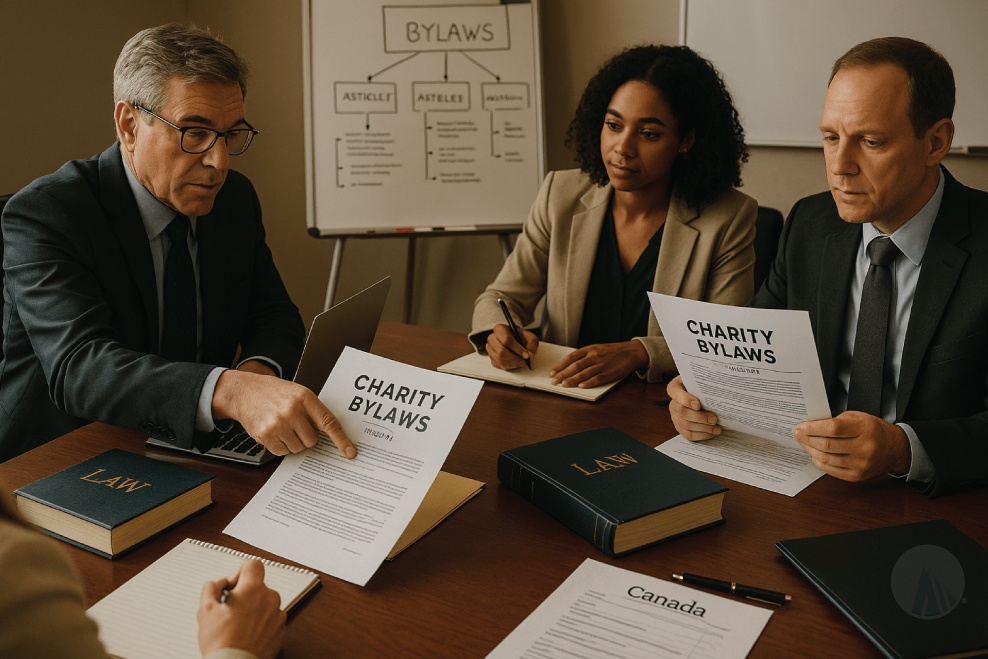
  5. Create Bylaws: Your nonprofit should have bylaws that outline how it will operate. These include the roles and responsibilities of members, how meetings are held, and how decisions are made.
  6. Fundraising and Compliance: Nonprofits must follow fundraising rules and regulations to ensure transparency. You may also need to submit annual reports to maintain your nonprofit status.

Challenges Nonprofits Face in Canada

While nonprofits play a crucial role in Canadian society, they do face challenges:

  • Funding: It can be difficult to secure consistent funding for nonprofit activities. Many nonprofits rely on donations and grants, which may not always be reliable or sufficient.
  • Competition: With so many organizations in Canada working toward similar causes, it can be hard to stand out and get the attention of donors, volunteers, and other supporters.
  • Administrative Burden: Maintaining compliance with regulations, keeping track of finances, and filing necessary reports can be time-consuming and require expertise, especially for small organizations with limited resources.

Conclusion

Nonprofit organizations in Canada are a vital part of the country’s social fabric. They are dedicated to addressing important issues, supporting communities, and helping those in need. Understanding what it means to be a nonprofit organization is essential if you’re planning to start one or support an existing one.

Nonprofits have a legal structure, financial advantages, and the ability to make a significant impact in areas like education, healthcare, the environment, and the arts. However, they also face challenges, from securing funding to navigating administrative duties. By understanding the structure and benefits of nonprofits, you can make informed decisions about supporting or starting your own nonprofit organization in Canada.

Ready for better nonprofit reporting?
At Northfield & Associates, we have a team of professional bookkeepers and accountants to help your organization manage the books so that you can breeze through tax season.
GET IN TOUCH

What We Do!

We’re often asked by prospective clients what our Bookkeeping Service covers?  People want to know what specific tasks we do, and what their responsibility is.  This brief explainer page will answer that question.  This is by no means an exhaustive list, but covers the most frequently asked questions.

Getting Started

  • Review your existing books for needed corrections or back-work
  • Chart of accounts setup or amendment
  • Assistance with setting up bank feeds
  • Limited assistance* with setting up payroll (QBO or Gusto only)
  • Your books brought current and reconciled if needed

Ongoing Monthly Bookkeeping

  • After-the-fact transaction recording
  • Post to general ledger
  • Post to other ledgers (as needed)
  • Bank account reconciliation
  • Monthly financial statements
  • Other bookkeeping services, as required
  • Best-practice bookkeeping advice and counsel

Year End

  • Assistance with 1099-NEC preparation*
  • Assistance with 1099-MISC preparation*
  • Year-end financial statements and period-end closing

What We Don’t Do

Pay bills

We do not offer bill-pay services at this time, nor do we manage Accounts Payable (AP) or Accounts Receivable (AR).

Payroll tax responsibility

Our bookkeepers can assist you in setting up your initial payroll service in QBO or Gusto. We are not responsible for entering payroll hours/salary, accruing payroll taxes, nor the transmittal of payroll taxes to the IRS or the state.  Your full-service payroll provider (QBO, Gusto, or whatever other service a client uses) will be the responsible party for payroll and payroll tax compliance.

*Payroll deductions and benefits

We provide assistance with setting up a payroll account in either Quickbooks Online or Gusto, including entry of employee data.  We do not assist in state registrations, benefits, or advise on deductions.  Those service areas are provided directly by either QBO or Gusto.

Preparation of W2s

Similar to the last item, your full-service payroll provider (QBO/Gusto) is responsible for preparation of Form W2 for employees.

Sales tax reporting

For those nonprofits that sell taxable goods and/or services, your bookkeeper will assist in accounting for sales taxes collected and transmitted, but we do not prepare state sales tax reports.

Donation recording

We do not provide individual donation data entry into your neither your donor CRM nor Quickbooks Online, nor do we prepare year-end donor acknowledgements.

Administrative tasks

We cannot provide administrative services unrelated to our bookkeeping function.

Attend board meetings

Due to the constraints of time and distance, we are unable to be present, physically nor virtually, at a meeting of a client’s board of directors.*May incur additional fee per 1099-NEC or 1099-MISC.

Let’s Collaborate & Make a Difference!
Partner with us to amplify your mission. Whether it’s Charity accounting, financial transparency, or strategic growth—we’re here to help you create meaningful impact. Let’s work together to build a better future!
Book a Call

Contact us today to schedule your consultation.

Working with Our Firm

In this evolving economic landscape, collaboration with our firm offers clients a strategic advantage. With Cambodia’s reform-driven investment environment and Canada’s expanding footprint in Southeast Asia, our team of experienced consultants and legal advisors provides tailored guidance to help businesses navigate cross-border opportunities. We focus in developing comprehensive legal strategies, structuring international partnerships, and ensuring compliance in emerging markets.

By leveraging our regional insight and international expertise, you benefit from a trusted partner dedicated to helping you capitalize on growth potential in Cambodia and beyond.

Book a Consultation with Northfield & Associates
Your Trusted Partner in International Bilateral Relations

At Northfield & Associates are focus in Foreign Direct Investment (FDI), international trade missions, and cross-border legal strategy. Our team of experienced consultants and legal advisors offers tailored guidance and strategic insight to help you navigate the complexities of international partnerships and development opportunities.

Whether you choose to meet in person at one of our offices or connect virtually, we provide flexible and accessible consultation options. During your session, we’ll assess your goals, review key documentation, and guide you through every stage of your FDI or trade mission engagement.

Let us help you take the next step with confidence supported by trusted legal and strategic counsel every step of the way.

Northfield & Associates
Advancing Global Partnerships, Together.

Take the First Step Today

If you believe you may be eligible for legal relief or simply need sound legal advice, we’re here to help. Contact us today to book your consultation. Let us provide the clarity, strategy, and peace of mind you need to move forward.

Disclaimer: The information contained in this article is provided for general information purposes only and does not constitute legal or other professional advice. Readers should seek tailored legal advice in relation to their personal circumstances.

We serve our clients in English, Cambodian, Vietnamese, Mandarin and Cantonese, especially in Asian clients.

  • If you or anybody that you know, think that you meet the requirements and wish to receive further information.
  • We can help you start the application process and confirm eligibility requirements to participate.
  • We Offer Consultations & Meetings by Phone & Virtually. Affordable Fees.
Book a Consultation Today
Contact Northfield & Associates today to schedule a consultation with an experienced Consultant.
Book a call with a Consultation
Join the community of Northfield & Associates
Connect with peers and community ambassadors to hear real experiences, tips, and advice about studying abroad.
Explore Northfield & Associates community

About Northfield

Northfield & Associates International Corporation is a global consulting firm serving private enterprises, public institutions, not-for-profit organizations, and institutional capital providers. Operating across Cambodia, Canada, and global markets, the firm supports capital deployment, regulatory navigation, and enterprise decision-making in complex economic and geopolitical environments. Northfield & Associates delivers customized, execution-focused advisory solutions that drive measurable transformation, strengthen competitiveness, and enhance long-term highest value opportunities. The firm incorporates consulting, legal, regulatory, financial, and risk expertise to enable disciplined capital allocation, strong governance, and operational resilience. Northfield & Associates upholds a culture of applied insight and innovation, supporting clients across digital transformation, growth strategy, and organizational capability building. The firm advises individual, leading global corporations, midsize enterprises, government agencies, and mission-driven organizations through long-term partnerships. Enterprise-wide risk management, professional ethics, and fiduciary standards are embedded across all operations. Northfield & Associates’ diverse, globally unified teams are committed to execution certainty and sustainable, risk-adjusted returns aligned with ESG and stakeholder objectives.

Forward-Looking Information

This news release contains forward-looking information. All statements, other than statements of historic fact, that address activities, events or developments that the Company believes, expects or anticipates will or may occur in the future constitute forward-looking information.

This forward-looking information reflects the current expectations or beliefs of the Company based on information currently available to the Company.

Forward-looking information is subject to a number of risks and uncertainties that may cause the actual results of the Company to differ materially from those discussed in the forward-looking information, and even if such actual results are realized or substantially realized, there can be no assurance that they will have the expected consequences to, or effects on the Company. Factors that could cause actual results or events to differ materially from current expectations include, among other things: the failure to finalize negotiations concerning the increase of the Loan or to close such transaction and the failure of the Company to complete the acquisition of the Company Facility; operating performance of facilities; environmental and safety risks; delays in obtaining or failure to obtain necessary permits and approvals from government authorities; unavailability of plant, equipment or labour; inability to retain key management and personnel; changes to regulations or policies affecting the Company’s activities; and the other risks disclosed under the heading “Risk Factors” and elsewhere in the Company’s amended annual information.

Forward-looking information speaks only as of the date on which it is made and, except as may be required by applicable securities laws, the Company disclaims any intent or obligation to update any forward-looking information, whether as a result of new information, future events or results or otherwise. Although the Company believes that the assumptions inherent in the forward-looking information are reasonable, forward-looking information is not a guarantee of future performance and accordingly undue reliance should not be put on such information due to the inherent uncertainty therein.

Questions?

info@northfied.biz

Within Corporate Newsroom  

Media Contact:

media@northfied.biz

Press contact

PR consultants
press@northfied.biz

NOT LEGAL ADVICE. Information made available on this website in any form is for information purposes only. It is not, and should not be taken as, legal advice. You should not rely on, or take or fail to take any action based upon this information. Never disregard professional legal advice or delay in seeking legal advice because of something you have read on this website. Northfield & Associates professionals will be pleased to discuss resolutions to specific legal concerns you may have.

Categories
Business News Financial Institution & Services Legal News Northfield News

Financial Statements for Charities and Nonprofits

Financial statements are detailed reports that show how your organization receives, spends, and manages money, including all assets, liabilities, revenue, and expenses. These formal records are essential for maintaining your charitable status and demonstrating accountability to supporters.

Organizations sometimes treat financial statements as simple bookkeeping exercises. In reality, these statements tell the complete story of your mission’s financial health.

They reveal patterns in donation cycles, program effectiveness, and long-term sustainability. Understanding how to structure and present this information can help secure major funding and maintain donor confidence.

Throughout this guide, we’ll walk through the core components of nonprofit financial statements. We’ll also explore how revenue recognition works differently for charitable organizations.

We will cover annual reporting requirements that keep your organization compliant. Best practices for maintaining transparency with your stakeholders will also be discussed.

What Are Financial Statements for Charities and Nonprofits?

Financial statements for charities and nonprofits are formal records that show how these organizations receive, manage, and spend money. They follow specific rules and formats that differ from business financial statements because charities serve the public good rather than make profits.

Definition and Purpose

Financial statements for charities are official documents that track all money coming into and going out of the organization. They show donors, government agencies, and the public exactly how funds are used.

These statements prove that the charity uses donations properly and follows its stated mission. They help donors decide whether to give money to the organization.

The main goals include:

  • Building trust with supporters
  • Meeting legal requirements
  • Showing financial health
  • Proving accountability

Charities must prepare these statements every year. They become public records that anyone can review.

This transparency helps maintain public confidence in charitable work. The statements also help charity leaders make better decisions.

They can see which programs cost the most money and which bring in the most donations.

Legal and Regulatory Background

Canadian charities must file financial statements with the Canada Revenue Agency each year. This requirement applies to all registered charities, regardless of their size or income level.

The Income Tax Act sets out these filing rules. Charities that fail to submit proper financial statements can lose their charitable status.

Without charitable status, organizations cannot issue tax receipts for donations.

Filing requirements include:

Provincial laws may add extra requirements. Some provinces require charities to file statements with provincial authorities as well.

The rules vary depending on where the charity operates. Charities with revenues over $500,000 typically need audited statements.

Smaller organizations may prepare their own statements or use a bookkeeper.

Key Differences from For-Profit Financial Statements

Charity financial statements use different names and focus on different things than business statements. Instead of showing profit, they show how well the charity serves its mission.

Main differences include:

For-ProfitCharity
Income StatementStatement of Operations
Focuses on profitFocuses on programs
Owners’ equityNet assets
Return on investmentMission effectiveness

Charities must show how much money goes to programs versus administration. Donors want to see that most funds support the charity’s actual work, not overhead costs.

The statement of financial position shows assets and liabilities like business statements do. However, charities separate restricted funds from unrestricted ones.

Restricted funds can only be used for specific purposes. Charities also report on cash flows differently and focus on how money supports charitable activities.

Understanding the financial health of a charity is crucial for transparency and accountability. But what exactly are financial statements, and why are they so important? Let’s break it down.

What Are Financial Statements?

Financial statements are detailed reports that show the financial activities and position of an organization. They are like a snapshot of how much money the charity has, where it comes from, and how it is spent. These statements are crucial for charities to file their annual information return, known as the T3010 or T2 for Not-for-Profit, even if the charity was not active or had no financial activity during the fiscal year.

Types of Financial Statements

There are two main types of financial statements that charities need to prepare:

1. Statement of Assets and Liabilities (Balance Sheet): This statement shows what the charity owns (assets) and what it owes (liabilities). It includes:

  • Current Assets: Cash, bank accounts, short-term investments, and receivables.
  • Long-term Assets: Investments maturing in more than a year, like stocks and bonds.
  • Fixed Assets: Capital assets such as buildings and equipment.
  • Current Liabilities: Accounts payable and deferred revenue.
  • Long-term Liabilities: Debts like mortgages that are due in more than a year.
  • Accumulated Surplus or Deficit: The difference between assets and liabilities, showing if the charity has more assets (surplus) or more liabilities (deficit).

2. Statement of Revenue and Expenditures (Income Statement): This statement details the money the charity earns (revenue) and spends (expenditures). It includes:

  • Revenue: Donations, government grants, investment income, sales of goods and services, rental income, fees, and income from fundraising.
  • Expenditures: Costs such as advertising, travel, interest and bank charges, office supplies, salaries, and occupancy costs (like rent and utilities).
  • Net Income or Loss: The difference between revenue and expenditures, indicating a surplus or deficit for the year.


Prepared NotesFinancial statements also include prepared notes that provide additional details, such as:

  • Accounting Policies: For example, how depreciation is calculated.
  • Details of Investments: Including maturity dates and interest rates.
  • Sources of Revenue: Specifying types of government grants.
  • Transactions with Non-Arm’s Length Parties: Deals with people or organizations closely related to the charity.
  • Information About Long-Term Funds: Such as donations that must be held for ten years or more.
  • Future Obligations: Expected future costs.

Reporting MethodsCharities can choose between two methods to report their finances:

  1. Cash Basis Method: Records revenue and expenditures only when money is received or paid.
  2. Accrual Basis Method: Records revenue when it is earned and expenditures when they are incurred, even if the money hasn’t been received or paid yet.

It’s important to use the same method consistently throughout the financial statements, except when reporting gifts received, which must always use the cash method.

Public AvailabilityFinancial statements are available to the public upon request. This transparency helps maintain trust with donors, government agencies, and the public.

Why Are Financial Statements Important?

  1. Transparency: They show how the charity uses its funds, ensuring donors and stakeholders know where their money goes.
  2. Accountability: Accurate financial statements help prevent misuse of funds and ensure legal compliance.
  3. Informed Decision-Making: Financial statements provide essential information for planning and budgeting.
  4. Public Trust: Openness about finances builds trust and confidence among supporters.


Financial statements are essential for every charity, regardless of size or activity level. They provide a clear picture of the charity’s financial health, ensuring transparency, accountability, and trust. By understanding and properly preparing these statements, charities can better manage their resources and fulfill their missions effectively.

Core Components of Financial Statements

Charitable and nonprofit organizations must prepare four distinct financial statements. These statements track how organizations receive and use their financial resources while demonstrating accountability to donors and regulators.

Statement of Financial Position

The statement of financial position shows what our organization owns and owes at a specific point in time. This statement replaces the traditional balance sheet used by for-profit businesses.

Assets represent everything of value that our organization owns. We list these in order of how quickly they can be converted to cash:

  • Current assets (cash, receivables, inventory)
  • Fixed assets (buildings, equipment, vehicles)
  • Investments and endowment funds

Liabilities are what our organization owes to others. We separate these into two categories:

  • Current liabilities (accounts payable, salaries due within one year)
  • Long-term liabilities (mortgages, multi-year commitments)

Net assets represent the difference between our assets and liabilities. We show net assets with or without donor restrictions.

Restricted net assets must be used for specific purposes as directed by donors. The basic equation remains: Assets = Liabilities + Net Assets

Statement of Operations

The statement of operations tracks our organization’s revenue and expenses over a full accounting period. This statement shows how effectively we use financial resources to advance our mission.

Revenue sources include:

  • Donations and contributions
  • Government grants
  • Program service fees
  • Investment income
  • Special event proceeds

We organize expenses into three main categories:

  • Program expenses: Direct costs of delivering services
  • Management expenses: Administrative and operational costs
  • Fundraising expenses: Costs related to donor development

The statement follows this formula: Revenue – Expenses = Change in Net Assets

We must clearly separate restricted and unrestricted activities. Restricted revenue can only be used for specific programs or purposes.

When we fulfill these restrictions, we report the release of funds from restricted to unrestricted categories.

Statement of Cash Flows

The statement of cash flows shows how cash moves in and out of our organization during the reporting period. This statement helps board members understand our liquidity and ability to meet financial obligations.

Operating activities include:

  • Cash received from donors and program participants
  • Cash paid for salaries and program expenses
  • Interest and investment income received

Investing activities cover:

  • Purchase or sale of equipment and property
  • Investment transactions
  • Loans made to other organizations

Financing activities involve:

  • Borrowing money or repaying loans
  • Donor contributions restricted for long-term purposes
  • Endowment gifts and investment returns

The statement reconciles the beginning and ending cash balances. It reveals whether our operations generate enough cash flow to sustain programs without borrowing.

Statement of Changes in Net Assets

The statement of changes in net assets shows how our net assets changed during the reporting period. This statement links our statement of financial position with our statement of operations.

We track changes separately for restricted and unrestricted net assets. Unrestricted net assets can be used for any organizational purpose.

Restricted net assets have donor-imposed limitations on their use. Key changes include:

  • Operating surpluses or deficits
  • Investment gains or losses
  • Release of restrictions when conditions are met
  • New donor restrictions imposed during the year

This statement helps donors and stakeholders understand how we manage financial resources over time. It shows whether we’re building reserves or using existing funds to support current operations.

Recognising Revenue and Managing Donations

Charities and nonprofits must properly record different types of income. They also need to maintain accurate donor records.

This includes understanding various revenue sources, tracking donations, and providing proper tax receipts to donors.

Types of Revenue for Charities and Nonprofits

We need to understand the different revenue streams that support our charitable work. Each type requires specific accounting treatment and documentation.

Primary Revenue Sources:

  • Donations from individuals and corporations
  • Government grants and funding
  • Investment income from endowments
  • Program service fees and sales
  • Fundraising event proceeds
  • Membership fees and subscriptions

Recording Revenue Properly

We must distinguish between contributions and exchange transactions. Contributions are donations where donors receive nothing of equal value in return.

Exchange transactions provide goods or services for payment. Conditional contributions require us to meet specific requirements before we can record the revenue.

Unconditional contributions can be recorded immediately when promised or received. We record revenue using either cash or accrual accounting methods.

Cash accounting records revenue when money arrives. Accrual accounting records revenue when earned, even if payment comes later.

Multi-year Grants

These require careful tracking across reporting periods. We must monitor conditions and milestones to ensure proper revenue recognition timing.

Donation Tracking and Acknowledgement

We must maintain detailed records of all donations. Proper tracking helps us manage relationships and comply with regulations.

Essential Tracking Information:

  • Donor name and contact details
  • Donation amount and date
  • Payment method used
  • Designation or restrictions
  • Acknowledgement sent date

Documentation Requirements

We need to keep records of all donations, regardless of size. This includes cash gifts, in-kind donations, and pledges.

Each donation should have supporting documentation like cheques, credit card receipts, or gift agreements.

Donor Communication

We should send acknowledgement letters promptly after receiving donations. These letters confirm receipt and show appreciation for the donor’s support.

Database Management

We can use donor management software to track contributions efficiently. This helps us avoid errors and maintain accurate records for reporting purposes.

Tax Receipts for Donors

We must issue official donation receipts to help donors claim tax deductions. Canadian regulations require specific information on these receipts.

Required Receipt Information:

  • Our registered charity number
  • Receipt number and date
  • Donor’s name and address
  • Donation amount and date received
  • Location where receipt was issued
  • Our signature or authorised person’s signature

Eligible Donations

We can only issue tax receipts for gifts where donors receive no benefit in return. If donors receive goods or services, we must calculate the eligible portion for tax receipt purposes.

Timing Requirements

We must issue receipts by February 28th of the year following the donation. For donations made in December, this gives us just two months to process receipts.

Record Keeping

We need to maintain copies of all issued receipts for our records. These documents must be available for review by Canada Revenue Agency if requested.

Managing Financial Resources and Liabilities

Effective management requires careful budgeting throughout the fiscal year. Accurate identification of what your organisation owes is also important.

Understanding these two areas helps maintain financial stability and ensures proper reporting.

Budgeting Practices

Creating annual budgets builds the foundation of sound financial management. We plan how to use our financial resources before each fiscal year begins.

Start by reviewing last year’s actual revenue and expenses. This gives us a realistic baseline for planning.

Revenue planning should include:

  • Expected donations and grants
  • Investment income projections
  • Fundraising event estimates
  • Service fee collections

Expense budgeting covers:

  • Program costs and staff salaries
  • Administrative expenses
  • Fundraising costs
  • Equipment and facility needs

We track actual amounts against budgeted figures each month. This lets us spot problems early and adjust spending as needed.

Cash flow planning helps us pay bills throughout the year. Donations often arrive seasonally, but expenses happen monthly.

Reserve funds cover unexpected costs or revenue shortfalls. Most organisations keep three to six months of operating expenses in reserves.

Identifying and Reporting Liabilities

Current liabilities must be paid within one year. These include accounts payable, staff wages owing, and deferred revenue from grants.

We record liabilities when we become legally obligated to pay, even if we have not received a bill yet.

Common current liabilities:

  • Unpaid invoices from suppliers
  • Accrued payroll and benefits
  • Grant money received but not yet spent
  • Short-term loan payments

Long-term liabilities include mortgages and equipment loans due after one year. We list these separately on our financial statements.

Deferred revenue is money received for future services. We owe donors these services instead of cash.

Track payment due dates to avoid late fees. Set up systems to record all invoices before the fiscal year ends.

Annual Reporting and the Fiscal Year Cycle

Canadian charities must align their financial statements with specific fiscal year requirements. Meeting strict reporting deadlines keeps their charitable status.

The fiscal year determines when we finalize financial records. It also drives all compliance obligations.

Fiscal Year Selection and Compliance

We can choose our charity’s fiscal year-end date. This decision impacts all future reporting requirements.

The fiscal year covers a 12-month period in our financial statements. Most charities select December 31st as their year-end date.

This aligns with the calendar year and simplifies record-keeping.

Key fiscal year requirements include:

  • Must be consistent from year to year
  • Cannot exceed 53 weeks for incorporated charities
  • Determines when we calculate disbursement quotas
  • Sets the timeline for all annual reporting obligations

Once we pick our fiscal year-end, we prepare comprehensive financial statements. These statements form the foundation of our T3010 filing with the Canada Revenue Agency.

Our fiscal year choice affects cash flow planning and audit scheduling. We should consider operational cycles and staff availability when selecting dates.

Reporting Deadlines and Requirements

All registered charities must file Form T3010 within six months of their fiscal year-end. Missing this deadline can lead to revocation of charitable status.

For charities with December 31st year-ends, the T3010 is due by June 30th. We must include audited financial statements if our annual revenue exceeds certain thresholds.

Additional reporting requirements:

Revenue LevelFinancial Statement Requirement
Under $250,000Internal financial statements
$250,000 – $1,000,000Review engagement
Over $1,000,000Audited financial statements

Federally incorporated charities face additional deadlines. We must file our Annual Corporate Return within 60 days of our incorporation anniversary.

Provincial reporting varies by jurisdiction. Ontario charities under ONCA require audited statements when revenue exceeds $500,000.

We keep all financial records for at least six years. Proper documentation supports our annual filings and protects against audits.

Ensuring Transparency and Accountability

Financial statements build trust with donors and the public. Audits provide external validation of financial accuracy.

Proper access lets stakeholders review how charities use their funds.

Role of Audits and Reviews

Independent audits validate our financial statements. An auditor examines our books and records to confirm we report finances accurately.

Many provinces require audits for charities above certain revenue thresholds. Even when not required, audits show our commitment to accountability.

Key audit benefits include:

  • External verification of financial accuracy
  • Identification of internal control weaknesses
  • Enhanced credibility with donors and funders
  • Compliance with regulatory requirements

Reviews offer a middle ground between audits and internal preparation. They provide some external oversight at lower cost than full audits.

We should choose qualified accountants who know charity accounting standards. The auditor’s independence ensures an unbiased assessment of our financial practices.

Access for Donors and Stakeholders

We make financial information available to those who support our work. Transparency builds trust and shows donors how we use their contributions.

Required disclosures typically include:

  • Annual financial statements
  • Canada Revenue Agency T3010 forms
  • Auditor’s reports when applicable
  • Executive compensation details

Many charities post financial statements on their websites for easy access. This demonstrates our commitment to openness.

Donors have the right to ask questions about our finances. We respond promptly and clearly to reasonable requests for financial information.

Board members need regular financial reports to fulfill their oversight duties. We provide monthly or quarterly statements showing budget versus actual performance.

Conclusion

Financial statements are essential tools for charities and nonprofits. They help organizations meet legal requirements and build trust with donors and supporters.

These four key statements work together to tell your organization’s financial story. They show how well you manage resources and advance your mission.

Proper financial reporting also opens doors to grant funding and major gifts.

At Northfield & Associates, we understand the legal complexities of nonprofit financial statements. Our team helps charities navigate compliance requirements and develop strong financial practices.

Get professional support today by email at info@northfield.biz, by phone at (416) 317-6806, or visit us or Schedule your free consultation to discuss your specific circumstances and receive expert assistance throughout the reinstatement process with our experienced legal team.

Frequently Asked Questions

Nonprofit organisations face specific requirements for financial reporting that differ from for-profit businesses. These questions address the most common concerns about preparing, filing, and analysing financial statements for charities and nonprofits.

What are the financial statements for a nonprofit organisation?

Nonprofit organisations prepare three main financial statements. The Statement of Financial Position shows assets, liabilities, and net assets at a specific date.

This statement often includes restricted funds and deferred revenue. The Statement of Operations shows revenues and expenses over a period.

It tracks how money flows in and out of the organisation. The Statement of Cash Flows shows actual cash movements and helps track liquidity and cash management.

Which financial statement is mandatory for NPO?

The Statement of Financial Position is mandatory for most nonprofits. Provincial regulations require this statement as part of annual filing requirements.

Registered charities must provide financial statements when filing their annual information return. The size and type of organisation determines which additional statements are required.

Do charities need to prepare financial statements?

Yes, charities must prepare financial statements. Registered charities have legal requirements to file financial statements annually.

Most charities need audited financial statements each year. Audits provide accountability and control measures for donors and regulators.

The board of directors must approve these financial statements. This approval cannot be delegated to committees.

What is a financial statement analysis for a non profit organisation?

Financial statement analysis examines how well a nonprofit uses its resources. We look at program efficiency ratios to see how much money goes directly to programs.

Administrative cost ratios show how much goes to overhead. Liquidity ratios tell us if the organisation can pay its bills.

Revenue diversity analysis shows if funding sources are stable. This helps assess financial health and sustainability.

What documents are needed to prepare financial statements?

Bank statements and reconciliations are essential documents. We need records of all cash transactions and account balances.

Donation records and grant agreements provide revenue information. Invoices and receipts document all expenses.

Fixed asset records show equipment and property values. Accounts payable and receivable lists track money owed and owing.

How to prepare financial statements for NGO?

Start by gathering all financial records for the reporting period. Reconcile bank accounts and update the general ledger.

Record all accrued expenses. Separate restricted and unrestricted funds.

Calculate depreciation on fixed assets. Prepare the three main financial statements using nonprofit accounting standards.

Qualified personnel should review the statements. The board then approves the statements.

Ready for better nonprofit reporting?
At Northfield & Associates, we have a team of professional bookkeepers and accountants to help your organization manage the books so that you can breeze through tax season.
GET IN TOUCH

What We Do!

We’re often asked by prospective clients what our Bookkeeping Service covers?  People want to know what specific tasks we do, and what their responsibility is.  This brief explainer page will answer that question.  This is by no means an exhaustive list, but covers the most frequently asked questions.

Getting Started

  • Review your existing books for needed corrections or back-work
  • Chart of accounts setup or amendment
  • Assistance with setting up bank feeds
  • Limited assistance* with setting up payroll (QBO or Gusto only)
  • Your books brought current and reconciled if needed

Ongoing Monthly Bookkeeping

  • After-the-fact transaction recording
  • Post to general ledger
  • Post to other ledgers (as needed)
  • Bank account reconciliation
  • Monthly financial statements
  • Other bookkeeping services, as required
  • Best-practice bookkeeping advice and counsel

Year End

  • Assistance with 1099-NEC preparation*
  • Assistance with 1099-MISC preparation*
  • Year-end financial statements and period-end closing

What We Don’t Do

Pay bills

We do not offer bill-pay services at this time, nor do we manage Accounts Payable (AP) or Accounts Receivable (AR).

Payroll tax responsibility

Our bookkeepers can assist you in setting up your initial payroll service in QBO or Gusto. We are not responsible for entering payroll hours/salary, accruing payroll taxes, nor the transmittal of payroll taxes to the IRS or the state.  Your full-service payroll provider (QBO, Gusto, or whatever other service a client uses) will be the responsible party for payroll and payroll tax compliance.

*Payroll deductions and benefits

We provide assistance with setting up a payroll account in either Quickbooks Online or Gusto, including entry of employee data.  We do not assist in state registrations, benefits, or advise on deductions.  Those service areas are provided directly by either QBO or Gusto.

Preparation of W2s

Similar to the last item, your full-service payroll provider (QBO/Gusto) is responsible for preparation of Form W2 for employees.

Sales tax reporting

For those nonprofits that sell taxable goods and/or services, your bookkeeper will assist in accounting for sales taxes collected and transmitted, but we do not prepare state sales tax reports.

Donation recording

We do not provide individual donation data entry into your neither your donor CRM nor Quickbooks Online, nor do we prepare year-end donor acknowledgements.

Administrative tasks

We cannot provide administrative services unrelated to our bookkeeping function.

Attend board meetings

Due to the constraints of time and distance, we are unable to be present, physically nor virtually, at a meeting of a client’s board of directors.*May incur additional fee per 1099-NEC or 1099-MISC.

Let’s Collaborate & Make a Difference!
Partner with us to amplify your mission. Whether it’s Charity accounting, financial transparency, or strategic growth—we’re here to help you create meaningful impact. Let’s work together to build a better future!
Book a Call

Contact us today to schedule your consultation.

Working with Our Firm

In this evolving economic landscape, collaboration with our firm offers clients a strategic advantage. With Cambodia’s reform-driven investment environment and Canada’s expanding footprint in Southeast Asia, our team of experienced consultants and legal advisors provides tailored guidance to help businesses navigate cross-border opportunities. We focus in developing comprehensive legal strategies, structuring international partnerships, and ensuring compliance in emerging markets.

By leveraging our regional insight and international expertise, you benefit from a trusted partner dedicated to helping you capitalize on growth potential in Cambodia and beyond.

Book a Consultation with Northfield & Associates
Your Trusted Partner in International Bilateral Relations

At Northfield & Associates are focus in Foreign Direct Investment (FDI), international trade missions, and cross-border legal strategy. Our team of experienced consultants and legal advisors offers tailored guidance and strategic insight to help you navigate the complexities of international partnerships and development opportunities.

Whether you choose to meet in person at one of our offices or connect virtually, we provide flexible and accessible consultation options. During your session, we’ll assess your goals, review key documentation, and guide you through every stage of your FDI or trade mission engagement.

Let us help you take the next step with confidence supported by trusted legal and strategic counsel every step of the way.

Northfield & Associates
Advancing Global Partnerships, Together.

Take the First Step Today

If you believe you may be eligible for legal relief or simply need sound legal advice, we’re here to help. Contact us today to book your consultation. Let us provide the clarity, strategy, and peace of mind you need to move forward.

Disclaimer: The information contained in this article is provided for general information purposes only and does not constitute legal or other professional advice. Readers should seek tailored legal advice in relation to their personal circumstances.

We serve our clients in English, Cambodian, Vietnamese, Mandarin and Cantonese, especially in Asian clients.

  • If you or anybody that you know, think that you meet the requirements and wish to receive further information.
  • We can help you start the application process and confirm eligibility requirements to participate.
  • We Offer Consultations & Meetings by Phone & Virtually. Affordable Fees.
Book a Consultation Today
Contact Northfield & Associates today to schedule a consultation with an experienced Consultant.
Book a call with a Consultation
Join the community of Northfield & Associates
Connect with peers and community ambassadors to hear real experiences, tips, and advice about studying abroad.
Explore Northfield & Associates community

About Northfield

Northfield & Associates International Corporation is a global consulting firm serving private enterprises, public institutions, not-for-profit organizations, and institutional capital providers. Operating across Cambodia, Canada, and global markets, the firm supports capital deployment, regulatory navigation, and enterprise decision-making in complex economic and geopolitical environments. Northfield & Associates delivers customized, execution-focused advisory solutions that drive measurable transformation, strengthen competitiveness, and enhance long-term highest value opportunities. The firm incorporates consulting, legal, regulatory, financial, and risk expertise to enable disciplined capital allocation, strong governance, and operational resilience. Northfield & Associates upholds a culture of applied insight and innovation, supporting clients across digital transformation, growth strategy, and organizational capability building. The firm advises individual, leading global corporations, midsize enterprises, government agencies, and mission-driven organizations through long-term partnerships. Enterprise-wide risk management, professional ethics, and fiduciary standards are embedded across all operations. Northfield & Associates’ diverse, globally unified teams are committed to execution certainty and sustainable, risk-adjusted returns aligned with ESG and stakeholder objectives.

Forward-Looking Information

This news release contains forward-looking information. All statements, other than statements of historic fact, that address activities, events or developments that the Company believes, expects or anticipates will or may occur in the future constitute forward-looking information.

This forward-looking information reflects the current expectations or beliefs of the Company based on information currently available to the Company.

Forward-looking information is subject to a number of risks and uncertainties that may cause the actual results of the Company to differ materially from those discussed in the forward-looking information, and even if such actual results are realized or substantially realized, there can be no assurance that they will have the expected consequences to, or effects on the Company. Factors that could cause actual results or events to differ materially from current expectations include, among other things: the failure to finalize negotiations concerning the increase of the Loan or to close such transaction and the failure of the Company to complete the acquisition of the Company Facility; operating performance of facilities; environmental and safety risks; delays in obtaining or failure to obtain necessary permits and approvals from government authorities; unavailability of plant, equipment or labour; inability to retain key management and personnel; changes to regulations or policies affecting the Company’s activities; and the other risks disclosed under the heading “Risk Factors” and elsewhere in the Company’s amended annual information.

Forward-looking information speaks only as of the date on which it is made and, except as may be required by applicable securities laws, the Company disclaims any intent or obligation to update any forward-looking information, whether as a result of new information, future events or results or otherwise. Although the Company believes that the assumptions inherent in the forward-looking information are reasonable, forward-looking information is not a guarantee of future performance and accordingly undue reliance should not be put on such information due to the inherent uncertainty therein.

Questions?

info@northfied.biz

Within Corporate Newsroom  

Media Contact:

media@northfied.biz

Press contact

PR consultants
press@northfied.biz

NOT LEGAL ADVICE. Information made available on this website in any form is for information purposes only. It is not, and should not be taken as, legal advice. You should not rely on, or take or fail to take any action based upon this information. Never disregard professional legal advice or delay in seeking legal advice because of something you have read on this website. Northfield & Associates professionals will be pleased to discuss resolutions to specific legal concerns you may have.

Categories
Immigration Immigration info Northfield News

Ontario Colleges Implement New Protection Laws for Foreign Students

Ontario Colleges Implement New Protection Laws for Foreign Students

The publicly financed institutions in Ontario have established new safeguards for foreign students studying in Canada. The scope of this legislation includes information and marketing, recruiting and training, as well as settlement and post-graduation services. This section will provide a comprehensive discussion of the new regulations.

Coverage of the Regulations

Last year, there were 807,750 international students at all levels of study in Canada, according to the Canadian Bureau for International Education. Indian students represented 40% of the total international enrollment, while Chinese students represented 12%. International students comprised 30% of overall enrollment at Ontario’s public colleges in 2020, with tuition payments totalling $1.7 billion and accounting for 68% of total tuition fee revenue.

New Rules to Safeguard Foreign Students

To protect international students studying in Canada, publicly financed universities in Ontario have adopted new international education best practices. Concerns regarding the maltreatment of international students, especially the dissemination of false information by unscrupulous recruitment agencies, prompted the establishment of these regulations.

The new laws create minimum industry standards and stricter criteria for enforcement. They require universities to verify that their marketing materials comply with the law and are not deceptive, which includes not guaranteeing academic, immigration, or job outcomes. In addition, universities are required to terminate contracts with any education agent engaged in “serious, deliberate, or ongoing activity that is untrue, misleading, deceptive, or in violation of the law.”

Private Universities Included

The new requirements involve both publicly financed and privately funded colleges. Public-Private College Partnerships (PPP), include taxpayer-funded institutions providing curricula to private career colleges for a charge; these colleges then employ their professors to conduct academic programmes. As of June 2021, eleven of Ontario’s twenty-four public universities partnered with twelve for-profit private career colleges, enrolling over 24,000 international students, up from 14,698 in 2018. Several of these partnerships did not adhere to enrollment criteria, and their quality assurance and student assistance operations could be improved, according to the provincial audit of 2021.

Colleges Ontario has published a twelve-page set of standards of practice for international education, which all twenty-four members of the organisation are expected to implement by June 2024. Seneca College is not a signatory since it intends to issue a comparable statement for both its domestic and international students.

Normalization of Procedure

According to Linda Franklin, President and Chief Executive Officer of Colleges Ontario, it is essential to standardise the laws throughout all Ontario public institutions so that overseas students know what to anticipate. “Some universities perform some tasks more effectively or differently than others.” Franklin stated that it would be vital to standardise this so that foreign students would have a very clear understanding of the offerings in Ontario regardless of which door they decided to enter.

Safeguarding the Reputation of Ontario

The laws are intended to preserve the reputation of Ontario as a safe, inviting, and great educational destination for overseas students. Franklin underlined the significance of preserving Ontario’s image as an outstanding site for overseas students. Franklin stated, “Our reputation in the world and the continuation of our standing as a safe, inviting magnificent nation…” There are already numerous incentives for international students to select Canada, and we would never want to jeopardise any of them by claiming that we are inferior to any of them.

If you have been taken advantage of by unscrupulous recruitment agencies, we can help you. Book a consultation with Northfield & Associates to help explore available options and navigate this process together, book a consultation with Northfield & Associates to help explore available options and navigate this process together.


Contact To Action

Contact us today to schedule your consultation.

Northfield & Associates

Advancing Global Partnerships, Together.

Working with Our Firm

In this evolving economic landscape, collaboration with our firm offers clients a strategic advantage. With Cambodia’s reform-driven investment environment and Canada’s expanding footprint in Southeast Asia, our team of experienced consultants and legal advisors provides tailored guidance to help businesses navigate cross-border opportunities. We focus in developing comprehensive legal strategies, structuring international partnerships, and ensuring compliance in emerging markets.

By leveraging our regional insight and international expertise, you benefit from a trusted partner dedicated to helping you capitalize on growth potential in Cambodia and beyond.

Book a Consultation with Northfield & Associates

Your Trusted Partner in International Bilateral Relations

At Northfield & Associates are focus in Foreign Direct Investment (FDI), international trade missions, and cross-border legal strategy. Our team of experienced consultants and legal advisors offers tailored guidance and strategic insight to help you navigate the complexities of international partnerships and development opportunities.

Whether you choose to meet in person at one of our offices or connect virtually, we provide flexible and accessible consultation options. During your session, we’ll assess your goals, review key documentation, and guide you through every stage of your FDI or trade mission engagement.

Let us help you take the next step with confidence supported by trusted legal and strategic counsel every step of the way.

Take the First Step Today

If you believe you may be eligible for legal relief or simply need sound legal advice, we’re here to help. Contact us today to book your consultation. Let us provide the clarity, strategy, and peace of mind you need to move forward.

We serve our clients in English, Cambodian, Vietnamese, Mandarin and Cantonese, especially in Asian clients.

  • If you or anybody that you know, think that you meet the requirements and wish to receive further information.
  • We can help you start the application process and confirm eligibility requirements to participate.
  • We Offer Consultations & Meetings by Phone & Virtually. Affordable Fees.

Disclaimer:

The information contained in this article is provided for general information purposes only and does not constitute legal or other professional advice. Readers should seek tailored legal advice in relation to their personal circumstances.

Northfield & Associates

Advancing Global Partnerships, Together.

Book a Consultation Today

Contact Northfield & Associates today to schedule a FREE consultation with an experienced Consultant.

Join the community of Northfield & Associates

Connect with peers and community ambassadors to hear real experiences, tips, and advice about studying abroad.


About Northfield

Northfield & Associates International Corporation is a global consulting firm serving private enterprises, public institutions, not-for-profit organizations, and institutional capital providers. Operating across Cambodia, Canada, and global markets, the firm supports capital deployment, regulatory navigation, and enterprise decision-making in complex economic and geopolitical environments. Northfield & Associates delivers customized, execution-focused advisory solutions that drive measurable transformation, strengthen competitiveness, and enhance long-term highest value opportunities. The firm incorporates consulting, legal, regulatory, financial, and risk expertise to enable disciplined capital allocation, strong governance, and operational resilience. Northfield & Associates upholds a culture of applied insight and innovation, supporting clients across digital transformation, growth strategy, and organizational capability building. The firm advises individual, leading global corporations, midsize enterprises, government agencies, and mission-driven organizations through long-term partnerships. Enterprise-wide risk management, professional ethics, and fiduciary standards are embedded across all operations. Northfield & Associates’ diverse, globally unified teams are committed to execution certainty and sustainable, risk-adjusted returns aligned with ESG and stakeholder objectives.

Forward-Looking Information

This news release contains forward-looking information. All statements, other than statements of historic fact, that address activities, events or developments that the Company believes, expects or anticipates will or may occur in the future constitute forward-looking information.

This forward-looking information reflects the current expectations or beliefs of the Company based on information currently available to the Company.

Forward-looking information is subject to a number of risks and uncertainties that may cause the actual results of the Company to differ materially from those discussed in the forward-looking information, and even if such actual results are realized or substantially realized, there can be no assurance that they will have the expected consequences to, or effects on the Company. Factors that could cause actual results or events to differ materially from current expectations include, among other things: the failure to finalize negotiations concerning the increase of the Loan or to close such transaction and the failure of the Company to complete the acquisition of the Company Facility; operating performance of facilities; environmental and safety risks; delays in obtaining or failure to obtain necessary permits and approvals from government authorities; unavailability of plant, equipment or labour; inability to retain key management and personnel; changes to regulations or policies affecting the Company’s activities; and the other risks disclosed under the heading “Risk Factors” and elsewhere in the Company’s amended annual information.

Forward-looking information speaks only as of the date on which it is made and, except as may be required by applicable securities laws, the Company disclaims any intent or obligation to update any forward-looking information, whether as a result of new information, future events or results or otherwise. Although the Company believes that the assumptions inherent in the forward-looking information are reasonable, forward-looking information is not a guarantee of future performance and accordingly undue reliance should not be put on such information due to the inherent uncertainty therein.

Questions?

info@northfied.biz

Within Corporate Newsroom  

Media Contact:

media@northfied.biz

Press contact

PR consultants
press@northfied.biz

NOT LEGAL ADVICE. Information made available on this website in any form is for information purposes only. It is not, and should not be taken as, legal advice. You should not rely on, or take or fail to take any action based upon this information. Never disregard professional legal advice or delay in seeking legal advice because of something you have read on this website. Northfield & Associates professionals will be pleased to discuss resolutions to specific legal concerns you may have.

Categories
Northfield News

Do Charities Need Audited Financial Statements in Canada?

The answer depends on where your charity operates and how much revenue it brings in each year. The Canada Revenue Agency does not require charities to submit audited financial statements with their annual information returns.

However, provincial laws, funding organizations, or a charity’s governing body may require audits based on specific thresholds and circumstances.

Different provinces set different rules for when charities need audited statements. In Ontario, charities incorporated under the Ontario Not-for-Profit Corporations Act (ONCA) require a Review Engagement for revenue between $100,000 and $500,000, and a full Audit when annual revenue reaches $500,000.

Under the Alberta Societies Act, charities generally require a review engagement for revenue between $100,000 and $250,000, and an audit when annual revenue exceeds $250,000. British Columbia and other provinces have their own thresholds and requirements that charities must follow.

Understanding these requirements helps charities stay compliant and maintain trust with donors and stakeholders.

This article explains when audits are required, what alternatives exist for smaller organizations, and how charities can meet their financial reporting obligations across Canada.

When Are Audited Financial Statements Required for Charities in Canada?

The requirement for audited financial statements depends on several factors including annual revenue levels, provincial versus federal jurisdiction, and whether the charity solicits public donations.

The Canada Revenue Agency does not mandate audits, but other regulatory bodies often do.

Understanding Revenue Thresholds and Audit Triggers

Revenue thresholds vary by jurisdiction. Federal charities typically require audits at $250,000, while Ontario charities incorporated under the Ontario Not-for-Profit Corporations Act (ONCA) require audits at $500,000. Requirements are set by provincial laws and incorporating statutes.

Organizations that fall below the audit threshold typically qualify for a Review Engagement (providing limited assurance) or a Compilation (providing no assurance).

Revenue calculations include all sources of income. This covers donations, grants, investment income, and program fees.

Charities need to track their total revenue carefully throughout the fiscal year to determine if they cross the audit threshold.

When revenue drops below $250,000 in subsequent years, charities may transition from an audit to a review engagement. This change takes effect in the following fiscal period after financial statements are prepared.

Organizations should consult with their accountant to confirm when this shift can occur.

Some charities with revenue below the threshold still choose to conduct audits voluntarily. Donors and funders often view audited financial statements as a sign of transparency and sound financial management.

Provincial and Federal Requirements

Charities incorporated under the Canada Not-for-Profit Corporations Act follow federal rules that often differ from provincial standards.

Federal corporations typically face stricter audit requirements based on member approval rather than revenue alone.

Provincial requirements vary significantly across Canada. Ontario charities incorporated under the Ontario Corporations Act face different thresholds than those in British Columbia or Alberta.

Some provinces require audits at lower revenue levels or impose additional conditions based on organizational structure.

Organizations operating in multiple provinces must comply with the most stringent applicable requirements.

A charity registered federally but operating primarily in one province needs to follow both sets of rules where they apply.

The Canada Revenue Agency itself does not require audited financial statements for the annual T3010 return.

However, other government authorities, funding bodies, or the charity’s governing documents may mandate audits regardless of CRA requirements.

Soliciting Corporations Versus Non-Soliciting Corporations

Soliciting corporations actively seek donations from the public through fundraising campaigns, online appeals, or direct mail.

These organizations face stricter audit requirements in many provinces due to their public accountability obligations.

Non-soliciting corporations rely primarily on membership fees, government grants, or other restricted funding sources.

They typically have more relaxed audit requirements and may qualify for review engagements at higher revenue levels than soliciting organizations.

The distinction matters particularly at the provincial level. Some provinces impose audit requirements on soliciting corporations at lower revenue thresholds, sometimes as low as $100,000 in annual revenue.

Non-soliciting organizations in the same province might not require audits until they reach $250,000 or higher.

Charities should verify their classification with their provincial regulator. The determination depends on actual fundraising activities rather than charitable registration status alone.

Legal and Regulatory Framework for Charity Financial Reporting

Canadian charities operate under federal tax law through the Income Tax Act and the Canada Revenue Agency’s oversight. They must also comply with provincial incorporation laws that often set their own financial reporting rules.

The Charities Directorate maintains charitable status requirements. Provincial statutes like the Ontario Not-for-Profit Corporations Act add extra layers of compliance.

Income Tax Act and CRA Oversight

The Income Tax Act establishes the federal framework for registered charities in Canada. This law defines what qualifies as a charitable organization and sets out the basic requirements charities must follow to maintain their tax-exempt status.

The Canada Revenue Agency enforces these rules through the Charities Directorate. All registered charities must file a T3010 annual information return with financial statements attached, even if the charity had no activity or a zero balance during the fiscal period.

The CRA requires these statements to include a balance sheet showing assets and liabilities and an income statement showing revenue and expenditures.

The CRA recommends professional audits for charities with income over $250,000. However, the agency does not legally require audited statements.

For smaller charities, the treasurer can sign the financial statements instead of hiring a professional auditor.

Charities Directorate and Charitable Status

The Charities Directorate manages the registration and oversight of all Canadian charities. This division of the CRA determines whether organizations qualify for charitable status and monitors their ongoing compliance with federal requirements.

Organizations must meet specific criteria to obtain and keep charitable status. They must demonstrate that their purposes fall under recognized charitable categories and that they spend their resources on charitable activities.

The Charities Directorate reviews annual returns and financial statements to verify compliance. Loss of charitable status means losing tax-exempt benefits and the ability to issue donation receipts.

The Charities Directorate can revoke registration if a charity fails to file complete returns or violates other federal requirements.

Provincial Legislation: ONCA and Others

Provincial laws add requirements beyond federal regulations. In Ontario, the Ontario Not-for-Profit Corporations Act governs incorporated charities and sets financial reporting rules based on revenue thresholds.

Most provinces require charities to have audited financial statements when annual revenue exceeds certain thresholds—typically $250,000 to $500,000 depending on the province and type of corporation.

Incorporated registered charities must check their provincial incorporation statute to determine audit requirements. The law in their province of incorporation dictates whether they need to appoint a public accountant or auditor.

Some provinces also require charities to file financial statements with provincial authorities in addition to federal filing.

A charity’s bylaws may impose stricter requirements than provincial or federal law. These governing documents sometimes mandate audits at lower revenue levels or require specific types of financial reviews.

Types and Components of Charity Financial Statements

Charity financial statements contain specific sections that show how organizations manage their money and resources.

The statement of financial position displays what a charity owns and owes, while the statement of operations tracks income and spending on programs throughout the year.

Statement of Financial Position and Assets

The statement of financial position serves as a charity’s balance sheet. It shows all assets, liabilities, and net assets at a specific point in time.

This document reveals the financial health of the organization by listing what it owns versus what it owes.

Assets include cash, investments, property, equipment, and amounts owed to the charity. Liabilities cover debts, accounts payable, and deferred revenue from funds received but not yet used for their intended purpose.

Net assets represent the difference between total assets and total liabilities. The statement of assets and liabilities helps donors and regulators understand if a charity can meet its obligations.

Organizations with strong net assets demonstrate stability. Those with significant liabilities may face challenges in maintaining operations or funding programs.

Statement of Operations and Program Spending

The statement of operations tracks all revenue and expenses during a fiscal period. It shows where money comes from and how charities spend it on programs, administration, and fundraising activities.

Revenue sources include donations, grants, fundraising events, and investment income. Expenses break down into three main categories: program spending (direct charitable work), administrative costs (management and oversight), and fundraising expenses (costs to raise donations).

This statement helps stakeholders evaluate how effectively a charity uses its resources. Most donors want to see that organizations spend a significant portion of their budget on actual programs rather than overhead costs.

Restricted Versus Unrestricted Funds

Charities must separate restricted funds from unrestricted funds in their financial statements. Restricted funds come with donor-imposed conditions that limit how the organization can use the money.

These funds must be spent according to specific purposes or timeframes set by the donor. Unrestricted funds give charities flexibility to use money where it’s needed most.

The board can allocate these resources to any program or operational need without external limitations. The statement of financial position displays both types of funds separately.

This distinction matters because it shows how much financial flexibility a charity actually has, even if total net assets appear strong.

Audit, Review, and Compilation Engagements: Key Differences

Canadian charities can choose between three types of financial engagements depending on their revenue levels and regulatory requirements.

An audit engagement provides the highest level of assurance, while a compilation offers basic statement preparation with no assurance at all.

Audit Engagement Explained

An audit engagement involves an independent accountant examining a charity’s financial records, transactions, and internal controls to provide an opinion on whether the financial statements present a fair picture of the organization’s financial position.

The accountant tests underlying documentation, confirms balances with third parties, and assesses whether the statements follow Canadian accounting standards.

This process delivers positive assurance, meaning the auditor states that the financial statements are free from material misstatement.

Most provinces require audits when annual revenue exceeds $250,000. During board meetings, directors review and approve these audited statements before sharing them with members, funders, and the Canada Revenue Agency.

Audits take the most time and cost more than other options. They also provide the strongest credibility with donors and grant-makers.

Review Engagement Requirements

A review engagement involves less extensive procedures than an audit engagement but still provides limited assurance on the financial statements.

The accountant performs analytical procedures and makes inquiries of management to determine if the statements are plausible and free from obvious errors.

A financial review does not include testing transactions or examining source documents in detail. The accountant issues a report stating whether anything came to their attention suggesting the statements are not fairly presented.

This level of assurance sits between an audit and a compilation. Charities below provincial audit thresholds often use review engagements to satisfy funders or bylaws while keeping costs manageable.

Review reports are commonly accepted for grant applications and regulatory filings when a full audit is not mandatory.

When to Use a Compilation

A compilation involves an accountant preparing financial statements from information provided by the charity without performing any verification or providing assurance.

The accountant simply organizes the data into proper financial statement format following accounting standards. No opinion or assurance is issued.

The compilation report clearly states that readers should not rely on the statements for investment or credit decisions. This option costs the least and works for smaller charities with minimal revenue that are not required to meet the disbursement quota through audited records or satisfy funder requirements.

Some charities use compilations for internal purposes or board meetings while reserving review engagements or audits for external reporting when needed.

Accounting Standards and Financial Reporting for Charities

Canadian charities must follow specific accounting frameworks that ensure their financial statements are accurate, consistent, and transparent.

These standards guide how organizations recognize revenue, report expenses, and present financial information to donors and regulators.

Canadian Accounting Standards for Not-For-Profit Organizations (ASNPO)

Most Canadian charities follow the Accounting Standards for Not-For-Profit Organizations (ASNPO), which are designed specifically for organizations that don’t operate for profit.

These standards are part of the CPA Canada Handbook and provide clear rules for recording financial activities unique to charities.

ASNPO requires charities to prepare three main financial statements:

  • Statement of financial position (balance sheet)
  • Statement of operations (income statement)
  • Statement of changes in net assets

Charities must also classify their net assets into categories: unrestricted, internally restricted, and externally restricted.

This classification shows donors and regulators how funds can be used. Externally restricted funds come with donor-imposed conditions that must be followed.

The standards require disclosure of accounting policies, such as how depreciation is calculated and how donated goods are valued.

Charities must also explain any significant transactions with related parties or unusual financial events.

CPA Canada Handbook Guidance

The CPA Canada Handbook provides detailed guidance that accountants and charity leaders use to apply ASNPO correctly.

This handbook is updated regularly to reflect changes in financial reporting requirements and best practices.

The handbook covers specific situations charities face, such as:

  • How to record government grants and contributions
  • When to recognize pledged donations as revenue
  • How to account for endowment funds
  • Treatment of tangible capital assets

Charities can also choose to follow Public Sector Accounting Standards (PSAS) instead of ASNPO, particularly if they receive substantial government funding or are controlled by government entities.

However, ASNPO remains the most common choice for independent charitable organizations.

The handbook helps ensure consistency across the charitable sector. This makes it easier for donors and funders to compare financial statements between different organizations.

Revenue Recognition and Reporting Consistency

Revenue recognition rules determine when a charity records donations, grants, and other income in its financial statements.

ASNPO uses the deferral method or the restricted fund method for recognizing contributions.

Under the deferral method, restricted contributions are recorded as liabilities when received.

They are recognized as revenue when the related expenses occur.

Unrestricted contributions are recorded as revenue immediately when received.

The restricted fund method tracks each type of restricted fund separately.

This makes it easier to show compliance with donor restrictions.

This method works well for charities with multiple restricted programs or endowments.

Consistency in applying these methods year after year is essential.

Changing methods requires disclosure and can affect how financial trends appear.

Charities must document their revenue recognition policies clearly in the notes to their financial statements.

Maintaining Transparency, Accountability, and Donor Confidence

Financial transparency and accountability are the foundation for building donor confidence in Canadian charities.

Organizations with clear financial management and open communication strengthen public trust and improve their ability to secure ongoing support.

Importance of Public Trust

Public trust determines whether donors choose to support a charity and continue giving over time.

When charities share financial information openly, donors can verify that their contributions are being used effectively for the intended charitable purposes.

Donor confidence relies on an organization’s ability to demonstrate responsible financial management.

Charities that provide clear financial records help donors understand how their money is spent and what impact their contributions make.

This transparency reassures both current and potential donors that the organization operates with integrity.

The loss of public trust can severely impact a charity’s ability to raise funds and maintain operations.

Organizations that fail to demonstrate transparency often face declining donations and increased scrutiny from regulators.

Building trust requires consistent effort, and maintaining it depends on ongoing transparency and accountability.

Best Practices for Annual Reporting

Annual reports should include complete financial statements that show all revenue sources and expenses.

The report needs to break down spending by program area so donors can see how funds are allocated across different charitable activities.

Charities should present financial information in clear, accessible language that non-accountants can understand.

Including charts or graphs helps donors visualize spending patterns and program costs.

The report should also explain any significant changes in revenue or expenses compared to previous years.

Organizations must make annual reports easily available to the public through their websites and upon request.

Timely distribution of these reports, ideally within a few months of the fiscal year end, demonstrates organizational efficiency.

Including stories of impact alongside financial data helps donors connect their contributions to real outcomes.

Transparency and Accountability Measures

Registered charities must file annual information returns with the Canada Revenue Agency and provide financial statements regardless of activity level.

These filings become public records that anyone can access to review a charity’s financial practices.

Organizations should maintain detailed financial records throughout the year and implement internal controls to prevent errors or misuse of funds.

Regular financial reviews by board members help identify issues before they become serious problems.

Many charities also establish finance committees to oversee financial management and report to the full board.

Providing tax receipts promptly and accurately fulfills both legal requirements and donor expectations.

Charities should respond quickly to donor questions about finances and be willing to explain spending decisions.

Some organizations go beyond minimum requirements by publishing quarterly financial updates or sharing detailed program budgets to show their commitment to accountability.

Conclusion

Canadian charities must file financial statements with their T3010 returns, but the Canada Revenue Agency does not require these statements to be audited.

The CRA recommends professional audits for charities with gross income over $250,000.

However, provincial laws, funding bodies, or a charity’s governing documents may set different requirements that make audited statements mandatory.

Smaller charities can submit financial statements signed by their treasurer or another officer.

Larger organizations, especially those with revenue exceeding the $250,000 provincial benchmark, typically need professionally audited statements to meet provincial regulations and maintain transparency with donors and stakeholders.

Each province sets its own thresholds and rules, so charities must check the specific requirements in their jurisdiction.

B&H Charity Accounting Firm helps charities across Canada navigate financial reporting requirements and compliance obligations.

Whether a charity needs basic financial statements or full professional audits, our firm provides expert guidance tailored to each organization’s needs.

avigating director compensation rules can be complex.

Contact Northfield & Associates for expert guidance on compliance requirements. Our team understands Canadian charity law and can help ensure your organisation follows proper procedures.

Get professional support today by email at info@northfield.biz, by phone at (416) 317-6806, or visit us or Schedule your free consultation to discuss your specific circumstances and receive expert assistance throughout the reinstatement process with our experienced legal team.

Schedule a free consultation to discuss specific reporting requirements and ensure the charity meets all federal and provincial obligations.

Frequently Asked Questions

The rules around audited financial statements for Canadian charities vary by province and depend on factors like revenue size and organizational structure.

The Canada Revenue Agency does not require audits, but other authorities might.

What are the audit requirements for charities in Canada?

Audit requirements for Canadian charities depend on provincial rules rather than federal law.

Each province sets its own thresholds based on factors like annual revenue.

Ontario typically requires an audit when a charity reaches $500,000 in annual revenue under ONCA.

British Columbia has different limits.

Alberta requires an audit when annual revenue exceeds $250,000 under the Societies Act (and a review for revenue between $100,000 and $250,000).

Charities need to check the rules in their specific province.

The requirements can change based on where the charity operates.

Do charities need to have audited accounts?

Not all charities need audited accounts.

The Canada Revenue Agency does not require charities to submit audited financial statements.

Other groups might require audits though.

A charity’s governing body, funding organizations, or provincial authorities may ask for audited statements.

The audit requirement is typically triggered when revenue reaches the provincial threshold, commonly $250,000, though the federal CNCA trigger for soliciting corporations is $500,000.

Smaller organizations can prepare financial statements internally.

These statements just need to be signed by the treasurer or an officer.

Is audit mandatory for charitable trusts?

The audit rules for charitable trusts follow the same provincial guidelines as other registered charities.

A charitable trust in Alberta must have audited financial statements each year.

Provincial thresholds determine whether other charitable trusts need audits.

The type of legal structure matters less than the revenue size and location.

Charitable trusts must check their provincial requirements and any rules set by their funders.

Do charities have to disclose financial statements?

All registered charities must provide financial statements to the Canada Revenue Agency.

This applies even if the charity was not active during the fiscal period or had a zero balance.

Charities file financial statements as part of their annual information return using Form T3010.

The form includes financial statements, program activities, governance information, and fundraising details.

The financial data reported on the T3010 form is a summary derived from the full financial statements prepared for the board and other users. For CNCA corporations over $100,000, the full statements must be attached to the T3010.

Charities often present information differently depending on who needs to see it.

When is an audit required for a Canadian charity?

An audit becomes required when a charity meets certain provincial revenue thresholds.

The specific amount varies by province, with some requiring audits at $250,000 in annual revenue.

Funding bodies or governing organizations might set their own audit requirements regardless of provincial rules.

A charity might need an audit to maintain grants or meet membership requirements.

Revenue thresholds vary by province. Federal charities typically require audits at $250,000, while Ontario charities require audits at $500,000 in annual revenue.

What does the CRA say about audited statements for charities?

The Canada Revenue Agency does not require charities to submit audited financial statements. Charities must provide financial information with their annual return, but these statements do not need to be audited.

The CRA still requires financial statements even if other authorities ask for audited versions. The format and details for CRA filings may be different from audited statements used elsewhere.

Ready for better nonprofit reporting?
At Northfield & Associates, we have a team of professional bookkeepers and accountants to help your organization manage the books so that you can breeze through tax season.
GET IN TOUCH

What We Do!

We’re often asked by prospective clients what our Bookkeeping Service covers?  People want to know what specific tasks we do, and what their responsibility is.  This brief explainer page will answer that question.  This is by no means an exhaustive list, but covers the most frequently asked questions.

Getting Started

  • Review your existing books for needed corrections or back-work
  • Chart of accounts setup or amendment
  • Assistance with setting up bank feeds
  • Limited assistance* with setting up payroll (QBO or Gusto only)
  • Your books brought current and reconciled if needed

Ongoing Monthly Bookkeeping

  • After-the-fact transaction recording
  • Post to general ledger
  • Post to other ledgers (as needed)
  • Bank account reconciliation
  • Monthly financial statements
  • Other bookkeeping services, as required
  • Best-practice bookkeeping advice and counsel

Year End

  • Assistance with 1099-NEC preparation*
  • Assistance with 1099-MISC preparation*
  • Year-end financial statements and period-end closing

What We Don’t Do

Pay bills

We do not offer bill-pay services at this time, nor do we manage Accounts Payable (AP) or Accounts Receivable (AR).

Payroll tax responsibility

Our bookkeepers can assist you in setting up your initial payroll service in QBO or Gusto. We are not responsible for entering payroll hours/salary, accruing payroll taxes, nor the transmittal of payroll taxes to the IRS or the state.  Your full-service payroll provider (QBO, Gusto, or whatever other service a client uses) will be the responsible party for payroll and payroll tax compliance.

*Payroll deductions and benefits

We provide assistance with setting up a payroll account in either Quickbooks Online or Gusto, including entry of employee data.  We do not assist in state registrations, benefits, or advise on deductions.  Those service areas are provided directly by either QBO or Gusto.

Preparation of W2s

Similar to the last item, your full-service payroll provider (QBO/Gusto) is responsible for preparation of Form W2 for employees.

Sales tax reporting

For those nonprofits that sell taxable goods and/or services, your bookkeeper will assist in accounting for sales taxes collected and transmitted, but we do not prepare state sales tax reports.

Donation recording

We do not provide individual donation data entry into your neither your donor CRM nor Quickbooks Online, nor do we prepare year-end donor acknowledgements.

Administrative tasks

We cannot provide administrative services unrelated to our bookkeeping function.

Attend board meetings

Due to the constraints of time and distance, we are unable to be present, physically nor virtually, at a meeting of a client’s board of directors.*May incur additional fee per 1099-NEC or 1099-MISC.

Let’s Collaborate & Make a Difference!
Partner with us to amplify your mission. Whether it’s Charity accounting, financial transparency, or strategic growth—we’re here to help you create meaningful impact. Let’s work together to build a better future!
Book a Call

Contact us today to schedule your consultation.

Working with Our Firm

In this evolving economic landscape, collaboration with our firm offers clients a strategic advantage. With Cambodia’s reform-driven investment environment and Canada’s expanding footprint in Southeast Asia, our team of experienced consultants and legal advisors provides tailored guidance to help businesses navigate cross-border opportunities. We focus in developing comprehensive legal strategies, structuring international partnerships, and ensuring compliance in emerging markets.

By leveraging our regional insight and international expertise, you benefit from a trusted partner dedicated to helping you capitalize on growth potential in Cambodia and beyond.

Book a Consultation with Northfield & Associates
Your Trusted Partner in International Bilateral Relations

At Northfield & Associates are focus in Foreign Direct Investment (FDI), international trade missions, and cross-border legal strategy. Our team of experienced consultants and legal advisors offers tailored guidance and strategic insight to help you navigate the complexities of international partnerships and development opportunities.

Whether you choose to meet in person at one of our offices or connect virtually, we provide flexible and accessible consultation options. During your session, we’ll assess your goals, review key documentation, and guide you through every stage of your FDI or trade mission engagement.

Let us help you take the next step with confidence supported by trusted legal and strategic counsel every step of the way.

Northfield & Associates
Advancing Global Partnerships, Together.

Take the First Step Today

If you believe you may be eligible for legal relief or simply need sound legal advice, we’re here to help. Contact us today to book your consultation. Let us provide the clarity, strategy, and peace of mind you need to move forward.

Disclaimer: The information contained in this article is provided for general information purposes only and does not constitute legal or other professional advice. Readers should seek tailored legal advice in relation to their personal circumstances.

We serve our clients in English, Cambodian, Vietnamese, Mandarin and Cantonese, especially in Asian clients.

  • If you or anybody that you know, think that you meet the requirements and wish to receive further information.
  • We can help you start the application process and confirm eligibility requirements to participate.
  • We Offer Consultations & Meetings by Phone & Virtually. Affordable Fees.
Book a Consultation Today
Contact Northfield & Associates today to schedule a consultation with an experienced Consultant.
Book a call with a Consultation
Join the community of Northfield & Associates
Connect with peers and community ambassadors to hear real experiences, tips, and advice about studying abroad.
Explore Northfield & Associates community

About Northfield

Northfield & Associates International Corporation is a global consulting firm serving private enterprises, public institutions, not-for-profit organizations, and institutional capital providers. Operating across Cambodia, Canada, and global markets, the firm supports capital deployment, regulatory navigation, and enterprise decision-making in complex economic and geopolitical environments. Northfield & Associates delivers customized, execution-focused advisory solutions that drive measurable transformation, strengthen competitiveness, and enhance long-term highest value opportunities. The firm incorporates consulting, legal, regulatory, financial, and risk expertise to enable disciplined capital allocation, strong governance, and operational resilience. Northfield & Associates upholds a culture of applied insight and innovation, supporting clients across digital transformation, growth strategy, and organizational capability building. The firm advises individual, leading global corporations, midsize enterprises, government agencies, and mission-driven organizations through long-term partnerships. Enterprise-wide risk management, professional ethics, and fiduciary standards are embedded across all operations. Northfield & Associates’ diverse, globally unified teams are committed to execution certainty and sustainable, risk-adjusted returns aligned with ESG and stakeholder objectives.

Forward-Looking Information

This news release contains forward-looking information. All statements, other than statements of historic fact, that address activities, events or developments that the Company believes, expects or anticipates will or may occur in the future constitute forward-looking information.

This forward-looking information reflects the current expectations or beliefs of the Company based on information currently available to the Company.

Forward-looking information is subject to a number of risks and uncertainties that may cause the actual results of the Company to differ materially from those discussed in the forward-looking information, and even if such actual results are realized or substantially realized, there can be no assurance that they will have the expected consequences to, or effects on the Company. Factors that could cause actual results or events to differ materially from current expectations include, among other things: the failure to finalize negotiations concerning the increase of the Loan or to close such transaction and the failure of the Company to complete the acquisition of the Company Facility; operating performance of facilities; environmental and safety risks; delays in obtaining or failure to obtain necessary permits and approvals from government authorities; unavailability of plant, equipment or labour; inability to retain key management and personnel; changes to regulations or policies affecting the Company’s activities; and the other risks disclosed under the heading “Risk Factors” and elsewhere in the Company’s amended annual information.

Forward-looking information speaks only as of the date on which it is made and, except as may be required by applicable securities laws, the Company disclaims any intent or obligation to update any forward-looking information, whether as a result of new information, future events or results or otherwise. Although the Company believes that the assumptions inherent in the forward-looking information are reasonable, forward-looking information is not a guarantee of future performance and accordingly undue reliance should not be put on such information due to the inherent uncertainty therein.

Questions?

info@northfied.biz

Within Corporate Newsroom  

Media Contact:

media@northfied.biz

Press contact

PR consultants
press@northfied.biz

NOT LEGAL ADVICE. Information made available on this website in any form is for information purposes only. It is not, and should not be taken as, legal advice. You should not rely on, or take or fail to take any action based upon this information. Never disregard professional legal advice or delay in seeking legal advice because of something you have read on this website. Northfield & Associates professionals will be pleased to discuss resolutions to specific legal concerns you may have.

Categories
Business News Financial Institution & Services Legal News Northfield News

Form T3010 New Version: What Canadian Charities Need to Know

If you run a registered charity in Canada, you need to know about Form T3010 Version 24. This updated form launched in January 2024 and changes how you report your charity’s activities to the Canada Revenue Agency (CRA).

The new version reflects important changes to charitable spending rules that started in 2022. Understanding which version to use and how to file correctly will help you stay compliant and avoid filing problems.

In this guide, you’ll learn everything about the Form T3010 update, including who needs to use it, what’s changed, and how to file correctly.

What is Form T3010?

Form T3010 is the annual information return that every registered charity in Canada must file with the CRA.

Understanding the Registered Charity Information Return

Form T3010 is officially called the Registered Charity Information Return. You must complete this form every year to maintain your charity’s registered status.

Think of it as your charity’s annual report to the government. It shows what your organization did, how much money you received, and how you spent it.

Who Must File Form T3010:

  • All registered charities in Canada
  • Registered Canadian amateur athletic associations
  • Organizations with registered charity status under the Income Tax Act

Key Filing Requirements:

  • You must file within six months after your fiscal period ends
  • The form must be complete with all required information
  • You need to use the correct version based on your fiscal year end
  • Missing the deadline can result in penalties or loss of charitable status

Your Form T3010 helps the CRA ensure your charity operates according to Canadian charity law. It also provides transparency for donors and the public who want to see how charities use their funds.

Background: Why Form T3010 Was Updated

The federal government introduced new rules in 2022 to increase charitable spending in local communities across Canada.

2022 Legislative Changes to Charitable Spending

In 2022, the Canadian government announced major changes to how charities must spend their funds. These changes aimed to get more charitable dollars working directly in communities.

The main update was to the disbursement quota rules. These rules determine how much money your charity must spend on charitable activities each year.

What Changed in 2022:

  • New disbursement quota calculations
  • Updated rules for enduring property
  • Changes to how charities can hold and spend funds
  • Increased focus on community impact and transparency

The government gave charities time to adjust to these new rules. Form T3010 Version 24 is the result of those changes finally being reflected in the official reporting requirements.

This update ensures that the information you provide matches the new legal framework. It helps the CRA track whether charities are meeting the updated spending requirements.

Key Changes in Form T3010 Version 24

Version 24 includes important updates that affect how you report your charity’s financial information and activities.

Fiscal Period Requirements: Which Version to Use

Your fiscal period end date determines which version of Form T3010 you must use. This is one of the most important things to understand about the update.

Here’s the simple rule:

  • Fiscal period ending on or after December 31, 2023: You must use Form T3010 Version 24
  • Fiscal period ending on or before December 30, 2023: You must use Form T3010 Version 23

Let’s look at some examples to make this clear.

Example 1: Your charity’s fiscal year ends on March 31, 2024. Since this is after December 31, 2023, you must use Version 24.

Example 2: Your charity’s fiscal year ends on December 31, 2023. You must use Version 24 because your fiscal period ends “on or after” December 31, 2023.

Example 3: Your charity’s fiscal year ends on December 30, 2023. You use Version 23 because your fiscal period ends before December 31, 2023.

Chart: Which Form T3010 Version Should You Use?

Your Fiscal Year End DateForm Version to Use
December 30, 2023 or earlierVersion 23
December 31, 2023Version 24
January 1, 2024 or laterVersion 24

Enhanced Transparency and Reporting Requirements

Version 24 includes new sections that reflect the 2022 legislative changes. These updates help the CRA better understand how your charity operates.

New and Updated Sections:

  • Enhanced disbursement quota reporting fields
  • More detailed questions about charitable programs
  • Updated calculations for enduring property
  • Additional information about how you spend funds in communities
  • Improved tracking of administrative versus charitable spending

The form now asks for more specific information about where and how you deliver charitable programs. You’ll need to provide clearer details about the communities you serve.

There are also new questions about how you calculate your annual spending requirements. These align with the updated disbursement quota rules from 2022.

The goal is to give the CRA and the public a clearer picture of your charity’s impact. While this means more detailed reporting, it also helps demonstrate your organization’s value to donors and stakeholders.

How to File Form T3010 Version 24 Correctly

Filing your Form T3010 correctly starts with making sure you have the right version and complete information.

Downloading the Correct Version

Always download Form T3010 directly from the official CRA website. This is the only way to guarantee you have the current, correct version.

Important: Do not use old copies saved on your computer. The CRA will reject outdated forms, which means you’ll need to resubmit and could face late filing penalties.

How to Get the Correct Form:

  1. Go to the official CRA Forms and Publications page
  2. Search for “Form T3010”
  3. Download the form each time you need to file
  4. Check the version number on the form to confirm it matches your fiscal year requirements

You can file Form T3010 online through the CRA’s Charities Directorate portal, or you can print and mail a paper copy. Online filing is faster and you’ll get confirmation of receipt right away.

Pro tip: Save the form with your fiscal year in the filename, like “T3010_FY2024.pdf” so you know which year it’s for.

Common Filing Mistakes to Avoid

Many charities make simple mistakes that delay their filing or cause rejection. Here are the most common problems and how to avoid them.

Mistake 1: Using an Old Saved Copy

Don’t use a form you saved last year. Always download a fresh copy for each filing period.

Mistake 2: Choosing the Wrong Version

Double-check your fiscal year end date against the version requirements. If you’re unsure, use the chart provided earlier in this article.

Mistake 3: Missing Required Information

The form has mandatory fields that must be completed. Review the entire form before submitting to ensure nothing is blank.

Mistake 4: Incorrect Calculations

Your financial totals must match your financial statements. Double-check all math, especially disbursement quota calculations.

Mistake 5: Filing After the Deadline

Mark your calendar for six months after your fiscal year end. Set a reminder for one month before to give yourself time to prepare.

Mistake 6: Not Keeping Supporting Documents

Keep all receipts, financial statements, and supporting documents for at least six years. The CRA may request them during a review.

What Information Does Form T3010 Require?

Understanding what information you need to provide helps you prepare your filing efficiently.

Required Details for Your Charity Information Return

Form T3010 asks for comprehensive information about your charity’s operations. You’ll need several documents ready before you start.

Organizational Information:

  • Your charity’s legal name and business number
  • Mailing address and contact information
  • Names and addresses of directors and trustees
  • Your charity’s main activities and purposes

Financial Information:

  • Total revenue from all sources
  • Breakdown of revenue by category (donations, grants, investments, etc.)
  • Total expenditures for the fiscal year
  • Assets and liabilities at year end
  • Detailed program spending information

Charitable Activities:

  • Description of programs you operated
  • Locations where you delivered services
  • Number of people or communities served
  • Details about grants made to other organizations

Compensation Information:

  • Details about the 10 highest-paid employees or contractors
  • Board member compensation (if any)
  • Benefits provided to staff and volunteers

Disbursement Quota Calculations:

  • Your charity’s disbursement quota for the year
  • How much you spent on charitable activities
  • Whether you met your spending requirements
  • Any amounts carried forward from previous years

You should have your audited or reviewed financial statements ready. Your accountant or bookkeeper can help you gather the correct figures.

Important Deadlines and Compliance Requirements

Meeting your filing deadline is crucial for maintaining your registered charity status.

Filing Timeline for Form T3010 Version 24

You have six months from the end of your fiscal year to file Form T3010. Missing this deadline can have serious consequences.

Your Filing Deadline:

Take your fiscal year end date and add six months. That’s your deadline.

Examples:

  • Fiscal year ends March 31, 2024 → File by September 30, 2024
  • Fiscal year ends December 31, 2023 → File by June 30, 2024
  • Fiscal year ends June 30, 2024 → File by December 31, 2024

What Happens If You File Late:

  • Your charity may lose its registered status
  • You’ll receive a non-compliance letter from the CRA
  • You may face penalties of up to $500 per month
  • Your charity’s information on the CRA website will show you’re not in good standing
  • You could lose your ability to issue donation receipts

How to Request an Extension:

In rare cases, you can request a filing extension. You must contact the CRA Charities Directorate before your deadline and explain why you need more time.

The CRA doesn’t automatically grant extensions. You need a valid reason, such as a natural disaster, serious illness, or major organizational crisis.

CRA Review and Acceptance Process

After you submit Form T3010, the CRA reviews your information to ensure it’s complete and accurate.

What Happens After Submission:

  1. The CRA receives your form
  2. Staff review it for completeness
  3. They check calculations and cross-reference financial data
  4. They may contact you if they need clarification
  5. They update your charity’s public record

Processing Times:

Online submissions usually process within a few weeks. Paper submissions can take several months.

You’ll receive a confirmation notice once the CRA accepts your return. Keep this notice with your charity’s records.

If Your Form Is Rejected:

The CRA will send you a letter explaining what’s wrong. Common reasons include using the wrong version, missing information, or incorrect calculations.

You’ll need to correct the issues and resubmit. Do this quickly to avoid penalties for late filing.

If you disagree with the CRA’s assessment, you have the right to appeal. Contact the Charities Directorate or consult a charity lawyer for guidance.

Resources and Support for Filing Form T3010

You don’t have to navigate Form T3010 alone. Several resources can help you file correctly.

Where to Find Help

The CRA provides comprehensive guidance for charities filing Form T3010. Take advantage of these free resources.

Official CRA Resources:

  • CRA Charities and Giving website: Complete guides and instructions
  • Form T3010 instruction guide: Step-by-step filing help
  • CRA Charities Directorate phone line: 1-800-267-2384
  • My Business Account: Online portal for filing and tracking
  • CRA webinars and workshops: Free training sessions throughout the year

Professional Support:

Sometimes you need expert help, especially if your charity has complex finances or unusual situations.

  • Charity lawyers: Can advise on legal compliance issues
  • Accountants specializing in nonprofits: Help with financial reporting and calculations
  • Charity consultants: Provide comprehensive filing support
  • Volunteer management programs: Some offer free or low-cost assistance to small charities

Filing Software and Tools:

Several software programs can simplify the Form T3010 filing process. These tools help you organize information, perform calculations automatically, and submit electronically.

Popular options include specialized nonprofit accounting software that integrates with CRA systems. Check with your accountant about which tools they recommend.

Community Resources:

Local nonprofit support organizations often provide workshops on CRA compliance. Your provincial or territorial nonprofit association may offer training sessions on Form T3010.

Staying Compliant with Form T3010 Version 24

Understanding and correctly filing Form T3010 Version 24 protects your charity’s registered status and builds trust with donors.

The key points to remember are simple. First, check your fiscal year end date to determine which version you need. Always download a fresh copy from the official CRA website each time you file.

Give yourself plenty of time before the six-month deadline. Gather your financial statements, program information, and supporting documents early in the process.

Double-check all calculations and ensure every required field is complete. If you’re unsure about anything, reach out to the CRA or consult a professional before submitting.

Accurate and timely filing demonstrates your commitment to transparency and good governance. It shows donors, funders, and the public that your charity operates responsibly.

The updated Form T3010 may seem complex at first, but it ultimately serves an important purpose. It helps ensure charitable dollars reach the communities and causes that need them most.

Take time to understand the changes, use the correct version, and file on time. Your charity’s compliance and reputation depend on it.

Frequently Asked Questions

What is the difference between Form T3010 Version 23 and Version 24?

Version 24 includes updated sections that reflect the 2022 legislative changes to disbursement quota rules. It has new fields for reporting charitable spending and enhanced questions about program delivery. The main difference is how you report your charity’s spending requirements and community impact.

When should I use Form T3010 Version 24?

You must use Version 24 if your charity’s fiscal period ends on or after December 31, 2023. This applies to fiscal years ending on December 31, 2023, and any date in 2024 or later.

Where can I download the official Form T3010?

Download Form T3010 directly from the CRA’s official Forms and Publications page at canada.ca. Search for “Form T3010” and always download a fresh copy each time you need to file. Never use old saved versions from previous years.

What happens if I file an outdated version of Form T3010?

The CRA will reject your filing if you submit the wrong version. You’ll need to complete and resubmit the correct version, which could cause you to miss your filing deadline and face penalties. Always verify you’re using the right version before submitting.

How long does it take to complete Form T3010?

Completion time varies based on your charity’s size and complexity. Small charities with straightforward finances might spend 4-6 hours. Larger organizations with multiple programs and complex finances may need several days. Start early to give yourself plenty of time.

Can I file Form T3010 electronically?

Yes, you can file Form T3010 online through the CRA’s Charities Directorate portal using your My Business Account. Electronic filing is faster and provides immediate confirmation of receipt. You can also mail a paper copy if you prefer.

Ready for better nonprofit reporting?
At Northfield & Associates, we have a team of professional bookkeepers and accountants to help your organization manage the books so that you can breeze through tax season.
GET IN TOUCH

What We Do!

We’re often asked by prospective clients what our Bookkeeping Service covers?  People want to know what specific tasks we do, and what their responsibility is.  This brief explainer page will answer that question.  This is by no means an exhaustive list, but covers the most frequently asked questions.

Getting Started

  • Review your existing books for needed corrections or back-work
  • Chart of accounts setup or amendment
  • Assistance with setting up bank feeds
  • Limited assistance* with setting up payroll (QBO or Gusto only)
  • Your books brought current and reconciled if needed

Ongoing Monthly Bookkeeping

  • After-the-fact transaction recording
  • Post to general ledger
  • Post to other ledgers (as needed)
  • Bank account reconciliation
  • Monthly financial statements
  • Other bookkeeping services, as required
  • Best-practice bookkeeping advice and counsel

Year End

  • Assistance with 1099-NEC preparation*
  • Assistance with 1099-MISC preparation*
  • Year-end financial statements and period-end closing

What We Don’t Do

Pay bills

We do not offer bill-pay services at this time, nor do we manage Accounts Payable (AP) or Accounts Receivable (AR).

Payroll tax responsibility

Our bookkeepers can assist you in setting up your initial payroll service in QBO or Gusto. We are not responsible for entering payroll hours/salary, accruing payroll taxes, nor the transmittal of payroll taxes to the IRS or the state.  Your full-service payroll provider (QBO, Gusto, or whatever other service a client uses) will be the responsible party for payroll and payroll tax compliance.

*Payroll deductions and benefits

We provide assistance with setting up a payroll account in either Quickbooks Online or Gusto, including entry of employee data.  We do not assist in state registrations, benefits, or advise on deductions.  Those service areas are provided directly by either QBO or Gusto.

Preparation of W2s

Similar to the last item, your full-service payroll provider (QBO/Gusto) is responsible for preparation of Form W2 for employees.

Sales tax reporting

For those nonprofits that sell taxable goods and/or services, your bookkeeper will assist in accounting for sales taxes collected and transmitted, but we do not prepare state sales tax reports.

Donation recording

We do not provide individual donation data entry into your neither your donor CRM nor Quickbooks Online, nor do we prepare year-end donor acknowledgements.

Administrative tasks

We cannot provide administrative services unrelated to our bookkeeping function.

Attend board meetings

Due to the constraints of time and distance, we are unable to be present, physically nor virtually, at a meeting of a client’s board of directors.*May incur additional fee per 1099-NEC or 1099-MISC.

Let’s Collaborate & Make a Difference!
Partner with us to amplify your mission. Whether it’s Charity accounting, financial transparency, or strategic growth—we’re here to help you create meaningful impact. Let’s work together to build a better future!
Book a Call

Contact us today to schedule your consultation.

Working with Our Firm

In this evolving economic landscape, collaboration with our firm offers clients a strategic advantage. With Cambodia’s reform-driven investment environment and Canada’s expanding footprint in Southeast Asia, our team of experienced consultants and legal advisors provides tailored guidance to help businesses navigate cross-border opportunities. We focus in developing comprehensive legal strategies, structuring international partnerships, and ensuring compliance in emerging markets.

By leveraging our regional insight and international expertise, you benefit from a trusted partner dedicated to helping you capitalize on growth potential in Cambodia and beyond.

Book a Consultation with Northfield & Associates
Your Trusted Partner in International Bilateral Relations

At Northfield & Associates are focus in Foreign Direct Investment (FDI), international trade missions, and cross-border legal strategy. Our team of experienced consultants and legal advisors offers tailored guidance and strategic insight to help you navigate the complexities of international partnerships and development opportunities.

Whether you choose to meet in person at one of our offices or connect virtually, we provide flexible and accessible consultation options. During your session, we’ll assess your goals, review key documentation, and guide you through every stage of your FDI or trade mission engagement.

Let us help you take the next step with confidence supported by trusted legal and strategic counsel every step of the way.

Northfield & Associates
Advancing Global Partnerships, Together.

Take the First Step Today

If you believe you may be eligible for legal relief or simply need sound legal advice, we’re here to help. Contact us today to book your consultation. Let us provide the clarity, strategy, and peace of mind you need to move forward.

Disclaimer: The information contained in this article is provided for general information purposes only and does not constitute legal or other professional advice. Readers should seek tailored legal advice in relation to their personal circumstances.

We serve our clients in English, Cambodian, Vietnamese, Mandarin and Cantonese, especially in Asian clients.

  • If you or anybody that you know, think that you meet the requirements and wish to receive further information.
  • We can help you start the application process and confirm eligibility requirements to participate.
  • We Offer Consultations & Meetings by Phone & Virtually. Affordable Fees.
Book a Consultation Today
Contact Northfield & Associates today to schedule a consultation with an experienced Consultant.
Book a call with a Consultation
Join the community of Northfield & Associates
Connect with peers and community ambassadors to hear real experiences, tips, and advice about studying abroad.
Explore Northfield & Associates community

About Northfield

Northfield & Associates International Corporation is a global consulting firm serving private enterprises, public institutions, not-for-profit organizations, and institutional capital providers. Operating across Cambodia, Canada, and global markets, the firm supports capital deployment, regulatory navigation, and enterprise decision-making in complex economic and geopolitical environments. Northfield & Associates delivers customized, execution-focused advisory solutions that drive measurable transformation, strengthen competitiveness, and enhance long-term highest value opportunities. The firm incorporates consulting, legal, regulatory, financial, and risk expertise to enable disciplined capital allocation, strong governance, and operational resilience. Northfield & Associates upholds a culture of applied insight and innovation, supporting clients across digital transformation, growth strategy, and organizational capability building. The firm advises individual, leading global corporations, midsize enterprises, government agencies, and mission-driven organizations through long-term partnerships. Enterprise-wide risk management, professional ethics, and fiduciary standards are embedded across all operations. Northfield & Associates’ diverse, globally unified teams are committed to execution certainty and sustainable, risk-adjusted returns aligned with ESG and stakeholder objectives.

Forward-Looking Information

This news release contains forward-looking information. All statements, other than statements of historic fact, that address activities, events or developments that the Company believes, expects or anticipates will or may occur in the future constitute forward-looking information.

This forward-looking information reflects the current expectations or beliefs of the Company based on information currently available to the Company.

Forward-looking information is subject to a number of risks and uncertainties that may cause the actual results of the Company to differ materially from those discussed in the forward-looking information, and even if such actual results are realized or substantially realized, there can be no assurance that they will have the expected consequences to, or effects on the Company. Factors that could cause actual results or events to differ materially from current expectations include, among other things: the failure to finalize negotiations concerning the increase of the Loan or to close such transaction and the failure of the Company to complete the acquisition of the Company Facility; operating performance of facilities; environmental and safety risks; delays in obtaining or failure to obtain necessary permits and approvals from government authorities; unavailability of plant, equipment or labour; inability to retain key management and personnel; changes to regulations or policies affecting the Company’s activities; and the other risks disclosed under the heading “Risk Factors” and elsewhere in the Company’s amended annual information.

Forward-looking information speaks only as of the date on which it is made and, except as may be required by applicable securities laws, the Company disclaims any intent or obligation to update any forward-looking information, whether as a result of new information, future events or results or otherwise. Although the Company believes that the assumptions inherent in the forward-looking information are reasonable, forward-looking information is not a guarantee of future performance and accordingly undue reliance should not be put on such information due to the inherent uncertainty therein.

Questions?

info@northfied.biz

Within Corporate Newsroom  

Media Contact:

media@northfied.biz

Press contact

PR consultants
press@northfied.biz

NOT LEGAL ADVICE. Information made available on this website in any form is for information purposes only. It is not, and should not be taken as, legal advice. You should not rely on, or take or fail to take any action based upon this information. Never disregard professional legal advice or delay in seeking legal advice because of something you have read on this website. Northfield & Associates professionals will be pleased to discuss resolutions to specific legal concerns you may have.

Categories
Business News Financial Institution & Services Legal News Northfield News

What Recourse Do Charities Have, and How Transparent Is the Process?

Charities play a crucial role in society, channeling resources to noble causes and making a positive impact. However, like any organization, charities may face audits by the Canada Revenue Agency (CRA) to ensure compliance with regulations. In this blog post, we explore the options available to charities during and after an audit, shedding light on the transparency measures in place and the statistics surrounding audit outcomes.

Recourse During and After an Audit:

When a charity undergoes an audit, it has the opportunity to make representations to the CRA. These representations may include providing additional information, explaining disagreements with the CRA’s position, or proposing changes to address concerns. The CRA thoroughly considers the charity’s responses before making a determination on compliance outcomes.

If the CRA decides to impose sanctions, annul, or revoke the charity’s registration, it communicates this decision through a registered mail letter. In response to such a letter, the charity can file a written objection within 90 days with the Appeals Intake Centre, providing reasons for the objection and presenting all relevant facts. The Appeals Branch reviews the objection fairly, and if the charity disagrees with the decision, it can further appeal to the Federal Court of Appeal or the Tax Court of Canada.

Public Availability of Audit Information:

Charities are not exempt from public scrutiny when it comes to certain aspects of audit outcomes. Despite the general confidentiality rules, the CRA can release information about charities in specific situations. When a charity’s registration is revoked or annulled, or when sanctions are imposed, the CRA publishes this information in the List of charities. The CRA can also release copies of the letters outlining the reasons for its decisions, ensuring transparency in its actions.

Charities undergoing audits should be aware of the recourse available to them during and after the process. The transparency measures implemented by the CRA, such as public disclosure of certain information, aim to ensure accountability and uphold the integrity of the charitable sector. By understanding the outcomes of audits, charities can work towards compliance and continue their vital contributions to the community.

At Northfield & Associates our expert guidance on compliance requirements. Our team understands Canadian charity law and can help ensure your organisation follows proper procedures.

Get professional support today by email at info@northfield.biz, by phone at (416) 317-6806, or visit us or Schedule your free consultation to discuss your specific circumstances and receive expert assistance throughout the reinstatement process with our experienced legal team.

Ready for better nonprofit reporting?
At Northfield & Associates, we have a team of professional bookkeepers and accountants to help your organization manage the books so that you can breeze through tax season.
GET IN TOUCH

What We Do!

We’re often asked by prospective clients what our Bookkeeping Service covers?  People want to know what specific tasks we do, and what their responsibility is.  This brief explainer page will answer that question.  This is by no means an exhaustive list, but covers the most frequently asked questions.

Getting Started

  • Review your existing books for needed corrections or back-work
  • Chart of accounts setup or amendment
  • Assistance with setting up bank feeds
  • Limited assistance* with setting up payroll (QBO or Gusto only)
  • Your books brought current and reconciled if needed

Ongoing Monthly Bookkeeping

  • After-the-fact transaction recording
  • Post to general ledger
  • Post to other ledgers (as needed)
  • Bank account reconciliation
  • Monthly financial statements
  • Other bookkeeping services, as required
  • Best-practice bookkeeping advice and counsel

Year End

  • Assistance with 1099-NEC preparation*
  • Assistance with 1099-MISC preparation*
  • Year-end financial statements and period-end closing

What We Don’t Do

Pay bills

We do not offer bill-pay services at this time, nor do we manage Accounts Payable (AP) or Accounts Receivable (AR).

Payroll tax responsibility

Our bookkeepers can assist you in setting up your initial payroll service in QBO or Gusto. We are not responsible for entering payroll hours/salary, accruing payroll taxes, nor the transmittal of payroll taxes to the IRS or the state.  Your full-service payroll provider (QBO, Gusto, or whatever other service a client uses) will be the responsible party for payroll and payroll tax compliance.

*Payroll deductions and benefits

We provide assistance with setting up a payroll account in either Quickbooks Online or Gusto, including entry of employee data.  We do not assist in state registrations, benefits, or advise on deductions.  Those service areas are provided directly by either QBO or Gusto.

Preparation of W2s

Similar to the last item, your full-service payroll provider (QBO/Gusto) is responsible for preparation of Form W2 for employees.

Sales tax reporting

For those nonprofits that sell taxable goods and/or services, your bookkeeper will assist in accounting for sales taxes collected and transmitted, but we do not prepare state sales tax reports.

Donation recording

We do not provide individual donation data entry into your neither your donor CRM nor Quickbooks Online, nor do we prepare year-end donor acknowledgements.

Administrative tasks

We cannot provide administrative services unrelated to our bookkeeping function.

Attend board meetings

Due to the constraints of time and distance, we are unable to be present, physically nor virtually, at a meeting of a client’s board of directors.*May incur additional fee per 1099-NEC or 1099-MISC.

Let’s Collaborate & Make a Difference!
Partner with us to amplify your mission. Whether it’s Charity accounting, financial transparency, or strategic growth—we’re here to help you create meaningful impact. Let’s work together to build a better future!
Book a Call

Contact us today to schedule your consultation.

Working with Our Firm

In this evolving economic landscape, collaboration with our firm offers clients a strategic advantage. With Cambodia’s reform-driven investment environment and Canada’s expanding footprint in Southeast Asia, our team of experienced consultants and legal advisors provides tailored guidance to help businesses navigate cross-border opportunities. We focus in developing comprehensive legal strategies, structuring international partnerships, and ensuring compliance in emerging markets.

By leveraging our regional insight and international expertise, you benefit from a trusted partner dedicated to helping you capitalize on growth potential in Cambodia and beyond.

Book a Consultation with Northfield & Associates
Your Trusted Partner in International Bilateral Relations

At Northfield & Associates are focus in Foreign Direct Investment (FDI), international trade missions, and cross-border legal strategy. Our team of experienced consultants and legal advisors offers tailored guidance and strategic insight to help you navigate the complexities of international partnerships and development opportunities.

Whether you choose to meet in person at one of our offices or connect virtually, we provide flexible and accessible consultation options. During your session, we’ll assess your goals, review key documentation, and guide you through every stage of your FDI or trade mission engagement.

Let us help you take the next step with confidence supported by trusted legal and strategic counsel every step of the way.

Northfield & Associates
Advancing Global Partnerships, Together.

Take the First Step Today

If you believe you may be eligible for legal relief or simply need sound legal advice, we’re here to help. Contact us today to book your consultation. Let us provide the clarity, strategy, and peace of mind you need to move forward.

Disclaimer: The information contained in this article is provided for general information purposes only and does not constitute legal or other professional advice. Readers should seek tailored legal advice in relation to their personal circumstances.

We serve our clients in English, Cambodian, Vietnamese, Mandarin and Cantonese, especially in Asian clients.

  • If you or anybody that you know, think that you meet the requirements and wish to receive further information.
  • We can help you start the application process and confirm eligibility requirements to participate.
  • We Offer Consultations & Meetings by Phone & Virtually. Affordable Fees.
Book a Consultation Today
Contact Northfield & Associates today to schedule a consultation with an experienced Consultant.
Book a call with a Consultation
Join the community of Northfield & Associates
Connect with peers and community ambassadors to hear real experiences, tips, and advice about studying abroad.
Explore Northfield & Associates community

About Northfield

Northfield & Associates International Corporation is a global consulting firm serving private enterprises, public institutions, not-for-profit organizations, and institutional capital providers. Operating across Cambodia, Canada, and global markets, the firm supports capital deployment, regulatory navigation, and enterprise decision-making in complex economic and geopolitical environments. Northfield & Associates delivers customized, execution-focused advisory solutions that drive measurable transformation, strengthen competitiveness, and enhance long-term highest value opportunities. The firm incorporates consulting, legal, regulatory, financial, and risk expertise to enable disciplined capital allocation, strong governance, and operational resilience. Northfield & Associates upholds a culture of applied insight and innovation, supporting clients across digital transformation, growth strategy, and organizational capability building. The firm advises individual, leading global corporations, midsize enterprises, government agencies, and mission-driven organizations through long-term partnerships. Enterprise-wide risk management, professional ethics, and fiduciary standards are embedded across all operations. Northfield & Associates’ diverse, globally unified teams are committed to execution certainty and sustainable, risk-adjusted returns aligned with ESG and stakeholder objectives.

Forward-Looking Information

This news release contains forward-looking information. All statements, other than statements of historic fact, that address activities, events or developments that the Company believes, expects or anticipates will or may occur in the future constitute forward-looking information.

This forward-looking information reflects the current expectations or beliefs of the Company based on information currently available to the Company.

Forward-looking information is subject to a number of risks and uncertainties that may cause the actual results of the Company to differ materially from those discussed in the forward-looking information, and even if such actual results are realized or substantially realized, there can be no assurance that they will have the expected consequences to, or effects on the Company. Factors that could cause actual results or events to differ materially from current expectations include, among other things: the failure to finalize negotiations concerning the increase of the Loan or to close such transaction and the failure of the Company to complete the acquisition of the Company Facility; operating performance of facilities; environmental and safety risks; delays in obtaining or failure to obtain necessary permits and approvals from government authorities; unavailability of plant, equipment or labour; inability to retain key management and personnel; changes to regulations or policies affecting the Company’s activities; and the other risks disclosed under the heading “Risk Factors” and elsewhere in the Company’s amended annual information.

Forward-looking information speaks only as of the date on which it is made and, except as may be required by applicable securities laws, the Company disclaims any intent or obligation to update any forward-looking information, whether as a result of new information, future events or results or otherwise. Although the Company believes that the assumptions inherent in the forward-looking information are reasonable, forward-looking information is not a guarantee of future performance and accordingly undue reliance should not be put on such information due to the inherent uncertainty therein.

Questions?

info@northfied.biz

Within Corporate Newsroom  

Media Contact:

media@northfied.biz

Press contact

PR consultants
press@northfied.biz

NOT LEGAL ADVICE. Information made available on this website in any form is for information purposes only. It is not, and should not be taken as, legal advice. You should not rely on, or take or fail to take any action based upon this information. Never disregard professional legal advice or delay in seeking legal advice because of something you have read on this website. Northfield & Associates professionals will be pleased to discuss resolutions to specific legal concerns you may have.

Categories
Business News Financial Institution & Services Legal News Northfield News

Understanding Audit Thresholds for Canadian Charities

In Canada, charities hit the audit threshold when their annual revenue exceeds $250,000. At that point, they must conduct a formal audit by a licensed accountant. Below that level, a financial review or compilation may suffice.

Continue with us to unpack how these thresholds work, how to determine which rules apply, and what steps we should take to stay compliant.

What Are Audit Thresholds for Canadian Charities?

Running a charity in Canada comes with strict financial oversight. Understanding audit thresholds helps us know when we need an audit and what type is required.

Definition of Audit Thresholds

An audit threshold is the annual revenue level at which a charity must have its financial statements audited.

In Canada, this threshold varies by province and territory. For example, in Ontario, most charities require an audit when annual revenue exceeds $250,000, while smaller organizations may only need a review engagement.

These rules ensure financial transparency and protect donors’ trust.

Importance for Canadian Charities

Knowing the audit threshold helps us avoid costly mistakes. If we miss an audit when required, we could face penalties or lose funding opportunities.

It also gives donors and regulators confidence in our financial records. Audited statements prove that we handle funds responsibly and follow the law.

For many grant applications, having audited statements is a mandatory requirement.

Determining Applicable Thresholds

We start by checking our charity’s annual revenue and the rules in our province. Provincial legislation often sets the exact audit or review engagement requirements.

We also review our charity’s governing documents, as some bylaws or funding agreements may require audits even below the legal threshold.

If we’re unsure, we can confirm with a licensed public accountant or our provincial regulator to avoid compliance issues.

Key Financial Reporting Requirements

Canadian charities must follow strict financial reporting rules to maintain compliance and donor trust. These obligations ensure our records are accurate, transparent, and ready for government review at any time.

Annual Financial Statements

Every registered charity must prepare financial statements for each fiscal year. These statements summarise income, expenses, assets, and liabilities.

The required level of assurance compilation, review engagement, or audit depends on our annual revenue and provincial regulations. For example:

In Ontario, charities with over $250,000 in annual revenue generally require an audit.

  • Charities below this threshold may only need a review engagement or compilation report.

Financial statements must follow Canadian accounting standards for not-for-profit organizations (ASNPO) unless otherwise required by funding agreements.

Directors should review and approve these statements before they are shared with members, funders, or the Canada Revenue Agency (CRA).

Whether nonprofits with these revenue amounts need a review engagement or audit and whether these requirements can be waived should be discussed with the Northfield & Associates lawyer or accountant, as this will depend on several factors, including whether the nonprofit is incorporated federally or provincially, as well as whether it is soliciting or non-soliciting corporation.  

Annual Information Return Obligations

We must file the T3010 Registered Charity Information Return with the CRA within six months of our fiscal year-end. This filing includes:

  • Basic charity details, including programs and activities
  • Financial data from the year’s statements
  • Information on fundraising, political activities, and compensation

Failing to file on time may result in late penalties, public notice of non-compliance, or even loss of registered status.

Maintaining accurate, up-to-date records throughout the year makes filing much easier and reduces the risk of errors.

Annual Reports Submission

In addition to the CRA requirements, many provinces require annual filings with their corporate registry if we are incorporated. For example:

  • In Ontario, incorporated charities must file an annual return with the Ontario Business Registry.
  • In British Columbia, charities must file an annual report with the BC Registry Services.

Some funders also request annual narrative reports alongside financial statements to demonstrate how grants were used.

Directors should ensure all required submissions governmental or contractual are completed by their deadlines. This protects our compliance status and maintains credibility with donors and partners.

Applicable Accounting Standards for Charities

Canadian charities must follow specific accounting standards to ensure their financial statements are accurate, consistent, and comparable. The standards we apply depend on our size, operations, and the type of organization we operate.

Accounting Standards for Not-for-Profit Organizations (ASNPO)

Most Canadian charities follow the Accounting Standards for Not-for-Profit Organizations (ASNPO) under the CPA Canada Handbook. These standards provide clear guidance for preparing statements that reflect our organization’s unique financial activities.

Under ASNPO, we must disclose:

  • Sources of revenue, such as donations, grants, and fundraising
  • How restricted funds are used
  • The value of contributed goods and services, if measurable

ASNPO also allows flexibility for smaller charities while still promoting transparency. It is the preferred framework unless funders or regulators require a different standard.

Public Sector Accounting Standards (PSAS)

Some charities—especially those heavily funded by government grants—use Public Sector Accounting Standards (PSAS). This framework is more detailed and aligns closely with government reporting requirements.

PSAS often applies to:

  • Charities controlled by government entities
  • Larger organizations with substantial public funding
  • Charities that choose to adopt a more comprehensive reporting system for transparency

PSAS has stricter rules for reporting tangible capital assets, employee benefits, and restricted funds compared to ASNPO.

Differences Between For-Profit and Non-Profit Reporting

Non-profit financial reporting focuses on accountability and stewardship of resources rather than profitability. Our goal is to show how we use funds to achieve our mission.

Key differences include:

  • Revenue recognition: Non-profits often report grants and donations differently from sales revenue in for-profit entities.
  • Net assets classification: We separate funds into restricted, internally restricted, and unrestricted categories.
  • Performance measurement: Non-profits emphasise service delivery and program impact, not profit margins.

Understanding these differences ensures we prepare statements that meet legal requirements and reflect our charitable purpose accurately.

CRA Compliance and Audit Process

The Canada Revenue Agency (CRA) monitors charities to ensure they meet their legal and financial obligations. Understanding how audits work helps us prepare and stay compliant.

CRA Audit Procedures for Charities

When the CRA audits a charity, it reviews financial records, annual returns, and program activities to ensure that we operate within our charitable purposes.

The process typically includes:

  • A formal notification of the audit
  • Requests for specific documents, such as bank statements, receipts, and meeting minutes
  • On-site or virtual review by CRA auditors
  • A written summary of findings and any required actions

If the CRA identifies compliance issues, it may give us a chance to correct them before taking further steps.

How Charities Are Selected for Audit

Charities are selected for audits in several ways. Sometimes it’s random; other times, it’s due to potential red flags in our filings.

Common triggers include:

  • Large or unusual changes in revenue or expenses
  • Missing or late annual returns
  • Complaints from the public or other agencies
  • Inconsistencies between reported activities and actual programs

Regular, accurate recordkeeping reduces the risk of issues during an audit and demonstrates that we manage resources responsibly.

Role of the Charities Directorate

The CRA’s Charities Directorate oversees all registered charities in Canada. They handle registrations, review annual filings, and enforce compliance rules.

They also provide resources and guidance to help us meet reporting obligations. If we’re unsure about a requirement, contacting the Directorate directly can prevent costly mistakes.

Beyond enforcement, the Directorate’s role is to protect public trust in the charitable sector by ensuring funds are used for legitimate charitable purposes.

Internal Controls and Risk Management

Strong internal controls protect our charity’s assets, ensure accurate reporting, and reduce the risk of errors or fraud. By putting effective systems in place, we safeguard our reputation and maintain donor confidence.

Establishing Effective Internal Controls

Internal controls are policies and procedures that guide how we manage money and make decisions. They help us detect problems early and ensure compliance with laws and funder requirements.

Examples include:

  • Separating duties so no single person controls all financial processes
  • Requiring dual signatures for large transactions
  • Conducting regular reconciliations of bank accounts

Documenting these controls in writing ensures everyone follows the same procedures.

Revenue Recognition and Tracking

Accurate revenue recognition is essential for compliance and transparency. We must record donations, grants, and other income according to accounting standards such as ASNPO or PSAS.

For restricted funds, we track how and when they are spent to ensure they meet the donor’s intent. Maintaining detailed ledgers and using accounting software designed for non-profits makes tracking easier and more reliable.

Timely and accurate tracking also helps us prepare for audits without scrambling for missing records.

Preventing and Detecting Non-Compliance

The best way to prevent non-compliance is to make it part of our daily operations. This includes regular training for staff and volunteers on legal requirements and ethical practices.

Periodic internal reviews can identify potential risks before they escalate. We can also engage external accountants to provide an independent assessment of our processes.

By addressing small issues early, we avoid penalties, reputational damage, and the possibility of losing our charitable status.

Consequences of Failing to Meet Audit and Reporting Standards

Missing audit or reporting requirements can have serious consequences for our charity. These range from financial penalties to losing our ability to operate as a registered charity.

Financial Penalties for Charities

The CRA can impose monetary penalties for late or inaccurate filings. These penalties vary depending on the severity of the offence and how quickly we correct the issue.

In some cases, we may also have to repay improperly used grant funds or cover the costs of an external audit ordered by regulators.

Revocation of Registered Status

If we repeatedly fail to meet our obligations, the CRA can revoke our charitable registration. Losing registered status means:

  • We can no longer issue donation receipts
  • We may have to transfer remaining assets to another registered charity
  • Our charity’s name will appear on the public revocation list

Regaining status is a lengthy and challenging process, so prevention is critical.

Loss of Public Trust

Donors expect transparency and accountability. If we fail to meet reporting standards, it can damage our reputation.

Negative publicity can lead to reduced donations, volunteer drop-off, and strained relationships with community partners. Rebuilding trust often takes years and significant effort.

Impact on Grant and Funding Opportunities

Many funding agreements require current audited financial statements and proof of CRA compliance. If we fall short, we risk losing access to these funds.

In competitive grant programs, a history of non-compliance can make our applications less attractive to funders.

Maintaining strong reporting practices not only keeps us compliant but also positions our charity as a trustworthy and capable partner.

Conclusion

Meeting audit thresholds and following proper reporting standards isn’t just a legal requirement—it’s essential for protecting our charity’s mission and credibility. By staying informed about CRA rules and provincial obligations, we avoid penalties and keep our operations running smoothly.

Strong financial practices and timely audits show donors, regulators, and partners that we handle resources responsibly. This trust directly supports our ability to secure funding and deliver impactful programs.

If you want expert help with audits, financial statements, and CRA compliance, Northfield & Associates offers professional accounting services tailored to Canadian charities. Partnering with specialists ensures we stay compliant, reduce risks, and focus on making a difference in our communities.

Frequently Asked Questions

We often hear the same questions from charity leaders about audits and reporting rules in Canada. Here are clear answers to help you stay informed and compliant.

What is the audit threshold for charities?

In most provinces, charities must have an audit when annual revenue exceeds $250,000. However, thresholds vary depending on the province and governing documents. Always check both provincial law and your charity’s bylaws.

Do charities need audited financial statements in Canada?

Not all charities require an audit. Smaller charities may only need a review engagement or compilation. The requirement depends on annual revenue, provincial legislation, and any conditions set by funders or bylaws.

What are the requirements for audit in Canada?

Audit requirements depend on your province and revenue level. Generally, you must engage a licensed public accountant, provide full access to your financial records, and present the audited statements to your board or members.

What is the difference between a charity and a charitable trust?

A charity is an organization registered with the CRA to carry out charitable purposes, such as relieving poverty or advancing education. A charitable trust is a legal arrangement where assets are managed by trustees for charitable purposes. Both can be registered charities, but their governance structures differ.

What criteria establish the need for audited financial statements for charities across various provinces?

Each province sets its own rules. For example, Ontario generally requires an audit at $250,000 annual revenue, while British Columbia may set different limits. Some provinces also consider total assets, not just revenue, when determining requirements.

What defines a benefit corporation in Ontario and what are its audit requirements?

A benefit corporation is a for-profit company that also pursues a public benefit purpose. In Ontario, these corporations must follow standard corporate financial reporting rules. If incorporated under the Ontario Business Corporations Act, audit requirements depend on revenue, shareholder agreements, and corporate bylaws.

Ready for better nonprofit reporting?
At Northfield & Associates, we have a team of professional bookkeepers and accountants to help your organization manage the books so that you can breeze through tax season.
GET IN TOUCH

What We Do!

We’re often asked by prospective clients what our Bookkeeping Service covers?  People want to know what specific tasks we do, and what their responsibility is.  This brief explainer page will answer that question.  This is by no means an exhaustive list, but covers the most frequently asked questions.

Getting Started

  • Review your existing books for needed corrections or back-work
  • Chart of accounts setup or amendment
  • Assistance with setting up bank feeds
  • Limited assistance* with setting up payroll (QBO or Gusto only)
  • Your books brought current and reconciled if needed

Ongoing Monthly Bookkeeping

  • After-the-fact transaction recording
  • Post to general ledger
  • Post to other ledgers (as needed)
  • Bank account reconciliation
  • Monthly financial statements
  • Other bookkeeping services, as required
  • Best-practice bookkeeping advice and counsel

Year End

  • Assistance with 1099-NEC preparation*
  • Assistance with 1099-MISC preparation*
  • Year-end financial statements and period-end closing

What We Don’t Do

Pay bills

We do not offer bill-pay services at this time, nor do we manage Accounts Payable (AP) or Accounts Receivable (AR).

Payroll tax responsibility

Our bookkeepers can assist you in setting up your initial payroll service in QBO or Gusto. We are not responsible for entering payroll hours/salary, accruing payroll taxes, nor the transmittal of payroll taxes to the IRS or the state.  Your full-service payroll provider (QBO, Gusto, or whatever other service a client uses) will be the responsible party for payroll and payroll tax compliance.

*Payroll deductions and benefits

We provide assistance with setting up a payroll account in either Quickbooks Online or Gusto, including entry of employee data.  We do not assist in state registrations, benefits, or advise on deductions.  Those service areas are provided directly by either QBO or Gusto.

Preparation of W2s

Similar to the last item, your full-service payroll provider (QBO/Gusto) is responsible for preparation of Form W2 for employees.

Sales tax reporting

For those nonprofits that sell taxable goods and/or services, your bookkeeper will assist in accounting for sales taxes collected and transmitted, but we do not prepare state sales tax reports.

Donation recording

We do not provide individual donation data entry into your neither your donor CRM nor Quickbooks Online, nor do we prepare year-end donor acknowledgements.

Administrative tasks

We cannot provide administrative services unrelated to our bookkeeping function.

Attend board meetings

Due to the constraints of time and distance, we are unable to be present, physically nor virtually, at a meeting of a client’s board of directors.*May incur additional fee per 1099-NEC or 1099-MISC.

Let’s Collaborate & Make a Difference!
Partner with us to amplify your mission. Whether it’s Charity accounting, financial transparency, or strategic growth—we’re here to help you create meaningful impact. Let’s work together to build a better future!
Book a Call

Contact us today to schedule your consultation.

Working with Our Firm

In this evolving economic landscape, collaboration with our firm offers clients a strategic advantage. With Cambodia’s reform-driven investment environment and Canada’s expanding footprint in Southeast Asia, our team of experienced consultants and legal advisors provides tailored guidance to help businesses navigate cross-border opportunities. We focus in developing comprehensive legal strategies, structuring international partnerships, and ensuring compliance in emerging markets.

By leveraging our regional insight and international expertise, you benefit from a trusted partner dedicated to helping you capitalize on growth potential in Cambodia and beyond.

Book a Consultation with Northfield & Associates
Your Trusted Partner in International Bilateral Relations

At Northfield & Associates are focus in Foreign Direct Investment (FDI), international trade missions, and cross-border legal strategy. Our team of experienced consultants and legal advisors offers tailored guidance and strategic insight to help you navigate the complexities of international partnerships and development opportunities.

Whether you choose to meet in person at one of our offices or connect virtually, we provide flexible and accessible consultation options. During your session, we’ll assess your goals, review key documentation, and guide you through every stage of your FDI or trade mission engagement.

Let us help you take the next step with confidence supported by trusted legal and strategic counsel every step of the way.

Northfield & Associates
Advancing Global Partnerships, Together.

Take the First Step Today

If you believe you may be eligible for legal relief or simply need sound legal advice, we’re here to help. Contact us today to book your consultation. Let us provide the clarity, strategy, and peace of mind you need to move forward.

Disclaimer: The information contained in this article is provided for general information purposes only and does not constitute legal or other professional advice. Readers should seek tailored legal advice in relation to their personal circumstances.

We serve our clients in English, Cambodian, Vietnamese, Mandarin and Cantonese, especially in Asian clients.

  • If you or anybody that you know, think that you meet the requirements and wish to receive further information.
  • We can help you start the application process and confirm eligibility requirements to participate.
  • We Offer Consultations & Meetings by Phone & Virtually. Affordable Fees.
Book a Consultation Today
Contact Northfield & Associates today to schedule a consultation with an experienced Consultant.
Book a call with a Consultation
Join the community of Northfield & Associates
Connect with peers and community ambassadors to hear real experiences, tips, and advice about studying abroad.
Explore Northfield & Associates community

About Northfield

Northfield & Associates International Corporation is a global consulting firm serving private enterprises, public institutions, not-for-profit organizations, and institutional capital providers. Operating across Cambodia, Canada, and global markets, the firm supports capital deployment, regulatory navigation, and enterprise decision-making in complex economic and geopolitical environments. Northfield & Associates delivers customized, execution-focused advisory solutions that drive measurable transformation, strengthen competitiveness, and enhance long-term highest value opportunities. The firm incorporates consulting, legal, regulatory, financial, and risk expertise to enable disciplined capital allocation, strong governance, and operational resilience. Northfield & Associates upholds a culture of applied insight and innovation, supporting clients across digital transformation, growth strategy, and organizational capability building. The firm advises individual, leading global corporations, midsize enterprises, government agencies, and mission-driven organizations through long-term partnerships. Enterprise-wide risk management, professional ethics, and fiduciary standards are embedded across all operations. Northfield & Associates’ diverse, globally unified teams are committed to execution certainty and sustainable, risk-adjusted returns aligned with ESG and stakeholder objectives.

Forward-Looking Information

This news release contains forward-looking information. All statements, other than statements of historic fact, that address activities, events or developments that the Company believes, expects or anticipates will or may occur in the future constitute forward-looking information.

This forward-looking information reflects the current expectations or beliefs of the Company based on information currently available to the Company.

Forward-looking information is subject to a number of risks and uncertainties that may cause the actual results of the Company to differ materially from those discussed in the forward-looking information, and even if such actual results are realized or substantially realized, there can be no assurance that they will have the expected consequences to, or effects on the Company. Factors that could cause actual results or events to differ materially from current expectations include, among other things: the failure to finalize negotiations concerning the increase of the Loan or to close such transaction and the failure of the Company to complete the acquisition of the Company Facility; operating performance of facilities; environmental and safety risks; delays in obtaining or failure to obtain necessary permits and approvals from government authorities; unavailability of plant, equipment or labour; inability to retain key management and personnel; changes to regulations or policies affecting the Company’s activities; and the other risks disclosed under the heading “Risk Factors” and elsewhere in the Company’s amended annual information.

Forward-looking information speaks only as of the date on which it is made and, except as may be required by applicable securities laws, the Company disclaims any intent or obligation to update any forward-looking information, whether as a result of new information, future events or results or otherwise. Although the Company believes that the assumptions inherent in the forward-looking information are reasonable, forward-looking information is not a guarantee of future performance and accordingly undue reliance should not be put on such information due to the inherent uncertainty therein.

Questions?

info@northfied.biz

Within Corporate Newsroom  

Media Contact:

media@northfied.biz

Press contact

PR consultants
press@northfied.biz

NOT LEGAL ADVICE. Information made available on this website in any form is for information purposes only. It is not, and should not be taken as, legal advice. You should not rely on, or take or fail to take any action based upon this information. Never disregard professional legal advice or delay in seeking legal advice because of something you have read on this website. Northfield & Associates professionals will be pleased to discuss resolutions to specific legal concerns you may have.

Categories
Business News Financial Institution & Services Legal News Northfield News

Creating Legally Compliant Charity Bylaws: Templates and Examples

Well-crafted bylaws are the backbone of effective charity governance, yet they’re often hastily cobbled together from online templates without considering their critical legal and operational importance. In my years as a charity lawyer, I’ve seen how thoughtfully developed bylaws can prevent governance disputes, ensure regulatory compliance, and provide clarity during organizational challenges.

This comprehensive guide will walk you through creating bylaws that not only meet legal requirements but also serve as practical tools for governing your organization effectively. I’ll share real-world examples, provide customizable templates, and help you understand key provisions that should be tailored to your charity’s specific needs and circumstances.

Understanding the Role of Bylaws in Charity Governance

Before diving into specific provisions, it’s essential to understand the fundamental role bylaws play in your organization.

Legal Significance of Bylaws

Bylaws serve as the internal operating manual for your organization, with significant legal implications:

  • Legal enforceability: Bylaws are legally binding rules that govern your organization’s operations
  • Contractual nature: They form a type of contract between the organization and its members
  • Regulatory compliance: They demonstrate compliance with governing legislation
  • Dispute resolution framework: They provide procedures for resolving internal conflicts
  • Decision-making authority: They establish who can make which decisions and how
  • Operational guidance: They provide day-to-day operational procedures
  • Liability protection: Properly followed bylaws can help shield directors from liability

When drafted properly, bylaws provide legal certainty and clarity that helps your organization function smoothly and compliantly.

Relationship to Articles of Incorporation

Bylaws work in conjunction with your articles of incorporation:

  • Hierarchical relationship: Articles take precedence over bylaws
  • Complementary function: Bylaws expand on the framework established in the articles
  • Operational detail: Bylaws provide the operational details not included in articles
  • Amendment differences: Bylaws are typically easier to amend than articles
  • Regulatory distinctions: Articles are filed with corporate authorities; bylaws may not require filing
  • Content division: Articles contain fundamental provisions; bylaws contain procedural rules
  • Public vs. internal: Articles are public documents; bylaws are primarily internal

Understanding this relationship ensures your bylaws complement rather than contradict your articles of incorporation. For information on incorporation options, see our guide to federal vs. provincial incorporation.

Regulatory Framework

Bylaws must comply with multiple regulatory frameworks:

  • Corporate legislation: Canada Not-for-profit Corporations Act (CNCA) or provincial equivalents
  • Charity regulations: CRA requirements for registered charities
  • Common law: Principles established through court decisions
  • Governance standards: Best practices for nonprofit governance
  • Sector-specific regulations: Additional requirements for certain types of organizations
  • Funding requirements: Provisions required by major funders
  • Accreditation standards: Requirements from accrediting bodies

Different jurisdictions have different requirements, so understanding the specific framework governing your organization is crucial. Organizations in Ontario should refer to our ONCA compliance guide.

Amendment Processes

Bylaw amendment procedures typically include:

  • Member approval requirements: Usually a special resolution (2/3 majority)
  • Notice provisions: Specific advance notice of proposed changes
  • Documentation requirements: Formal recording of amendments
  • Filing requirements: Potential filing with corporate or charity regulators
  • CRA notification: For registered charities, notification of significant changes
  • Effective dates: When amendments take effect
  • Transitional provisions: How to handle matters in progress during changes

Well-designed amendment processes balance flexibility with appropriate oversight and stability.

Enforcement Considerations

Bylaws need practical enforcement mechanisms:

  • Judicial enforcement: Courts may enforce bylaws in certain circumstances
  • Internal enforcement: Board responsibility to uphold bylaws
  • Member remedies: Rights of members to ensure bylaw compliance
  • Regulator oversight: Corporate and charity regulators may review bylaw adherence
  • Practical limitations: Real-world constraints on enforcement
  • Consequences of non-compliance: Clearly defined outcomes for violations
  • Interpretation authority: Who can authoritatively interpret bylaws

Considering enforcement mechanisms when drafting bylaws helps ensure they will function effectively in practice.

Essential Elements of Charity and Nonprofit Bylaws

All charity and nonprofit bylaws should include certain core elements.

Mandatory Provisions

Depending on your jurisdiction, mandatory provisions typically include:

  • Name and purpose: Organization identification and mission
  • Membership conditions: Who can be a member and how
  • Member meetings: How meetings are called and conducted
  • Board composition: Number and qualifications of directors
  • Director selection: How directors are chosen
  • Officer positions: Required officers and their selection
  • Financial provisions: Fiscal year and financial management
  • Amendment process: How bylaws can be changed
  • Dissolution provisions: What happens if the organization dissolves
  • Notice requirements: How and when notices must be provided

Failure to include mandatory provisions can result in default legislative provisions applying automatically.

Recommended Optional Provisions

Beyond mandatory elements, consider including:

  • Committee structures: Standing and ad hoc committee frameworks
  • Conflict of interest procedures: Detailed processes for managing conflicts
  • Indemnification provisions: Protection for directors and officers
  • Electronic meeting provisions: Rules for virtual participation
  • Proxies and absentee voting: Procedures for voting without attendance
  • Membership discipline: Processes for addressing member misconduct
  • Dispute resolution mechanisms: Procedures for internal disputes
  • Record-keeping requirements: Standards for organizational records
  • Executive authority limitations: Constraints on executive powers
  • Board evaluation processes: Procedures for assessing board performance

These provisions address common operational needs and prevent governance gaps.

Jurisdiction-specific Requirements

Different incorporation jurisdictions have unique requirements:

  • Federal (CNCA): Specific member rights, mandatory provisions
  • Ontario (ONCA): Detailed membership provisions, special meeting rights
  • BC Societies Act: Unique member proposal rights, reporting requirements
  • Alberta Societies Act: Traditional governance model requirements
  • Quebec Companies Act: Civil law context, linguistic considerations
  • Other provinces: Various requirements based on provincial legislation

Ensure your bylaws comply with the specific legislation governing your organization.

Charity-specific Considerations

Registered charities should include:

  • Charitable purpose limitations: Provisions restricting activities to charitable purposes
  • Director remuneration restrictions: Limitations on payments to directors
  • Non-profit clauses: Prohibition on profit distribution
  • Dissolution provisions: Transfer of assets to qualified donees upon dissolution
  • CRA compliance provisions: Acknowledgment of charitable obligations
  • Books and records provisions: CRA-compliant record-keeping requirements
  • Investment limitation clauses: Appropriate investment restriction language
  • Related party transaction restrictions: Limitations on insider dealings

These provisions help ensure ongoing compliance with CRA requirements. For information on charity registration, see our complete guide to Canadian charity registration.

CRA Expectations

The CRA looks for specific bylaw elements, including:

  • Exclusively charitable purposes: Clear limitation to charitable activities
  • Non-profit character: Prohibition on profit distribution
  • Arm’s length governance: Appropriate board independence
  • Private benefit limitations: Prevention of undue benefits to individuals
  • Proper dissolution clause: Assets to qualified donees upon dissolution
  • Control provisions: Demonstration of appropriate organizational control
  • Remuneration limitations: Restrictions on payments to directors
  • General compliance provision: Commitment to following charity laws

These elements support your charity registration and ongoing CRA compliance. For more on CRA requirements, see our CRA compliance FAQ.

Membership Provisions in Nonprofit Bylaws

Membership structures require careful consideration and clear definition in your bylaws.

Classes of Membership

Bylaw provisions for membership classes should address:

  • Number of classes: Single or multiple membership categories
  • Class definitions: Clear criteria for each membership type
  • Voting rights: Which classes have voting privileges
  • Class-specific privileges: Special rights for certain classes
  • Fee structures: Different dues for different classes
  • Class transitions: How members move between classes
  • Proportional requirements: Minimum or maximum percentages for classes
  • Creation and dissolution: Process for adding or removing classes

Well-defined classes provide clarity and prevent disputes about member status and rights.

Qualification Criteria

Membership qualification provisions should include:

  • Eligibility requirements: Who can become a member
  • Age restrictions: Minimum age if applicable
  • Geographic limitations: Residence requirements if any
  • Professional qualifications: Required credentials if relevant
  • Interest alignment: Connection to organizational mission
  • Financial obligations: Fee requirements for membership
  • Participation expectations: Required involvement level
  • Reference requirements: Whether endorsement is needed

Clear qualification criteria prevent misunderstandings and ensure appropriate membership composition.

Admission Processes

Membership admission provisions should detail:

  • Application procedures: How to apply for membership
  • Approval process: Who decides on applications and how
  • Timing considerations: When applications are processed
  • Documentation requirements: What applicants must provide
  • Orientation procedures: Introduction to the organization
  • Probationary periods: Trial membership if applicable
  • Appeal rights: Recourse if application is denied
  • Renewal procedures: How membership is continued

Documented admission processes ensure consistent and fair treatment of potential members.

Rights and Responsibilities

Clearly define what members can expect and what’s expected of them:

  • Voting rights: What members can vote on and how
  • Meeting participation: Right to attend and speak at meetings
  • Information access: Right to organizational records
  • Proposal rights: Ability to place items on meeting agendas
  • Financial obligations: Dues and other financial responsibilities
  • Participation expectations: Required involvement
  • Representational limitations: Restrictions on speaking for the organization
  • Code of conduct: Behavioral expectations

Well-defined rights and responsibilities create clear expectations for the membership relationship.

Termination Provisions

Address how membership can end through:

  • Voluntary resignation: Process for members to leave
  • Non-payment of dues: Consequences of financial delinquency
  • Death or dissolution: Automatic termination events
  • Discipline and expulsion: Process for involuntary termination
  • Inactive status: Transition for non-participating members
  • Appeal mechanisms: Process for contesting termination
  • Reinstatement procedures: How terminated members can return
  • Effect of termination: What former members lose and retain

Fair, clear termination provisions protect both the organization and individual members.

Board of Directors Structure in Charity Bylaws

The board structure is central to effective governance and requires detailed bylaw provisions.

Composition Requirements

Board composition provisions should address:

  • Size parameters: Minimum and maximum number of directors
  • Constituency representation: Requirements for specific stakeholder representation
  • Diversity considerations: Commitments to representative governance
  • Ex-officio positions: Automatic board seats based on other roles
  • Independence requirements: Arm’s length director percentages
  • Staff participation: Whether employees can serve as directors
  • Founder provisions: Special roles for organizational founders
  • Balance requirements: Distribution across geography, expertise, etc.

Thoughtful composition requirements help ensure an effective, representative board.

Qualification Criteria

Director qualification provisions should include:

  • Basic legal requirements: Age, mental capacity, bankruptcy status
  • Membership requirements: Whether directors must be members
  • Skills and expertise: Required qualifications or experience
  • Commitment expectations: Time and contribution requirements
  • Conflict limitations: Restrictions based on other affiliations
  • Residency requirements: Geographic limitations if any
  • Term limit provisions: Restrictions on consecutive terms
  • Criminal record considerations: Background check requirements

Clear qualification criteria help ensure capable, appropriate board leadership.

Election/Appointment Processes

Director selection provisions should detail:

  • Nomination procedures: How candidates are identified
  • Election timing: When elections occur
  • Voting mechanisms: How votes are cast and counted
  • Appointment provisions: Process for appointed (non-elected) directors
  • Staggered terms: Election rotation to ensure continuity
  • Acclamation procedures: Process when candidates equal vacancies
  • Interim appointment: Filling mid-term vacancies
  • Onboarding process: Transition for new directors

Well-designed selection processes promote fairness and organizational stability.

Terms of Office

Term provisions should address:

  • Length of regular terms: Standard director term duration
  • Term commencement: When terms officially begin
  • Term conclusion: When and how terms end
  • Consecutive term limits: Restrictions on reelection
  • Lifetime term limits: Total service restrictions if any
  • Staggered term structure: How terms are distributed
  • Partial term counting: How incomplete terms affect limits
  • Term extensions: Circumstances allowing extended service

Appropriate term provisions balance continuity with regular renewal.

Removal Procedures

Director removal provisions should include:

  • Member removal rights: Process for membership to remove directors
  • Board removal powers: Whether and how the board can remove members
  • Cause requirements: Whether specific reasons are needed
  • Automatic removal triggers: Circumstances causing automatic removal
  • Notice requirements: Advance notification of removal proceedings
  • Hearing rights: Opportunity for director to respond to concerns
  • Voting thresholds: Required majority for removal
  • Effective date: When removal takes effect

Fair removal procedures protect both organizational and individual interests.

Meeting Procedures in Nonprofit Bylaws

Clear meeting procedures are essential for effective governance and legal compliance.

Members’ Meeting Requirements

Membership meeting provisions should address:

  • Annual meeting timing: When the AGM must be held
  • Special meeting triggers: Circumstances warranting additional meetings
  • Calling authority: Who can call meetings
  • Location parameters: Where meetings can be held
  • Virtual participation: Provisions for electronic attendance
  • Notice requirements: Advance notification timing and method
  • Agenda requirements: What must be included on the agenda
  • Record date: Who is eligible to participate based on timing

Well-structured membership meetings ensure appropriate oversight and participation.

Board Meeting Provisions

Board meeting provisions should detail:

  • Regular meeting frequency: How often the board meets
  • Special meeting provisions: Process for additional meetings
  • Calling authority: Who can initiate meetings
  • Notice requirements: How far in advance notice must be given
  • Notice waiver: How directors can waive notice requirements
  • Agenda distribution: When and how agendas are provided
  • Open vs. closed sessions: Public access provisions
  • Guest participation: Rules for non-director attendance

Effective board meeting provisions balance accessibility with efficient governance.

Notice Requirements

Notice provisions should specify:

  • Timing parameters: How far in advance notice must be given
  • Delivery methods: Acceptable ways to provide notice
  • Content requirements: What information notices must contain
  • Record date: Cutoff date for determining who receives notice
  • Responsibility designation: Who must provide notice
  • Waiver provisions: How notice can be waived
  • Defect remedies: How to handle notice errors
  • Deemed receipt: When notice is considered received

Proper notice is essential for legally valid meetings and decisions.

Quorum Specifications

Quorum provisions should address:

  • Calculation method: How quorum is determined
  • Different thresholds: Varying requirements for different meetings
  • Loss of quorum: What happens if quorum is lost during a meeting
  • Adjournment procedures: Process when quorum isn’t achieved
  • Presence definitions: What constitutes attendance (in-person, electronic)
  • Proxy counting: Whether proxies count toward quorum
  • Interested party exclusions: Whether conflicted individuals count
  • Minimum requirements: Absolute minimum numbers regardless of percentage

Appropriate quorum provisions ensure decisions reflect adequate participation.

Voting Procedures

Voting provisions should detail:

  • Decision thresholds: Required majorities for different decisions
  • Voting methods: How votes are cast (show of hands, ballot, electronic)
  • Proxy voting: Whether and how proxies can be used
  • Absentee voting: Mail-in or electronic voting options
  • Chair voting rights: Whether and when the chair votes
  • Tie-breaking provisions: How tied votes are resolved
  • Abstention treatment: How abstentions affect outcomes
  • Voting record requirements: How votes are documented

Clear voting procedures prevent disputes about decision legitimacy.

Officer Roles and Responsibilities in Charity Bylaws

Officer provisions establish leadership roles and authorities within your organization.

Required Officer Positions

Officer structure provisions should address:

  • Mandatory positions: Which officer roles must be filled
  • Combined roles: Whether one person can hold multiple offices
  • Hierarchical relationship: Reporting and authority structures
  • Board membership requirements: Whether officers must be directors
  • Signing authority: Which officers can sign documents
  • Acting appointments: Temporary role fulfillment
  • Vacancy provisions: Process when officer positions are empty
  • Creation authority: Process for establishing additional positions

Well-defined officer structures provide clear organizational leadership.

Appointment/Election Processes

Officer selection provisions should detail:

  • Selection timing: When officers are chosen
  • Selection authority: Who chooses officers (board or members)
  • Nomination process: How candidates are identified
  • Eligibility requirements: Who can serve in officer roles
  • Selection method: Voting or appointment procedures
  • Acclamation provisions: Process when only one candidate exists
  • Interim appointments: Filling mid-term vacancies
  • Notification requirements: How selections are communicated

Appropriate selection processes ensure qualified leadership and orderly transitions.

Term Limitations

Officer term provisions should address:

  • Term duration: How long officers serve
  • Term commencement: When terms begin
  • Term conclusion: When and how terms end
  • Consecutive term limits: Restrictions on reappointment
  • Removal provisions: Process for removing officers
  • Resignation process: How officers can step down
  • Renewal procedures: Process for continuing in office
  • Transition requirements: Knowledge transfer between officers

Term provisions balance continuity with leadership renewal.

Duties and Authorities

Officer duty provisions should detail:

  • General responsibilities: Overarching obligations of each position
  • Specific functions: Particular tasks assigned to each role
  • Delegation authority: What duties can be delegated and how
  • Signing authority: Document execution powers
  • Financial authorities: Spending and financial oversight powers
  • Supervision responsibilities: Staff oversight duties
  • Reporting obligations: Required reports and their timing
  • Performance standards: Expectations for role fulfillment

Clear duty descriptions prevent confusion and ensure accountability.

Removal Provisions

Officer removal provisions should include:

  • Removal authority: Who can remove officers
  • Cause requirements: Whether specific reasons are needed
  • Process details: Steps for removing an officer
  • Notice requirements: Advance notification of removal proceedings
  • Hearing rights: Opportunity to respond to concerns
  • Voting thresholds: Required majority for removal
  • Appeal process: Recourse for contested removals
  • Effect on directorship: Whether board position is also affected

Fair removal procedures protect both organizational and individual interests.

Financial Governance Provisions in Nonprofit Bylaws

Sound financial governance requires specific bylaw provisions.

Fiscal Year Definition

Fiscal year provisions should address:

  • Year-end date: Official financial year conclusion
  • Reporting alignment: Coordination with government fiscal periods
  • Change authority: Who can modify the fiscal year
  • Change process: How year-end changes are implemented
  • Transition periods: How to handle shortened or extended periods
  • Notification requirements: Who must be informed of changes
  • Regulatory filings: Required government notifications
  • Effect on budgeting: How changes impact financial planning

A clear fiscal year definition establishes the framework for financial reporting.

Banking Arrangements

Banking provisions should detail:

  • Institution selection: Who chooses financial institutions
  • Account establishment: Process for opening accounts
  • Authorized signatories: Who can access and manage accounts
  • Signature requirements: How many signatures are required
  • Electronic banking: Provisions for online financial management
  • Credit card policies: Rules for organizational credit cards
  • Banking resolution authority: Who can approve banking resolutions
  • Account monitoring: Oversight and reporting requirements

Proper banking provisions protect organizational assets and ensure accountability.

Signing Authorities

Signing authority provisions should address:

  • Document categories: Different authority for different document types
  • Position-based authority: Which roles have signing power
  • Multiple signature requirements: When multiple signatories are needed
  • Delegation provisions: Whether and how authority can be delegated
  • Restriction parameters: Limitations on signing authority
  • Emergency provisions: Authority in urgent situations
  • Reporting requirements: Documentation of significant signatures
  • Review processes: Periodic evaluation of signing activities

Clear signing authorities prevent unauthorized commitments and ensure proper oversight.

Borrowing Powers

Borrowing provisions should detail:

  • Authorization scope: Types of permitted borrowing
  • Approval authority: Who can approve borrowing
  • Limit parameters: Maximum borrowing amounts
  • Purpose restrictions: Allowed reasons for borrowing
  • Security provisions: What can be used as collateral
  • Reporting requirements: How borrowing is documented and reported
  • Related party restrictions: Limitations on internal loans
  • Repayment provisions: Guidelines for debt retirement

Appropriate borrowing provisions enable financial flexibility while preventing excessive risk.

Investment Policies

Investment provisions should address:

  • Investment authority: Who can make investment decisions
  • Permitted investments: Types of allowed investments
  • Risk parameters: Acceptable risk levels
  • Return expectations: Performance guidelines
  • Ethical considerations: Social responsibility guidelines
  • Delegation provisions: Professional management parameters
  • Reporting requirements: Investment performance reporting
  • Review frequency: How often investments are evaluated

Well-crafted investment provisions balance growth potential with appropriate caution. For information on charity and nonprofit distinctions, see our article on charity vs. nonprofit status.

Conflict of Interest Provisions in Charity Bylaws

Comprehensive conflict of interest provisions are essential for good governance.

Disclosure Requirements

Conflict disclosure provisions should detail:

  • Disclosure timing: When conflicts must be declared
  • Disclosure scope: What types of interests must be disclosed
  • Disclosure method: How conflicts should be reported
  • Annual disclosure: Requirements for regular declarations
  • Related party definitions: Who counts as a related party
  • Material interest threshold: What level of interest requires disclosure
  • Continuing disclosure: Obligations for ongoing conflicts
  • Documentation requirements: How disclosures are recorded

Thorough disclosure is the foundation of effective conflict management.

Management Procedures

Conflict management provisions should address:

  • Evaluation process: How potential conflicts are assessed
  • Decision authority: Who determines when conflicts exist
  • Recusal requirements: When individuals must withdraw from discussions
  • Participation limitations: Restrictions on involvement with conflicted matters
  • Information access: What information conflicted individuals can receive
  • Alternative approaches: Methods to address or avoid conflicts
  • Policy framework: Relationship to detailed conflict policies
  • Documentation requirements: How conflict management is recorded

Proper management procedures prevent conflicts from compromising decisions.

Voting Restrictions

Conflict voting provisions should detail:

  • Prohibition scope: When conflicted individuals cannot vote
  • Quorum impact: How recusals affect quorum calculations
  • Majority calculation: How abstentions affect required majorities
  • Special meeting provisions: When separate meetings are needed
  • Member approval requirements: When disinterested member approval is needed
  • Documentation requirements: How voting restrictions are recorded
  • Exception provisions: Limited circumstances allowing conflicted voting
  • Consequence provisions: Effects of improper voting

Appropriate voting restrictions prevent conflicted decisions while enabling functionality.

Documentation Processes

Conflict documentation provisions should address:

  • Disclosure recording: How conflicts are documented
  • Minutes requirements: What must be noted in meeting records
  • Registry maintenance: Ongoing conflict documentation
  • Access provisions: Who can review conflict records
  • Confidentiality balance: Public transparency vs. privacy
  • Retention requirements: How long records must be kept
  • Format specifications: Physical or electronic documentation
  • Reporting obligations: Whether and how conflicts are reported

Thorough documentation demonstrates proper conflict management.

Enforcement Mechanisms

Conflict enforcement provisions should detail:

  • Compliance monitoring: Who oversees conflict management
  • Violation consequences: What happens when rules are broken
  • Investigation process: How alleged violations are examined
  • Sanction authority: Who can impose consequences
  • Appeal provisions: Recourse for contested decisions
  • Remedy options: How to address improperly managed conflicts
  • External reporting: When regulators should be notified
  • Education requirements: Conflict management training

Effective enforcement ensures conflict provisions are meaningful rather than merely symbolic.

ONCA-Compliant Bylaw Considerations for Ontario Nonprofits

Ontario organizations must navigate specific ONCA requirements in their bylaws.

Membership Voting Rights

ONCA membership provisions should address:

  • Non-voting member rights: Special voting rights on certain matters
  • Class voting: When separate class votes are required
  • Fundamental change votes: Special processes for major changes
  • Membership transfers: Whether and how memberships can be transferred
  • Default voting rights: Recognition of statutory voting rights
  • Electronic voting: Provisions for remote participation
  • Proxy provisions: Whether and how proxies can be used
  • Special resolution thresholds: Required majorities for different decisions

ONCA grants important rights to members that must be reflected in bylaws.

Director Qualifications

ONCA director provisions should include:

  • Basic qualifications: Age, capacity, bankruptcy status
  • Member requirement: Whether directors must be members
  • Additional qualifications: Organization-specific requirements
  • Disqualification triggers: What causes director ineligibility
  • Ex officio provisions: Automatic director positions
  • Term limits: Restrictions on consecutive service
  • Maximum/minimum numbers: Board size parameters
  • Consent requirements: How directors accept positions

ONCA establishes basic director requirements that bylaws can supplement.

Meeting Participation Options

ONCA meeting provisions should address:

  • Electronic participation: Provisions for virtual attendance
  • Entirely virtual meetings: When fully remote meetings are permitted
  • Technology specifications: Acceptable participation methods
  • Verification requirements: How participant identity is confirmed
  • Technical difficulty provisions: What happens when technology fails
  • Recording permissions: Whether meetings can be recorded
  • Physical location requirements: Whether in-person options are needed
  • Notice implications: How electronic meetings affect notifications

ONCA allows electronic participation when bylaws provide for it.

Notice Provisions

ONCA notice provisions should detail:

  • Timing requirements: How far in advance notice must be given
  • Delivery methods: Acceptable notification approaches
  • Content specifications: What information notices must contain
  • Record date: Cutoff for determining who receives notice
  • Notice waiver: How notice requirements can be waived
  • Computation of time: How notice periods are calculated
  • Defect remedies: How to handle notice errors
  • Deemed receipt: When notice is considered received

ONCA establishes minimum notice requirements that bylaws must meet or exceed.

Special Resolution Requirements

ONCA special resolution provisions should address:

  • Definition clarity: What constitutes a special resolution
  • Application scope: Which decisions require special resolutions
  • Voting threshold: Required majority (typically 2/3)
  • Notice requirements: Special notification for these resolutions
  • Documentation standards: How special resolutions are recorded
  • Implementation timing: When decisions take effect
  • Amendment limitations: Restrictions on changing approved resolutions
  • Member proposal rights: Process for member-initiated resolutions

ONCA requires special resolutions for specific decisions, which bylaws must reflect.

Sample Bylaw Templates for Canadian Charities

Adaptable templates can help you create appropriate bylaws for your organization.

Simple Charity Bylaw Template

A basic charity bylaw template typically includes:

  • Name and purpose statement: Organizational identification
  • Single membership class: Unified membership structure
  • Basic board structure: Simple governance framework
  • Standard officer positions: Traditional leadership roles
  • Annual meeting provisions: Regular member gathering
  • Simple amendment process: How bylaws can be changed
  • Basic financial provisions: Fundamental financial governance
  • Conflict of interest provisions: Essential conflict management
  • Indemnification clause: Basic director protection
  • Dissolution provisions: What happens if the organization ends

This template works well for small, straightforward charitable organizations.

Multi-class Membership Model

A multi-class membership template includes:

  • Multiple membership categories: Different member types
  • Class-specific rights: Varying privileges by class
  • Class voting provisions: How different classes vote
  • Class transition rules: Moving between categories
  • Class-specific fees: Different contribution levels
  • Representative governance: Board composition reflecting classes
  • Class-specific meetings: Separate gatherings when needed
  • Class amendment protections: Special approval for class changes
  • Class dissolution provisions: What happens to different classes
  • Class dispute resolution: Addressing inter-class conflicts

This template suits organizations with diverse stakeholder groups.

Faith-based Organization Example

A faith-based organization template addresses:

  • Statement of faith: Religious foundation
  • Religious leadership roles: Spiritual governance positions
  • Membership based on faith affirmation: Belief-based participation
  • Doctrinal decision processes: How faith positions are determined
  • Religious activity provisions: Worship and ministry framework
  • Spiritual qualification requirements: Leadership criteria
  • Faith-based dispute resolution: Biblical or doctrinal processes
  • Religious property provisions: Sacred asset management
  • Denominational relationship: Connection to broader faith bodies
  • Religious dissolution clause: Faith-aligned asset distribution

This template helps religious organizations maintain faith-centered governance.

Foundation-specific Provisions

A foundation bylaw template includes:

  • Grant-making provisions: How funding decisions are made
  • Arm’s length governance: Independent board requirements
  • Disbursement planning: Meeting quota requirements
  • Investment management: Asset stewardship approach
  • Donor involvement limitations: Appropriate donor role boundaries
  • Grant recipient qualifications: Who can receive funding
  • Due diligence procedures: How recipients are evaluated
  • Multi-year grant provisions: Extended funding arrangements
  • Grant reporting requirements: Accountability mechanisms
  • Donor-advised fund provisions: When donor input is permitted

This template supports organizations primarily focused on funding other charities. For more on foundation types, see our article on charity registration timelines.

Social Service Agency Model

A social service agency template addresses:

  • Client-centered purpose: Service-focused mission
  • Program governance provisions: Service oversight
  • Professional qualification requirements: Staff standards
  • Client representation in governance: Service recipient voice
  • Ethics and standards provisions: Professional conduct
  • Service delivery governance: Program quality oversight
  • Client confidentiality: Privacy safeguards
  • Risk management provisions: Client safety protections
  • Complaint resolution processes: Addressing service issues
  • Community partnership framework: Collaborative relationships

This template supports organizations delivering direct services to vulnerable populations.

Conclusion

Well-crafted bylaws provide both legal compliance and practical governance tools for your charity or nonprofit. By understanding the key elements and tailoring provisions to your specific organizational needs, you create a foundation for effective, compliant operations.

Remember that bylaws should evolve with your organization. Regular review and thoughtful amendment ensures they remain relevant and useful as your charity grows and changes. The time invested in developing comprehensive, clear bylaws will pay dividends through smoother governance, reduced conflicts, and stronger regulatory compliance.

Ready to create or update your charity’s bylaws?

Work with Northfield & Associates for expert guidance in developing governing documents that meet legal requirements while supporting your organization’s unique mission and operational needs.

Navigating director compensation rules can be complex.

Contact Northfield & Associates for expert guidance on compliance requirements. Our team understands Canadian charity law and can help ensure your organisation follows proper procedures.

Get professional support today by email at info@northfield.biz, by phone at (416) 317-6806, or visit us or Schedule your free consultation to discuss your specific circumstances and receive expert assistance throughout the reinstatement process with our experienced legal team.

Ready for better nonprofit reporting?
At Northfield & Associates, we have a team of professional bookkeepers and accountants to help your organization manage the books so that you can breeze through tax season.
GET IN TOUCH

What We Do!

We’re often asked by prospective clients what our Bookkeeping Service covers?  People want to know what specific tasks we do, and what their responsibility is.  This brief explainer page will answer that question.  This is by no means an exhaustive list, but covers the most frequently asked questions.

Getting Started

  • Review your existing books for needed corrections or back-work
  • Chart of accounts setup or amendment
  • Assistance with setting up bank feeds
  • Limited assistance* with setting up payroll (QBO or Gusto only)
  • Your books brought current and reconciled if needed

Ongoing Monthly Bookkeeping

  • After-the-fact transaction recording
  • Post to general ledger
  • Post to other ledgers (as needed)
  • Bank account reconciliation
  • Monthly financial statements
  • Other bookkeeping services, as required
  • Best-practice bookkeeping advice and counsel

Year End

  • Assistance with 1099-NEC preparation*
  • Assistance with 1099-MISC preparation*
  • Year-end financial statements and period-end closing

What We Don’t Do

Pay bills

We do not offer bill-pay services at this time, nor do we manage Accounts Payable (AP) or Accounts Receivable (AR).

Payroll tax responsibility

Our bookkeepers can assist you in setting up your initial payroll service in QBO or Gusto. We are not responsible for entering payroll hours/salary, accruing payroll taxes, nor the transmittal of payroll taxes to the IRS or the state.  Your full-service payroll provider (QBO, Gusto, or whatever other service a client uses) will be the responsible party for payroll and payroll tax compliance.

*Payroll deductions and benefits

We provide assistance with setting up a payroll account in either Quickbooks Online or Gusto, including entry of employee data.  We do not assist in state registrations, benefits, or advise on deductions.  Those service areas are provided directly by either QBO or Gusto.

Preparation of W2s

Similar to the last item, your full-service payroll provider (QBO/Gusto) is responsible for preparation of Form W2 for employees.

Sales tax reporting

For those nonprofits that sell taxable goods and/or services, your bookkeeper will assist in accounting for sales taxes collected and transmitted, but we do not prepare state sales tax reports.

Donation recording

We do not provide individual donation data entry into your neither your donor CRM nor Quickbooks Online, nor do we prepare year-end donor acknowledgements.

Administrative tasks

We cannot provide administrative services unrelated to our bookkeeping function.

Attend board meetings

Due to the constraints of time and distance, we are unable to be present, physically nor virtually, at a meeting of a client’s board of directors.*May incur additional fee per 1099-NEC or 1099-MISC.

Let’s Collaborate & Make a Difference!
Partner with us to amplify your mission. Whether it’s Charity accounting, financial transparency, or strategic growth—we’re here to help you create meaningful impact. Let’s work together to build a better future!
Book a Call

Contact us today to schedule your consultation.

Working with Our Firm

In this evolving economic landscape, collaboration with our firm offers clients a strategic advantage. With Cambodia’s reform-driven investment environment and Canada’s expanding footprint in Southeast Asia, our team of experienced consultants and legal advisors provides tailored guidance to help businesses navigate cross-border opportunities. We focus in developing comprehensive legal strategies, structuring international partnerships, and ensuring compliance in emerging markets.

By leveraging our regional insight and international expertise, you benefit from a trusted partner dedicated to helping you capitalize on growth potential in Cambodia and beyond.

Book a Consultation with Northfield & Associates
Your Trusted Partner in International Bilateral Relations

At Northfield & Associates are focus in Foreign Direct Investment (FDI), international trade missions, and cross-border legal strategy. Our team of experienced consultants and legal advisors offers tailored guidance and strategic insight to help you navigate the complexities of international partnerships and development opportunities.

Whether you choose to meet in person at one of our offices or connect virtually, we provide flexible and accessible consultation options. During your session, we’ll assess your goals, review key documentation, and guide you through every stage of your FDI or trade mission engagement.

Let us help you take the next step with confidence supported by trusted legal and strategic counsel every step of the way.

Northfield & Associates
Advancing Global Partnerships, Together.

Take the First Step Today

If you believe you may be eligible for legal relief or simply need sound legal advice, we’re here to help. Contact us today to book your consultation. Let us provide the clarity, strategy, and peace of mind you need to move forward.

Disclaimer: The information contained in this article is provided for general information purposes only and does not constitute legal or other professional advice. Readers should seek tailored legal advice in relation to their personal circumstances.

We serve our clients in English, Cambodian, Vietnamese, Mandarin and Cantonese, especially in Asian clients.

  • If you or anybody that you know, think that you meet the requirements and wish to receive further information.
  • We can help you start the application process and confirm eligibility requirements to participate.
  • We Offer Consultations & Meetings by Phone & Virtually. Affordable Fees.
Book a Consultation Today
Contact Northfield & Associates today to schedule a consultation with an experienced Consultant.
Book a call with a Consultation
Join the community of Northfield & Associates
Connect with peers and community ambassadors to hear real experiences, tips, and advice about studying abroad.
Explore Northfield & Associates community

About Northfield

Northfield & Associates International Corporation is a global consulting firm serving private enterprises, public institutions, not-for-profit organizations, and institutional capital providers. Operating across Cambodia, Canada, and global markets, the firm supports capital deployment, regulatory navigation, and enterprise decision-making in complex economic and geopolitical environments. Northfield & Associates delivers customized, execution-focused advisory solutions that drive measurable transformation, strengthen competitiveness, and enhance long-term highest value opportunities. The firm incorporates consulting, legal, regulatory, financial, and risk expertise to enable disciplined capital allocation, strong governance, and operational resilience. Northfield & Associates upholds a culture of applied insight and innovation, supporting clients across digital transformation, growth strategy, and organizational capability building. The firm advises individual, leading global corporations, midsize enterprises, government agencies, and mission-driven organizations through long-term partnerships. Enterprise-wide risk management, professional ethics, and fiduciary standards are embedded across all operations. Northfield & Associates’ diverse, globally unified teams are committed to execution certainty and sustainable, risk-adjusted returns aligned with ESG and stakeholder objectives.

Forward-Looking Information

This news release contains forward-looking information. All statements, other than statements of historic fact, that address activities, events or developments that the Company believes, expects or anticipates will or may occur in the future constitute forward-looking information.

This forward-looking information reflects the current expectations or beliefs of the Company based on information currently available to the Company.

Forward-looking information is subject to a number of risks and uncertainties that may cause the actual results of the Company to differ materially from those discussed in the forward-looking information, and even if such actual results are realized or substantially realized, there can be no assurance that they will have the expected consequences to, or effects on the Company. Factors that could cause actual results or events to differ materially from current expectations include, among other things: the failure to finalize negotiations concerning the increase of the Loan or to close such transaction and the failure of the Company to complete the acquisition of the Company Facility; operating performance of facilities; environmental and safety risks; delays in obtaining or failure to obtain necessary permits and approvals from government authorities; unavailability of plant, equipment or labour; inability to retain key management and personnel; changes to regulations or policies affecting the Company’s activities; and the other risks disclosed under the heading “Risk Factors” and elsewhere in the Company’s amended annual information.

Forward-looking information speaks only as of the date on which it is made and, except as may be required by applicable securities laws, the Company disclaims any intent or obligation to update any forward-looking information, whether as a result of new information, future events or results or otherwise. Although the Company believes that the assumptions inherent in the forward-looking information are reasonable, forward-looking information is not a guarantee of future performance and accordingly undue reliance should not be put on such information due to the inherent uncertainty therein.

Questions?

info@northfied.biz

Within Corporate Newsroom  

Media Contact:

media@northfied.biz

Press contact

PR consultants
press@northfied.biz

NOT LEGAL ADVICE. Information made available on this website in any form is for information purposes only. It is not, and should not be taken as, legal advice. You should not rely on, or take or fail to take any action based upon this information. Never disregard professional legal advice or delay in seeking legal advice because of something you have read on this website. Northfield & Associates professionals will be pleased to discuss resolutions to specific legal concerns you may have.

Hey there! Ask me anything!