Northfield & Associate International Corporation Announces Intent to Establish Canada–Cambodia Venture Capital and Private Equity Collaboration Involving 50 Canadian Firms
Phnom Penh / Toronto — December 19, 2025 — Mr. Andy Lim, the President of Northfield & Associate International Corporation are pleased to announce on December 19, 2025, the company’s intent to initiate a business collaboration with fifty (50) Canadian venture capital and private equity firms to facilitate bilateral trade and investment opportunities for Cambodian investors.
The proposed collaboration is designed to create an institutional-grade platform enabling compliant capital participation, co-investment, and strategic market access between Canada and Cambodia. The initiative prioritizes governance rigor, risk-adjusted returns, and sector-focused deployment aligned with both jurisdictions’ regulatory frameworks and investment mandates.
Under the contemplated framework, Northfield & Associate International Corporation will coordinate market origination, investor engagement, and cross-border structuring, while the Canadian partner is expected to contribute fund management expertise, due diligence protocols, portfolio construction, and post-investment value creation. Target sectors include advanced manufacturing, agri-business, infrastructure-adjacent services, clean technology, and digital economy enablers, subject to regulatory approvals and final agreements.
“This initiative reflects a disciplined approach to cross-border capital formation grounded in transparency, regulatory compliance, and long-term value creation,” commented by Mr. Andy Lim.
“By aligning Cambodian investor appetite with Canadian private capital expertise, we aim to establish a credible conduit for bilateral trade expansion and sustainable investment.”
The collaboration intends to adhere to applicable securities laws, anti-money laundering and counter-terrorist financing requirements, foreign investment review processes, and tax governance standards in both jurisdictions. Engagement with legal counsel, compliance specialists, and independent advisors will underpin transaction structuring and execution. Next steps include partner selection, definitive documentation, regulatory consultations, and the establishment of an operational governance model. No binding commitments have been executed at this stage.
Phnom Penh / Toronto — 19 décembre 2025 — M. Andy Lim, président de Northfield & Associate International Corporation sont heureux d’annoncer le 19 décembre 2025, l’intention de la société d’entamer une collaboration avec cinquante (50) sociétés canadiennes de capital-risque et de capital-investissement afin de faciliter les échanges commerciaux bilatéraux et les occasions d’investissement pour les investisseurs cambodgiens.
Cette collaboration vise à créer une plateforme institutionnelle permettant une participation au capital conforme à la réglementation, des co-investissements et un accès stratégique aux marchés canadien et cambodgien. L’initiative favorise une gouvernance rigoureuse, des rendements ajustés au risque et un déploiement sectoriel ciblé, conformément aux cadres réglementaires et aux mandats d’investissement des deux juridictions.
Dans le cadre de cette collaboration, Northfield & Associate International Corporation coordonnera les études de marché, la mobilisation des investisseurs et la structuration transfrontalière, tandis que le partenaire canadien apportera son expertise en matière de gestion de fonds, de procédures de vérification préalable, de construction de portefeuille et de création de valeur post-investissement. Les secteurs ciblés comprennent la fabrication de pointe, l’agroalimentaire, les services d’infrastructure, les technologies propres et les catalyseurs de l’économie numérique, sous réserve des approbations réglementaires et des accords définitifs. « Cette initiative témoigne d’une approche rigoureuse en matière de levée de capitaux transfrontalière, fondée sur la transparence, la conformité réglementaire et la création de valeur à long terme », a commenté Andy Lim.
En associant les intérêts des investisseurs cambodgiens à l’expertise canadienne en capital-investissement, nous visons à établir un cadre crédible pour le développement du commerce bilatéral et l’investissement durable.
Cette collaboration vise à se conformer aux lois sur les valeurs mobilières applicables, aux exigences en matière de lutte contre le blanchiment d’argent et le financement du terrorisme, aux processus d’examen des investissements étrangers et aux normes de gouvernance fiscale dans les deux juridictions. Des conseillers juridiques, des spécialistes de la conformité et des conseillers indépendants seront mandatés pour guider et exécuter la transaction. Les prochaines étapes comprennent la sélection du partenaire, la finalisation de la documentation, les consultations réglementaires et la mise en place d’un modèle de gouvernance opérationnelle. Aucun engagement ferme n’a été pris à ce stade.
About Northfield
Northfield & Associates is a consulting firm and a trusted advisor on business strategy in Cambodia. We specialize in the key global sectors, including
agribusiness , aviation and automotive, energy, natural resources, financial services, healthcare, infrastructure, real estate and information technology. Industry Solutions, Service Line and Global & Regional Services.
clients get access to in-depth knowledge in key sectors.
legal, financial management, risk assessment, real estate, IT and enablement of organizations strategies. We partners with array of clients to reach new frontiers and cross uncharted organizations territories. We would work across various sectors in both the private and public, including government domain and focus on strategic, operations, organization and change.
Forward-Looking Information:
This news release contains forward-looking information. All statements, other than statements of historic fact, that address activities, events or developments that the Company believes, expects or anticipates will or may occur in the future constitute forward-looking information.
This forward-looking information reflects the current expectations or beliefs of the Company based on information currently available to the Company.
Forward-looking information is subject to a number of risks and uncertainties that may cause the actual results of the Company to differ materially from those discussed in the forward-looking information, and even if such actual results are realized or substantially realized, there can be no assurance that they will have the expected consequences to, or effects on the Company. Factors that could cause actual results or events to differ materially from current expectations include, among other things: the failure to finalize negotiations concerning the increase of the Loan or to close such transaction and the failure of the Company to complete the acquisition of the Company Facility; operating performance of facilities; environmental and safety risks; delays in obtaining or failure to obtain necessary permits and approvals from government authorities; unavailability of plant, equipment or labour; inability to retain key management and personnel; changes to regulations or policies affecting the Company”s activities; and the other risks disclosed under the heading “Risk Factors” and elsewhere in the Company”s amended annual information.
Forward-looking information speaks only as of the date on which it is made and, except as may be required by applicable securities laws, the Company disclaims any intent or obligation to update any forward-looking information, whether as a result of new information, future events or results or otherwise. Although the Company believes that the assumptions inherent in the forward-looking information are reasonable, forward-looking information is not a guarantee of future performance and accordingly undue reliance should not be put on such information due to the inherent uncertainty therein.
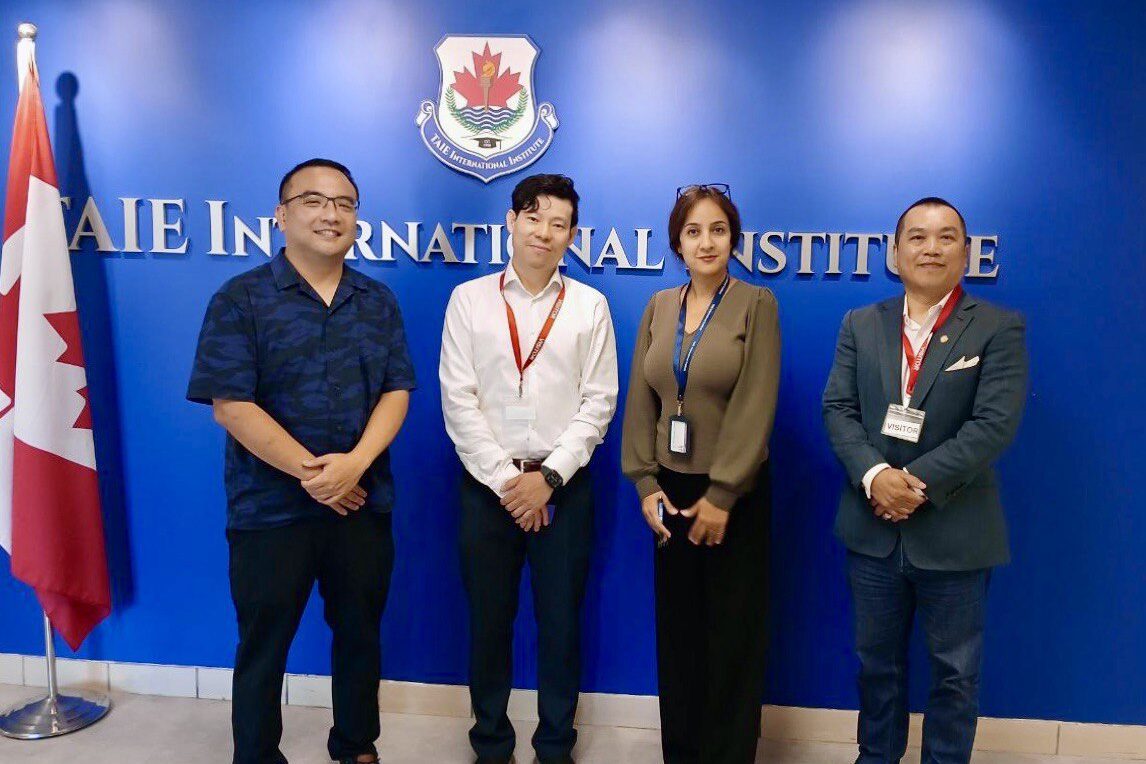
Toronto, Canada — November 26, 2025 — Northfield & Associates International Corporation and TAIE International Institute are pleased to announce in a joint statement, the successful execution of a Memorandum of Understanding (MoU), establishing a formal cooperation framework designed to advance educational opportunities, enhance academic mobility, and foster cultural exchange between the Kingdom of Cambodia and Canada.
The MoU was executed by Mr. Andy Lim, President & Worldwide Managing Partner, Northfield & Associates International Corporation, and Mr. Truman Wong, President, TAIE International Institute, during an official signing ceremony held on November 26, 2025.
This partnership is designed to expand access for Cambodian students to high-quality Canadian educational pathways, strengthen institutional collaboration, and promote bilateral engagement through structured programs including:
Student mobility and exchange initiatives
Teacher exchange and academic collaboration
Joint professional development and capacity-building programs
Cross-institutional research, training, and knowledge-sharing
Enhanced public–private cooperation in education and youth development
In line with the broader objectives of promoting human capital development, the partnership underscores a shared commitment to supporting Cambodia’s next generation of learners, leaders, and professionals.
“We are proud to formalize this cooperation, which opens new horizons for Cambodian youth and reinforces the value of international academic partnership,” commented Mr. Andy Lim.
“This MoU reflects TAIE’s long-standing dedication to creating meaningful opportunities for students worldwide and deepening global educational engagement,” added Mr. Truman Wong.
Both organizations expressed strong confidence that the cooperation will produce lasting benefits for students, institutions, and communities, while contributing to the strengthening of educational relations between Cambodia and Canada.
តូរ៉ុនតូ ប្រទេសកាណាដា — ថ្ងៃទី ២៦ ខែវិច្ឆិកា ឆ្នាំ២០២៥ — ក្រុមហ៊ុន Northfield & Associates International Corporation និង TAIE International Institute និងវិទ្យាស្ថានអន្តរជាតិ TAIE មានសេចក្តីសោមនស្សរីករាយក្នុងការប្រកាសនៅក្នុងសេចក្តីថ្លែងការណ៍រួមមួយ អំពីការអនុវត្តន៍ដោយជោគជ័យនៃអនុស្សរណៈនៃការយោគយល់គ្នា (MoU) ដោយបង្កើតក្របខ័ណ្ឌសហប្រតិបត្តិការជាផ្លូវការដែលត្រូវបានរចនាឡើងដើម្បីជំរុញឱកាសអប់រំ បង្កើនភាពចល័តសិក្សា និងលើកកម្ពស់ការផ្លាស់ប្តូរវប្បធម៌រវាងព្រះរាជាណាចក្រកម្ពុជា និងកាណាដា។
អនុស្សរណៈនៃការយោគយល់គ្នា (MoU) នេះត្រូវបានចុះហត្ថលេខាដោយ លោក Andy Lim, ប្រធាន និងដៃគូគ្រប់គ្រងទូទាំងពិភពលោក នៃ Northfield & Associates International Corporation និង លោក Truman Wong, ប្រធាន TAIE International Institute, ក្នុងពិធីផ្លូវការដែលបានប្រារព្ធឡើងនៅថ្ងៃទី ២៦ ខែវិច្ឆិកា ឆ្នាំ២០២៥។
Toronto, Canada — 26 Novembre 2025 — Northfield & Associates International Corporation et TAIE International Institute sont heureux d’annoncer dans une déclaration conjointe la signature réussie d’un Protocole d’Accord (MoU), établissant un cadre de coopération formel destiné à promouvoir les possibilités éducatives, à améliorer la mobilité académique et à favoriser les échanges culturels entre le Royaume du Cambodge et le Canada.
Le protocole a été signé par : M. Andy Lim, Président et Managing Partner Mondial de Northfield & Associates International Corporation, et M. Truman Wong, Président de TAIE International Institute, lors d’une cérémonie officielle tenue le 26 novembre 2025.
Ce partenariat vise à élargir l’accès des étudiants cambodgiens à des parcours éducatifs de haute qualité au Canada, à renforcer la collaboration institutionnelle et à encourager l’engagement bilatéral à travers :
Des programmes d’échanges d’étudiants
Des échanges de professeurs et des collaborations académiques
Des initiatives conjointes de formation et de renforcement des capacités
La recherche institutionnelle et le partage de connaissances
Une coopération accrue entre les secteurs public et privé dans le domaine de l’éducation
À cette occasion, M. Andy Lim a déclaré : « Nous sommes honourés de formaliser cette coopération, qui ouvre de nouvelles perspectives pour la jeunesse cambodgienne et confirme l’importance des partenariats éducatifs internationaux. »
De son côté, M. Truman Wong a ajouté : « Ce protocole témoigne de l’engagement durable de TAIE à créer des opportunités significatives pour les étudiants du monde entier et à renforcer la collaboration éducative globale. »
Les deux institutions ont exprimé leur confiance que ce partenariat apportera des avantages durables pour les étudiants, les établissements et les communautés, tout en renforçant les relations éducatives entre le Cambodge et le Canada.
About Northfield
Northfield & Associates is a consulting firm and a trusted advisor on business strategy in Cambodia. We specialize in the key global sectors, including
agribusiness , aviation and automotive, energy, natural resources, financial services, healthcare, infrastructure, real estate and information technology. Industry Solutions, Service Line and Global & Regional Services.
clients get access to in-depth knowledge in key sectors.
legal, financial management, risk assessment, real estate, IT and enablement of organizations strategies. We partners with array of clients to reach new frontiers and cross uncharted organizations territories. We would work across various sectors in both the private and public, including government domain and focus on strategic, operations, organization and change.
Forward-Looking Information:
This news release contains forward-looking information. All statements, other than statements of historic fact, that address activities, events or developments that the Company believes, expects or anticipates will or may occur in the future constitute forward-looking information.
This forward-looking information reflects the current expectations or beliefs of the Company based on information currently available to the Company.
Forward-looking information is subject to a number of risks and uncertainties that may cause the actual results of the Company to differ materially from those discussed in the forward-looking information, and even if such actual results are realized or substantially realized, there can be no assurance that they will have the expected consequences to, or effects on the Company. Factors that could cause actual results or events to differ materially from current expectations include, among other things: the failure to finalize negotiations concerning the increase of the Loan or to close such transaction and the failure of the Company to complete the acquisition of the Company Facility; operating performance of facilities; environmental and safety risks; delays in obtaining or failure to obtain necessary permits and approvals from government authorities; unavailability of plant, equipment or labour; inability to retain key management and personnel; changes to regulations or policies affecting the Company”s activities; and the other risks disclosed under the heading “Risk Factors” and elsewhere in the Company”s amended annual information.
Forward-looking information speaks only as of the date on which it is made and, except as may be required by applicable securities laws, the Company disclaims any intent or obligation to update any forward-looking information, whether as a result of new information, future events or results or otherwise. Although the Company believes that the assumptions inherent in the forward-looking information are reasonable, forward-looking information is not a guarantee of future performance and accordingly undue reliance should not be put on such information due to the inherent uncertainty therein.
Thornhill, Ontario — August 18, 2025 — Mr. Andy Lim, President, and Mr. That Suon, CEO of Northfield & Associates International Corporation, were invited by Mr. Bryan Abichandani, Project Manager of TAIE International Institute, for an in-depth tour of the institution’s facilities and to explore potential business collaboration opportunities. The meeting, held at the TAIE International Institute campus, centered around a strategic partnership aimed at supporting Cambodian students interested in continuing their higher education in Canada.
During the visit, Mr. Lim and Mr. Suon discussed various opportunities for collaboration, particularly focusing on creating structured pathways for Cambodian students to pursue academic excellence at TAIE International Institute. The discussions also underscored the importance of forming a clear, legally compliant framework for international student admissions, which would ensure both institutional and student interests are fully protected.
The proposed collaboration seeks to formalize a partnership that prioritizes the following key business objectives and legal principles (1) Strict Adherence to Regulatory Standards; Both Northfield & Associates and TAIE International Institute are committed to complying with all relevant local and international laws governing student admissions and visa applications. This includes ensuring that all recruitment activities are aligned with the Canadian Education and Immigration Laws, which necessitate an airtight process for ensuring students meet all criteria for a study permit; (2) Data Protection and Confidentiality; A critical component of the collaboration involves protecting the personal and academic data of prospective students. Both organizations agree to strict confidentiality agreements to ensure that sensitive information is handled according to Canadian privacy laws, including Personal Information Protection and Electronic Documents Act (PIPEDA); (3) Clear and Transparent Pathways for Students; The collaboration will focus on developing transparent, scientifically grounded admission procedures that provide students with clear expectations regarding their educational journey in Canada. A key component will be leveraging advanced data analytics to forecast the success of students from Cambodia based on academic history and demographic data. This will guide tailored support programs, ensuring both academic and career success post-graduation; (4) Mutual Business Benefits; By facilitating access to high-quality Canadian education for students from Cambodia, this collaboration stands to benefit both institutions. TAIE International Institute will expand its reach and diversify its student body, while Northfield & Associates will further cement its position as a trusted education consultant specializing in Canadian higher education pathways; and (5) Risk Mitigation and Contingency Planning; To safeguard both parties’ interests, a comprehensive risk management plan will be developed. This plan will include contingency provisions in the event of regulatory changes, market disruptions, or unforeseen complications in the recruitment process. Both institutions have committed to working closely with legal advisors to ensure all agreements are enforceable, addressing any potential legal complexities before they arise.
Mr. Lim and Mr. Suon expressed enthusiasm about the potential partnership, noting the significant opportunity it presents for both institutions and the Cambodian students seeking to advance their education in Canada. The visit and discussions were the first step in what promises to be a productive and mutually beneficial collaboration. Further discussions are scheduled to formalize the partnership and define the scope of student recruitment, curriculum development, and ongoing support mechanisms.
Media Contact: Northfield & Associates Communications Team 📧 info@northfield.biz
About Northfield
Northfield & Associates is a consulting firm and a trusted advisor on business strategy in Cambodia. We specialize in the key global sectors, including
agribusiness , aviation and automotive, energy, natural resources, financial services, healthcare, infrastructure, real estate and information technology. Industry Solutions, Service Line and Global & Regional Services.
clients get access to in-depth knowledge in key sectors.
legal, financial management, risk assessment, real estate, IT and enablement of organizations strategies. We partners with array of clients to reach new frontiers and cross uncharted organizations territories. We would work across various sectors in both the private and public, including government domain and focus on strategic, operations, organization and change.
Forward-Looking Information:
This news release contains forward-looking information. All statements, other than statements of historic fact, that address activities, events or developments that the Company believes, expects or anticipates will or may occur in the future constitute forward-looking information.
This forward-looking information reflects the current expectations or beliefs of the Company based on information currently available to the Company.
Forward-looking information is subject to a number of risks and uncertainties that may cause the actual results of the Company to differ materially from those discussed in the forward-looking information, and even if such actual results are realized or substantially realized, there can be no assurance that they will have the expected consequences to, or effects on the Company. Factors that could cause actual results or events to differ materially from current expectations include, among other things: the failure to finalize negotiations concerning the increase of the Loan or to close such transaction and the failure of the Company to complete the acquisition of the Company Facility; operating performance of facilities; environmental and safety risks; delays in obtaining or failure to obtain necessary permits and approvals from government authorities; unavailability of plant, equipment or labour; inability to retain key management and personnel; changes to regulations or policies affecting the Company”s activities; and the other risks disclosed under the heading “Risk Factors” and elsewhere in the Company”s amended annual information.
Forward-looking information speaks only as of the date on which it is made and, except as may be required by applicable securities laws, the Company disclaims any intent or obligation to update any forward-looking information, whether as a result of new information, future events or results or otherwise. Although the Company believes that the assumptions inherent in the forward-looking information are reasonable, forward-looking information is not a guarantee of future performance and accordingly undue reliance should not be put on such information due to the inherent uncertainty therein.
Phnom Penh — March 26, 2025 — Canada and Cambodia have maintained a dynamic and evolving bilateral relationship rooted in decades of diplomatic engagement, multilateral cooperation, and growing economic ties. With the recent elevation of Canada’s diplomatic mission in Phnom Penh to a advancing Embassy in March 2025, under the broader Indo-Pacific Strategy, opportunities for deeper partnerships are expanding. As part of Canada’s Indo-Pacific Strategy, the Honourable Mary Ng, Minister of Export Promotion, International Trade and Economic Development, will lead a Team Canada Trade Mission (TCTM) to Thailand and Cambodia in May 2025. Canada will also send business delegations to the Lao People’s Democratic Republic and Brunei Darussalam in May 2025.
Northfield & Associates recognizes the strategic importance of this relationship and is committed to further deepening its collaboration with Cambodian and Canadian partners. As Canada continues to emphasize democratic development, sustainable economic growth, and regional security in its engagement with Cambodia, Northfield & Associates is well positioned to play a pivotal role in facilitating meaningful partnerships and projects that align with these goals.
The strong trade relationship valued at $2.4 billion in 2024 reflects the robust potential for Canadian businesses. With Cambodia benefiting from Canada’s Market Access Initiative (providing duty-free, quota-free access for LDCs), Northfield & Associates stands to gain significantly by supporting Canadian exporters and investors exploring high-growth sectors in Cambodia, such as textiles, infrastructure, agriculture, and sustainable development.
By leveraging its networks and expertise, Northfield & Associates will continue to build bridges between Canadian business leaders and Cambodian markets. This includes facilitating trade missions, investment forums, and capacity-building programs that promote ethical practices, innovation, and mutual prosperity.
Furthermore, Northfield & Associates strongly values the foundational principles of Canada–Cambodia relations: human rights, rule of law, press freedom, and anti-corruption. Our work reinforces these priorities by promoting transparent, accountable, and inclusive practices in all engagements.
Through active collaboration in multilateral platforms such as the UN, ASEAN, WTO, and La Francophonie, Northfield & Associates is proud to contribute to a bilateral relationship that supports peace, stability, and economic resilience in the Indo-Pacific region.
Working with Our Firm
In this evolving economic landscape, collaboration with our firm offers clients a strategic advantage. With Cambodia’s reform-driven investment environment and Canada’s expanding footprint in Southeast Asia, our team of experienced consultants and legal advisors provides tailored guidance to help businesses navigate cross-border opportunities. We specialize in developing comprehensive legal strategies, structuring international partnerships, and ensuring compliance in emerging markets.
By leveraging our regional insight and international expertise, you benefit from a trusted partner dedicated to helping you capitalize on growth potential in Cambodia and beyond.
Your Trusted Partner in International Bilateral Relations
At Northfield & Associates, we specialize in Foreign Direct Investment (FDI), international trade missions, and cross-border legal strategy. Our team of experienced consultants and legal advisors offers tailored guidance and strategic insight to help you navigate the complexities of international partnerships and development opportunities.
Whether you choose to meet in person at one of our offices or connect virtually, we provide flexible and accessible consultation options. During your session, we’ll assess your goals, review key documentation, and guide you through every stage of your FDI or trade mission engagement.
Let us help you take the next step with confidence supported by trusted legal and strategic counsel every step of the way.
If you believe you may be eligible for legal relief or simply need sound legal advice, we’re here to help. Contact us today to book your consultation. Let us provide the clarity, strategy, and peace of mind you need to move forward.
Disclaimer: The information contained in this article is provided for general information purposes only and does not constitute legal or other professional advice. Readers should seek tailored legal advice in relation to their personal circumstances.
We serve our clients in English, Cambodian, Vietnamese, Mandarin and Cantonese, especially in Asian clients.
If you or anybody that you know, think that you meet the requirements and wish to receive further information.
We can help you start the application process and confirm eligibility requirements to participate.
We Offer Consultations & Meetings by Phone & Virtually. Affordable Fees.
Book a Consultation Today
Contact Northfield & Associates today to schedule a consultation with an experienced Consultant.
Northfield & Associates International Corporation is a global strategic advisory and consulting firm partnering with private equity, sovereign, and institutional investors to deploy capital, manage regulatory, supporting senior leadership, boards, and capital providers across Cambodia, Canada, and international markets operating in complex regulatory, economic, and geopolitical environments, and drive enterprise value creation across complex global markets.
We advise boards, executives, entrepreneurs, and public-sector decision-makers on business strategy, institutional transformation, and high-stakes market challenges requiring disciplined judgment, capital efficiency, and execution certainty. Our work is concentrated across priority global sectors, including agribusiness, aviation and automotive, energy and natural resources, financial services, healthcare, infrastructure, real estate, immigration, education, and information technology.
Our platform integrates sector-specific intelligence with multidisciplinary advisory capabilities. Clients benefit from coordinated access to consulting, legal and regulatory counsel, financial management, risk assessment, real estate advisory, immigration, education, and technology expertise. This integrated model supports informed capital allocation, regulatory-compliant investment structuring, and execution-ready strategies designed to optimise returns, preserve downside protection, and enhance risk-adjusted performance.
Northfield combines consulting rigor with legal and regulatory judgment to support capital markets-aligned decision-making in complex, regulated, and rapidly evolving environments. We partner with private enterprises, institutional investors, family offices, and public-sector entities to structure, deploy, and manage capital effectively; strengthen governance; mitigate regulatory and geopolitical risk; and drive sustainable enterprise value creation.
Our engagements span strategy formulation, operational optimisation, organisational design, and change execution. We deliver measurable outcomes that improve financial performance, support disciplined growth, enhance valuation, and generate durable returns on investment for investors, shareholders, and institutional stakeholders. We operate with independence, precision, and accountability, aligned with long-term value creation and fiduciary standards.
Forward-Looking Information
This news release contains forward-looking information. All statements, other than statements of historic fact, that address activities, events or developments that the Company believes, expects or anticipates will or may occur in the future constitute forward-looking information.
This forward-looking information reflects the current expectations or beliefs of the Company based on information currently available to the Company.
Forward-looking information is subject to a number of risks and uncertainties that may cause the actual results of the Company to differ materially from those discussed in the forward-looking information, and even if such actual results are realized or substantially realized, there can be no assurance that they will have the expected consequences to, or effects on the Company. Factors that could cause actual results or events to differ materially from current expectations include, among other things: the failure to finalize negotiations concerning the increase of the Loan or to close such transaction and the failure of the Company to complete the acquisition of the Company Facility; operating performance of facilities; environmental and safety risks; delays in obtaining or failure to obtain necessary permits and approvals from government authorities; unavailability of plant, equipment or labour; inability to retain key management and personnel; changes to regulations or policies affecting the Company’s activities; and the other risks disclosed under the heading “Risk Factors” and elsewhere in the Company’s amended annual information.
Forward-looking information speaks only as of the date on which it is made and, except as may be required by applicable securities laws, the Company disclaims any intent or obligation to update any forward-looking information, whether as a result of new information, future events or results or otherwise. Although the Company believes that the assumptions inherent in the forward-looking information are reasonable, forward-looking information is not a guarantee of future performance and accordingly undue reliance should not be put on such information due to the inherent uncertainty therein.
Questions?
info@northfied.biz
Within Corporate Newsroom
Media Contact:
media@northfied.biz
Press contact
PR consultants press@northfied.biz
NOT LEGAL ADVICE. Information made available on this website in any form is for information purposes only. It is not, and should not be taken as, legal advice. You should not rely on, or take or fail to take any action based upon this information. Never disregard professional legal advice or delay in seeking legal advice because of something you have read on this website. Northfield & Associates professionals will be pleased to discuss resolutions to specific legal concerns you may have.
3 Steps to Ensure Your Not-for-Profit’s Compliance to ONCA
Navigating the transition to the new Ontario Not-for-Profit Corporations Act (ONCA) regulations can seem overwhelming for not-for-profit organizations. However, breaking it down into manageable steps can streamline the entire process and help ensure your organization complies with the new regulations.
This post will outline three key steps your not-for-profit organization can take to ensure compliance with ONCA.
Step 1: Understand the Changes
The first crucial step in ensuring compliance with ONCA is to thoroughly understand the critical aspects of the new regulations and how they differ from the current laws. ONCA introduces new rules for membership, governance, and financial reporting. This understanding is not just important, it’s essential as these changes will directly impact your organization’s bylaws, Letters Patent, and other governing documents. To start, delve into the ONCA requirements, consult legal experts, and gather information on how the changes will affect your organization.
Step 2: Review and Update Documents
The next proactive step is to meticulously examine your organization’s bylaws, Letters, Patents, and other governing documents to ensure they align with ONCA requirements. This includes ensuring that your organization’s purpose, membership, governance structure, and decision-making processes comply with ONCA regulations. Review your organization’s governing documents to ensure compliance and identify any areas that require updating. This could include updating your organization’s bylaws to include provisions for electronic voting or updating your Letters Patent to reflect changes in your organization’s name or structure.
Step 3: Educate Your Team
Lastly, it’s of utmost importance to ensure that everyone in your organization, from the board members to the staff, is fully aware of the changes and how they will impact their roles and responsibilities. This includes comprehensive training on the new regulations, updating job descriptions, and communicating any changes to your organization’s policies and procedures. To educate your team, organize training sessions or workshops to ensure everyone is up to date on the new regulations. You can also provide resources such as guides or FAQ documents to help your team navigate the changes.
Following these three steps, your not-for-profit organization can smoothly transition to the new regulations under ONCA, ensuring legal compliance and operational efficiency. It is crucial to begin the process as soon as possible to allow ample time to make necessary changes before the new regulations occur.
Remember, compliance with ONCA is essential for your organization’s success, and taking the necessary steps now can save you time and money in the long run.
Overview of ONCA Compliance for Ontario Not-for-Profit Corporations
Transitioning to the Ontario Not-for-Profit Corporations Act (ONCA) requires careful attention to several core areas of our organization’s governance and operations.
The updated legislation changes how we manage bylaws, membership, and reporting. Our governing documents such as Articles of Incorporation and by-laws may need substantial revision.
Key areas to focus on include:
Membership and Voting Rights: ONCA introduces new rules about membership classes and members’ rights.
These updates include provisions for absentee voting and clearer processes for member participation in meetings and proposals.
Governance and Director Roles: The act clarifies directors’ duties and outlines options for indemnification.
Our leadership must understand these changes to maintain proper oversight.
Financial Accountability: ONCA sets new requirements for financial reporting.
It extends transparency expectations to all not-for-profit corporations, not just public charities under the Canada Revenue Agency.
Document Review and Updates: We must review and update our governing documents—including Letters of Patent and articles of amendment.
Legal advice can help ensure accuracy.
Incorporation and Registry Compliance: The Ontario Business Registry manages filings related to ONCA.
We need to keep up with incorporation documents and ongoing compliance requirements.
Education and Transition Planning: We must educate our team about the new regulations.
Resources like the Not-for-Profit Incorporator’s Handbook and support from groups such as Community Legal Education Ontario can help.
Important deadlines: Ontario not-for-profit corporations had until October 18, 2024, to update their structures under ONCA.
Although the transition deadline has passed, many organizations continue to refine their policies to meet ONCA standards.
ONCA Compliance Areas
What to Review or Update
Key Points
Membership Structure
Membership classes, voting rights
Absentee voting, members’ meeting rules
Governance
Directors’ duties, indemnification
Clear responsibilities, board training
Governing Documents
By-laws, Letters of Patent, articles of amendment
Legal review, alignment with ONCA
Financial Reporting
Audit requirements, transparency standards
Compliance with CRA and ONCA
Incorporation and Filing
Ontario Business Registry submissions
Timely updates and filings
Team Education & Training
Workshops, guides, policy updates
Communication across board and staff
By focusing on these points, we help our organization operate effectively under ONCA’s modernized framework.
Careful planning and active participation from everyone are vital to maintain compliance and support our mandate as a public benefit corporation in Ontario.
Conclusion
Navigating ONCA compliance doesn’t have to be overwhelming when you have the right legal guidance. The transition to Ontario’s modernized not-for-profit framework requires careful attention to governance structures, membership rights, financial reporting, and document updates. While the October 2024 deadline has passed, many organizations are still working to fully align their operations with ONCA standards, making expert legal support more crucial than ever.
At Northfield & Associates, we specialize in helping Ontario not-for-profit corporations achieve and maintain ONCA compliance. Our experienced team understands the complexities of transitioning governance documents, updating bylaws, and ensuring your organization meets both provincial and federal requirements. Whether you need assistance with membership structure revisions, director duty clarification, or financial reporting compliance, we provide practical solutions tailored to your organization’s unique needs.
Ready to ensure your not-for-profit is fully ONCA compliant?
Contact us at Northfield & Associates today to take the first step toward confident ONCA compliance and effective governance for your organization.
In this evolving economic landscape, collaboration with our firm offers clients a strategic advantage. With Cambodia’s reform-driven investment environment and Canada’s expanding footprint in Southeast Asia, our team of experienced consultants and legal advisors provides tailored guidance to help businesses navigate cross-border opportunities. We focus in developing comprehensive legal strategies, structuring international partnerships, and ensuring compliance in emerging markets.
By leveraging our regional insight and international expertise, you benefit from a trusted partner dedicated to helping you capitalize on growth potential in Cambodia and beyond.
Book a Consultation with Northfield & Associates
Your Trusted Partner in International Bilateral Relations
At Northfield & Associates are focus in Foreign Direct Investment (FDI), international trade missions, and cross-border legal strategy. Our team of experienced consultants and legal advisors offers tailored guidance and strategic insight to help you navigate the complexities of international partnerships and development opportunities.
Whether you choose to meet in person at one of our offices or connect virtually, we provide flexible and accessible consultation options. During your session, we’ll assess your goals, review key documentation, and guide you through every stage of your FDI or trade mission engagement.
Let us help you take the next step with confidence supported by trusted legal and strategic counsel every step of the way.
Take the First Step Today
If you believe you may be eligible for legal relief or simply need sound legal advice, we’re here to help. Contact us today to book your consultation. Let us provide the clarity, strategy, and peace of mind you need to move forward.
We serve our clients in English, Cambodian, Vietnamese, Mandarin and Cantonese, especially in Asian clients.
If you or anybody that you know, think that you meet the requirements and wish to receive further information.
We can help you start the application process and confirm eligibility requirements to participate.
We Offer Consultations & Meetings by Phone & Virtually. Affordable Fees.
Disclaimer:
The information contained in this article is provided for general information purposes only and does not constitute legal or other professional advice. Readers should seek tailored legal advice in relation to their personal circumstances.
Northfield & Associates International Corporation is a global consulting firm serving private enterprises, public institutions, not-for-profit organizations, and institutional capital providers. Operating across Cambodia, Canada, and global markets, the firm supports capital deployment, regulatory navigation, and enterprise decision-making in complex economic and geopolitical environments. Northfield & Associates delivers customized, execution-focused advisory solutions that drive measurable transformation, strengthen competitiveness, and enhance long-term highest value opportunities. The firm incorporates consulting, legal, regulatory, financial, and risk expertise to enable disciplined capital allocation, strong governance, and operational resilience. Northfield & Associates upholds a culture of applied insight and innovation, supporting clients across digital transformation, growth strategy, and organizational capability building. The firm advises individual, leading global corporations, midsize enterprises, government agencies, and mission-driven organizations through long-term partnerships. Enterprise-wide risk management, professional ethics, and fiduciary standards are embedded across all operations. Northfield & Associates’ diverse, globally unified teams are committed to execution certainty and sustainable, risk-adjusted returns aligned with ESG and stakeholder objectives.
Forward-Looking Information
This news release contains forward-looking information. All statements, other than statements of historic fact, that address activities, events or developments that the Company believes, expects or anticipates will or may occur in the future constitute forward-looking information.
This forward-looking information reflects the current expectations or beliefs of the Company based on information currently available to the Company.
Forward-looking information is subject to a number of risks and uncertainties that may cause the actual results of the Company to differ materially from those discussed in the forward-looking information, and even if such actual results are realized or substantially realized, there can be no assurance that they will have the expected consequences to, or effects on the Company. Factors that could cause actual results or events to differ materially from current expectations include, among other things: the failure to finalize negotiations concerning the increase of the Loan or to close such transaction and the failure of the Company to complete the acquisition of the Company Facility; operating performance of facilities; environmental and safety risks; delays in obtaining or failure to obtain necessary permits and approvals from government authorities; unavailability of plant, equipment or labour; inability to retain key management and personnel; changes to regulations or policies affecting the Company’s activities; and the other risks disclosed under the heading “Risk Factors” and elsewhere in the Company’s amended annual information.
Forward-looking information speaks only as of the date on which it is made and, except as may be required by applicable securities laws, the Company disclaims any intent or obligation to update any forward-looking information, whether as a result of new information, future events or results or otherwise. Although the Company believes that the assumptions inherent in the forward-looking information are reasonable, forward-looking information is not a guarantee of future performance and accordingly undue reliance should not be put on such information due to the inherent uncertainty therein.
Questions?
info@northfied.biz
Within Corporate Newsroom
Media Contact:
media@northfied.biz
Press contact
PR consultants press@northfied.biz
NOT LEGAL ADVICE. Information made available on this website in any form is for information purposes only. It is not, and should not be taken as, legal advice. You should not rely on, or take or fail to take any action based upon this information. Never disregard professional legal advice or delay in seeking legal advice because of something you have read on this website. Northfield & Associates professionals will be pleased to discuss resolutions to specific legal concerns you may have.
How to Register a Church in Canada: Step-by-Step Guide
Starting a church in Canada involves more than gathering a congregation and holding services. To operate legally and access benefits such as tax exemptions and issuing tax receipts to donors, your church needs proper registration. But how do you register a church in Canada, and is it considered a charity? This guide will walk you through the steps to establish and register a church in compliance with Canadian laws.
Church Registration in Canada: Quick Overview
Before diving into the details, here’s what you need to know at a glance:
Timeline: 3-12 months total (2-4 weeks for provincial incorporation, 4-6 weeks for federal incorporation, 6-12 months for CRA charitable status approval)
Total Costs: $200-$2,500
Provincial incorporation: $200-$350
Federal incorporation: $200-$250
CRA charitable registration: Free
Legal fees (optional): $1,500-$5,000
Basic Requirements:
Minimum 3 directors
Governing documents (articles and bylaws)
Religious purposes that benefit the public
Proper organizational structure
Key Benefits:
Legal entity status and limited liability protection
Tax-exempt status
Ability to issue donation receipts
Enhanced credibility and public trust
What Is Church Registration in Canada?
Churches in Canada generally fall under the category of nonprofit organizations. Many churches also apply for charitable status with the Canada Revenue Agency (CRA) to receive tax-exempt benefits and issue donation receipts. However, registering a church requires meeting specific legal requirements.
A church can be incorporated as a nonprofit religious corporation under the Ontario Not-for-Profit Corporations Act (ONCA) for those in Ontario or the Canada Not-for-Profit Corporations Act (CNCA) for those operating across multiple provinces. This incorporation provides the church with legal recognition, limited liability protection, and a formal governance structure.
Step 1: Define the Purpose and Structure of the Church
Before registering, it’s essential to determine:
The church’s mission, beliefs, and statement of faith
Leadership structure (e.g., pastors, elders, board of directors)
If your church primarily operates in Ontario, you can incorporate under ONCA by filing:
Articles of Incorporation (Form 2)
A NUANS name search report (if applicable)
A cover letter and government fee
For other provinces, similar processes exist under respective provincial nonprofit legislation.
Option 2: Federal Incorporation
If your church will operate across multiple provinces, federal incorporation under CNCA may be better. You’ll need to file:
Articles of Incorporation
A NUANS name search report
Bylaws and governance structure
Once incorporated, your church exists as a legal entity.
Other Provincial Options
British Columbia: Incorporate under the BC Societies Act through BC Registry Services. Cost: approximately $100-$150. Processing time: 1-2 weeks.
Alberta: Use the Alberta Societies Act through Alberta Corporate Registry. Cost: approximately $100. Processing time: 1-2 weeks.
Saskatchewan: Register under the Saskatchewan Non-profit Corporations Act. Cost: approximately $125-$200. Processing time: 2-3 weeks.
Manitoba: Incorporate under The Corporations Act through Companies Office. Cost: approximately $330. Processing time: 2-4 weeks.
Quebec: Quebec has unique requirements under Part III of the Companies Act. Churches may incorporate as legal persons or register under the Civil Code. It’s highly recommended to consult a Quebec charity lawyer due to the province’s distinct legal system. Cost: approximately $200-$400. Processing time: 4-6 weeks.
Maritime Provinces: Each has its own societies or nonprofit corporations legislation with similar processes to other provinces.
Note: Processing times are approximate and can vary based on government workload and application completeness.
Step 4: Apply for a Business Number (BN) and CRA Registration
After incorporation, your church needs a Business Number (BN) from the CRA for tax-related matters. You can apply online through the CRA’s Business Registration system.
Step 5: Apply for Charitable Status (Optional but Recommended)
Not all churches automatically qualify as charities. However, obtaining charitable status allows the church to issue donation receipts and receive tax-exempt status. To apply:
Submit governing documents (e.g., articles of incorporation, bylaws)
Demonstrate the church’s charitable purposes (e.g., advancing religion, providing community services)
The CRA reviews applications to ensure the organization meets the requirements for religious charities.
What Qualifies as “Advancement of Religion” for the CRA?
To receive charitable registration, your church must demonstrate that it advances religion in a way that benefits the public. Here’s what the CRA looks for:
Activities That Qualify:
Regular Worship Services:
Scheduled religious services open to the community
Prayer meetings and religious observances
Celebration of religious holidays and sacraments
Religious Education:
Sunday school or religious education programs
Bible studies and scripture classes
Training programs for religious leaders
Youth programs with religious instruction
Community Outreach:
Missionary work aligned with religious beliefs
Community support programs rooted in religious doctrine
Pastoral care and counselling
Religious publications and media
Maintenance of Places of Worship:
Operating churches, temples, or houses of worship
Providing space for religious ceremonies
Maintaining religious artifacts and symbols
What the CRA Examines:
Public Benefit:
Activities must be available to a significant segment of the public
Cannot be limited to a private group or family
Must demonstrate community benefit
Religious Doctrine:
Clear statement of faith and beliefs
Recognized religious practices
Genuine religious purpose (not primarily social or recreational)
Operational Structure:
Regular religious services and activities
Trained or ordained religious leaders
Formal membership or congregation
Financial Accountability:
At least 80% of resources directed to charitable activities
Proper donation receipting procedures
Transparent financial reporting
Red Flags the CRA Watches For:
Private benefit to founders or directors
Primarily social or cultural activities without religious component
Unclear or constantly changing religious doctrine
Limited public access to activities
Mixing political advocacy with religious activities
Excessive fundraising with minimal religious programming
Pro Tip: When completing Application to Register a Charity, provide specific examples of your religious activities, worship schedules, and how you’ll benefit the public. Vague descriptions like “spreading faith” are insufficient – the CRA wants concrete details about what your church will actually do.
Step 6: Register for Tax Exemptions and Other Benefits
Once approved as a charity, your church can apply for:
Property tax exemptions (varies by municipality)
HST/GST rebates
Payroll deductions for clergy housing allowances
Maintaining tax-exempt status requires compliance with CRA regulations, such as annual reporting and proper financial management.
Annual Compliance Requirements for Registered Churches
After receiving charitable registration, your church has ongoing obligations to maintain its status. Failing to meet these requirements can result in penalties, loss of charitable status, or even legal consequences.
Annual Filing Requirements:
T3010 Registered Charity Information Return:
Must be filed within 6 months of your fiscal year-end
Reports all revenue, expenses, and activities
Publicly available on CRA website
Filing fee: $0
Deadline is strict – late filing results in $500 penalty and possible revocation
Provincial/Federal Annual Returns:
Ontario corporations: Annual return required (currently no fee under ONCA)
Federal corporations: Annual return required ($0-$40 fee)
Update any changes to directors, registered office address
Due dates vary by incorporation jurisdiction
Financial Requirements:
Minimum Spending on Charitable Activities:
Must spend at least 80% of donated funds on religious/charitable activities
Maximum 10% on administration
Maximum 10% on fundraising
These are guidelines; actual spending must be reasonable
Record Keeping (Minimum 7 Years):
All donation receipts and donor records
Financial statements and bank records
Minutes of board meetings
Contracts and agreements
Correspondence with CRA
Property and asset records
Donation Receipts:
Must follow CRA guidelines exactly
Include mandatory information: charity name, registration number, date, amount, donor name
Only issue receipts for eligible donations
Keep copies of all issued receipts
Governance Requirements:
Board Meetings:
Hold regular board meetings (at least annually, ideally quarterly)
Keep detailed minutes
Ensure quorum requirements are met
Document all major decisions
Member Meetings:
Hold annual general meetings if you have members
Provide financial reports to members
Hold director elections as per bylaws
Director Obligations:
Maintain minimum number of directors (usually 3)
Ensure directors are not disqualified (not bankrupt, not convicted of fraud)
Directors must act in the church’s best interests
Update CRA within 30 days of director changes
Operational Requirements:
Stay Within Charitable Purposes:
Activities must align with registered purposes
Cannot change purposes without CRA approval
Cannot engage in prohibited political activities
Limited business activities (must be related to religious purposes)
Avoid Private Benefit:
No distribution of income to members or directors
Compensation must be reasonable for services rendered
Arms-length transactions required
No personal use of church assets
Political Activities (Limited):
Can devote up to 10% of resources to political activities
Must be non-partisan
Must relate to your charitable purposes
Cannot support or oppose political parties or candidates directly
Public Transparency:
Information Available on CRA Website:
T3010 returns (publicly searchable)
Charity registration details
Contact information
Financial summaries
Your Responsibilities:
Keep public informed about activities
Respond to reasonable information requests
Maintain up-to-date contact information with CRA
Consequences of Non-Compliance:
Minor Issues:
Written warnings from CRA
Education letters
Compliance agreements
Serious Issues:
$500-$5,000 penalties
Suspension of donation receipting privileges
Compliance audits
Severe Issues:
Revocation of charitable status
Public disclosure of non-compliance
Legal action for misuse of charitable funds
Pro Tip: Many churches hire a bookkeeper or accountant familiar with charity requirements to ensure compliance. The small cost prevents major problems down the road.
Are Churches Considered Nonprofits or Charities in Canada?
Churches in Canada are generallynonprofits, but not all qualify as registered charities. A nonprofit church can operate legally but won’t receive charitable tax benefits unless it registers with the CRA. To be recognized as a charity, a church must prove its activities advance religion and benefit the public.
How Much Does It Cost to Register a Church in Canada?
The costs vary depending on the registration process:
NUANS name search: $15–$35
Provincial incorporation: $155 (Ontario government fee, other provinces may vary)
Federal incorporation: $200 (Corporations Canada fee)
While DIY registration is possible, hiring an experienced charity lawyer ensures compliance, provides for ideal membership structure, and increases approval chances.
How Long Does It Take to Register a Church in Canada?
Federal incorporation: 1–3 days
Charity registration: 5–12 months (depending on CRA review and how well the application is drafted)
Planning ahead helps avoid delays and ensures smooth registration.
Common Mistakes When Registering a Church in Canada (And How to Avoid Them)
Learning from others’ mistakes can save you time, money, and frustration. Here are the most common errors churches make during registration:
1. Not Having Proper Bylaws Before Incorporating
The Mistake: Rushing to incorporate with generic or incomplete bylaws copied from the internet.
Why It’s a Problem:
CRA will scrutinize your bylaws during charitable registration
Poorly drafted bylaws cause delays or rejection
Bylaws are hard to change once incorporated
How to Avoid It: Have a lawyer draft or review your bylaws before incorporation. Ensure they include mandatory dissolution clauses and comply with CRA requirements.
2. Insufficient Board Members
The Mistake: Starting with only 1-2 directors to keep things simple.
Why It’s a Problem:
Most provinces require minimum 3 directors
CRA looks unfavorably on very small boards
Creates succession problems if a director leaves
How to Avoid It: Start with at least 3-5 qualified directors who understand their fiduciary duties and are committed to the church’s mission.
3. Mixing Personal and Church Finances
The Mistake: Using personal bank accounts for church income and expenses, especially in the early stages.
Why It’s a Problem:
Violates nonprofit and charity rules
Creates personal tax liability
CRA will deny or revoke charitable status
Exposes personal assets to church liabilities
How to Avoid It: Open a dedicated church bank account immediately after incorporation. Never deposit church funds into personal accounts.
4. Not Keeping Proper Donation Records
The Mistake: Informal tracking of donations, issuing receipts before charitable registration, or missing mandatory receipt information.
Why It’s a Problem:
Cannot prove financial accountability to CRA
Donors lose tax credits if receipts are improper
Penalty of 5% of receipted amount for each incorrect receipt
Can lead to loss of charitable status
How to Avoid It:
Only issue official donation receipts after receiving charitable registration
Use CRA-approved receipt formats
Keep detailed donor records for 7 years
Consider donor management software
5. Failing to File Annual Returns on Time
The Mistake: Missing the T3010 filing deadline or forgetting provincial annual returns.
Why It’s a Problem:
Automatic $500 penalty for late T3010
Can lead to revocation of charitable status after 1 year
Provincial penalties for late corporate returns
Creates compliance record with CRA
How to Avoid It:
Mark filing deadlines on calendar (6 months after fiscal year-end)
Consider hiring an accountant for T3010 preparation
File even if you had no activity
Set up CRA online account for reminders
6. Not Understanding the 80/10/10 Rule
The Mistake: Spending too much on administration or fundraising relative to actual charitable activities.
Why It’s a Problem:
CRA expects approximately 80% of resources on religious/charitable activities
Excessive overhead raises red flags
Can lead to CRA investigation or status loss
How to Avoid It:
Budget carefully to prioritize religious programming
Track expenses by category (charitable activities, administration, fundraising)
Keep administration and fundraising each under 20% of total spending
Document that spending is reasonable for your church’s size and activities
7. Copying Another Church’s Documents Without Customization
The Mistake: Using another church’s articles, bylaws, or Application to Register a Charity as a template without proper adaptation.
Why It’s a Problem:
Each church has unique circumstances and needs
Generic documents often contain errors or irrelevant clauses
CRA notices boilerplate applications and scrutinizes them more carefully
May not comply with your specific provincial requirements
How to Avoid It: Use templates as a starting point only. Customize all documents to reflect your church’s actual structure, beliefs, and plans. Have a lawyer review before filing.
8. Unclear or Overly Broad Purpose Statements
The Mistake: Writing vague purposes like “to help people” or overly broad purposes that include non-charitable activities.
Why It’s a Problem:
CRA requires specific charitable purposes
Vague purposes invite CRA questions and delays
Broad purposes may include non-charitable elements that disqualify you
How to Avoid It: Be specific about your religious purposes. Use language like “to advance the Christian faith through worship, religious education, and community ministry” rather than “to help the community.”
9. Starting Operations Before Proper Registration
The Mistake: Holding services, collecting donations, and issuing receipts before completing incorporation and charitable registration.
Why It’s a Problem:
Operating without incorporation removes liability protection
Cannot legally issue donation receipts without charitable registration
Donors cannot claim tax credits
May create personal tax liability
How to Avoid It:
Complete incorporation before commencing formal operations
Wait for charitable registration before issuing donation receipts
You can hold informal gatherings, but don’t collect significant funds until properly registered
10. Ignoring Provincial Requirements When Federally Incorporated
The Mistake: Thinking federal incorporation means you don’t need to register in provinces where you operate.
Why It’s a Problem:
May still need to register for provincial sales tax
Need to register for provincial payroll accounts if hiring staff
May need extra-provincial registration for certain activities
How to Avoid It: Research specific requirements in each province where you’ll operate, even with federal incorporation.
What If My Church’s Charitable Application Is Denied?
Not all church applications for charitable status are approved on the first try. Here’s what you need to know if you receive a denial:
Common Reasons for CRA Denial:
Insufficient Public Benefit:
Activities appear to benefit a private group rather than the broader public
Limited access to services or membership
Family-run organization with insufficient community involvement
Insufficient demonstration of financial accountability
No clear plan for sustainability
Governance Concerns:
Inadequate bylaws or articles
Board members who don’t meet CRA requirements
Conflicts of interest not properly addressed
Documentation Issues:
Incomplete Application to Register a Charity
Missing required supporting documents
Inconsistencies between different documents
What Happens After a Denial?
CRA Notification:
You’ll receive a detailed letter explaining the reasons for denial
Letter will specify what requirements weren’t met
You have 90 days to respond or appeal
Your Options:
Option 1: Provide Additional Information (Within 90 Days)
Submit clarifying documents
Explain misunderstandings
Provide evidence you meet requirements
CRA will reconsider based on new information
Option 2: Revise and Reapply (After Addressing Issues)
Fix the problems identified in the denial letter
Revise governing documents if needed
Submit a new application
No waiting period required if you address the issues properly
Option 3: File an Objection (Within 90 Days)
Formal appeal process if you believe the denial was incorrect
Must provide detailed reasons why you disagree
CRA Appeals Division will review
Can take 6-12 months for resolution
Option 4: Operate as Nonprofit Without Charitable Status
Continue operating as an incorporated nonprofit
Cannot issue donation receipts
No tax-exempt status
Can reapply for charitable status in the future
Tips for Successful Reapplication:
Address Every Issue:
Carefully read the denial letter
Fix each specific problem mentioned
Don’t just resubmit the same application
Strengthen Your Application:
Provide more detailed activity descriptions
Include concrete examples of how you’ll benefit the public
Show evidence of community need
Demonstrate financial viability
Seek Professional Help:
Consider hiring a charity lawyer for reapplication
Lawyers familiar with CRA requirements can significantly improve approval chances
Investment in legal help often saves time and future problems
Document Everything:
Keep copies of all correspondence with CRA
Maintain records of how you addressed each concern
Show progress on implementing required changes
How Long Until You Can Reapply?
Good news: There’s no mandatory waiting period. You can reapply as soon as you’ve addressed the issues that caused the denial. However:
Take time to properly fix the problems
Don’t rush a reapplication with the same flaws
Most successful reapplications happen 2-6 months after denial
Operating Without Charitable Status:
If you decide not to reapply or need time to build your church before trying again:
You Can:
Operate legally as an incorporated nonprofit
Hold religious services and activities
Accept donations (but cannot issue tax receipts)
Build a track record of activities
Reapply for charitable status later when better positioned
Benefits of Waiting:
Demonstrate established operations and community benefit
Build financial history and stability
Refine governance structure
Develop clear track record for CRA
Many churches successfully operate for 1-2 years as nonprofits before applying for charitable status, which can actually strengthen their applications.
Final Thoughts: Should You Register Your Church as a Charity?
Registering a church as a nonprofit provides legal protection and structure, while obtaining charitable status offers tax benefits and donation advantages. If your church relies on donations, charitable registration is highly recommended.
Have more questions about registering your Canadian temple or church?
At Northfield & Associates our expert teams guidance on compliance requirements. Our team understands Canadian charity law and can help ensure your organisation follows proper procedures.
How long does it take to register a church in Canada?
The complete process takes 3-12 months total. Incorporation takes 2-6 weeks, while CRA charitable registration takes 6-12 months. You can operate as a nonprofit immediately after incorporation, but must wait for charitable registration before issuing donation receipts.
Can I start a church without incorporation?
Yes, but it’s not recommended. Without incorporation, you have no liability protection, cannot apply for charitable status, cannot own property in the church’s name, and have less credibility with donors. Most churches incorporate immediately for legal protection.
Do I need a physical location to register a church in Canada?
No, you don’t need a church building. Many churches start by meeting in homes or renting community spaces. You only need a registered office address (can be a home address) and evidence of regular religious activities.
How many members do I need to start a church in Canada?
There’s no minimum number of members, but you need at least 3 directors for your board. For charitable registration, most churches have at least 15-25 regular participants to demonstrate public benefit rather than being a private family group.
What’s the difference between registered and unregistered churches in Canada?
An unregistered church has no legal status or liability protection and cannot issue donation receipts. A registered nonprofit church has legal protection but still cannot issue receipts. A registered charity church can issue donation receipts, receives tax-exempt status, but must meet CRA compliance requirements.
Ready for better nonprofit reporting?
At Northfield & Associates, we have a team of professional bookkeepers and accountants to help your organization manage the books so that you can breeze through tax season.
We’re often asked by prospective clients what our Bookkeeping Service covers? People want to know what specific tasks we do, and what their responsibility is. This brief explainer page will answer that question. This is by no means an exhaustive list, but covers the most frequently asked questions.
Getting Started
Review your existing books for needed corrections or back-work
Chart of accounts setup or amendment
Assistance with setting up bank feeds
Limited assistance* with setting up payroll (QBO or Gusto only)
Your books brought current and reconciled if needed
Ongoing Monthly Bookkeeping
After-the-fact transaction recording
Post to general ledger
Post to other ledgers (as needed)
Bank account reconciliation
Monthly financial statements
Other bookkeeping services, as required
Best-practice bookkeeping advice and counsel
Year End
Assistance with 1099-NEC preparation*
Assistance with 1099-MISC preparation*
Year-end financial statements and period-end closing
What We Don’t Do
Pay bills
We do not offer bill-pay services at this time, nor do we manage Accounts Payable (AP) or Accounts Receivable (AR).
Payroll tax responsibility
Our bookkeepers can assist you in setting up your initial payroll service in QBO or Gusto. We are not responsible for entering payroll hours/salary, accruing payroll taxes, nor the transmittal of payroll taxes to the IRS or the state. Your full-service payroll provider (QBO, Gusto, or whatever other service a client uses) will be the responsible party for payroll and payroll tax compliance.
*Payroll deductions and benefits
We provide assistance with setting up a payroll account in either Quickbooks Online or Gusto, including entry of employee data. We do not assist in state registrations, benefits, or advise on deductions. Those service areas are provided directly by either QBO or Gusto.
Preparation of W2s
Similar to the last item, your full-service payroll provider (QBO/Gusto) is responsible for preparation of Form W2 for employees.
Sales tax reporting
For those nonprofits that sell taxable goods and/or services, your bookkeeper will assist in accounting for sales taxes collected and transmitted, but we do not prepare state sales tax reports.
Donation recording
We do not provide individual donation data entry into your neither your donor CRM nor Quickbooks Online, nor do we prepare year-end donor acknowledgements.
Administrative tasks
We cannot provide administrative services unrelated to our bookkeeping function.
Attend board meetings
Due to the constraints of time and distance, we are unable to be present, physically nor virtually, at a meeting of a client’s board of directors.*May incur additional fee per 1099-NEC or 1099-MISC.
Let’s Collaborate & Make a Difference!
Partner with us to amplify your mission. Whether it’s Charity accounting, financial transparency, or strategic growth—we’re here to help you create meaningful impact. Let’s work together to build a better future!
In this evolving economic landscape, collaboration with our firm offers clients a strategic advantage. With Cambodia’s reform-driven investment environment and Canada’s expanding footprint in Southeast Asia, our team of experienced consultants and legal advisors provides tailored guidance to help businesses navigate cross-border opportunities. We focus in developing comprehensive legal strategies, structuring international partnerships, and ensuring compliance in emerging markets.
By leveraging our regional insight and international expertise, you benefit from a trusted partner dedicated to helping you capitalize on growth potential in Cambodia and beyond.
Your Trusted Partner in International Bilateral Relations
At Northfield & Associates are focus in Foreign Direct Investment (FDI), international trade missions, and cross-border legal strategy. Our team of experienced consultants and legal advisors offers tailored guidance and strategic insight to help you navigate the complexities of international partnerships and development opportunities.
Whether you choose to meet in person at one of our offices or connect virtually, we provide flexible and accessible consultation options. During your session, we’ll assess your goals, review key documentation, and guide you through every stage of your FDI or trade mission engagement.
Let us help you take the next step with confidence supported by trusted legal and strategic counsel every step of the way.
Northfield & Associates
Advancing Global Partnerships, Together.
Take the First Step Today
If you believe you may be eligible for legal relief or simply need sound legal advice, we’re here to help. Contact us today to book your consultation. Let us provide the clarity, strategy, and peace of mind you need to move forward.
Disclaimer: The information contained in this article is provided for general information purposes only and does not constitute legal or other professional advice. Readers should seek tailored legal advice in relation to their personal circumstances.
We serve our clients in English, Cambodian, Vietnamese, Mandarin and Cantonese, especially in Asian clients.
If you or anybody that you know, think that you meet the requirements and wish to receive further information.
We can help you start the application process and confirm eligibility requirements to participate.
We Offer Consultations & Meetings by Phone & Virtually. Affordable Fees.
Book a Consultation Today
Contact Northfield & Associates today to schedule a consultation with an experienced Consultant.
Northfield & Associates International Corporation is a global consulting firm serving private enterprises, public institutions, not-for-profit organizations, and institutional capital providers. Operating across Cambodia, Canada, and global markets, the firm supports capital deployment, regulatory navigation, and enterprise decision-making in complex economic and geopolitical environments. Northfield & Associates delivers customized, execution-focused advisory solutions that drive measurable transformation, strengthen competitiveness, and enhance long-term highest value opportunities. The firm incorporates consulting, legal, regulatory, financial, and risk expertise to enable disciplined capital allocation, strong governance, and operational resilience. Northfield & Associates upholds a culture of applied insight and innovation, supporting clients across digital transformation, growth strategy, and organizational capability building. The firm advises individual, leading global corporations, midsize enterprises, government agencies, and mission-driven organizations through long-term partnerships. Enterprise-wide risk management, professional ethics, and fiduciary standards are embedded across all operations. Northfield & Associates’ diverse, globally unified teams are committed to execution certainty and sustainable, risk-adjusted returns aligned with ESG and stakeholder objectives.
Forward-Looking Information
This news release contains forward-looking information. All statements, other than statements of historic fact, that address activities, events or developments that the Company believes, expects or anticipates will or may occur in the future constitute forward-looking information.
This forward-looking information reflects the current expectations or beliefs of the Company based on information currently available to the Company.
Forward-looking information is subject to a number of risks and uncertainties that may cause the actual results of the Company to differ materially from those discussed in the forward-looking information, and even if such actual results are realized or substantially realized, there can be no assurance that they will have the expected consequences to, or effects on the Company. Factors that could cause actual results or events to differ materially from current expectations include, among other things: the failure to finalize negotiations concerning the increase of the Loan or to close such transaction and the failure of the Company to complete the acquisition of the Company Facility; operating performance of facilities; environmental and safety risks; delays in obtaining or failure to obtain necessary permits and approvals from government authorities; unavailability of plant, equipment or labour; inability to retain key management and personnel; changes to regulations or policies affecting the Company’s activities; and the other risks disclosed under the heading “Risk Factors” and elsewhere in the Company’s amended annual information.
Forward-looking information speaks only as of the date on which it is made and, except as may be required by applicable securities laws, the Company disclaims any intent or obligation to update any forward-looking information, whether as a result of new information, future events or results or otherwise. Although the Company believes that the assumptions inherent in the forward-looking information are reasonable, forward-looking information is not a guarantee of future performance and accordingly undue reliance should not be put on such information due to the inherent uncertainty therein.
Questions?
info@northfied.biz
Within Corporate Newsroom
Media Contact:
media@northfied.biz
Press contact
PR consultants press@northfied.biz
NOT LEGAL ADVICE. Information made available on this website in any form is for information purposes only. It is not, and should not be taken as, legal advice. You should not rely on, or take or fail to take any action based upon this information. Never disregard professional legal advice or delay in seeking legal advice because of something you have read on this website. Northfield & Associates professionals will be pleased to discuss resolutions to specific legal concerns you may have.
February 03, 2025 — Phnom Penh — Canada will significantly upgrade diplomatic mission to embassy in Phnom Penh with the opening of a full embassy, accompanied by a resident ambassador, slated for 2025. This move follows an announcement by Prime Minister Justin Trudeau during the 2024 ASEAN Leaders’ Summit in Vientiane, Lao PDR. This upgrade marks a critical step in strengthening the enduring relationship between Canada and Cambodia, a bond that has been nurtured for decades.
Canada has played a pivotal role in Cambodia’s development, contributing to the nation’s peace and stability since the 1950s. Over 1,000 Canadian soldiers have served in Cambodia since 1954, underscoring Canada’s deep commitment to the region.
In recent years, diplomatic and economic relations between Canada and Cambodia have flourished. As of 2023, Canada is the 10th-largest donor of Official Development Assistance (ODA) to Cambodia, contributing CAD $23.1 million (approximately USD $17 million) during the 2022–2023 fiscal year. One of the most notable contributions was Canada’s funding of the Anti-Personnel Mine Ban Convention Review Conference held in Siem Reap in November 2024, where Canada pledged an additional USD $2.1 million to support ongoing mine clearance efforts. This brings Canada’s total contribution to over USD $50 million in the fight against landmines in Cambodia.
Trade relations between the two countries have also seen significant growth. Canada is now Cambodia’s seventh-largest trading partner, with Cambodian exports to Canada totaling USD $2.1 billion in 2023. This thriving trade relationship is expected to be further strengthened with the participation of over 60 Canadian business leaders in an upcoming trade mission to Phnom Penh in May 2025. This mission reflects the growing interest in Cambodia’s emerging market and represents an excellent opportunity for Canadian firms, including those at Northfield & Associates, to deepen their involvement in the region.
Northfield & Associates and the Future of Canada-Cambodia Relations: For Northfield & Associates, the increased diplomatic engagement between Canada and Cambodia offers significant opportunities to expand its presence in Cambodia’s rapidly evolving business landscape. As Canada’s role in the region grows, so too does the potential for Northfield & Associates to leverage its expertise in navigating the complexities of international trade and investment. The company stands to benefit greatly from enhanced bilateral ties, especially given the influx of Canadian businesses seeking to engage more deeply with Cambodia’s dynamic economy.
The elevation of Canada’s diplomatic mission to an embassy in Phnom Penh is a reflection of the growing partnership between the two nations. As this relationship continues to mature, both countries are poised to reap the benefits of expanded trade, investment, and collaboration, fostering a shared future of prosperity and stability in the region.
Working With Our Firm
In this evolving economic landscape, collaboration with our firm offers clients a strategic advantage. With Cambodia’s reform-driven investment environment and Canada’s expanding footprint in Southeast Asia, our team of experienced consultants and legal advisors provides tailored guidance to help businesses navigate cross-border opportunities. We specialize in developing comprehensive legal strategies, structuring international partnerships, and ensuring compliance in emerging markets.
By leveraging our regional insight and international expertise, you benefit from a trusted partner dedicated to helping you capitalize on growth potential in Cambodia and beyond.
Book a Consultation with Northfield & Associates Your Trusted Partner in International Bilateral Relations
At Northfield & Associates, we specialize in Foreign Direct Investment (FDI), international trade missions, and cross-border legal strategy. Our team of experienced consultants and legal advisors offers tailored guidance and strategic insight to help you navigate the complexities of international partnerships and development opportunities.
Whether you choose to meet in person at one of our offices or connect virtually, we provide flexible and accessible consultation options. During your session, we’ll assess your goals, review key documentation, and guide you through every stage of your FDI or trade mission engagement.
Let us help you take the next step with confidence supported by trusted legal and strategic counsel every step of the way.
Contact us today to schedule your consultation. Northfield & Associates – Advancing Global Partnerships, Together.
Book a Consultation with Northfield & Associates
Are you facing a contract dispute and unsure of your next steps? At Northfield & Associates, our experienced legal team is here to guide you through the process with clarity and confidence.
Whether you’re located in Cambodia or anywhere across Canada, we offer personalized legal support tailored to your unique situation. We understand the complexities of contract law and are committed to helping you resolve disputes efficiently and effectively.
You can schedule a consultation at one of our offices or meet with us remotely, whichever works best for you. During your consultation, we’ll review your contract, evaluate your legal options, and provide practical, results-driven advice to help you move forward.
Let us help you take the next step with confidence.
Considering Immigration to Canada?
We’re Here to Help.
Immigrating to Canada can be a life-changing opportunity but navigating the complexities of immigration law can be challenging. At Northfield & Associates, we provide trusted legal guidance and personalized support every step of the way.
Our experienced team specializes in family class sponsorships and is committed to helping you understand your options and successfully manage the application process. Whether you’re just beginning to explore your immigration journey or need assistance with specific legal procedures, we’re here to offer clear, effective solutions tailored to your unique situation.
Let Northfield & Associates be your guide to a new beginning in Canada.
At Northfield & Associates, we understand the complexities of your situation and know how to navigate them effectively. Our experienced team will conduct a thorough review of your case and offer clear, honest guidance tailored to your needs. With a proven track record of helping clients overcome challenging circumstances, we bring a combination of skill, insight, and compassion to every case we handle.
At our firm, we are committed to empowering clients through clear, practical legal guidance tailored to their individual needs. Our experienced attorneys and consultants work closely with you to develop strategic solutions that align with your specific goals. Contact us today to learn how we can support you in navigating your legal challenges with confidence.
Serving Clients Across Canada and Beyond
At Northfield & Associates, we are proud to provide dedicated legal and consulting services to clients across Canada and internationally. Whether you’re navigating a family dispute, facing criminal charges, managing business-related legal matters, or seeking support with immigration law and consulting, our experienced team is here to assist you.
We approach every case with care, integrity, and a commitment to achieving the best possible outcome. Our lawyers and consultants will thoroughly assess your situation and offer clear, honest guidance tailored to your needs. With a proven track record of helping clients overcome complex legal challenges, we combine skill, experience, and compassion in everything we do.
Disclaimer: The information contained in this article is provided for general information purposes only and does not constitute legal or other professional advice. Readers should seek tailored legal advice in relation to their personal circumstances.
We serve our clients in English, Cambodian, Vietnamese, Mandarin and Cantonese, especially in Asian clients.
If you or anybody that you know, think that you meet the requirements and wish to receive further information.
We can help you start the application process and confirm eligibility requirements to participate.
We Offer Consultations & Meetings by Phone & Virtually. Affordable Fees.
Book a Consultation Today
Contact Northfield & Associates today to schedule a consultation with an experienced Consultant.
Northfield & Associates International Corporation is a global strategic advisory and consulting firm partnering with private equity, sovereign, and institutional investors to deploy capital, manage regulatory, supporting senior leadership, boards, and capital providers across Cambodia, Canada, and international markets operating in complex regulatory, economic, and geopolitical environments, and drive enterprise value creation across complex global markets.
We advise boards, executives, entrepreneurs, and public-sector decision-makers on business strategy, institutional transformation, and high-stakes market challenges requiring disciplined judgment, capital efficiency, and execution certainty. Our work is concentrated across priority global sectors, including agribusiness, aviation and automotive, energy and natural resources, financial services, healthcare, infrastructure, real estate, immigration, education, and information technology.
Our platform integrates sector-specific intelligence with multidisciplinary advisory capabilities. Clients benefit from coordinated access to consulting, legal and regulatory counsel, financial management, risk assessment, real estate advisory, immigration, education, and technology expertise. This integrated model supports informed capital allocation, regulatory-compliant investment structuring, and execution-ready strategies designed to optimise returns, preserve downside protection, and enhance risk-adjusted performance.
Northfield combines consulting rigor with legal and regulatory judgment to support capital markets-aligned decision-making in complex, regulated, and rapidly evolving environments. We partner with private enterprises, institutional investors, family offices, and public-sector entities to structure, deploy, and manage capital effectively; strengthen governance; mitigate regulatory and geopolitical risk; and drive sustainable enterprise value creation.
Our engagements span strategy formulation, operational optimisation, organisational design, and change execution. We deliver measurable outcomes that improve financial performance, support disciplined growth, enhance valuation, and generate durable returns on investment for investors, shareholders, and institutional stakeholders. We operate with independence, precision, and accountability, aligned with long-term value creation and fiduciary standards.
Forward-Looking Information
This news release contains forward-looking information. All statements, other than statements of historic fact, that address activities, events or developments that the Company believes, expects or anticipates will or may occur in the future constitute forward-looking information.
This forward-looking information reflects the current expectations or beliefs of the Company based on information currently available to the Company.
Forward-looking information is subject to a number of risks and uncertainties that may cause the actual results of the Company to differ materially from those discussed in the forward-looking information, and even if such actual results are realized or substantially realized, there can be no assurance that they will have the expected consequences to, or effects on the Company. Factors that could cause actual results or events to differ materially from current expectations include, among other things: the failure to finalize negotiations concerning the increase of the Loan or to close such transaction and the failure of the Company to complete the acquisition of the Company Facility; operating performance of facilities; environmental and safety risks; delays in obtaining or failure to obtain necessary permits and approvals from government authorities; unavailability of plant, equipment or labour; inability to retain key management and personnel; changes to regulations or policies affecting the Company’s activities; and the other risks disclosed under the heading “Risk Factors” and elsewhere in the Company’s amended annual information.
Forward-looking information speaks only as of the date on which it is made and, except as may be required by applicable securities laws, the Company disclaims any intent or obligation to update any forward-looking information, whether as a result of new information, future events or results or otherwise. Although the Company believes that the assumptions inherent in the forward-looking information are reasonable, forward-looking information is not a guarantee of future performance and accordingly undue reliance should not be put on such information due to the inherent uncertainty therein.
Questions?
info@northfied.biz
Within Corporate Newsroom
Media Contact:
media@northfied.biz
Press contact
PR consultants press@northfied.biz
NOT LEGAL ADVICE. Information made available on this website in any form is for information purposes only. It is not, and should not be taken as, legal advice. You should not rely on, or take or fail to take any action based upon this information. Never disregard professional legal advice or delay in seeking legal advice because of something you have read on this website. Northfield & Associates professionals will be pleased to discuss resolutions to specific legal concerns you may have.
Charitable Bequests in Canada: Giving Through Your Will
At Northfield & Associates, we help Canadians navigate the complexities of charitable estate planning to ensure your philanthropic goals are realized while maximizing tax benefits for your estate. Understanding charitable bequests is essential for creating a lasting legacy that reflects your values.
Giving back to causes you care about can continue beyond your lifetime. A charitable bequest lets you support important organizations through gifts specified in your will or estate plan.
Charitable bequests provide substantial tax advantages for your estate while ensuring your favourite causes receive meaningful support long after you’re gone. Many Canadians don’t realize how flexible these gifts can be.
You can leave money, property, or a portion of what remains after other bequests are paid. Planning a charitable bequest involves understanding Canadian legal requirements and choosing the right beneficiaries.
Work with qualified professionals to ensure your wishes are met. We’ll walk you through essential considerations, from provincial differences to tax strategies, so you can make informed decisions about your legacy giving in Canada.
Understanding Charitable Bequests: The Canadian Context
Canadian charitable bequests operate within a legal framework that determines which organizations qualify for tax benefits. The Canada Revenue Agency oversees this system through registered charity requirements.
This framework provides substantial tax advantages for estate planning. Understanding these rules helps you maximize your impact.
Definition And Types Of Bequests
A charitable bequest is a gift you specify in your will that directs part of your estate to a charity after you die. This gift becomes available to the chosen organization without reducing your assets during your lifetime.
You can structure charitable bequests in several ways. Specific Bequests direct a particular item, like stocks, real estate, or valuable property, to your chosen charity.
Percentage Bequests give a set portion of your total estate to charity. For example, you might leave 10% of your estate value to your favourite organization.
Residual Bequests provide what remains after you distribute specific gifts to family and friends. This ensures charities receive something regardless of your estate’s final value.
Contingent Bequests only take effect under certain conditions. For example, you might specify that a charity receives funds if your primary beneficiaries predecease you.
Canadian Registered Charities Vs. Qualified Donees Vs. Non-Profit Organizations
Not all organizations qualify for charitable tax benefits in Canada. Understanding these distinctions helps you maximize your bequest’s impact.
Registered charities hold official status with the Canada Revenue Agency. These organizations provide full tax benefits for charitable bequests and include most hospitals, religious groups, and community foundations.
Qualified donees include registered charities plus organizations like Canadian municipalities, provincial governments, and certain foreign charities. Bequests to qualified donees generate donation tax credits.
Non-profit organizations without registered charity status don’t provide tax benefits. Your estate receives no tax advantages for bequests to them.
Verify an organization’s status using the Canada Revenue Agency’s list of charities and other qualified donees before including them in your will.
Understanding CRA’s Charitable Registration System
The Canada Revenue Agency sets strict requirements for charitable registration. Organizations must demonstrate charitable purposes, provide public benefit, and maintain detailed financial records.
Registered charities receive a registration number and must file annual information returns. They can issue official donation receipt for income tax purposes and must maintain compliance to keep their status.
The CRA reviews charitable status regularly. Organizations can lose registration for non-compliance, which affects their ability to provide tax benefits for bequests.
Confirm current registration status when drafting your will. Use the organization’s complete legal name to prevent confusion and ensure your bequest reaches the intended recipient.
Tax Advantages Under The Income Tax Act
Canadian tax law provides significant benefits for charitable bequests. Your estate can claim donation tax credits up to 100% of net income in the year of death.
Any unused credits can apply to the previous tax year. This flexibility often eliminates most or all income taxes your estate might owe.
Capital gains taxes typically apply at death, but charitable bequests of appreciated property often qualify for special treatment. The donation credit frequently offsets these taxes entirely.
These benefits apply only to gifts made to qualified donees. Non-registered organizations don’t provide tax advantages.
Donation Tax Credits
Your estate claims charitable bequest credits on the final tax return or the estate’s T3 return. The credit equals 15% of the first $200 donated plus about 29% of amounts over $200.
Higher earners may qualify for enhanced credits in some provinces. Combined federal and provincial benefits can exceed 50% of the donation amount.
Credits apply against taxes owed, not total income. The generous limits for death-year donations usually provide full tax relief for most estates.
Professional tax preparation is essential for estates with significant charitable bequests. The timing and calculation of credits require expertise to maximize benefits.
The Deemed Disposition At Death
Canadian tax law treats death as selling all your assets at fair market value. This creates capital gains taxes on appreciated investments, real estate, and business interests.
Charitable bequests help offset these deemed disposition taxes. The donation credits often equal or exceed the capital gains taxes triggered by death.
Direct bequests of appreciated property to charity can eliminate the capital gains entirely in some cases. The charity receives the full asset value while your estate avoids the related taxes.
This strategy works well for highly appreciated stocks, real estate, or business interests that would otherwise create large tax bills.
Timeline: From Intention To Impact
The charitable bequest process begins when you sign your will but doesn’t complete until months or years after death. Understanding this timeline helps you plan effectively.
During Life: You draft your will, choose beneficiaries, and can modify bequests as circumstances change.
At Death: Your estate’s executor begins probate proceedings and identifies all charitable bequests specified in the will.
Estate Administration: The executor values assets, pays debts, and determines the final bequest amounts. This process typically takes 6-18 months.
Transfer and Tax Benefits: Charitable bequests transfer to organizations after estate settlement. Tax credits apply when the charity receives the gift, not at your death date.
This extended timeline means your chosen charities might wait considerable time before receiving bequests. The tax benefits remain available to your estate.
Before You Begin: Pre-Planning Considerations
Successful charitable bequests require careful planning that balances your financial security, family needs, and philanthropic goals. Understanding tax implications, legal requirements, and professional guidance options will help you make informed decisions about your estate plan.
Assessing Your Estate And Financial Situation
Before adding charitable bequests to your will, you need to understand your complete financial picture. List all assets, debts, and ongoing expenses.
Start by calculating your net worth. Include your home, investments, retirement savings, and personal property. Subtract all debts and liabilities.
Consider your future financial needs. Think about healthcare costs, long-term care, and inflation. These factors affect how much you can comfortably give away.
Key assets to review:
Primary residence and other real estate
Investment accounts and RRSPs
Life insurance policies
Business interests
Personal property with significant value
Review your income sources in retirement, including pensions, government benefits, and investment income. Understanding your cash flow helps you determine if you can afford charitable bequests without financial hardship.
Balancing Family Obligations With Philanthropic Goals
Charitable giving should not come at the expense of family financial security. Ensure your spouse and dependents are properly provided for.
Consider your family’s current and future needs. Young children may need education funding. Adult children might benefit from inheritance to buy homes or start businesses.
Discuss your charitable intentions with family members. Open communication prevents surprises and family conflicts after death.
Some families choose to involve children in selecting charities.
Options for balancing both goals:
Leave a percentage to charity rather than a fixed amount
Set up charitable gifts only after family needs are met
Use residuary bequests for charitable giving
Consider smaller charitable amounts with lifetime giving
Family circumstances change over time. Regular estate plan reviews ensure your will reflects current family needs and charitable goals.
Lifetime Giving Vs. Testamentary Gifts: Tax Implications In Canada
Both lifetime giving and charitable bequests offer tax benefits, but the timing differs.
Lifetime charitable gifts provide immediate tax receipts. You can use these receipts to reduce current income taxes. Any unused credits can be carried forward for up to five years.
Charitable bequests generate tax receipts for your estate. The executor can claim tax credits for up to 100% of your net income in your final tax return. Unused credits can be applied to the previous year’s return.
Tax benefit comparison:
Giving Method
Tax Receipt Timing
Credit Limit
Carryforward Period
Lifetime gifts
Immediate
75% of net income
5 years
Charitable bequests
At death
100% of net income
1 year back
Consider your tax situation when choosing between lifetime and testamentary giving. High-income earners may benefit more from spreading charitable deductions over several years through lifetime giving.
Mental Capacity Requirements Under Canadian Common Law And Provincial Legislation
Creating or changing a will requires testamentary capacity under Canadian law. You must understand the nature and effect of making a will.
You need to know what property you own and its approximate value. You also need to know who might reasonably expect to inherit from your estate.
The capacity requirement is lower for making a will than for other legal decisions. Complex charitable bequests may require higher understanding levels.
Signs of sufficient capacity:
Understanding your assets and their value
Knowing your potential beneficiaries
Comprehending the effects of your will
Making decisions free from undue influence
If you have concerns about future capacity, make your will sooner rather than later. Document your decision-making process with your lawyer to prevent future challenges.
Medical conditions like dementia can affect capacity. Regular capacity assessments may be necessary if cognitive decline is possible.
The Importance Of Canadian Professional Advice
Estate planning with charitable bequests involves complex legal and tax considerations. Professional advice ensures your will achieves your goals and complies with Canadian law.
Lawyers draft clear bequest language and ensure proper charity identification. They also structure gifts to minimize tax and avoid common legal problems.
Tax professionals can model different giving scenarios. They show how charitable bequests affect your estate’s total tax bill and net value to heirs.
Professional team members:
Estate planning lawyer for legal drafting
Accountant for tax planning
Financial planner for overall strategy
Charity representatives for gift structuring
Get multiple opinions for large or complex charitable gifts. The cost of professional advice is small compared to potential problems from poorly planned bequests.
Choose professionals with specific experience in charitable giving and Canadian tax law. General practitioners may miss important opportunities or requirements.
Choosing Your Charitable Beneficiaries
Selecting the right charitable beneficiaries requires careful research and understanding of Canada’s regulatory framework. Verify charity registration status, review financial transparency, and consider qualified donees beyond traditional charities.
Researching Canadian Charities And Qualified Donees
Before including any organization in your will, verify their status as a qualified donee under the Income Tax Act. Only gifts to qualified donees generate tax receipts for your estate.
The Canada Revenue Agency (CRA) maintains strict criteria for charitable registration. Organizations must operate exclusively for charitable purposes: relief of poverty, advancement of education, advancement of religion, or other purposes benefiting the community.
Key research steps include:
Confirming current registration status
Reviewing the organization’s mission and activities
Checking financial statements and annual filings
Verifying the correct legal name
Consider the charity’s longevity and stability. Organizations that have operated successfully for many years may be more likely to continue their work long-term.
Using CRA’s List of charities and other qualified donees
The CRA’s online List of charities and other qualified donees is our main verification tool. We can search by charity name, registration number, or location to confirm an organization’s status.
The database provides essential information, including:
Current registration status
Business number (BN) with registration number
Date of registration
Designated gifts status
Contact information
Active status means the charity is currently registered and can issue tax receipts. Revoked status means the organization cannot operate as a charity or issue receipts.
We must use the exact legal name shown in the database when drafting our will. Informal names or abbreviations may delay or complicate matters for our executor.
Understanding CRA Registration Numbers
Every registered charity receives a unique nine-digit registration number with their Business number (BN) with registration number. This 15-digit combination serves as the official identifier.
The registration number format is 123456789RR0001. “RR” shows registered charity status, and the last four digits identify different programs within larger organizations.
Important considerations:
Always verify the complete 15-digit number
National charities may have separate registration numbers for different branches
Some organizations operate multiple registered charities under one umbrella
We should include both the charity’s legal name and registration number in our will to ensure proper identification.
Reviewing T3010 Filings For Financial Transparency
Registered charities file annual T3010 returns that detail their finances and activities. These public documents help us evaluate how organizations use donations.
Key financial metrics to examine:
Fundraising ratio: Administrative and fundraising costs versus program spending
Revenue sources: Government funding, donations, investment income
Expenditure breakdown: Program delivery versus overhead costs
Asset management: Reserves and long-term sustainability
Most effective charities spend 70-80% of their budget on programs rather than administration. Newer charities or those building infrastructure may spend differently.
We can access T3010 filings through the CRA database or request copies from organizations.
Checking Compliance History And Revocations
The CRA monitors charities for compliance with federal regulations. We should check for any compliance issues or sanctions before making bequest commitments.
Red flags include:
Recent suspension of receipting privileges
Outstanding compliance requirements
History of late filing penalties
Previous revocation and re-registration
The List of charities and other qualified donees shows current status but may not detail historical issues. We can contact the CRA for compliance history or review the organization’s annual filings for disclosed penalties.
Charities with clean compliance records show better governance and lower risk of future problems affecting our gift.
Evaluating Governance Under Canadian Charity Law
Strong governance shows an organization’s ability to manage funds and continue operations long-term. We should assess leadership structure and decision-making processes.
Governance indicators include:
Independent board of directors
Clear conflict of interest policies
Regular board meetings and oversight
Transparent reporting practices
Succession planning
Well-governed charities publish annual reports beyond their required T3010 filings. These reports often include board member information, strategic plans, and detailed program outcomes.
We may request governance documents from organizations or review their websites for transparency indicators.
Qualified Donees Beyond Registered Charities
Canadian tax law recognizes several categories of qualified donees besides registered charities. These organizations can also issue tax receipts for estate gifts.
Qualified donee categories include:
Registered Canadian amateur athletic associations
Registered journalism organizations
Canadian municipalities
Federal, provincial, and territorial governments
Certain foreign charities
United Nations agencies
Each category has specific requirements and limitations. We must verify qualification status through government databases or directly with the CRA.
Some qualified donees may have restrictions on gift types or purposes that affect estate planning.
Registered Canadian Amateur Athletic Associations (RCAAAs)
RCAAAs promote amateur athletics in Canada and qualify for charitable tax treatment. They must register with the CRA and meet specific operational requirements.
RCAAA requirements include:
Exclusive focus on amateur sport
Canadian organization and control
No professional sport activities
Regular filing of annual information returns
We can verify RCAAA status through the CRA database. These organizations receive similar registration numbers with “RR” designation.
RCAAAs may operate locally, provincially, or nationally. We should confirm the organization matches our intended charitable impact.
Registered Journalism Organizations (RJOs)
RJOs are a newer category of qualified donee, created to support independent journalism in Canada. They must meet specific criteria for registration and maintenance.
RJO qualification requirements:
Primary purpose of journalism in the public interest
Canadian organization and control
Independence from government and political parties
Adherence to professional journalism standards
The CRA maintains a separate section in their database for RJOs. We should verify current status as this category faces ongoing regulatory development.
RJOs allow us to support media diversity and democratic discourse through estate giving.
Canadian Municipalities
All Canadian municipalities automatically qualify as donees without separate registration. We can make gifts to cities, towns, counties, or other municipal governments.
Municipal gift considerations:
Gifts typically support specific municipal projects or general operations
No registration number required
May need to specify intended use or department
Local governments may have gift acceptance policies
We should contact municipal offices to discuss estate gift procedures and any restrictions on gift types or purposes.
Municipal gifts often support parks, libraries, recreation facilities, or community programs.
Federal, Provincial, And Territorial Governments
All levels of Canadian government qualify.
Getting The Details Right: Canadian Legal Requirements
Proper identification of charitable recipients and precise legal language are essential for valid charitable bequests in Canada. The charitable registration status, correct legal names, and protective clauses determine if your intended gifts will reach their destinations and provide tax benefits.
Finding The Correct Legal Name
Every registered charity in Canada has an official legal name on their governing documents and CRA registration. This legal name may differ from the name they use in public or marketing materials.
We must use the charity’s exact legal name in our will to ensure proper identification. For example, a charity might be known publicly as “Help Kids Read,” but their legal name could be “The Children’s Literacy Foundation of Ontario.”
The legal name appears on the charity’s letters patent, articles of incorporation, or other founding documents. We can also find it through the CRA’s List of charities and other qualified donees by searching the registration number.
Using an incorrect name can delay or prevent the bequest from reaching the intended charity. Our executor may need to seek court approval to clarify our intentions, which costs time and money from our estate.
Why Operating Names And “Doing Business As” Names Aren’t Sufficient
Many charities operate under trade names or “doing business as” names that are more descriptive than their legal names. These operating names have no legal standing for bequest purposes.
A charity might be legally incorporated as “The Society for Environmental Protection and Education” but operate as “Green Future Canada.” Only the legal name creates a binding obligation in our will.
Operating names can change without notice or legal formality. Multiple organizations might use similar operating names, creating confusion about our intended recipient.
Provincial business registries may list operating names, but these don’t establish the charity’s legal identity. We need the name from incorporation documents or CRA registration records.
CRA Charities Listing: Account Name Vs. Legal Name
The CRA charity database shows both account names and legal names, but these may not always match. The account name is how CRA refers to the charity, while the legal name comes from incorporation documents.
We should cross-reference both names when researching our chosen charity. Sometimes the CRA account name includes abbreviations or slight variations from the legal name.
The registration number provides the most reliable identification method. Even if names change, the registration number stays the same throughout the charity’s existence.
We can verify information by calling CRA’s charities directorate or checking multiple sources. This extra step prevents costly mistakes in our will drafting.
Reviewing Letters Patent, Articles Of Incorporation, Or Governing Documents
Letters patent or articles of incorporation contain the charity’s official legal name as registered with provincial or federal authorities. These documents provide the most authoritative source for proper identification.
We can request copies of these documents from the charity or obtain them through provincial corporate registries. Most provinces maintain online databases where we can search by organization name or number.
The governing documents also show the charity’s stated purposes and powers. This information helps us understand whether our intended gift aligns with their legal mandate.
Changes to legal names require formal amendment processes that create paper trails. We can track name changes through updated articles or supplementary letters patent.
Provincial Vs. Federal Incorporation Considerations
Charities can incorporate provincially or federally, which affects where we find their legal documentation. Federally incorporated charities register with Corporations Canada, while provincial charities register with their home province.
Federal incorporation allows operation across Canada but doesn’t automatically grant charitable status. The charity must still register separately with CRA for tax purposes.
Provincial incorporation limits operations to that province unless the charity registers extra-provincially elsewhere. The legal name reflects the incorporating jurisdiction’s requirements and language laws.
We need to check the correct registry based on the charity’s incorporation type. The CRA database shows whether incorporation was federal or provincial.
Drafting Precise Bequest Language For Canadian Wills
Precise language removes ambiguity about our charitable intentions and reduces the risk of failed bequests. Our will clause should include the charity’s full legal name, registration number, and current address.
A well-drafted charitable bequest clause reads: “I give [$amount/percentage/description of property] to [Full Legal Name of Charity], a registered charity located at [address], bearing registration number [CRA registration number].”
We should specify whether the gift is a general bequest (unrestricted use), specific bequest (particular purpose), or contingent bequest (conditional on certain circumstances).
The clause should state what happens if the charity cannot accept the gift or no longer exists when our estate is distributed.
Charitable Registration Status Clauses
Including charitable registration status language protects our estate’s tax position and clarifies our intent to benefit only registered charities. This clause ensures our gift qualifies for charitable tax credits.
We can add: “provided that at the time of my death, the organization remains a registered charity under the Income Tax Act (Canada).” This condition protects against charities that lose their status.
The clause should specify what happens if the charity loses registration before our death. Options include redirecting the gift to another charity or returning it to the estate.
This language helps our executor avoid making gifts that don’t qualify for tax benefits or that we wouldn’t have intended.
What Happens If A Charity Loses CRA Registration?
When a charity loses CRA registration, it cannot issue tax receipts or legally operate as a charity. Our bequest to such an organization may fail or lose its tax benefits.
CRA revokes registration for reasons like failure to file returns, operating outside charitable purposes, or inadequate governance. The charity can appeal, but the process can take years.
If we don’t include protective language, our executor might still need to make the gift. However, our estate loses the charitable tax credit, which could increase the tax burden on other beneficiaries.
Our will should address this scenario by naming alternative charities or directing that failed charitable gifts return to our estate.
Including Protective Language
Protective clauses help safeguard your charitable intentions if circumstances change between will signing and estate distribution.
These provisions guide your executor in handling unexpected situations.
Key protective elements include naming alternative charities if your first choice cannot receive the gift.
They also provide directions for handling merged or renamed organizations and allow your executor to select similar charities if needed.
You might include this: “If the named charity has ceased to exist or is no longer a registered charity, my executor may direct this gift to a similar registered charity serving comparable purposes.”
This language avoids court applications and gives your executor reasonable discretion while honoring your charitable wishes.
Restricted Vs. Unrestricted Gifts Under Canadian Charity Law
Unrestricted gifts let charities use your donation for any purpose within their mandate.
These gifts provide maximum flexibility and are generally preferred by charities.
Provincial Considerations: How Your Location Matters
Each province and territory in Canada has its own rules for wills and estates.
These differences affect how charitable bequests work and what steps your estate must follow.
Provincial Variations In Estate Law
Estate law varies significantly across Canada.
Each jurisdiction has its own approach to handling wills and charitable gifts.
Common law provinces follow similar principles but have different specific rules.
All provinces except Quebec use common law, but details like witness requirements and executor duties change from place to place.
Some provinces require two witnesses for wills, while others have different age requirements or waiting periods before probate.
Charitable bequest recognition follows different timelines across provinces.
Your estate may need to wait longer in some provinces before the charity receives official donation receipt for income tax purposes, which affects when tax benefits become available.
Wills And Estates Legislation By Province/Territory
Each province has specific laws governing wills and estates:
Province/Territory
Primary Legislation
Ontario
Succession Law Reform Act
British Columbia
Wills, Estates and Succession Act
Alberta
Wills and Succession Act
Saskatchewan
The Wills Act, 1996
Manitoba
The Wills Act
Quebec
Civil Code of Quebec
New Brunswick
Wills Act
Nova Scotia
Wills Act
Prince Edward Island
Wills Act
Newfoundland and Labrador
Wills Act
Key differences include formal requirements for valid wills.
Some provinces allow more flexibility in how you can change or revoke charitable bequests.
Age requirements vary slightly.
Most provinces set the minimum age at 18, but some allow younger people to make wills in certain cases.
Probate Fees And Estate Administration Tax
Probate costs differ between provinces.
These fees directly impact how much your charity receives from your bequest.
Ontario charges estate administration tax on a sliding scale.
Estates under $50,000 pay $5 per $1,000, while larger estates pay $15 per $1,000 on amounts over $50,000.
British Columbia has probate fees of $6 per $1,000 for the first $25,000.
Amounts between $25,000 and $50,000 pay $14 per $1,000, and estates over $50,000 pay $14 per $1,000 on the total value.
Alberta eliminated probate fees in 2020.
This makes Alberta one of the most cost-effective provinces for estate administration.
Quebec has much lower costs because it uses a different legal system.
Notarial wills often avoid probate entirely.
Intestacy Rules If No Valid Will Exists
If someone dies without a valid will, provincial intestacy laws decide who gets the assets.
These rules rarely include charitable gifts.
Spouse and children usually receive priority under intestacy rules.
The exact division depends on your province and family situation.
No automatic charitable giving happens under intestacy.
Your intended charitable bequest will not occur unless you document it in a valid will.
Provincial variations in intestacy can be substantial.
Ontario gives different amounts to surviving spouses than British Columbia or Alberta.
Asset distribution timelines also vary.
Some provinces require longer waiting periods before distributing assets to heirs.
Quebec’s Unique Civil Law System
Quebec uses civil law instead of common law.
This creates significant differences for charitable bequests and estate planning.
Civil Code of Quebec governs all estate matters.
The rules and procedures differ from other Canadian provinces.
Forced heirship concepts do not exist in Quebec, but family members have stronger rights to contest wills.
This can affect charitable bequests if family members object.
Three types of wills are recognized: notarial, holograph, and witnessed wills.
Each has different requirements and probate processes.
Language requirements may apply in Quebec.
Wills written in English might need translation during probate proceedings.
Notarial Wills Vs. Holograph Wills
Different provinces accept different types of wills, which affects how you document charitable bequests.
Notarial wills are only available in Quebec.
A notary prepares these wills with specific legal formalities, and they rarely require probate.
This determines which rules apply to your charitable bequest.
Superior Courts in each province handle probate applications.
The specific court names vary, but the function remains the same.
Jurisdiction rules usually require probate where the deceased lived at death.
If you own property in multiple provinces, you may need to file in more than one court.
Common Pitfalls Under Canadian Law
Life events, asset ownership structures, and beneficiary designations can affect your charitable bequest plans.
Provincial laws can create automatic revocations and tax consequences that many Canadians do not expect.
Life Events That Affect Your Canadian Will
Major life changes can invalidate your will without warning.
Canadian provinces have strict rules about when wills become void.
These laws exist to protect spouses and families, but they can also cancel your charitable bequests.
Marriage automatically revokes most wills in Canada.
Only Prince Edward Island allows married people to keep their old wills.
All other provinces require a new will after marriage.
Your charitable gifts disappear when your will becomes invalid.
The province’s intestacy laws take over instead.
Having children doesn’t revoke your will.
But it can reduce what goes to charity, as some provinces give children automatic rights to your estate.
Adoption creates the same legal relationship as biological children.
Adopted children get the same inheritance rights under provincial law.
Marriage And Remarriage: Automatic Revocation In Most Provinces
Getting married wipes out your existing will in most provinces.
This rule catches many Canadians off guard.
The revocation happens automatically on your wedding day.
You do not need to do anything; the law makes your will void.
British Columbia, Alberta, Saskatchewan, Manitoba, Ontario, New Brunswick, Nova Scotia, Newfoundland and Labrador, Northwest Territories, Nunavut, and Yukon all follow this rule.
Only Prince Edward Island lets you keep your old will after marriage.
Even then, your spouse gets legal rights that might reduce charitable bequests.
Common-law relationships do not trigger automatic revocation, but they can still affect how your estate is divided.
Remarriage after divorce creates the same problem.
Your second marriage voids any will you made after your first marriage ended.
Divorce: Partial Revocation Rules Vary By Province
Divorce does not cancel your entire will like marriage does.
Instead, it removes your ex-spouse from the document.
Most provinces treat divorced spouses as if they died before you.
Any gifts to your ex-spouse go to the backup beneficiaries.
This can accidentally increase your charitable bequests or reduce them if your ex-spouse was supposed to get assets that would later go to charity.
Ontario has special rules about divorced spouses and wills.
The Family Law Act gives divorced spouses some continued rights in certain situations.
Quebec follows civil law, not common law.
Divorce affects wills differently there, so you need Quebec legal advice for accurate information.
Some provinces void appointments of ex-spouses as executors.
Others let the appointment stand unless you change it.
The Importance Of “In Contemplation Of Marriage” Clauses
You can protect your will from marriage revocation with special wording.
This clause tells the court you planned to marry when you signed your will.
The clause must name your future spouse specifically.
General language like “my future husband” will not work in most provinces.
“I make this will in contemplation of my marriage to [full legal name]” is the standard format.
Some provinces require additional specific language.
This protection only works if you actually marry the person you named.
Marrying someone else still revokes your will.
The clause protects your entire will, including charitable bequests.
Without it, you need to make a new will after your wedding.
Not all provinces recognize contemplation of marriage clauses equally.
Check your provincial law before relying on this protection.
Regular Will Reviews
Life changes can happen gradually or suddenly. Regular reviews catch problems before they affect your charitable plans.
We recommend reviewing your will every three to five years. Major life events should trigger immediate reviews.
New grandchildren, deaths in the family, and changes in your financial situation all matter. Changes to the charities you want to support also matter.
Charities can merge, close, or lose their registration. Your bequest might fail if the organization doesn’t exist when you die.
Tax laws change over time. What worked for charitable giving five years ago might not be optimal today.
Keep a list of your will’s key provisions. This makes it easier to spot problems during reviews.
Asset Ownership Issues In Canada
How you own assets affects whether they’re part of your estate. Many Canadians accidentally exclude assets from their charitable bequests.
Assets that pass by right of survivorship bypass your will entirely. Joint bank accounts and jointly owned real estate work this way.
This reduces your estate’s value. Smaller estates mean smaller charitable bequests if you’re giving a percentage.
Different ownership structures have different tax consequences. Some trigger immediate capital gains. Others defer taxes until later.
Understanding these structures helps you plan better charitable gifts. You can avoid accidentally excluding assets you meant to include.
Joint Tenancy With Right Of Survivorship
Joint tenancy means all owners have equal rights to the entire property. When one owner dies, the others automatically get their share.
The deceased owner’s share doesn’t go through their estate. It passes directly to the surviving joint tenants.
This can exclude your house, cottage, or investments from charitable bequests. The assets aren’t available for your will to distribute.
Joint tenancy works well for spouses who want everything to go to each other first. It’s problematic if you want some assets available for charity.
Adding adult children as joint tenants can trigger immediate tax consequences. Canada Revenue Agency might treat this as a gift.
Consider tenancy in common instead if you want more control over how assets pass at death.
Tenancy In Common
Tenants in common own specific percentages of property. Each owner can sell their share or leave it in their will.
Your percentage goes through your estate when you die. This makes it available for charitable bequests.
The percentages don’t have to be equal. You might own 60% while your spouse owns 40%.
This structure gives you more control over charitable planning. But it can complicate things for surviving owners.
Your heirs become co-owners with your spouse or other surviving tenants. This can create family conflicts.
Tenancy in common property still needs to go through probate. Factor probate fees into your planning.
The Pecore Presumption And Resulting Trusts
Canadian courts apply special rules when parents transfer assets to adult children. The Pecore presumption affects how these transfers work.
Adding adult children to bank accounts or property titles creates a legal presumption. Courts assume the child holds the asset for the parent’s benefit.
This means the asset returns to your estate when you die.
Tax Optimization Strategies For Canadians
Canadian taxpayers can maximize charitable giving through strategic tax planning. Donation tax credits, income limits, and timing all matter.
Key strategies include understanding how credits work at death, managing income thresholds, and exploring alternatives like securities donations and RRSP/RRIF gifts.
Understanding How Donation Tax Credits Work At Death
When you make charitable bequests, the donation tax credit works differently than during your lifetime. The estate receives a charitable donation receipt for your final tax return.
You can also use the receipt on the tax return for the year before death. This gives you more flexibility to maximize the tax benefit.
The executor decides how to split the donation between these two years. They should choose the option that provides the greatest tax savings.
Federal Credit: 15% (First $200) + 33% (Amounts Over $200)
The federal donation tax credit starts at 15% for the first $200 you donate each year. For amounts over $200, you get a 33% credit rate (29% for gifts claimed before 2024).
This means a $1,000 donation gives you a federal credit of $294. Calculate this as ($200 × 15%) + ($800 × 33%) = $30 + $264 = $294.
For large charitable bequests, most of the donation receives the higher 33% rate. Bigger gifts become more tax-efficient than smaller ones.
Provincial Credits: Varies By Province
Each province sets its own donation tax credit rates. These rates vary significantly across Canada.
Provincial credit rates for donations over $200:
Ontario: 11.16%
British Columbia: 14.7%
Alberta: 10%
Quebec: 25.75%
Nova Scotia: 16.67%
When you combine federal and provincial credits, your total can reach 44% to 54% depending on where you live. Charitable giving becomes a powerful tax strategy.
The 100% Of Net Income Limit In Year Of Death And Preceding Year
During your lifetime, you can claim donations up to 75% of your net income each year. At death, this limit increases to 100% of net income.
You can use this 100% limit for both the year of death and the preceding year. This gives your estate more room to claim large charitable bequests.
If your bequest exceeds these limits, you can carry forward unused amounts for up to five years. However, this carry-forward happens after death and may create complications.
The Problem Of Insufficient Taxable Income At Death
Many Canadians face a common problem at death. Your charitable bequest may be larger than your taxable income, limiting the tax benefit.
If you have low income in your final years, you cannot fully use large donation receipts. The excess donations get carried forward but may never provide tax savings.
This situation is especially common for retirees with modest pension income. Planning ahead helps avoid this tax trap.
Deemed Disposition Triggering Capital Gains
At death, Canadian tax law treats you as selling all your assets. This “deemed disposition” can create large capital gains on your final tax return.
These capital gains increase your taxable income in the year of death. Higher income gives you more room to claim charitable donation receipts.
You can use this situation strategically. Large charitable bequests can offset the tax from deemed disposition and reduce the overall tax burden on your estate.
When Estates Can’t Fully Utilize Donation Receipts
Sometimes your estate cannot use all the donation receipts, even with the enhanced limits at death. This wastes valuable tax credits.
Common situations include:
Low lifetime income with large bequests
Insufficient capital gains at death
Poor timing of the charitable gift
When this happens, your estate loses the tax benefit permanently. The unused credits cannot help your beneficiaries or the estate.
Strategic Lifetime Giving Approaches
Making charitable gifts during your lifetime often provides better tax results than bequests. You can control the timing and maximize your tax brackets.
Spread large donations over several years to stay within the 75% income limit. This approach uses your donation receipts more efficiently.
Benefits of lifetime giving:
Better control over tax timing
Ability to see the impact of your gifts
More flexibility in tax planning
Guaranteed use of tax credits
Consider making regular donations instead of one large bequest.
Using The Donation Carry-Forward
You can carry forward unused donation amounts for up to five years. This rule helps when your donations exceed the annual income limits.
The carry-forward works during your lifetime and continues after death. Your estate can use carried-forward amounts from previous years.
Strategic timing helps maximize this benefit. You might make a large donation in a high-income year and carry forward the excess.
Income Splitting Opportunities With Family
Spouses can share donation receipts to optimize their combined tax savings. Claim donations against the higher-income spouse’s return.
This strategy works because the higher earner likely pays taxes at a higher rate. The donation tax credit provides greater savings when applied to higher-income tax returns.
You can also time donations to coincide with years when one spouse has unusually high income. This maximizes the tax benefit for your family.
Donating Appreciated Securities
Donating publicly traded securities directly to charity eliminates capital gains tax. This strategy provides double tax benefits.
Example: You own stock worth $10,000 that cost $4,000. If you sell and donate cash, you pay tax on $6,000 in capital gains. If you donate the stock directly, you avoid this tax entirely.
You still receive a donation receipt for the full $10,000 value. This approach works well for long-held investments with large gains.
Donating RRSP/RRIF Assets Directly To Charity
You can name a charity as the beneficiary of your RRSP or RRIF. The charity receives the funds directly, and your estate gets a donation receipt.
This strategy helps offset the income tax from RRSP/RRIF withdrawals at death. These registered accounts become fully taxable when you die.
Tax benefits:
Estate receives charitable donation receipt
Receipt can offset RRSP/RRIF income inclusion
Reduces overall tax burden on the estate
This approach works well for large registered account balances.
Gifts Of Ecologically Sensitive Land
Donating certified ecological property provides enhanced tax benefits. You can claim up to 100% of your net income for these gifts, even during your lifetime.
The property must be certified as ecologically sensitive by Environment and Climate Change Canada. The certification process takes time and requires professional help.
Working With Canadian Estate Planning Professionals
Successful charitable bequest planning requires working with qualified professionals. The right team includes specialized lawyers, executors who understand their duties, and tax advisors familiar with charitable giving rules.
Finding A Qualified Wills And Estates Lawyer
You need a lawyer who specializes in estate planning and charitable giving. General practice lawyers may not know the complex rules around charitable bequests.
Look for lawyers who work regularly with charitable organizations. They know how to structure bequests to maximize tax benefits while avoiding common problems.
Key qualifications to seek:
Active membership in provincial law society
Focus on wills and estates (not just occasional work)
Experience with charitable bequests specifically
Knowledge of both provincial estate law and federal tax rules
Ask potential lawyers about their recent charitable bequest cases. How many have they handled in the past year? What types of charities were involved?
Provincial Law Society Directories
Each province maintains an online directory of licensed lawyers. These directories let you search by location and practice area.
Major provincial law societies:
Ontario: Law Society of Ontario (LSO)
British Columbia: Law Society of British Columbia
Alberta: Law Society of Alberta
Quebec: Barreau du Québec
The directories show lawyer credentials, practice areas, and disciplinary history. You can filter results to find lawyers who list “wills and estates” or “charitable planning” as specialties.
Most directories include lawyer contact information and firm details. Some show years of practice and professional certifications.
Specialization Certifications
Several provinces offer formal certification programs for estate planning lawyers. These certifications require extra training and ongoing education.
Ontario offers certification through the Law Society’s specialist program. Certified specialists prove their expertise through peer review and continuing education.
British Columbia provides similar specialist recognition for estate lawyers. The certification process includes written exams and practice requirements.
Look for lawyers with these formal certifications. They show advanced knowledge beyond basic legal training.
Some lawyers also hold designations from groups like the Canadian Association of Gift Planners (CAGP). These designations show a commitment to staying current with charitable giving practices.
Questions To Ask
Before hiring an estate lawyer, ask specific questions about their experience with charitable bequests.
Essential questions include:
How many charitable bequests have you drafted in the past two years?
What types of charitable gifts do you recommend most often?
How do you handle specific vs. residual bequests?
What’s your fee structure for will preparation?
Ask about their relationships with local charities. Do they work with planned giving officers? How do they verify charity registration status?
Find out how they approach tax planning. Ask how they structure bequests to maximize tax credits for the estate.
Request references from recent clients who made charitable bequests. A qualified lawyer should provide references with client permission.
The Role Of Your Executor/Estate Trustee
The executor (called estate trustee in Ontario) has legal duties when handling charitable bequests. They must follow the will’s instructions and meet all legal requirements.
Key executor responsibilities:
Obtain charity registration numbers
Verify charities are still operating
Calculate exact bequest amounts
Obtain proper tax receipts
File estate tax returns correctly
Discuss charitable bequests with your chosen executor before finalizing the will. They need to understand the extra work involved.
Some executors may not feel comfortable handling complex charitable gifts. Consider appointing a professional executor or trust company for estates with significant charitable components.
The executor is personally liable for mistakes in handling bequests. Beneficiaries or charities can sue if the executor fails to fulfill their duties.
Legal Obligations Under Provincial Law
Provincial laws govern how executors handle charitable bequests. These laws vary across Canada but share common requirements.
Universal obligations include:
Following exact will instructions
Obtaining court approval for major decisions
Keeping detailed records of all transactions
Providing accountings to beneficiaries
Ontario’s Trustee Act requires executors to invest estate funds prudently while settling bequests. They must not delay charitable distributions without good reason.
British Columbia has similar requirements under the Wills, Estates and Succession Act. Executors must distribute charitable bequests within reasonable timeframes.
Most provinces allow courts to modify charitable bequests if the original charity no longer exists. Courts direct funds to similar charitable purposes.
Compensation Guidelines By Province
Executor compensation varies by province and estate complexity. Charitable bequests can increase the work required and justify higher fees.
Typical compensation ranges:
Ontario: 2.5% of estate value plus care and management fees
British Columbia: Up to 5% of gross estate value
Alberta: “Fair and reasonable” compensation based on work performed
Professional executors often charge hourly rates instead of percentage fees. Rates usually range from $200 to $500 per hour depending on complexity and location.
Discuss compensation expectations with potential executors upfront. Some family members may waive fees, but professionals will always charge.
Complex charitable bequests involving multiple charities or ongoing trusts require more work. Agree on higher compensation in advance if needed.
Should You Appoint The Charity As Executor?
Large charities sometimes serve as executors for estates making substantial bequests. This arrangement has both advantages and risks.
Benefits of charity executors:
Deep knowledge of charitable tax rules
Professional estate administration
No conflicts between charitable and family interests
Permanent institution (won’t die or become unavailable)
Potential drawbacks:
May prioritize charity interests over family
Professional fees can be high
Less personal relationship with family
May lack knowledge of specific assets or family dynamics
Only consider charity executors for estates where charitable bequests make up a major portion of total assets. For smaller gifts, family or professional executors usually work better.
Engaging Canadian Tax Advisors
Charitable bequests create complex tax situations. You need tax advisors who understand both estate taxation and charitable giving rules.
Look for Chartered Professional Accountants (CPAs) with estate and trust experience. They should know how charitable donations affect terminal tax returns and estate distributions.
Key tax considerations include:
Timing of charitable donation claims
Capital gains elimination on gifted securities
Interaction with other estate deductions
Provincial tax credit differences
Some tax advisors specialize in charitable sector work. They understand charity operations and can structure gifts for maximum benefit.
Engage tax advisors early in the planning process. Early advice can help you develop effective strategies.
Protecting Your Will Under Canadian Law
Canadian law requires specific steps to make your will legally valid and protect it from challenges. Each province has different rules for signing, witnessing, and storing wills that affect charitable bequests.
Proper Execution Requirements
A valid will in Canada must meet strict legal requirements that vary by province. These requirements protect both the testator and beneficiaries, including charities.
Key execution elements include:
Legal age of majority in your province
Sound mental capacity when signing
Proper witnessing procedures
Clear testator signature
Written document format
Failure to meet these requirements can invalidate your entire will. Your charitable bequests may not reach their intended recipients.
Work with a qualified lawyer to ensure proper execution. Lawyers understand provincial variations and can prevent costly mistakes.
Common Law Provinces: Two Witnesses, Testator Signature
All provinces except Quebec follow common law will requirements. You must sign your will in the presence of two independent witnesses who are at least 18 years old.
Both witnesses must:
Be present when you sign
Sign the will themselves
Not be beneficiaries or spouses of beneficiaries
Have mental capacity to understand what they’re witnessing
Important witness restrictions:
Charity employees cannot witness if that charity receives a bequest
Family members should not witness
Lawyers preparing the will can witness
Witnesses do not need to read your will or know its contents. They only confirm your identity and that you signed willingly.
Quebec: Notarial, Holograph, Or Witnessed Wills
Quebec recognizes three types of valid wills under the Civil Code. Each type has different requirements and protection levels.
Notarial wills offer the strongest protection. A notary prepares and keeps the original document. Two witnesses must be present during signing.
These wills rarely face successful challenges.
Holograph wills must be entirely handwritten and signed by you. No witnesses are required, but these wills are more vulnerable to disputes about authenticity or mental capacity.
Witnessed wills follow rules similar to common law provinces. You sign before two witnesses who also sign the document.
Choose notarial wills for substantial charitable bequests. The extra cost provides significant protection against legal challenges.
Age Of Majority Requirements By Province
You must reach the age of majority in your province to make a valid will. This requirement affects when you can include charitable bequests in your estate planning.
Province/Territory
Age of Majority
Alberta, Manitoba, Ontario, Prince Edward Island, Quebec, Saskatchewan
18 years
British Columbia, New Brunswick, Newfoundland and Labrador, Northwest Territories, Nova Scotia, Nunavut, Yukon
19 years
Married minors can make valid wills in most provinces regardless of age. Military personnel may also have special provisions for earlier will-making.
If you made a will before reaching majority age, it becomes invalid. Create a new will after your 18th or 19th birthday to include charitable bequests.
Storage Options
Proper storage protects your will from loss, damage, or tampering. The location you choose affects how quickly your executor can access the document after your death.
Consider these factors when choosing storage:
Security from theft or damage
Accessibility for your executor
Cost of storage services
Climate control for document preservation
Never store your only copy in a safety deposit box. Bank policies may prevent immediate access after death, delaying charitable distributions.
Keep your will in a fireproof, waterproof location. Inform your executor and family members where to find it.
Lawyer’s Vault
Most law firms offer secure document storage services. This option provides professional-grade security and easy access for your executor.
Advantages include:
Fireproof and waterproof storage
Professional oversight
Direct contact with your executor
Legal advice readily available
Your lawyer maintains detailed records of document location and access procedures. They can guide your executor through the probate process efficiently.
Annual storage fees typically range from $25 to $100. Many lawyers store wills at no charge for existing clients.
Ask about storage policies when preparing your will.
Court Registries
Several provinces allow will registration with court registries. This service creates an official record of your will’s existence and location.
Provinces offering will registries:
British Columbia
Alberta
Saskatchewan
Nova Scotia
Registration fees range from $15 to $50. The registry doesn’t store your actual will but maintains location information for executors.
This system helps prevent lost wills and ensures proper legal procedures. Official registration provides better protection for your charitable beneficiaries.
Home Storage Risks
Storing your will at home creates significant risks for charitable bequests. Family disputes, natural disasters, or simple misplacement can eliminate years of estate planning.
Common home storage problems:
Fire or flood damage
Accidental disposal by family members
Tampering or destruction by disgruntled heirs
Inability to locate the document
Home storage may seem convenient and cost-effective, but the risks often outweigh these benefits for substantial charitable gifts.
If you choose home storage, use a fireproof safe or filing cabinet. Tell multiple trusted people about the location and access methods.
Who Should Have Copies?
Strategic copy distribution helps your will reach the right authorities. It also maintains confidentiality during your lifetime.
Essential copy holders:
Your primary executor
Your lawyer
One trusted family member or friend
Give copies, not originals, to most people. Courts need originals for probate proceedings.
Don’t give copies to all beneficiaries, including charities. This prevents premature expectations and potential family conflicts.
Update all copy holders when you revise your will. Outdated versions can cause confusion and delay charitable distributions.
Digital Estates And Online Assets
Modern estates often include digital assets. These require special planning.
Digital assets can impact charitable bequests if not properly addressed.
Common digital assets:
Online banking and investment accounts
Digital currencies and wallets
Social media accounts
Cloud storage services
Email accounts containing important documents
Create a separate digital asset inventory with access credentials. Store this information securely and update it regularly.
Many online platforms have specific policies for deceased users. Research these policies for accounts holding significant value.
Consider naming a digital executor with technical expertise. This person can work with your primary executor to locate and transfer digital assets to charitable beneficiaries.
Testamentary Capacity Challenges: Avoiding Will
Communicating Your Canadian Legacy
Sharing your charitable intentions requires balancing privacy and practical needs. These choices affect tax benefits, family relationships, and your charitable impact across Canada.
Should You Inform The Charity In Advance?
Informing charities about your planned bequest offers significant advantages. This approach is recommended for most donors, though it remains a personal choice.
Benefits of advance notification include:
Ensuring the charity accepts your specific type of gift
Confirming your bequest aligns with their current mission
Receiving recognition during your lifetime if desired
Building stronger relationships with the organization
Some charities cannot accept certain gifts. Real estate donations may be declined due to environmental concerns.
Complex or burdensome bequests might be refused if the charity lacks resources to manage them. Early communication prevents disappointment.
Your estate executor won’t need to find an alternative beneficiary if your chosen charity declines the gift.
Confidentiality remains an option. You can inform the charity without disclosing specific amounts. This allows for planning discussions while maintaining privacy about your estate’s value.
Benefits Of Legacy Society Membership
Many Canadian charities offer legacy societies for donors who include them in their wills. These groups provide valuable benefits beyond simple recognition.
Typical legacy society benefits include:
Special events and behind-the-scenes access
Regular updates on organizational impact
Estate planning seminars and resources
Priority invitations to major announcements
Networking opportunities with like-minded donors
Legacy societies help charities plan for future funding. They can budget more effectively knowing committed supporters exist.
Membership often includes access to planned giving professionals. These experts can answer questions about optimal gift structures and tax implications in your province.
Some societies offer family benefits. Your children or grandchildren might receive scholarships, mentorship opportunities, or volunteer positions through these connections.
Privacy protection remains paramount. Most legacy societies allow anonymous participation if you prefer confidentiality while still accessing member benefits.
Confidential Vs. Public Recognition
Recognition preferences vary among Canadian donors. Both confidential and public approaches to charitable bequests have valid reasons.
Confidential bequests offer several advantages:
Complete privacy for your family
No pressure from other organizations
Protection from increased solicitations
Flexibility to change plans without explanation
Public recognition can inspire others to give. Your visible commitment might encourage friends, colleagues, or community members to consider similar gifts.
Anonymous options exist within public programs. Many charities list anonymous donors by gift size rather than name. This approach inspires others while protecting your privacy.
Consider your family’s comfort level. Some relatives prefer private philanthropy, while others take pride in public recognition.
Professional advice helps balance these considerations. Estate lawyers can structure gifts to provide the right recognition while protecting your family’s interests.
Discussing Plans With Family Members
Family conversations about charitable bequests require sensitivity and timing. Early discussions help prevent confusion and conflict after your death.
Key family members to include:
Spouse or life partner
Adult children who are potential heirs
Primary beneficiaries of your estate
Anyone serving as executor
Start with your values and motivations. Explain why specific causes matter to you rather than focusing on dollar amounts.
Consider family financial security first. Relatives need assurance that charitable gifts won’t compromise their reasonable expectations or needs.
Address concerns directly. Some family members worry about reduced inheritances. Others may question charity effectiveness or management.
Timing matters. These conversations work best during calm periods, not during family stress or health crises.
Document family discussions. Written records can help executors later if questions arise about your intentions.
Managing Expectations Under Canadian Family Law
Canadian family law provides protections for certain relatives that can override will provisions. Legal requirements must be considered when planning charitable bequests.
Each province has different dependant relief legislation. These laws allow courts to vary will provisions if adequate support wasn’t provided for eligible dependants.
Common dependants include:
Surviving spouses or common-law partners
Minor children
Adult disabled children
Other dependants you supported financially
Courts balance charitable intentions against family obligations. They rarely eliminate charitable bequests but may reduce them to provide adequate family support.
Prevention strategies include:
Providing reasonable support for all dependants
Documenting your decision-making process
Obtaining family acknowledgment of your plans
Structuring gifts to preserve core family support
Legal advice is essential when family situations are complex. Blended families, estranged relationships, or significant wealth require careful planning to achieve your charitable goals and meet legal obligations.
Dependant Relief Claims And Provincial Variation Statutes
Provincial variation statutes create extra complexity for charitable estate planning in Canada. These laws differ between provinces in scope and application.
Ontario’s Succession Law Reform Act allows dependants to apply for support from estates. Courts consider factors like the dependant’s financial needs, their relationship with the deceased, and the estate’s size.
British Columbia’s Wills, Estates and Succession Act includes moral obligations to family members. Courts can vary wills when provisions seem inadequate for people the deceased should have supported.
Alberta and other provinces have similar but distinct legislation. Each province defines eligible dependants differently and uses varying criteria for court decisions.
Time limits apply to these claims. Most provinces allow six months to two years for dependant relief applications after probate is granted.
Risk mitigation strategies include:
Understanding your province’s specific legislation
Providing adequate support for all potential claimants
Creating detailed explanations for your decisions
Considering insurance to fund both family and charitable goals
Creating A Memorandum Of Wishes
A memorandum of wishes gives non-binding guidance to your executor about your charitable intentions. This document complements your formal will with extra context and explanation.
Include specific details about:
Why you chose particular charities
How you want gifts used if possible
Alternative charities if primary choices cannot accept
Your values and philanthropic philosophy
Family considerations that influenced your decisions
This document helps executors understand your priorities. It’s especially valuable for residual bequests where exact amounts aren’t predetermined.
Update memorandums regularly. Your philanthropic interests may change, and charity circumstances evolve over time.
Legal formality isn’t required. Simple, clear language works better than complex legal terms for expressing your wishes and motivations.
Share copies with relevant parties. Your executor, major beneficiary charities, and key family members should receive copies to understand your intentions fully.
Leaving A Statement Of Philanthropic Values
A philanthropic values statement creates lasting meaning beyond the financial impact of your charitable bequests. This document explains
Special Situations In Canadian Estate Planning
Certain charitable bequests require specialized planning due to their complexity or unique tax implications. International donations and gifts of non-traditional assets can significantly affect your estate’s tax position.
Large Estates And Alternative Minimum Tax Considerations
When your estate is large, the alternative minimum tax (AMT) becomes important in charitable planning. The AMT applies when tax preferences reduce regular income tax below the minimum threshold.
Charitable donations can trigger AMT calculations if they create large deductions compared to income. Your estate may need to pay the higher of regular tax or AMT.
Key AMT triggers include:
Charitable donations exceeding 75% of net income
Capital gains donations creating large deductions
Multiple years of carry-forward donations claimed at once
We recommend timing charitable gifts carefully in large estates. Spreading donations across multiple tax years can minimize AMT exposure.
Professional tax planning is essential when estate values exceed $5 million. The interaction between charitable deductions and AMT requires careful analysis to optimize tax savings.
Charitable Remainder Trusts Under Canadian Law
Charitable remainder trusts let you provide income to beneficiaries while ensuring charities receive the remainder. These trusts offer unique tax advantages for high-net-worth individuals.
Under Canadian law, you receive an immediate charitable tax receipt for the present value of the remainder interest. The trust pays income to designated beneficiaries for a set period or their lifetime.
Trust structure benefits:
Immediate charitable tax deduction
Income stream for beneficiaries
Reduced capital gains on donated assets
Estate tax savings
The charitable remainder must be at least 10% of the initial trust value. Income payments cannot exceed 50% annually of the initial fair market value.
These trusts work well with appreciated securities or real estate. Professional administration ensures compliance with trust rules and tax requirements.
Gifts Of Real Property
Donating real property to charity requires special consideration due to valuation and tax issues. Environmental assessments and title issues can complicate these donations.
You must obtain professional appraisals for real property donations exceeding $1,000. The Canada Revenue Agency may challenge valuations that appear excessive.
Important considerations:
Environmental liability assessments
Capital gains implications
Property tax responsibilities until transfer
Zoning and land use restrictions
Consider donating a partial interest in property if a full donation isn’t practical. You can donate a remainder interest while retaining life use of the property.
Some charities cannot accept real property due to management constraints. Verify the charity’s ability to receive and manage real estate before making commitments.
Gifts Of Private Company Shares
Private company shares offer unique opportunities and challenges for charitable giving. These donations can provide significant tax advantages and support your preferred causes.
Professional valuation determines the fair market value, especially for minority interests or restricted shares. Discounts for lack of marketability often apply to private company interests.
Valuation factors include:
Company financial performance
Market conditions in the industry
Restrictions on share transfer
Minority versus controlling interests
Private company donations work well when the charity can sell shares to third parties or back to the company. Some charities prefer cash donations over illiquid securities.
Consider the timing of private company donations carefully. Share values can fluctuate, affecting both tax benefits and charitable impact.
Cultural Property Donations
Cultural property donations receive special treatment under Canadian tax law through the Cultural Property Export and Import Act.
These donations can eliminate capital gains entirely.
The Cultural Property Review Board must certify donations as culturally significant to Canada.
Certified cultural property donations can be claimed at 100% of fair market value with no capital gains.
The donation credit can offset income tax completely in the year of donation.
Museums, galleries, and archives must be designated institutions to receive cultural property.
The certification process takes several months and requires detailed documentation.
Supporting Specific Programs
Directing charitable bequests to specific programs requires careful legal drafting to ensure your intentions are followed.
General charitable purposes provide more flexibility than restricted donations.
Your will should clearly identify the specific program or purpose you wish to support.
Include provisions for alternative uses if the designated program is discontinued.
Drafting considerations:
Clear program identification
Alternative purpose provisions
Sunset clauses for time-limited programs
Charity’s discretion for implementation
Work with both your lawyer and the intended charity when creating restricted bequests.
The charity should confirm its ability to honor your specific intentions.
Consider creating a fund within the charity rather than supporting existing programs.
This approach provides lasting recognition while giving the charity management flexibility.
International Considerations
Cross-border charitable giving involves complex tax rules that vary significantly between countries.
Canadian tax benefits may not be available for foreign charitable donations through your estate.
Gifts To US Charities
US registered charities can qualify for Canadian charitable tax receipts under specific circumstances.
The charity must carry on activities in Canada or receive donations from Canadian residents.
Your estate can claim donations to qualifying US charities up to 75% of US-source income.
This limitation often reduces available tax benefits compared to Canadian charities.
Qualifying criteria:
US charity registration under IRS rules
Activities conducted in Canada
Donations from Canadian residents
Proper documentation requirements
The Income Tax Act provides a specific list of qualifying US charities.
Universities and colleges typically qualify more easily than other organization types.
Consider using donor-advised funds to support US charities.
These vehicles can provide more flexible giving options while maintaining Canadian tax benefits.
Gifts To Other Foreign Charities
Non-US foreign charities generally do not qualify for Canadian charitable tax receipts.
Your estate receives no tax deduction for donations to most international organizations.
Some exceptions exist for charities operating in countries with tax treaties containing charitable provisions.
These situations require careful analysis of treaty language and domestic law.
Alternative approaches:
Canadian charities with international programs
Donor-advised funds supporting global causes
International foundations with Canadian registration
Corporate partnerships facilitating international giving
Canadian charitable organizations often support international causes through their programs.
This approach provides tax benefits while achieving your international charitable goals.
Cross-Border Estates
Estates with assets in multiple countries face complex charitable planning challenges.
Tax benefits may vary significantly depending on asset location and charitable recipient jurisdiction.
US estate tax rules differ substantially from Canadian requirements for charitable bequests.
Professional advice becomes essential for optimizing tax benefits across both jurisdictions.
Planning considerations:
Asset location and tax jurisdiction
Treaty benefits for charitable deductions
Currency exchange impacts
Multiple probate proceedings
International tax compliance requirements
Consider which assets
Keeping Your Bequest Current
Your charitable bequest needs regular updates to stay effective and legally sound.
Life changes, tax law updates, and charity status shifts can affect your planned gifts.
When To Review And Update Your Will
We recommend reviewing your will every three to five years at minimum.
This schedule helps catch changes you might have forgotten about.
Major birthdays like turning 65 or 70 are good reminder dates.
Set a calendar alert to review your charitable bequests during these milestone years.
Your financial situation changes over time.
What seemed like a reasonable donation five years ago might now be too large or too small for your estate.
Annual review checklist:
Current asset values
Family financial needs
Charity performance and reputation
Tax law changes
Provincial estate law updates
If you made your will more than seven years ago, schedule a comprehensive review with your lawyer immediately.
After Major Life Events
Certain life events require immediate will updates.
Don’t wait for your regular review schedule when these happen.
Marriage or divorce changes your legal obligations to family members.
Your charitable giving capacity might increase or decrease significantly.
Birth or adoption of children or grandchildren often shifts your estate priorities.
You may want to reduce charitable bequests to provide more for family.
Death of a spouse or other major beneficiary requires complete estate plan restructuring.
Your charitable giving capacity typically changes dramatically.
Retirement affects your income and asset mix.
The charitable bequest that made sense during your working years might need adjustment.
Serious illness in your family can create unexpected financial needs.
You might need to reduce planned charitable gifts to cover care costs.
When Tax Laws Change
Federal and provincial tax laws affecting charitable donations change periodically.
These updates can make your bequest more or less tax-efficient.
The charitable donation tax credit rates vary by province.
When your province changes these rates, your bequest’s tax impact changes too.
Recent significant changes include:
Enhanced donation tax credits for first-time donors
Changes to capital gains exemptions on donated securities
New rules for donations of private company shares
Your lawyer or tax advisor should notify you of relevant changes.
However, stay informed by checking Canada Revenue Agency updates annually.
Estate tax rules also evolve.
What qualified as tax-efficient planning when you made your will might not work under current rules.
When Charities Merge Or Dissolve
Charities sometimes merge with other organizations or cease operations entirely.
Your bequest language determines what happens to your gift in these situations.
If your chosen charity dissolves, your gift might go to a similar organization or return to your estate.
This depends on your will’s specific wording.
Charity mergers can change the organization’s focus or effectiveness.
The merged charity might not align with your original intentions.
Check your chosen charities’ status every two years.
Look for news about financial troubles, leadership changes, or mission shifts.
The CRA website shows current registration status, but it doesn’t predict future problems.
Follow charity news and annual reports for early warning signs.
Protective will language can direct your gift to similar organizations if your first choice becomes unavailable.
Tracking CRA Registration Status
Only registered charities qualify for donation tax benefits.
Losing registration status makes your bequest less tax-efficient for your estate.
Check each charity’s registration status annually using the CRA’s list of charities and other qualified donees.
Search by registration number rather than name for accuracy.
Registration can be lost for:
Failure to file required annual returns
Misuse of charitable funds
Activities outside charitable purposes
Inadequate record keeping
Warning signs include:
“Revoked” status on CRA website
Missing or late annual filings
Qualified opinions in audited statements
Leadership or governance problems
If your chosen charity loses registration, consult your lawyer about updating your bequest language immediately.
Provincial Law Changes Affecting Estates
Each province has different estate laws that can affect charitable bequests.
These laws change occasionally and impact how your gifts are handled.
Probate fee changes affect the total cost of settling your estate.
Higher fees might make charitable bequests relatively more attractive.
Family property laws in some provinces give family members rights to challenge charitable bequests.
Recent changes in British Columbia and other provinces have strengthened these rights.
Estate administration rules determine how quickly charities receive their bequests.
New streamlined processes can speed up gift transfers.
Your province’s Law Society website usually announces significant estate law changes.
Subscribe to their updates if available.
Work with a local lawyer familiar with your province’s current estate laws.
National firms might miss important provincial updates.
Maintaining Relationships With Chosen Charities
Strong relationships with your chosen charities help ensure your bequest achieves your intended impact.
Regular contact reveals changes in their work or needs.
Annual donor communications show how the charity operates and whether it still matches your values.
Read their reports and newsletters carefully.
Site visits or volunteer work give you direct insight into the charity’s effectiveness and culture.
This firsthand knowledge helps confirm your bequest decisions.
If the charity’s work has shifted significantly from when you made your bequest, consider whether adjustments are needed.
Mission drift is common in charitable organizations.
Key relationship maintenance activities:
Attend annual meetings or events
Meet with development staff periodically
Review audited financial statements
Monitor program effectiveness reports
Some donors inform charities about planned bequests.
This helps the charity plan and may improve your relationship, but it’s not required.
Updating Beneficiary Designations
A codicil is a legal document that makes small changes to your will without rewriting the entire document.
Codicils work well for simple bequest updates.
When to use a codicil:
Changing donation amounts
Updating charity names after mergers
Adding or removing one charitable beneficiary
Correcting registration numbers or addresses
When to rewrite your will completely:
Major changes to multiple bequests
Significant family changes
Complete restructuring of your estate plan
Adding complex charitable giving structures
Your lawyer will recommend the best approach based on your specific situation.
Simple changes through codicils cost less than complete will rewrites.
Proper codicil execution requires the same legal formalities as your original will.
Don’t attempt handwritten changes without legal advice.
Keep your lawyer informed about all changes, even minor ones.
They can advise whether a codicil is sufficient or if broader updates are needed.
Real-World Canadian Case Studies
These cases show how charitable bequests play out in practice across different provinces.
They highlight both successful gifts and common problems that can derail charitable intentions.
The Bequest That Worked Perfectly In Ontario
Margaret Thompson’s will left her $500,000 investment portfolio to the Toronto General Hospital Foundation in 2019.
Her lawyer used precise language that named the charity’s legal entity correctly.
The will specified “Toronto General & Western Hospital Foundation” with its registered charity number.
This avoided confusion with similar hospital foundations in the city.
Key Success Factors:
Clear beneficiary identification
Specific asset designation
Current charity registration verified
Professional legal drafting
The foundation received the full bequest within eight months of probate.
No family members contested the gift because Margaret had discussed her plans openly.
The hospital used the funds to purchase new cardiac equipment.
This case shows how proper planning creates smooth transfers that honour the donor’s wishes.
When Unclear Language Led To A BC Supreme Court Application
Robert Chen’s 2020 will said he wanted to leave money “to help sick children in Vancouver.” His estate executor faced a problem when Robert died in 2022.
Three different children’s charities claimed the $200,000 bequest. BC Children’s Hospital Foundation, Canuck Place, and Make-A-Wish BC all argued they fit the description.
The executor applied to BC Supreme Court for direction. The court process took 18 months and cost $45,000 in legal fees.
Court’s Decision Process:
The judge reviewed Robert’s donation history.
The court examined his volunteer activities.
The judge considered his personal connections.
The judge awarded the bequest to BC Children’s Hospital Foundation. Robert had volunteered there for five years and made yearly donations.
This case cost the estate significant time and money. Naming specific charities avoids these disputes.
How A Flexibility Clause Saved A Legacy Gift In Alberta
Sarah Mitchell’s will left her Calgary home to the Alberta Cancer Foundation in 2021. When she died in 2023, the charity faced closure due to funding cuts.
Her lawyer included a backup provision. If the primary charity could not accept the gift, the bequest would go to the Canadian Cancer Society’s Alberta division.
The Flexibility Clause Read:“Should the Alberta Cancer Foundation cease operations or be unable to accept this bequest, the gift shall transfer to the Canadian Cancer Society, Alberta/NWT Division.”
The Canadian Cancer Society received the $400,000 from the home sale. Sarah’s goal to fund cancer research was still met.
Without this clause, the bequest would have gone back into the residual estate. Her three children would have received the money instead of her chosen cause.
This example shows why backup charity provisions protect donor intentions when organizations change.
A Contested Estate And Dependant Relief Claim
David Wong left $300,000 to Doctors Without Borders in his 2020 will. His adult son filed a dependant relief claim in Ontario court after David died in 2022.
The son argued David had a moral duty to support him. He was unemployed and struggled financially during the pandemic.
Court Considerations:
The court looked at David’s relationship with his son.
The court reviewed the son’s financial needs and circumstances.
The judge considered the estate’s size ($800,000).
The court examined David’s history of charitable giving.
The judge reduced the charitable bequest to $150,000. The son received $150,000 to meet his immediate needs.
The remaining $500,000 went to his son as planned. The charity still received a significant gift, though smaller than intended.
This case shows how family claims can affect charitable bequests even with a valid will.
Cross-Border Complications Resolved
Maria Santos lived in Windsor and wanted to support a Detroit children’s charity where she had volunteered. Her 2019 will left $250,000 to the American organization.
Canadian tax law complicated the bequest. The charity was not registered in Canada, which limited estate tax benefits.
Resolution Steps:
They located the charity’s Canadian affiliate.
They restructured the bequest through a legal amendment.
This maintained Maria’s original charitable intent.
The estate kept full tax benefits.
The Canadian affiliate received the funds and sent them to Detroit. This approach satisfied tax requirements in both countries.
Cross-border charitable giving needs careful planning. Qualified advisors can prevent tax complications that reduce the gift’s value.
Conclusion
Charitable bequests let you create lasting impact and provide tax benefits for your estate. These gifts through your will support causes you care about and reduce your final tax burden.
Planning charitable bequests takes careful attention to legal requirements and tax issues. Experienced professionals can ensure your wishes are clear and legally binding.
At Northfield & Associates, we help Canadians with charitable giving through estate planning. Our team knows charity law and tax rules to maximize your impact.
Schedule a FREE consultation, to make sure your charitable legacy matches your values and meets all legal requirements.
Frequently Asked Questions
Charitable bequests in Canada offer tax benefits and allow you to support causes you care about through your will. Understanding the tax rules, donation limits, and legal requirements helps you make informed choices about leaving charitable gifts.
Are bequests taxable in Canada?
Charitable bequests are not taxable when left to registered charities. The estate can claim these donations on the T3 Trust Income Tax and Information Return.
This can lower the estate’s overall tax burden. Regular bequests to individuals may follow different tax rules depending on the recipient and amount.
What is a charitable bequest?
A charitable bequest is a gift made through your will to a charity or non-profit organization. The charity receives the gift after your death, so your current assets stay the same.
Bequests can include cash, securities, real estate, or personal property. You can leave a percentage of your estate or a specific dollar amount.
What are the rules for charitable status in Canada?
Charities must register with the Canada Revenue Agency to qualify for tax benefits. They must operate only for charitable purposes like relieving poverty, advancing education, or other community benefits.
You can check a charity’s status on the Government of Canada website. Only registered charities can issue official donation receipt for income tax purposes.
How much do you get back for charitable donations in Canada?
The federal charitable tax credit provides 15% on the first $200 donated and 29% on amounts over $200. Provincial tax credits add extra benefits that vary by province.
For large estates, charitable donations can greatly reduce tax liability. The combined credits can return 40-50% of your donation depending on your province.
What is the difference between a donation and a bequest?
A donation is a gift made during your lifetime that provides immediate tax benefits. A bequest is a gift made through your will that takes effect after death.
Donations lower your current year’s taxes. Bequests reduce your estate’s tax burden and do not affect your current finances.
What does the term bequest mean?
A bequest is a gift or transfer of property made through your will. It takes effect after your death as part of your estate distribution.
You can make bequests as specific items, dollar amounts, or percentages of your estate. Bequests let you distribute your assets according to your wishes.
In this evolving economic landscape, collaboration with our firm offers clients a strategic advantage. With Cambodia’s reform-driven investment environment and Canada’s expanding footprint in Southeast Asia, our team of experienced consultants and legal advisors provides tailored guidance to help businesses navigate cross-border opportunities. We focus in developing comprehensive legal strategies, structuring international partnerships, and ensuring compliance in emerging markets.
By leveraging our regional insight and international expertise, you benefit from a trusted partner dedicated to helping you capitalize on growth potential in Cambodia and beyond.
Book a Consultation with Northfield & Associates
Your Trusted Partner in International Bilateral Relations
At Northfield & Associates are focus in Foreign Direct Investment (FDI), international trade missions, and cross-border legal strategy. Our team of experienced consultants and legal advisors offers tailored guidance and strategic insight to help you navigate the complexities of international partnerships and development opportunities.
Whether you choose to meet in person at one of our offices or connect virtually, we provide flexible and accessible consultation options. During your session, we’ll assess your goals, review key documentation, and guide you through every stage of your FDI or trade mission engagement.
Let us help you take the next step with confidence supported by trusted legal and strategic counsel every step of the way.
Take the First Step Today
If you believe you may be eligible for legal relief or simply need sound legal advice, we’re here to help. Contact us today to book your consultation. Let us provide the clarity, strategy, and peace of mind you need to move forward.
We serve our clients in English, Cambodian, Vietnamese, Mandarin and Cantonese, especially in Asian clients.
If you or anybody that you know, think that you meet the requirements and wish to receive further information.
We can help you start the application process and confirm eligibility requirements to participate.
We Offer Consultations & Meetings by Phone & Virtually. Affordable Fees.
Disclaimer:
The information contained in this article is provided for general information purposes only and does not constitute legal or other professional advice. Readers should seek tailored legal advice in relation to their personal circumstances.
Northfield & Associates International Corporation is a global consulting firm serving private enterprises, public institutions, not-for-profit organizations, and institutional capital providers. Operating across Cambodia, Canada, and global markets, the firm supports capital deployment, regulatory navigation, and enterprise decision-making in complex economic and geopolitical environments. Northfield & Associates delivers customized, execution-focused advisory solutions that drive measurable transformation, strengthen competitiveness, and enhance long-term highest value opportunities. The firm incorporates consulting, legal, regulatory, financial, and risk expertise to enable disciplined capital allocation, strong governance, and operational resilience. Northfield & Associates upholds a culture of applied insight and innovation, supporting clients across digital transformation, growth strategy, and organizational capability building. The firm advises individual, leading global corporations, midsize enterprises, government agencies, and mission-driven organizations through long-term partnerships. Enterprise-wide risk management, professional ethics, and fiduciary standards are embedded across all operations. Northfield & Associates’ diverse, globally unified teams are committed to execution certainty and sustainable, risk-adjusted returns aligned with ESG and stakeholder objectives.
Forward-Looking Information
This news release contains forward-looking information. All statements, other than statements of historic fact, that address activities, events or developments that the Company believes, expects or anticipates will or may occur in the future constitute forward-looking information.
This forward-looking information reflects the current expectations or beliefs of the Company based on information currently available to the Company.
Forward-looking information is subject to a number of risks and uncertainties that may cause the actual results of the Company to differ materially from those discussed in the forward-looking information, and even if such actual results are realized or substantially realized, there can be no assurance that they will have the expected consequences to, or effects on the Company. Factors that could cause actual results or events to differ materially from current expectations include, among other things: the failure to finalize negotiations concerning the increase of the Loan or to close such transaction and the failure of the Company to complete the acquisition of the Company Facility; operating performance of facilities; environmental and safety risks; delays in obtaining or failure to obtain necessary permits and approvals from government authorities; unavailability of plant, equipment or labour; inability to retain key management and personnel; changes to regulations or policies affecting the Company’s activities; and the other risks disclosed under the heading “Risk Factors” and elsewhere in the Company’s amended annual information.
Forward-looking information speaks only as of the date on which it is made and, except as may be required by applicable securities laws, the Company disclaims any intent or obligation to update any forward-looking information, whether as a result of new information, future events or results or otherwise. Although the Company believes that the assumptions inherent in the forward-looking information are reasonable, forward-looking information is not a guarantee of future performance and accordingly undue reliance should not be put on such information due to the inherent uncertainty therein.
Questions?
info@northfied.biz
Within Corporate Newsroom
Media Contact:
media@northfied.biz
Press contact
PR consultants press@northfied.biz
NOT LEGAL ADVICE. Information made available on this website in any form is for information purposes only. It is not, and should not be taken as, legal advice. You should not rely on, or take or fail to take any action based upon this information. Never disregard professional legal advice or delay in seeking legal advice because of something you have read on this website. Northfield & Associates professionals will be pleased to discuss resolutions to specific legal concerns you may have.
Are you ready to make a difference in your Toronto community but unsure how to register a charity? You’re not alone.
Many passionate individuals want to start charitable organizations but find the Canada Revenue Agency (CRA) registration process overwhelming. This guide breaks down every step you need to take to successfully register your charity in Toronto.
Whether you’re starting from scratch or converting an existing nonprofit into a registered charity, you’ll learn how to draft compliant charitable purposes, describe your activities, and navigate the CRA application process. Let’s get started.
Understanding Charitable Registration in Canada
Before you begin the registration process, you need to understand what charitable registration means and how it works in Canada. This knowledge will help you determine if registering as a charity is the right choice for your organization.
What is a Registered Charity?
A registered charity is an organization that the CRA has approved to operate exclusively for charitable purposes. When you register your charity, you gain the legal ability to issue tax receipts for donations.
This status provides significant benefits for your organization:
Tax-exempt status: Your charity doesn’t pay income tax on its revenue
Donor incentives: Supporters can claim tax deductions for their donations
Increased credibility: Registration shows you meet strict government standards
Access to grants: Many foundations only fund registered charities
Public trust: The charitable status builds confidence with potential donors
However, registration also comes with responsibilities. You must file annual returns, maintain proper records, and follow all CRA regulations for charities.
Who Can Register a Charity in Toronto?
Not every organization qualifies for charitable registration. Your organization must meet specific criteria set by the CRA.
You can register a charity if your organization:
Operates exclusively for charitable purposes
Provides public benefit (not just private benefit to members)
Has activities that directly support your charitable purposes
Maintains proper governance structures
Keeps detailed financial records
Most Toronto charities start as incorporated nonprofits under either federal or Ontario law. You can also establish a charitable trust, but incorporation is more common because it provides liability protection for your board members.
Your organization must be created before you can apply for charitable registration. If you haven’t incorporated yet, you’ll need to do that first.
The Four Categories of Charitable Purposes
The CRA recognizes only four categories of charitable purposes in Canada. Your organization must fit into at least one of these categories to qualify for registration. Understanding these categories helps you draft purposes that the CRA will approve.
1. Relief of Poverty
This category covers organizations that help people in financial need. Poverty relief doesn’t just mean helping homeless individuals—it includes anyone facing economic hardship.
Toronto examples of poverty relief:
Operating food banks in low-income neighbourhoods
Providing emergency shelter services
Offering free meals to those experiencing financial difficulty
Distributing clothing to families in need
Helping people access affordable housing
The CRA defines poverty broadly. Your beneficiaries don’t need to be destitute—they just need to face genuine financial challenges that your charity helps address.
2. Advancement of Education
Educational charities promote learning and knowledge in the community. This category is broader than you might think.
What qualifies as educational advancement:
Providing scholarships to Toronto students
Operating tutoring programs for underserved communities
Running workshops and training programs
Creating educational resources and libraries
Supporting research and academic programs
Your educational activities must have genuine educational value. Simply hosting lectures or publishing information isn’t enough—you need to demonstrate how your activities advance learning.
3. Advancement of Religion
Religious organizations can register as charities when they promote religious worship, practice, and teaching. This includes places of worship like temples, mosques, and churches.
Key requirements for religious charities:
Your beliefs must involve faith in a higher power
You must have an identifiable form of worship
Your religion must include a moral or ethical code
You need a community of believers
If you’re registering a religious organization, you’ll need to provide detailed information about your beliefs, practices, and governance structure.
4. Other Purposes Benefiting the Community
This catchall category includes many other ways to benefit the public. The CRA calls these “other charitable purposes.”
Common examples in Toronto:
Public health: Running health clinics, promoting wellness programs
Sports and recreation: Youth sports programs (when they’re truly charitable)
For this category, you must prove your purpose benefits the community in a way the law recognizes as charitable. Not every beneficial activity qualifies—the CRA evaluates each case carefully.
How to Draft Charitable Purposes and Activities
Writing your charitable purposes is the most critical part of your application. The CRA scrutinizes this language carefully because it defines what your charity can and cannot do.
Your governing documents must include both your purposes (why you exist) and your activities (what you’ll do).
The What, How, and Who Framework
The CRA uses a simple framework to evaluate your purposes. Every purpose statement should clearly explain three elements.
The three essential elements:
What: The charitable goal you’re trying to achieve
How: The methods you’ll use to achieve it
Who: The beneficiaries you’ll serve
Here’s an example for an educational charity:
“To advance education by providing free tutoring services to elementary school students in Toronto who face academic challenges.”
What: Advance education
How: Providing free tutoring services
Who: Elementary school students in Toronto with academic challenges
This framework ensures your purposes are specific enough for the CRA to understand and approve.
Describing Activities in Detail
After you draft your purposes, you need to describe your activities in detail. The CRA wants to understand exactly what your charity will do.
Include these details for each activity:
The specific programs or services you’ll offer
How often you’ll conduct these activities
Where in Toronto (or beyond) you’ll operate
Who will benefit and how they’ll benefit
What resources you’ll use to carry out the activities
Example of detailed activity description:
“We will operate a weekly homework club every Tuesday and Thursday evening from 4 PM to 6 PM at community centres in Scarborough and North York. Volunteer tutors will provide one-on-one academic support to students in grades 4-6 who are struggling with math and reading comprehension.”
The more specific you are, the easier it is for the CRA to approve your application.
Ensuring Activities Align with Purposes
Every activity must directly support at least one of your charitable purposes. This alignment is crucial for CRA approval.
Activities that align properly:
Your purpose is poverty relief → Your activity is providing free legal aid to low-income families
Your purpose is education advancement → Your activity is offering scholarships to students
Your purpose is community health → Your activity is running free vaccination clinics
Activities that don’t align:
Operating a commercial business that doesn’t support your purposes
Fundraising activities that become ends in themselves
Political activities beyond what’s permitted for charities
Activities that benefit private individuals rather than the public
If you’re unsure whether an activity aligns with your purposes, consult CRA guidance documents or speak with a charity lawyer before including it in your application.
Step-by-Step Process to Register Your Charity in Toronto
Now that you understand charitable purposes, let’s walk through the actual registration process. Follow these steps carefully to increase your chances of approval.
Step 1: Incorporate Your Organization
Before you can register as a charity, your organization must have legal status. Most Toronto charities incorporate as nonprofit corporations.
You have two incorporation options:
Ontario incorporation:
File with Ontario’s Ministry of Public and Business Service Delivery
Governed by the Ontario Not-for-Profit Corporations Act (ONCA)
Best if you’ll operate primarily in Ontario
Costs approximately $155 for online filing
Federal incorporation:
File with Corporations Canada
Governed by the Canada Not-for-Profit Corporations Act
Better if you plan to operate across provinces
Costs approximately $200 plus name search fees
Choose the option that matches your geographic scope. Most Toronto-focused charities choose Ontario incorporation for simplicity.
Step 2: Prepare Your Governing Documents
Your governing documents (articles of incorporation or constitution) must include specific clauses that meet CRA requirements.
Essential clauses your documents need:
Charitable purposes clause: Clear statement of your purposes using the framework above
Dissolution clause: What happens to assets if your charity closes (must go to other charities)
No private benefit clause: Confirms no individual benefits personally from your charity
Activities clause: Description of how you’ll achieve your purposes
Board structure: How your board operates and makes decisions
The CRA provides model clauses in their guidance documents. Using these models helps ensure your documents meet their standards.
Step 3: Draft Charitable Purposes and Activities
Use the guidance from the previous section to write comprehensive purposes and activities. The CRA recommends reviewing their publication CG-019: How to Draft Purposes for Charitable Registration.
Tips for drafting success:
Use clear, simple language (avoid legal jargon when possible)
Be specific about your methods and beneficiaries
Ensure every activity connects to a purpose
Don’t copy purposes from other charities—customize for your organization
Have someone outside your organization read and understand them
Take your time with this step. Well-drafted purposes speed up the approval process significantly.
Step 4: Complete the Online Application
Complete your application online through the CRA’s My Business Account portal. Since the digitization of the Charities Directorate, there is no longer a specific form number for this online application—it must be completed directly through the portal.
Key sections of Form T1789:
Section
What You’ll Provide
Organization details
Legal name, address, contact information
Structure
Type of organization, governing documents
Purposes and activities
Detailed descriptions of what you’ll do
Financial information
Expected revenue sources and expenditures
Directors/trustees
Names and addresses of board members
Related organizations
Any connections to other charities or businesses
Supporting documents you’ll need to attach:
Copy of your articles of incorporation or constitution
Bylaws (if applicable)
Financial statements or projected budget
Board resolution authorizing the application
Any other relevant documents (leases, agreements, etc.)
The application typically takes several hours to complete thoroughly. Don’t rush through it—accuracy matters more than speed.
Step 5: Submit Your Application to CRA
Once you’ve completed everything, submit your application through the CRA portal. There’s no application fee, but you should keep copies of everything you submit.
After submission, you can expect:
Acknowledgment: The CRA will confirm they received your application within a few weeks
Processing time: Currently 6-12 months for most applications (sometimes longer)
Questions: The CRA may contact you for clarification or additional information
Decision: You’ll receive written notification of approval or refusal
During the processing period, respond promptly to any CRA requests. Delays in your responses extend the overall timeline.
CRA Compliance and Guidelines
Registration is just the beginning. Once approved, you must maintain compliance with ongoing CRA requirements to keep your charitable status.
Staying Compliant with CRA Requirements
Your charity has legal obligations every year after registration. Missing these requirements can result in penalties or loss of charitable status.
Annual obligations include:
Filing Form T3010 (Annual Information Return):
Due within six months of your fiscal year-end
Reports all financial activities, programs, and organizational changes
Required even if you had no financial activity
Late filing results in automatic penalties
Maintaining proper books and records:
Keep official donation receipts for at least two years
Maintain financial records for six years
Document board meeting minutes and major decisions
Track all revenue sources and expenditures
Issuing valid donation receipts:
Follow CRA requirements exactly for receipt content and format
Only issue receipts for eligible gifts
Keep copies of all receipts issued
Report all receipts on your T3010
Spending requirements:
Spend at least 3.5% of your charity’s value on charitable activities annually
This is called the “disbursement quota”
Calculate it carefully based on CRA rules
Non-compliance can lead to serious consequences including fines, loss of privileges, or revocation of charitable status.
Key CRA Resources for Toronto Charities
The CRA provides extensive support for registered charities. Take advantage of these resources to stay informed and compliant.
Essential CRA resources:
CRA Charities Directorate:
Phone: 1-800-267-2384
Hours: Monday-Friday, 8 AM – 5 PM Eastern Time
Email: Through your My Business Account portal
They answer questions about registration and compliance
Online guidance:
Charities Listings (search database of all registered charities)
Guidance publications (detailed explanations of CRA requirements)
Webinars and videos (educational materials)
Form T3010 charity return
Key publications to bookmark:
T4063: Registering a Charity for Income Tax Purposes
CG-019: How to Draft Purposes for Charitable Registration
CPS-019: What is a Related Business?
T4033: Completing the Registered Charity Information Return
Review these resources regularly. The CRA updates requirements periodically, and staying informed helps you avoid compliance issues.
Modifying Your Charity’s Purposes or Activities
As your charity grows, you may want to expand your purposes or start new activities. You can’t make these changes without CRA approval.
When You Need CRA Approval
Not every change requires advance approval. Understanding which changes need permission helps you plan appropriately.
Major changes requiring CRA approval:
Adding new charitable purposes to your governing documents
Removing or significantly modifying existing purposes
Starting activities that differ substantially from your registered activities
Changing your legal structure (e.g., amalgamating with another charity)
Operating outside your stated geographic area in a major way
Minor changes you can make without pre-approval:
Adjusting how you deliver existing programs
Expanding within your stated purposes and activities
Adding new board members or staff
Moving to a new location within your operating area
When in doubt, contact the CRA before making changes. It’s better to ask first than to operate outside your registration.
How to Request Changes
If you need to modify your charitable purposes, follow this process carefully.
Steps for requesting changes:
Amend your governing documents: Update your articles or constitution following your jurisdiction’s process (Ontario or federal)
Notify the CRA: Submit the amended documents through your My Business Account
Provide explanation: Include a letter explaining why you’re making changes and how new purposes are charitable
Wait for review: The CRA will evaluate whether your changes still qualify as charitable
Receive decision: You’ll get written confirmation of approval or concerns to address
This process can take several months. Plan ahead if you have time-sensitive changes to make.
Don’t start new activities or operate under new purposes until the CRA approves your changes. Operating outside your registration can jeopardize your charitable status.
Common Challenges When Registering a Charity in Toronto
Many applications face obstacles during the registration process. Understanding common challenges helps you avoid them.
Application Rejections and How to Avoid Them
The CRA rejects applications for specific, fixable reasons. Learning these common issues helps you strengthen your application from the start.
Top reasons for rejection:
Purposes too vague or broad:
Problem: “To help people in Toronto” doesn’t specify how or who
Solution: Use the what-how-who framework with specific details
Activities don’t align with purposes:
Problem: Your purpose is education but activities focus on social events
Solution: Ensure every activity directly supports stated purposes
Private benefit concerns:
Problem: Board members or founders will personally benefit from the charity
Solution: Include strong conflict of interest policies and demonstrate public benefit
Insufficient public benefit:
Problem: Your charity helps only a small, closed group
Solution: Show how the public at large can benefit from your work
Non-charitable activities included:
Problem: Operating a business or engaging in prohibited political activities
Solution: Limit activities to those the CRA recognizes as charitable
If your application is refused, the CRA will explain why. You can revise and reapply addressing their concerns.
Timeline and Processing Expectations
Understanding realistic timelines helps you plan your charity’s launch appropriately.
Current processing times:
Application Type
Expected Timeline
Standard applications
6-12 months
Applications with issues
12-18+ months
Simple applications (using model documents)
4-6 months
Factors that can delay approval:
Incomplete applications or missing documents
Unclear or problematic purposes and activities
Complex organizational structures
Related party transactions that need review
Slow responses to CRA questions
How to check your application status:
Log into your My Business Account portal
Check for messages from the CRA
Call the Charities Directorate if it’s been longer than 6 months
Don’t assume silence means approval—wait for official notification
During the wait, you can prepare for operations. Develop your programs, recruit board members, and create systems for when you receive approval.
Working with Charity Law Professionals
Registering a charity involves complex legal and tax requirements. Professional guidance can save you time, money, and frustration.
When to Seek Legal Assistance
Not every organization needs a lawyer, but certain situations strongly benefit from professional help.
Consider legal assistance if:
Your charitable purposes are complex or innovative
You plan to operate in multiple jurisdictions
Your charity involves significant real estate or assets
You have related businesses or complex funding structures
Your application was previously refused
You’re amalgamating multiple organizations
You have questions about what’s legally permitted
Simple, straightforward charities with standard purposes can often handle registration independently using CRA resources.
Benefits of Professional Guidance
Working with experienced charity lawyers provides several advantages throughout the registration process.
Key benefits include:
Avoiding costly mistakes:
Lawyers familiar with CRA requirements spot potential issues early
They prevent problems that delay approval or cause rejection
Fixing mistakes after submission takes much longer than getting it right initially
Ensuring CRA compliance:
Professionals stay current on changing regulations and CRA policies
They draft purposes and activities that meet current standards
They ensure your governing documents include all required clauses
Faster approval process:
Well-prepared applications move through CRA review more quickly
Complete, compliant applications rarely receive requests for additional information
Professional drafting reduces back-and-forth with the CRA
Strategic planning:
Lawyers help you structure your charity optimally from the start
They advise on issues like related businesses and proper governance
They help you plan for long-term compliance, not just initial registration
The cost of professional assistance is often recovered through time savings and avoiding compliance problems down the road.
Conclusion
Registering a charity in Toronto requires careful planning, detailed documentation, and patience throughout the CRA approval process. By understanding the four categories of charitable purposes, drafting clear and specific purposes and activities, and following the step-by-step registration process, you increase your chances of success significantly.
Remember these key points as you move forward:
Start by incorporating your organization and preparing compliant governing documents. Take time to draft purposes that clearly explain the what, how, and who of your charitable work. Complete Form T1789 thoroughly and accurately, attaching all required supporting documents.
After registration, maintain compliance by filing annual returns, keeping proper records, and seeking CRA approval before making major changes to your purposes or activities.
The journey to charitable registration can feel overwhelming, but the result—being able to issue tax receipts and operate as a fully registered charity—makes the effort worthwhile. Your Toronto community will benefit from the important work you’re planning to do.
Get Expert Help With Your Charity Registration
Ready to start your charity registration but want professional guidance? Our experienced charity law team helps Toronto organizations navigate the CRA process successfully.
We’ll review your situation, explain your options, and provide clear next steps for your charitable registration.
Frequently Asked Questions
How long does it take to register a charity in Toronto?
The CRA typically takes 6-12 months to process charity registration applications. Simple applications using standard purposes may be approved in 4-6 months, while complex applications can take 12-18 months or longer. Your response time to any CRA questions affects the overall timeline.
How much does it cost to register a charity with the CRA?
There’s no fee to submit your charity registration application to the CRA. However, you’ll pay incorporation fees (approximately $155-$200 depending on whether you incorporate provincially or federally). If you use legal services, those costs vary based on your charity’s complexity.
Can I register a charity without incorporating first?
No, you must establish your organization’s legal structure before applying for charitable registration. Most Toronto charities incorporate as nonprofit corporations under either Ontario or federal law. You could alternatively establish a charitable trust, but incorporation provides better liability protection for your board members.
What’s the difference between a charity and a nonprofit in Ontario?
A nonprofit organization operates for purposes beyond making profit, but not all nonprofits are charities. Only organizations with exclusively charitable purposes that meet CRA requirements can register as charities. Registered charities can issue tax receipts for donations, while regular nonprofits cannot.
Do I need a lawyer to register a charity in Toronto?
A lawyer isn’t legally required, but professional assistance helps with complex applications. If your purposes are straightforward and you’re comfortable using CRA guidance documents, you can complete the process yourself. However, lawyers help avoid mistakes that delay approval and ensure your governing documents meet all CRA requirements.
In this evolving economic landscape, collaboration with our firm offers clients a strategic advantage. With Cambodia’s reform-driven investment environment and Canada’s expanding footprint in Southeast Asia, our team of experienced consultants and legal advisors provides tailored guidance to help businesses navigate cross-border opportunities. We focus in developing comprehensive legal strategies, structuring international partnerships, and ensuring compliance in emerging markets.
By leveraging our regional insight and international expertise, you benefit from a trusted partner dedicated to helping you capitalize on growth potential in Cambodia and beyond.
Book a Consultation with Northfield & Associates
Your Trusted Partner in International Bilateral Relations
At Northfield & Associates are focus in Foreign Direct Investment (FDI), international trade missions, and cross-border legal strategy. Our team of experienced consultants and legal advisors offers tailored guidance and strategic insight to help you navigate the complexities of international partnerships and development opportunities.
Whether you choose to meet in person at one of our offices or connect virtually, we provide flexible and accessible consultation options. During your session, we’ll assess your goals, review key documentation, and guide you through every stage of your FDI or trade mission engagement.
Let us help you take the next step with confidence supported by trusted legal and strategic counsel every step of the way.
Take the First Step Today
If you believe you may be eligible for legal relief or simply need sound legal advice, we’re here to help. Contact us today to book your consultation. Let us provide the clarity, strategy, and peace of mind you need to move forward.
We serve our clients in English, Cambodian, Vietnamese, Mandarin and Cantonese, especially in Asian clients.
If you or anybody that you know, think that you meet the requirements and wish to receive further information.
We can help you start the application process and confirm eligibility requirements to participate.
We Offer Consultations & Meetings by Phone & Virtually. Affordable Fees.
Disclaimer:
The information contained in this article is provided for general information purposes only and does not constitute legal or other professional advice. Readers should seek tailored legal advice in relation to their personal circumstances.
Northfield & Associates International Corporation is a global consulting firm serving private enterprises, public institutions, not-for-profit organizations, and institutional capital providers. Operating across Cambodia, Canada, and global markets, the firm supports capital deployment, regulatory navigation, and enterprise decision-making in complex economic and geopolitical environments. Northfield & Associates delivers customized, execution-focused advisory solutions that drive measurable transformation, strengthen competitiveness, and enhance long-term highest value opportunities. The firm incorporates consulting, legal, regulatory, financial, and risk expertise to enable disciplined capital allocation, strong governance, and operational resilience. Northfield & Associates upholds a culture of applied insight and innovation, supporting clients across digital transformation, growth strategy, and organizational capability building. The firm advises individual, leading global corporations, midsize enterprises, government agencies, and mission-driven organizations through long-term partnerships. Enterprise-wide risk management, professional ethics, and fiduciary standards are embedded across all operations. Northfield & Associates’ diverse, globally unified teams are committed to execution certainty and sustainable, risk-adjusted returns aligned with ESG and stakeholder objectives.
Forward-Looking Information
This news release contains forward-looking information. All statements, other than statements of historic fact, that address activities, events or developments that the Company believes, expects or anticipates will or may occur in the future constitute forward-looking information.
This forward-looking information reflects the current expectations or beliefs of the Company based on information currently available to the Company.
Forward-looking information is subject to a number of risks and uncertainties that may cause the actual results of the Company to differ materially from those discussed in the forward-looking information, and even if such actual results are realized or substantially realized, there can be no assurance that they will have the expected consequences to, or effects on the Company. Factors that could cause actual results or events to differ materially from current expectations include, among other things: the failure to finalize negotiations concerning the increase of the Loan or to close such transaction and the failure of the Company to complete the acquisition of the Company Facility; operating performance of facilities; environmental and safety risks; delays in obtaining or failure to obtain necessary permits and approvals from government authorities; unavailability of plant, equipment or labour; inability to retain key management and personnel; changes to regulations or policies affecting the Company’s activities; and the other risks disclosed under the heading “Risk Factors” and elsewhere in the Company’s amended annual information.
Forward-looking information speaks only as of the date on which it is made and, except as may be required by applicable securities laws, the Company disclaims any intent or obligation to update any forward-looking information, whether as a result of new information, future events or results or otherwise. Although the Company believes that the assumptions inherent in the forward-looking information are reasonable, forward-looking information is not a guarantee of future performance and accordingly undue reliance should not be put on such information due to the inherent uncertainty therein.
Questions?
info@northfied.biz
Within Corporate Newsroom
Media Contact:
media@northfied.biz
Press contact
PR consultants press@northfied.biz
NOT LEGAL ADVICE. Information made available on this website in any form is for information purposes only. It is not, and should not be taken as, legal advice. You should not rely on, or take or fail to take any action based upon this information. Never disregard professional legal advice or delay in seeking legal advice because of something you have read on this website. Northfield & Associates professionals will be pleased to discuss resolutions to specific legal concerns you may have.
Charitable Bequests in Canada: Giving Through Your Will
At Northfield & Associates, we help Canadians navigate the complexities of charitable estate planning to ensure your philanthropic goals are realized while maximizing tax benefits for your estate. Understanding charitable bequests is essential for creating a lasting legacy that reflects your values.
Giving back to causes you care about can continue beyond your lifetime. A charitable bequest lets you support important organizations through gifts specified in your will or estate plan.
Charitable bequests provide substantial tax advantages for your estate while ensuring your favourite causes receive meaningful support long after you’re gone. Many Canadians don’t realize how flexible these gifts can be.
You can leave money, property, or a portion of what remains after other bequests are paid. Planning a charitable bequest involves understanding Canadian legal requirements and choosing the right beneficiaries.
Work with qualified professionals to ensure your wishes are met. We’ll walk you through essential considerations, from provincial differences to tax strategies, so you can make informed decisions about your legacy giving in Canada.
Understanding Charitable Bequests: The Canadian Context
Canadian charitable bequests operate within a legal framework that determines which organizations qualify for tax benefits. The Canada Revenue Agency oversees this system through registered charity requirements.
This framework provides substantial tax advantages for estate planning. Understanding these rules helps you maximize your impact.
Definition And Types Of Bequests
A charitable bequest is a gift you specify in your will that directs part of your estate to a charity after you die. This gift becomes available to the chosen organization without reducing your assets during your lifetime.
You can structure charitable bequests in several ways. Specific Bequests direct a particular item, like stocks, real estate, or valuable property, to your chosen charity.
Percentage Bequests give a set portion of your total estate to charity. For example, you might leave 10% of your estate value to your favourite organization.
Residual Bequests provide what remains after you distribute specific gifts to family and friends. This ensures charities receive something regardless of your estate’s final value.
Contingent Bequests only take effect under certain conditions. For example, you might specify that a charity receives funds if your primary beneficiaries predecease you.
Canadian Registered Charities Vs. Qualified Donees Vs. Non-Profit Organizations
Not all organizations qualify for charitable tax benefits in Canada. Understanding these distinctions helps you maximize your bequest’s impact.
Registered charities hold official status with the Canada Revenue Agency. These organizations provide full tax benefits for charitable bequests and include most hospitals, religious groups, and community foundations.
Qualified donees include registered charities plus organizations like Canadian municipalities, provincial governments, and certain foreign charities. Bequests to qualified donees generate donation tax credits.
Non-profit organizations without registered charity status don’t provide tax benefits. Your estate receives no tax advantages for bequests to them.
Verify an organization’s status using the Canada Revenue Agency’s list of charities and other qualified donees before including them in your will.
Understanding CRA’s Charitable Registration System
The Canada Revenue Agency sets strict requirements for charitable registration. Organizations must demonstrate charitable purposes, provide public benefit, and maintain detailed financial records.
Registered charities receive a registration number and must file annual information returns. They can issue official donation receipt for income tax purposes and must maintain compliance to keep their status.
The CRA reviews charitable status regularly. Organizations can lose registration for non-compliance, which affects their ability to provide tax benefits for bequests.
Confirm current registration status when drafting your will. Use the organization’s complete legal name to prevent confusion and ensure your bequest reaches the intended recipient.
Tax Advantages Under The Income Tax Act
Canadian tax law provides significant benefits for charitable bequests. Your estate can claim donation tax credits up to 100% of net income in the year of death.
Any unused credits can apply to the previous tax year. This flexibility often eliminates most or all income taxes your estate might owe.
Capital gains taxes typically apply at death, but charitable bequests of appreciated property often qualify for special treatment. The donation credit frequently offsets these taxes entirely.
These benefits apply only to gifts made to qualified donees. Non-registered organizations don’t provide tax advantages.
Donation Tax Credits
Your estate claims charitable bequest credits on the final tax return or the estate’s T3 return. The credit equals 15% of the first $200 donated plus about 29% of amounts over $200.
Higher earners may qualify for enhanced credits in some provinces. Combined federal and provincial benefits can exceed 50% of the donation amount.
Credits apply against taxes owed, not total income. The generous limits for death-year donations usually provide full tax relief for most estates.
Professional tax preparation is essential for estates with significant charitable bequests. The timing and calculation of credits require expertise to maximize benefits.
The Deemed Disposition At Death
Canadian tax law treats death as selling all your assets at fair market value. This creates capital gains taxes on appreciated investments, real estate, and business interests.
Charitable bequests help offset these deemed disposition taxes. The donation credits often equal or exceed the capital gains taxes triggered by death.
Direct bequests of appreciated property to charity can eliminate the capital gains entirely in some cases. The charity receives the full asset value while your estate avoids the related taxes.
This strategy works well for highly appreciated stocks, real estate, or business interests that would otherwise create large tax bills.
Timeline: From Intention To Impact
The charitable bequest process begins when you sign your will but doesn’t complete until months or years after death. Understanding this timeline helps you plan effectively.
During Life: You draft your will, choose beneficiaries, and can modify bequests as circumstances change.
At Death: Your estate’s executor begins probate proceedings and identifies all charitable bequests specified in the will.
Estate Administration: The executor values assets, pays debts, and determines the final bequest amounts. This process typically takes 6-18 months.
Transfer and Tax Benefits: Charitable bequests transfer to organizations after estate settlement. Tax credits apply when the charity receives the gift, not at your death date.
This extended timeline means your chosen charities might wait considerable time before receiving bequests. The tax benefits remain available to your estate.
Before You Begin: Pre-Planning Considerations
Successful charitable bequests require careful planning that balances your financial security, family needs, and philanthropic goals. Understanding tax implications, legal requirements, and professional guidance options will help you make informed decisions about your estate plan.
Assessing Your Estate And Financial Situation
Before adding charitable bequests to your will, you need to understand your complete financial picture. List all assets, debts, and ongoing expenses.
Start by calculating your net worth. Include your home, investments, retirement savings, and personal property. Subtract all debts and liabilities.
Consider your future financial needs. Think about healthcare costs, long-term care, and inflation. These factors affect how much you can comfortably give away.
Key assets to review:
Primary residence and other real estate
Investment accounts and RRSPs
Life insurance policies
Business interests
Personal property with significant value
Review your income sources in retirement, including pensions, government benefits, and investment income. Understanding your cash flow helps you determine if you can afford charitable bequests without financial hardship.
Balancing Family Obligations With Philanthropic Goals
Charitable giving should not come at the expense of family financial security. Ensure your spouse and dependents are properly provided for.
Consider your family’s current and future needs. Young children may need education funding. Adult children might benefit from inheritance to buy homes or start businesses.
Discuss your charitable intentions with family members. Open communication prevents surprises and family conflicts after death.
Some families choose to involve children in selecting charities.
Options for balancing both goals:
Leave a percentage to charity rather than a fixed amount
Set up charitable gifts only after family needs are met
Use residuary bequests for charitable giving
Consider smaller charitable amounts with lifetime giving
Family circumstances change over time. Regular estate plan reviews ensure your will reflects current family needs and charitable goals.
Lifetime Giving Vs. Testamentary Gifts: Tax Implications In Canada
Both lifetime giving and charitable bequests offer tax benefits, but the timing differs.
Lifetime charitable gifts provide immediate tax receipts. You can use these receipts to reduce current income taxes. Any unused credits can be carried forward for up to five years.
Charitable bequests generate tax receipts for your estate. The executor can claim tax credits for up to 100% of your net income in your final tax return. Unused credits can be applied to the previous year’s return.
Tax benefit comparison:
Giving Method
Tax Receipt Timing
Credit Limit
Carryforward Period
Lifetime gifts
Immediate
75% of net income
5 years
Charitable bequests
At death
100% of net income
1 year back
Consider your tax situation when choosing between lifetime and testamentary giving. High-income earners may benefit more from spreading charitable deductions over several years through lifetime giving.
Mental Capacity Requirements Under Canadian Common Law And Provincial Legislation
Creating or changing a will requires testamentary capacity under Canadian law. You must understand the nature and effect of making a will.
You need to know what property you own and its approximate value. You also need to know who might reasonably expect to inherit from your estate.
The capacity requirement is lower for making a will than for other legal decisions. Complex charitable bequests may require higher understanding levels.
Signs of sufficient capacity:
Understanding your assets and their value
Knowing your potential beneficiaries
Comprehending the effects of your will
Making decisions free from undue influence
If you have concerns about future capacity, make your will sooner rather than later. Document your decision-making process with your lawyer to prevent future challenges.
Medical conditions like dementia can affect capacity. Regular capacity assessments may be necessary if cognitive decline is possible.
The Importance Of Canadian Professional Advice
Estate planning with charitable bequests involves complex legal and tax considerations. Professional advice ensures your will achieves your goals and complies with Canadian law.
Lawyers draft clear bequest language and ensure proper charity identification. They also structure gifts to minimize tax and avoid common legal problems.
Tax professionals can model different giving scenarios. They show how charitable bequests affect your estate’s total tax bill and net value to heirs.
Professional team members:
Estate planning lawyer for legal drafting
Accountant for tax planning
Financial planner for overall strategy
Charity representatives for gift structuring
Get multiple opinions for large or complex charitable gifts. The cost of professional advice is small compared to potential problems from poorly planned bequests.
Choose professionals with specific experience in charitable giving and Canadian tax law. General practitioners may miss important opportunities or requirements.
Choosing Your Charitable Beneficiaries
Selecting the right charitable beneficiaries requires careful research and understanding of Canada’s regulatory framework. Verify charity registration status, review financial transparency, and consider qualified donees beyond traditional charities.
Researching Canadian Charities And Qualified Donees
Before including any organization in your will, verify their status as a qualified donee under the Income Tax Act. Only gifts to qualified donees generate tax receipts for your estate.
The Canada Revenue Agency (CRA) maintains strict criteria for charitable registration. Organizations must operate exclusively for charitable purposes: relief of poverty, advancement of education, advancement of religion, or other purposes benefiting the community.
Key research steps include:
Confirming current registration status
Reviewing the organization’s mission and activities
Checking financial statements and annual filings
Verifying the correct legal name
Consider the charity’s longevity and stability. Organizations that have operated successfully for many years may be more likely to continue their work long-term.
Using CRA’s List of charities and other qualified donees
The CRA’s online List of charities and other qualified donees is our main verification tool. We can search by charity name, registration number, or location to confirm an organization’s status.
The database provides essential information, including:
Current registration status
Business number (BN) with registration number
Date of registration
Designated gifts status
Contact information
Active status means the charity is currently registered and can issue tax receipts. Revoked status means the organization cannot operate as a charity or issue receipts.
We must use the exact legal name shown in the database when drafting our will. Informal names or abbreviations may delay or complicate matters for our executor.
Understanding CRA Registration Numbers
Every registered charity receives a unique nine-digit registration number with their Business number (BN) with registration number. This 15-digit combination serves as the official identifier.
The registration number format is 123456789RR0001. “RR” shows registered charity status, and the last four digits identify different programs within larger organizations.
Important considerations:
Always verify the complete 15-digit number
National charities may have separate registration numbers for different branches
Some organizations operate multiple registered charities under one umbrella
We should include both the charity’s legal name and registration number in our will to ensure proper identification.
Reviewing T3010 Filings For Financial Transparency
Registered charities file annual T3010 returns that detail their finances and activities. These public documents help us evaluate how organizations use donations.
Key financial metrics to examine:
Fundraising ratio: Administrative and fundraising costs versus program spending
Revenue sources: Government funding, donations, investment income
Expenditure breakdown: Program delivery versus overhead costs
Asset management: Reserves and long-term sustainability
Most effective charities spend 70-80% of their budget on programs rather than administration. Newer charities or those building infrastructure may spend differently.
We can access T3010 filings through the CRA database or request copies from organizations.
Checking Compliance History And Revocations
The CRA monitors charities for compliance with federal regulations. We should check for any compliance issues or sanctions before making bequest commitments.
Red flags include:
Recent suspension of receipting privileges
Outstanding compliance requirements
History of late filing penalties
Previous revocation and re-registration
The List of charities and other qualified donees shows current status but may not detail historical issues. We can contact the CRA for compliance history or review the organization’s annual filings for disclosed penalties.
Charities with clean compliance records show better governance and lower risk of future problems affecting our gift.
Evaluating Governance Under Canadian Charity Law
Strong governance shows an organization’s ability to manage funds and continue operations long-term. We should assess leadership structure and decision-making processes.
Governance indicators include:
Independent board of directors
Clear conflict of interest policies
Regular board meetings and oversight
Transparent reporting practices
Succession planning
Well-governed charities publish annual reports beyond their required T3010 filings. These reports often include board member information, strategic plans, and detailed program outcomes.
We may request governance documents from organizations or review their websites for transparency indicators.
Qualified Donees Beyond Registered Charities
Canadian tax law recognizes several categories of qualified donees besides registered charities. These organizations can also issue tax receipts for estate gifts.
Qualified donee categories include:
Registered Canadian amateur athletic associations
Registered journalism organizations
Canadian municipalities
Federal, provincial, and territorial governments
Certain foreign charities
United Nations agencies
Each category has specific requirements and limitations. We must verify qualification status through government databases or directly with the CRA.
Some qualified donees may have restrictions on gift types or purposes that affect estate planning.
Registered Canadian Amateur Athletic Associations (RCAAAs)
RCAAAs promote amateur athletics in Canada and qualify for charitable tax treatment. They must register with the CRA and meet specific operational requirements.
RCAAA requirements include:
Exclusive focus on amateur sport
Canadian organization and control
No professional sport activities
Regular filing of annual information returns
We can verify RCAAA status through the CRA database. These organizations receive similar registration numbers with “RR” designation.
RCAAAs may operate locally, provincially, or nationally. We should confirm the organization matches our intended charitable impact.
Registered Journalism Organizations (RJOs)
RJOs are a newer category of qualified donee, created to support independent journalism in Canada. They must meet specific criteria for registration and maintenance.
RJO qualification requirements:
Primary purpose of journalism in the public interest
Canadian organization and control
Independence from government and political parties
Adherence to professional journalism standards
The CRA maintains a separate section in their database for RJOs. We should verify current status as this category faces ongoing regulatory development.
RJOs allow us to support media diversity and democratic discourse through estate giving.
Canadian Municipalities
All Canadian municipalities automatically qualify as donees without separate registration. We can make gifts to cities, towns, counties, or other municipal governments.
Municipal gift considerations:
Gifts typically support specific municipal projects or general operations
No registration number required
May need to specify intended use or department
Local governments may have gift acceptance policies
We should contact municipal offices to discuss estate gift procedures and any restrictions on gift types or purposes.
Municipal gifts often support parks, libraries, recreation facilities, or community programs.
Federal, Provincial, And Territorial Governments
All levels of Canadian government qualify.
Getting The Details Right: Canadian Legal Requirements
Proper identification of charitable recipients and precise legal language are essential for valid charitable bequests in Canada. The charitable registration status, correct legal names, and protective clauses determine if your intended gifts will reach their destinations and provide tax benefits.
Finding The Correct Legal Name
Every registered charity in Canada has an official legal name on their governing documents and CRA registration. This legal name may differ from the name they use in public or marketing materials.
We must use the charity’s exact legal name in our will to ensure proper identification. For example, a charity might be known publicly as “Help Kids Read,” but their legal name could be “The Children’s Literacy Foundation of Ontario.”
The legal name appears on the charity’s letters patent, articles of incorporation, or other founding documents. We can also find it through the CRA’s List of charities and other qualified donees by searching the registration number.
Using an incorrect name can delay or prevent the bequest from reaching the intended charity. Our executor may need to seek court approval to clarify our intentions, which costs time and money from our estate.
Why Operating Names And “Doing Business As” Names Aren’t Sufficient
Many charities operate under trade names or “doing business as” names that are more descriptive than their legal names. These operating names have no legal standing for bequest purposes.
A charity might be legally incorporated as “The Society for Environmental Protection and Education” but operate as “Green Future Canada.” Only the legal name creates a binding obligation in our will.
Operating names can change without notice or legal formality. Multiple organizations might use similar operating names, creating confusion about our intended recipient.
Provincial business registries may list operating names, but these don’t establish the charity’s legal identity. We need the name from incorporation documents or CRA registration records.
CRA Charities Listing: Account Name Vs. Legal Name
The CRA charity database shows both account names and legal names, but these may not always match. The account name is how CRA refers to the charity, while the legal name comes from incorporation documents.
We should cross-reference both names when researching our chosen charity. Sometimes the CRA account name includes abbreviations or slight variations from the legal name.
The registration number provides the most reliable identification method. Even if names change, the registration number stays the same throughout the charity’s existence.
We can verify information by calling CRA’s charities directorate or checking multiple sources. This extra step prevents costly mistakes in our will drafting.
Reviewing Letters Patent, Articles Of Incorporation, Or Governing Documents
Letters patent or articles of incorporation contain the charity’s official legal name as registered with provincial or federal authorities. These documents provide the most authoritative source for proper identification.
We can request copies of these documents from the charity or obtain them through provincial corporate registries. Most provinces maintain online databases where we can search by organization name or number.
The governing documents also show the charity’s stated purposes and powers. This information helps us understand whether our intended gift aligns with their legal mandate.
Changes to legal names require formal amendment processes that create paper trails. We can track name changes through updated articles or supplementary letters patent.
Provincial Vs. Federal Incorporation Considerations
Charities can incorporate provincially or federally, which affects where we find their legal documentation. Federally incorporated charities register with Corporations Canada, while provincial charities register with their home province.
Federal incorporation allows operation across Canada but doesn’t automatically grant charitable status. The charity must still register separately with CRA for tax purposes.
Provincial incorporation limits operations to that province unless the charity registers extra-provincially elsewhere. The legal name reflects the incorporating jurisdiction’s requirements and language laws.
We need to check the correct registry based on the charity’s incorporation type. The CRA database shows whether incorporation was federal or provincial.
Drafting Precise Bequest Language For Canadian Wills
Precise language removes ambiguity about our charitable intentions and reduces the risk of failed bequests. Our will clause should include the charity’s full legal name, registration number, and current address.
A well-drafted charitable bequest clause reads: “I give [$amount/percentage/description of property] to [Full Legal Name of Charity], a registered charity located at [address], bearing registration number [CRA registration number].”
We should specify whether the gift is a general bequest (unrestricted use), specific bequest (particular purpose), or contingent bequest (conditional on certain circumstances).
The clause should state what happens if the charity cannot accept the gift or no longer exists when our estate is distributed.
Charitable Registration Status Clauses
Including charitable registration status language protects our estate’s tax position and clarifies our intent to benefit only registered charities. This clause ensures our gift qualifies for charitable tax credits.
We can add: “provided that at the time of my death, the organization remains a registered charity under the Income Tax Act (Canada).” This condition protects against charities that lose their status.
The clause should specify what happens if the charity loses registration before our death. Options include redirecting the gift to another charity or returning it to the estate.
This language helps our executor avoid making gifts that don’t qualify for tax benefits or that we wouldn’t have intended.
What Happens If A Charity Loses CRA Registration?
When a charity loses CRA registration, it cannot issue tax receipts or legally operate as a charity. Our bequest to such an organization may fail or lose its tax benefits.
CRA revokes registration for reasons like failure to file returns, operating outside charitable purposes, or inadequate governance. The charity can appeal, but the process can take years.
If we don’t include protective language, our executor might still need to make the gift. However, our estate loses the charitable tax credit, which could increase the tax burden on other beneficiaries.
Our will should address this scenario by naming alternative charities or directing that failed charitable gifts return to our estate.
Including Protective Language
Protective clauses help safeguard your charitable intentions if circumstances change between will signing and estate distribution.
These provisions guide your executor in handling unexpected situations.
Key protective elements include naming alternative charities if your first choice cannot receive the gift.
They also provide directions for handling merged or renamed organizations and allow your executor to select similar charities if needed.
You might include this: “If the named charity has ceased to exist or is no longer a registered charity, my executor may direct this gift to a similar registered charity serving comparable purposes.”
This language avoids court applications and gives your executor reasonable discretion while honoring your charitable wishes.
Restricted Vs. Unrestricted Gifts Under Canadian Charity Law
Unrestricted gifts let charities use your donation for any purpose within their mandate.
These gifts provide maximum flexibility and are generally preferred by charities.
Provincial Considerations: How Your Location Matters
Each province and territory in Canada has its own rules for wills and estates.
These differences affect how charitable bequests work and what steps your estate must follow.
Provincial Variations In Estate Law
Estate law varies significantly across Canada.
Each jurisdiction has its own approach to handling wills and charitable gifts.
Common law provinces follow similar principles but have different specific rules.
All provinces except Quebec use common law, but details like witness requirements and executor duties change from place to place.
Some provinces require two witnesses for wills, while others have different age requirements or waiting periods before probate.
Charitable bequest recognition follows different timelines across provinces.
Your estate may need to wait longer in some provinces before the charity receives official donation receipt for income tax purposes, which affects when tax benefits become available.
Wills And Estates Legislation By Province/Territory
Each province has specific laws governing wills and estates:
Province/Territory
Primary Legislation
Ontario
Succession Law Reform Act
British Columbia
Wills, Estates and Succession Act
Alberta
Wills and Succession Act
Saskatchewan
The Wills Act, 1996
Manitoba
The Wills Act
Quebec
Civil Code of Quebec
New Brunswick
Wills Act
Nova Scotia
Wills Act
Prince Edward Island
Wills Act
Newfoundland and Labrador
Wills Act
Key differences include formal requirements for valid wills.
Some provinces allow more flexibility in how you can change or revoke charitable bequests.
Age requirements vary slightly.
Most provinces set the minimum age at 18, but some allow younger people to make wills in certain cases.
Probate Fees And Estate Administration Tax
Probate costs differ between provinces.
These fees directly impact how much your charity receives from your bequest.
Ontario charges estate administration tax on a sliding scale.
Estates under $50,000 pay $5 per $1,000, while larger estates pay $15 per $1,000 on amounts over $50,000.
British Columbia has probate fees of $6 per $1,000 for the first $25,000.
Amounts between $25,000 and $50,000 pay $14 per $1,000, and estates over $50,000 pay $14 per $1,000 on the total value.
Alberta eliminated probate fees in 2020.
This makes Alberta one of the most cost-effective provinces for estate administration.
Quebec has much lower costs because it uses a different legal system.
Notarial wills often avoid probate entirely.
Intestacy Rules If No Valid Will Exists
If someone dies without a valid will, provincial intestacy laws decide who gets the assets.
These rules rarely include charitable gifts.
Spouse and children usually receive priority under intestacy rules.
The exact division depends on your province and family situation.
No automatic charitable giving happens under intestacy.
Your intended charitable bequest will not occur unless you document it in a valid will.
Provincial variations in intestacy can be substantial.
Ontario gives different amounts to surviving spouses than British Columbia or Alberta.
Asset distribution timelines also vary.
Some provinces require longer waiting periods before distributing assets to heirs.
Quebec’s Unique Civil Law System
Quebec uses civil law instead of common law.
This creates significant differences for charitable bequests and estate planning.
Civil Code of Quebec governs all estate matters.
The rules and procedures differ from other Canadian provinces.
Forced heirship concepts do not exist in Quebec, but family members have stronger rights to contest wills.
This can affect charitable bequests if family members object.
Three types of wills are recognized: notarial, holograph, and witnessed wills.
Each has different requirements and probate processes.
Language requirements may apply in Quebec.
Wills written in English might need translation during probate proceedings.
Notarial Wills Vs. Holograph Wills
Different provinces accept different types of wills, which affects how you document charitable bequests.
Notarial wills are only available in Quebec.
A notary prepares these wills with specific legal formalities, and they rarely require probate.
This determines which rules apply to your charitable bequest.
Superior Courts in each province handle probate applications.
The specific court names vary, but the function remains the same.
Jurisdiction rules usually require probate where the deceased lived at death.
If you own property in multiple provinces, you may need to file in more than one court.
Common Pitfalls Under Canadian Law
Life events, asset ownership structures, and beneficiary designations can affect your charitable bequest plans.
Provincial laws can create automatic revocations and tax consequences that many Canadians do not expect.
Life Events That Affect Your Canadian Will
Major life changes can invalidate your will without warning.
Canadian provinces have strict rules about when wills become void.
These laws exist to protect spouses and families, but they can also cancel your charitable bequests.
Marriage automatically revokes most wills in Canada.
Only Prince Edward Island allows married people to keep their old wills.
All other provinces require a new will after marriage.
Your charitable gifts disappear when your will becomes invalid.
The province’s intestacy laws take over instead.
Having children doesn’t revoke your will.
But it can reduce what goes to charity, as some provinces give children automatic rights to your estate.
Adoption creates the same legal relationship as biological children.
Adopted children get the same inheritance rights under provincial law.
Marriage And Remarriage: Automatic Revocation In Most Provinces
Getting married wipes out your existing will in most provinces.
This rule catches many Canadians off guard.
The revocation happens automatically on your wedding day.
You do not need to do anything; the law makes your will void.
British Columbia, Alberta, Saskatchewan, Manitoba, Ontario, New Brunswick, Nova Scotia, Newfoundland and Labrador, Northwest Territories, Nunavut, and Yukon all follow this rule.
Only Prince Edward Island lets you keep your old will after marriage.
Even then, your spouse gets legal rights that might reduce charitable bequests.
Common-law relationships do not trigger automatic revocation, but they can still affect how your estate is divided.
Remarriage after divorce creates the same problem.
Your second marriage voids any will you made after your first marriage ended.
Divorce: Partial Revocation Rules Vary By Province
Divorce does not cancel your entire will like marriage does.
Instead, it removes your ex-spouse from the document.
Most provinces treat divorced spouses as if they died before you.
Any gifts to your ex-spouse go to the backup beneficiaries.
This can accidentally increase your charitable bequests or reduce them if your ex-spouse was supposed to get assets that would later go to charity.
Ontario has special rules about divorced spouses and wills.
The Family Law Act gives divorced spouses some continued rights in certain situations.
Quebec follows civil law, not common law.
Divorce affects wills differently there, so you need Quebec legal advice for accurate information.
Some provinces void appointments of ex-spouses as executors.
Others let the appointment stand unless you change it.
The Importance Of “In Contemplation Of Marriage” Clauses
You can protect your will from marriage revocation with special wording.
This clause tells the court you planned to marry when you signed your will.
The clause must name your future spouse specifically.
General language like “my future husband” will not work in most provinces.
“I make this will in contemplation of my marriage to [full legal name]” is the standard format.
Some provinces require additional specific language.
This protection only works if you actually marry the person you named.
Marrying someone else still revokes your will.
The clause protects your entire will, including charitable bequests.
Without it, you need to make a new will after your wedding.
Not all provinces recognize contemplation of marriage clauses equally.
Check your provincial law before relying on this protection.
Regular Will Reviews
Life changes can happen gradually or suddenly. Regular reviews catch problems before they affect your charitable plans.
We recommend reviewing your will every three to five years. Major life events should trigger immediate reviews.
New grandchildren, deaths in the family, and changes in your financial situation all matter. Changes to the charities you want to support also matter.
Charities can merge, close, or lose their registration. Your bequest might fail if the organization doesn’t exist when you die.
Tax laws change over time. What worked for charitable giving five years ago might not be optimal today.
Keep a list of your will’s key provisions. This makes it easier to spot problems during reviews.
Asset Ownership Issues In Canada
How you own assets affects whether they’re part of your estate. Many Canadians accidentally exclude assets from their charitable bequests.
Assets that pass by right of survivorship bypass your will entirely. Joint bank accounts and jointly owned real estate work this way.
This reduces your estate’s value. Smaller estates mean smaller charitable bequests if you’re giving a percentage.
Different ownership structures have different tax consequences. Some trigger immediate capital gains. Others defer taxes until later.
Understanding these structures helps you plan better charitable gifts. You can avoid accidentally excluding assets you meant to include.
Joint Tenancy With Right Of Survivorship
Joint tenancy means all owners have equal rights to the entire property. When one owner dies, the others automatically get their share.
The deceased owner’s share doesn’t go through their estate. It passes directly to the surviving joint tenants.
This can exclude your house, cottage, or investments from charitable bequests. The assets aren’t available for your will to distribute.
Joint tenancy works well for spouses who want everything to go to each other first. It’s problematic if you want some assets available for charity.
Adding adult children as joint tenants can trigger immediate tax consequences. Canada Revenue Agency might treat this as a gift.
Consider tenancy in common instead if you want more control over how assets pass at death.
Tenancy In Common
Tenants in common own specific percentages of property. Each owner can sell their share or leave it in their will.
Your percentage goes through your estate when you die. This makes it available for charitable bequests.
The percentages don’t have to be equal. You might own 60% while your spouse owns 40%.
This structure gives you more control over charitable planning. But it can complicate things for surviving owners.
Your heirs become co-owners with your spouse or other surviving tenants. This can create family conflicts.
Tenancy in common property still needs to go through probate. Factor probate fees into your planning.
The Pecore Presumption And Resulting Trusts
Canadian courts apply special rules when parents transfer assets to adult children. The Pecore presumption affects how these transfers work.
Adding adult children to bank accounts or property titles creates a legal presumption. Courts assume the child holds the asset for the parent’s benefit.
This means the asset returns to your estate when you die.
Tax Optimization Strategies For Canadians
Canadian taxpayers can maximize charitable giving through strategic tax planning. Donation tax credits, income limits, and timing all matter.
Key strategies include understanding how credits work at death, managing income thresholds, and exploring alternatives like securities donations and RRSP/RRIF gifts.
Understanding How Donation Tax Credits Work At Death
When you make charitable bequests, the donation tax credit works differently than during your lifetime. The estate receives a charitable donation receipt for your final tax return.
You can also use the receipt on the tax return for the year before death. This gives you more flexibility to maximize the tax benefit.
The executor decides how to split the donation between these two years. They should choose the option that provides the greatest tax savings.
Federal Credit: 15% (First $200) + 33% (Amounts Over $200)
The federal donation tax credit starts at 15% for the first $200 you donate each year. For amounts over $200, you get a 33% credit rate (29% for gifts claimed before 2024).
This means a $1,000 donation gives you a federal credit of $294. Calculate this as ($200 × 15%) + ($800 × 33%) = $30 + $264 = $294.
For large charitable bequests, most of the donation receives the higher 33% rate. Bigger gifts become more tax-efficient than smaller ones.
Provincial Credits: Varies By Province
Each province sets its own donation tax credit rates. These rates vary significantly across Canada.
Provincial credit rates for donations over $200:
Ontario: 11.16%
British Columbia: 14.7%
Alberta: 10%
Quebec: 25.75%
Nova Scotia: 16.67%
When you combine federal and provincial credits, your total can reach 44% to 54% depending on where you live. Charitable giving becomes a powerful tax strategy.
The 100% Of Net Income Limit In Year Of Death And Preceding Year
During your lifetime, you can claim donations up to 75% of your net income each year. At death, this limit increases to 100% of net income.
You can use this 100% limit for both the year of death and the preceding year. This gives your estate more room to claim large charitable bequests.
If your bequest exceeds these limits, you can carry forward unused amounts for up to five years. However, this carry-forward happens after death and may create complications.
The Problem Of Insufficient Taxable Income At Death
Many Canadians face a common problem at death. Your charitable bequest may be larger than your taxable income, limiting the tax benefit.
If you have low income in your final years, you cannot fully use large donation receipts. The excess donations get carried forward but may never provide tax savings.
This situation is especially common for retirees with modest pension income. Planning ahead helps avoid this tax trap.
Deemed Disposition Triggering Capital Gains
At death, Canadian tax law treats you as selling all your assets. This “deemed disposition” can create large capital gains on your final tax return.
These capital gains increase your taxable income in the year of death. Higher income gives you more room to claim charitable donation receipts.
You can use this situation strategically. Large charitable bequests can offset the tax from deemed disposition and reduce the overall tax burden on your estate.
When Estates Can’t Fully Utilize Donation Receipts
Sometimes your estate cannot use all the donation receipts, even with the enhanced limits at death. This wastes valuable tax credits.
Common situations include:
Low lifetime income with large bequests
Insufficient capital gains at death
Poor timing of the charitable gift
When this happens, your estate loses the tax benefit permanently. The unused credits cannot help your beneficiaries or the estate.
Strategic Lifetime Giving Approaches
Making charitable gifts during your lifetime often provides better tax results than bequests. You can control the timing and maximize your tax brackets.
Spread large donations over several years to stay within the 75% income limit. This approach uses your donation receipts more efficiently.
Benefits of lifetime giving:
Better control over tax timing
Ability to see the impact of your gifts
More flexibility in tax planning
Guaranteed use of tax credits
Consider making regular donations instead of one large bequest.
Using The Donation Carry-Forward
You can carry forward unused donation amounts for up to five years. This rule helps when your donations exceed the annual income limits.
The carry-forward works during your lifetime and continues after death. Your estate can use carried-forward amounts from previous years.
Strategic timing helps maximize this benefit. You might make a large donation in a high-income year and carry forward the excess.
Income Splitting Opportunities With Family
Spouses can share donation receipts to optimize their combined tax savings. Claim donations against the higher-income spouse’s return.
This strategy works because the higher earner likely pays taxes at a higher rate. The donation tax credit provides greater savings when applied to higher-income tax returns.
You can also time donations to coincide with years when one spouse has unusually high income. This maximizes the tax benefit for your family.
Donating Appreciated Securities
Donating publicly traded securities directly to charity eliminates capital gains tax. This strategy provides double tax benefits.
Example: You own stock worth $10,000 that cost $4,000. If you sell and donate cash, you pay tax on $6,000 in capital gains. If you donate the stock directly, you avoid this tax entirely.
You still receive a donation receipt for the full $10,000 value. This approach works well for long-held investments with large gains.
Donating RRSP/RRIF Assets Directly To Charity
You can name a charity as the beneficiary of your RRSP or RRIF. The charity receives the funds directly, and your estate gets a donation receipt.
This strategy helps offset the income tax from RRSP/RRIF withdrawals at death. These registered accounts become fully taxable when you die.
Tax benefits:
Estate receives charitable donation receipt
Receipt can offset RRSP/RRIF income inclusion
Reduces overall tax burden on the estate
This approach works well for large registered account balances.
Gifts Of Ecologically Sensitive Land
Donating certified ecological property provides enhanced tax benefits. You can claim up to 100% of your net income for these gifts, even during your lifetime.
The property must be certified as ecologically sensitive by Environment and Climate Change Canada. The certification process takes time and requires professional help.
Working With Canadian Estate Planning Professionals
Successful charitable bequest planning requires working with qualified professionals. The right team includes specialized lawyers, executors who understand their duties, and tax advisors familiar with charitable giving rules.
Finding A Qualified Wills And Estates Lawyer
You need a lawyer who specializes in estate planning and charitable giving. General practice lawyers may not know the complex rules around charitable bequests.
Look for lawyers who work regularly with charitable organizations. They know how to structure bequests to maximize tax benefits while avoiding common problems.
Key qualifications to seek:
Active membership in provincial law society
Focus on wills and estates (not just occasional work)
Experience with charitable bequests specifically
Knowledge of both provincial estate law and federal tax rules
Ask potential lawyers about their recent charitable bequest cases. How many have they handled in the past year? What types of charities were involved?
Provincial Law Society Directories
Each province maintains an online directory of licensed lawyers. These directories let you search by location and practice area.
Major provincial law societies:
Ontario: Law Society of Ontario (LSO)
British Columbia: Law Society of British Columbia
Alberta: Law Society of Alberta
Quebec: Barreau du Québec
The directories show lawyer credentials, practice areas, and disciplinary history. You can filter results to find lawyers who list “wills and estates” or “charitable planning” as specialties.
Most directories include lawyer contact information and firm details. Some show years of practice and professional certifications.
Specialization Certifications
Several provinces offer formal certification programs for estate planning lawyers. These certifications require extra training and ongoing education.
Ontario offers certification through the Law Society’s specialist program. Certified specialists prove their expertise through peer review and continuing education.
British Columbia provides similar specialist recognition for estate lawyers. The certification process includes written exams and practice requirements.
Look for lawyers with these formal certifications. They show advanced knowledge beyond basic legal training.
Some lawyers also hold designations from groups like the Canadian Association of Gift Planners (CAGP). These designations show a commitment to staying current with charitable giving practices.
Questions To Ask
Before hiring an estate lawyer, ask specific questions about their experience with charitable bequests.
Essential questions include:
How many charitable bequests have you drafted in the past two years?
What types of charitable gifts do you recommend most often?
How do you handle specific vs. residual bequests?
What’s your fee structure for will preparation?
Ask about their relationships with local charities. Do they work with planned giving officers? How do they verify charity registration status?
Find out how they approach tax planning. Ask how they structure bequests to maximize tax credits for the estate.
Request references from recent clients who made charitable bequests. A qualified lawyer should provide references with client permission.
The Role Of Your Executor/Estate Trustee
The executor (called estate trustee in Ontario) has legal duties when handling charitable bequests. They must follow the will’s instructions and meet all legal requirements.
Key executor responsibilities:
Obtain charity registration numbers
Verify charities are still operating
Calculate exact bequest amounts
Obtain proper tax receipts
File estate tax returns correctly
Discuss charitable bequests with your chosen executor before finalizing the will. They need to understand the extra work involved.
Some executors may not feel comfortable handling complex charitable gifts. Consider appointing a professional executor or trust company for estates with significant charitable components.
The executor is personally liable for mistakes in handling bequests. Beneficiaries or charities can sue if the executor fails to fulfill their duties.
Legal Obligations Under Provincial Law
Provincial laws govern how executors handle charitable bequests. These laws vary across Canada but share common requirements.
Universal obligations include:
Following exact will instructions
Obtaining court approval for major decisions
Keeping detailed records of all transactions
Providing accountings to beneficiaries
Ontario’s Trustee Act requires executors to invest estate funds prudently while settling bequests. They must not delay charitable distributions without good reason.
British Columbia has similar requirements under the Wills, Estates and Succession Act. Executors must distribute charitable bequests within reasonable timeframes.
Most provinces allow courts to modify charitable bequests if the original charity no longer exists. Courts direct funds to similar charitable purposes.
Compensation Guidelines By Province
Executor compensation varies by province and estate complexity. Charitable bequests can increase the work required and justify higher fees.
Typical compensation ranges:
Ontario: 2.5% of estate value plus care and management fees
British Columbia: Up to 5% of gross estate value
Alberta: “Fair and reasonable” compensation based on work performed
Professional executors often charge hourly rates instead of percentage fees. Rates usually range from $200 to $500 per hour depending on complexity and location.
Discuss compensation expectations with potential executors upfront. Some family members may waive fees, but professionals will always charge.
Complex charitable bequests involving multiple charities or ongoing trusts require more work. Agree on higher compensation in advance if needed.
Should You Appoint The Charity As Executor?
Large charities sometimes serve as executors for estates making substantial bequests. This arrangement has both advantages and risks.
Benefits of charity executors:
Deep knowledge of charitable tax rules
Professional estate administration
No conflicts between charitable and family interests
Permanent institution (won’t die or become unavailable)
Potential drawbacks:
May prioritize charity interests over family
Professional fees can be high
Less personal relationship with family
May lack knowledge of specific assets or family dynamics
Only consider charity executors for estates where charitable bequests make up a major portion of total assets. For smaller gifts, family or professional executors usually work better.
Engaging Canadian Tax Advisors
Charitable bequests create complex tax situations. You need tax advisors who understand both estate taxation and charitable giving rules.
Look for Chartered Professional Accountants (CPAs) with estate and trust experience. They should know how charitable donations affect terminal tax returns and estate distributions.
Key tax considerations include:
Timing of charitable donation claims
Capital gains elimination on gifted securities
Interaction with other estate deductions
Provincial tax credit differences
Some tax advisors specialize in charitable sector work. They understand charity operations and can structure gifts for maximum benefit.
Engage tax advisors early in the planning process. Early advice can help you develop effective strategies.
Protecting Your Will Under Canadian Law
Canadian law requires specific steps to make your will legally valid and protect it from challenges. Each province has different rules for signing, witnessing, and storing wills that affect charitable bequests.
Proper Execution Requirements
A valid will in Canada must meet strict legal requirements that vary by province. These requirements protect both the testator and beneficiaries, including charities.
Key execution elements include:
Legal age of majority in your province
Sound mental capacity when signing
Proper witnessing procedures
Clear testator signature
Written document format
Failure to meet these requirements can invalidate your entire will. Your charitable bequests may not reach their intended recipients.
Work with a qualified lawyer to ensure proper execution. Lawyers understand provincial variations and can prevent costly mistakes.
Common Law Provinces: Two Witnesses, Testator Signature
All provinces except Quebec follow common law will requirements. You must sign your will in the presence of two independent witnesses who are at least 18 years old.
Both witnesses must:
Be present when you sign
Sign the will themselves
Not be beneficiaries or spouses of beneficiaries
Have mental capacity to understand what they’re witnessing
Important witness restrictions:
Charity employees cannot witness if that charity receives a bequest
Family members should not witness
Lawyers preparing the will can witness
Witnesses do not need to read your will or know its contents. They only confirm your identity and that you signed willingly.
Quebec: Notarial, Holograph, Or Witnessed Wills
Quebec recognizes three types of valid wills under the Civil Code. Each type has different requirements and protection levels.
Notarial wills offer the strongest protection. A notary prepares and keeps the original document. Two witnesses must be present during signing.
These wills rarely face successful challenges.
Holograph wills must be entirely handwritten and signed by you. No witnesses are required, but these wills are more vulnerable to disputes about authenticity or mental capacity.
Witnessed wills follow rules similar to common law provinces. You sign before two witnesses who also sign the document.
Choose notarial wills for substantial charitable bequests. The extra cost provides significant protection against legal challenges.
Age Of Majority Requirements By Province
You must reach the age of majority in your province to make a valid will. This requirement affects when you can include charitable bequests in your estate planning.
Province/Territory
Age of Majority
Alberta, Manitoba, Ontario, Prince Edward Island, Quebec, Saskatchewan
18 years
British Columbia, New Brunswick, Newfoundland and Labrador, Northwest Territories, Nova Scotia, Nunavut, Yukon
19 years
Married minors can make valid wills in most provinces regardless of age. Military personnel may also have special provisions for earlier will-making.
If you made a will before reaching majority age, it becomes invalid. Create a new will after your 18th or 19th birthday to include charitable bequests.
Storage Options
Proper storage protects your will from loss, damage, or tampering. The location you choose affects how quickly your executor can access the document after your death.
Consider these factors when choosing storage:
Security from theft or damage
Accessibility for your executor
Cost of storage services
Climate control for document preservation
Never store your only copy in a safety deposit box. Bank policies may prevent immediate access after death, delaying charitable distributions.
Keep your will in a fireproof, waterproof location. Inform your executor and family members where to find it.
Lawyer’s Vault
Most law firms offer secure document storage services. This option provides professional-grade security and easy access for your executor.
Advantages include:
Fireproof and waterproof storage
Professional oversight
Direct contact with your executor
Legal advice readily available
Your lawyer maintains detailed records of document location and access procedures. They can guide your executor through the probate process efficiently.
Annual storage fees typically range from $25 to $100. Many lawyers store wills at no charge for existing clients.
Ask about storage policies when preparing your will.
Court Registries
Several provinces allow will registration with court registries. This service creates an official record of your will’s existence and location.
Provinces offering will registries:
British Columbia
Alberta
Saskatchewan
Nova Scotia
Registration fees range from $15 to $50. The registry doesn’t store your actual will but maintains location information for executors.
This system helps prevent lost wills and ensures proper legal procedures. Official registration provides better protection for your charitable beneficiaries.
Home Storage Risks
Storing your will at home creates significant risks for charitable bequests. Family disputes, natural disasters, or simple misplacement can eliminate years of estate planning.
Common home storage problems:
Fire or flood damage
Accidental disposal by family members
Tampering or destruction by disgruntled heirs
Inability to locate the document
Home storage may seem convenient and cost-effective, but the risks often outweigh these benefits for substantial charitable gifts.
If you choose home storage, use a fireproof safe or filing cabinet. Tell multiple trusted people about the location and access methods.
Who Should Have Copies?
Strategic copy distribution helps your will reach the right authorities. It also maintains confidentiality during your lifetime.
Essential copy holders:
Your primary executor
Your lawyer
One trusted family member or friend
Give copies, not originals, to most people. Courts need originals for probate proceedings.
Don’t give copies to all beneficiaries, including charities. This prevents premature expectations and potential family conflicts.
Update all copy holders when you revise your will. Outdated versions can cause confusion and delay charitable distributions.
Digital Estates And Online Assets
Modern estates often include digital assets. These require special planning.
Digital assets can impact charitable bequests if not properly addressed.
Common digital assets:
Online banking and investment accounts
Digital currencies and wallets
Social media accounts
Cloud storage services
Email accounts containing important documents
Create a separate digital asset inventory with access credentials. Store this information securely and update it regularly.
Many online platforms have specific policies for deceased users. Research these policies for accounts holding significant value.
Consider naming a digital executor with technical expertise. This person can work with your primary executor to locate and transfer digital assets to charitable beneficiaries.
Testamentary Capacity Challenges: Avoiding Will
Communicating Your Canadian Legacy
Sharing your charitable intentions requires balancing privacy and practical needs. These choices affect tax benefits, family relationships, and your charitable impact across Canada.
Should You Inform The Charity In Advance?
Informing charities about your planned bequest offers significant advantages. This approach is recommended for most donors, though it remains a personal choice.
Benefits of advance notification include:
Ensuring the charity accepts your specific type of gift
Confirming your bequest aligns with their current mission
Receiving recognition during your lifetime if desired
Building stronger relationships with the organization
Some charities cannot accept certain gifts. Real estate donations may be declined due to environmental concerns.
Complex or burdensome bequests might be refused if the charity lacks resources to manage them. Early communication prevents disappointment.
Your estate executor won’t need to find an alternative beneficiary if your chosen charity declines the gift.
Confidentiality remains an option. You can inform the charity without disclosing specific amounts. This allows for planning discussions while maintaining privacy about your estate’s value.
Benefits Of Legacy Society Membership
Many Canadian charities offer legacy societies for donors who include them in their wills. These groups provide valuable benefits beyond simple recognition.
Typical legacy society benefits include:
Special events and behind-the-scenes access
Regular updates on organizational impact
Estate planning seminars and resources
Priority invitations to major announcements
Networking opportunities with like-minded donors
Legacy societies help charities plan for future funding. They can budget more effectively knowing committed supporters exist.
Membership often includes access to planned giving professionals. These experts can answer questions about optimal gift structures and tax implications in your province.
Some societies offer family benefits. Your children or grandchildren might receive scholarships, mentorship opportunities, or volunteer positions through these connections.
Privacy protection remains paramount. Most legacy societies allow anonymous participation if you prefer confidentiality while still accessing member benefits.
Confidential Vs. Public Recognition
Recognition preferences vary among Canadian donors. Both confidential and public approaches to charitable bequests have valid reasons.
Confidential bequests offer several advantages:
Complete privacy for your family
No pressure from other organizations
Protection from increased solicitations
Flexibility to change plans without explanation
Public recognition can inspire others to give. Your visible commitment might encourage friends, colleagues, or community members to consider similar gifts.
Anonymous options exist within public programs. Many charities list anonymous donors by gift size rather than name. This approach inspires others while protecting your privacy.
Consider your family’s comfort level. Some relatives prefer private philanthropy, while others take pride in public recognition.
Professional advice helps balance these considerations. Estate lawyers can structure gifts to provide the right recognition while protecting your family’s interests.
Discussing Plans With Family Members
Family conversations about charitable bequests require sensitivity and timing. Early discussions help prevent confusion and conflict after your death.
Key family members to include:
Spouse or life partner
Adult children who are potential heirs
Primary beneficiaries of your estate
Anyone serving as executor
Start with your values and motivations. Explain why specific causes matter to you rather than focusing on dollar amounts.
Consider family financial security first. Relatives need assurance that charitable gifts won’t compromise their reasonable expectations or needs.
Address concerns directly. Some family members worry about reduced inheritances. Others may question charity effectiveness or management.
Timing matters. These conversations work best during calm periods, not during family stress or health crises.
Document family discussions. Written records can help executors later if questions arise about your intentions.
Managing Expectations Under Canadian Family Law
Canadian family law provides protections for certain relatives that can override will provisions. Legal requirements must be considered when planning charitable bequests.
Each province has different dependant relief legislation. These laws allow courts to vary will provisions if adequate support wasn’t provided for eligible dependants.
Common dependants include:
Surviving spouses or common-law partners
Minor children
Adult disabled children
Other dependants you supported financially
Courts balance charitable intentions against family obligations. They rarely eliminate charitable bequests but may reduce them to provide adequate family support.
Prevention strategies include:
Providing reasonable support for all dependants
Documenting your decision-making process
Obtaining family acknowledgment of your plans
Structuring gifts to preserve core family support
Legal advice is essential when family situations are complex. Blended families, estranged relationships, or significant wealth require careful planning to achieve your charitable goals and meet legal obligations.
Dependant Relief Claims And Provincial Variation Statutes
Provincial variation statutes create extra complexity for charitable estate planning in Canada. These laws differ between provinces in scope and application.
Ontario’s Succession Law Reform Act allows dependants to apply for support from estates. Courts consider factors like the dependant’s financial needs, their relationship with the deceased, and the estate’s size.
British Columbia’s Wills, Estates and Succession Act includes moral obligations to family members. Courts can vary wills when provisions seem inadequate for people the deceased should have supported.
Alberta and other provinces have similar but distinct legislation. Each province defines eligible dependants differently and uses varying criteria for court decisions.
Time limits apply to these claims. Most provinces allow six months to two years for dependant relief applications after probate is granted.
Risk mitigation strategies include:
Understanding your province’s specific legislation
Providing adequate support for all potential claimants
Creating detailed explanations for your decisions
Considering insurance to fund both family and charitable goals
Creating A Memorandum Of Wishes
A memorandum of wishes gives non-binding guidance to your executor about your charitable intentions. This document complements your formal will with extra context and explanation.
Include specific details about:
Why you chose particular charities
How you want gifts used if possible
Alternative charities if primary choices cannot accept
Your values and philanthropic philosophy
Family considerations that influenced your decisions
This document helps executors understand your priorities. It’s especially valuable for residual bequests where exact amounts aren’t predetermined.
Update memorandums regularly. Your philanthropic interests may change, and charity circumstances evolve over time.
Legal formality isn’t required. Simple, clear language works better than complex legal terms for expressing your wishes and motivations.
Share copies with relevant parties. Your executor, major beneficiary charities, and key family members should receive copies to understand your intentions fully.
Leaving A Statement Of Philanthropic Values
A philanthropic values statement creates lasting meaning beyond the financial impact of your charitable bequests. This document explains
Special Situations In Canadian Estate Planning
Certain charitable bequests require specialized planning due to their complexity or unique tax implications. International donations and gifts of non-traditional assets can significantly affect your estate’s tax position.
Large Estates And Alternative Minimum Tax Considerations
When your estate is large, the alternative minimum tax (AMT) becomes important in charitable planning. The AMT applies when tax preferences reduce regular income tax below the minimum threshold.
Charitable donations can trigger AMT calculations if they create large deductions compared to income. Your estate may need to pay the higher of regular tax or AMT.
Key AMT triggers include:
Charitable donations exceeding 75% of net income
Capital gains donations creating large deductions
Multiple years of carry-forward donations claimed at once
We recommend timing charitable gifts carefully in large estates. Spreading donations across multiple tax years can minimize AMT exposure.
Professional tax planning is essential when estate values exceed $5 million. The interaction between charitable deductions and AMT requires careful analysis to optimize tax savings.
Charitable Remainder Trusts Under Canadian Law
Charitable remainder trusts let you provide income to beneficiaries while ensuring charities receive the remainder. These trusts offer unique tax advantages for high-net-worth individuals.
Under Canadian law, you receive an immediate charitable tax receipt for the present value of the remainder interest. The trust pays income to designated beneficiaries for a set period or their lifetime.
Trust structure benefits:
Immediate charitable tax deduction
Income stream for beneficiaries
Reduced capital gains on donated assets
Estate tax savings
The charitable remainder must be at least 10% of the initial trust value. Income payments cannot exceed 50% annually of the initial fair market value.
These trusts work well with appreciated securities or real estate. Professional administration ensures compliance with trust rules and tax requirements.
Gifts Of Real Property
Donating real property to charity requires special consideration due to valuation and tax issues. Environmental assessments and title issues can complicate these donations.
You must obtain professional appraisals for real property donations exceeding $1,000. The Canada Revenue Agency may challenge valuations that appear excessive.
Important considerations:
Environmental liability assessments
Capital gains implications
Property tax responsibilities until transfer
Zoning and land use restrictions
Consider donating a partial interest in property if a full donation isn’t practical. You can donate a remainder interest while retaining life use of the property.
Some charities cannot accept real property due to management constraints. Verify the charity’s ability to receive and manage real estate before making commitments.
Gifts Of Private Company Shares
Private company shares offer unique opportunities and challenges for charitable giving. These donations can provide significant tax advantages and support your preferred causes.
Professional valuation determines the fair market value, especially for minority interests or restricted shares. Discounts for lack of marketability often apply to private company interests.
Valuation factors include:
Company financial performance
Market conditions in the industry
Restrictions on share transfer
Minority versus controlling interests
Private company donations work well when the charity can sell shares to third parties or back to the company. Some charities prefer cash donations over illiquid securities.
Consider the timing of private company donations carefully. Share values can fluctuate, affecting both tax benefits and charitable impact.
Cultural Property Donations
Cultural property donations receive special treatment under Canadian tax law through the Cultural Property Export and Import Act.
These donations can eliminate capital gains entirely.
The Cultural Property Review Board must certify donations as culturally significant to Canada.
Certified cultural property donations can be claimed at 100% of fair market value with no capital gains.
The donation credit can offset income tax completely in the year of donation.
Museums, galleries, and archives must be designated institutions to receive cultural property.
The certification process takes several months and requires detailed documentation.
Supporting Specific Programs
Directing charitable bequests to specific programs requires careful legal drafting to ensure your intentions are followed.
General charitable purposes provide more flexibility than restricted donations.
Your will should clearly identify the specific program or purpose you wish to support.
Include provisions for alternative uses if the designated program is discontinued.
Drafting considerations:
Clear program identification
Alternative purpose provisions
Sunset clauses for time-limited programs
Charity’s discretion for implementation
Work with both your lawyer and the intended charity when creating restricted bequests.
The charity should confirm its ability to honor your specific intentions.
Consider creating a fund within the charity rather than supporting existing programs.
This approach provides lasting recognition while giving the charity management flexibility.
International Considerations
Cross-border charitable giving involves complex tax rules that vary significantly between countries.
Canadian tax benefits may not be available for foreign charitable donations through your estate.
Gifts To US Charities
US registered charities can qualify for Canadian charitable tax receipts under specific circumstances.
The charity must carry on activities in Canada or receive donations from Canadian residents.
Your estate can claim donations to qualifying US charities up to 75% of US-source income.
This limitation often reduces available tax benefits compared to Canadian charities.
Qualifying criteria:
US charity registration under IRS rules
Activities conducted in Canada
Donations from Canadian residents
Proper documentation requirements
The Income Tax Act provides a specific list of qualifying US charities.
Universities and colleges typically qualify more easily than other organization types.
Consider using donor-advised funds to support US charities.
These vehicles can provide more flexible giving options while maintaining Canadian tax benefits.
Gifts To Other Foreign Charities
Non-US foreign charities generally do not qualify for Canadian charitable tax receipts.
Your estate receives no tax deduction for donations to most international organizations.
Some exceptions exist for charities operating in countries with tax treaties containing charitable provisions.
These situations require careful analysis of treaty language and domestic law.
Alternative approaches:
Canadian charities with international programs
Donor-advised funds supporting global causes
International foundations with Canadian registration
Corporate partnerships facilitating international giving
Canadian charitable organizations often support international causes through their programs.
This approach provides tax benefits while achieving your international charitable goals.
Cross-Border Estates
Estates with assets in multiple countries face complex charitable planning challenges.
Tax benefits may vary significantly depending on asset location and charitable recipient jurisdiction.
US estate tax rules differ substantially from Canadian requirements for charitable bequests.
Professional advice becomes essential for optimizing tax benefits across both jurisdictions.
Planning considerations:
Asset location and tax jurisdiction
Treaty benefits for charitable deductions
Currency exchange impacts
Multiple probate proceedings
International tax compliance requirements
Consider which assets
Keeping Your Bequest Current
Your charitable bequest needs regular updates to stay effective and legally sound.
Life changes, tax law updates, and charity status shifts can affect your planned gifts.
When To Review And Update Your Will
We recommend reviewing your will every three to five years at minimum.
This schedule helps catch changes you might have forgotten about.
Major birthdays like turning 65 or 70 are good reminder dates.
Set a calendar alert to review your charitable bequests during these milestone years.
Your financial situation changes over time.
What seemed like a reasonable donation five years ago might now be too large or too small for your estate.
Annual review checklist:
Current asset values
Family financial needs
Charity performance and reputation
Tax law changes
Provincial estate law updates
If you made your will more than seven years ago, schedule a comprehensive review with your lawyer immediately.
After Major Life Events
Certain life events require immediate will updates.
Don’t wait for your regular review schedule when these happen.
Marriage or divorce changes your legal obligations to family members.
Your charitable giving capacity might increase or decrease significantly.
Birth or adoption of children or grandchildren often shifts your estate priorities.
You may want to reduce charitable bequests to provide more for family.
Death of a spouse or other major beneficiary requires complete estate plan restructuring.
Your charitable giving capacity typically changes dramatically.
Retirement affects your income and asset mix.
The charitable bequest that made sense during your working years might need adjustment.
Serious illness in your family can create unexpected financial needs.
You might need to reduce planned charitable gifts to cover care costs.
When Tax Laws Change
Federal and provincial tax laws affecting charitable donations change periodically.
These updates can make your bequest more or less tax-efficient.
The charitable donation tax credit rates vary by province.
When your province changes these rates, your bequest’s tax impact changes too.
Recent significant changes include:
Enhanced donation tax credits for first-time donors
Changes to capital gains exemptions on donated securities
New rules for donations of private company shares
Your lawyer or tax advisor should notify you of relevant changes.
However, stay informed by checking Canada Revenue Agency updates annually.
Estate tax rules also evolve.
What qualified as tax-efficient planning when you made your will might not work under current rules.
When Charities Merge Or Dissolve
Charities sometimes merge with other organizations or cease operations entirely.
Your bequest language determines what happens to your gift in these situations.
If your chosen charity dissolves, your gift might go to a similar organization or return to your estate.
This depends on your will’s specific wording.
Charity mergers can change the organization’s focus or effectiveness.
The merged charity might not align with your original intentions.
Check your chosen charities’ status every two years.
Look for news about financial troubles, leadership changes, or mission shifts.
The CRA website shows current registration status, but it doesn’t predict future problems.
Follow charity news and annual reports for early warning signs.
Protective will language can direct your gift to similar organizations if your first choice becomes unavailable.
Tracking CRA Registration Status
Only registered charities qualify for donation tax benefits.
Losing registration status makes your bequest less tax-efficient for your estate.
Check each charity’s registration status annually using the CRA’s list of charities and other qualified donees.
Search by registration number rather than name for accuracy.
Registration can be lost for:
Failure to file required annual returns
Misuse of charitable funds
Activities outside charitable purposes
Inadequate record keeping
Warning signs include:
“Revoked” status on CRA website
Missing or late annual filings
Qualified opinions in audited statements
Leadership or governance problems
If your chosen charity loses registration, consult your lawyer about updating your bequest language immediately.
Provincial Law Changes Affecting Estates
Each province has different estate laws that can affect charitable bequests.
These laws change occasionally and impact how your gifts are handled.
Probate fee changes affect the total cost of settling your estate.
Higher fees might make charitable bequests relatively more attractive.
Family property laws in some provinces give family members rights to challenge charitable bequests.
Recent changes in British Columbia and other provinces have strengthened these rights.
Estate administration rules determine how quickly charities receive their bequests.
New streamlined processes can speed up gift transfers.
Your province’s Law Society website usually announces significant estate law changes.
Subscribe to their updates if available.
Work with a local lawyer familiar with your province’s current estate laws.
National firms might miss important provincial updates.
Maintaining Relationships With Chosen Charities
Strong relationships with your chosen charities help ensure your bequest achieves your intended impact.
Regular contact reveals changes in their work or needs.
Annual donor communications show how the charity operates and whether it still matches your values.
Read their reports and newsletters carefully.
Site visits or volunteer work give you direct insight into the charity’s effectiveness and culture.
This firsthand knowledge helps confirm your bequest decisions.
If the charity’s work has shifted significantly from when you made your bequest, consider whether adjustments are needed.
Mission drift is common in charitable organizations.
Key relationship maintenance activities:
Attend annual meetings or events
Meet with development staff periodically
Review audited financial statements
Monitor program effectiveness reports
Some donors inform charities about planned bequests.
This helps the charity plan and may improve your relationship, but it’s not required.
Updating Beneficiary Designations
A codicil is a legal document that makes small changes to your will without rewriting the entire document.
Codicils work well for simple bequest updates.
When to use a codicil:
Changing donation amounts
Updating charity names after mergers
Adding or removing one charitable beneficiary
Correcting registration numbers or addresses
When to rewrite your will completely:
Major changes to multiple bequests
Significant family changes
Complete restructuring of your estate plan
Adding complex charitable giving structures
Your lawyer will recommend the best approach based on your specific situation.
Simple changes through codicils cost less than complete will rewrites.
Proper codicil execution requires the same legal formalities as your original will.
Don’t attempt handwritten changes without legal advice.
Keep your lawyer informed about all changes, even minor ones.
They can advise whether a codicil is sufficient or if broader updates are needed.
Real-World Canadian Case Studies
These cases show how charitable bequests play out in practice across different provinces.
They highlight both successful gifts and common problems that can derail charitable intentions.
The Bequest That Worked Perfectly In Ontario
Margaret Thompson’s will left her $500,000 investment portfolio to the Toronto General Hospital Foundation in 2019.
Her lawyer used precise language that named the charity’s legal entity correctly.
The will specified “Toronto General & Western Hospital Foundation” with its registered charity number.
This avoided confusion with similar hospital foundations in the city.
Key Success Factors:
Clear beneficiary identification
Specific asset designation
Current charity registration verified
Professional legal drafting
The foundation received the full bequest within eight months of probate.
No family members contested the gift because Margaret had discussed her plans openly.
The hospital used the funds to purchase new cardiac equipment.
This case shows how proper planning creates smooth transfers that honour the donor’s wishes.
When Unclear Language Led To A BC Supreme Court Application
Robert Chen’s 2020 will said he wanted to leave money “to help sick children in Vancouver.” His estate executor faced a problem when Robert died in 2022.
Three different children’s charities claimed the $200,000 bequest. BC Children’s Hospital Foundation, Canuck Place, and Make-A-Wish BC all argued they fit the description.
The executor applied to BC Supreme Court for direction. The court process took 18 months and cost $45,000 in legal fees.
Court’s Decision Process:
The judge reviewed Robert’s donation history.
The court examined his volunteer activities.
The judge considered his personal connections.
The judge awarded the bequest to BC Children’s Hospital Foundation. Robert had volunteered there for five years and made yearly donations.
This case cost the estate significant time and money. Naming specific charities avoids these disputes.
How A Flexibility Clause Saved A Legacy Gift In Alberta
Sarah Mitchell’s will left her Calgary home to the Alberta Cancer Foundation in 2021. When she died in 2023, the charity faced closure due to funding cuts.
Her lawyer included a backup provision. If the primary charity could not accept the gift, the bequest would go to the Canadian Cancer Society’s Alberta division.
The Flexibility Clause Read:“Should the Alberta Cancer Foundation cease operations or be unable to accept this bequest, the gift shall transfer to the Canadian Cancer Society, Alberta/NWT Division.”
The Canadian Cancer Society received the $400,000 from the home sale. Sarah’s goal to fund cancer research was still met.
Without this clause, the bequest would have gone back into the residual estate. Her three children would have received the money instead of her chosen cause.
This example shows why backup charity provisions protect donor intentions when organizations change.
A Contested Estate And Dependant Relief Claim
David Wong left $300,000 to Doctors Without Borders in his 2020 will. His adult son filed a dependant relief claim in Ontario court after David died in 2022.
The son argued David had a moral duty to support him. He was unemployed and struggled financially during the pandemic.
Court Considerations:
The court looked at David’s relationship with his son.
The court reviewed the son’s financial needs and circumstances.
The judge considered the estate’s size ($800,000).
The court examined David’s history of charitable giving.
The judge reduced the charitable bequest to $150,000. The son received $150,000 to meet his immediate needs.
The remaining $500,000 went to his son as planned. The charity still received a significant gift, though smaller than intended.
This case shows how family claims can affect charitable bequests even with a valid will.
Cross-Border Complications Resolved
Maria Santos lived in Windsor and wanted to support a Detroit children’s charity where she had volunteered. Her 2019 will left $250,000 to the American organization.
Canadian tax law complicated the bequest. The charity was not registered in Canada, which limited estate tax benefits.
Resolution Steps:
They located the charity’s Canadian affiliate.
They restructured the bequest through a legal amendment.
This maintained Maria’s original charitable intent.
The estate kept full tax benefits.
The Canadian affiliate received the funds and sent them to Detroit. This approach satisfied tax requirements in both countries.
Cross-border charitable giving needs careful planning. Qualified advisors can prevent tax complications that reduce the gift’s value.
Conclusion
Charitable bequests let you create lasting impact and provide tax benefits for your estate. These gifts through your will support causes you care about and reduce your final tax burden.
Planning charitable bequests takes careful attention to legal requirements and tax issues. Experienced professionals can ensure your wishes are clear and legally binding.
At Northfield & Associates, we help Canadians with charitable giving through estate planning. Our team knows charity law and tax rules to maximize your impact.
to make sure your charitable legacy matches your values and meets all legal requirements.
Frequently Asked Questions
Charitable bequests in Canada offer tax benefits and allow you to support causes you care about through your will. Understanding the tax rules, donation limits, and legal requirements helps you make informed choices about leaving charitable gifts.
Are bequests taxable in Canada?
Charitable bequests are not taxable when left to registered charities. The estate can claim these donations on the T3 Trust Income Tax and Information Return.
This can lower the estate’s overall tax burden. Regular bequests to individuals may follow different tax rules depending on the recipient and amount.
What is a charitable bequest?
A charitable bequest is a gift made through your will to a charity or non-profit organization. The charity receives the gift after your death, so your current assets stay the same.
Bequests can include cash, securities, real estate, or personal property. You can leave a percentage of your estate or a specific dollar amount.
What are the rules for charitable status in Canada?
Charities must register with the Canada Revenue Agency to qualify for tax benefits. They must operate only for charitable purposes like relieving poverty, advancing education, or other community benefits.
You can check a charity’s status on the Government of Canada website. Only registered charities can issue official donation receipt for income tax purposes.
How much do you get back for charitable donations in Canada?
The federal charitable tax credit provides 15% on the first $200 donated and 29% on amounts over $200. Provincial tax credits add extra benefits that vary by province.
For large estates, charitable donations can greatly reduce tax liability. The combined credits can return 40-50% of your donation depending on your province.
What is the difference between a donation and a bequest?
A donation is a gift made during your lifetime that provides immediate tax benefits. A bequest is a gift made through your will that takes effect after death.
Donations lower your current year’s taxes. Bequests reduce your estate’s tax burden and do not affect your current finances.
What does the term bequest mean?
A bequest is a gift or transfer of property made through your will. It takes effect after your death as part of your estate distribution.
You can make bequests as specific items, dollar amounts, or percentages of your estate. Bequests let you distribute your assets according to your wishes.
In this evolving economic landscape, collaboration with our firm offers clients a strategic advantage. With Cambodia’s reform-driven investment environment and Canada’s expanding footprint in Southeast Asia, our team of experienced consultants and legal advisors provides tailored guidance to help businesses navigate cross-border opportunities. We focus in developing comprehensive legal strategies, structuring international partnerships, and ensuring compliance in emerging markets.
By leveraging our regional insight and international expertise, you benefit from a trusted partner dedicated to helping you capitalize on growth potential in Cambodia and beyond.
Book a Consultation with Northfield & Associates
Your Trusted Partner in International Bilateral Relations
At Northfield & Associates are focus in Foreign Direct Investment (FDI), international trade missions, and cross-border legal strategy. Our team of experienced consultants and legal advisors offers tailored guidance and strategic insight to help you navigate the complexities of international partnerships and development opportunities.
Whether you choose to meet in person at one of our offices or connect virtually, we provide flexible and accessible consultation options. During your session, we’ll assess your goals, review key documentation, and guide you through every stage of your FDI or trade mission engagement.
Let us help you take the next step with confidence supported by trusted legal and strategic counsel every step of the way.
Take the First Step Today
If you believe you may be eligible for legal relief or simply need sound legal advice, we’re here to help. Contact us today to book your consultation. Let us provide the clarity, strategy, and peace of mind you need to move forward.
We serve our clients in English, Cambodian, Vietnamese, Mandarin and Cantonese, especially in Asian clients.
If you or anybody that you know, think that you meet the requirements and wish to receive further information.
We can help you start the application process and confirm eligibility requirements to participate.
We Offer Consultations & Meetings by Phone & Virtually. Affordable Fees.
Disclaimer:
The information contained in this article is provided for general information purposes only and does not constitute legal or other professional advice. Readers should seek tailored legal advice in relation to their personal circumstances.
Northfield & Associates International Corporation is a global consulting firm serving private enterprises, public institutions, not-for-profit organizations, and institutional capital providers. Operating across Cambodia, Canada, and global markets, the firm supports capital deployment, regulatory navigation, and enterprise decision-making in complex economic and geopolitical environments. Northfield & Associates delivers customized, execution-focused advisory solutions that drive measurable transformation, strengthen competitiveness, and enhance long-term highest value opportunities. The firm incorporates consulting, legal, regulatory, financial, and risk expertise to enable disciplined capital allocation, strong governance, and operational resilience. Northfield & Associates upholds a culture of applied insight and innovation, supporting clients across digital transformation, growth strategy, and organizational capability building. The firm advises individual, leading global corporations, midsize enterprises, government agencies, and mission-driven organizations through long-term partnerships. Enterprise-wide risk management, professional ethics, and fiduciary standards are embedded across all operations. Northfield & Associates’ diverse, globally unified teams are committed to execution certainty and sustainable, risk-adjusted returns aligned with ESG and stakeholder objectives.
Forward-Looking Information
This news release contains forward-looking information. All statements, other than statements of historic fact, that address activities, events or developments that the Company believes, expects or anticipates will or may occur in the future constitute forward-looking information.
This forward-looking information reflects the current expectations or beliefs of the Company based on information currently available to the Company.
Forward-looking information is subject to a number of risks and uncertainties that may cause the actual results of the Company to differ materially from those discussed in the forward-looking information, and even if such actual results are realized or substantially realized, there can be no assurance that they will have the expected consequences to, or effects on the Company. Factors that could cause actual results or events to differ materially from current expectations include, among other things: the failure to finalize negotiations concerning the increase of the Loan or to close such transaction and the failure of the Company to complete the acquisition of the Company Facility; operating performance of facilities; environmental and safety risks; delays in obtaining or failure to obtain necessary permits and approvals from government authorities; unavailability of plant, equipment or labour; inability to retain key management and personnel; changes to regulations or policies affecting the Company’s activities; and the other risks disclosed under the heading “Risk Factors” and elsewhere in the Company’s amended annual information.
Forward-looking information speaks only as of the date on which it is made and, except as may be required by applicable securities laws, the Company disclaims any intent or obligation to update any forward-looking information, whether as a result of new information, future events or results or otherwise. Although the Company believes that the assumptions inherent in the forward-looking information are reasonable, forward-looking information is not a guarantee of future performance and accordingly undue reliance should not be put on such information due to the inherent uncertainty therein.
Questions?
info@northfied.biz
Within Corporate Newsroom
Media Contact:
media@northfied.biz
Press contact
PR consultants press@northfied.biz
NOT LEGAL ADVICE. Information made available on this website in any form is for information purposes only. It is not, and should not be taken as, legal advice. You should not rely on, or take or fail to take any action based upon this information. Never disregard professional legal advice or delay in seeking legal advice because of something you have read on this website. Northfield & Associates professionals will be pleased to discuss resolutions to specific legal concerns you may have.
NorthfieldAssistant
Northfield
Welcome to Our Chat!
Let's get started. Enter your email to begin chatting with us.